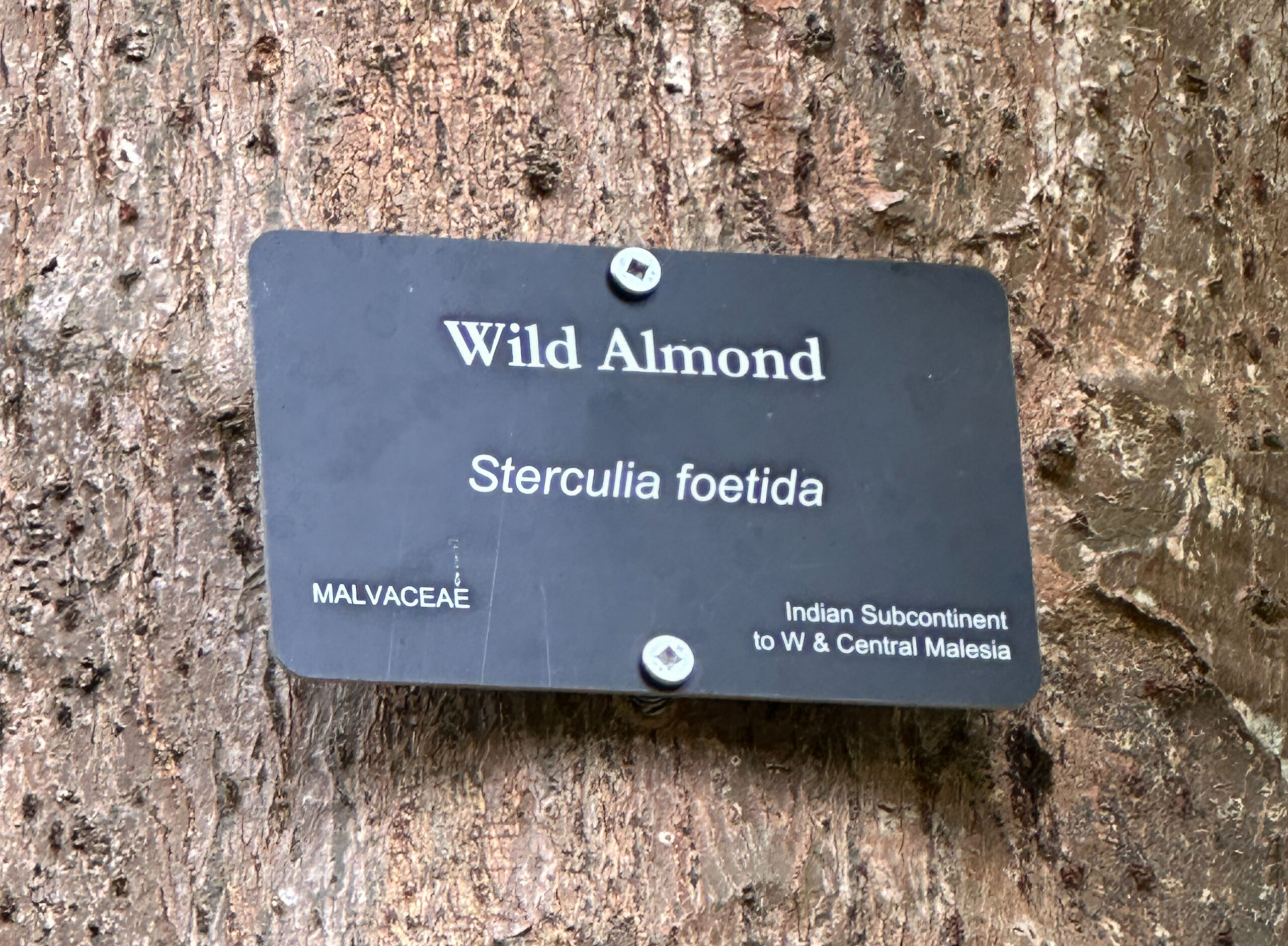
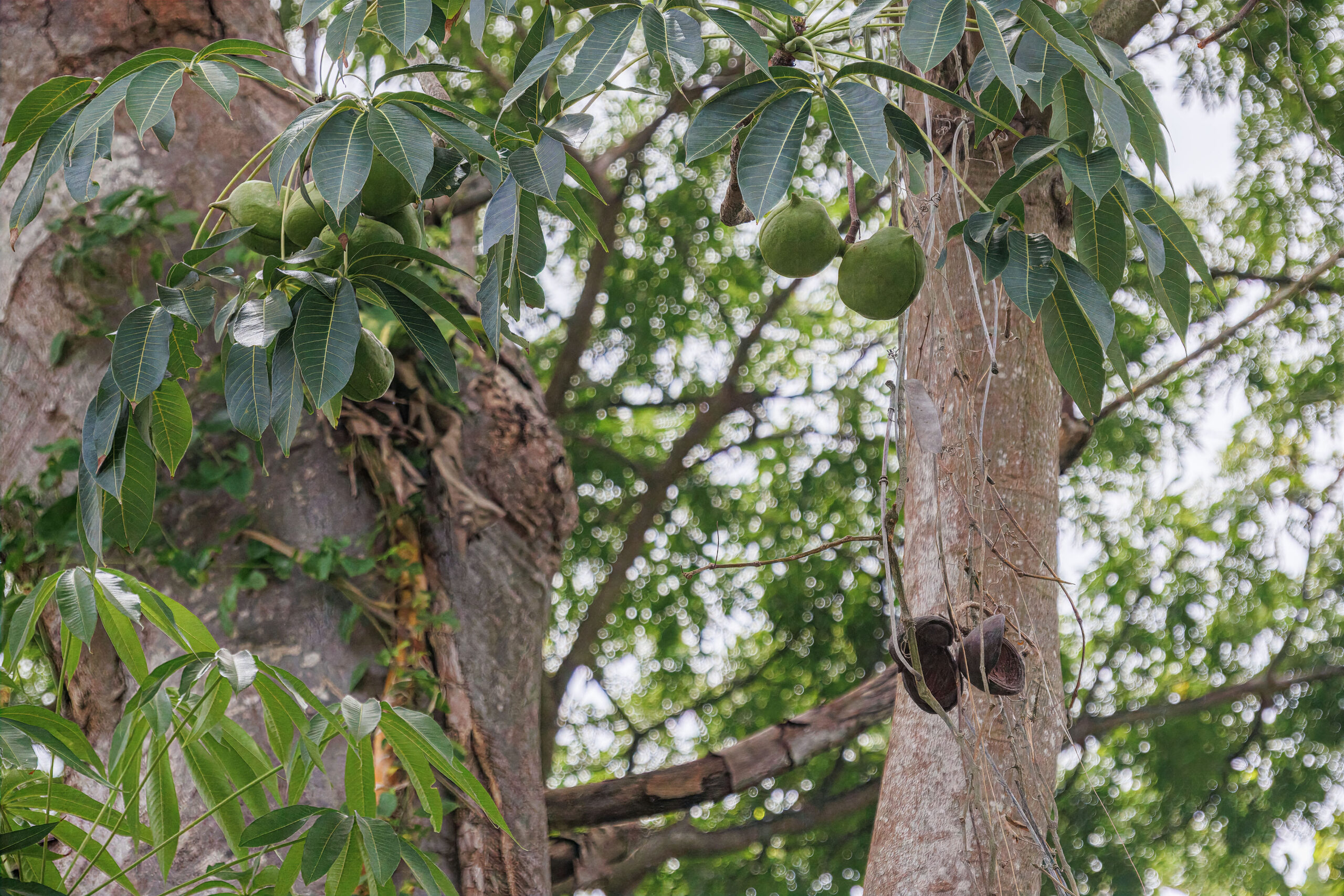
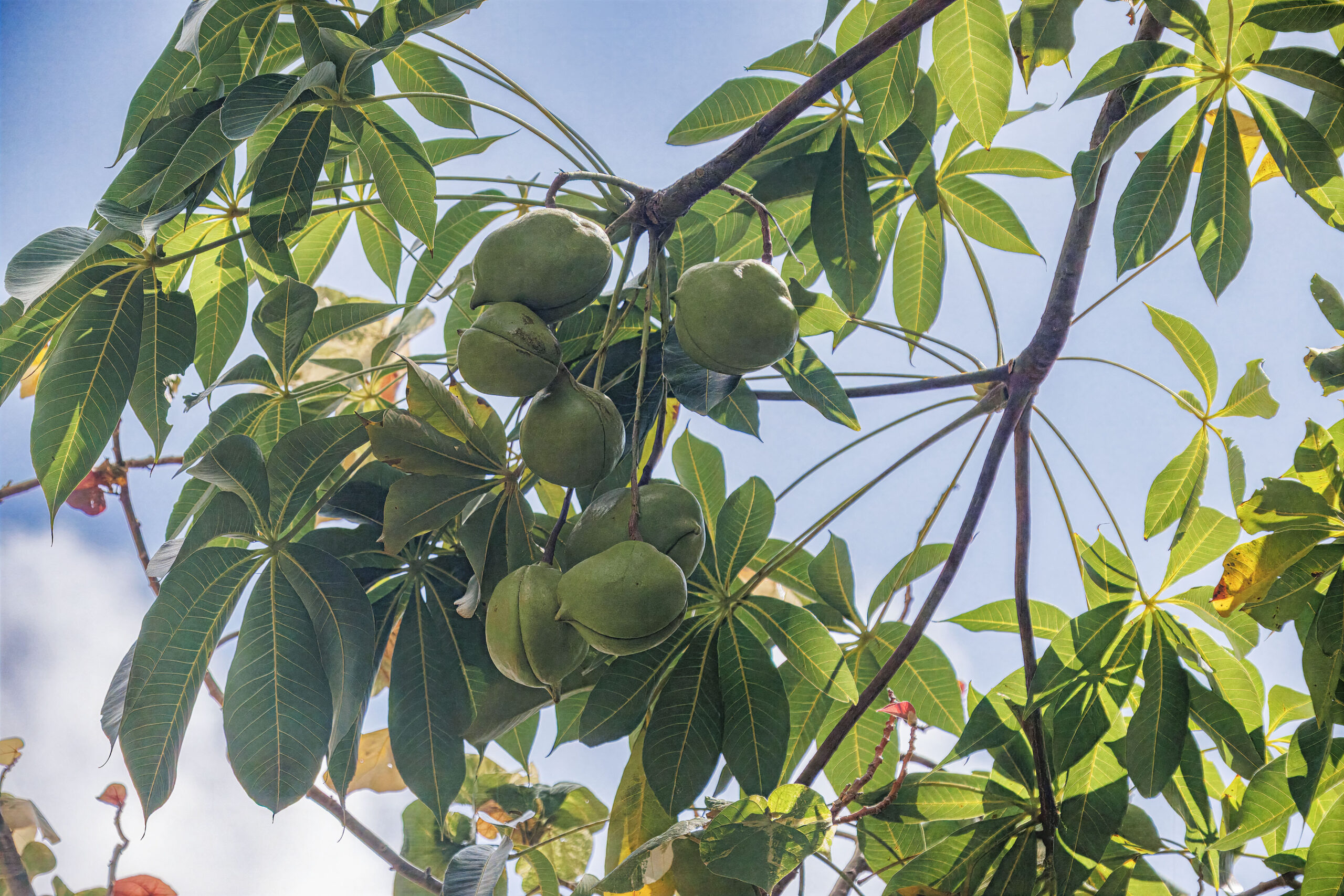
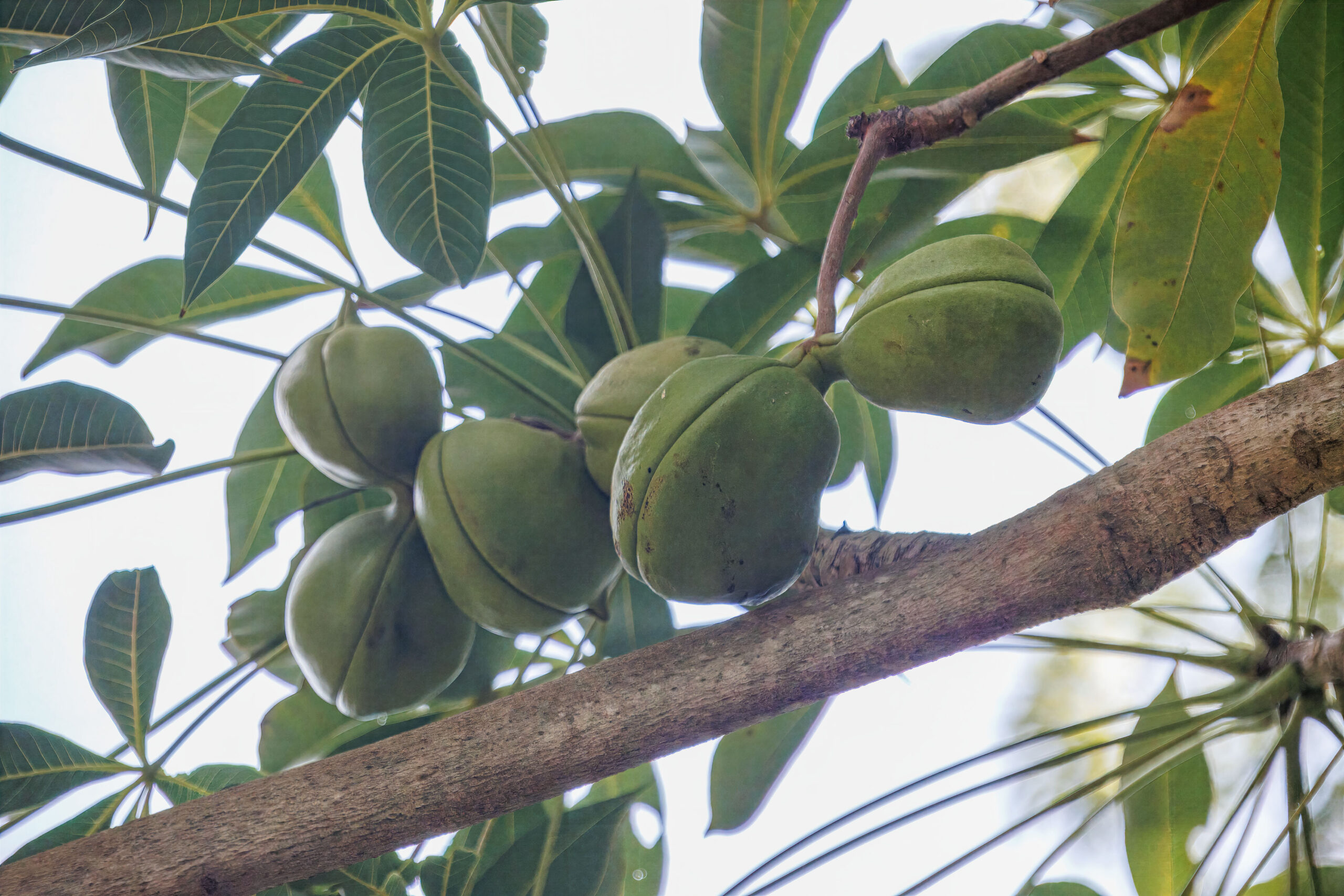
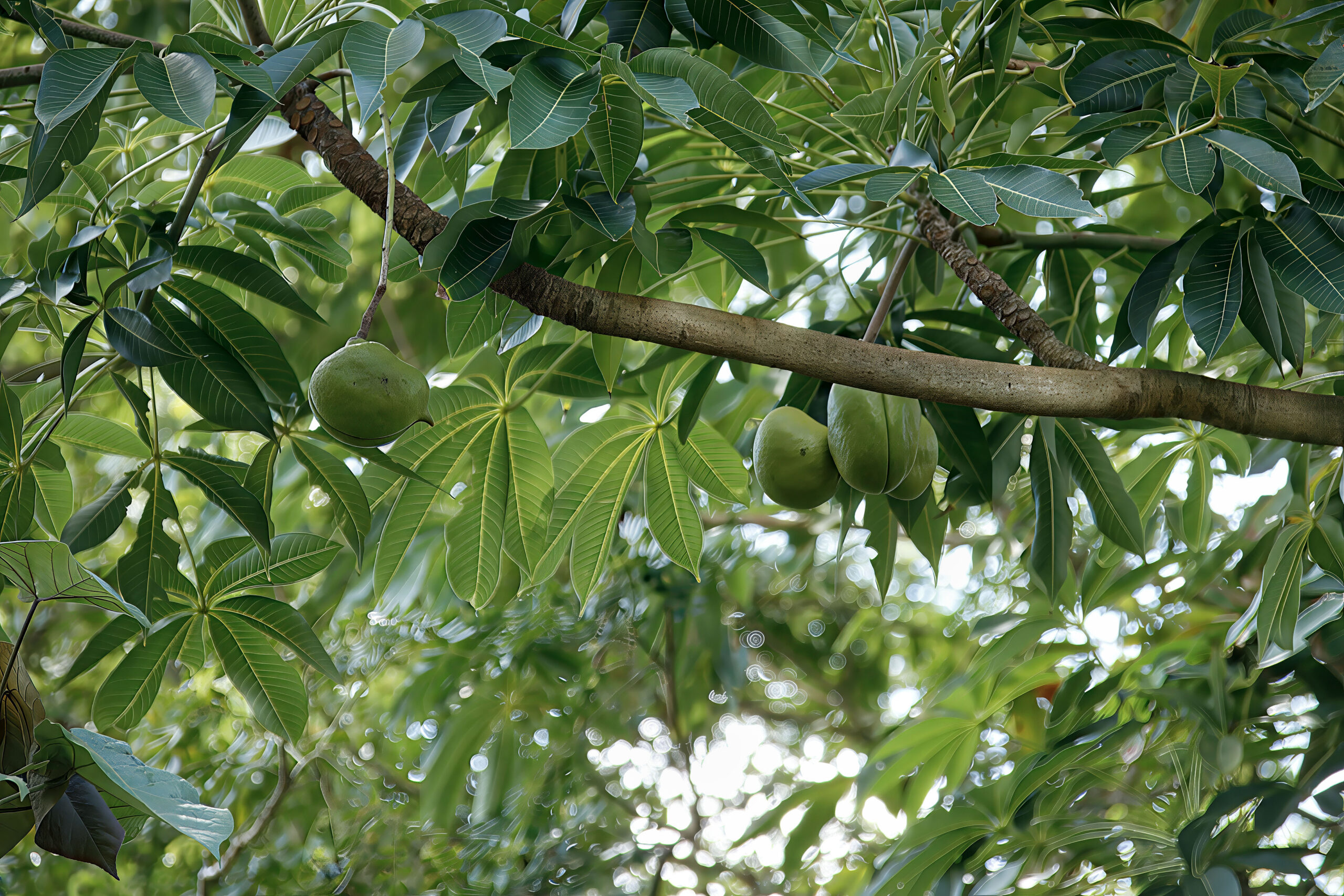
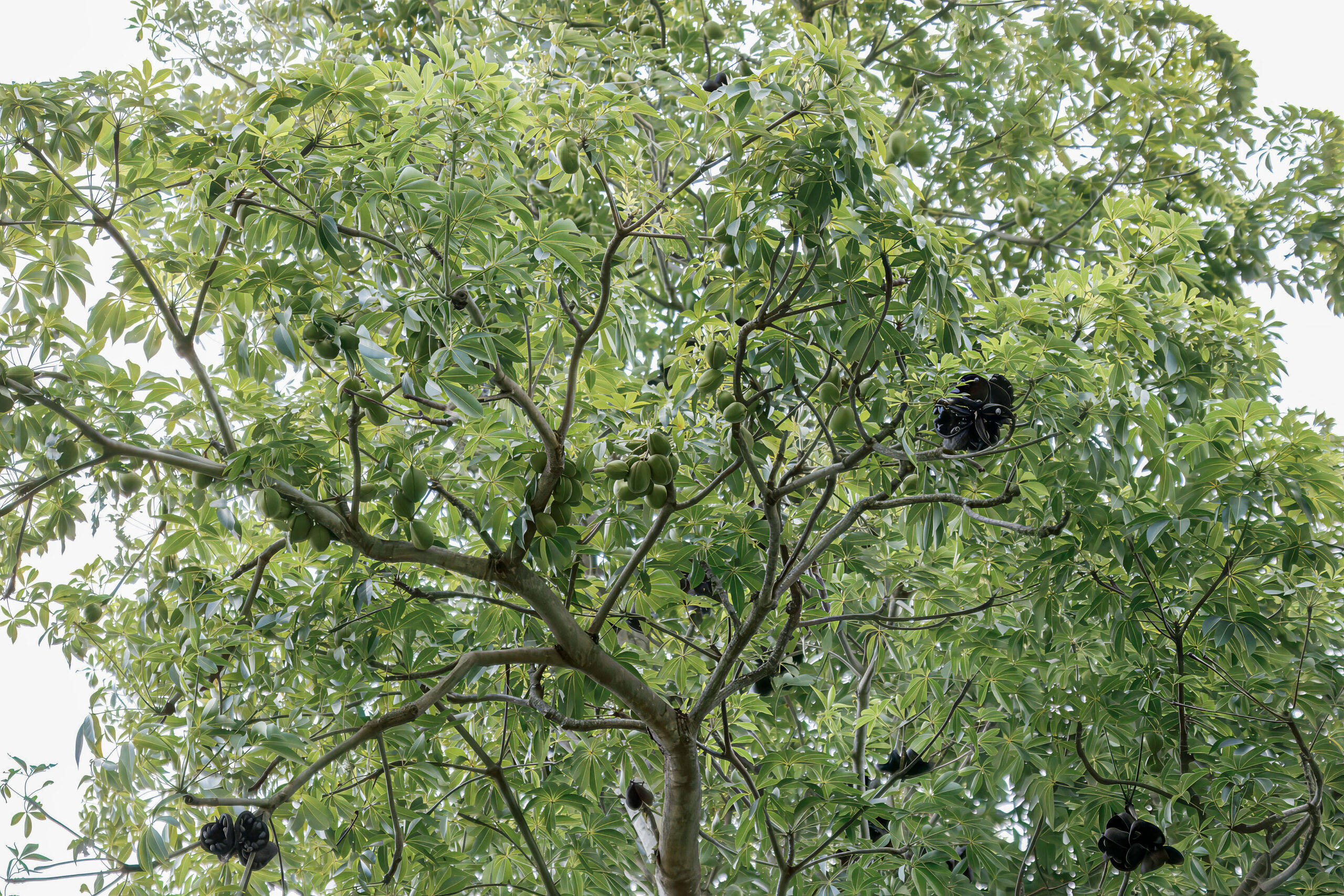
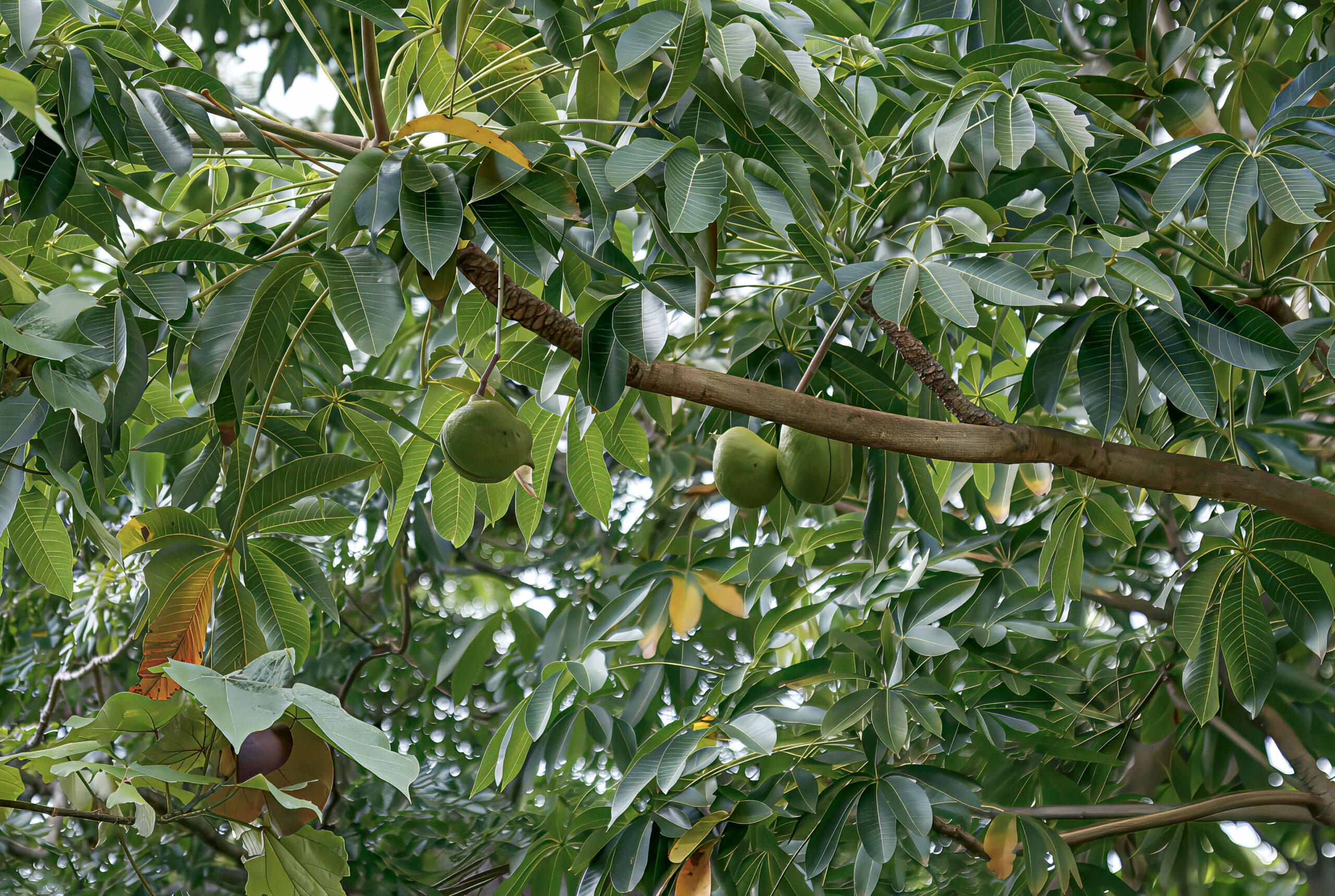
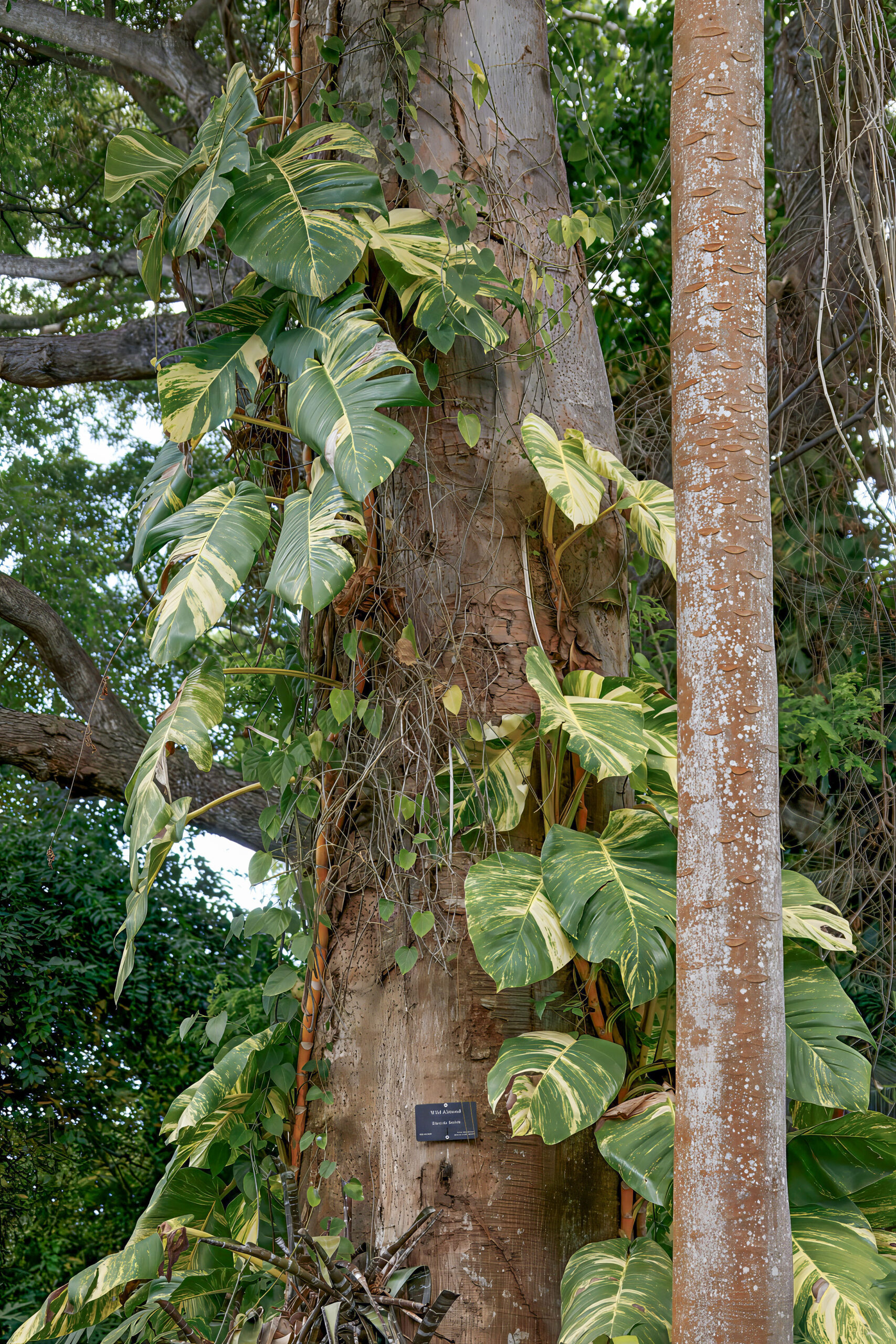
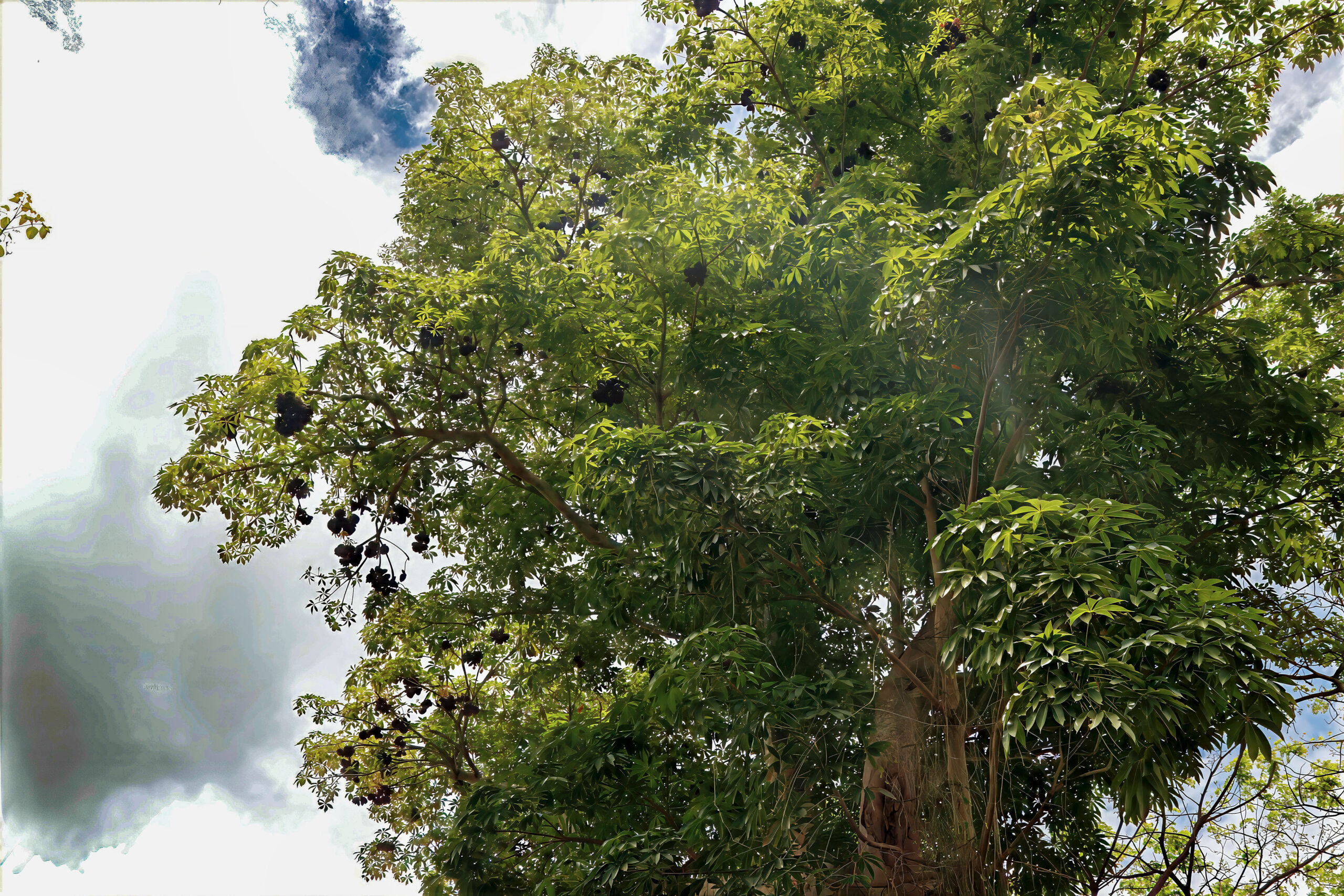
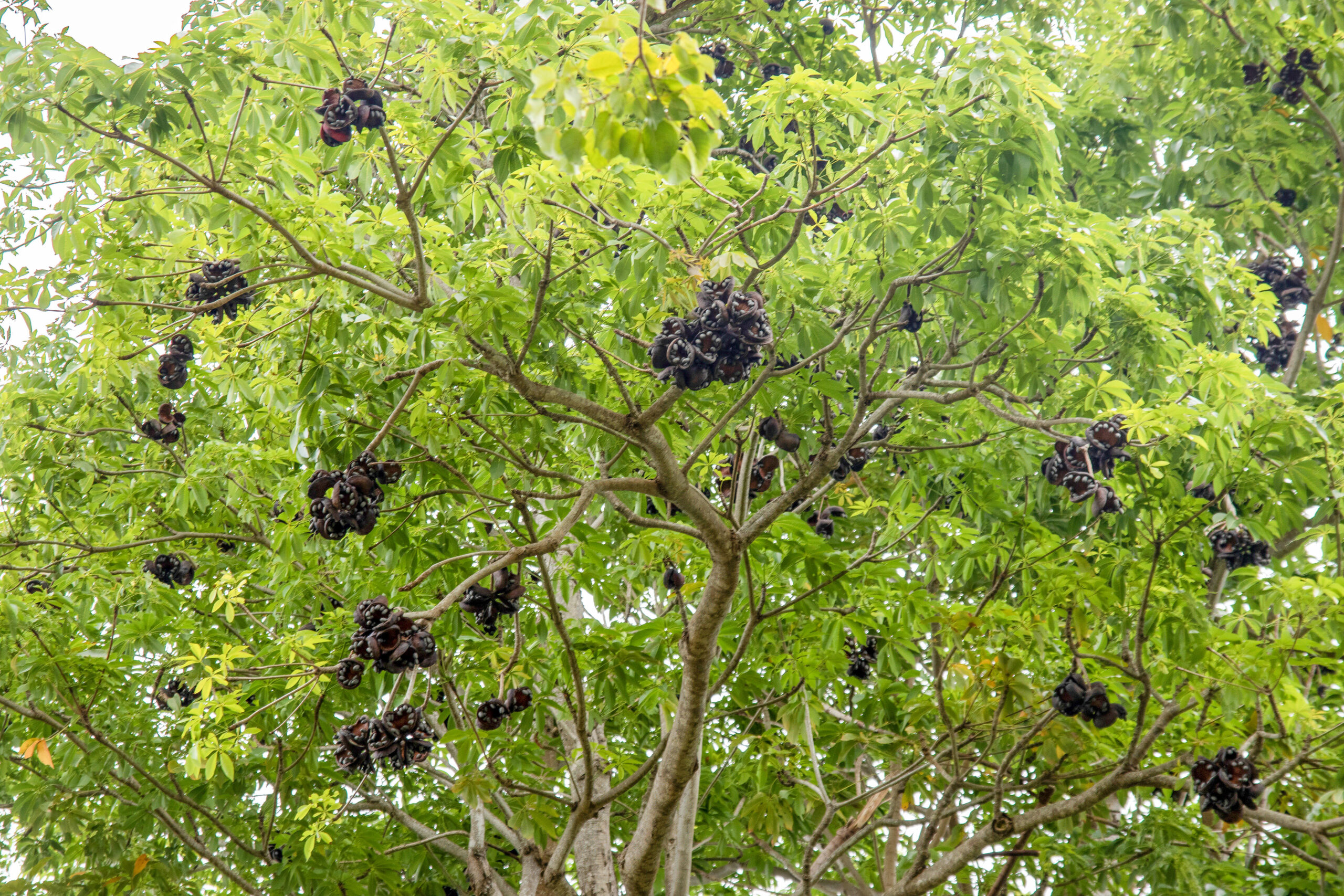
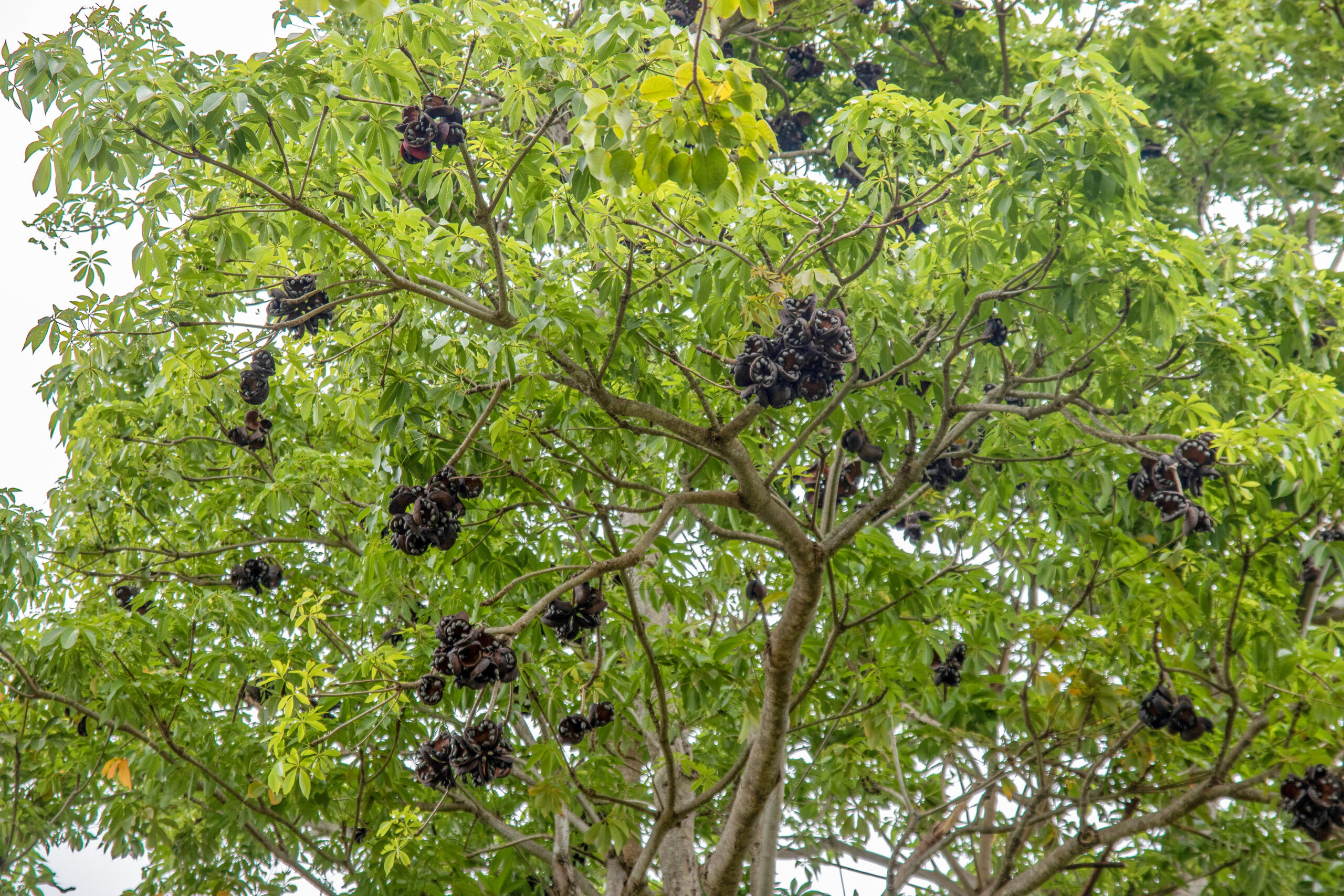
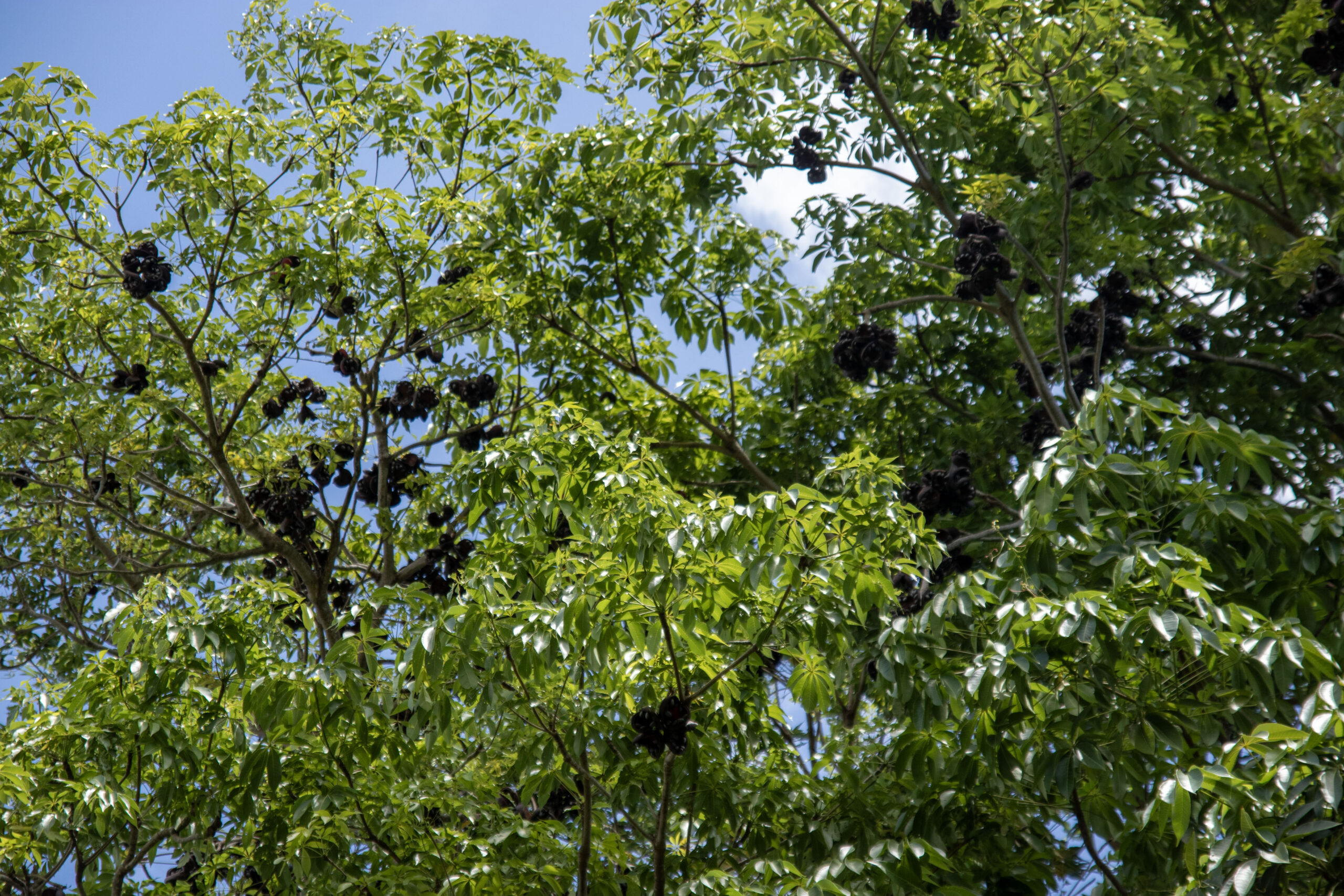
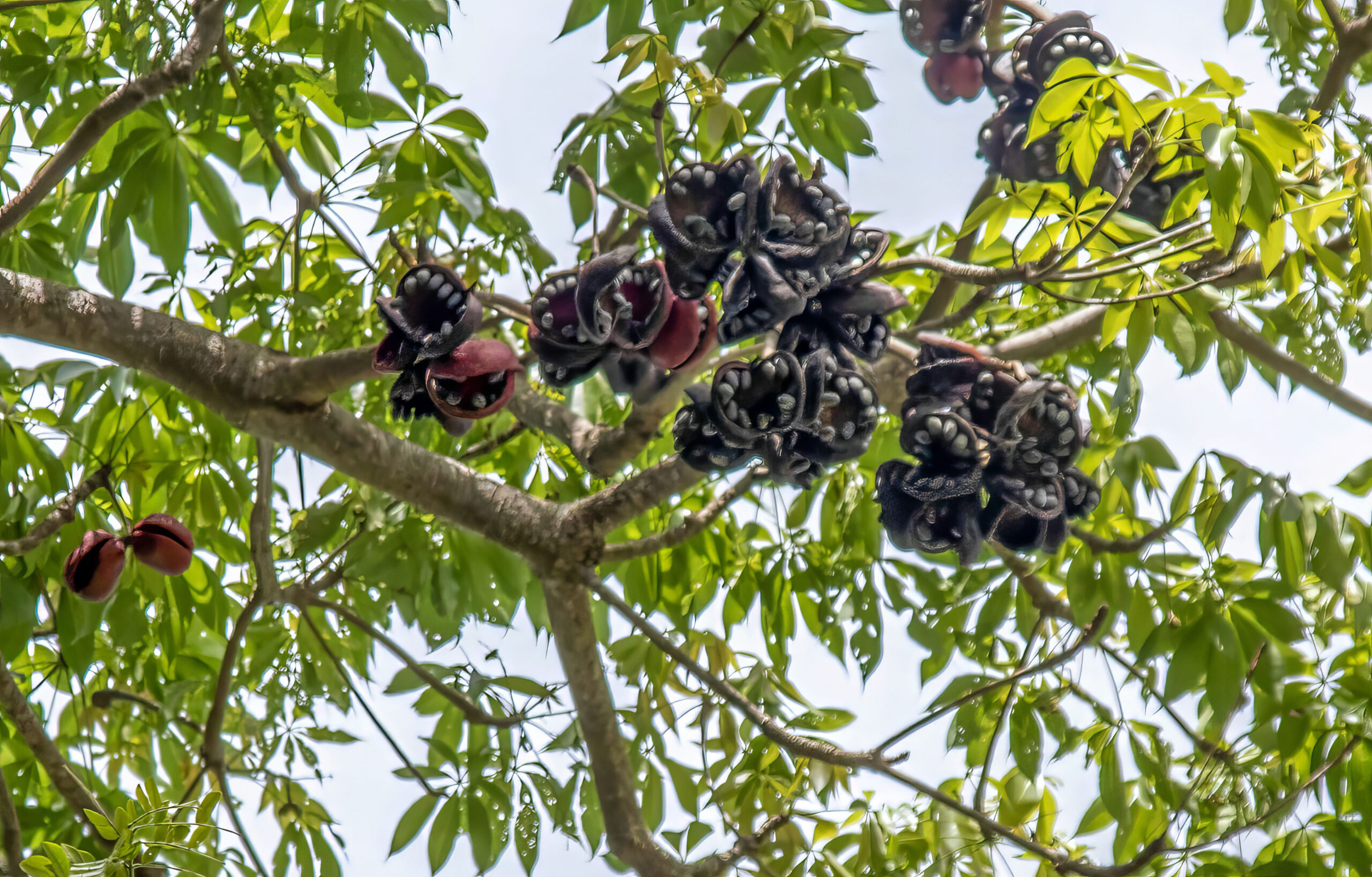
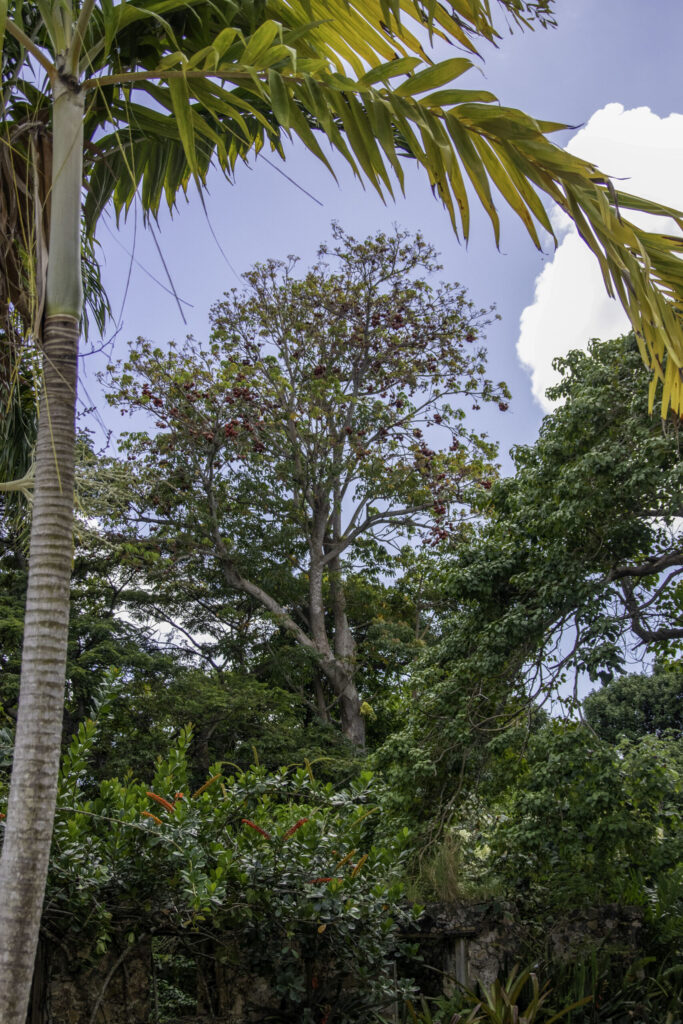
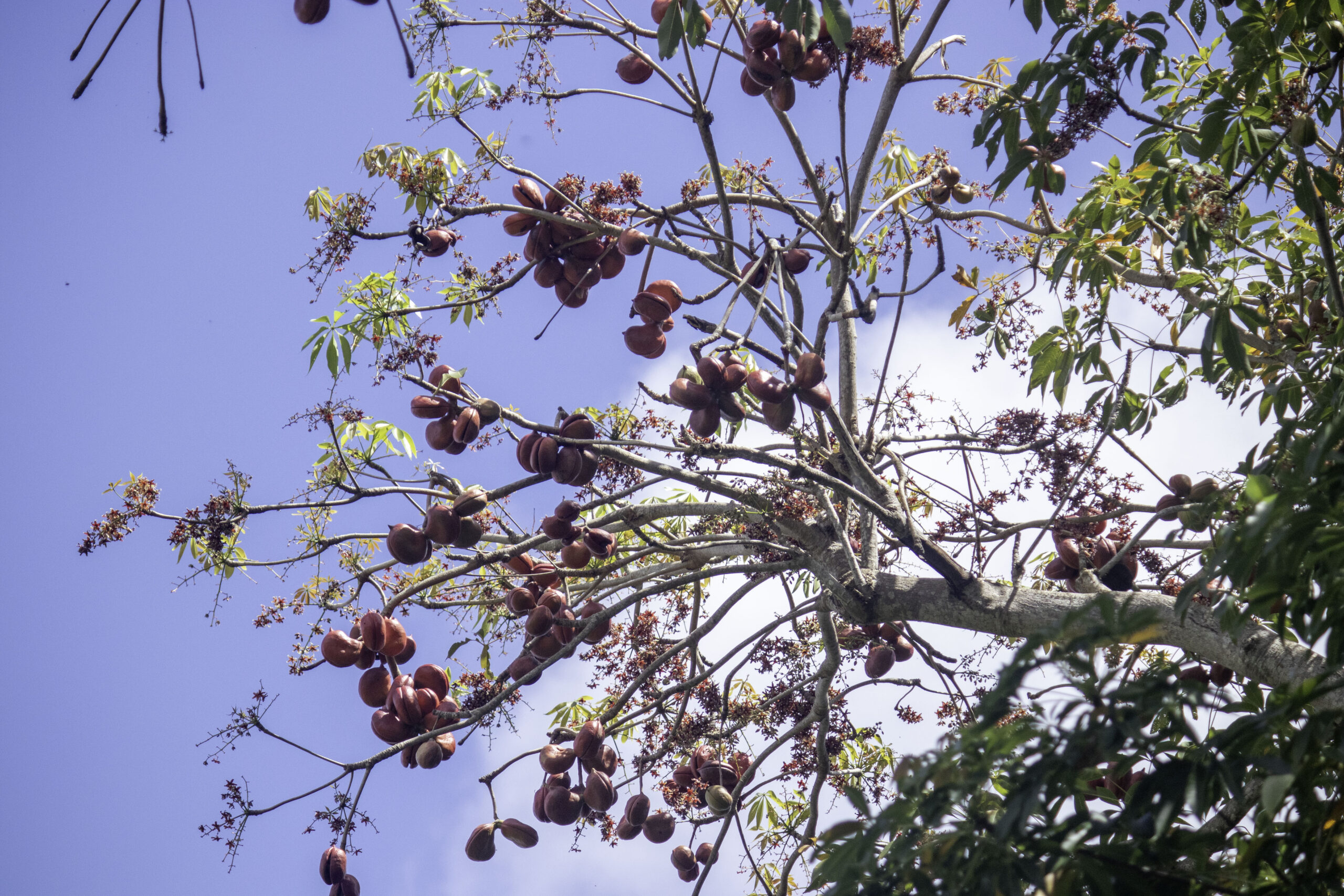
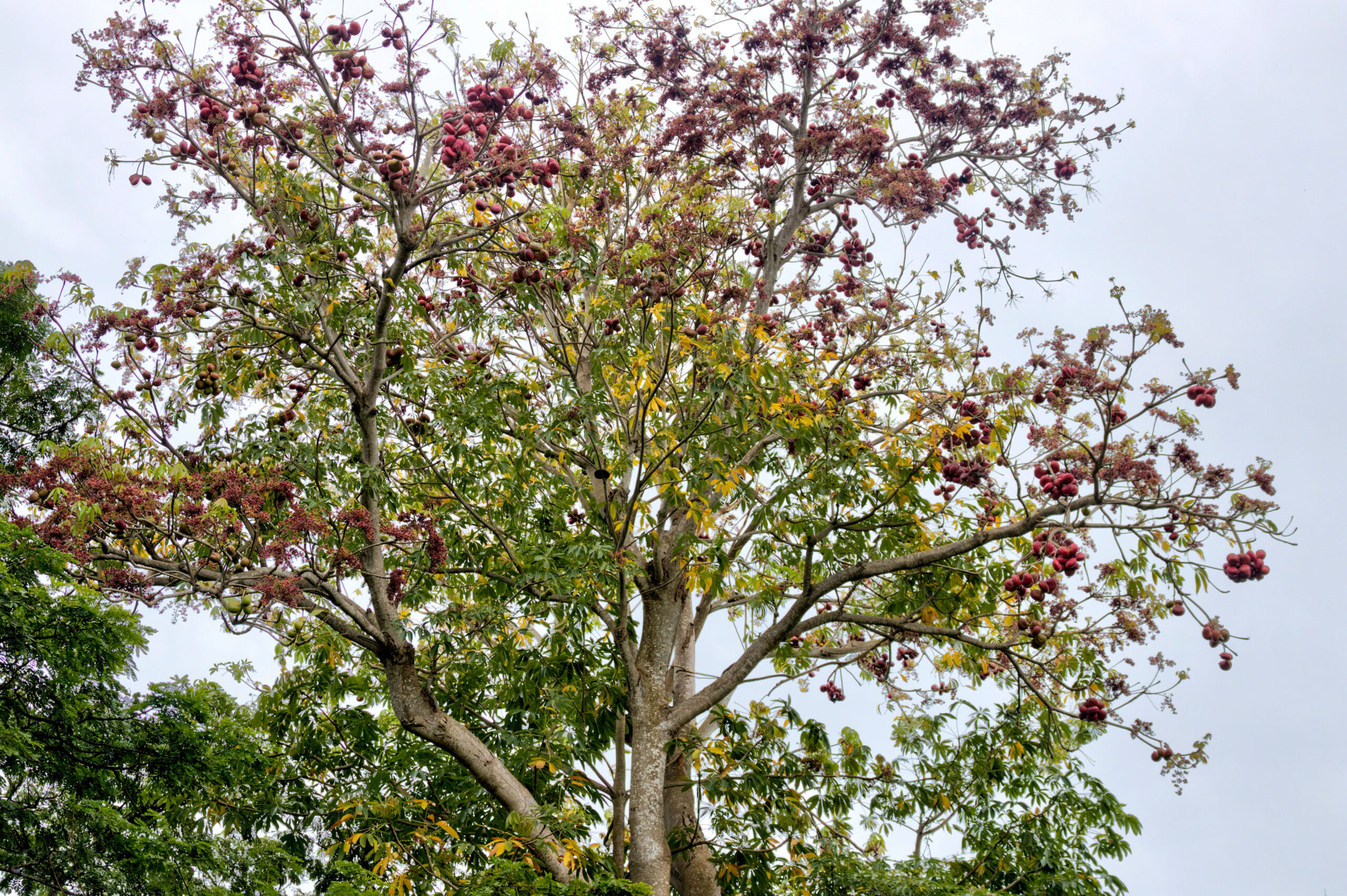
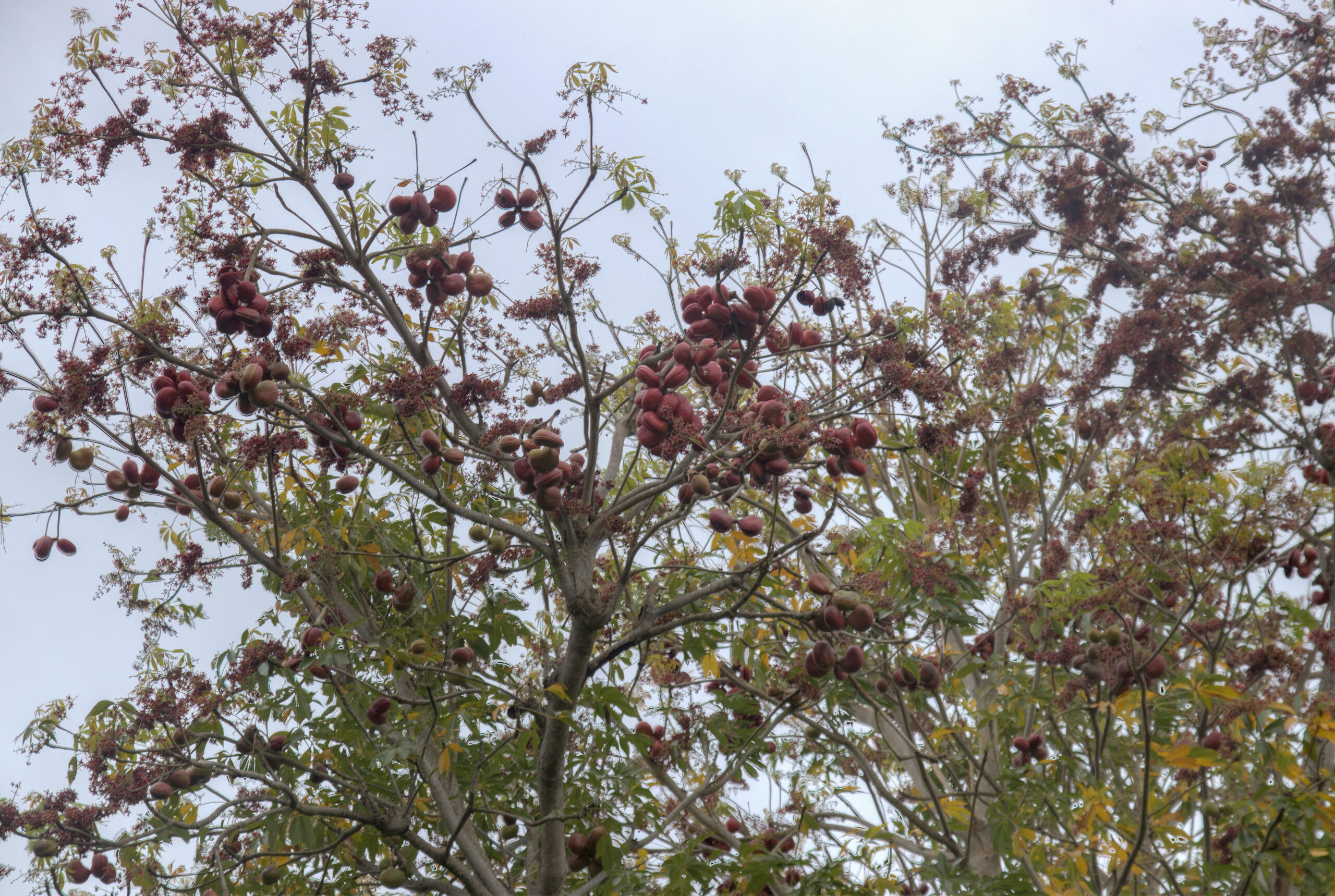
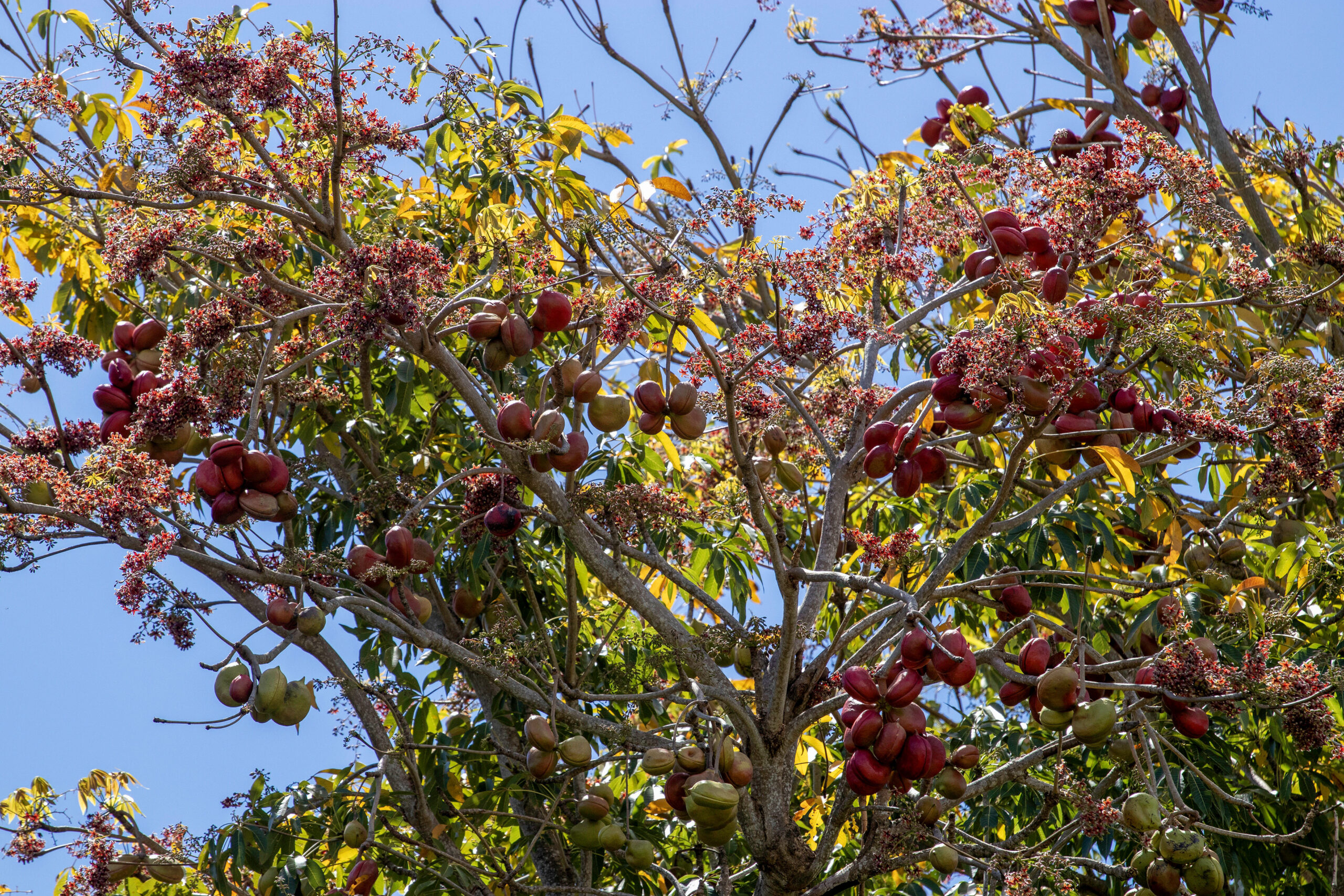
Wild Almond tree

Scientific name: Sterculia foetida

POWO Status: Tree

IUCN Red List threat level: Least Concern

GPS Location: 17° 42′ 56.62″ N, 64° 49′ 46.39″ W

Medicinal Uses

Sterculia foetida, or the Wild Almond tree, is used in traditional medicine for digestive issues (constipation, stomachaches), respiratory problems (coughs, asthma), skin conditions (eczema, wounds), inflammation (rheumatism), and as a general tonic, with leaves, bark, seeds, and gum all having reported uses, though modern scientific evidence supports some effects like anti-inflammatory and antimicrobial properties. The edible seeds, oil, gum, leaves, and bark are traditionally applied for various ailments, but scientific research is still developing to confirm these traditional uses. 

Traditional Medicinal Uses by Plant Part:

  • Seeds: Laxative (raw), purgative, used in treatments for skin diseases and rheumatism (with oil), also studied for anti-diabetic, anti-obesity, and antimicrobial effects.
  • Leaves: Decoctions used for difficult labor, diarrhea, skin eruptions, coughs, and as insect repellent.
  • Bark: Used for rheumatism, dropsy (edema), as a diuretic, and in skin washes.
  • Gum (Resin): Mild laxative, soothes coughs, relieves sore throats, and is rich in minerals.
  • Oil (from seeds): Applied to itchy skin conditions, used with wood for rheumatism. 

Reported Pharmacological Properties: 

  • Anti-inflammatory & Analgesic: Used for rheumatism, joint pain, and general swelling.
  • Antimicrobial: Shows potential against bacteria and fungi.
  • Digestive: Laxative and helps with indigestion.
  • Other: Antioxidant, anti-diabetic, anti-obesity, anti-cancer, antiviral, diuretic, and CNS depressant activities. 

Important Considerations:

  • Scientific Validation: While traditional uses are widespread, pharmacological research is ongoing to fully understand and validate these properties.
  • Potential Dangers: Some sources warn that cyclopropene fatty acids in the seeds could be harmful, and proper dosage and sourcing are crucial.

Observations:

Phenological Markers – Wild Almond (Sterculia foetida)

1. Leaf Behavior
Sterculia foetida is deciduous, typically shedding its leaves during the dry season.

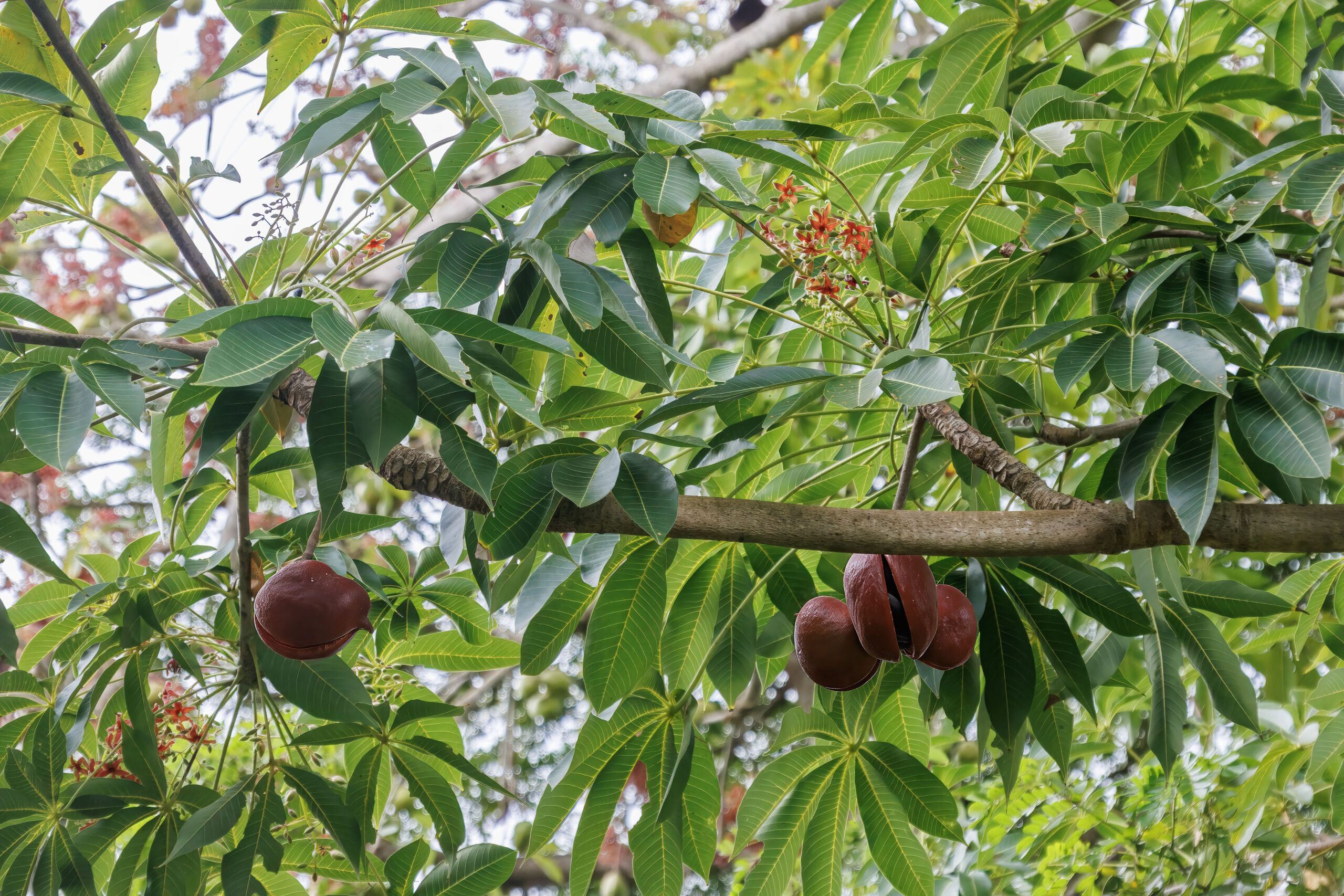
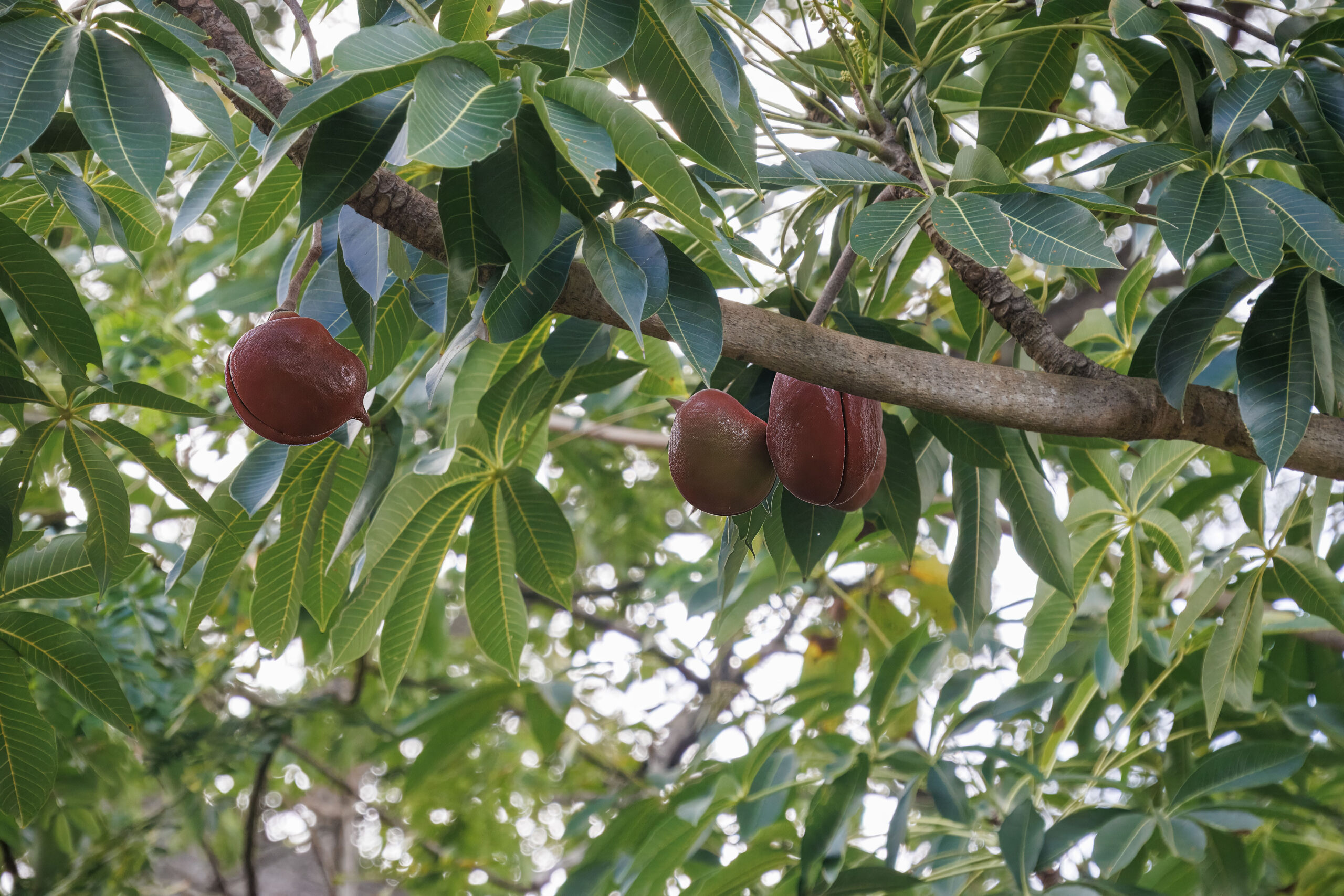
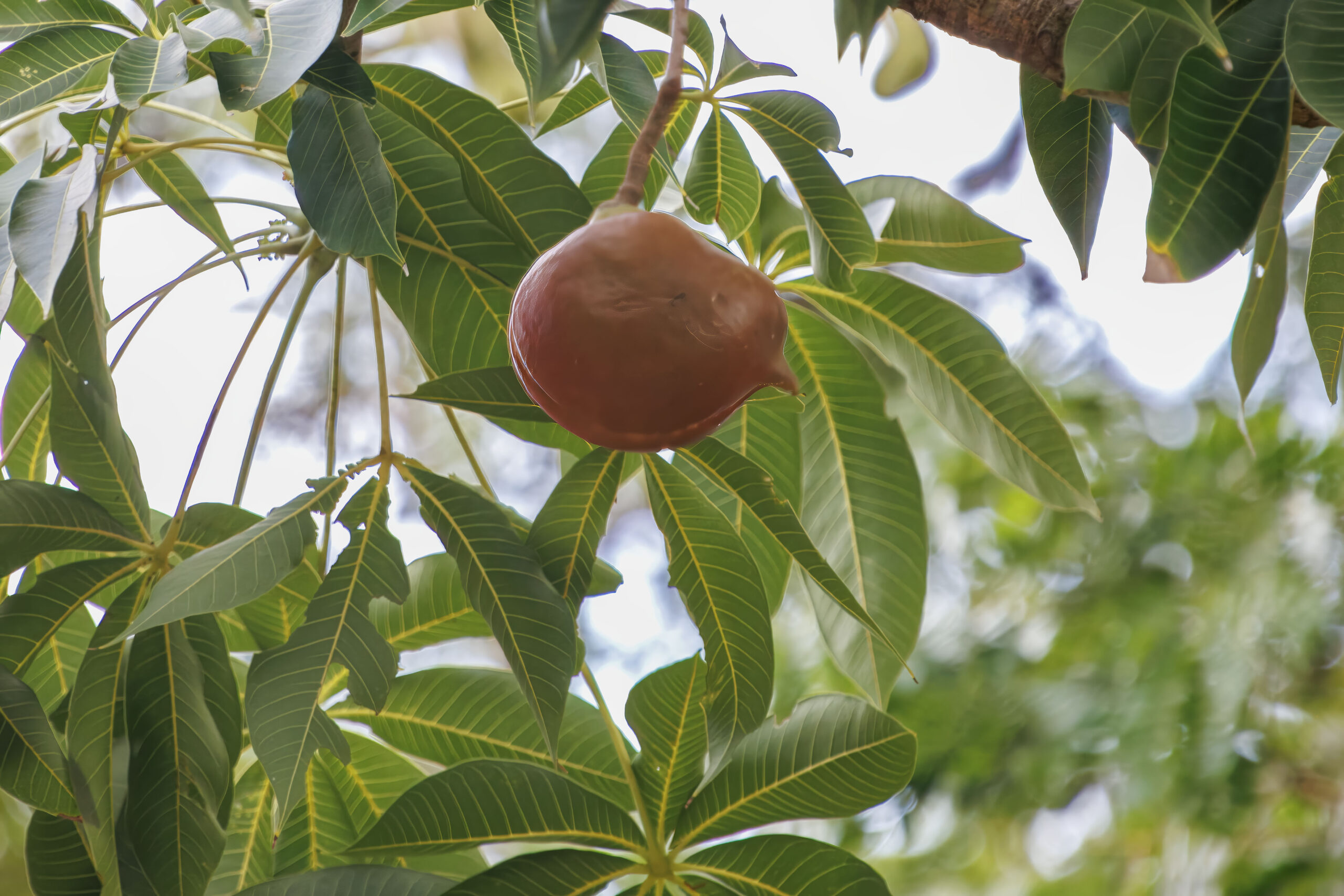
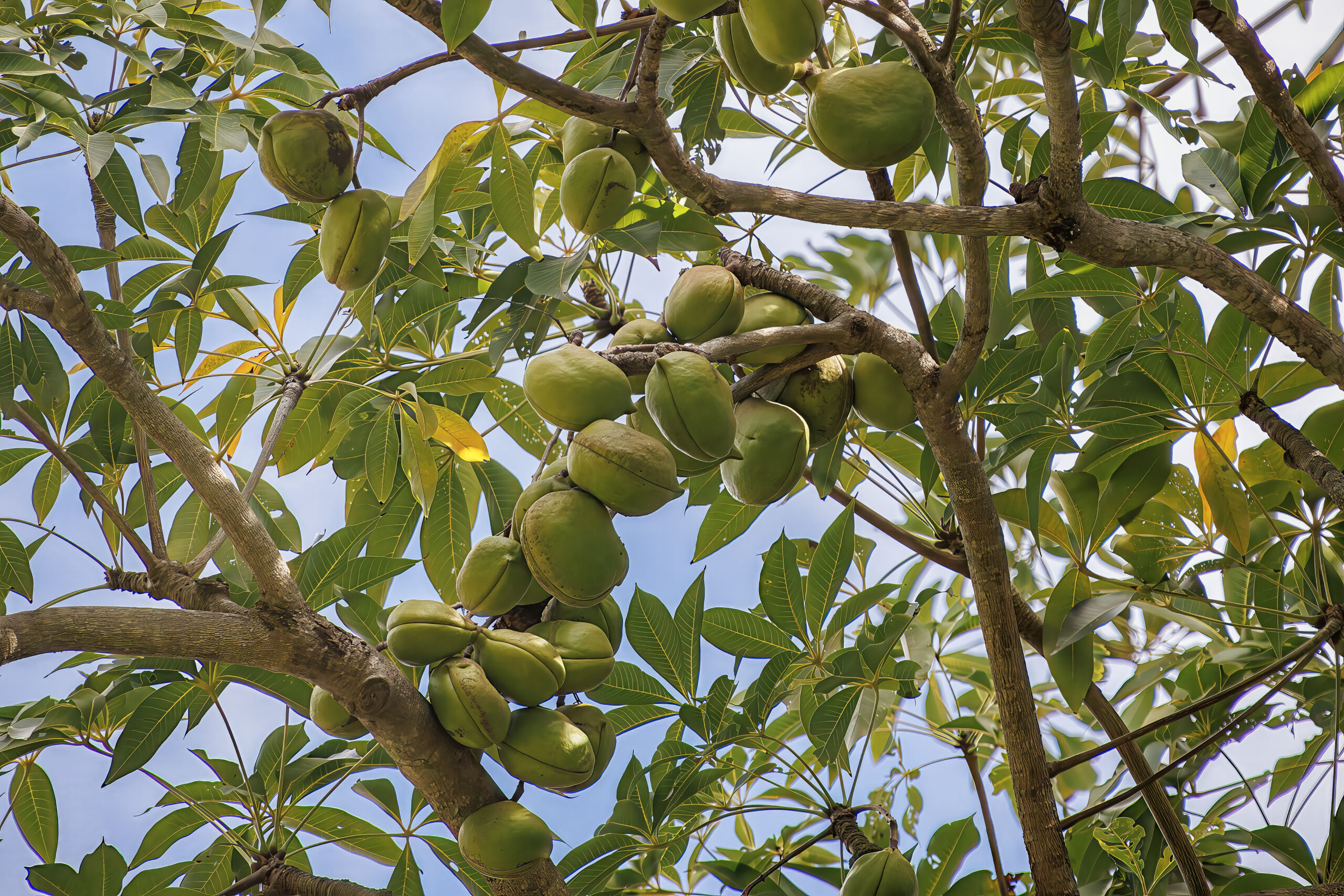
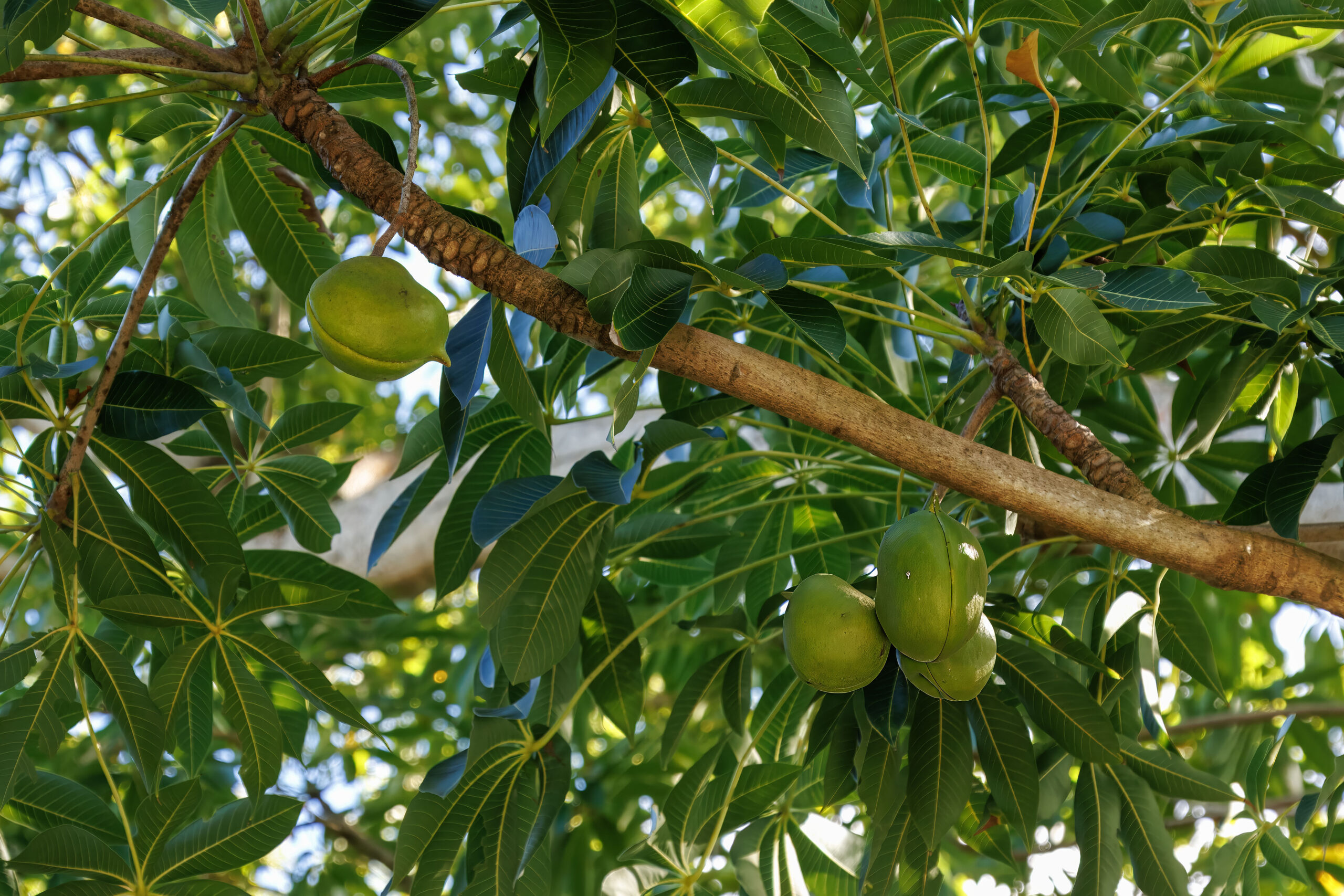
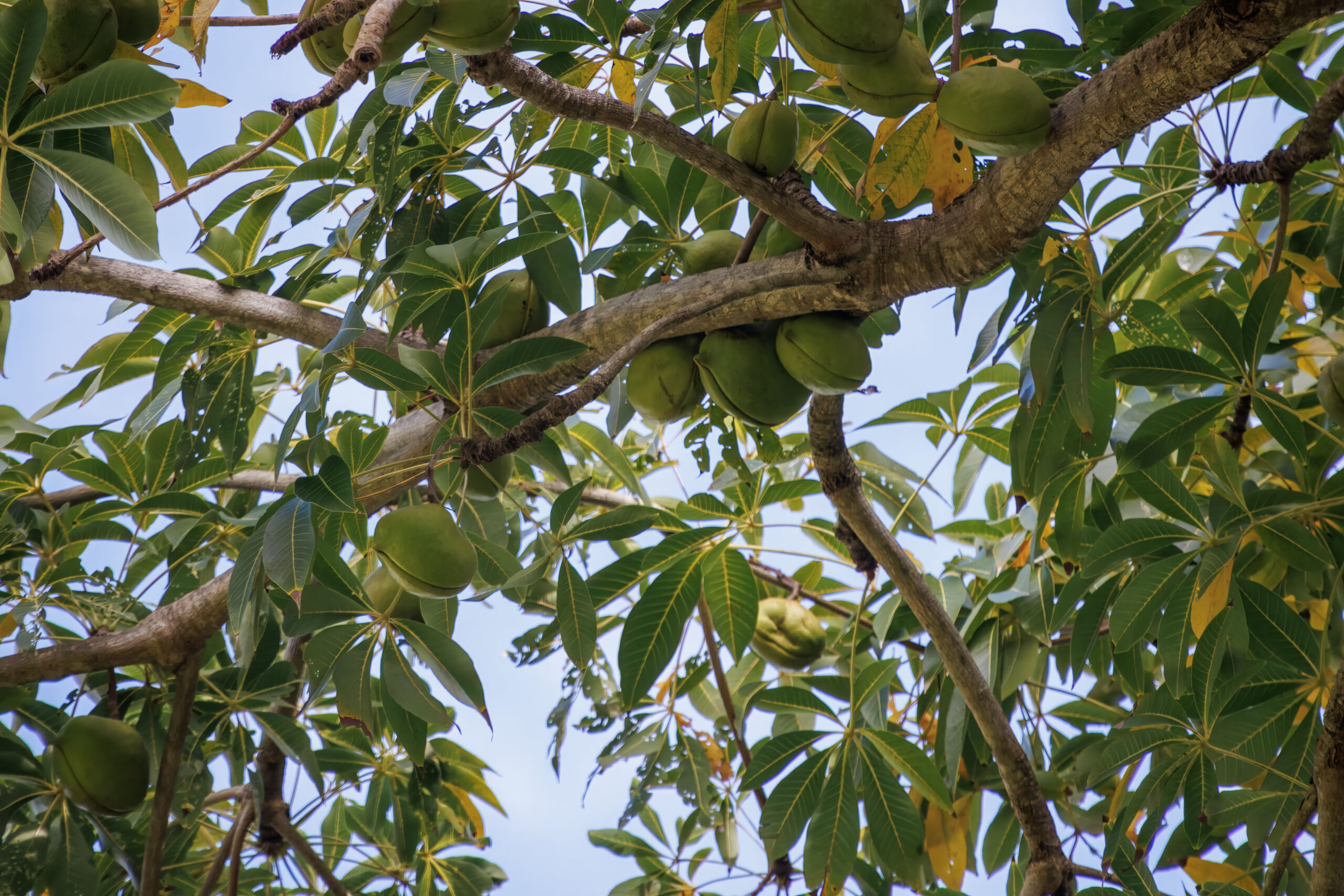
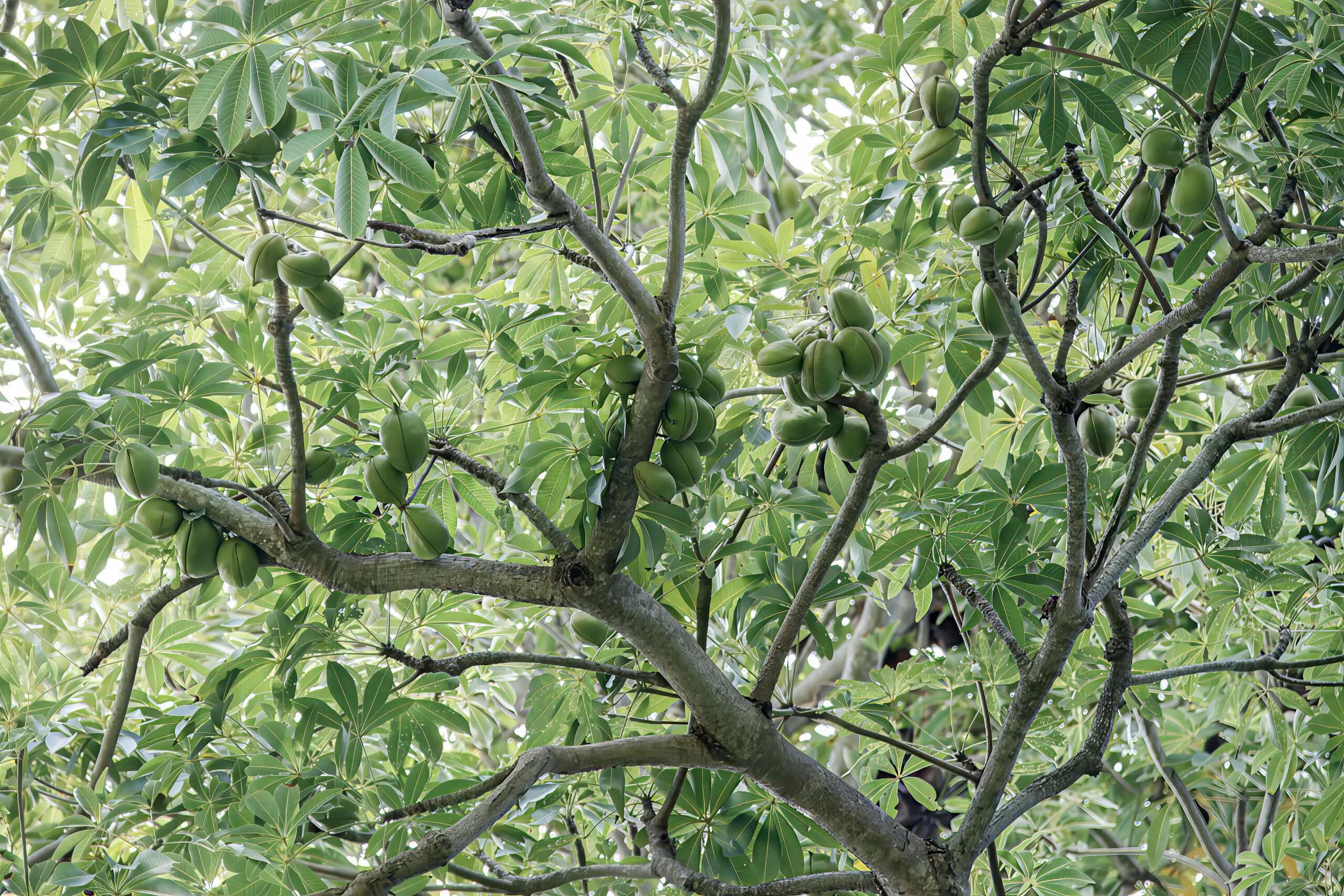
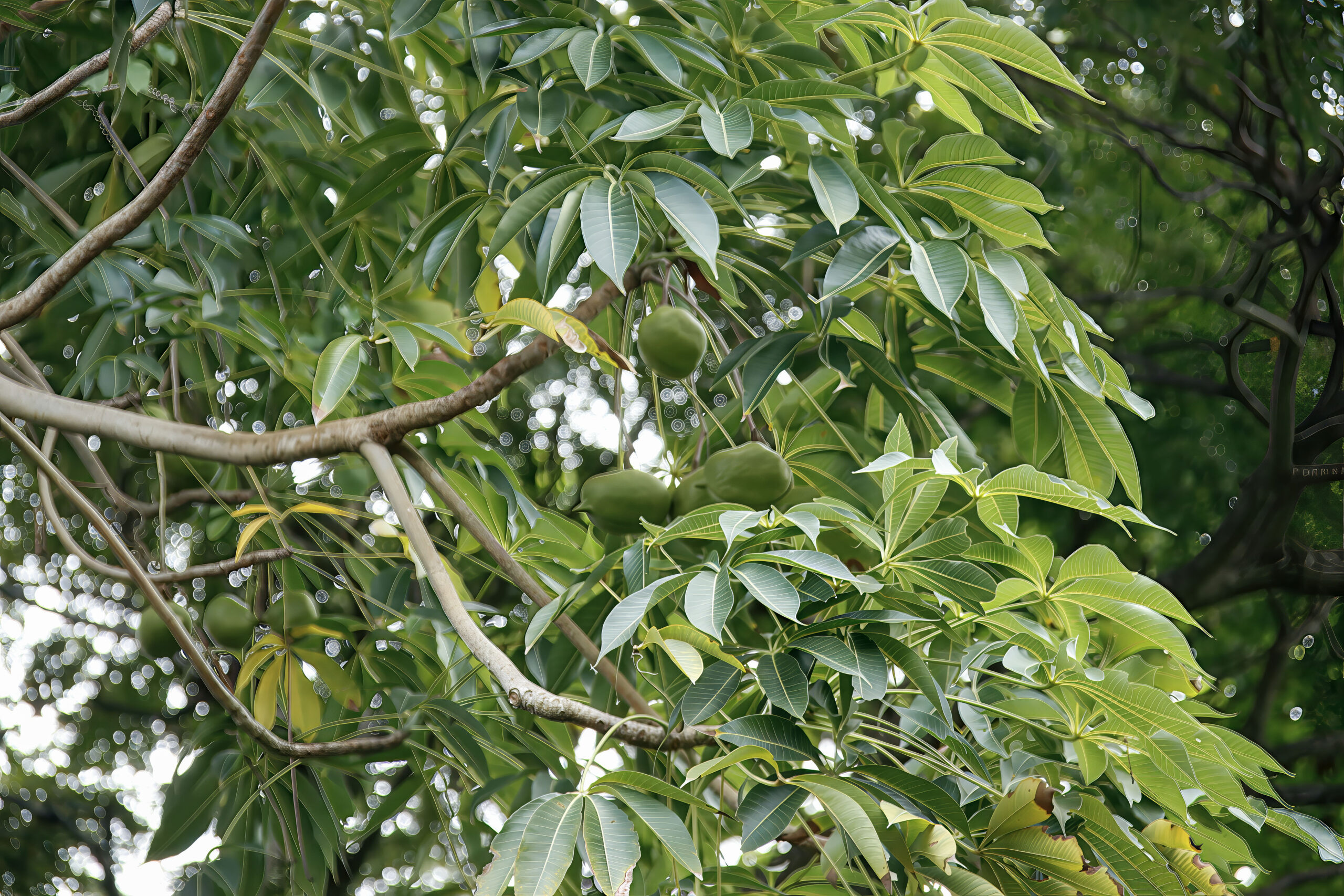
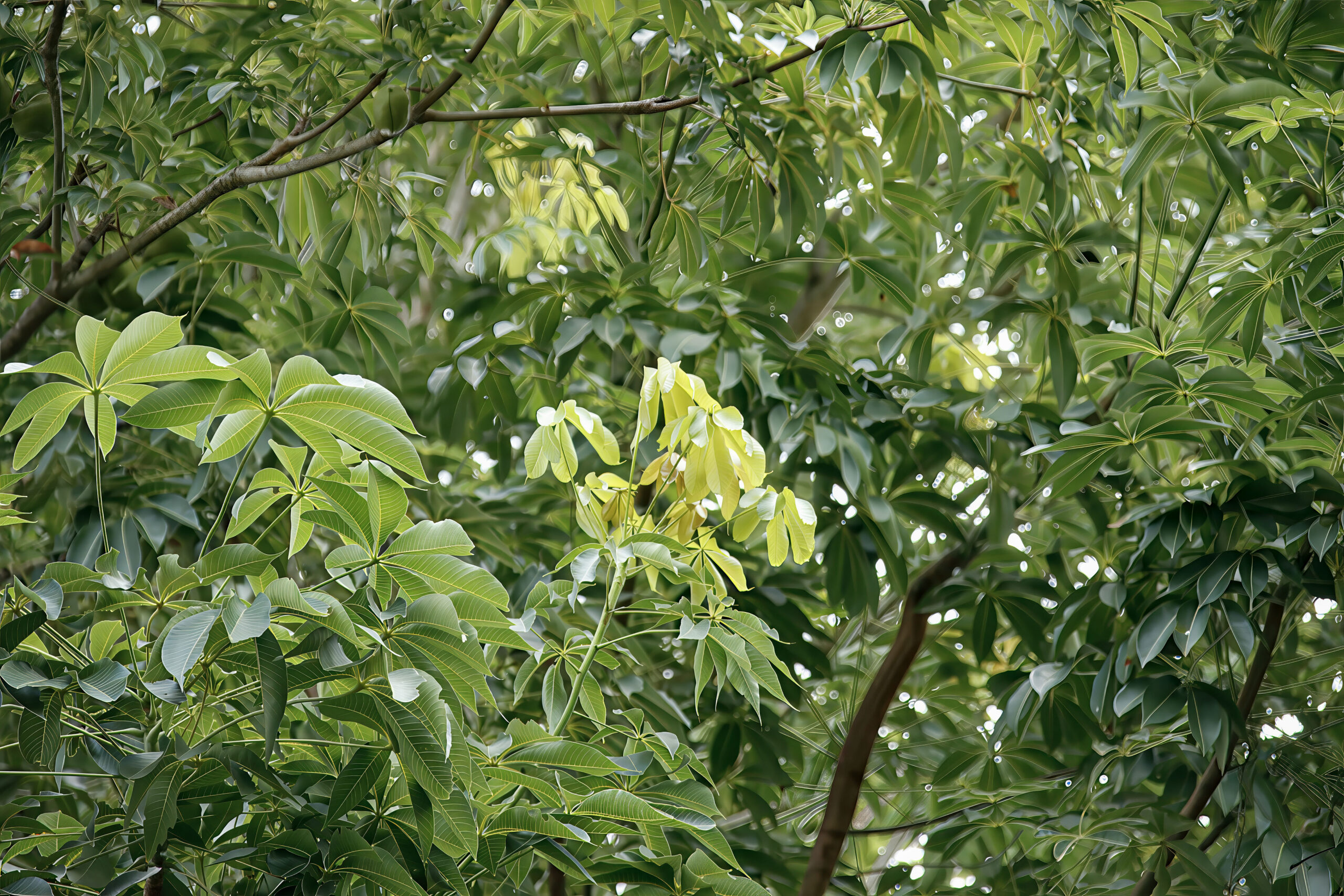
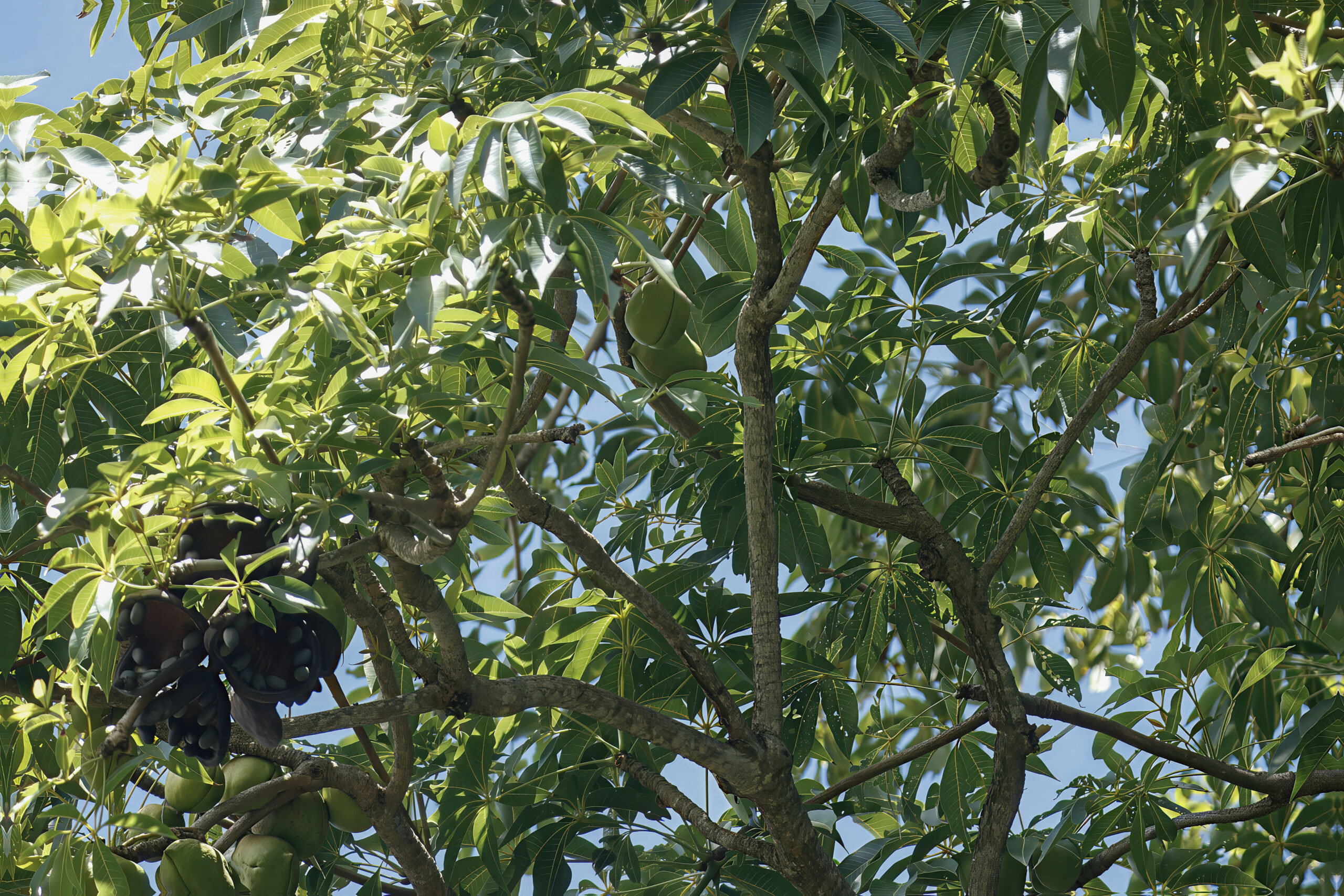
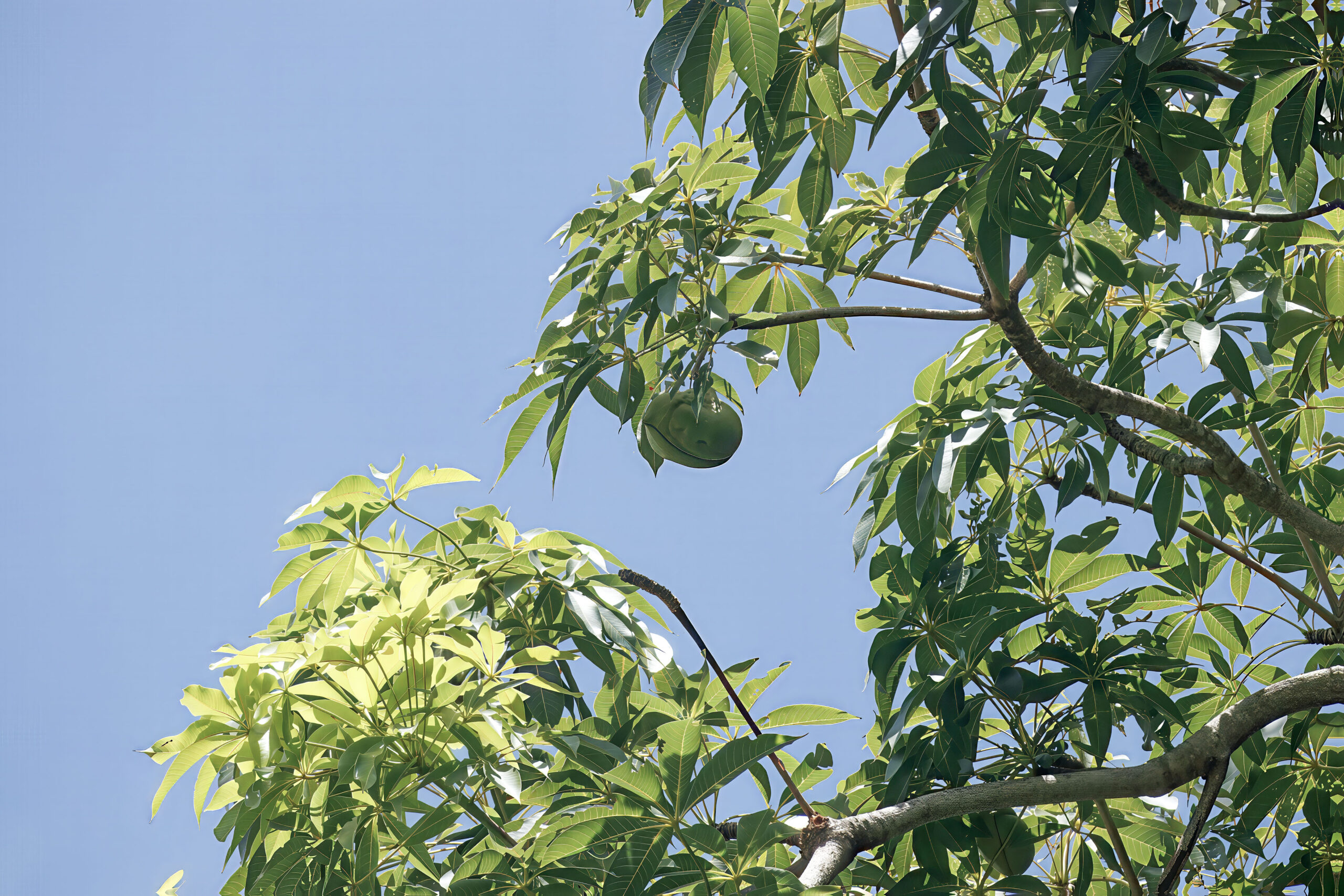
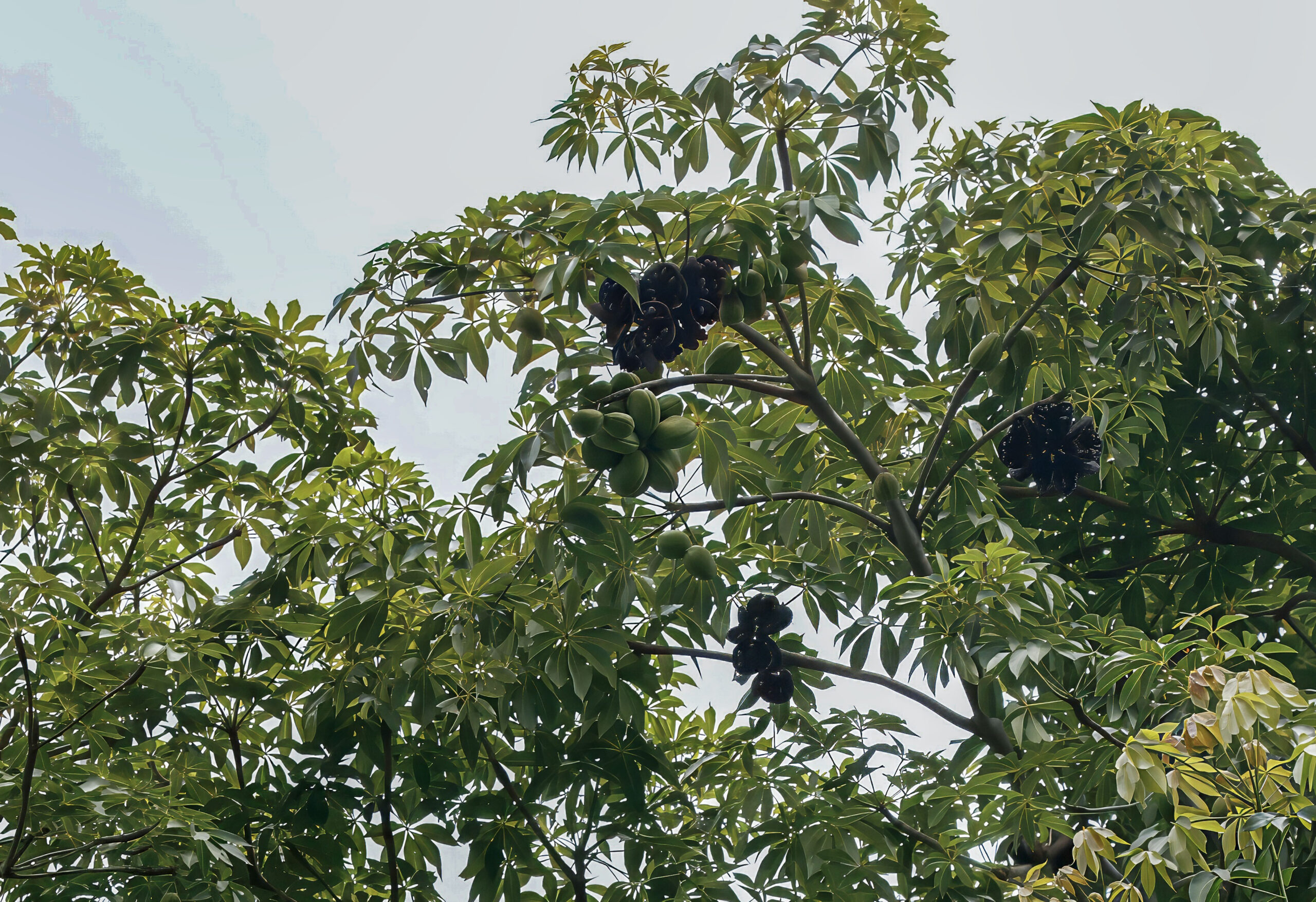
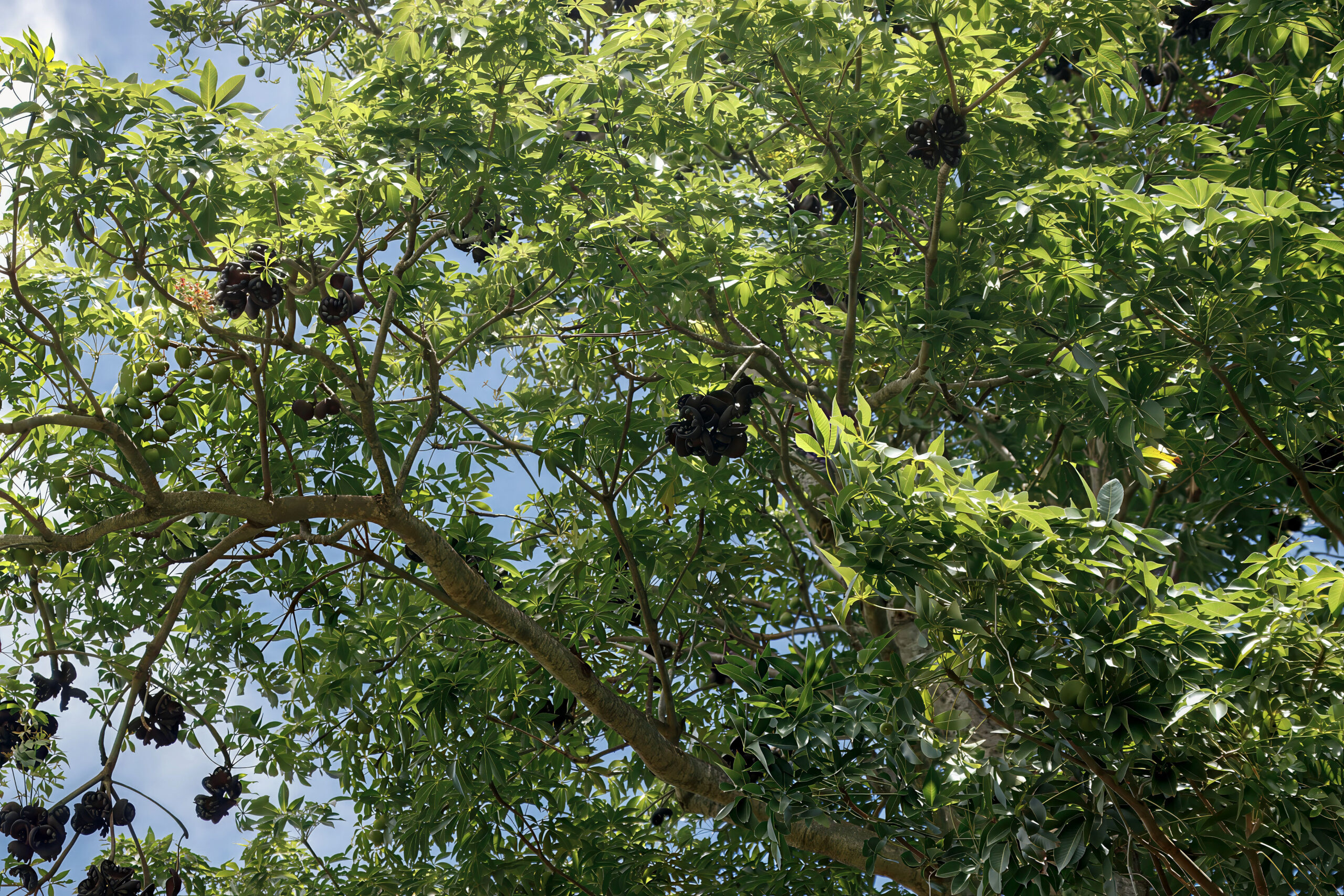
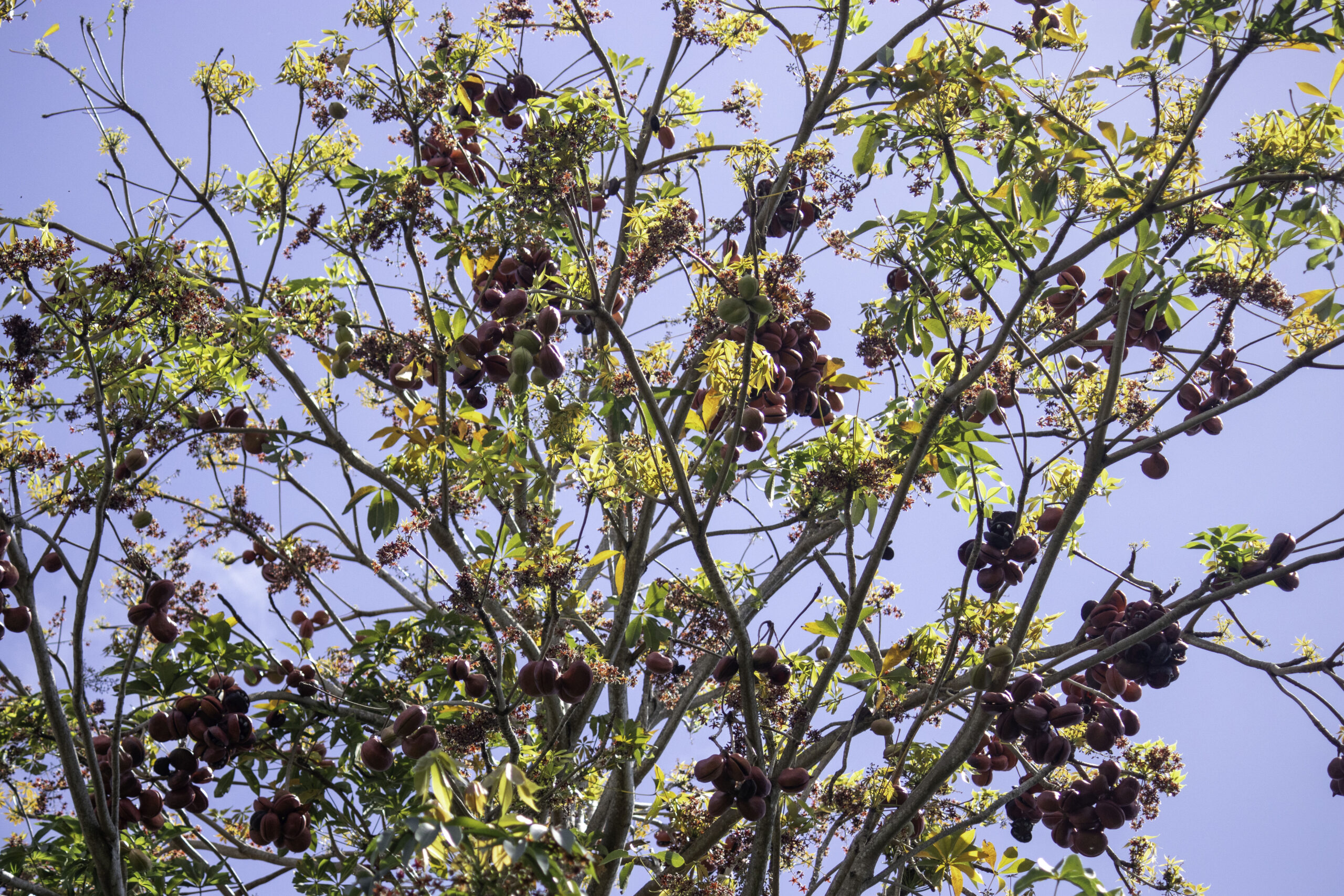
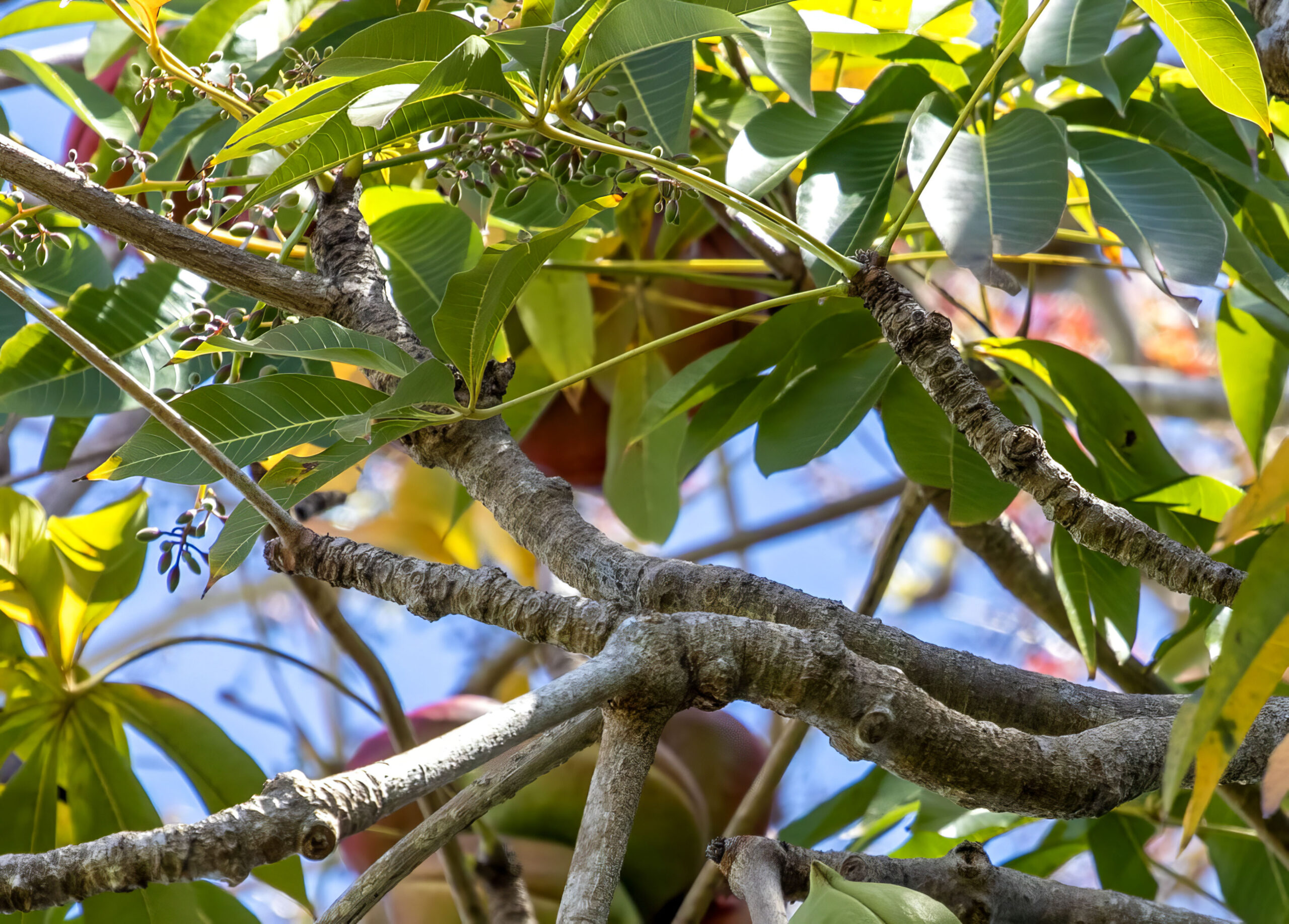
  • Leaves are palmately compound, usually with 5–9 oblong leaflets arranged like fingers on a hand.
  • Leaf drop occurs between January and March, often preceding flowering.
  • New leaf flushes emerge quickly with rainfall or seasonal shifts, typically in March–April.

Observation Tips:

  • Watch for complete canopy loss during dry months.
  • Record the first appearance of new leaflets, noting their bronze or reddish-green hue.

2. Flowering
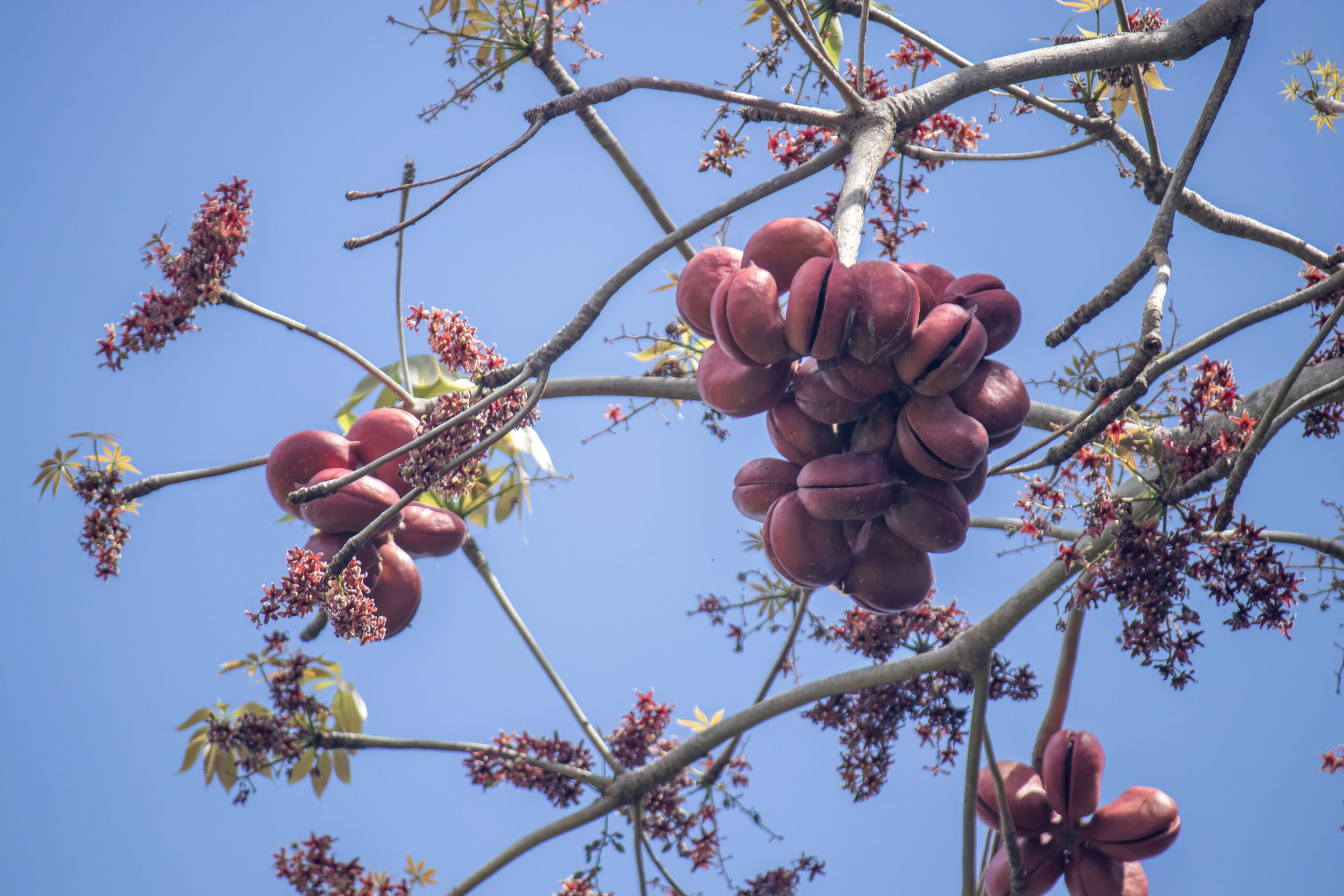
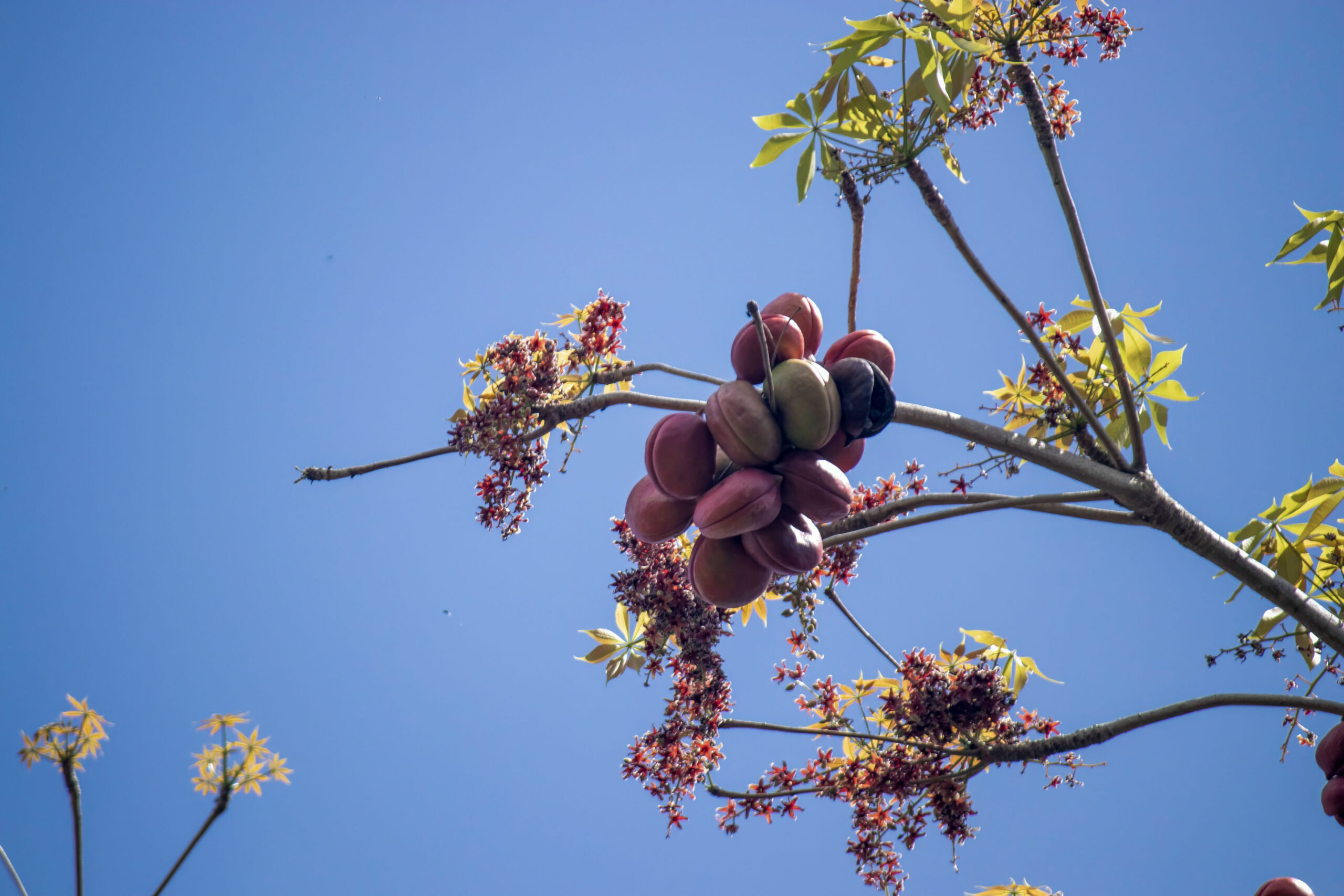
Flowers are small, reddish to purplish, and borne in loose clusters at the branch tips.

  • They are unisexual, and both male and female flowers are found on the same tree.
  • The flowers may emit a strong, unpleasant odor, particularly in the early blooming stages.
  • Flowering begins just before or during leaf flush, usually March to May.

Observation Tips:

  • Track emergence of flower clusters on leafless or newly flushing branches.
  • Note any odor and its correlation with flower maturity.
  • Observe pollinator visits, especially flies and beetles.

3. Fruiting
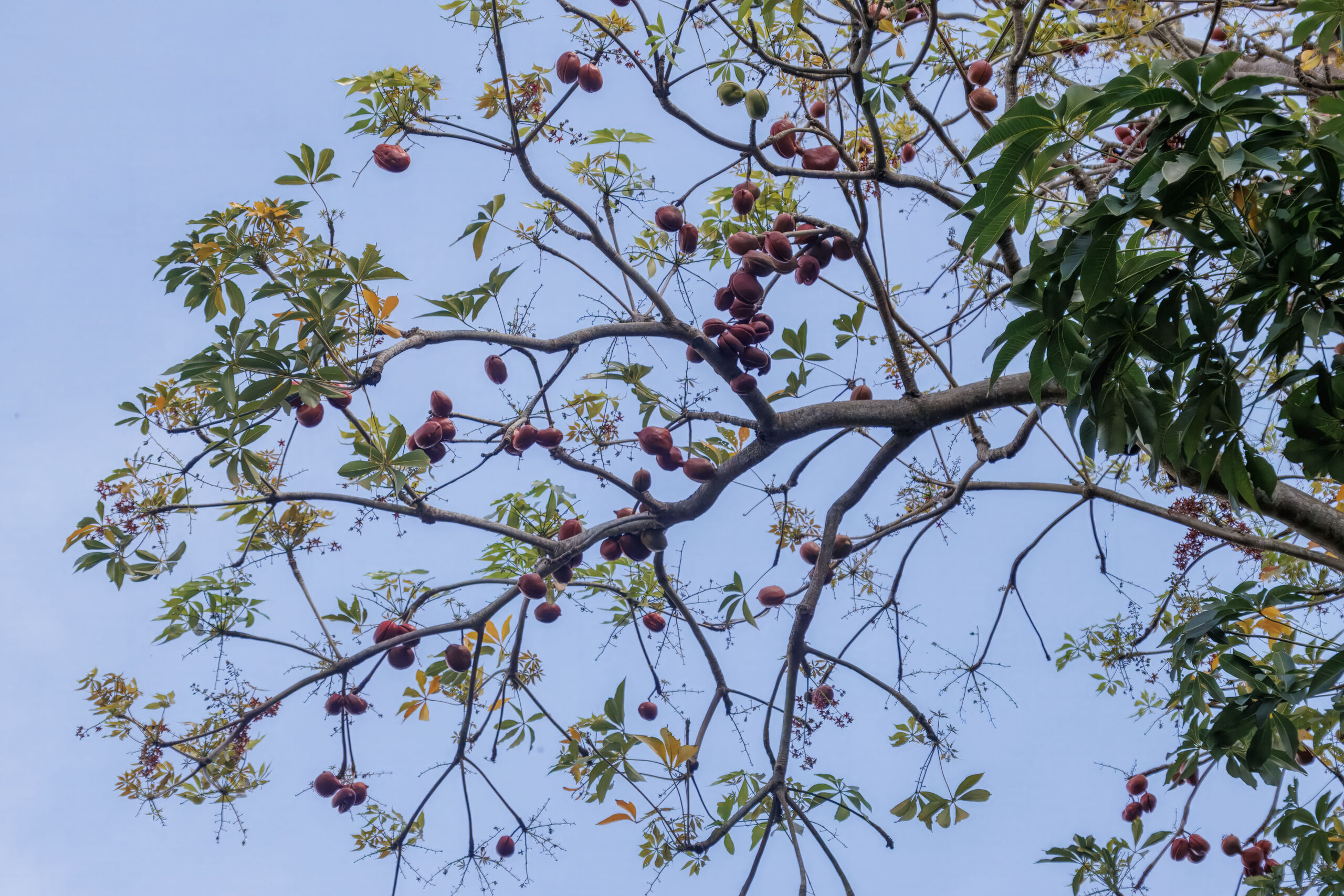
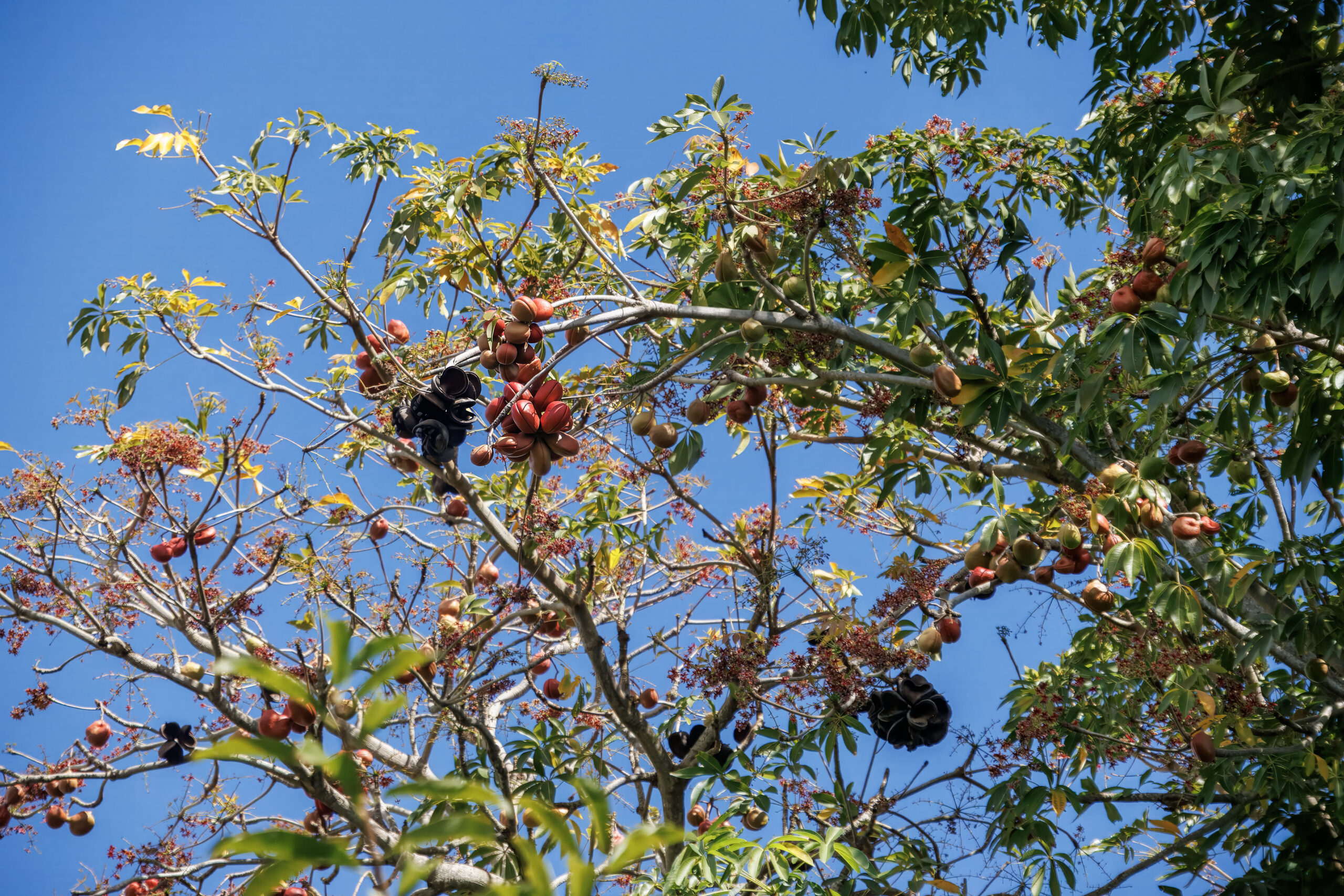
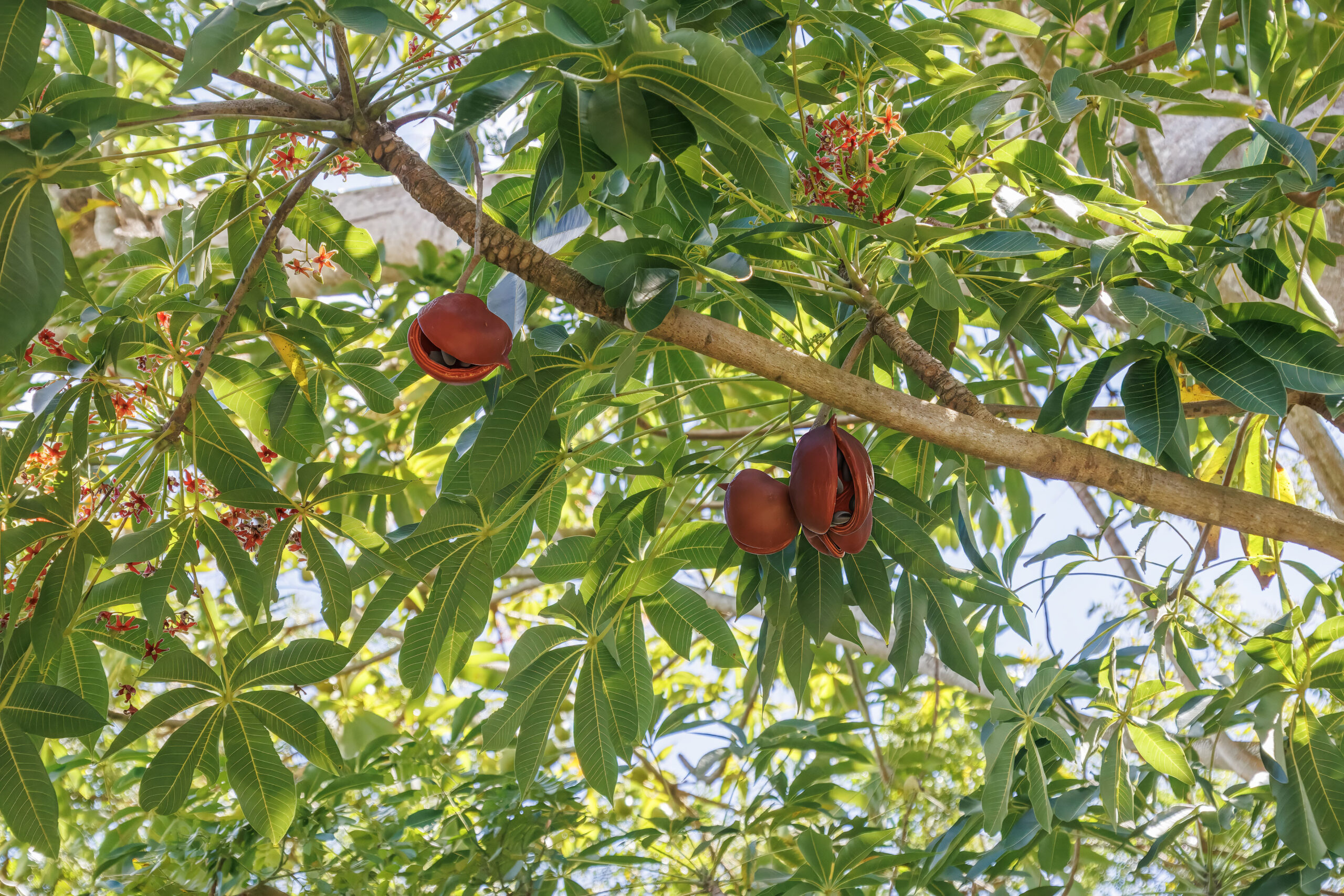
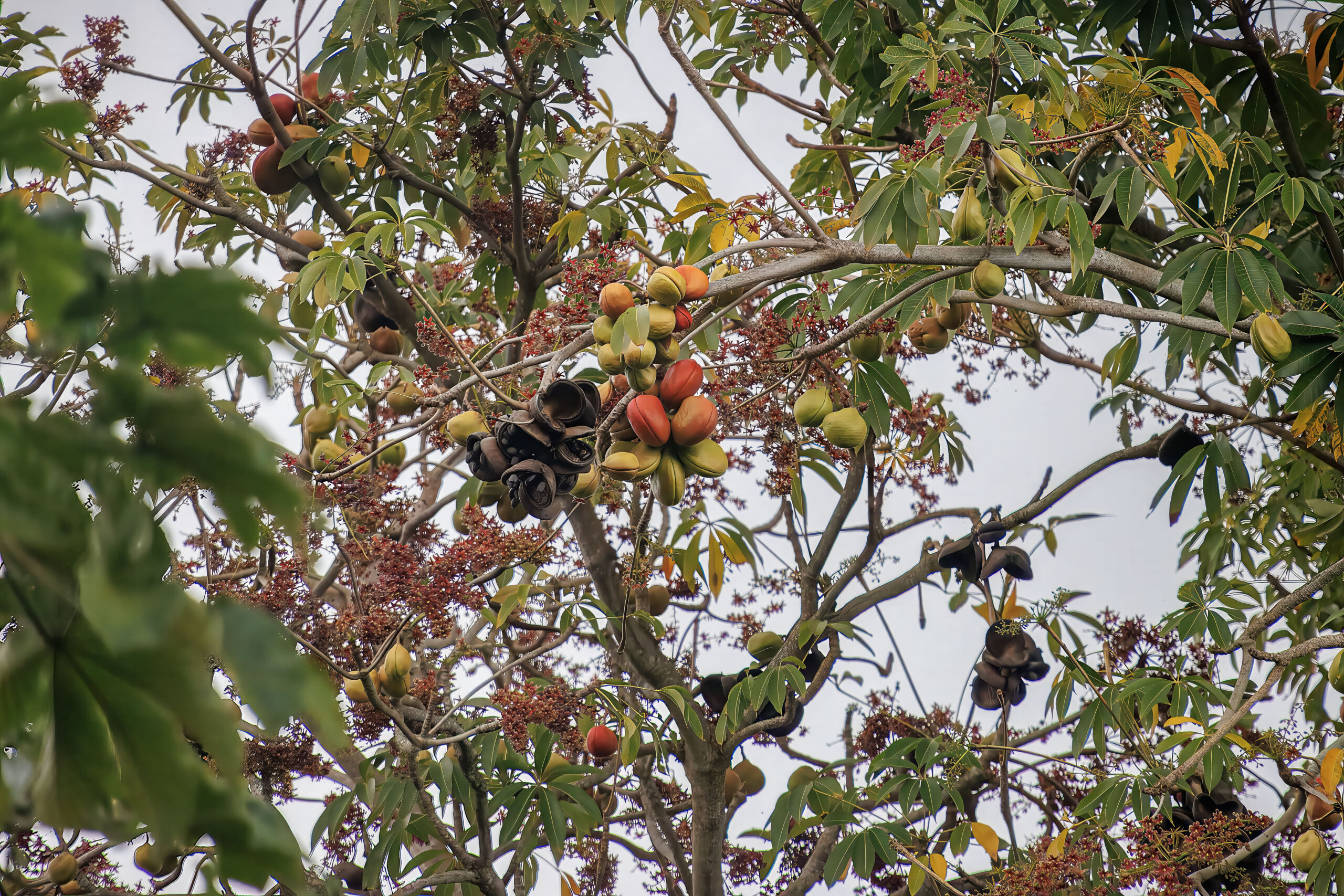
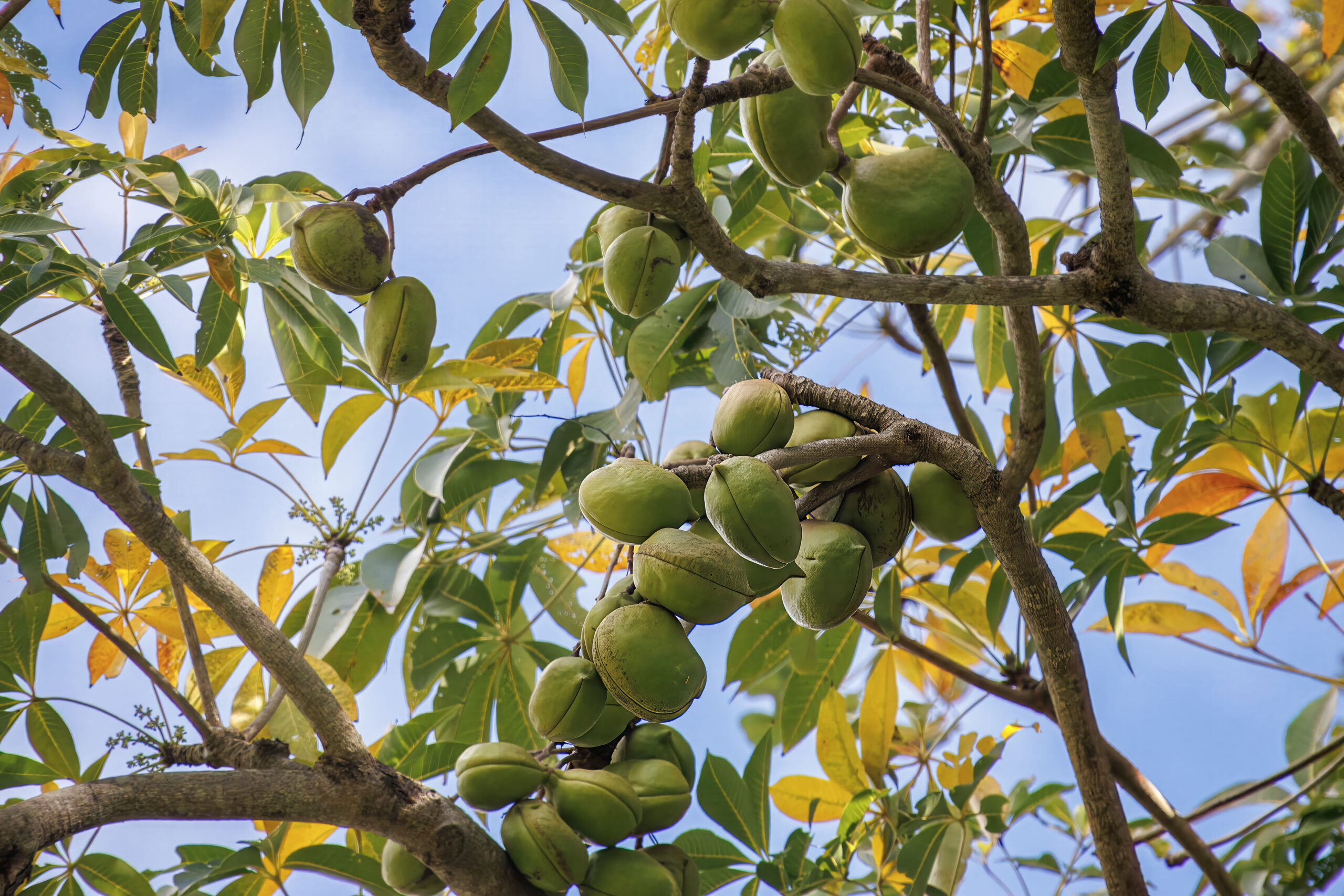
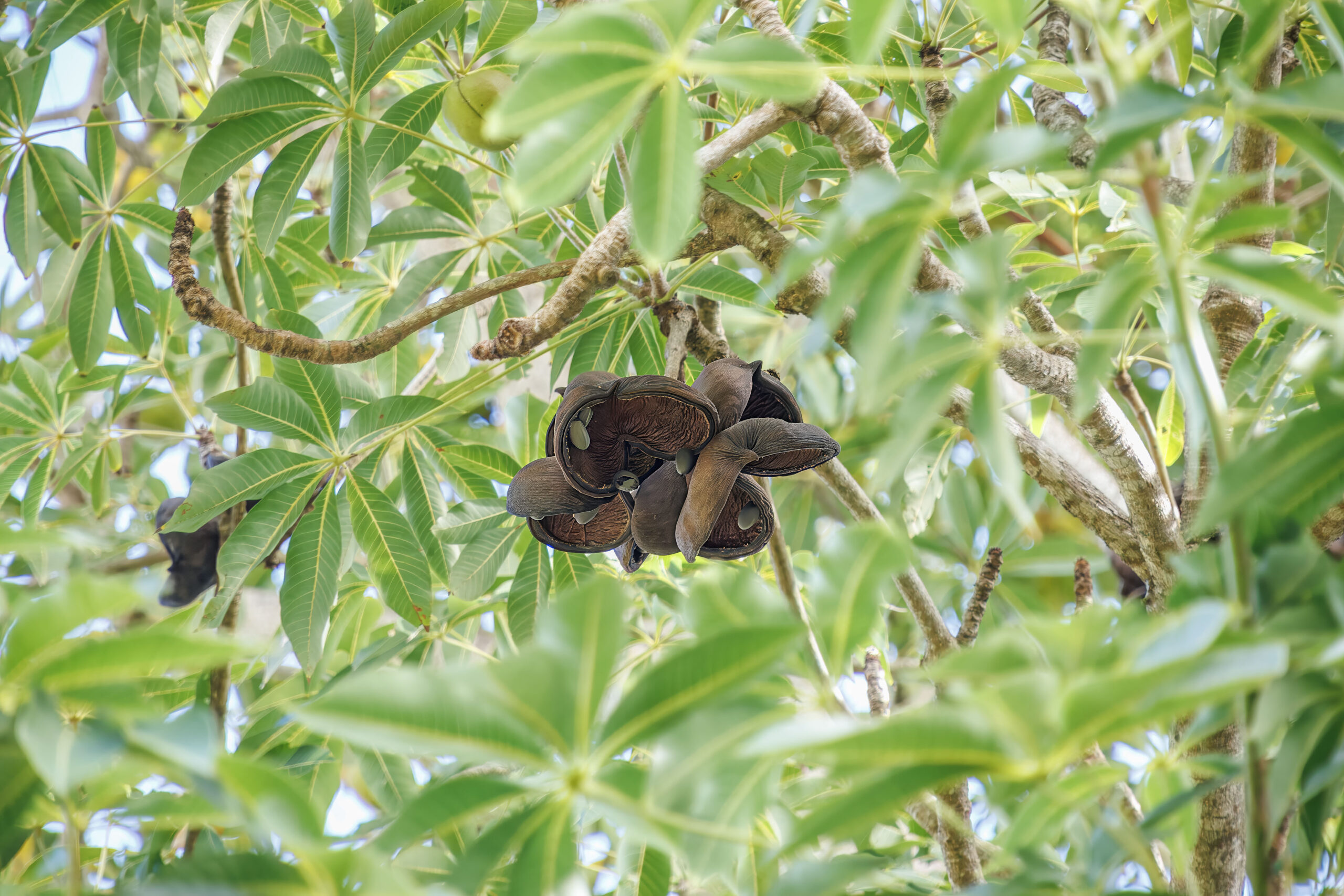
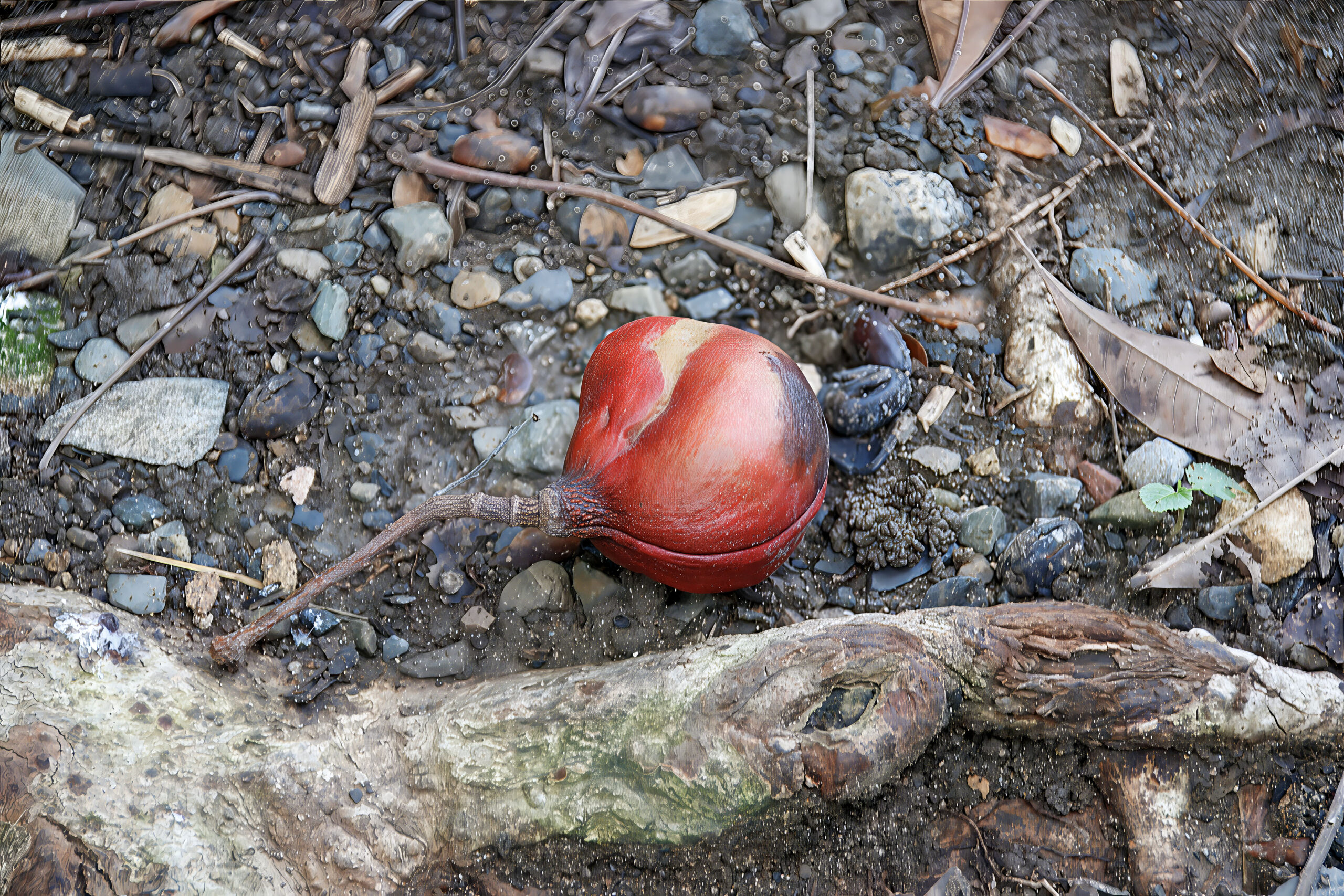
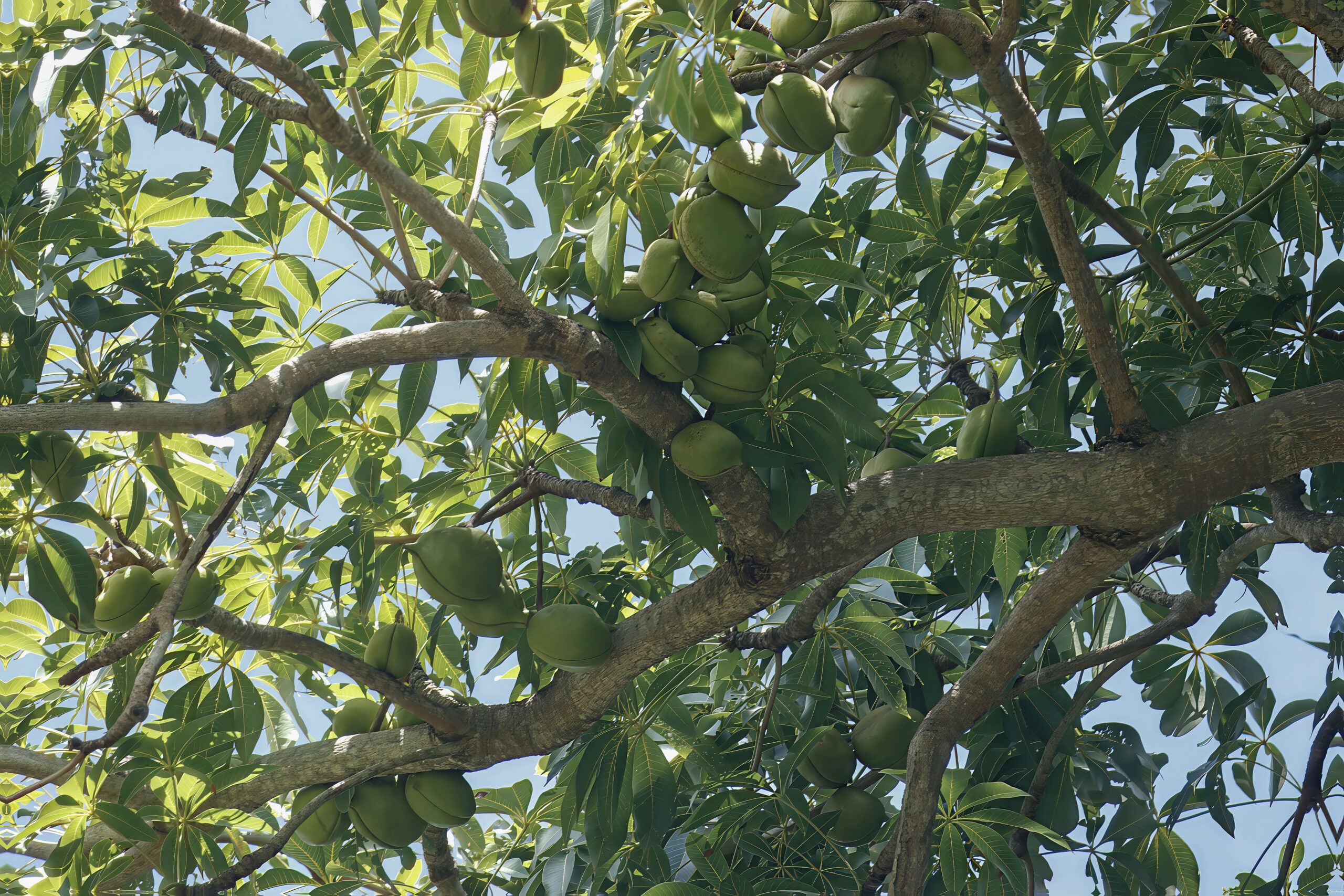
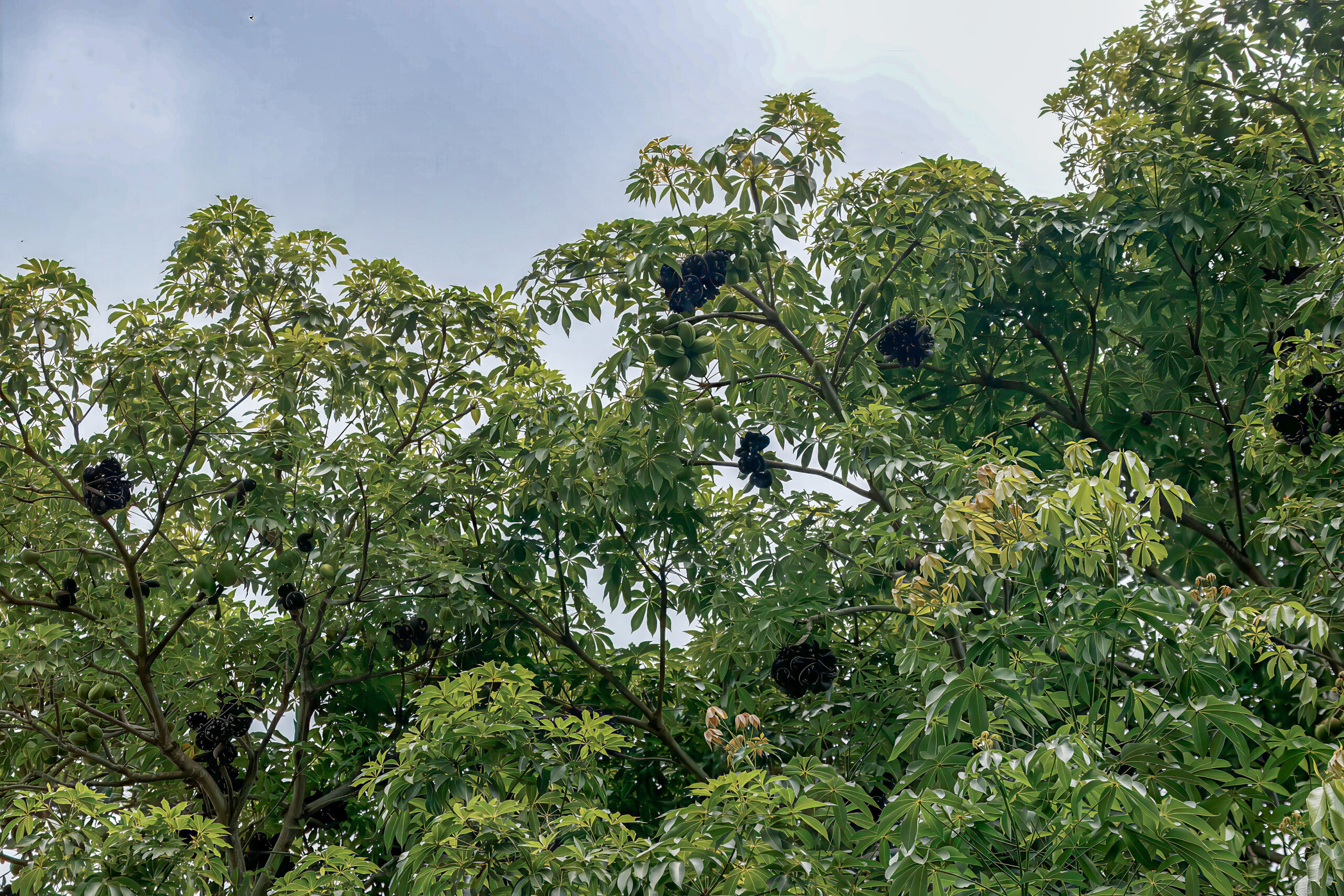
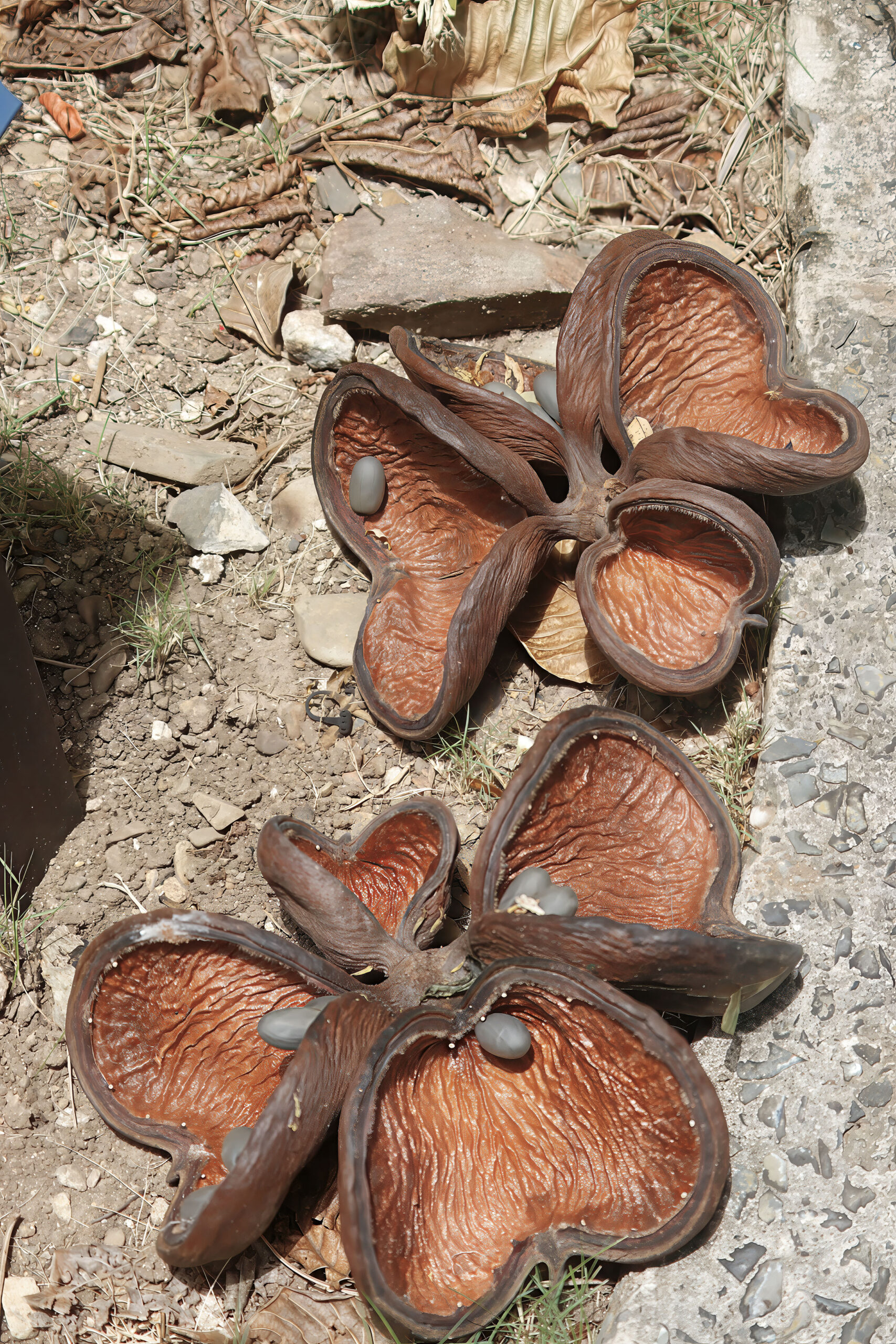
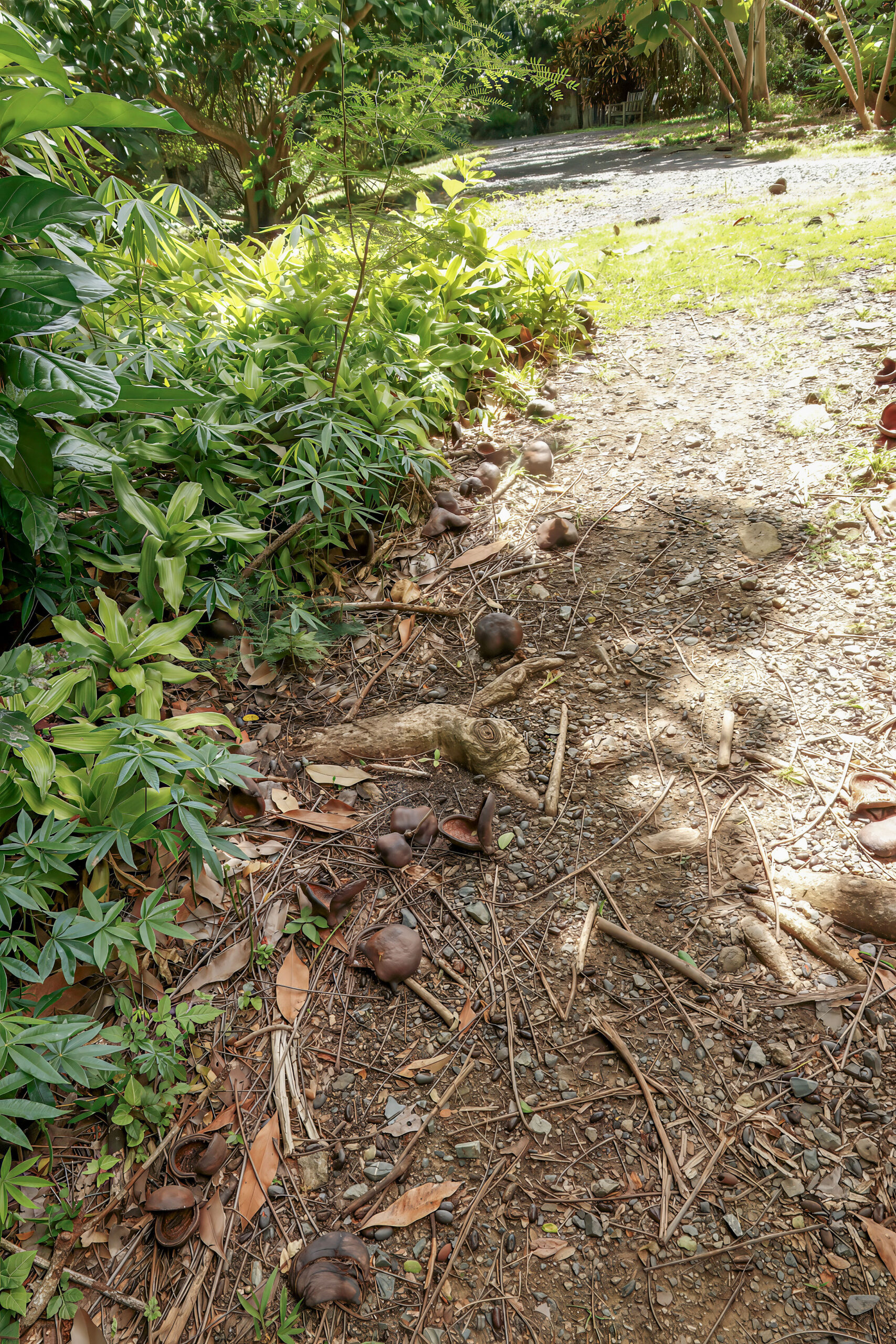
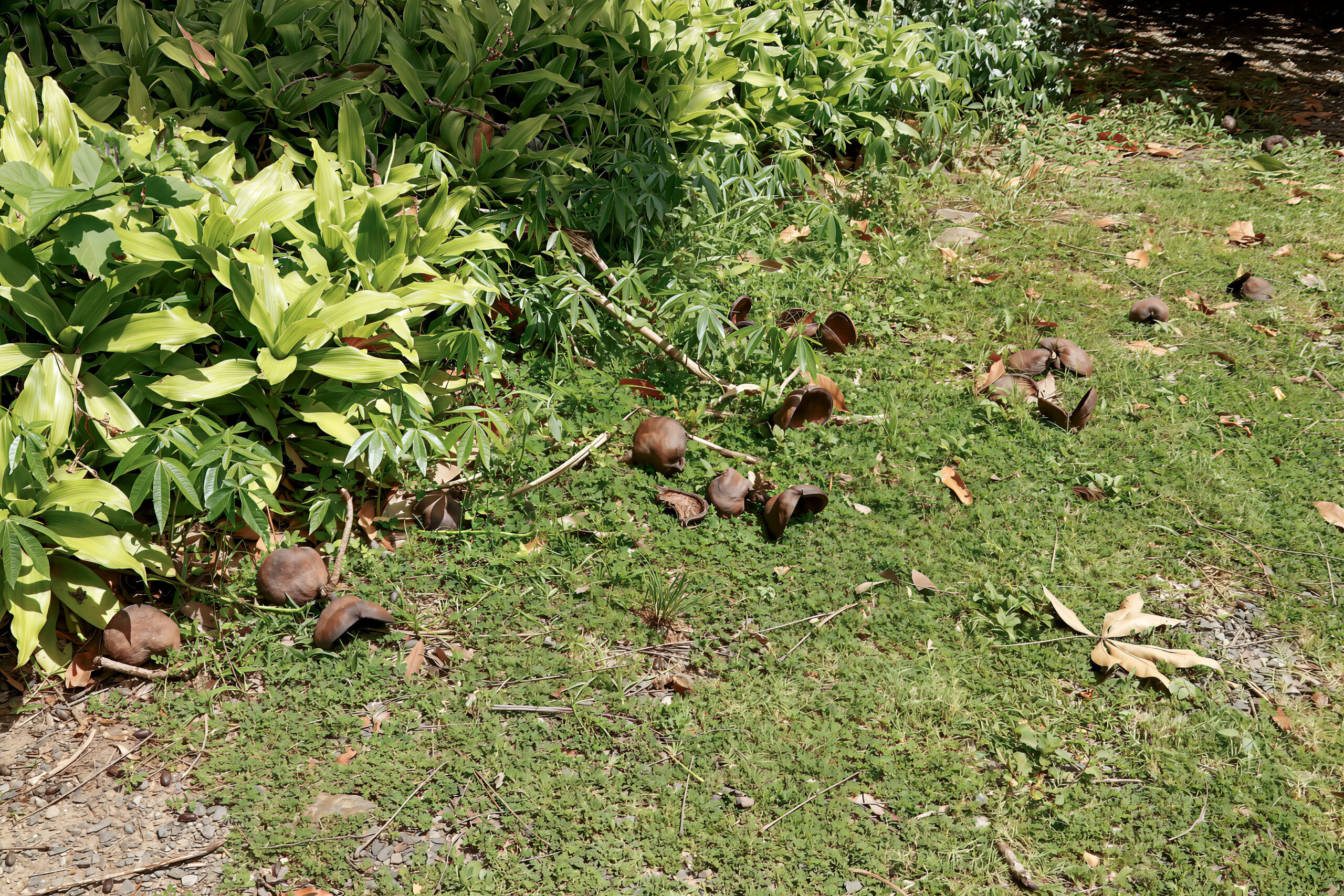
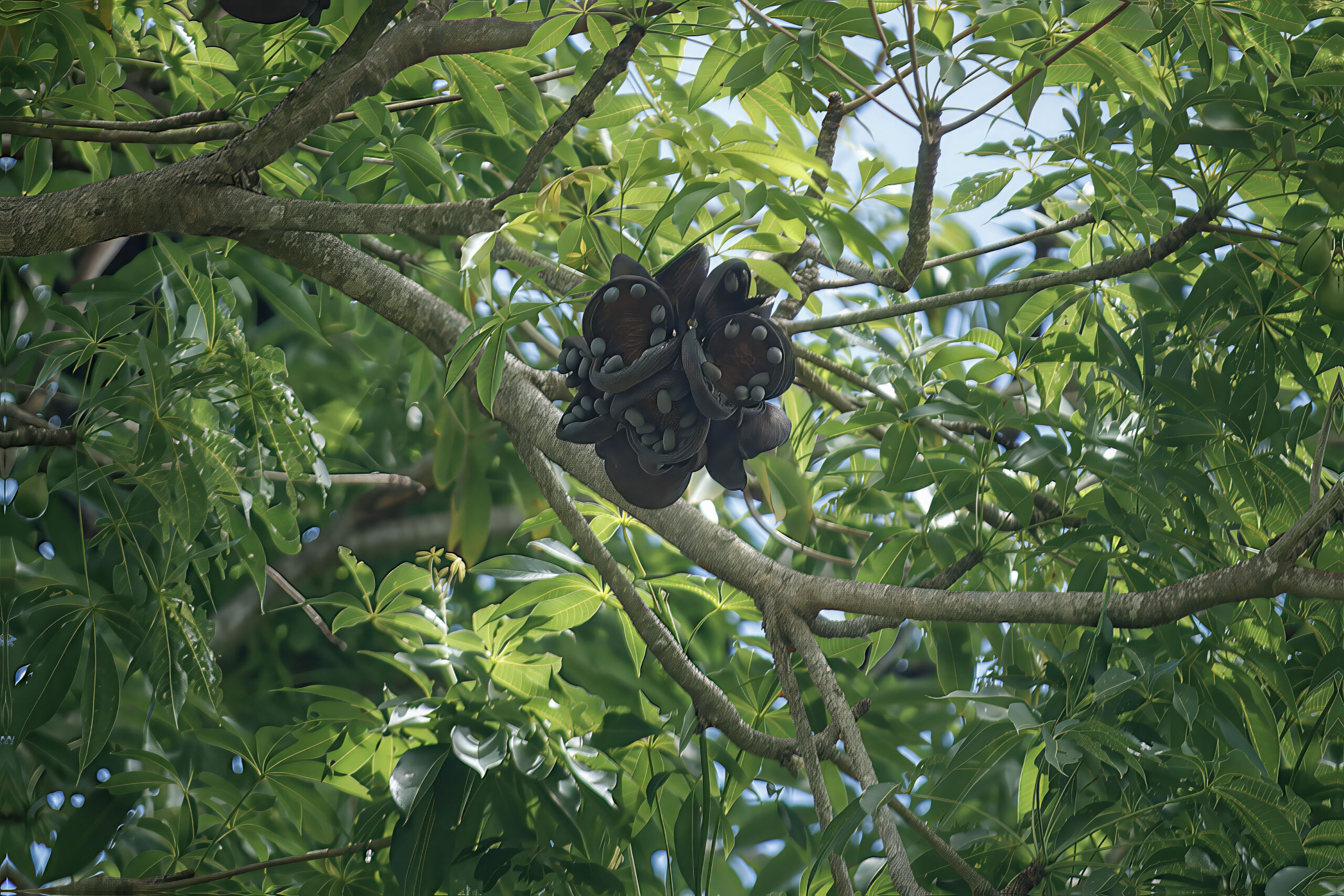
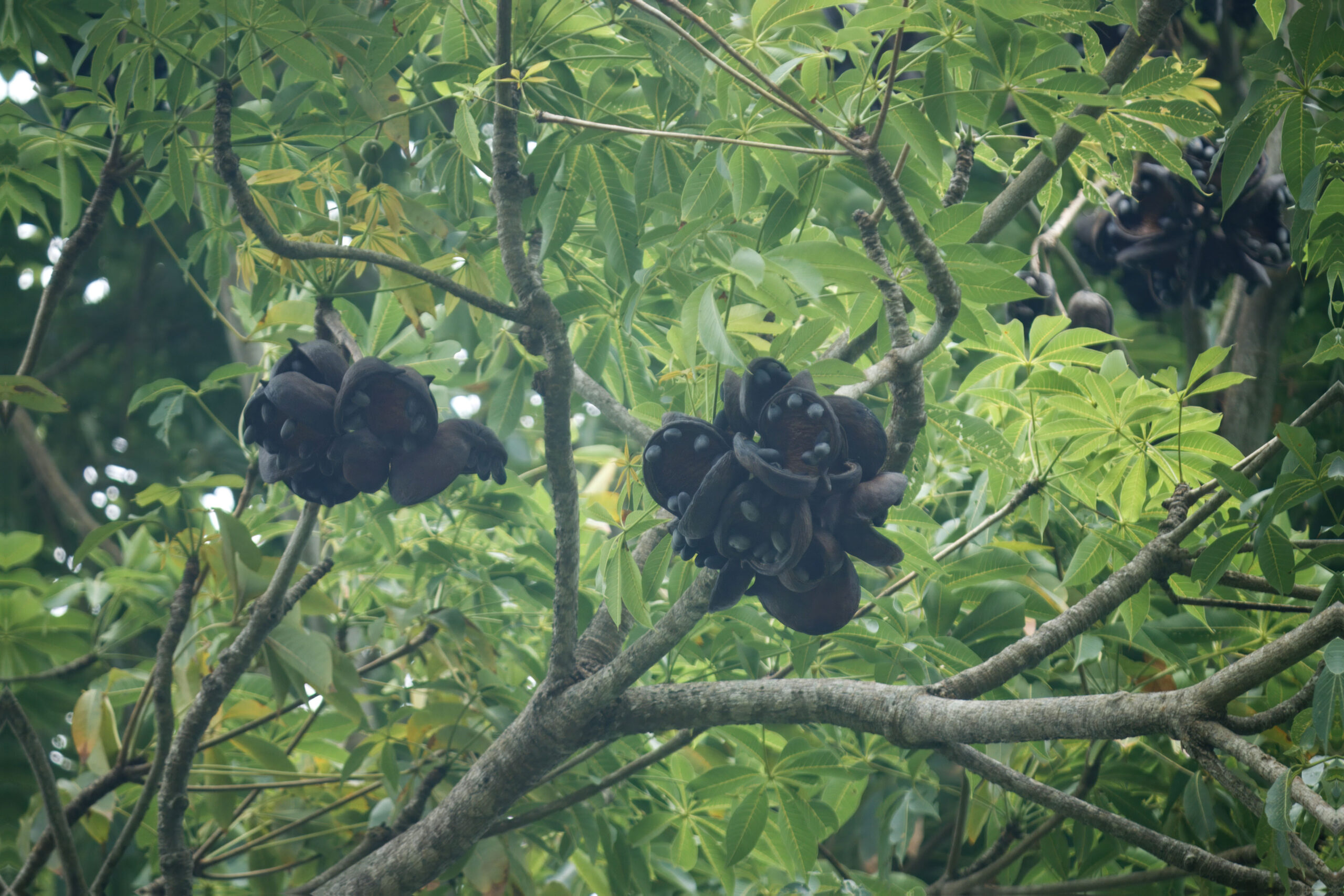
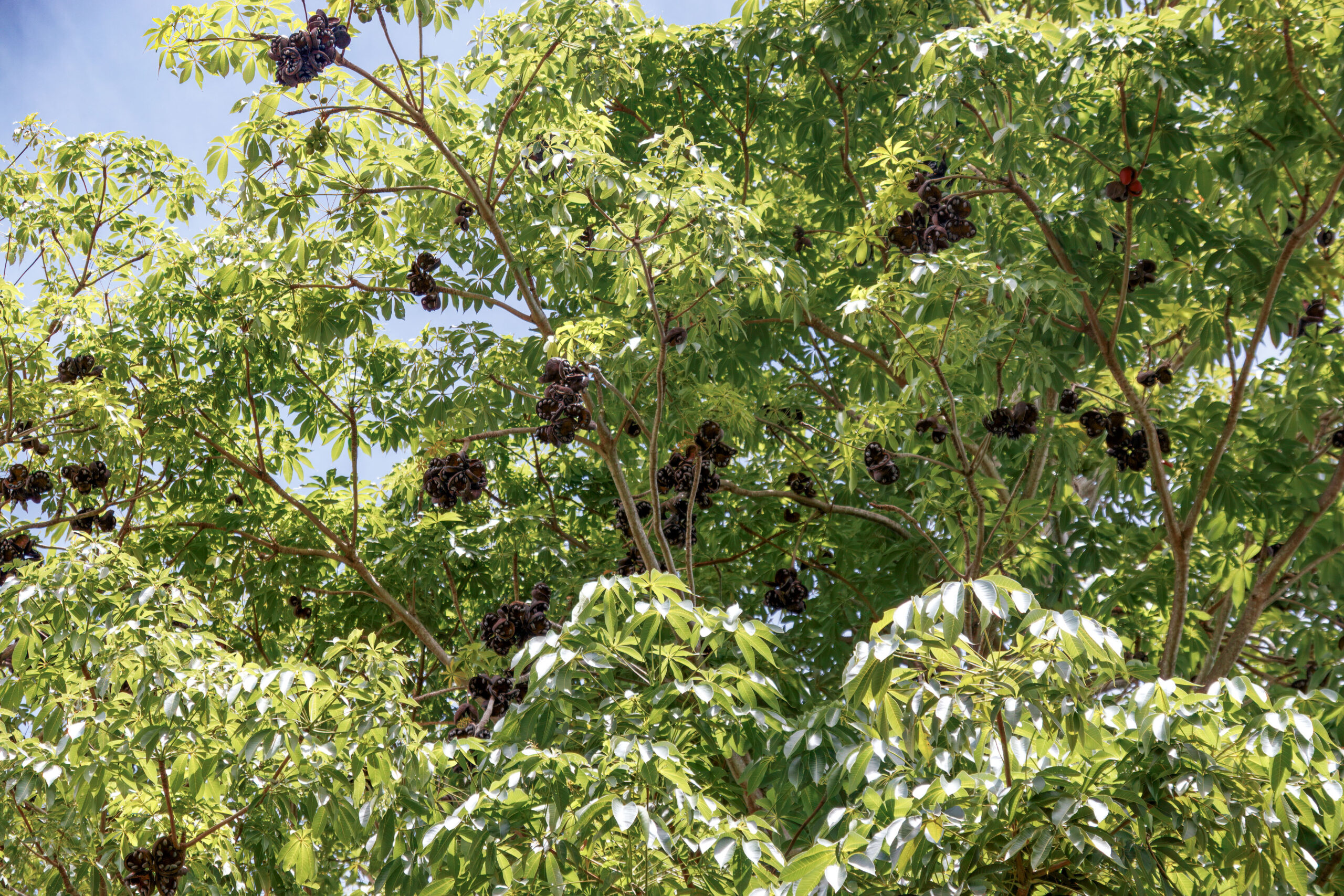
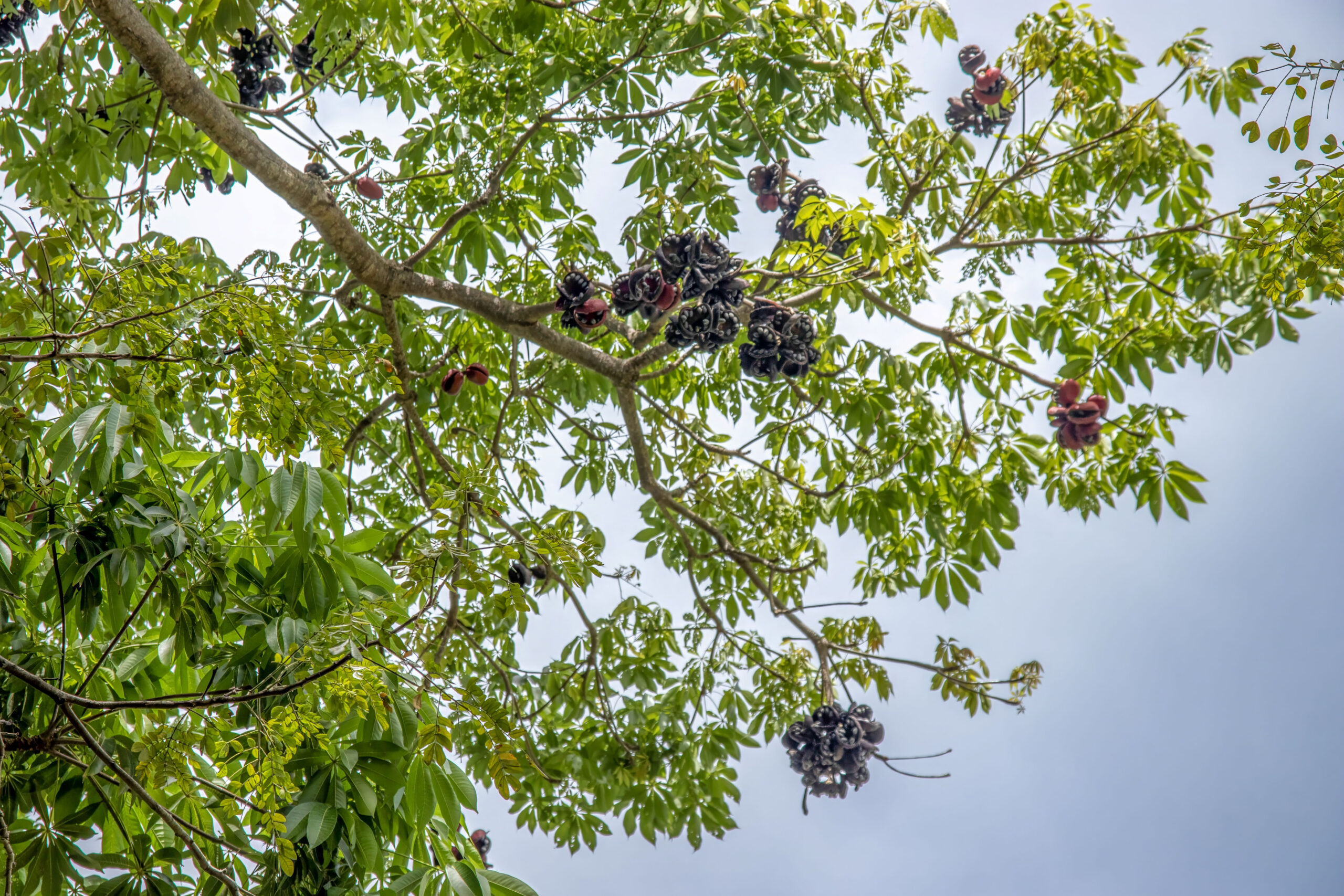
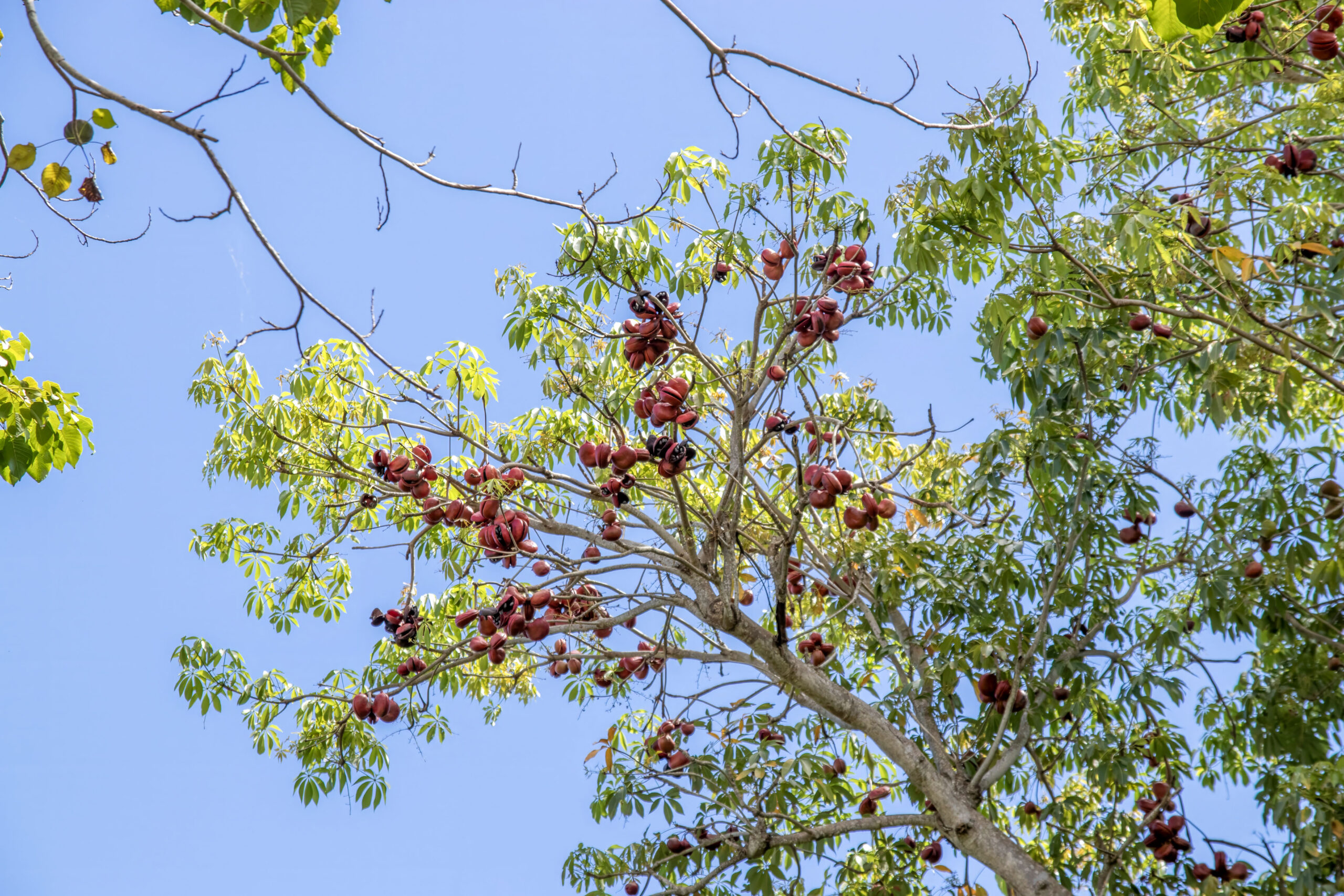
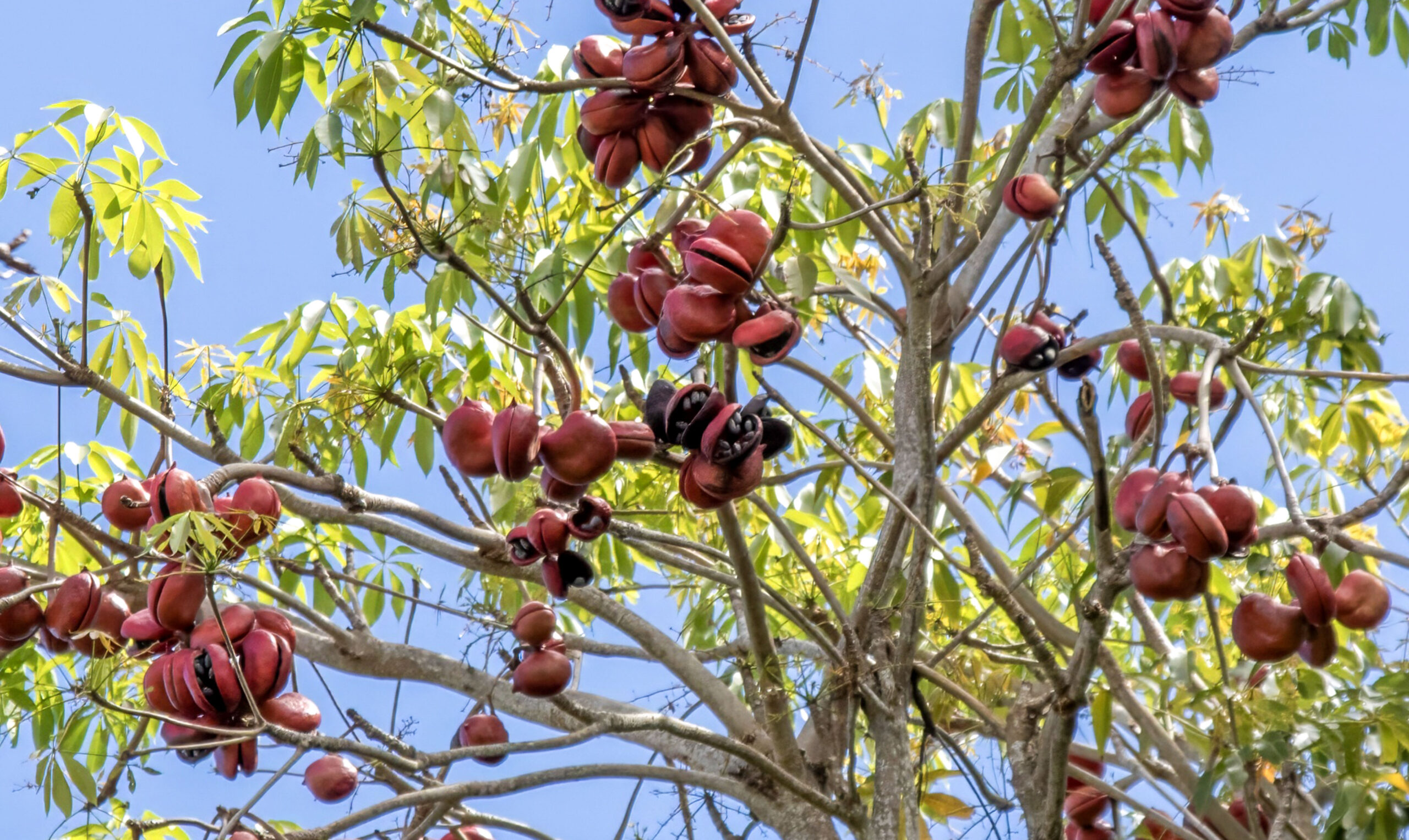
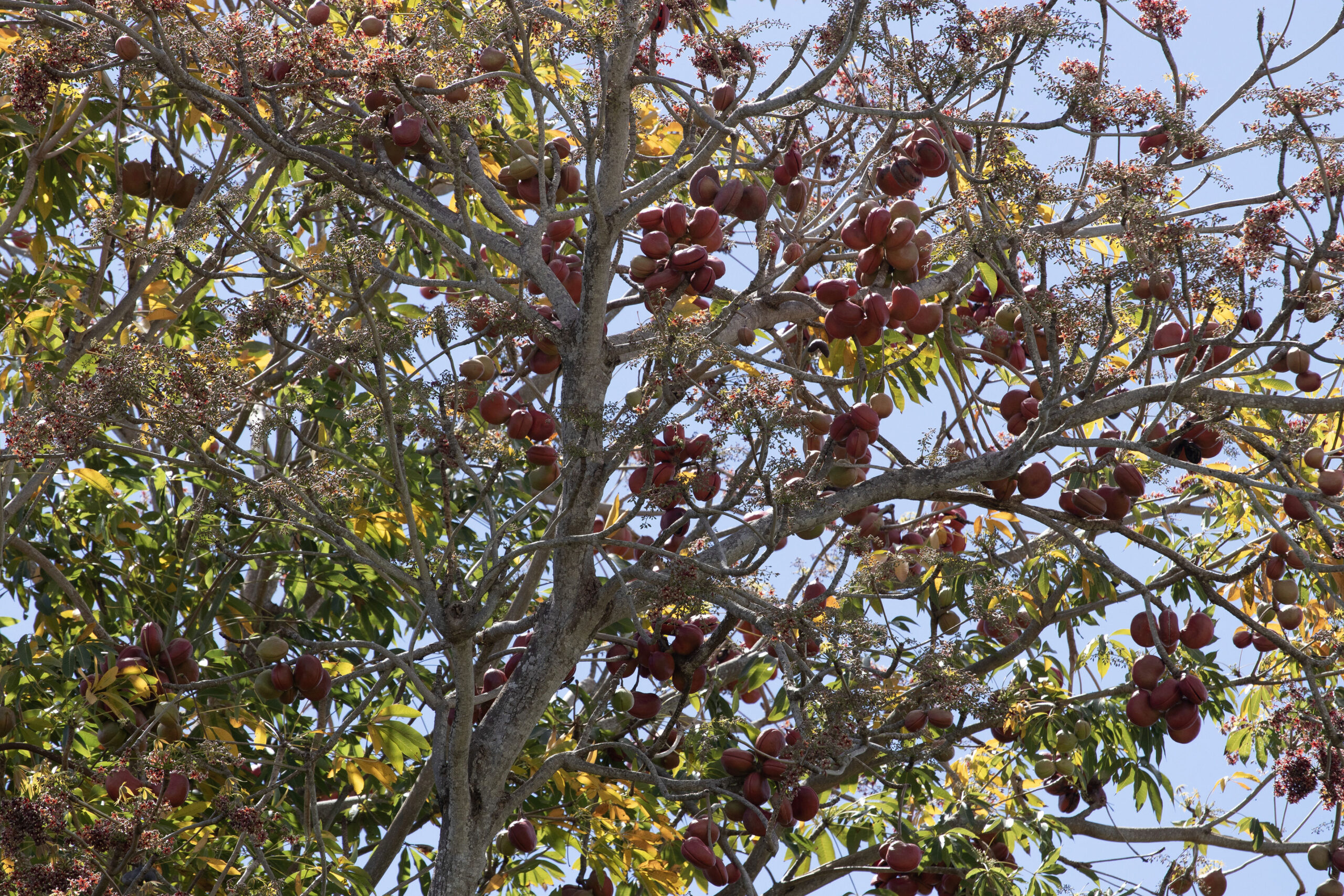
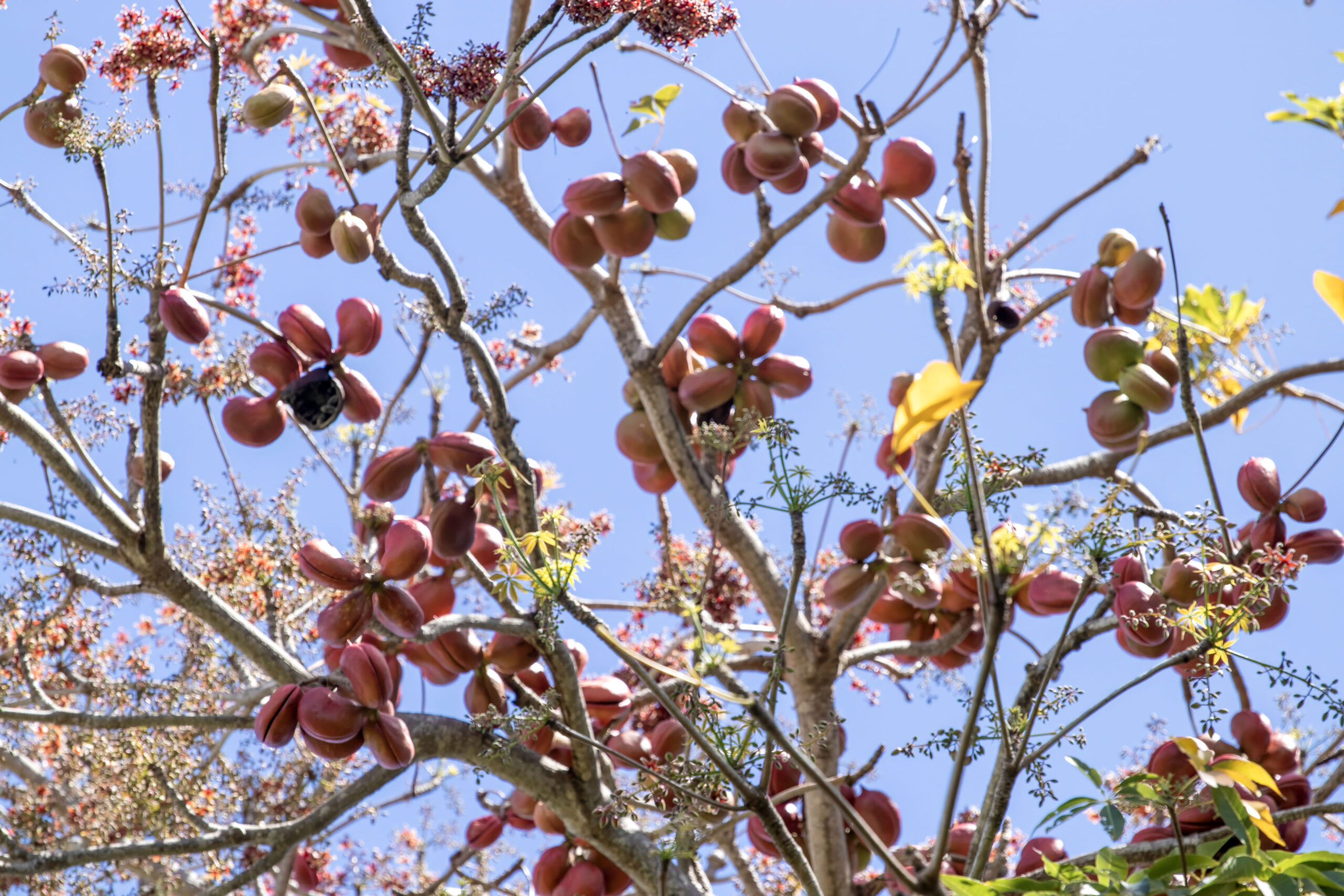
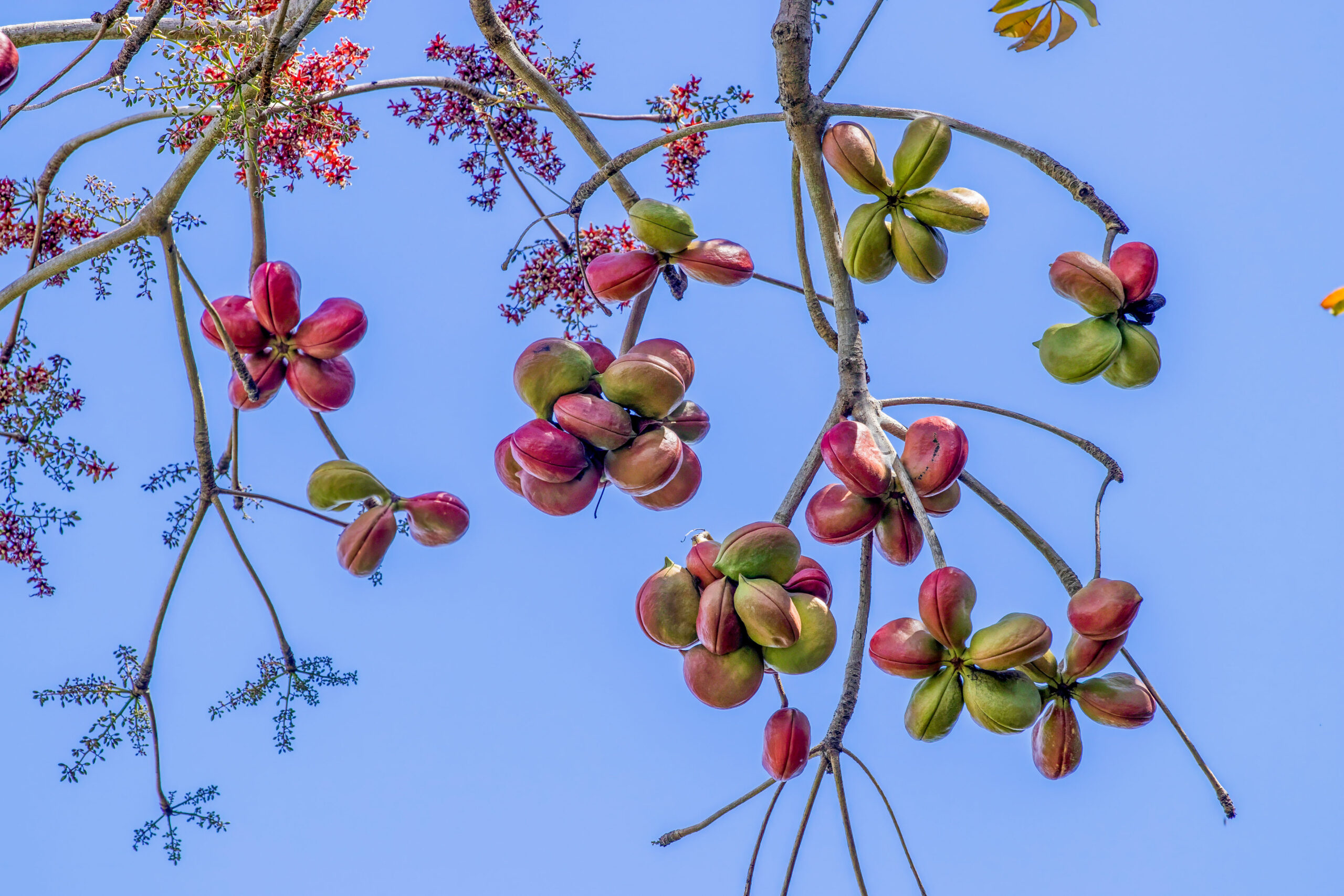
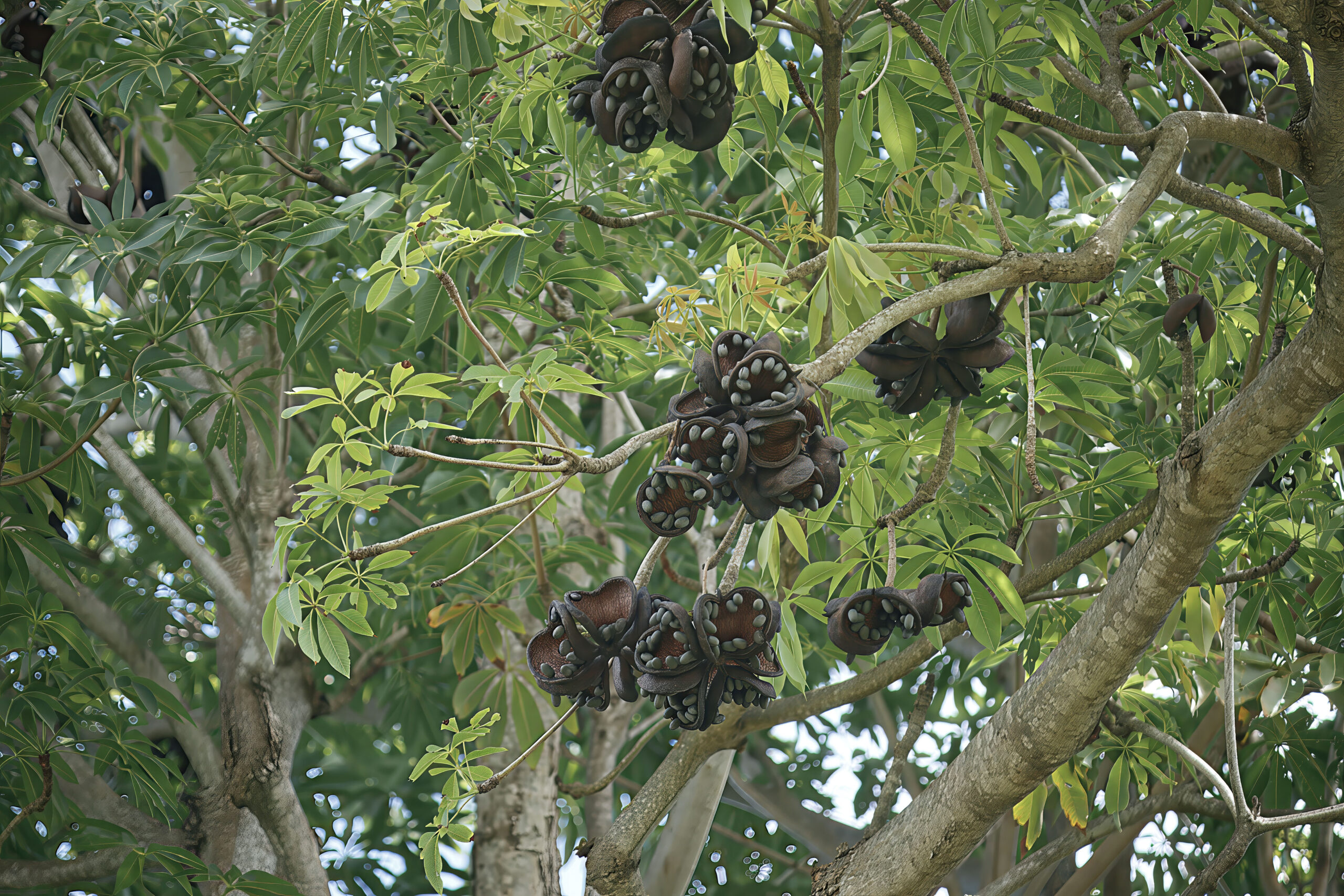
The fruit is a large, woody, capsule, that splits open when mature.

  • Inside each capsule are several smooth, black seeds—these resemble almonds in shape but are inedible raw and potentially toxic.
  • Fruits mature from May to July, and the seeds are sometimes roasted in traditional settings after detoxification.

Observation Tips:

  • Document fruit development, including capsule size, color change, and opening.
  • Note seed exposure and animal interaction—some birds may investigate them, though few consume them.

4. Growth Habit
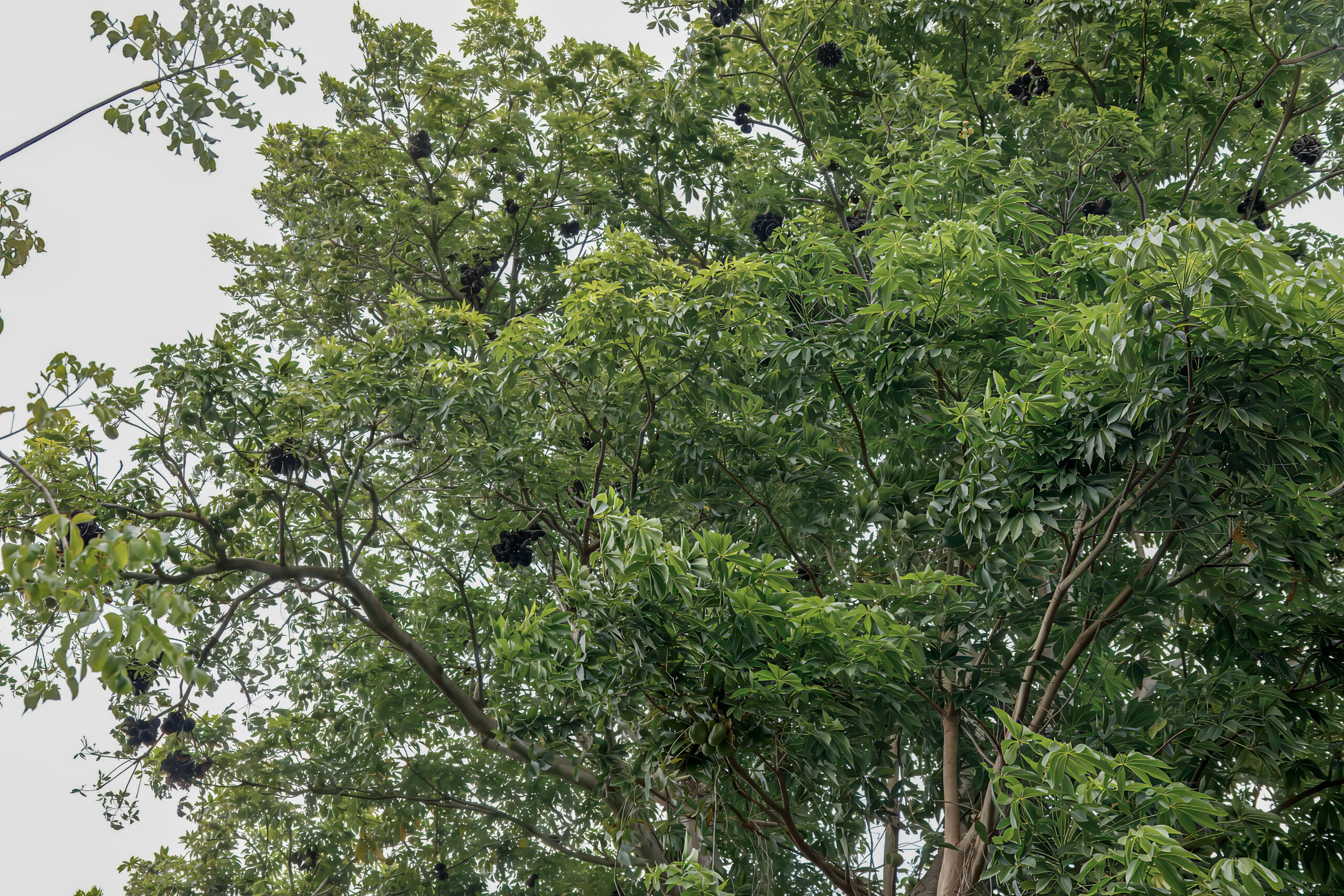
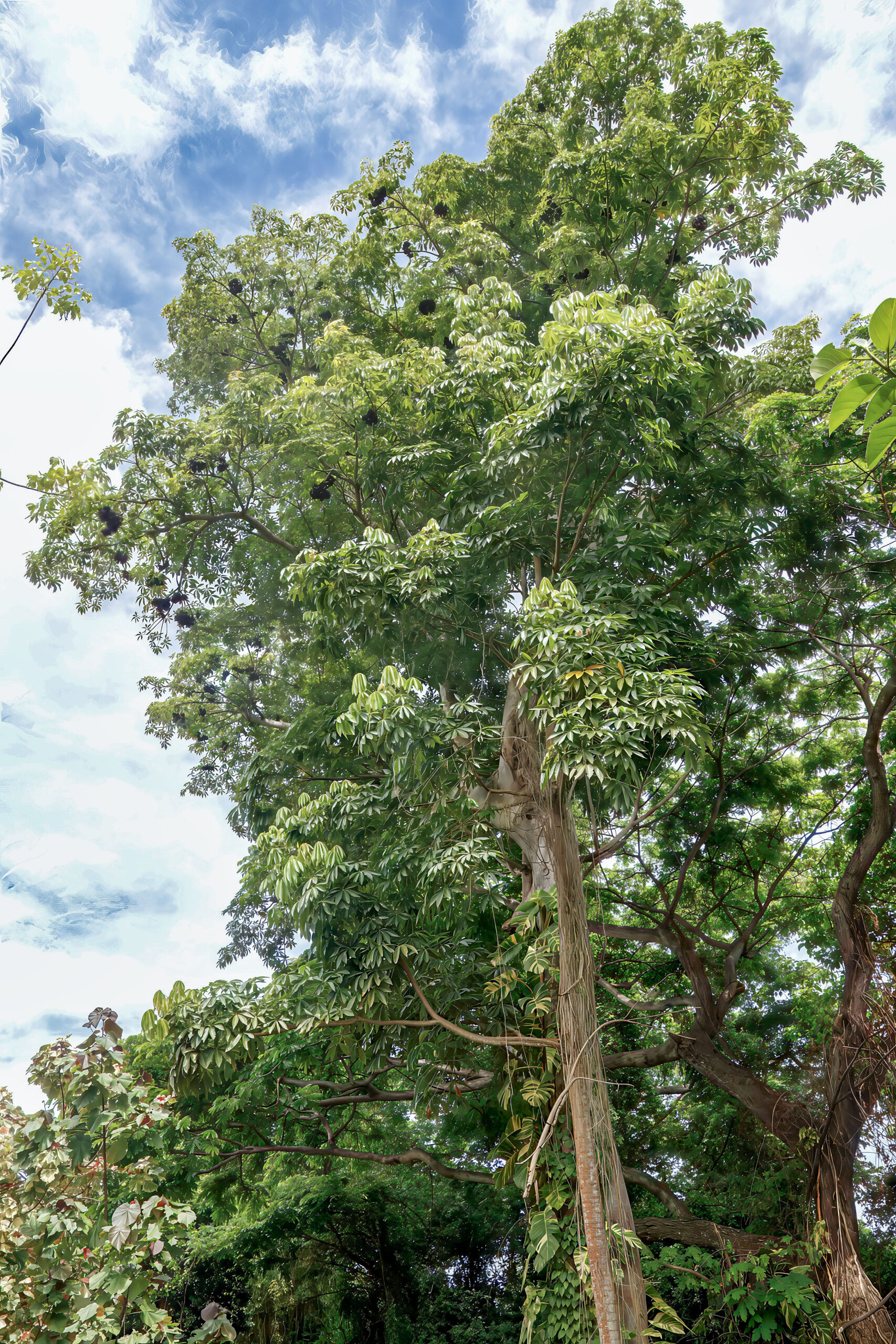
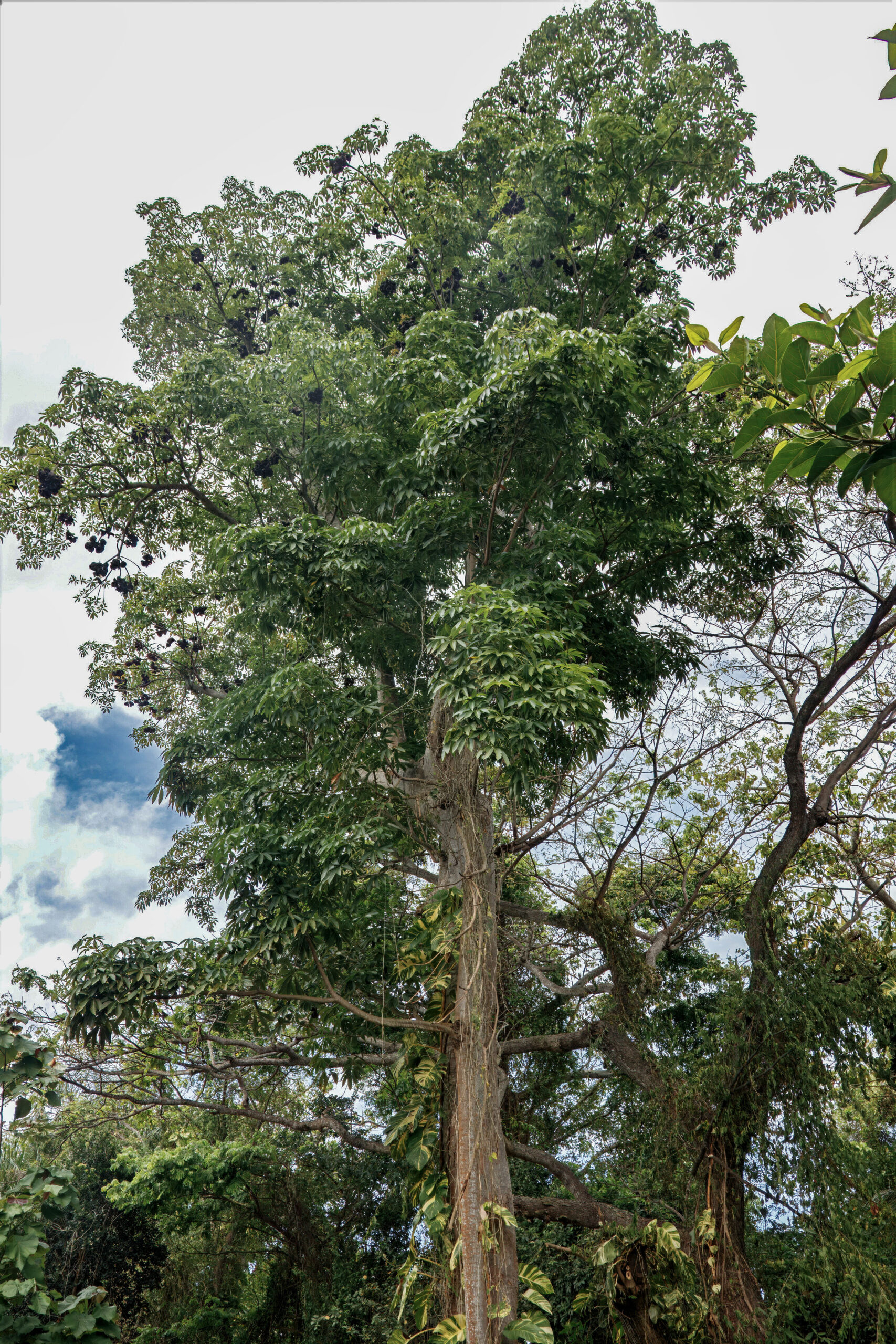
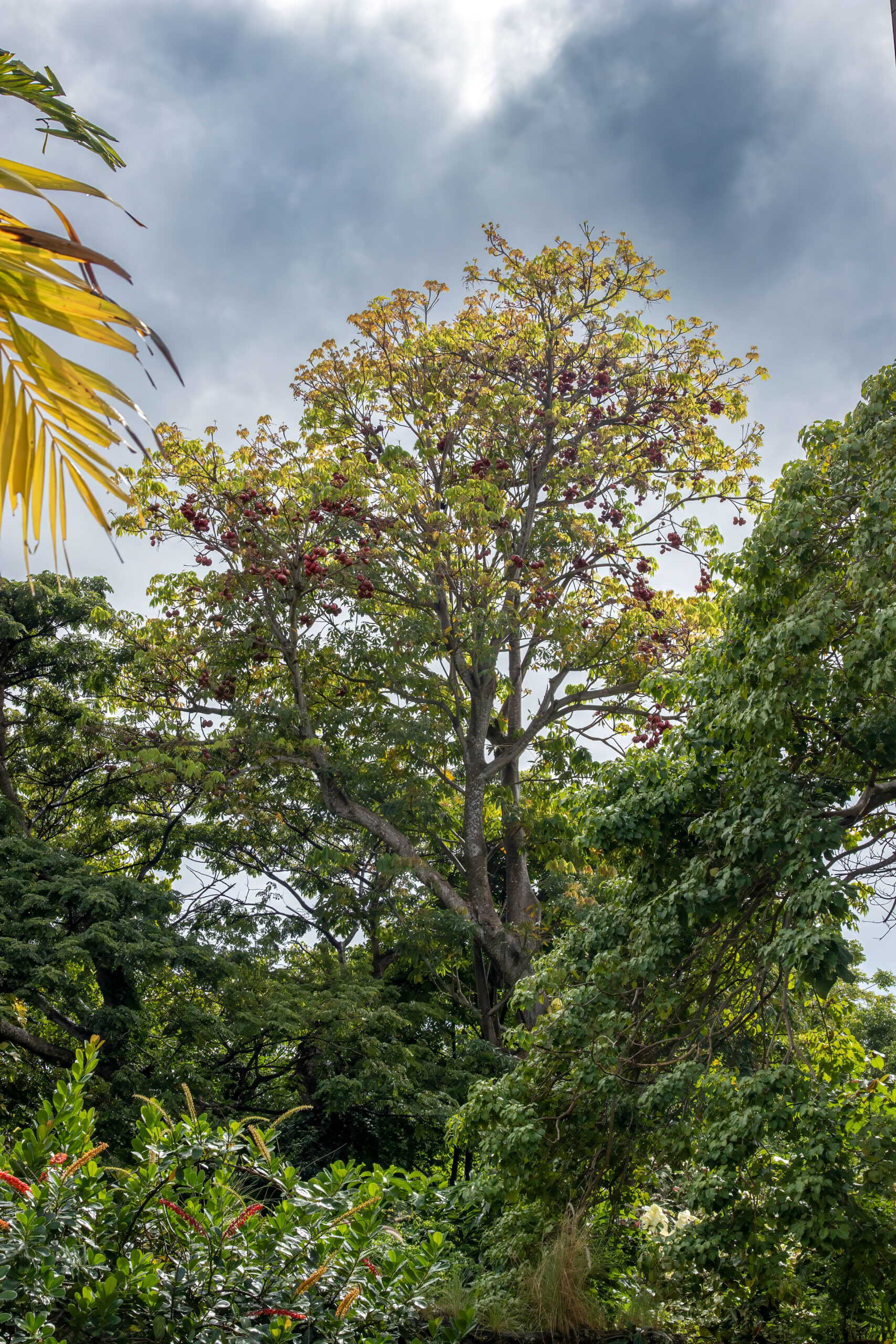
This species grows as a tall, fast-growing deciduous tree, reaching 60–100 feet in favorable conditions.

  • The trunk is often straight and branch-free for many feet, topped by a rounded to spreading canopy.
  • Commonly found in dry coastal forests or planted as an ornamental or shade tree in tropical regions.

5. Seasonal Pattern (St. Croix)

  • Jan–Mar: Complete or partial leaf drop
  • Mar–May: Flowering and new leaf emergence
  • May–Jul: Fruit maturation and seed exposure
  • Aug–Dec: Canopy fully leafed; rest phase or occasional light flowering
Scroll to Top