Swartz’s Pigeonplum
Scientific name: Coccoloba swartzii
POWO Status: Tree
IUCN Red List threat level: Least Concern
GPS Location: 17° 42′ 58.76 N, 64° 49′ 46.39 W


Medicinal Uses
Coccoloba swartzii, known as Bois rouge or Tie-tongue, is not widely recognized for medicinal uses, with sources indicating it offers no known medicinal benefits, unlike its relative Coccoloba uvifera (Sea Grape) which has traditional uses for skin issues, diarrhea, and asthma; C. swartzii‘s primary value lies in its hard, durable wood for construction and fence posts.
Observations:
Phenological Markers – Schwartz’s Pigeonplum (Coccoloba swartzii)
1. Leaf Behavior
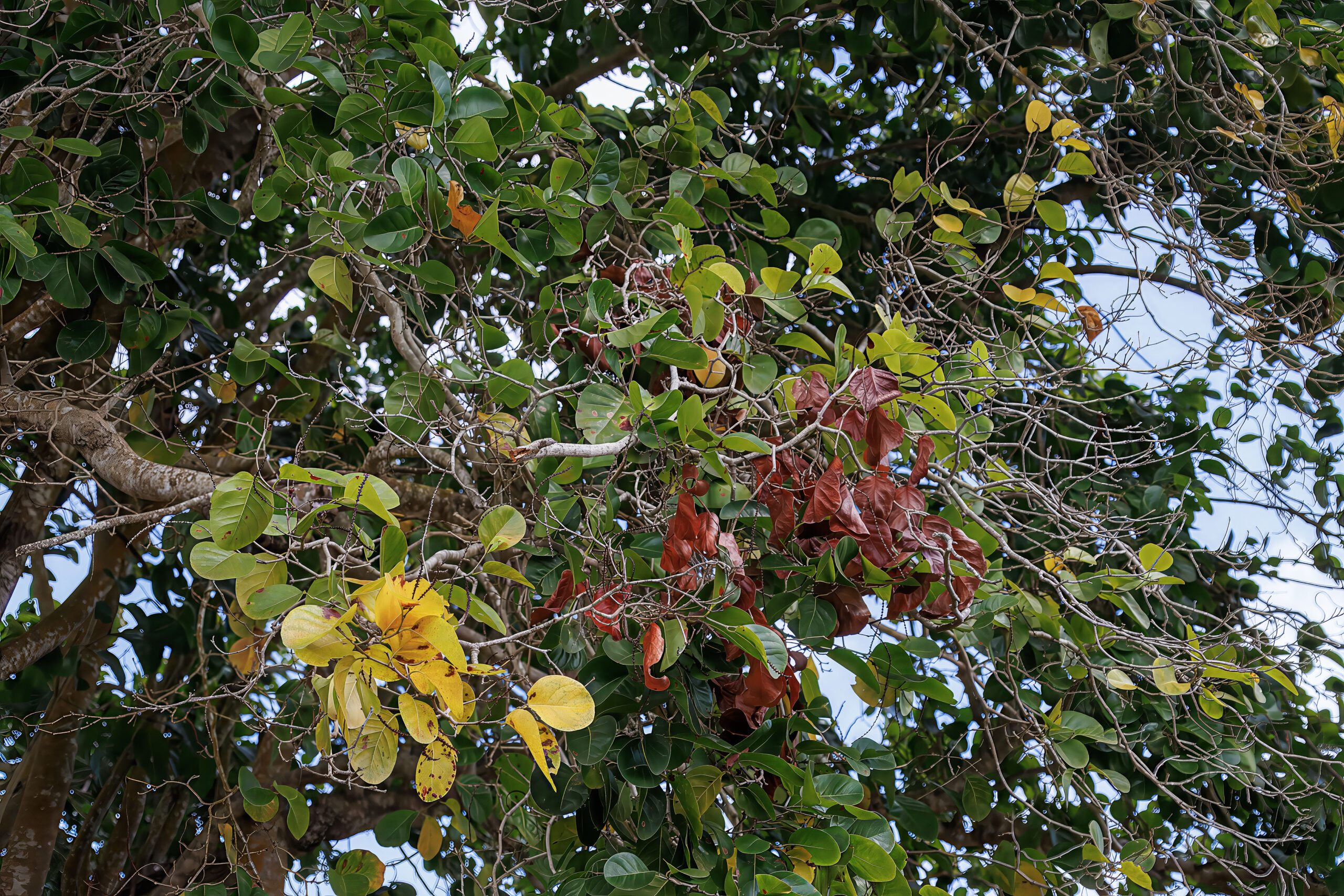
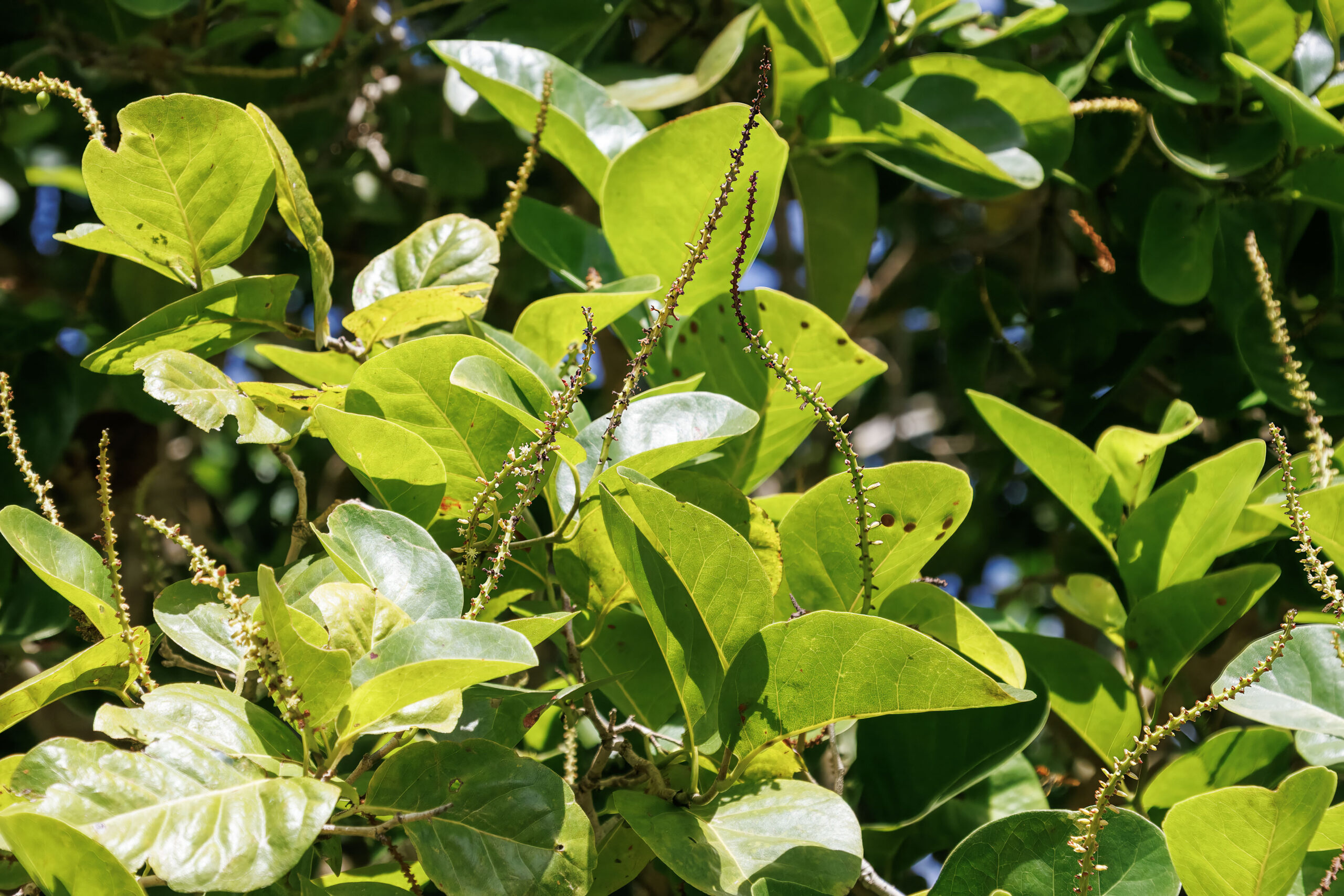
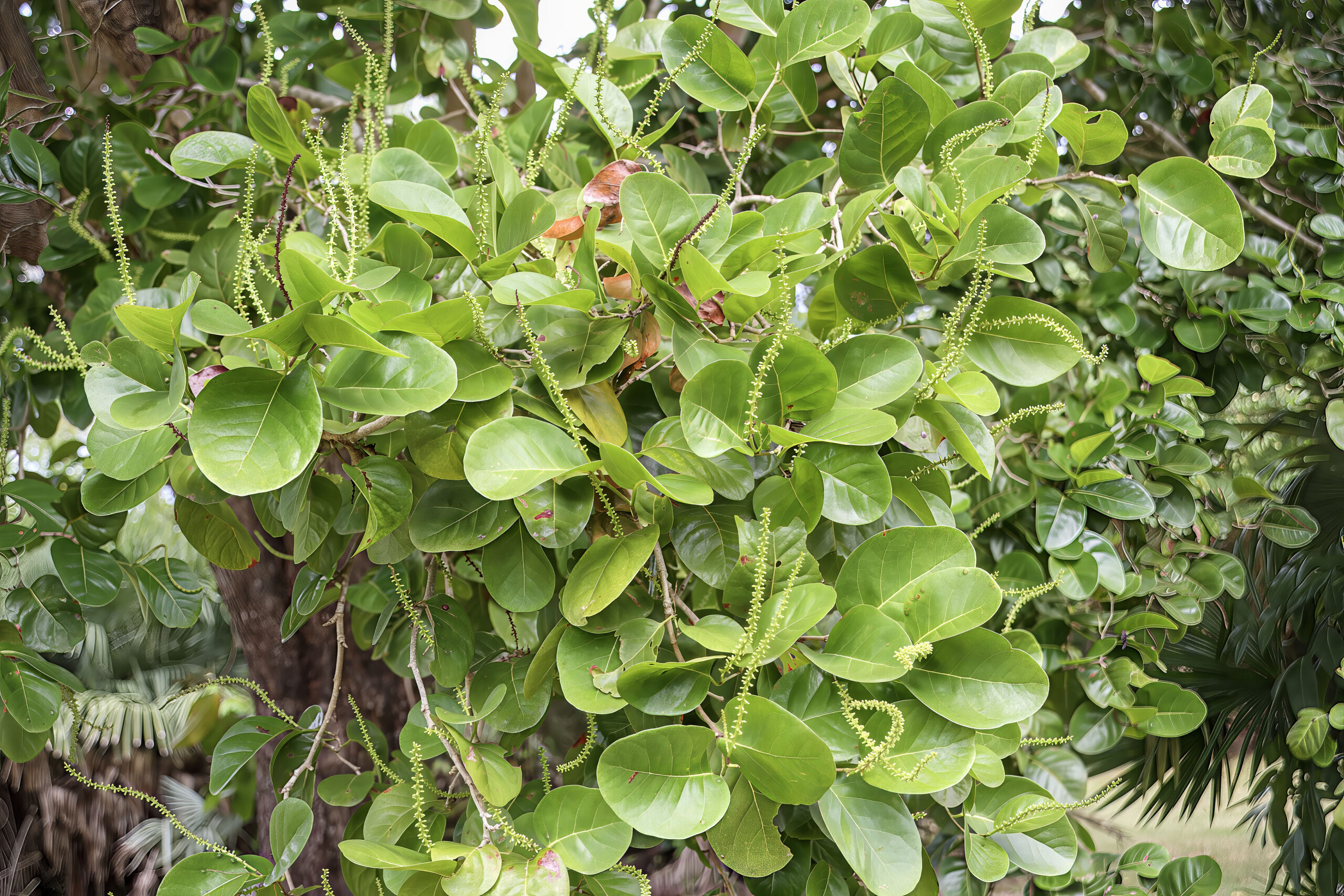
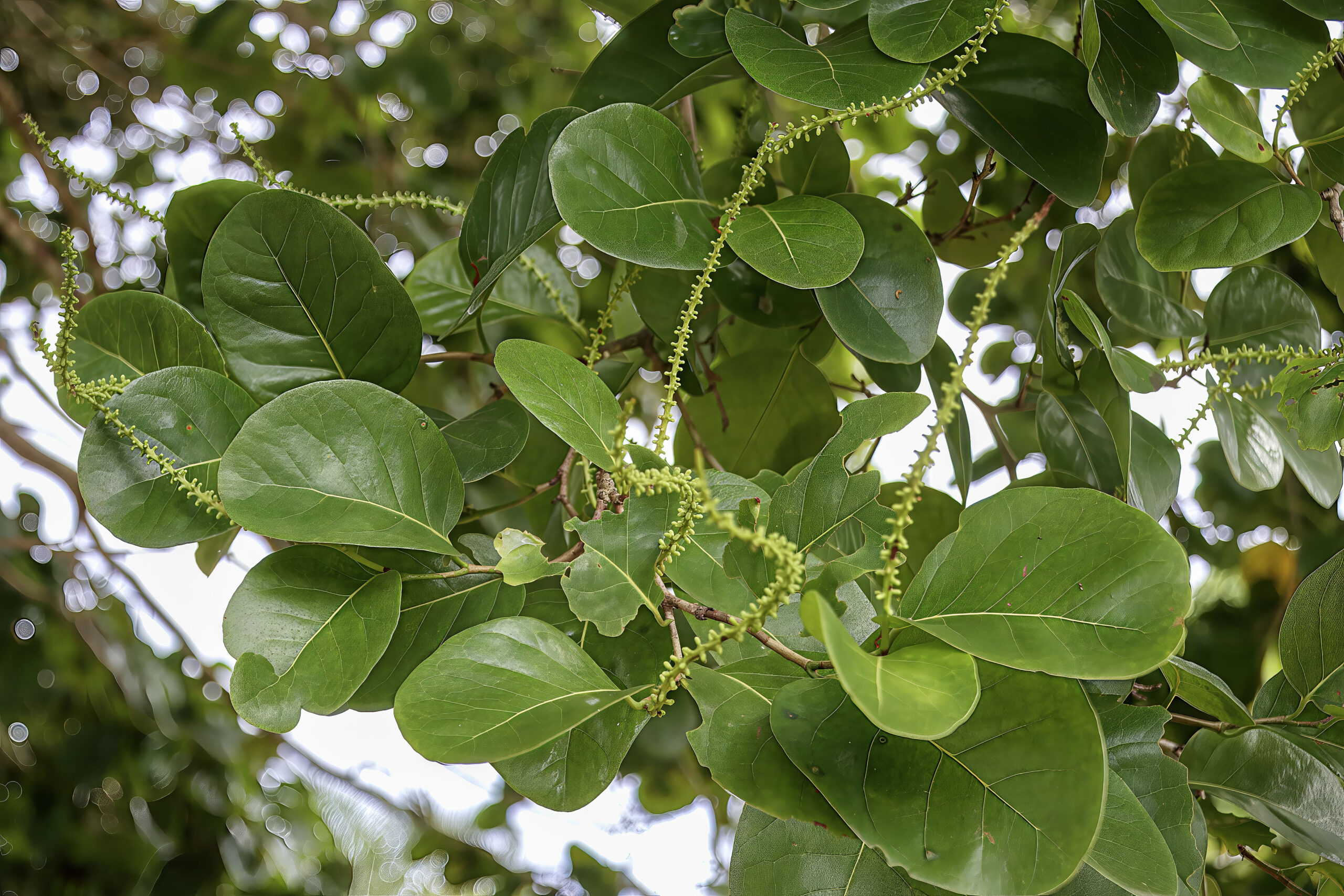
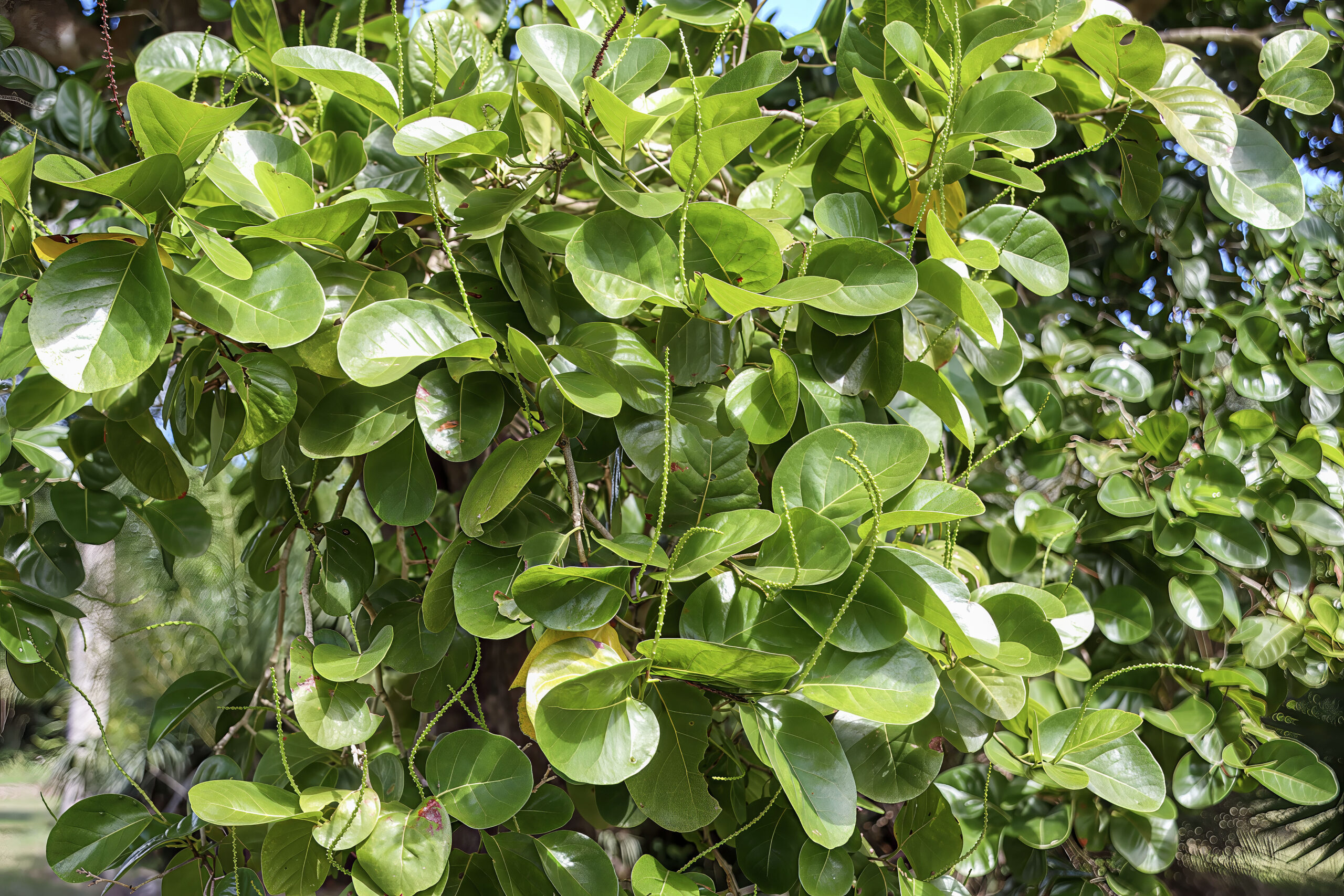
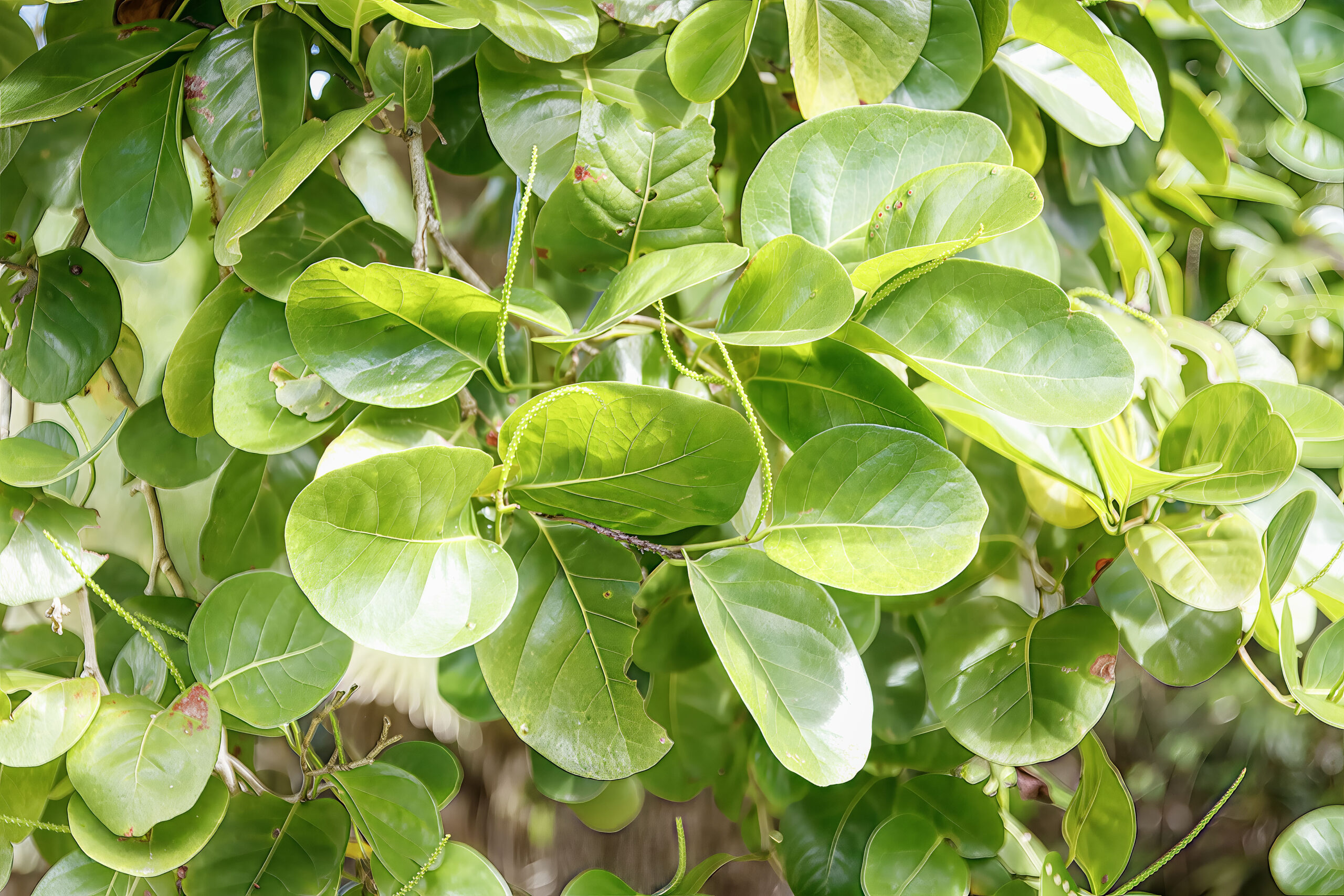
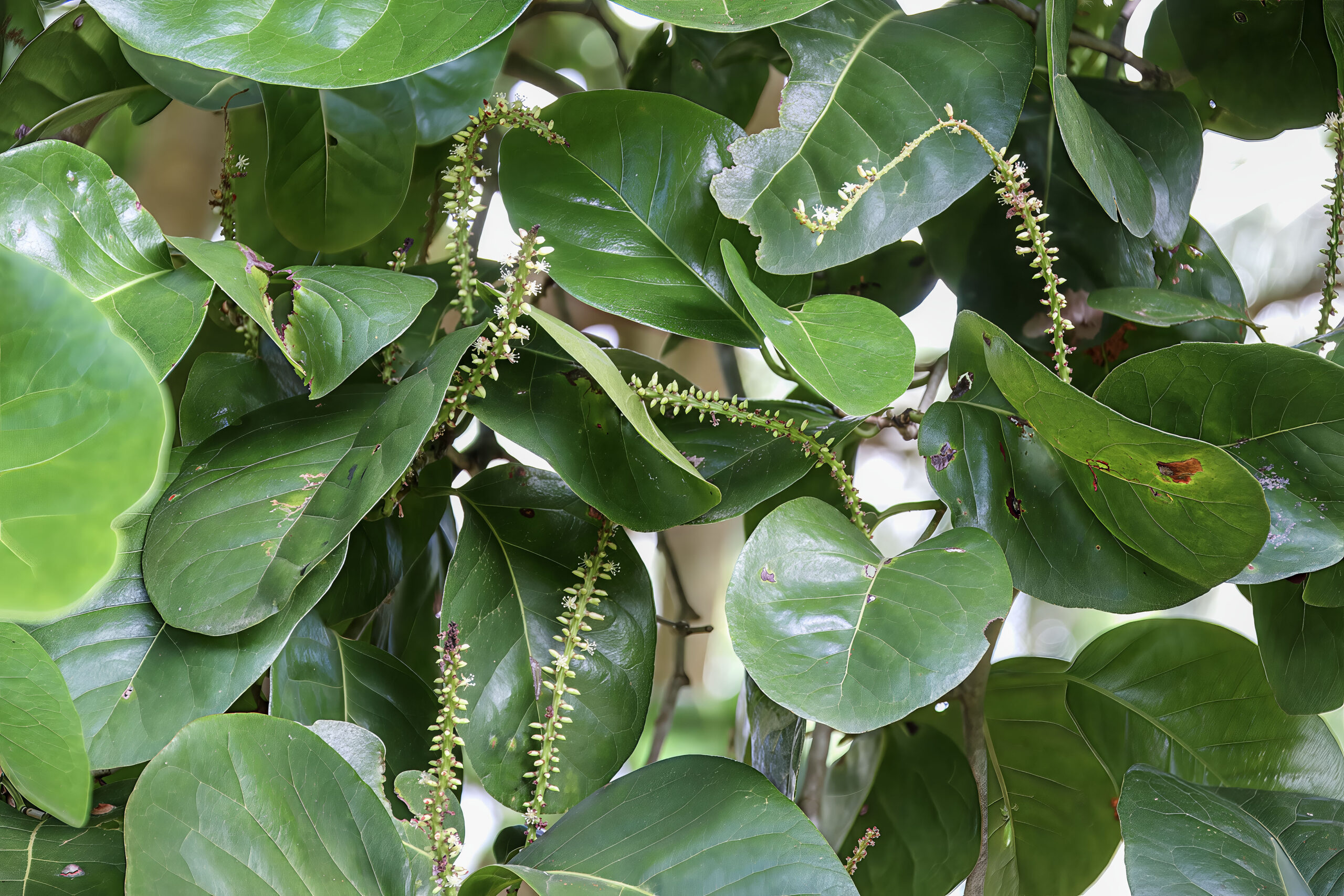
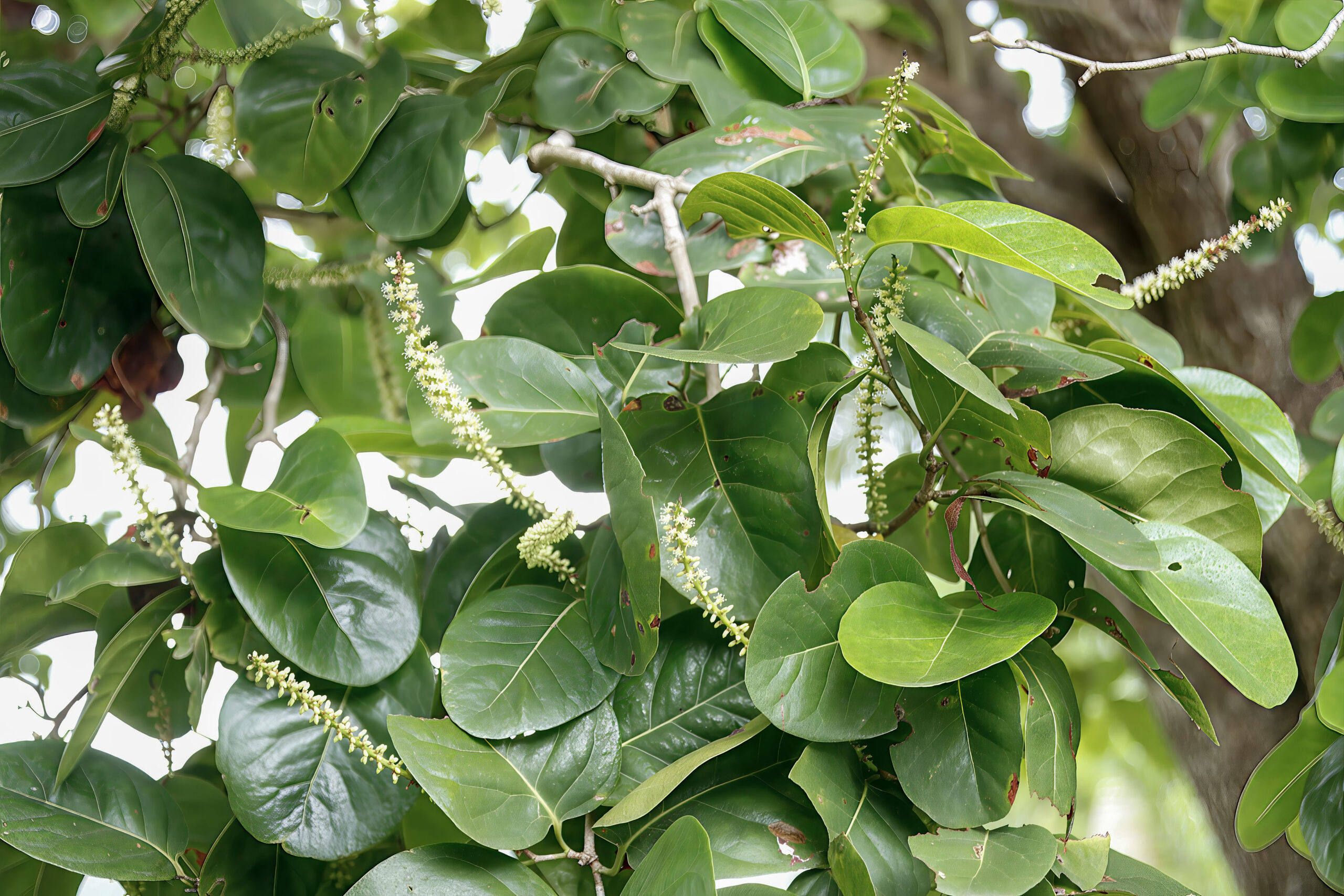
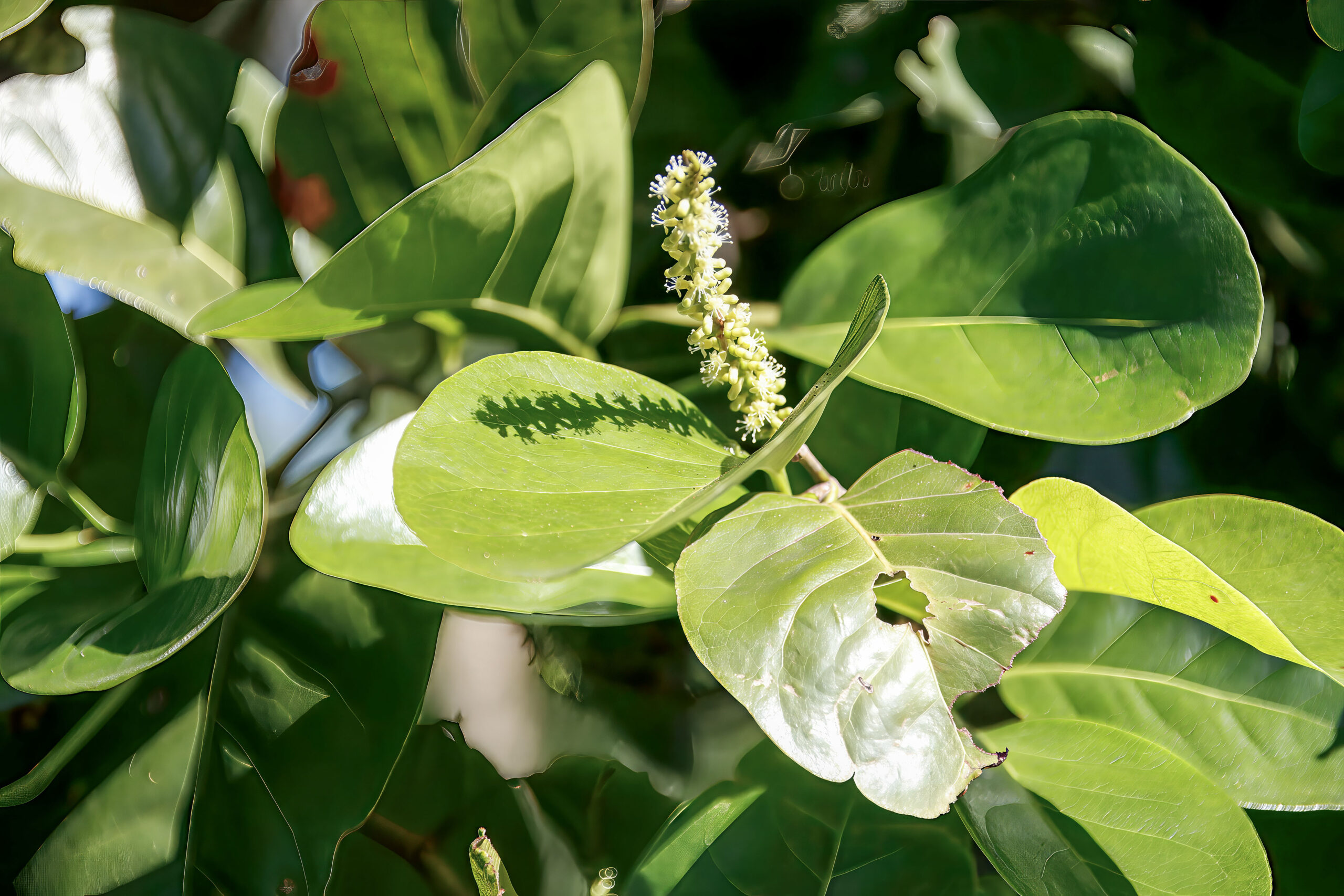
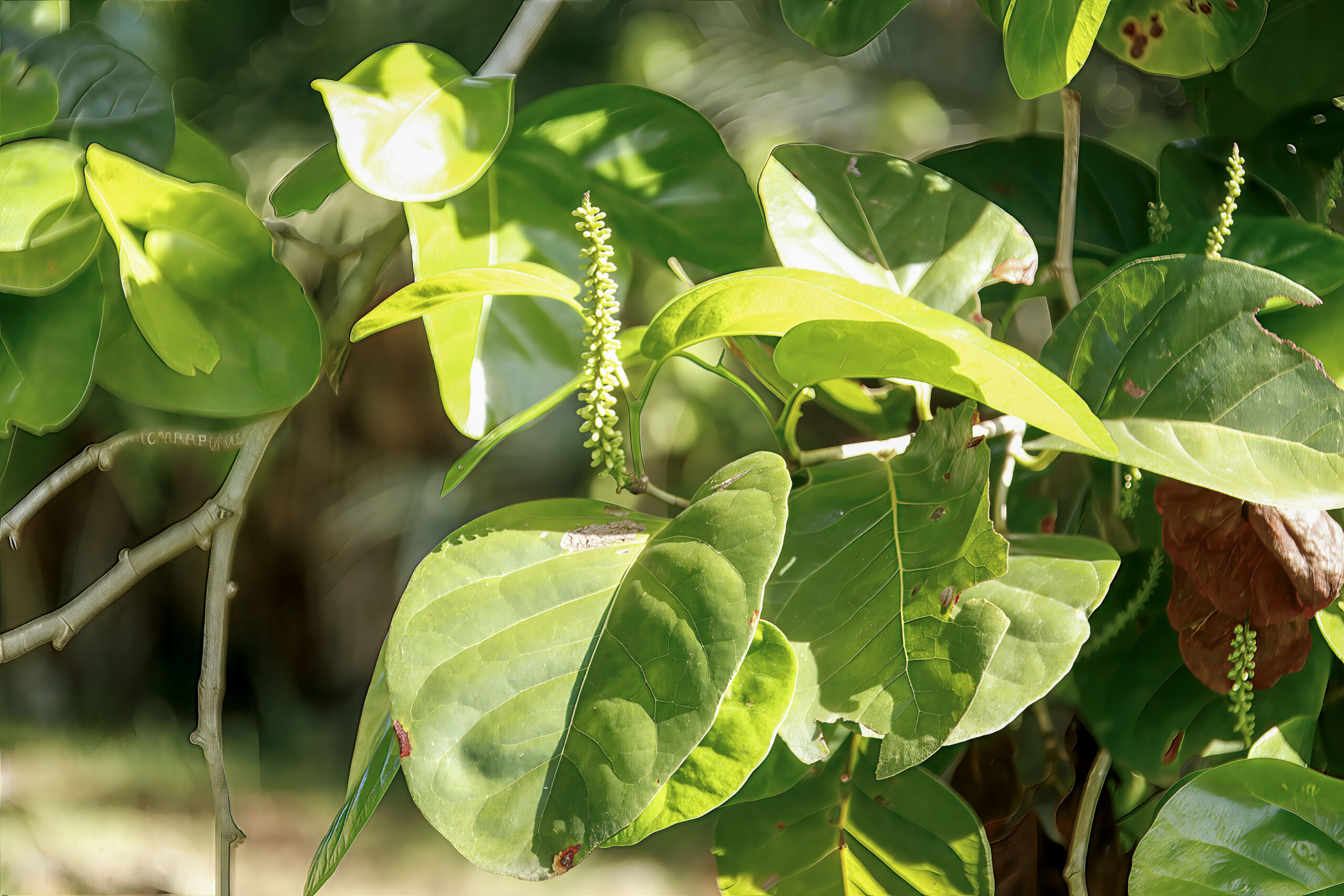
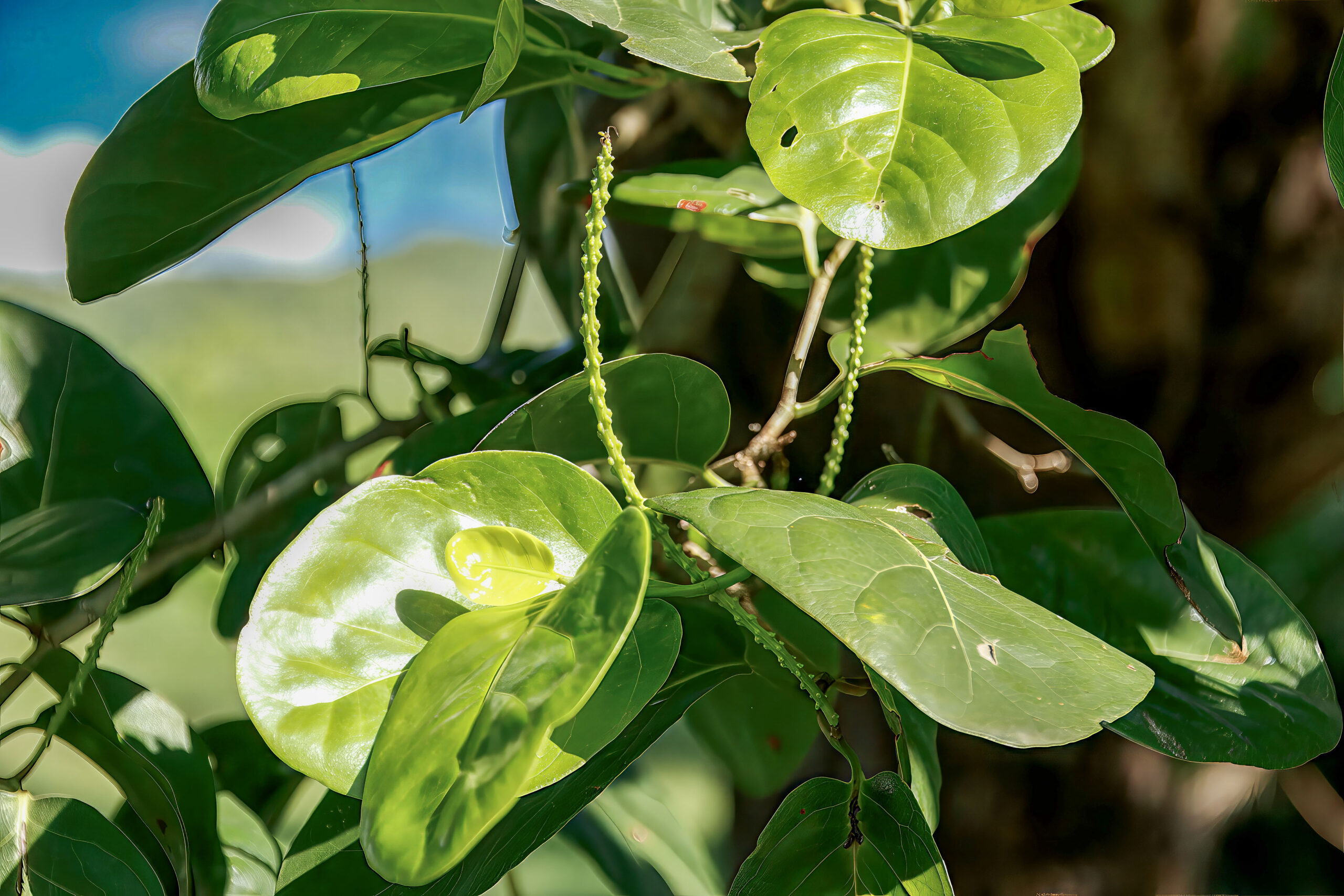
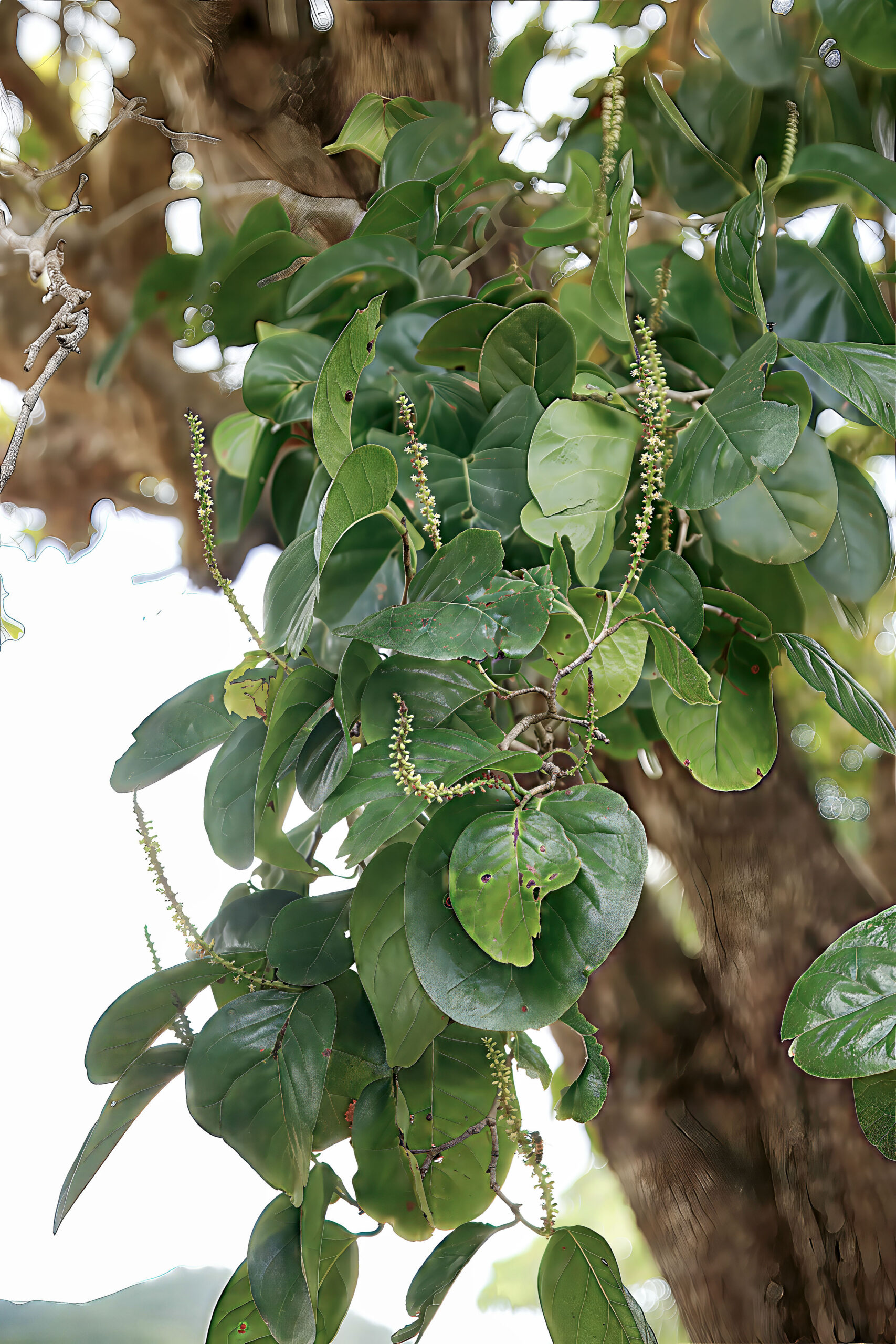
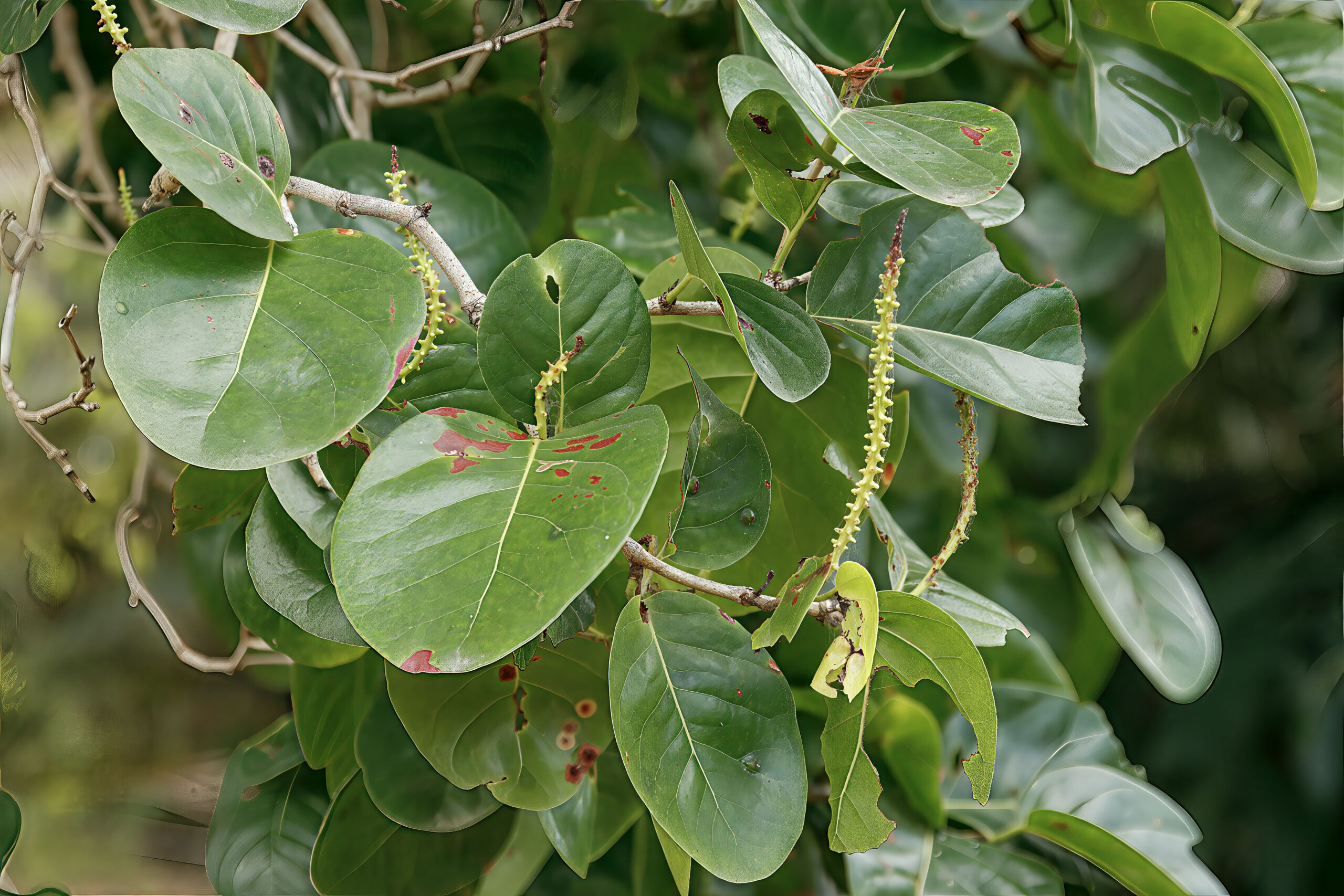
Coccoloba swartzii is a semi-evergreen to evergreen tree, with broad, leathery leaves that may vary slightly in shape but are typically oval to round, with a smooth edge and prominent veins.
- It retains most of its foliage year-round in moist conditions, but may shed some leaves during dry months.
- New leaves emerge in flushes, often reddish to bronze before maturing to green.
Observation Tips:
- Watch for subtle leaf flushing, especially March–May or after rainfall.
- Note any seasonal thinning during extended dry periods (e.g., February–April).
2. Flowering
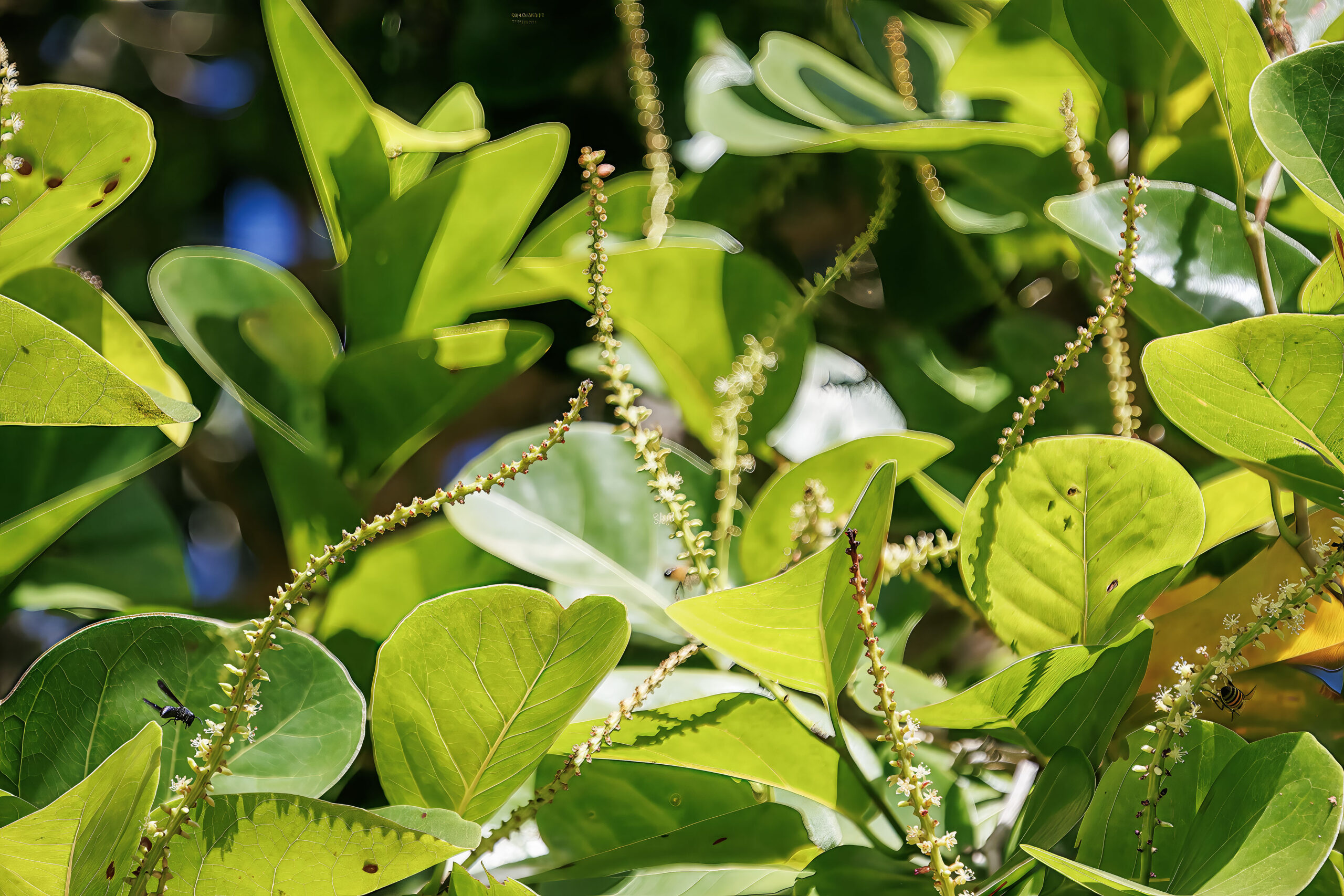
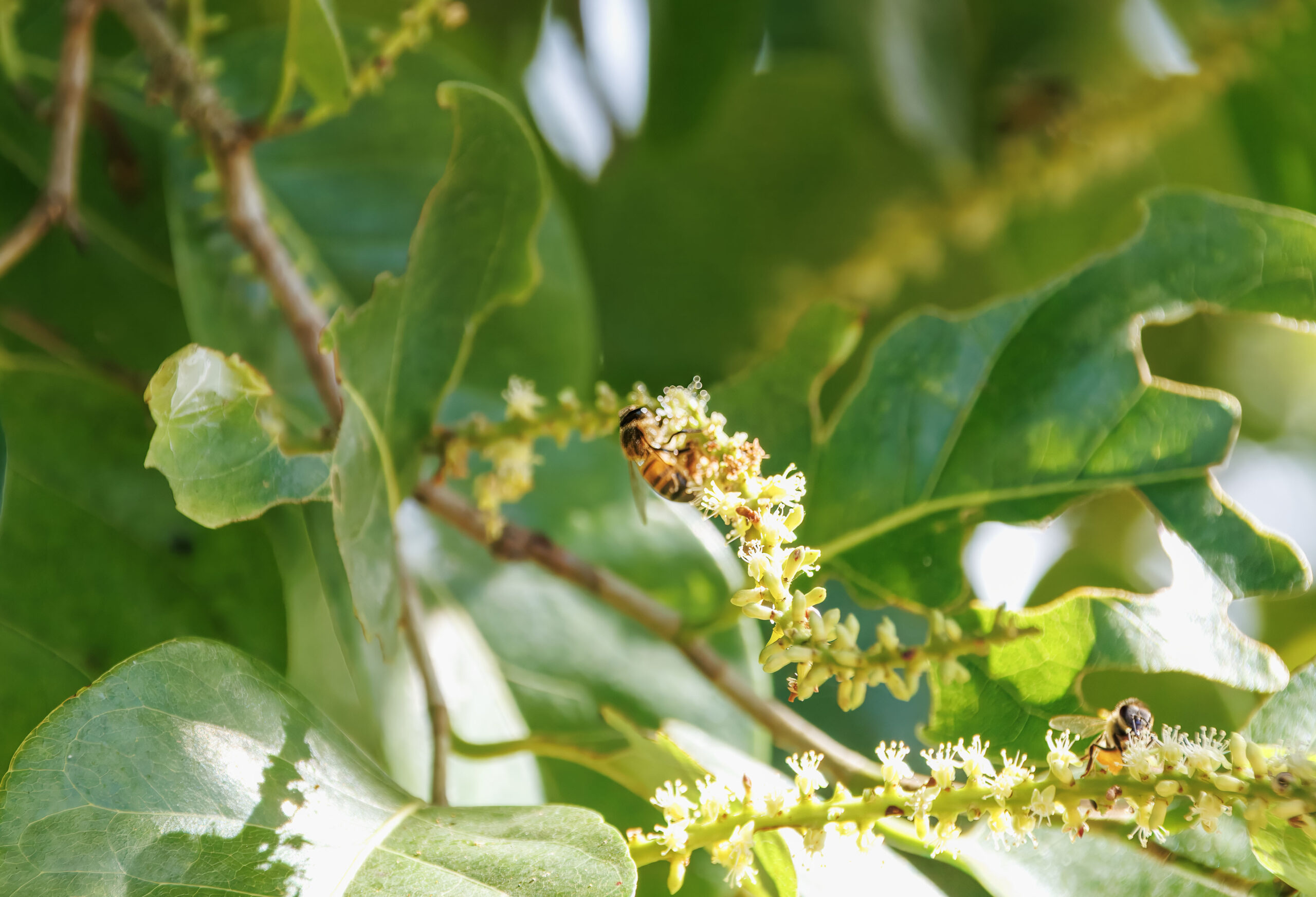
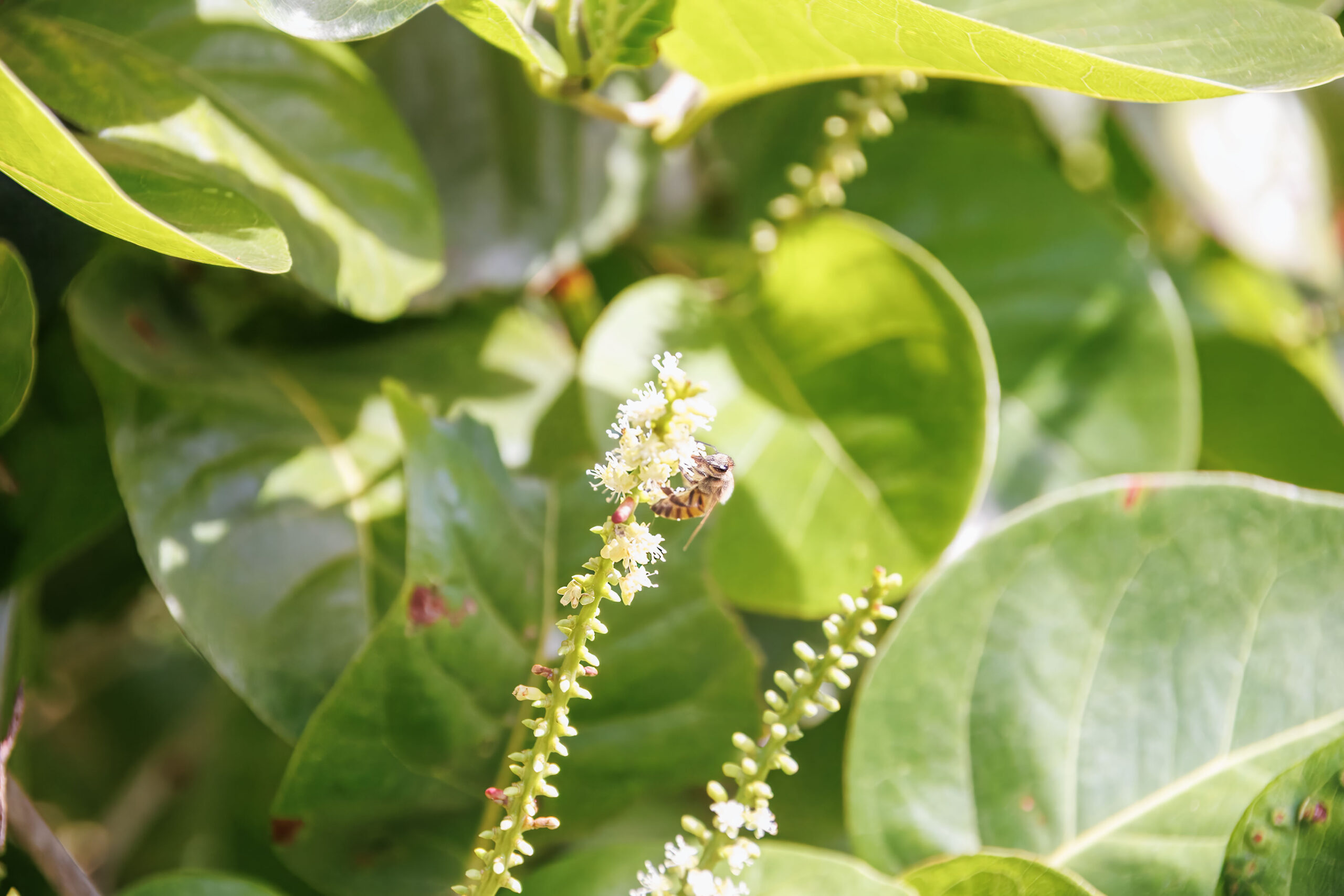
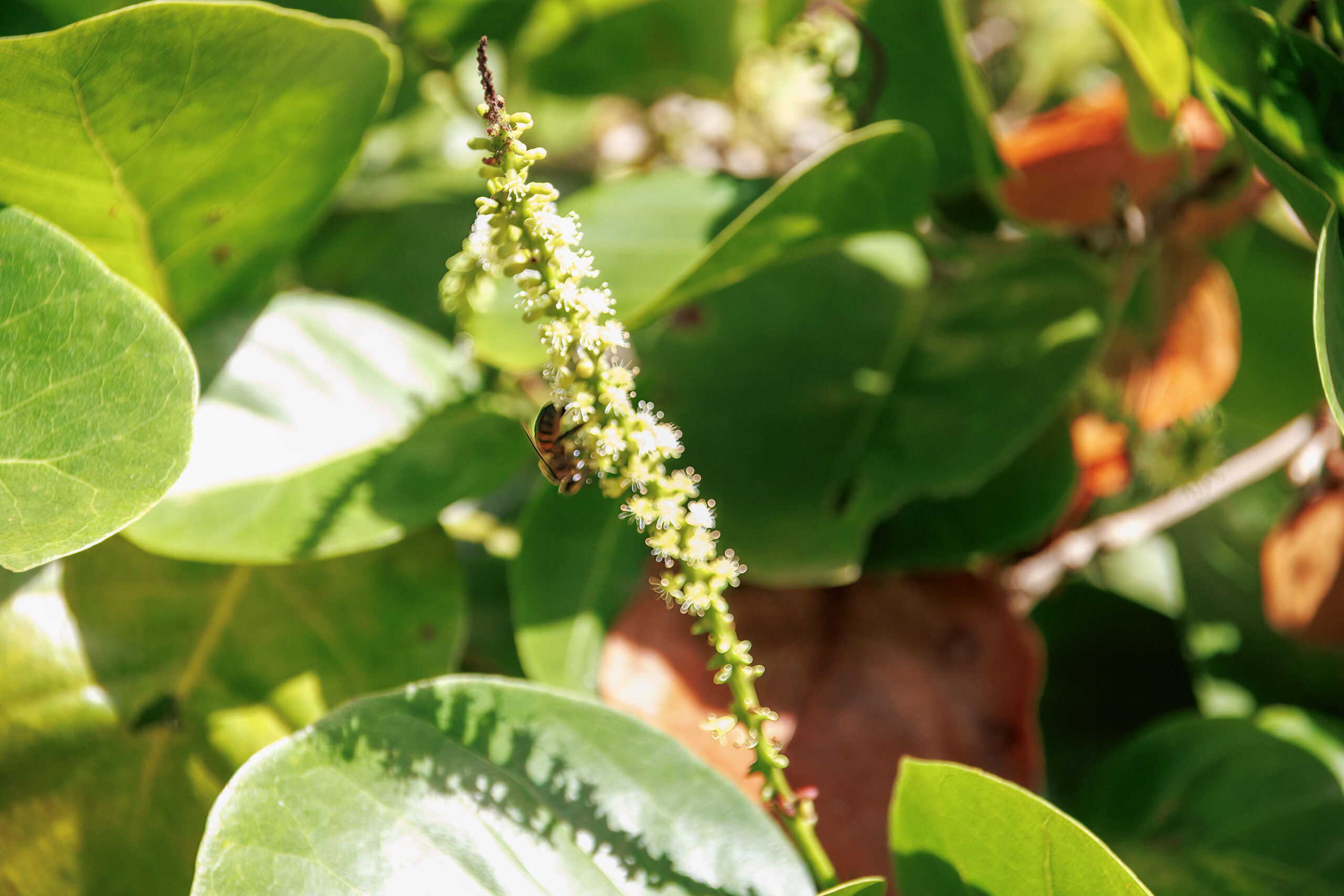
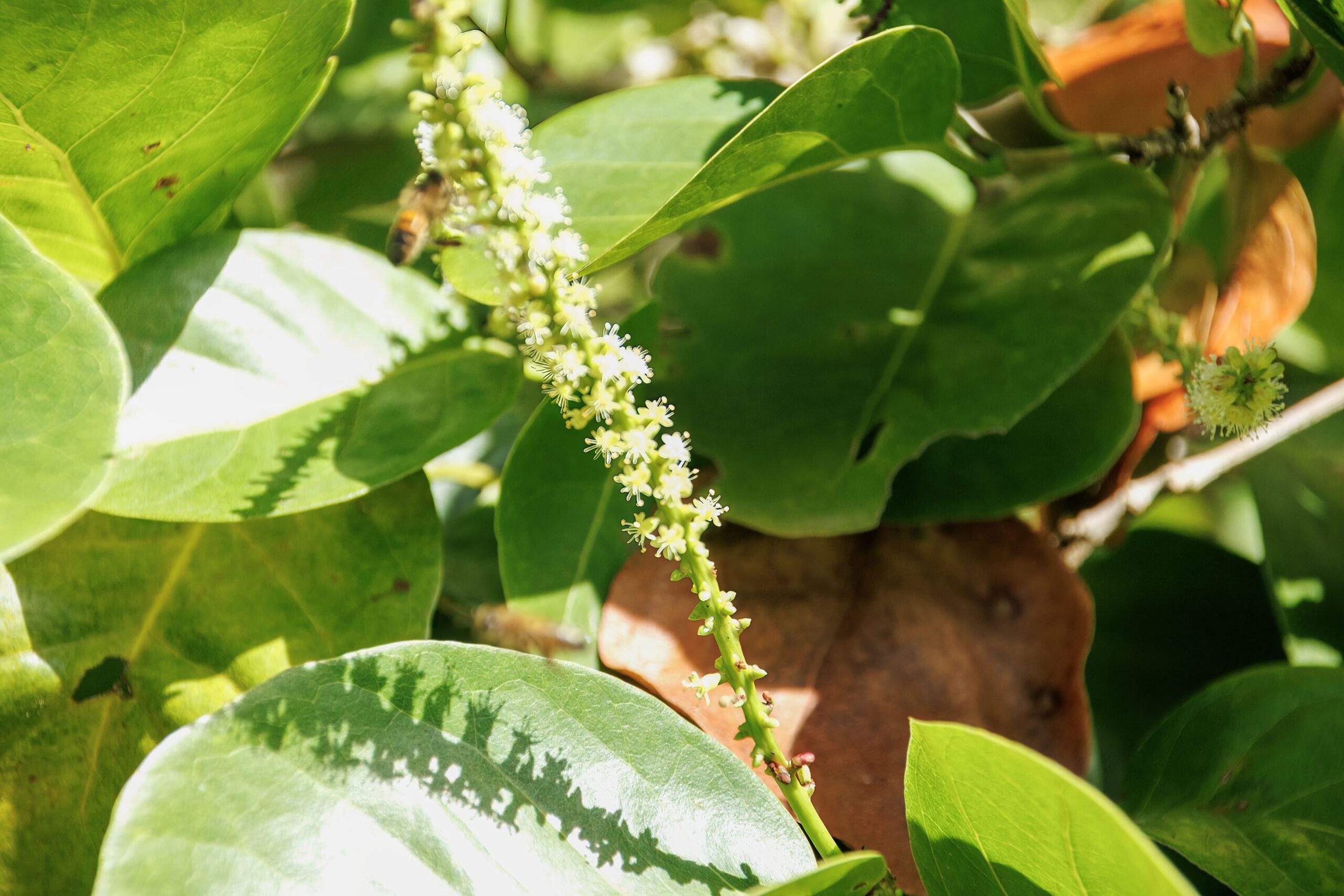
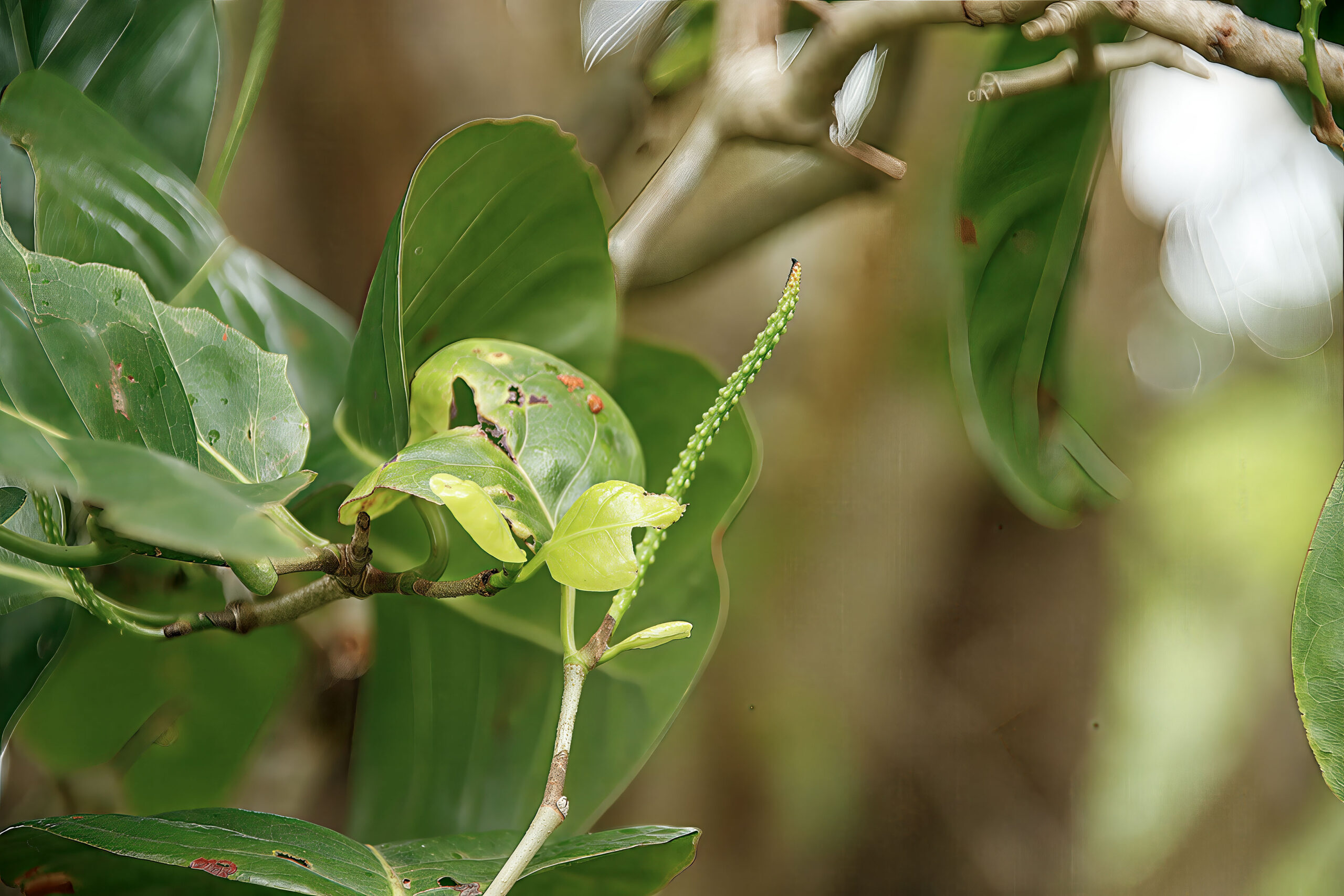
Flowers are tiny, white-green, and borne in elongated spikes (up to 4 inches long) that emerge at the tips of branches or in leaf axils.
- Blooming typically occurs in spring to early summer, especially April–June.
- The flowers are fragrant and attract bees and other small insects.
Observation Tips:
- Monitor branch tips and leaf axils for developing flower spikes.
- Document pollinator activity, especially on warm mornings.
3. Fruiting
The fruit is a small, round drupe, initially green, turning red to dark purple when ripe.
- Fruits are edible and mildly sweet, though not widely cultivated.
- Fruiting follows flowering, with mature fruit typically present July–September.
- The fruit is important to birds and small mammals for foraging.
Observation Tips:
- Track color progression of fruit clusters.
- Record fruit drop, wildlife feeding, and natural seed dispersal patterns.
4. Growth Habit
A small to medium-sized tree, usually 20–35 feet tall, with a rounded crown and light gray bark.
- Found in dry forests, coastal thickets, and limestone soils.
- Highly tolerant of salt, wind, and poor soil, making it a valuable coastal stabilizer and native landscaping choice.
5. Seasonal Pattern (St. Croix)
- Feb–Apr: Light leaf thinning; early flower spikes may form
- Apr–Jun: Peak flowering and new leaf flush
- Jul–Sep: Fruiting; canopy stability
- Oct–Jan: Gradual return to full leaf cover if previously thinned