
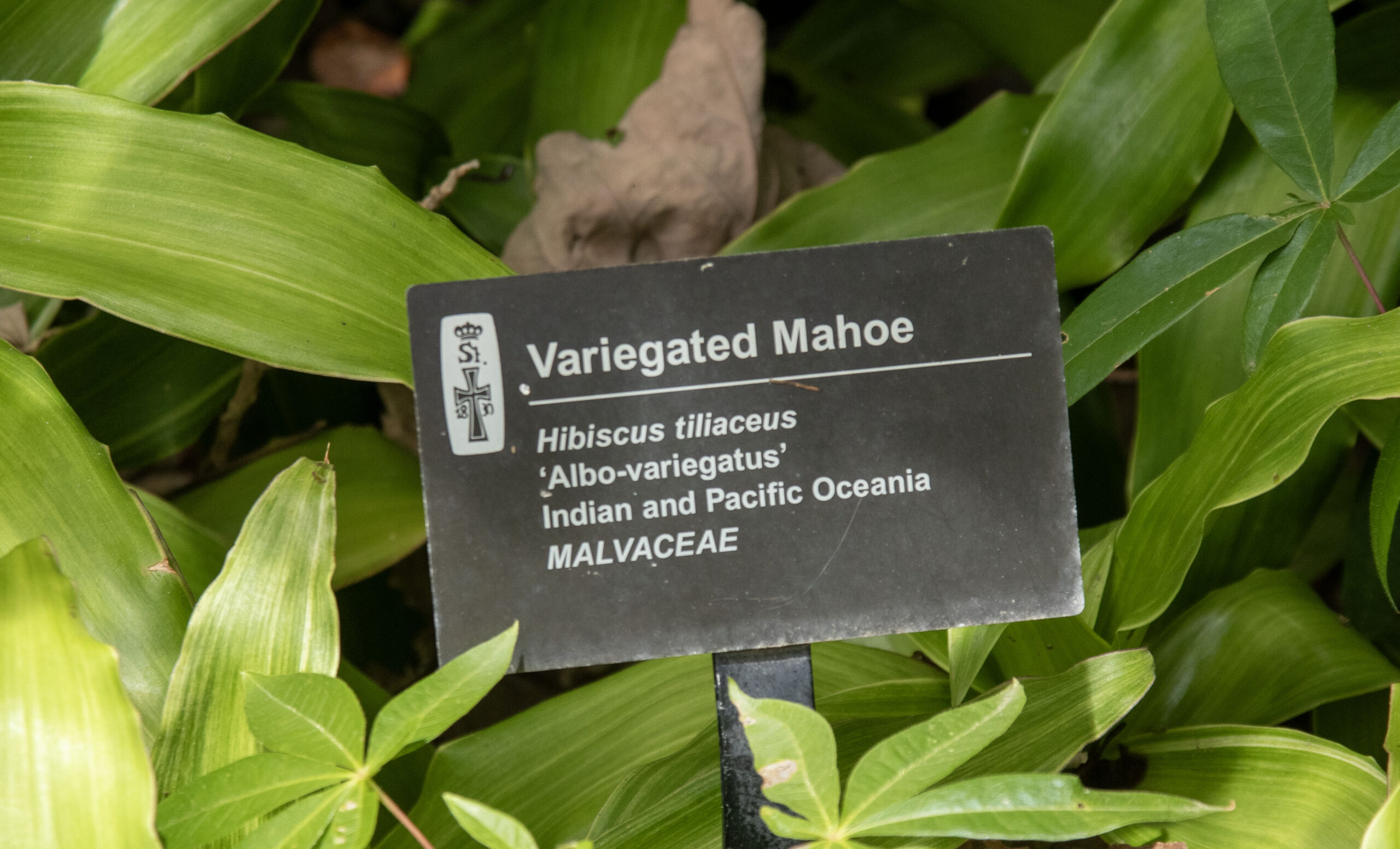
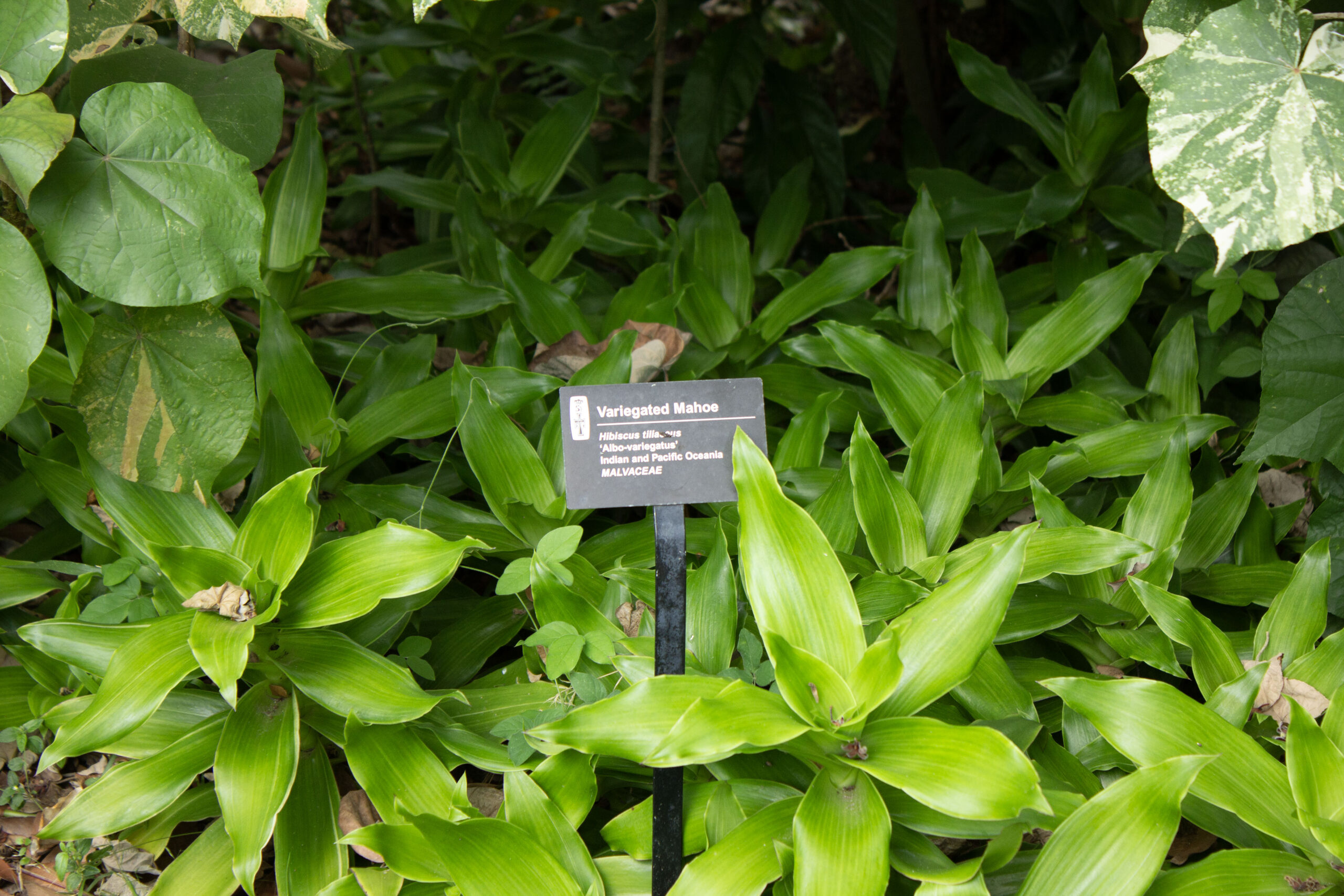
Variegated Mahoe
Scientific name: Hibiscus tiliaceu
POWO Status:Tree or Shrub
IUCN Red List threat level: Least Concern
GPS Location: 17° 42′ 56.67″ N, 64° 49′ 46.44″ W
Medicinal Uses
Hibiscus tiliaceus, or Beach Hibiscus, is a versatile tropical plant used in traditional medicine for fevers, coughs, skin issues (sores, wounds), stomach ailments (diarrhea, dysentery, pain), and chest congestion, with its leaves, flowers, bark, and sap offering antioxidant, anti-inflammatory, and antimicrobial properties, acting as demulcents, laxatives, and treatments for infections and inflammation, notes National Institutes of Health (.gov) and Useful Tropical Plants.
Uses by Plant Part
- Leaves: Applied for fevers, coughs, phlegm, sore throats, and skin diseases; sap used as a laxative.
- Flowers: Used for bronchitis, ear infections, abscesses, and to treat fevers and coughs.
- Bark: Mucilage from the bark treats dysentery and chest congestion; inner bark sap helps with labor pains and stomach aches.
- Sap: A slimy sap from bark and buds serves as a mild laxative or lubricant during childbirth.
- Roots: Used as a general tonic.
Reported Properties & Activities
- Antioxidant: Helps combat free radicals.
- Anti-inflammatory: Reduces swelling and inflammation.
- Antimicrobial: Fights bacteria and microbes.
- Demulcent: Soothes irritated mucous membranes (digestive/respiratory tracts).
Traditional Applications
- Respiratory: Soothes dry throats, coughs, and chest congestion.
- Digestive: Treats diarrhea, dysentery, and stomach pain.
- Infections: Used for ear infections, abscesses, and skin conditions.
- Childbirth: Sap aids in labor and postpartum recovery.
Modern Research
Studies suggest potential antidepressant-like effects and confirm its antioxidant, anti-inflammatory, and antimicrobial activities, with leaves showing promise as anticancer agents.
Observations:
Phenological Markers:
Common Name: Variegated Mahoe, Beach Hibiscus
Family: Malvaceae (Mallow Family)
Phenological Markers
| Phenophase | Indicator |
| Leaf Emergence | Young leaves are soft, dark green, and oval-shaped, appearing in spring and continuing through summer. |
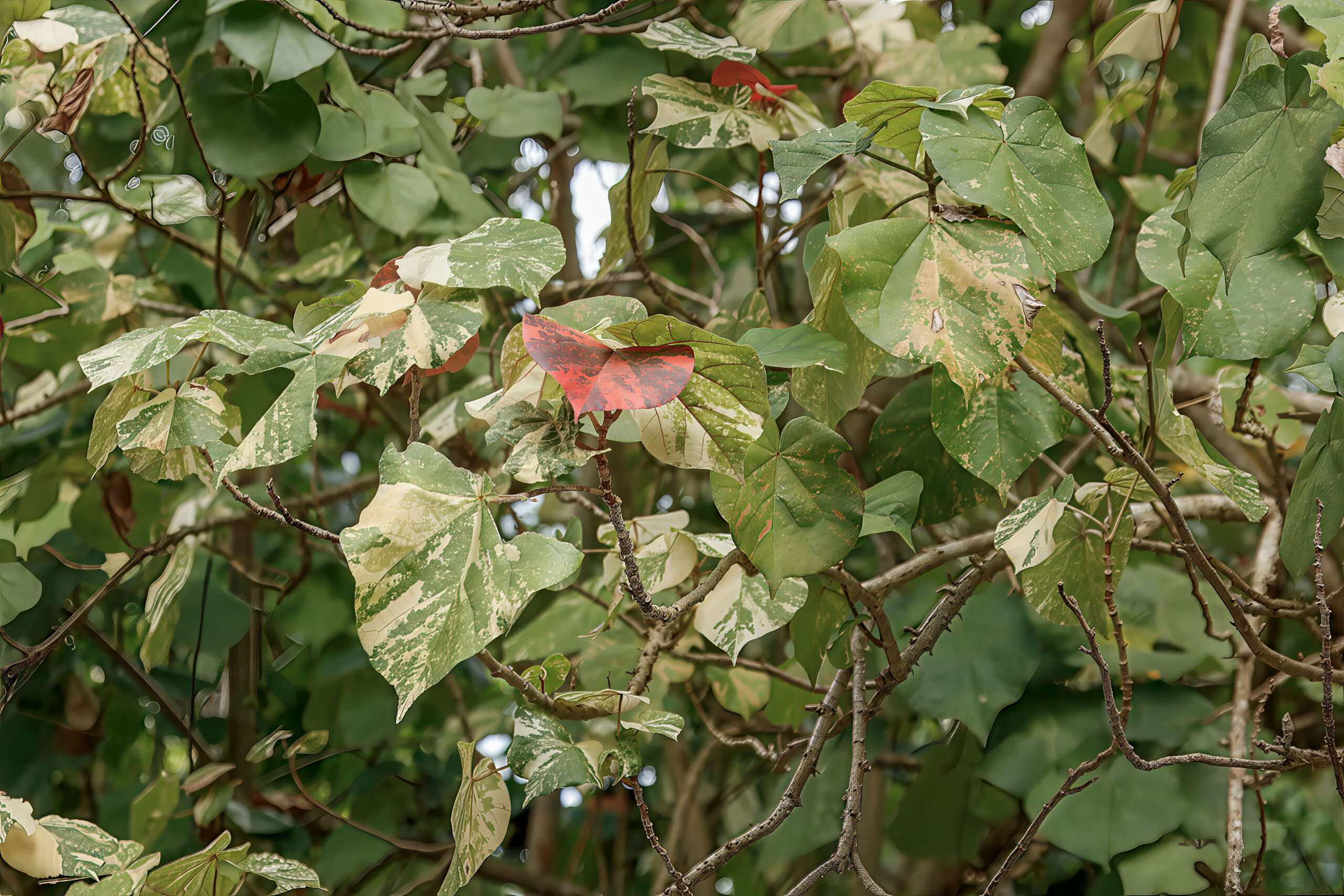
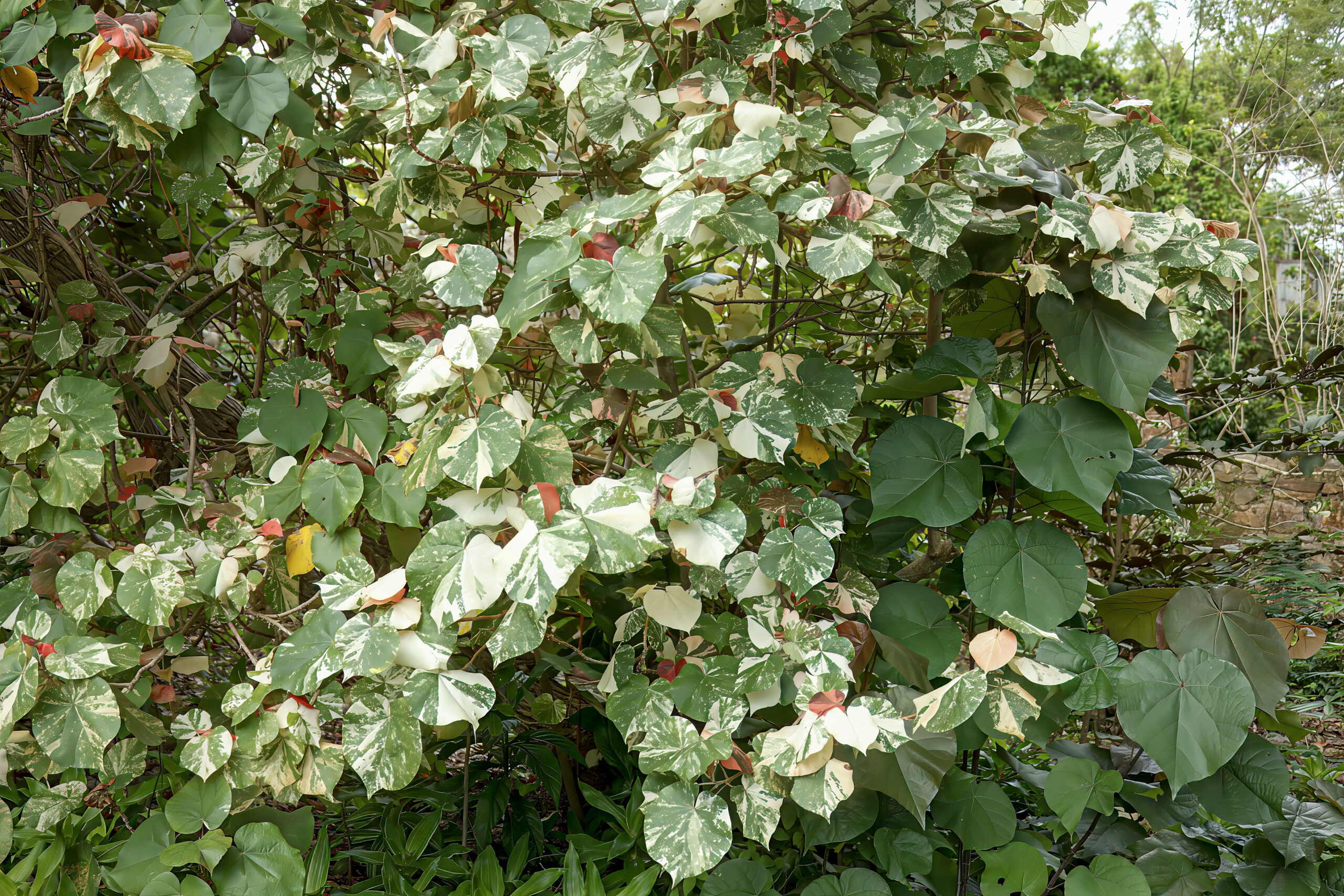
| Mature Green Leaves | Large, heart-shaped leaves, often with a rough texture, present year-round. |
| Leaf Senescence | Older leaves may yellow and drop during periods of drought or environmental stress. |
| Inflorescence Emergence | Bright yellow or orange flowers emerge from leaf axils, visible mainly in the late spring to early summer. |
| Flowering | Flowers bloom for a short time, often in **April to July**, with each flower lasting a single day. |
| Fruit Development | After flowering, capsule fruits develop and remain green for several months. |
| Fruit Ripening | Fruits turn brown and mature during **August to October**, ready for seed dispersal. |
| Fruit Drop | Mature fruits may drop to the ground or be eaten by wildlife, aiding in natural seed distribution. |
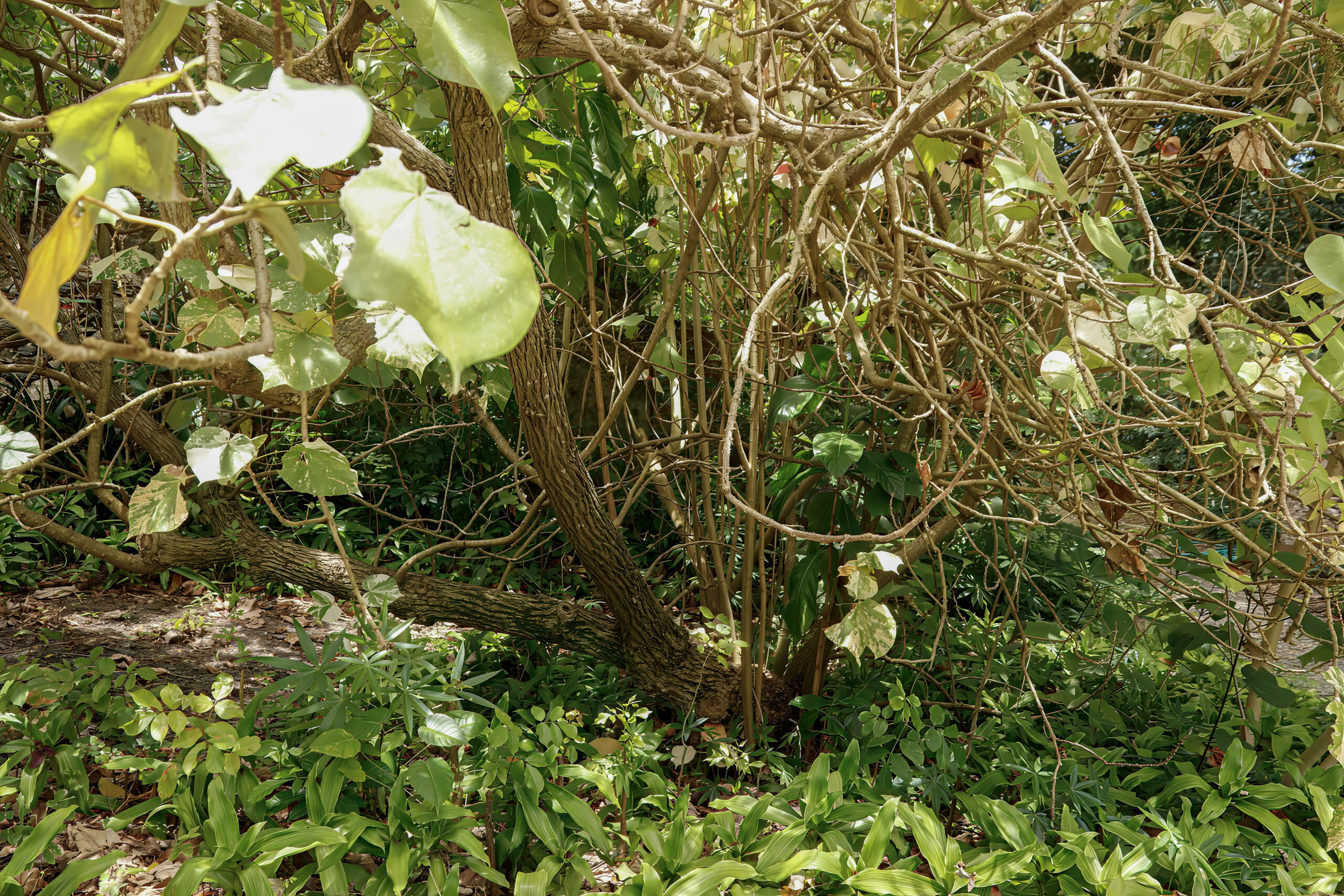
| Trunk Growth | Trunk thickens slowly; bark is fibrous and exfoliates in strips, giving it a characteristic appearance. |
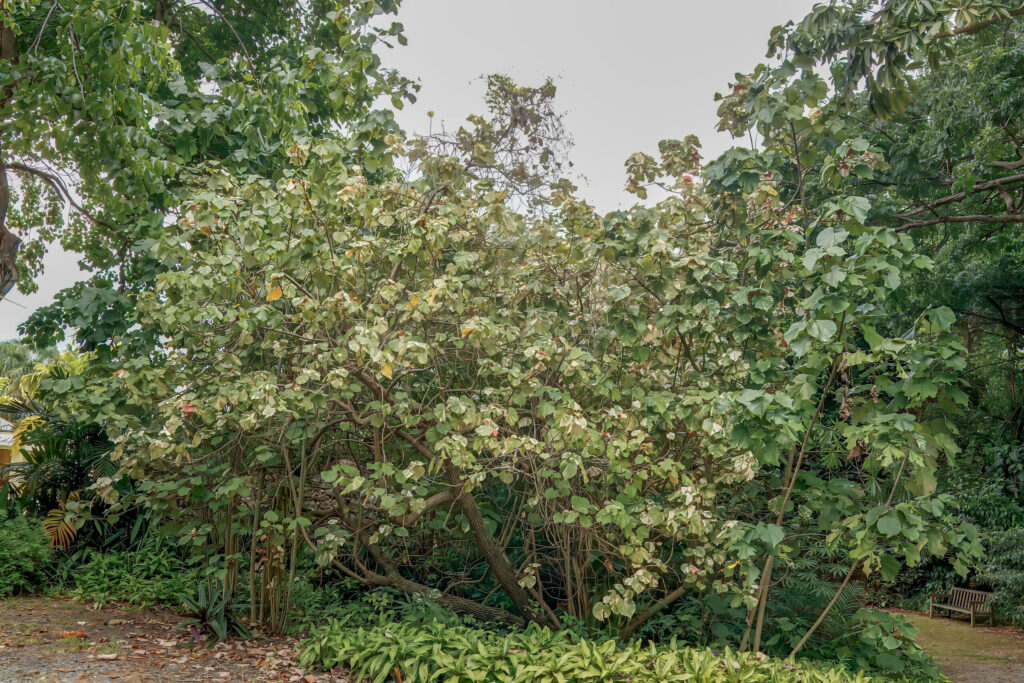
| Crown Presence | Leaves are always present in a large, rounded crown, though they may shed due to environmental factors. |
Observation Tips
– Look for the bright yellow or orange flowers that bloom for only one day each.
– Identify the heart-shaped leaves that may shed in response to water stress.
– Monitor the fruit development, as capsule fruits may remain on the tree for months before ripening.
Location Notes
Commonly found along coastal areas, particularly in sandy soils near beaches and estuaries.