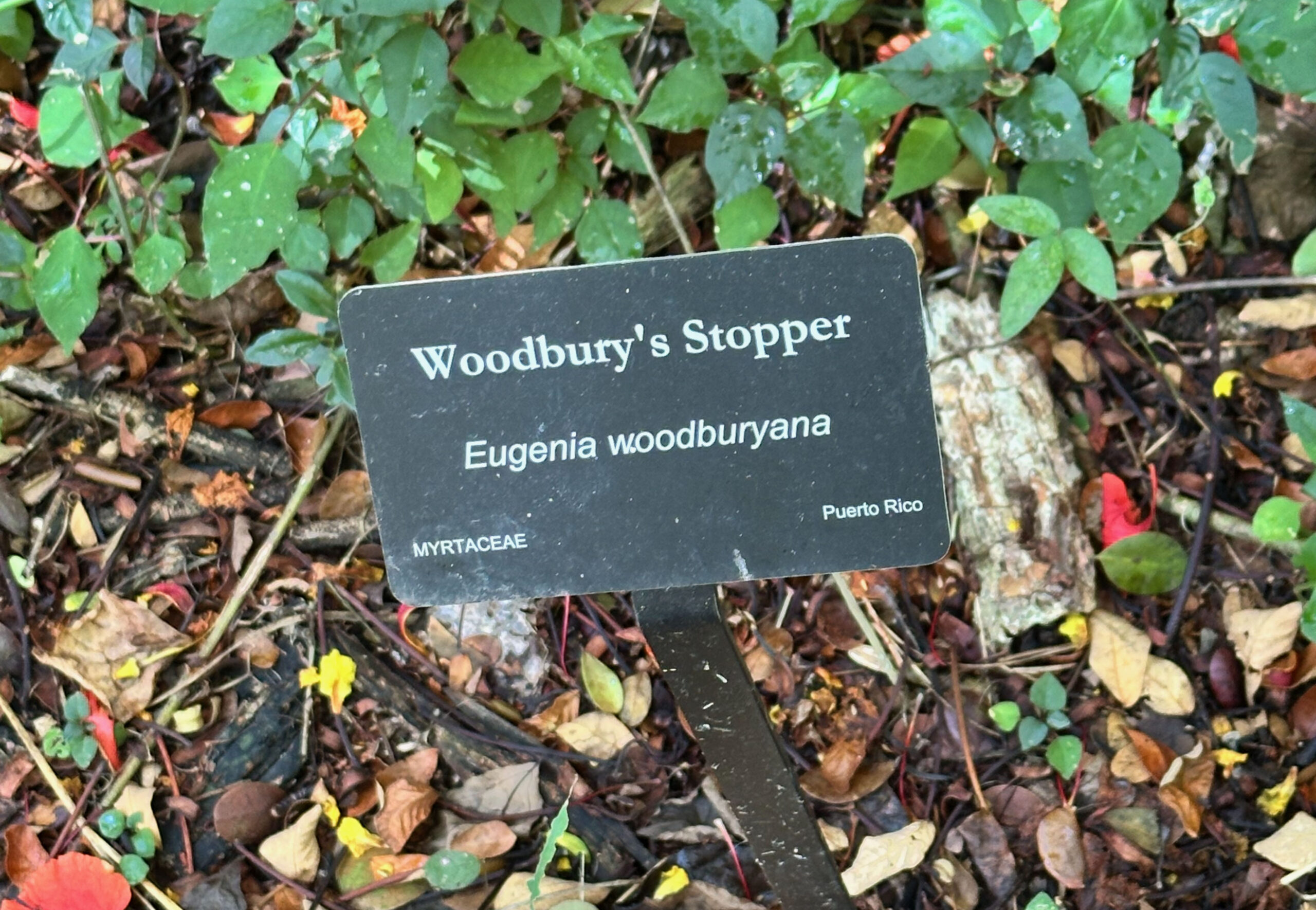
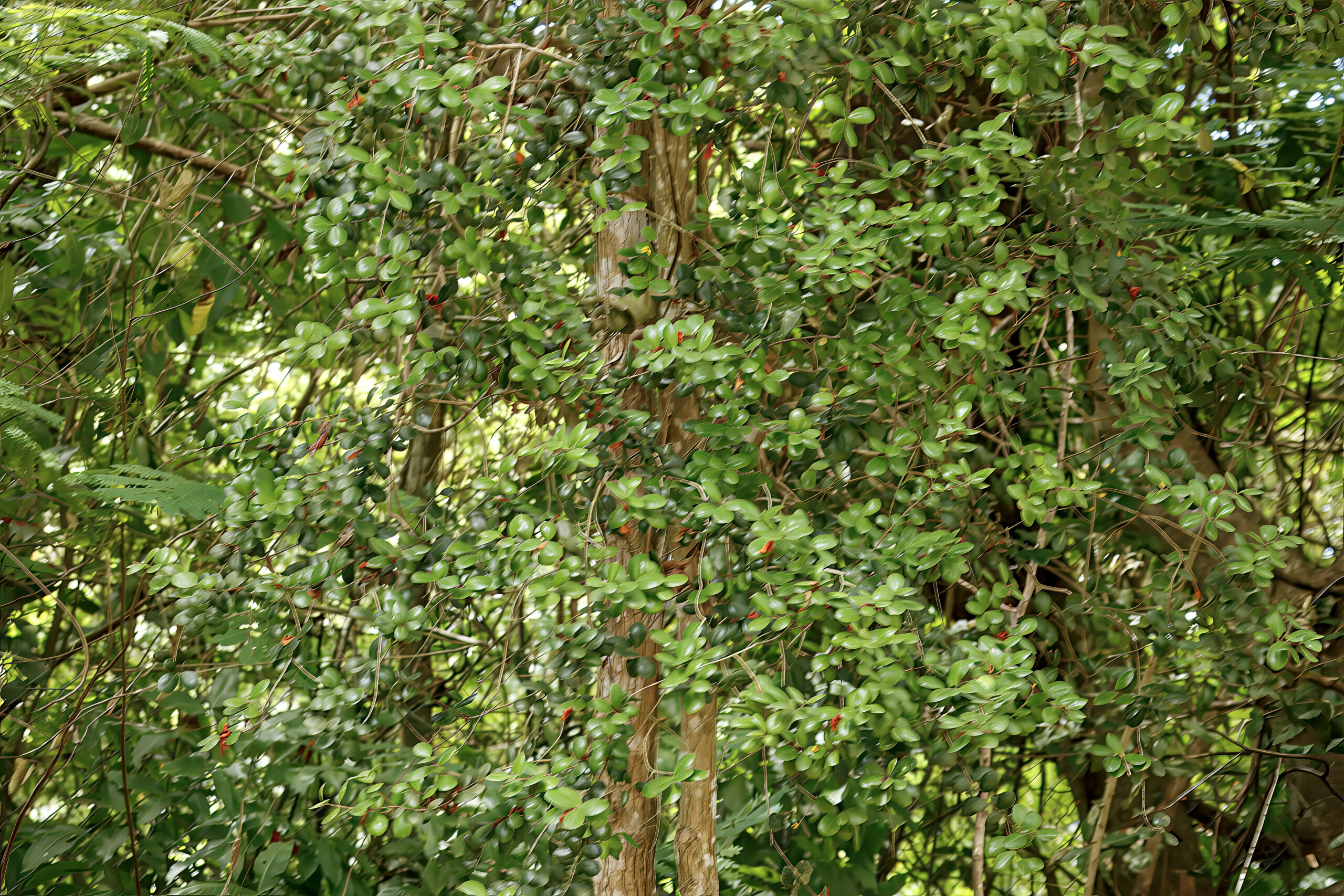
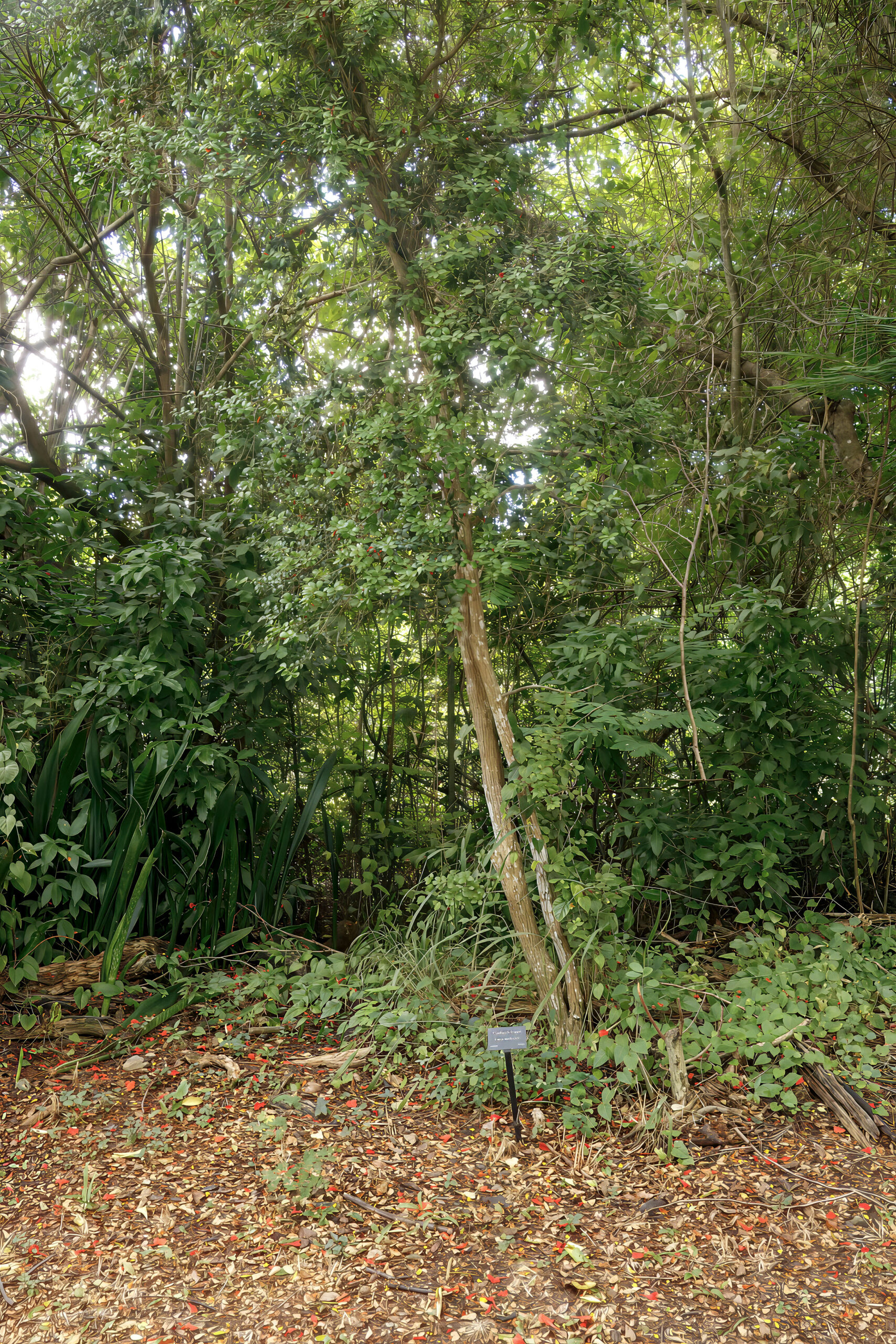
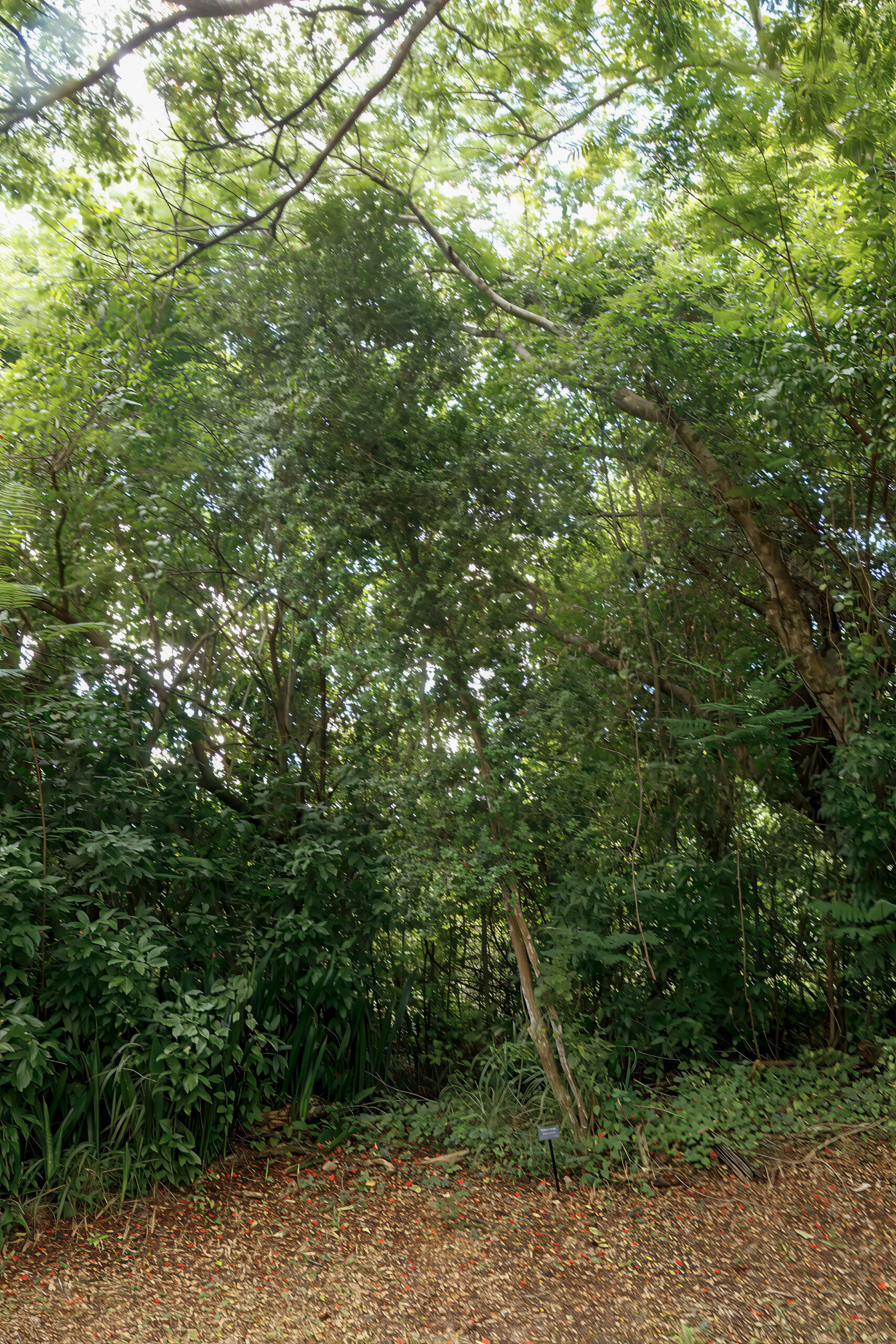
Woodbury’s Stopper
Scientific name: Eugenia woodburyana
POWO Status: Tree
IUCN Red List threat level: Vulnerable
GPS Location: 17° 42′ 59.68″ N, 64° 49′ 50.40″ W
Conservation Garden


Medicinal Uses
Eugenia woodburyana (Woodbury’s stopper) is a federally listed endangered species endemic to Puerto Rico, and there are no documented traditional medicinal uses specifically for this species. Information available about the plant focuses on its conservation status, habitat, and botanical description, not its medicinal properties.
Observations:
Phenological Markers – Woodbury’s Stopper (Eugenia woodburyana)
Scientific Name: Eugenia woodburyana
Common Names: Woodbury’s Stopper
Family: Myrtaceae
Conservation Status: Critically Endangered (IUCN Red List; U.S. Endangered Species List)
Leaf Phenology
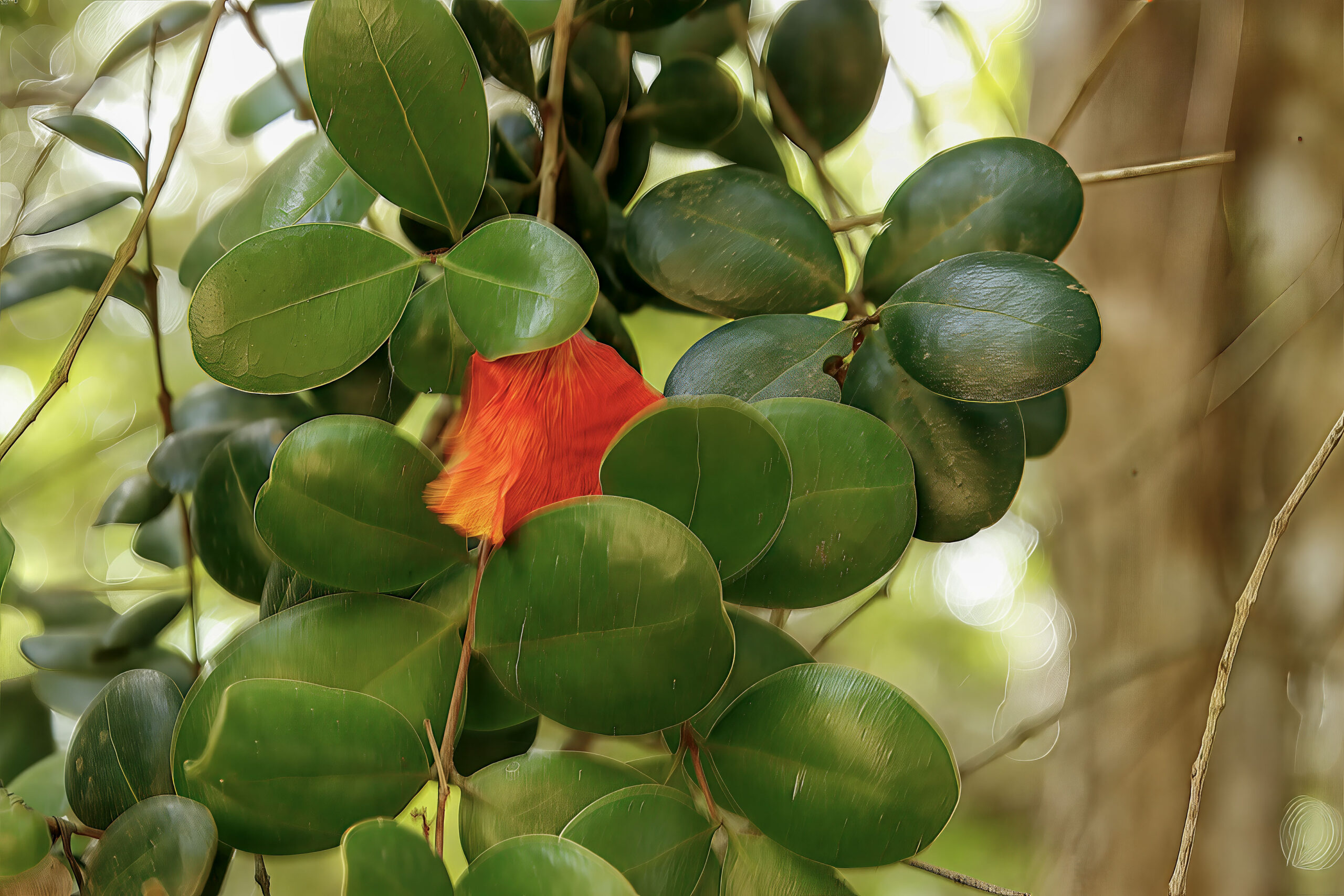
- New Leaf Emergence: New leaves flush periodically, typically associated with the onset of the rainy season. Young leaves are lighter green or reddish.
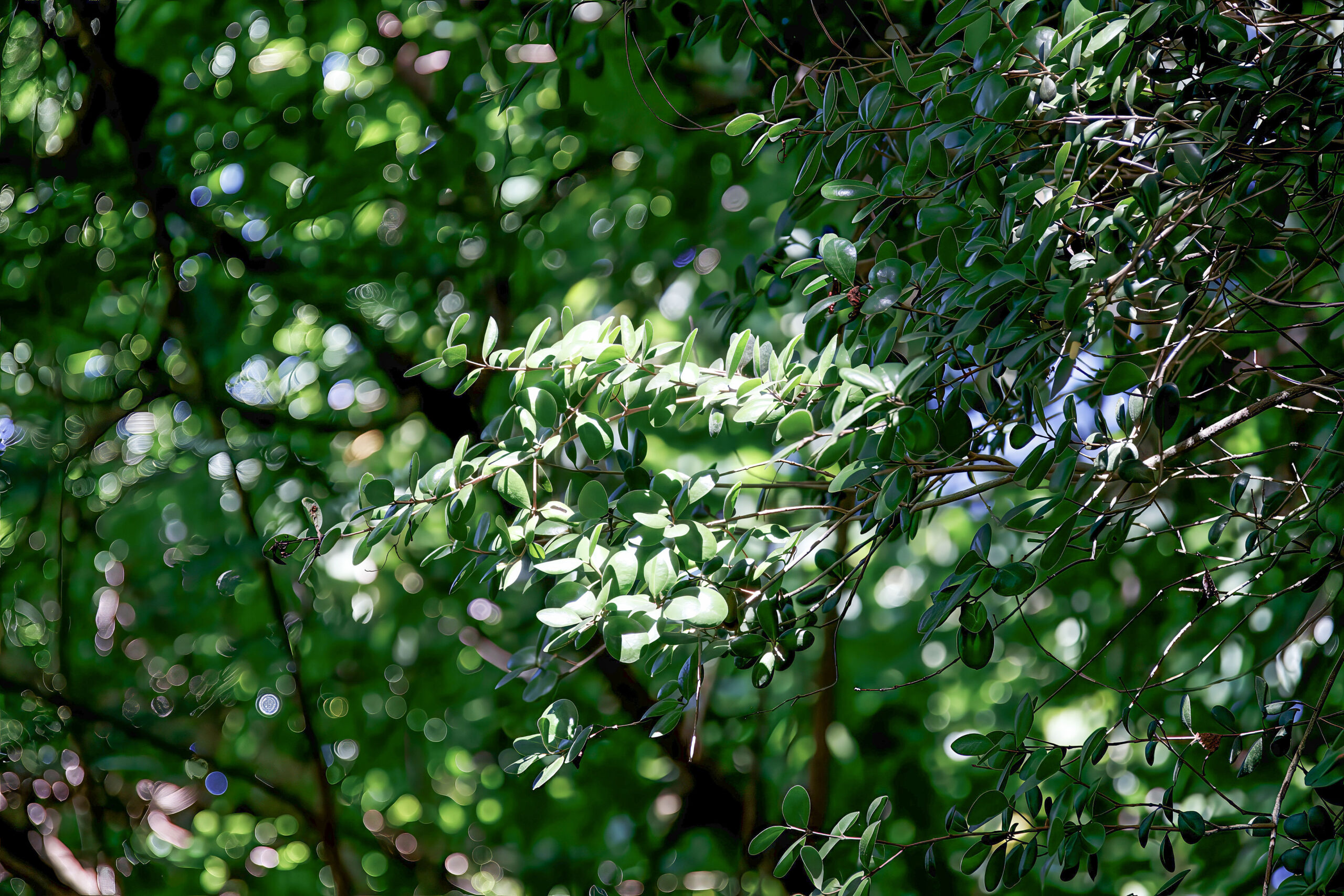
- Leaf Persistence: Evergreen species; mature leaves are leathery, dark green, and persist throughout the year.
- Leaf Drop: Not pronounced; occasional senescence of older leaves, usually balanced by new growth.
Flowering Phenology
- Flower Type: Small, white, fragrant flowers, typical of the Eugenia genus, usually in axillary clusters.
- Flowering Period: Often observed during spring to early summer (April to July), though specific timing may vary with local conditions and rainfall.
- Pollination Mechanism: Likely insect-pollinated, as with other stoppers; specific pollinators not well documented.
Fruiting Phenology
- Fruit Type: Small, berry-like drupe; red to purple-black when mature.
- Fruit Development: Follows flowering by several weeks; fruits typically mature by late summer or early fall (July to September).
- Dispersal Mechanism: Probably dispersed by birds and other wildlife attracted to the fleshy fruit.
- Seasonality: Fruiting is seasonal, not continuous, and may be irregular in stressed populations.
Observational Notes
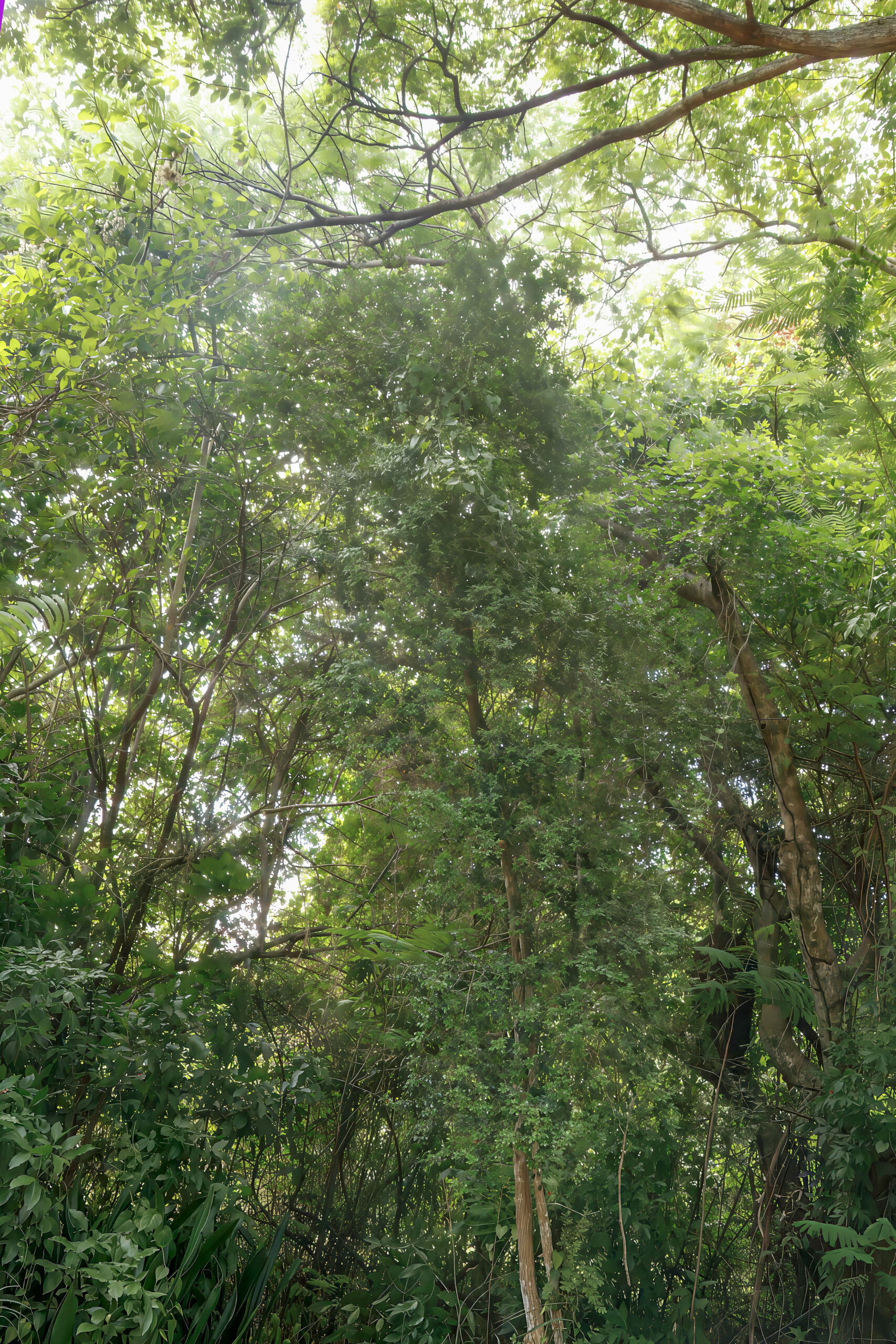
- Growth Habit: Small to medium-sized tree; part of dry to moist forest ecosystems in limited locations (notably in southern Puerto Rico).
- Phenology Triggers: Flowering and fruiting are likely influenced by rainfall and seasonal temperature shifts.
- Observation Tips: Document timing and abundance of flower and fruit production each year; monitor leaf flushes as indicators of health and hydration. Due to rarity, consistent monitoring can contribute valuable data to conservation.