
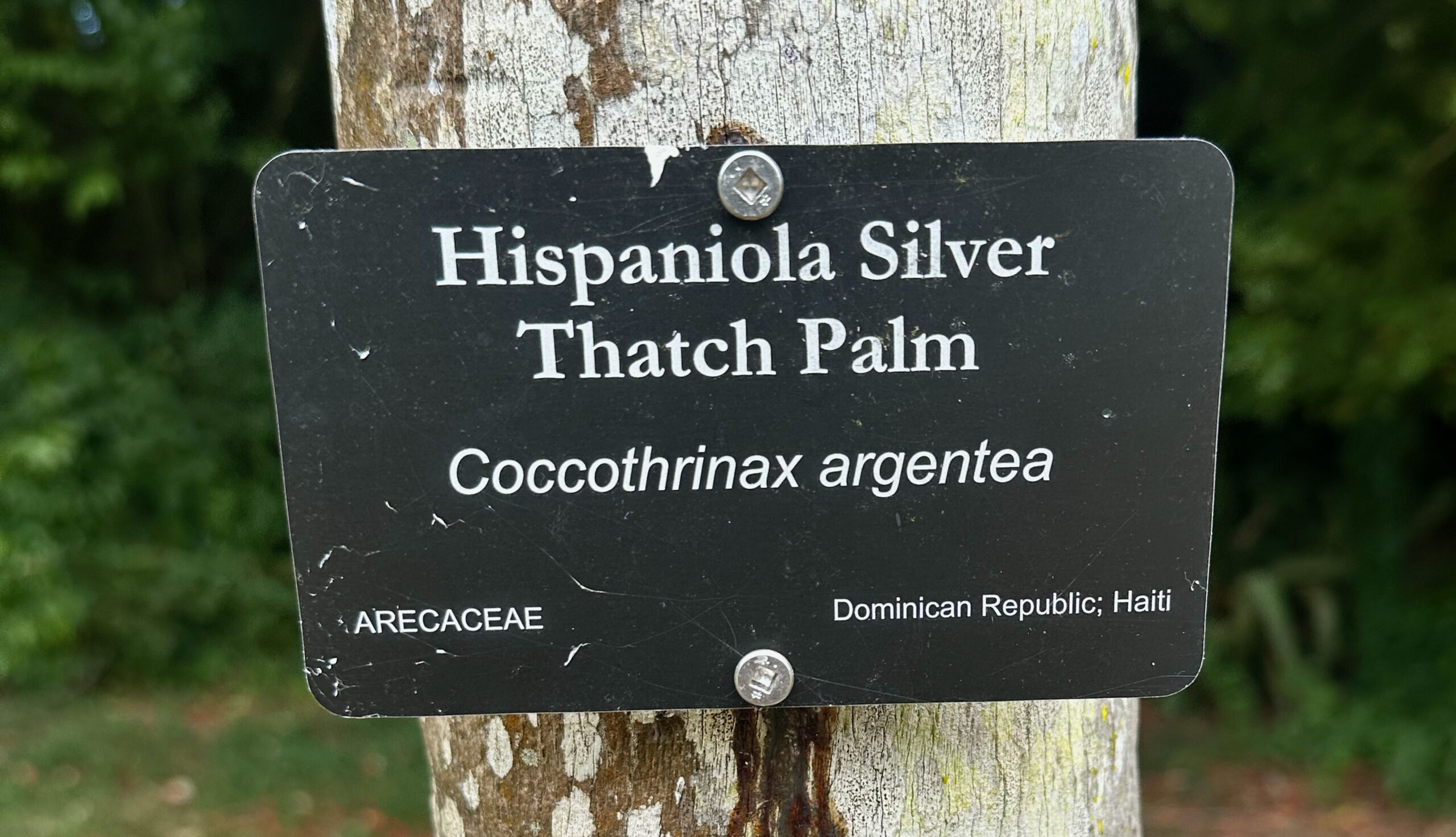
Hispaniola Silver Thatch Palm
Scientific name: Coccothrinax argentea
IUCN Red List threat level: Least Concern
GPS Location: 17° 42′ 54.13″ N, 64° 49′ 47.13″ W
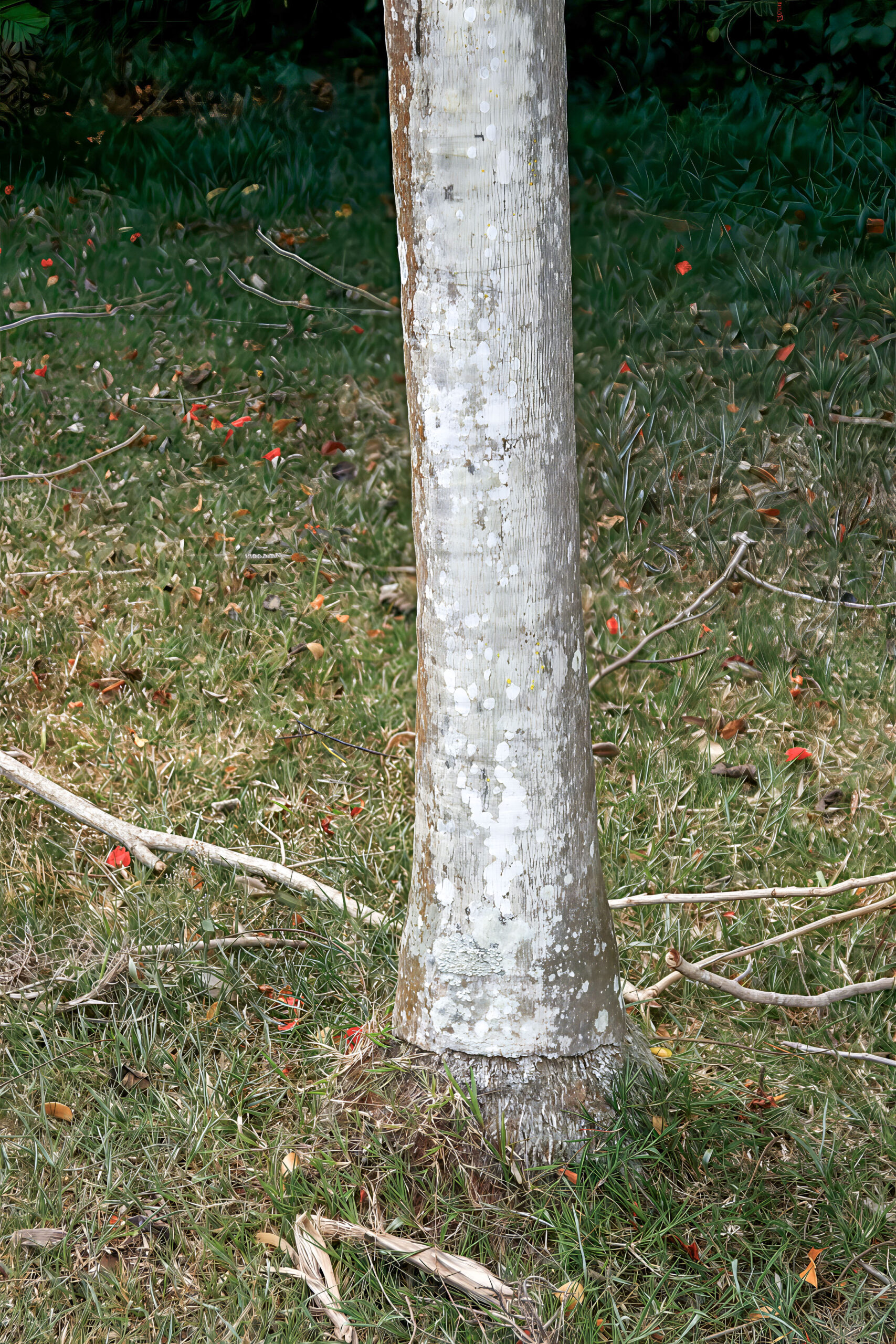
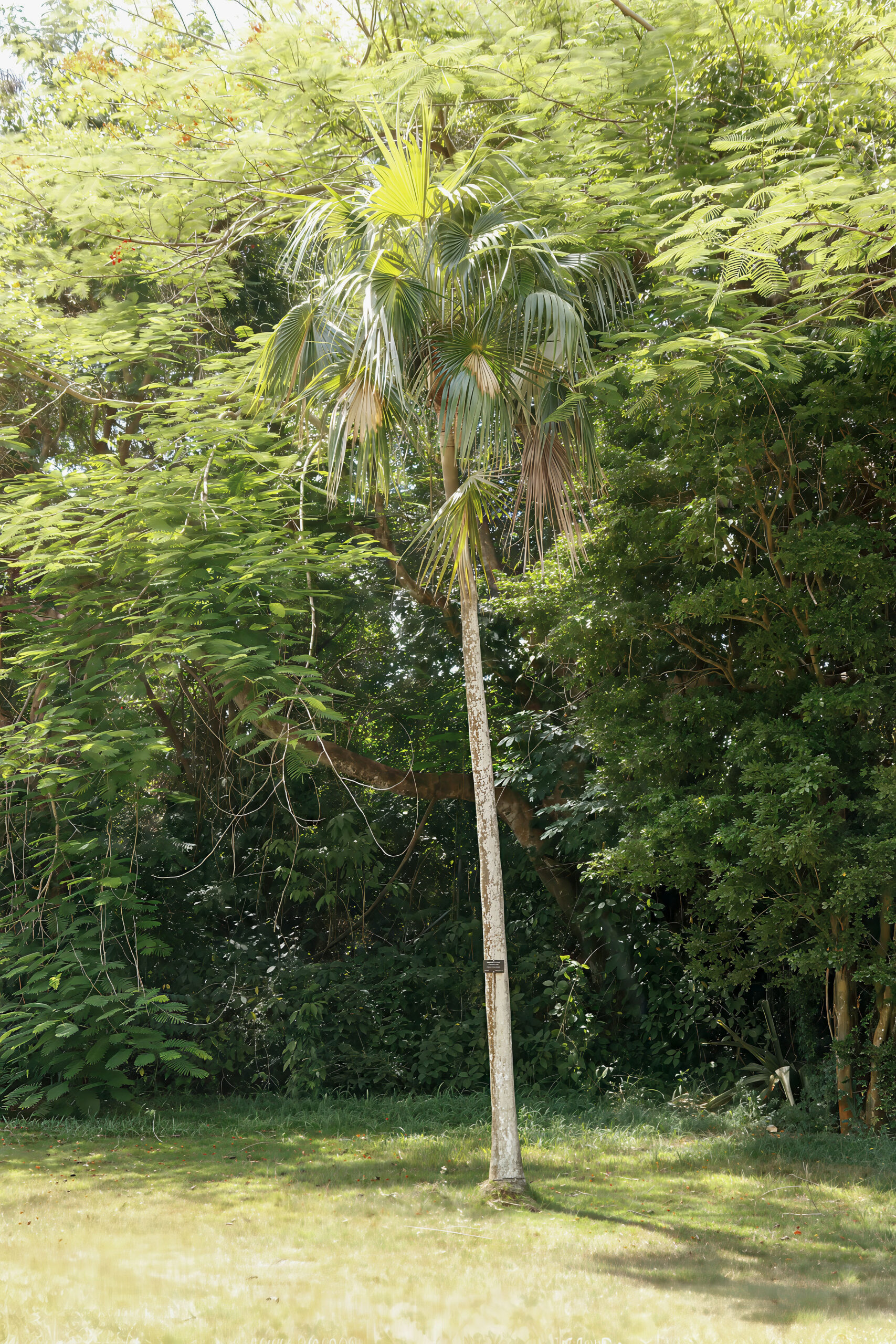
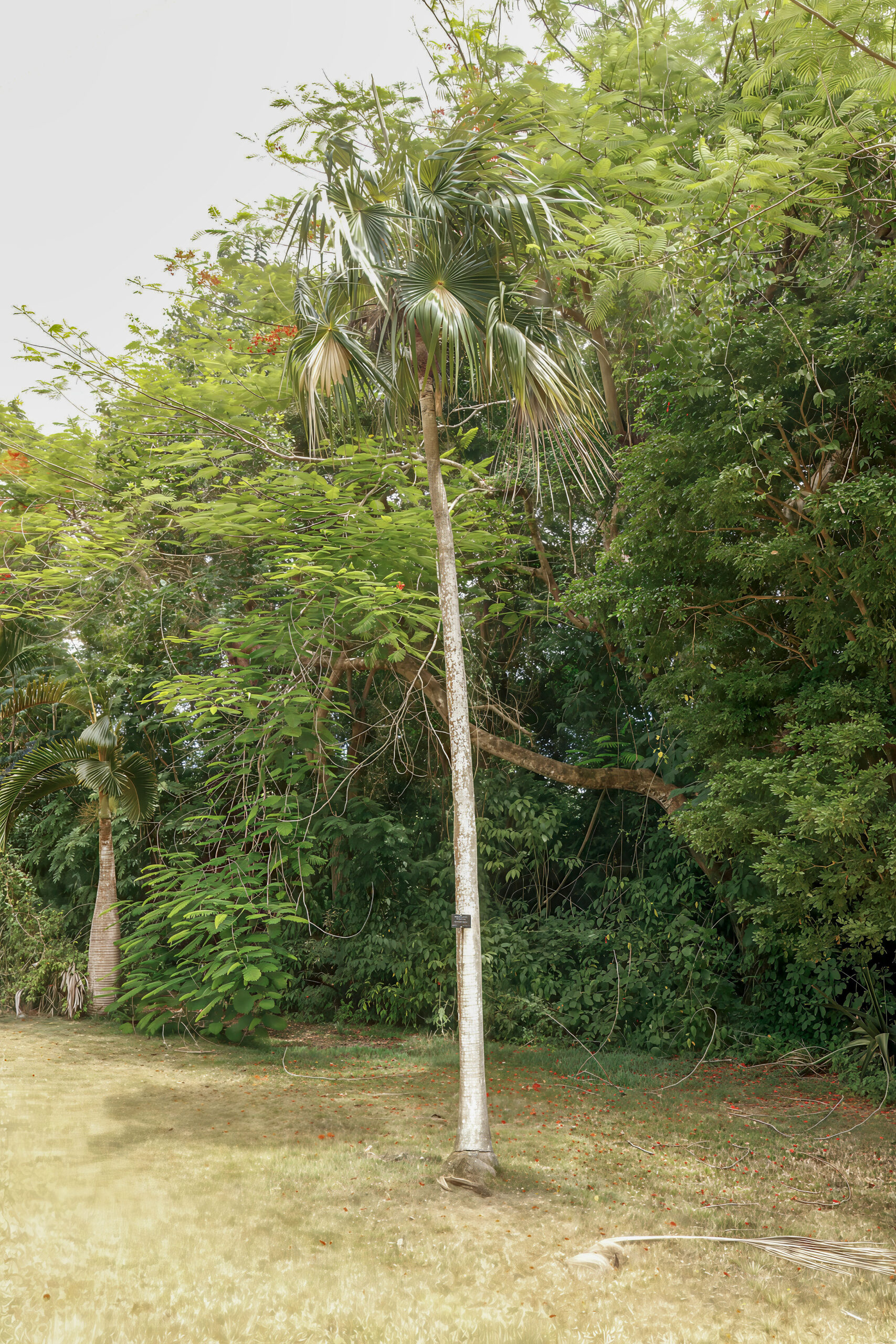
Observations:
Phenological Markers – Coccothrinax argentea (Hispaniolan Silver Palm)
Family: Arecaceae (Palm family)
Common Names: Hispaniolan Silver Palm, Silver Thatch Palm, Palma plateada
Habitat: Endemic to Hispaniola (Dominican Republic and Haiti); widely cultivated in the Caribbean, including the Virgin Islands, for ornamental and traditional uses. Prefers dry, rocky soils, often found in scrublands, savannas, and coastal dry forests.
Phenological Markers:
- Flowering Period:
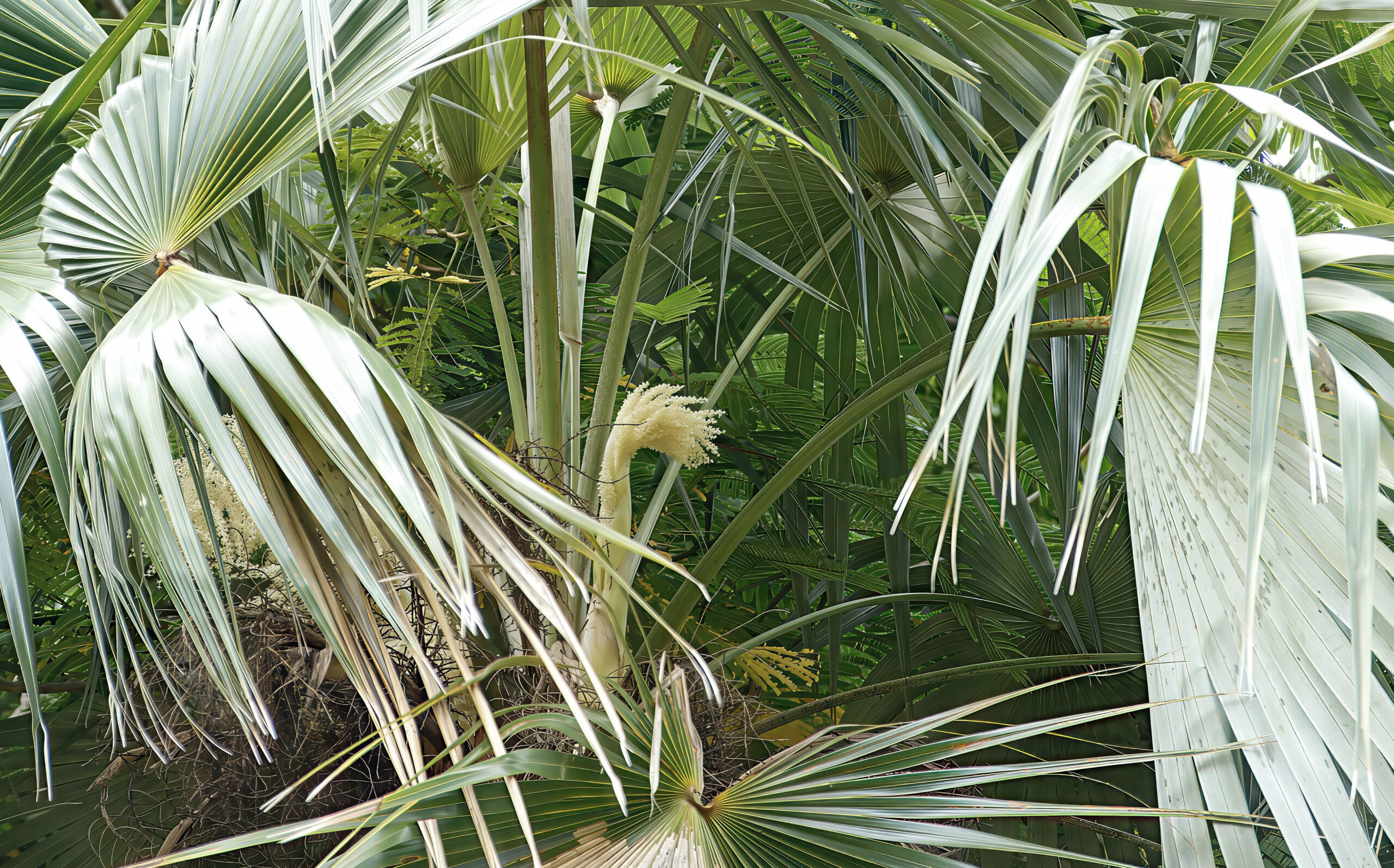
Generally flowers in late spring through summer (May to August), but can flower intermittently year-round in humid tropical climates. Flowers are small, creamy-white, and occur in long, branched inflorescences that extend beyond the leaves. - Fruiting Period:
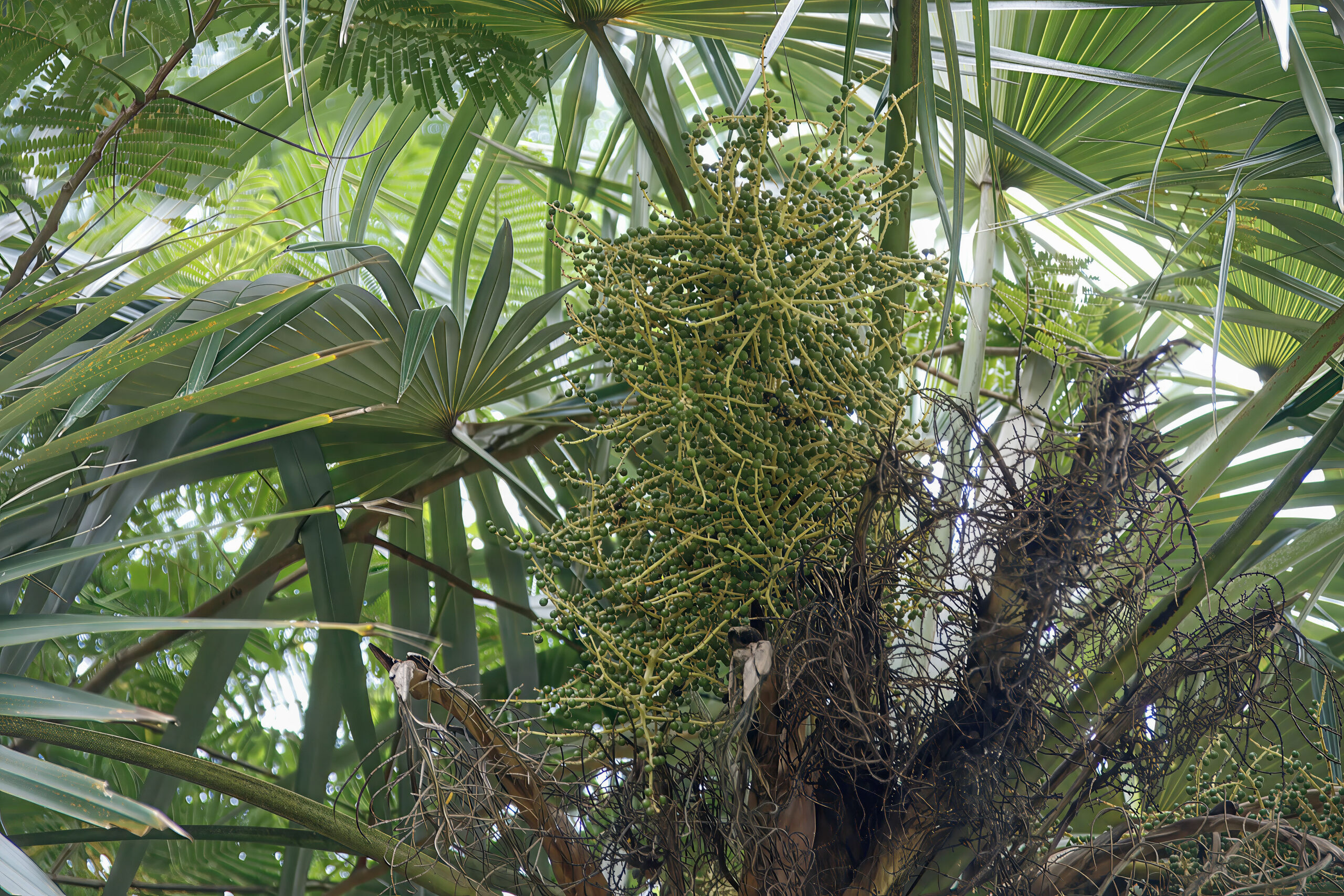
Fruits mature approximately 4–5 months after flowering, typically from September to December. The fruit is a small, shiny black drupe about 1 cm in diameter. - Leaf Fall:
Evergreen. Older fronds dry and hang downward or fall off naturally. Manual pruning is often used in cultivated specimens for tidiness. - Budding Period:
New fronds emerge continuously throughout the year, with a peak in early rainy season (April to June), often overlapping with flowering.
Key Features:
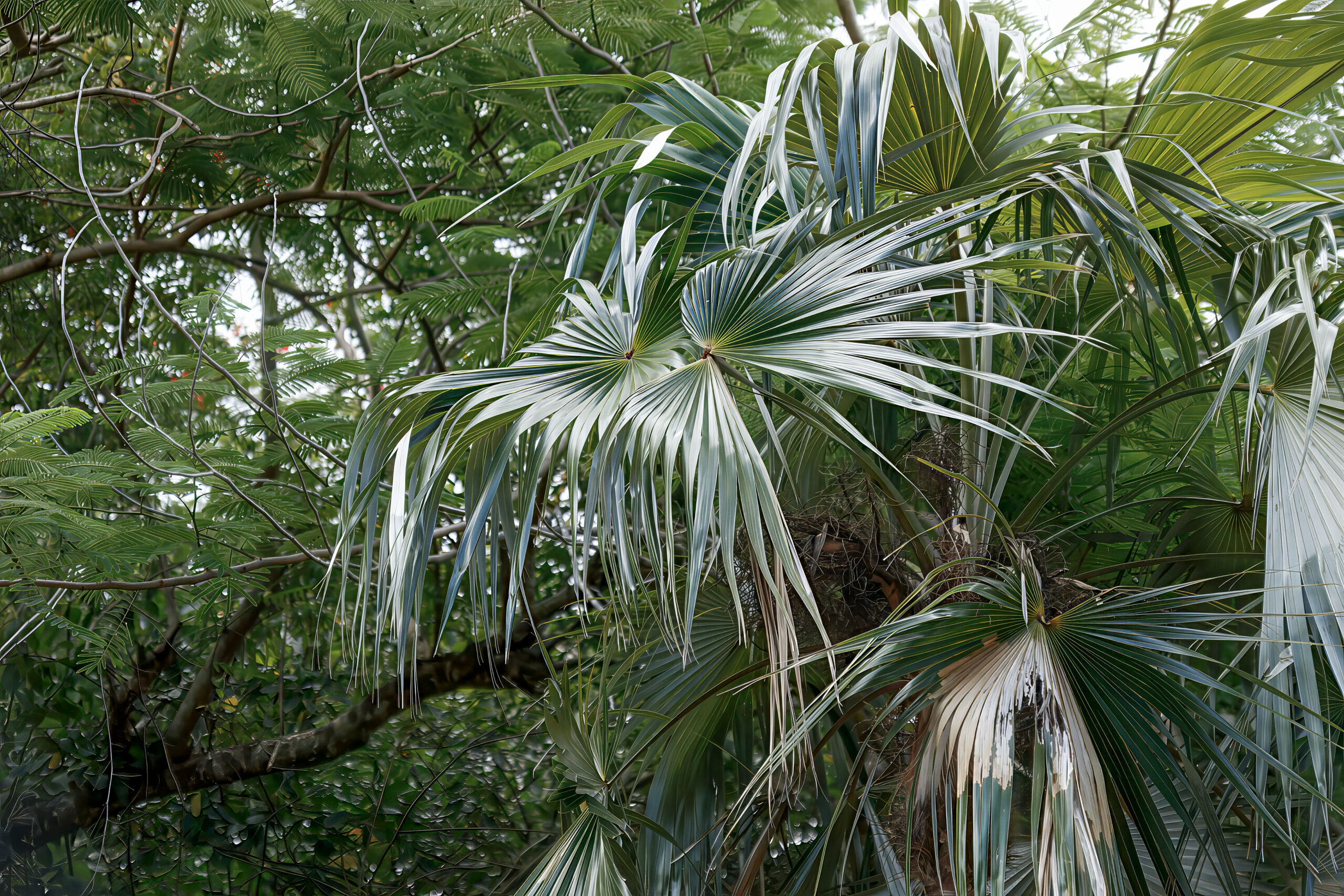
- Leaves: Fan-shaped (palmate), dark green above with a striking silvery-white underside that gives the palm its name. The leaf surface is covered in fine, reflective scales.
- Trunk: Slender, solitary, and gray with visible ring scars; typically grows 3–10 meters tall.
- Flowers: Tiny, fragrant, and pale yellow-white, produced in clusters on long, graceful inflorescences.
- Fruits: Small black drupes that are a food source for birds and other wildlife.
Additional Notes:
Often confused with Coccothrinax argentata, but C. argentea generally has a more robust trunk and more vividly silver leaf undersides.
This species is highly valued in traditional Dominican culture for thatching and making hats, baskets, and fans.
Drought-tolerant, salt-tolerant, and ideal for xeriscaping and coastal restoration.