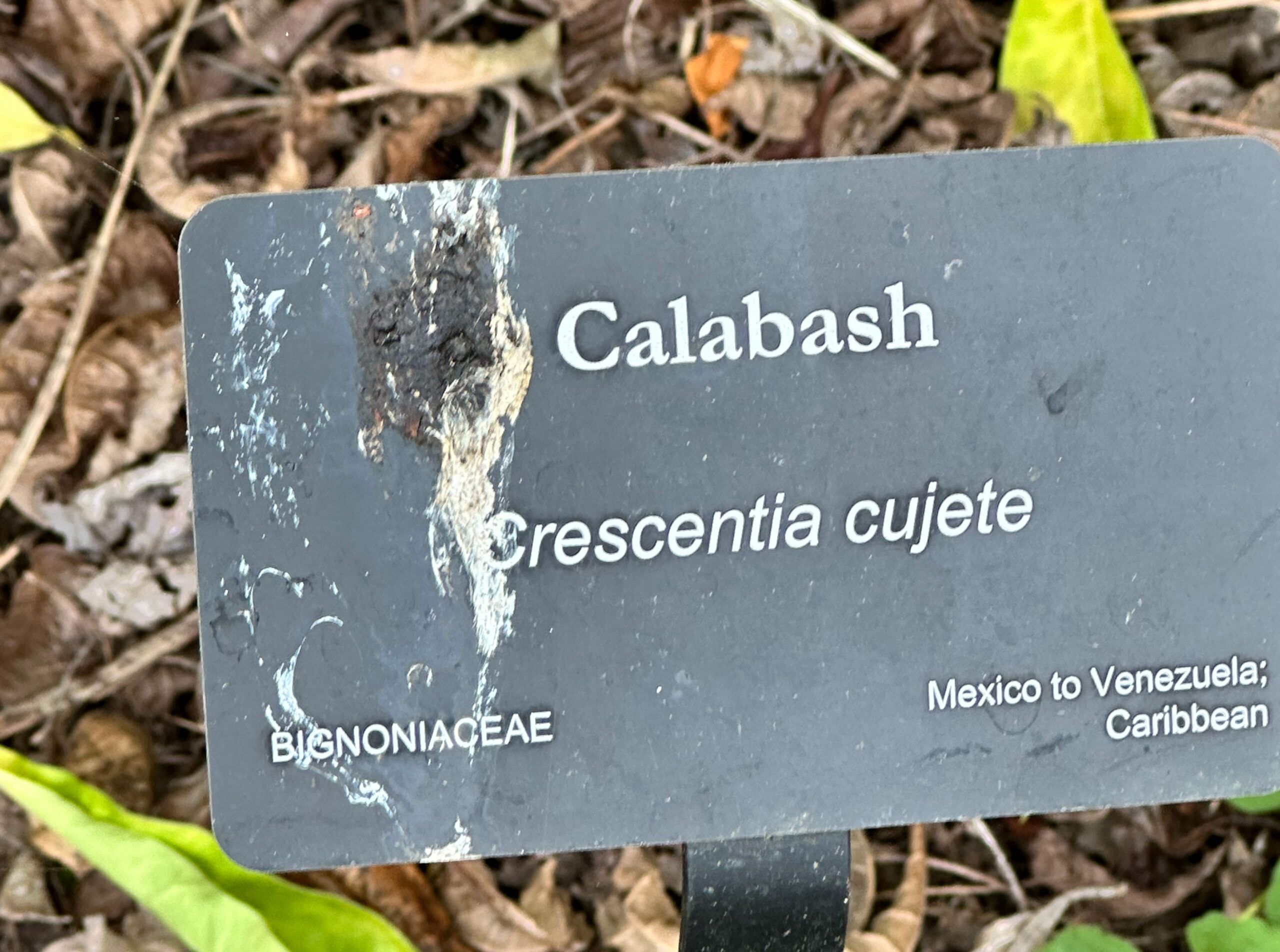
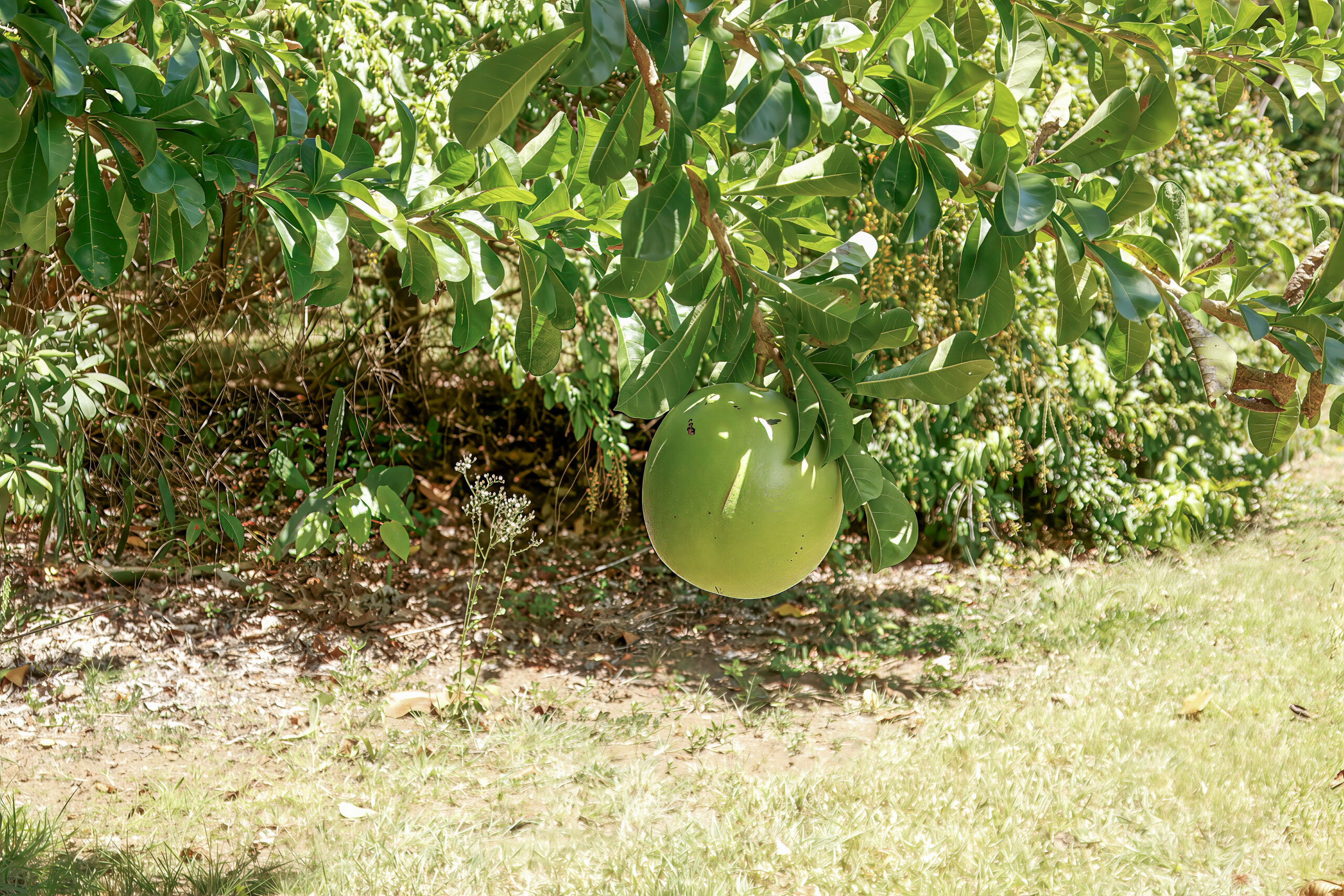
Calabash Tree
Scientific name: Crescentia cujete
POWO Status: Tree
IUCN Red List threat level: Least Concern
GPS Location: 17° 42′ 54.09″ N, 64° 49′ 48.75″ W


Medicinal Uses
Crescentia cujete, or the Calabash tree, is used in traditional medicine for various ailments, with different parts offering benefits, including treating hypertension, respiratory issues (coughs, asthma, colds), digestive problems (diarrhea, stomachaches, parasites), and even cancer, thanks to its anti-inflammatory, antioxidant, and antimicrobial compounds. Leaves are used for headaches and hypertension, while fruit pulp is made into syrups for colds and coughs, or used for menstrual pain and childbirth assistance, with studies showing promising anti-cancer and antimicrobial properties.
Common Medicinal Uses by Plant Part
- Leaves:
- Treat hypertension (high blood pressure).
- Used for coughs, colds, bronchitis, and asthma.
- Applied for headaches, bruises, and as a diuretic.
- Chewed for toothaches and used as a wash for wounds.
- Fruit (Pulp/Juice):
- Syrups made from fruit help with colds, coughs, and lung issues.
- Used for diarrhea, stomachaches, and intestinal parasites.
- Traditional use for inducing childbirth, easing menstrual pain, and in some cases, abortion.
- Decoctions used for snakebites (unripe fruit) and general inflammation.
- Whole Plant/Other Parts:
- Used for cancer, pneumonia, and diabetes management.
- Possesses significant antibacterial and anti-inflammatory potential.
Scientific Basis
- Phytochemistry: Contains flavonoids (like quercetin), terpenes, and acids (citric, tartaric).
- Pharmacology: Studies highlight its anti-inflammatory, antioxidant, and antimicrobial activities, with extracts showing cytotoxicity against cancer cells.
*Note: While traditional uses are extensive, many studies focus on isolated compounds or extracts, and the plant’s traditional applications, particularly for inducing abortion or childbirth, should be approached with caution and professional medical advice.
Observations:
Phenological Markers – Calabash Tree (Crescentia cujete)
1. Flowering
The Calabash Tree produces greenish-yellow to purplish, bell-shaped flowers, often with dark veining and a slightly waxy texture. What makes it especially unique is its cauliflorous habit:
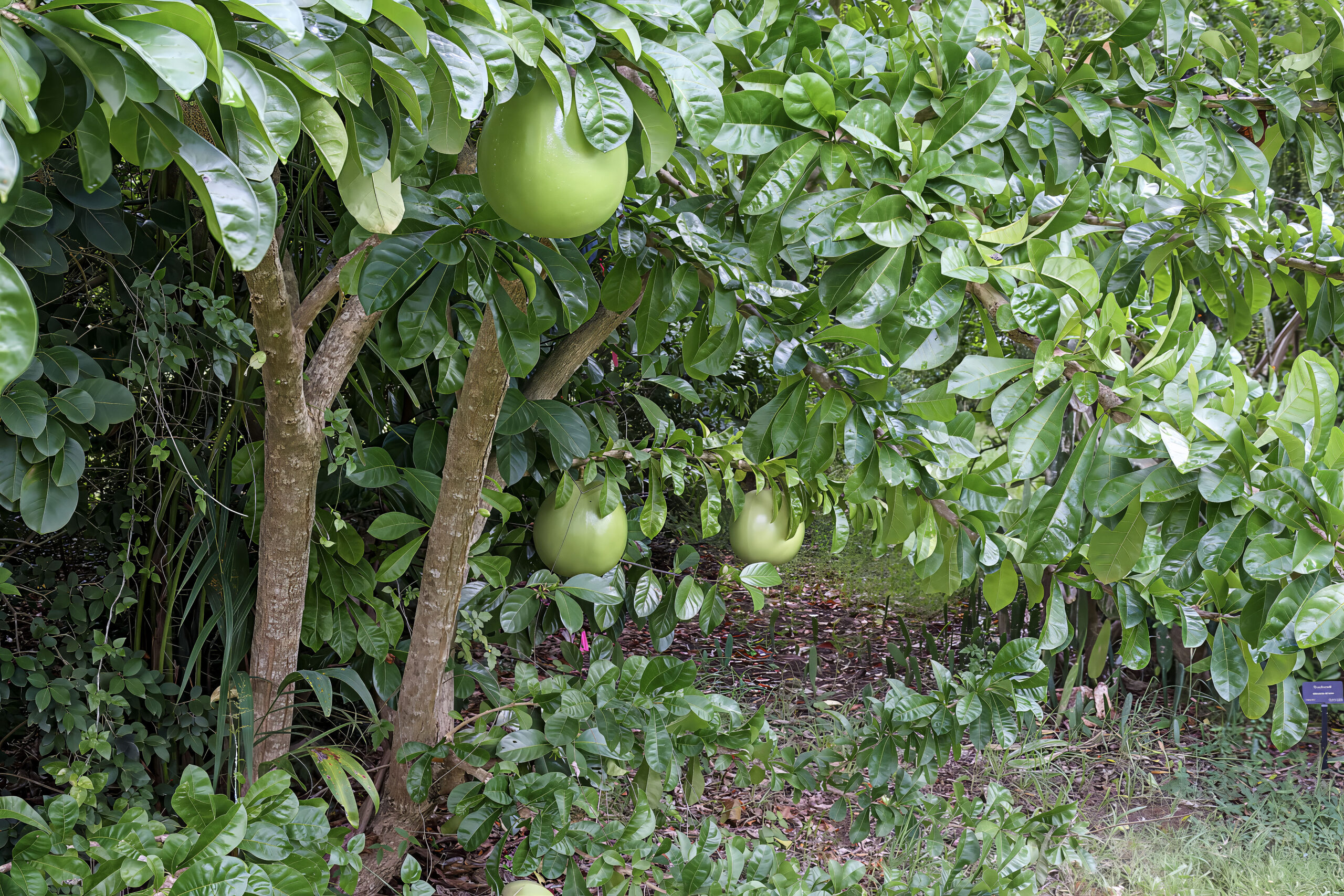
- Flowers grow directly from the trunk and larger branches, not the outer canopy.
- Flowering can occur throughout the year in tropical climates, but it may peak during the late dry to early wet season (March–May) in St. Croix.
- Flowers are bat-pollinated, opening in the late afternoon or early evening and lasting only a day.
Observation Tips:
- Look closely at the trunk and main limbs for buds and blossoms.
- Record time of day flowers appear and wither.
- Observe and note any pollinator activity at dusk or dawn.
2. Fruiting
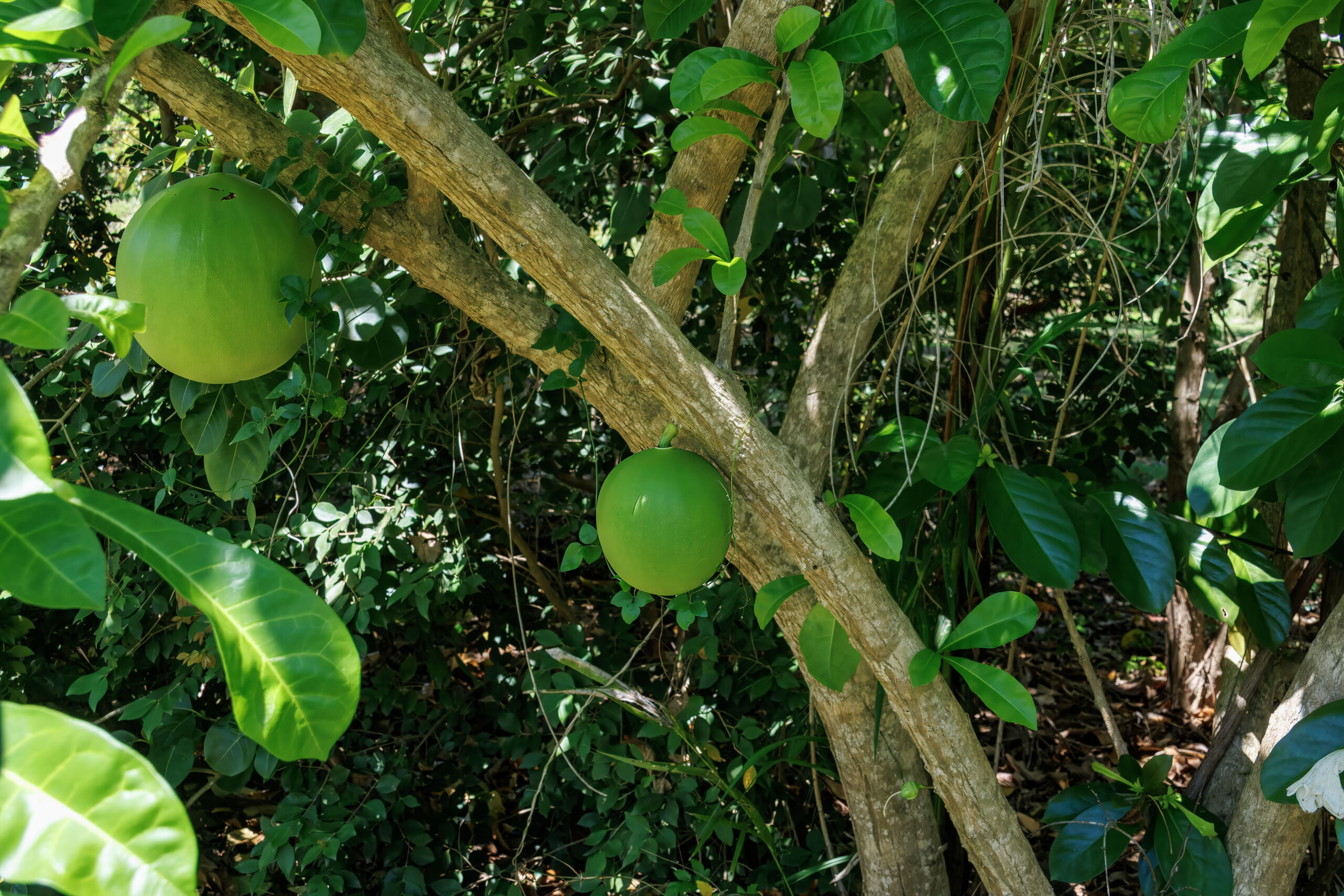
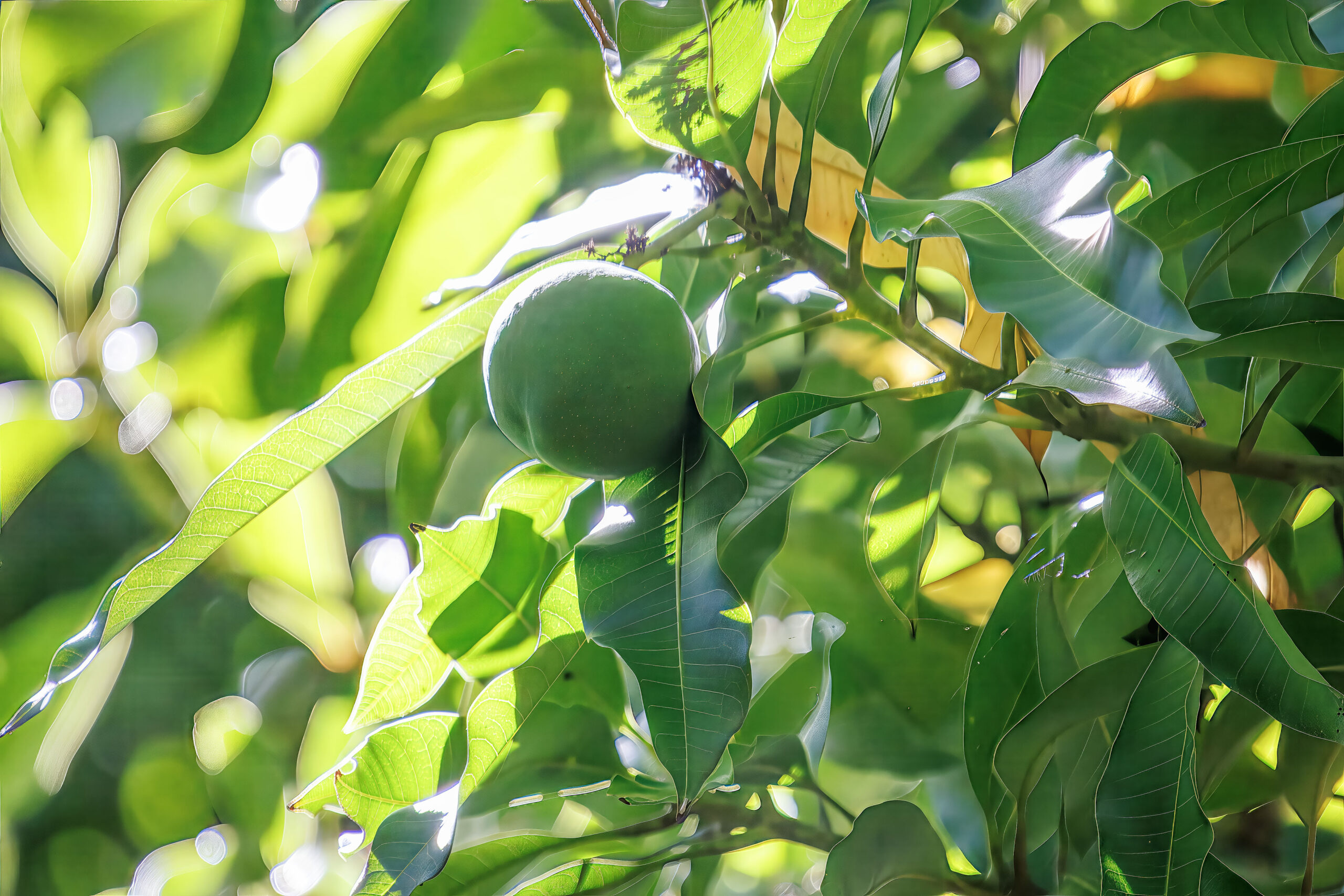
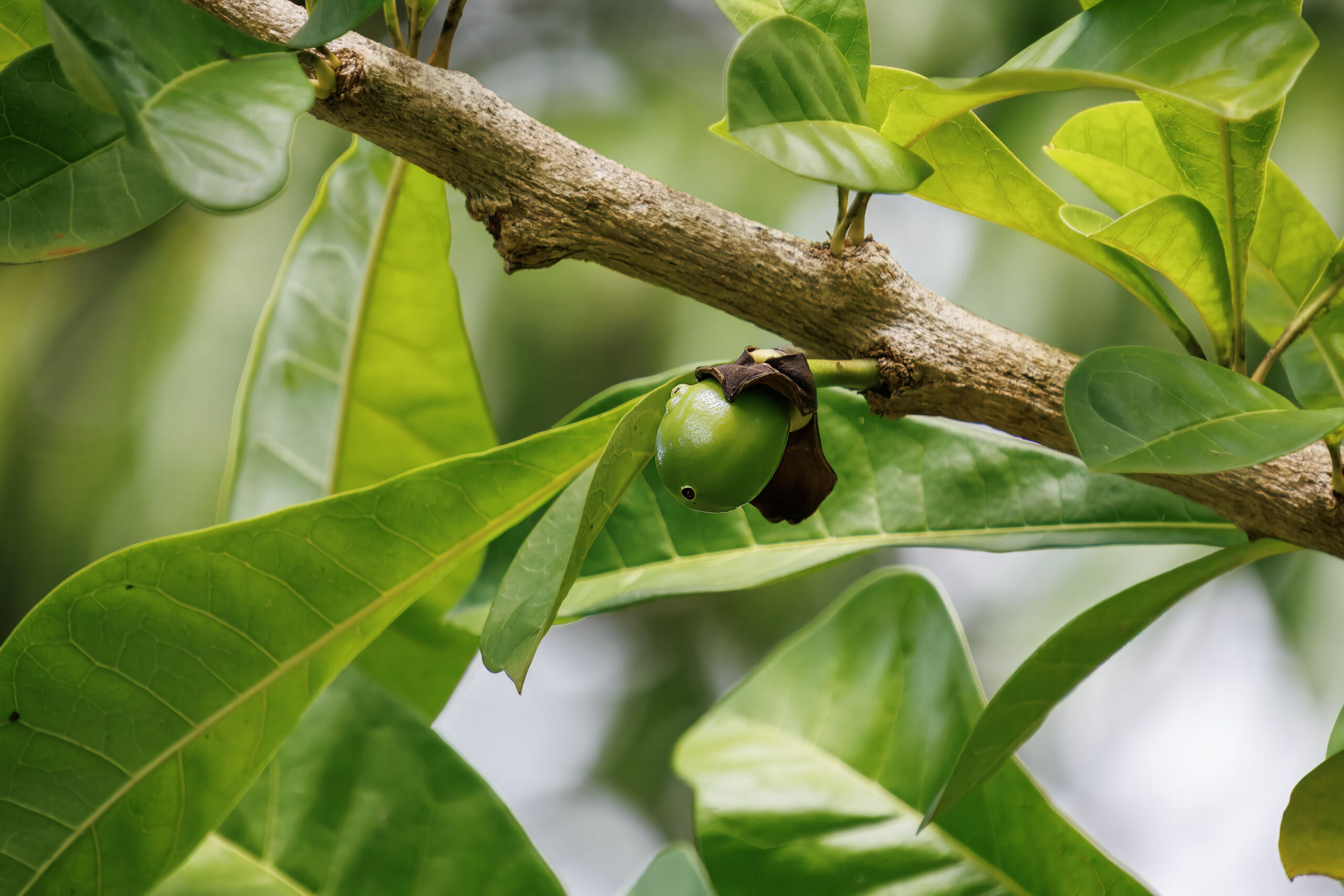
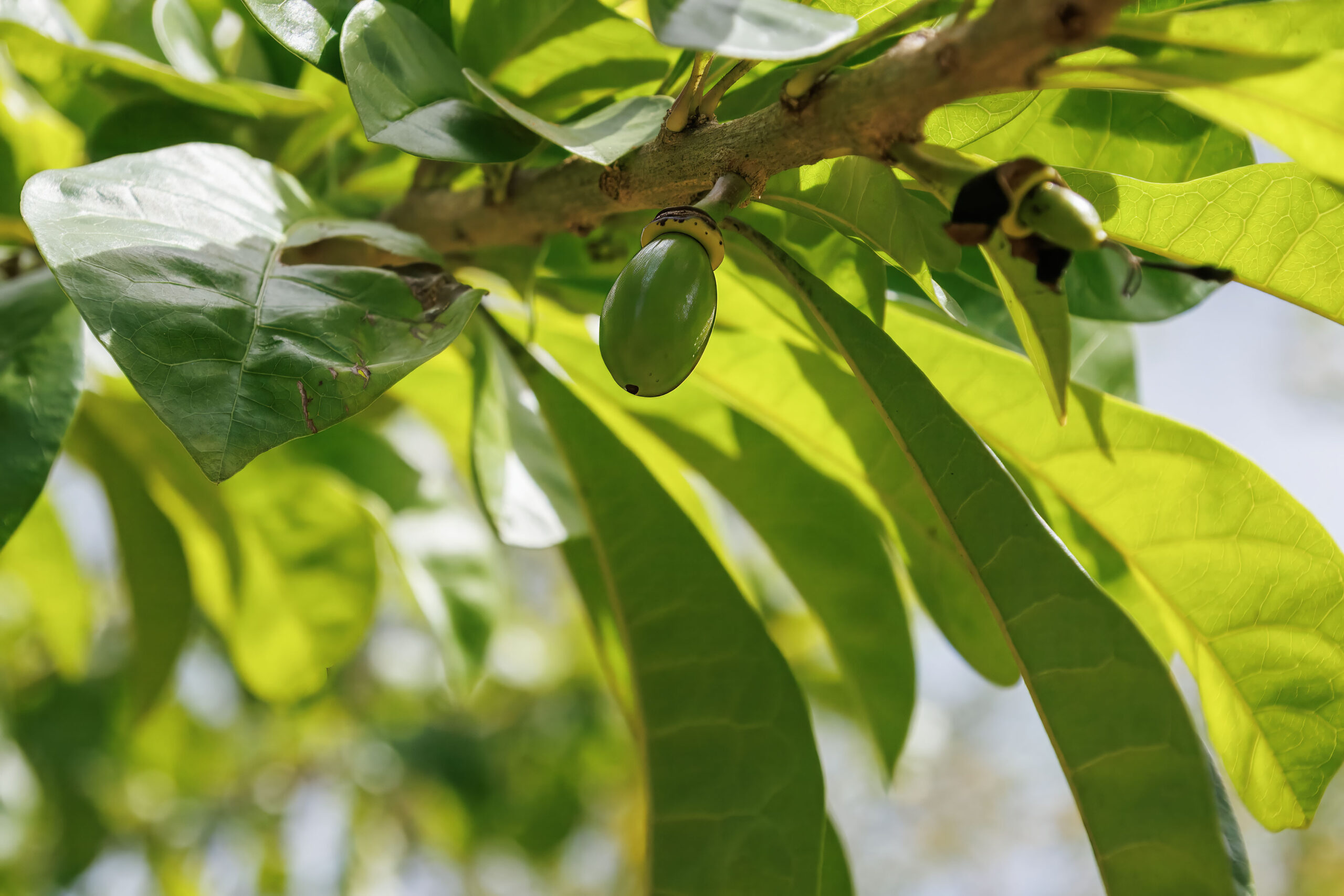
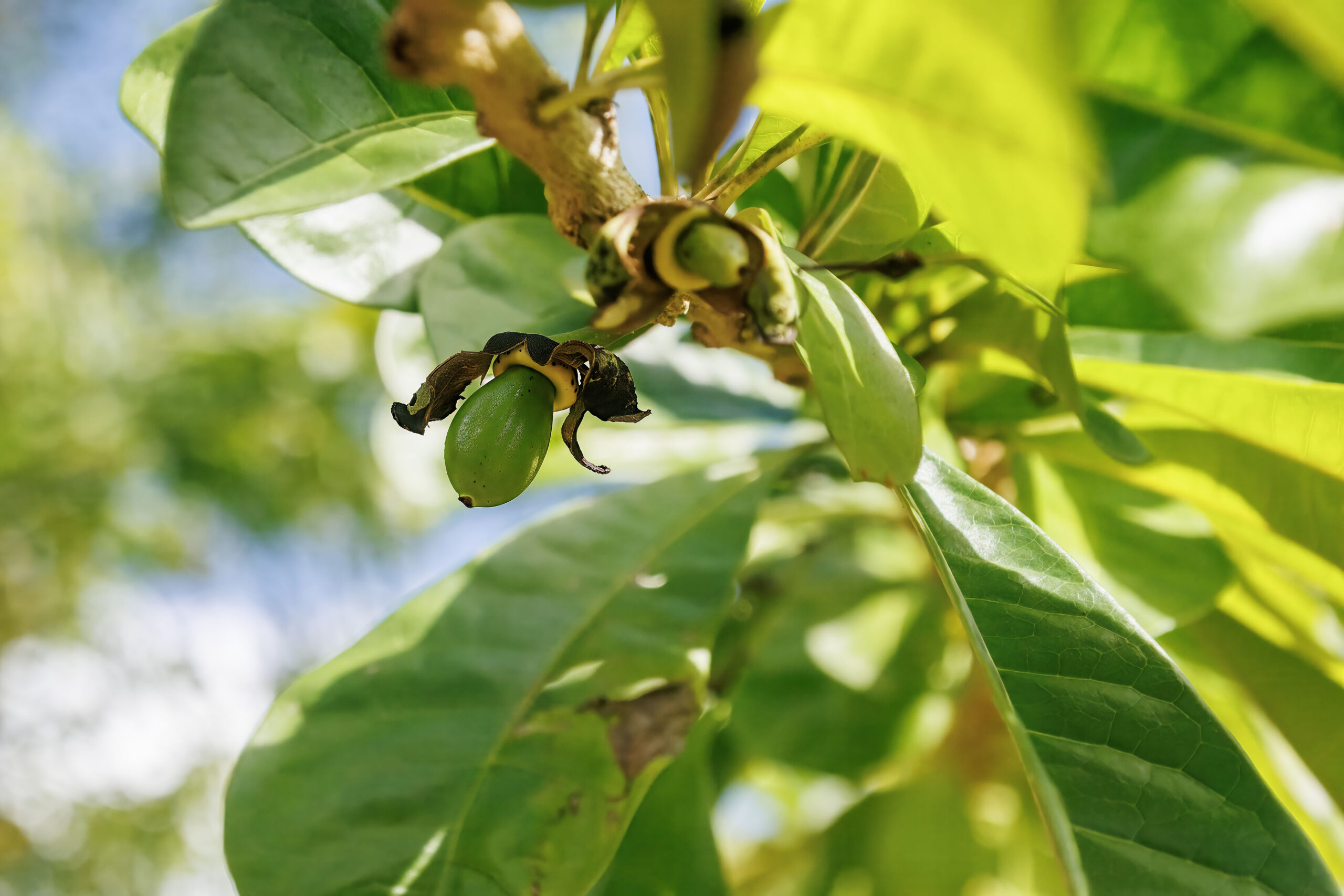
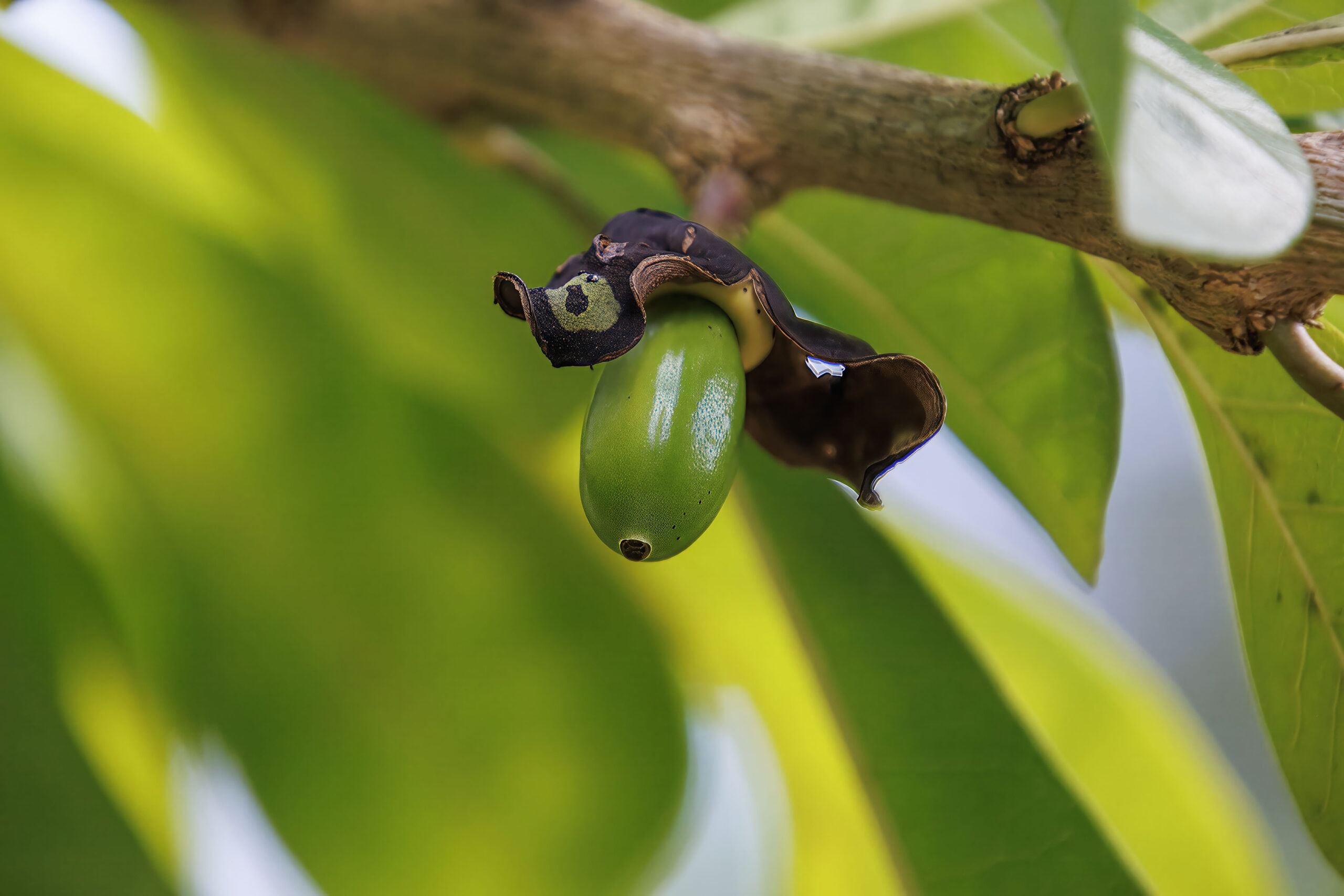
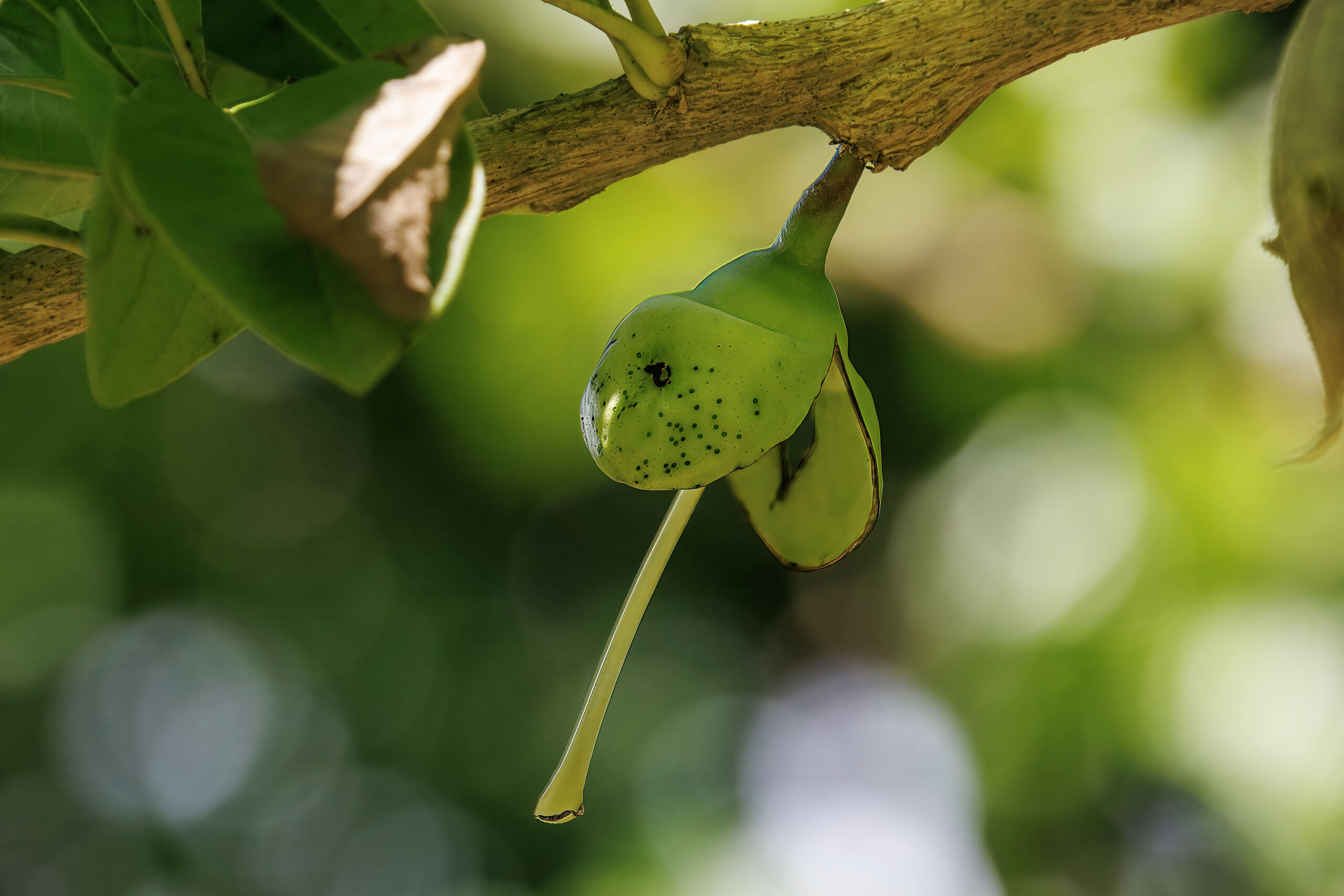
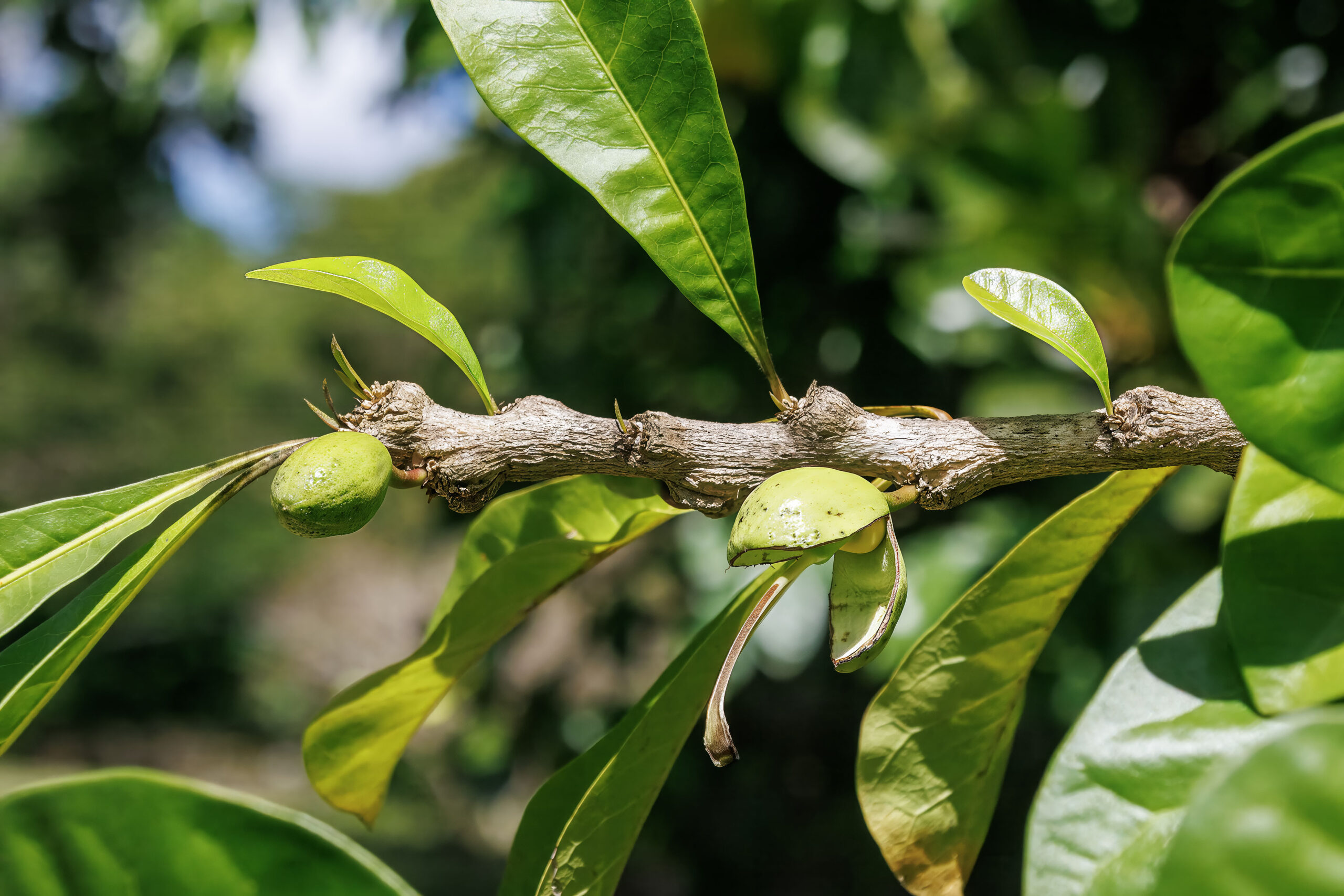
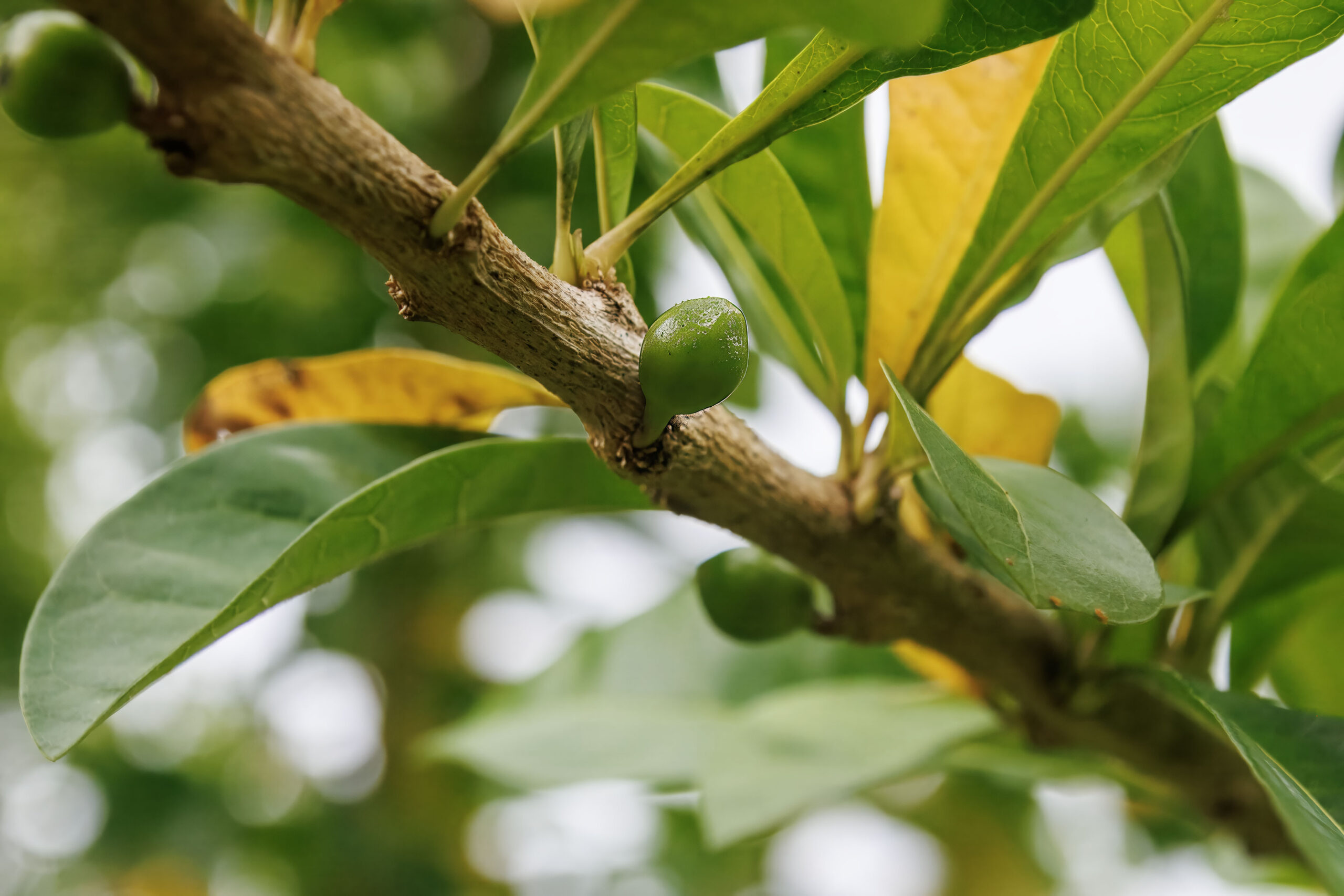
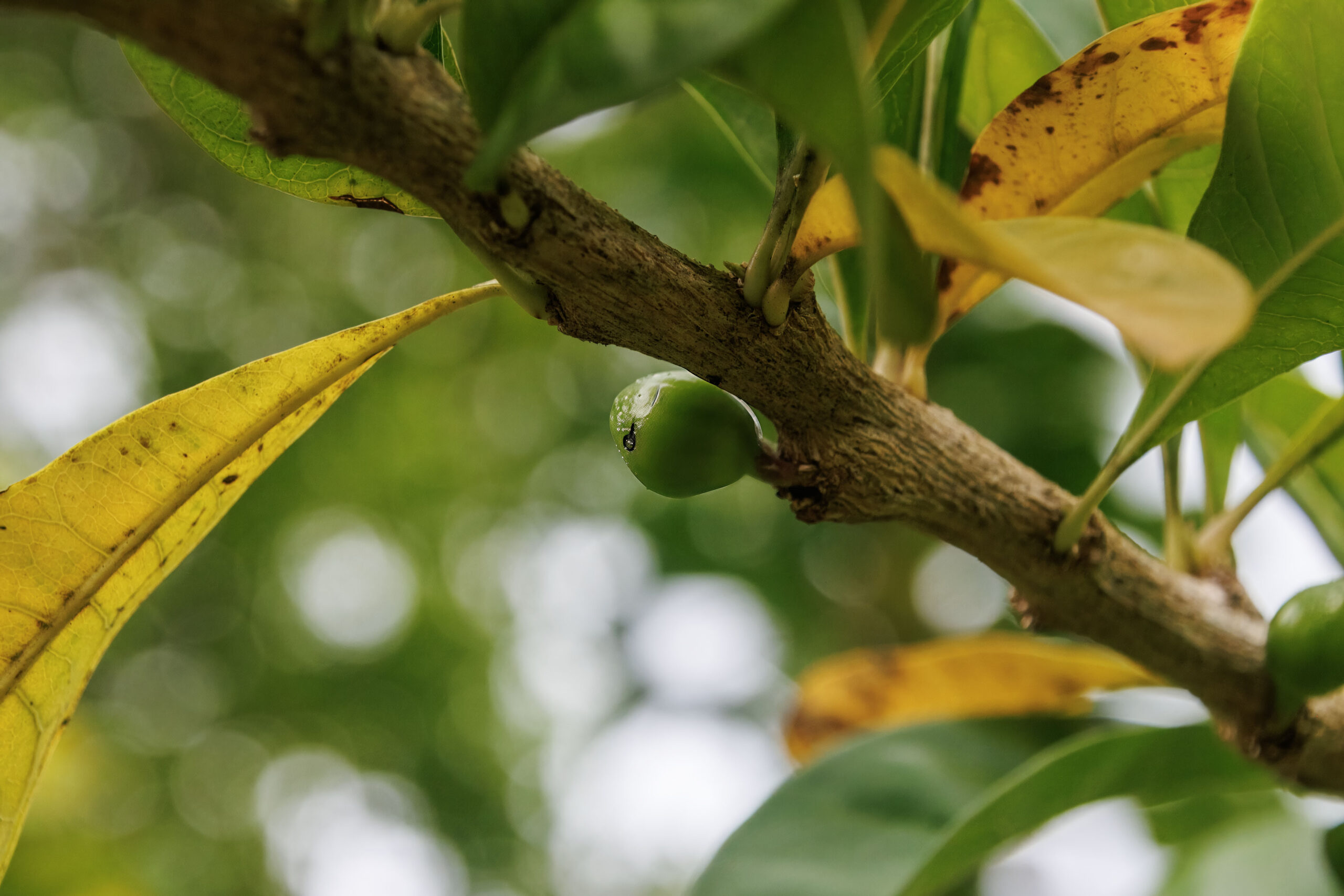
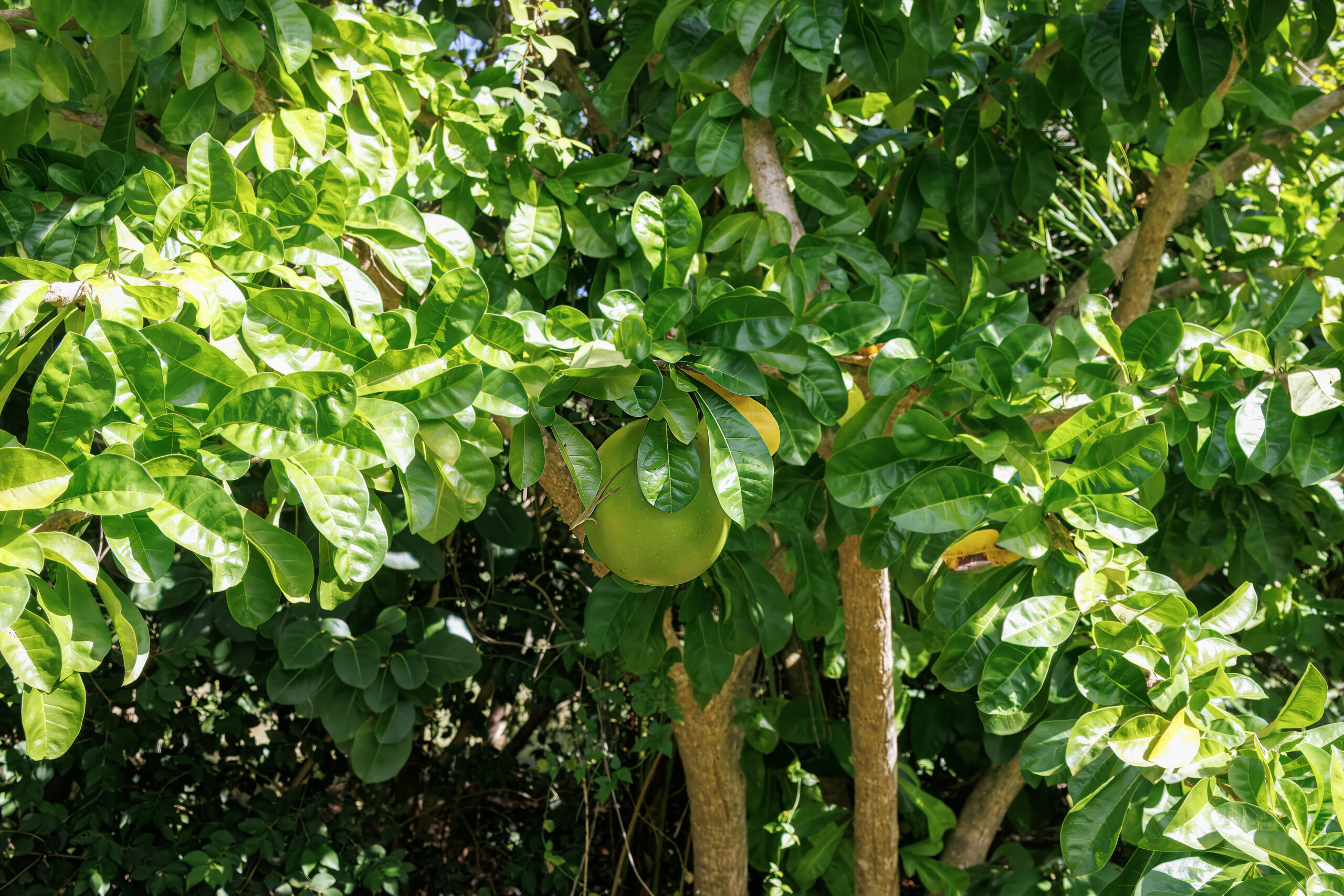
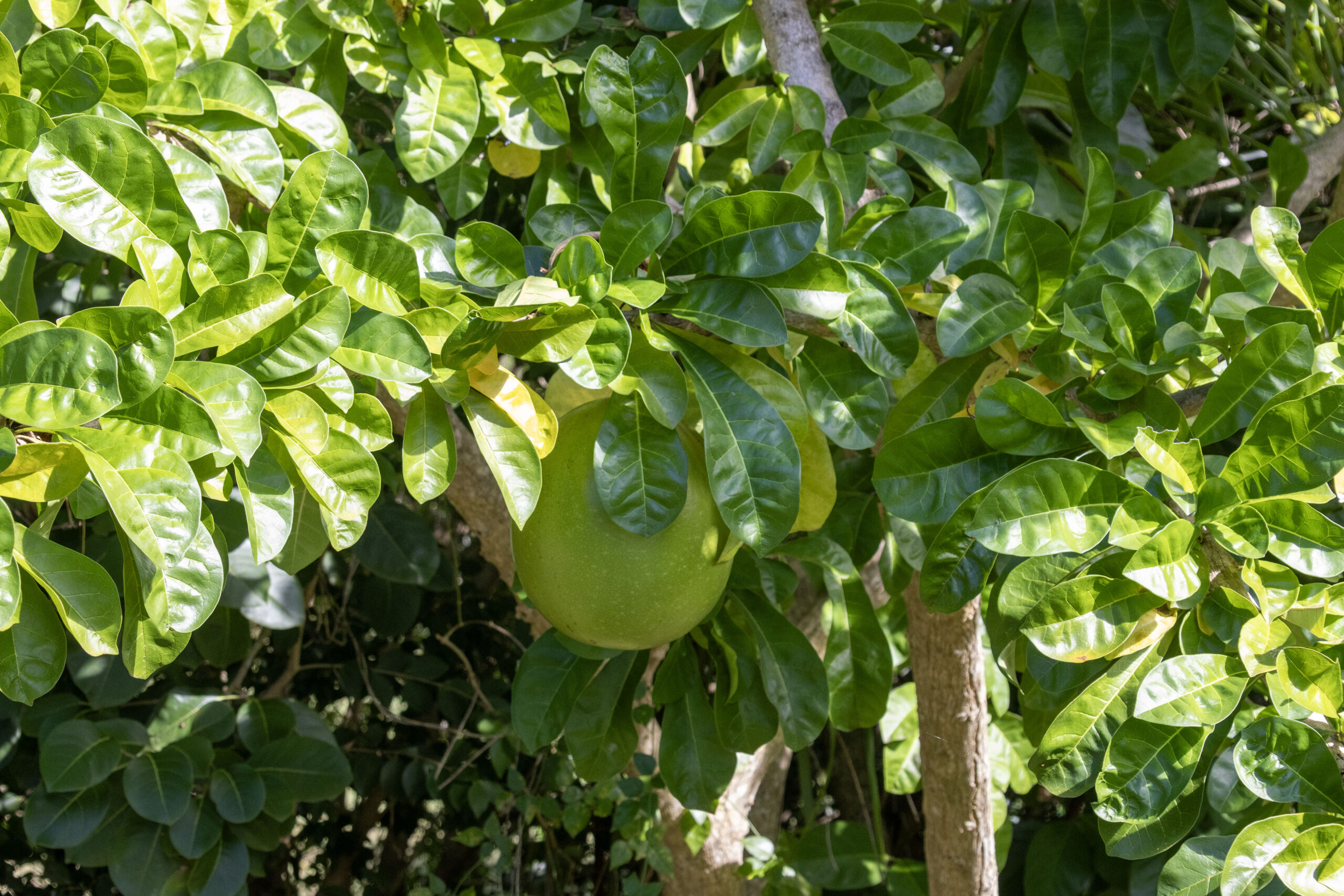
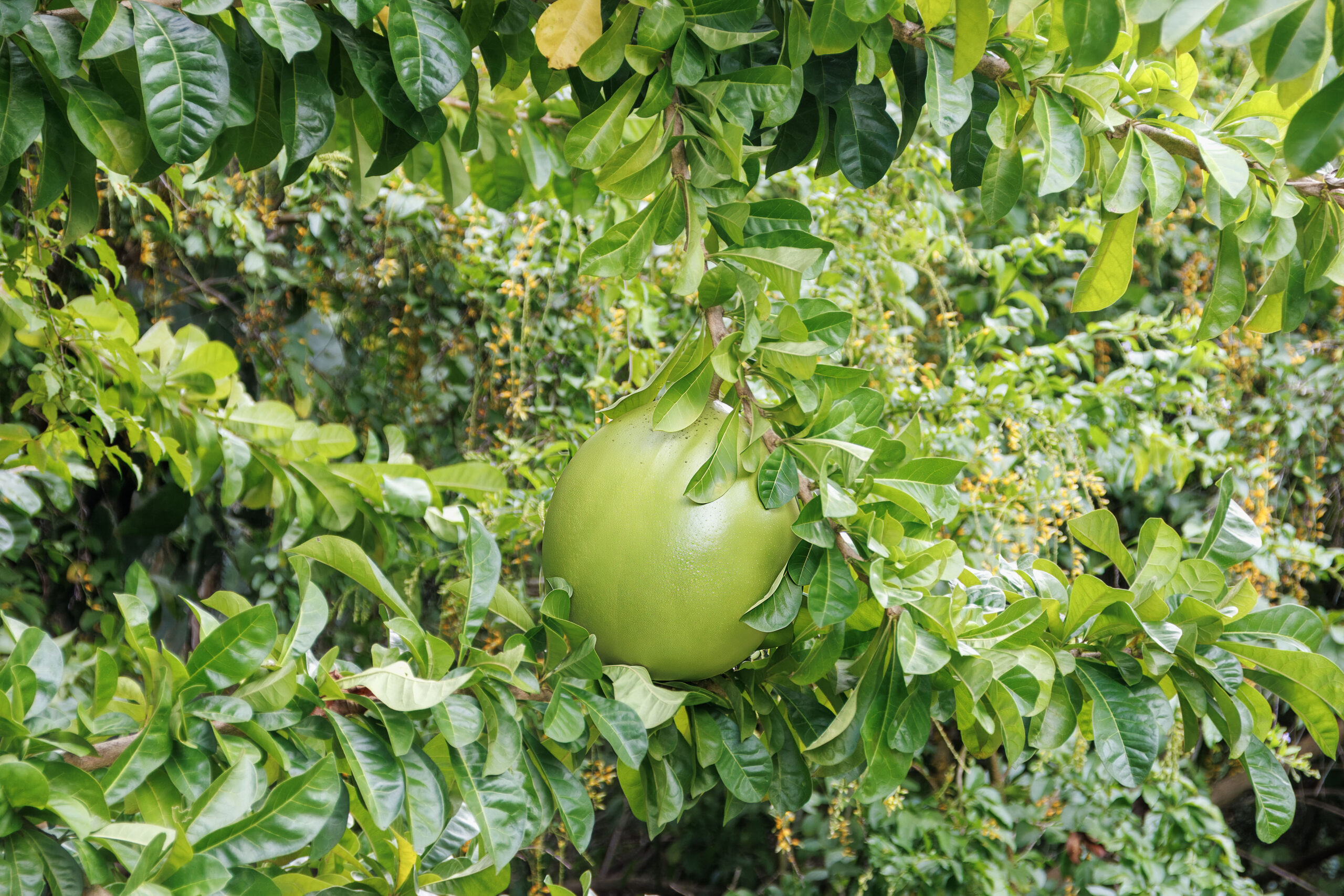
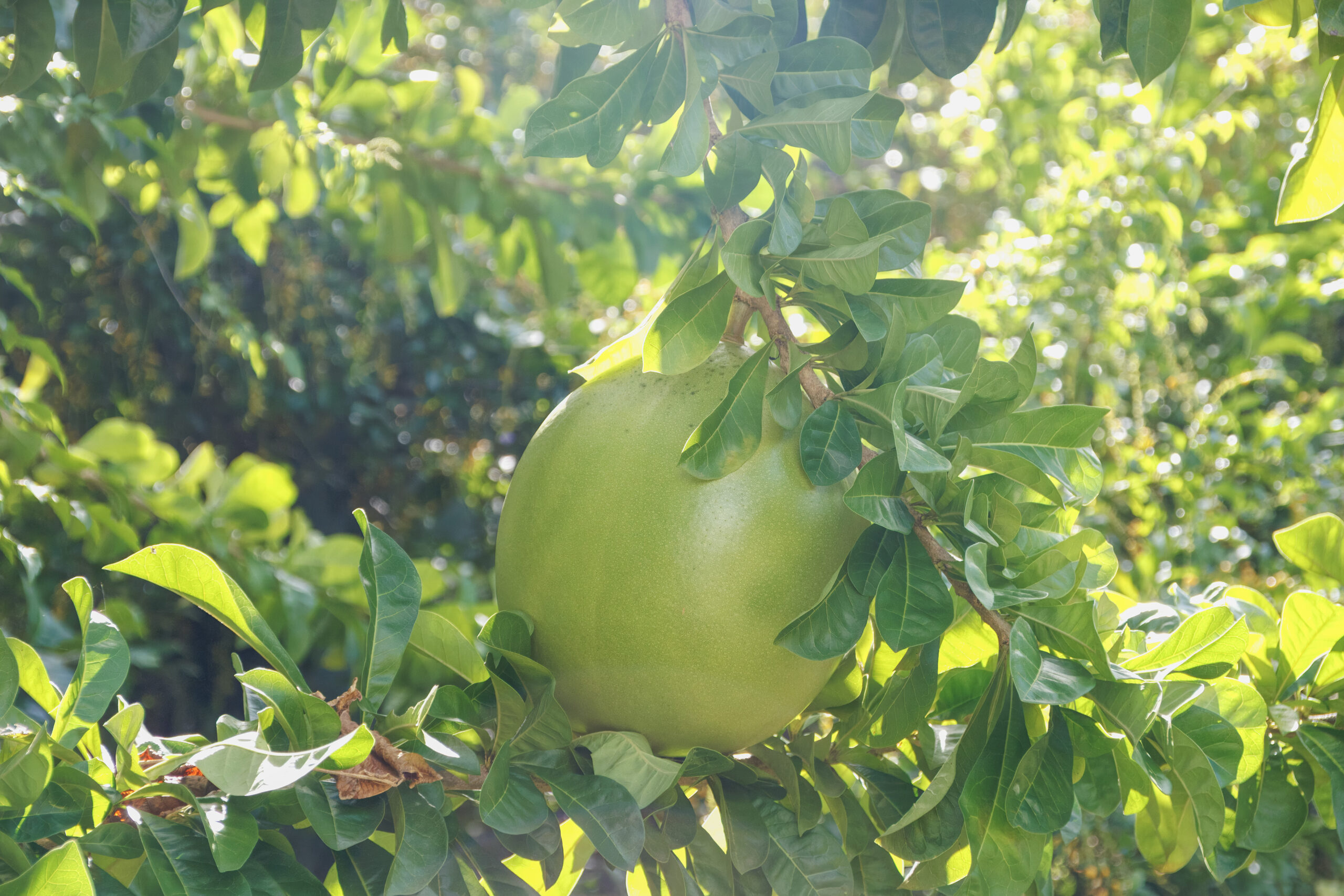
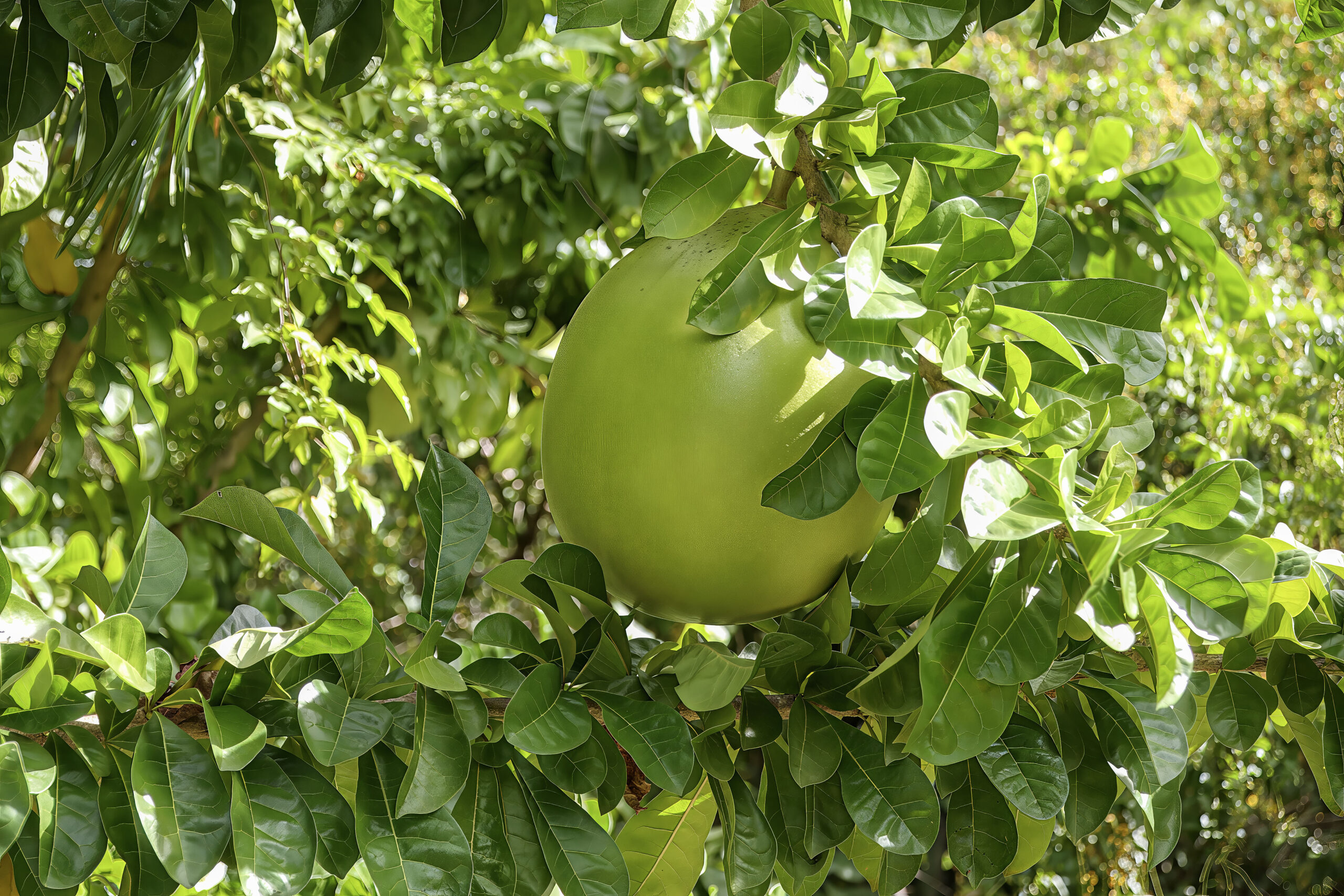
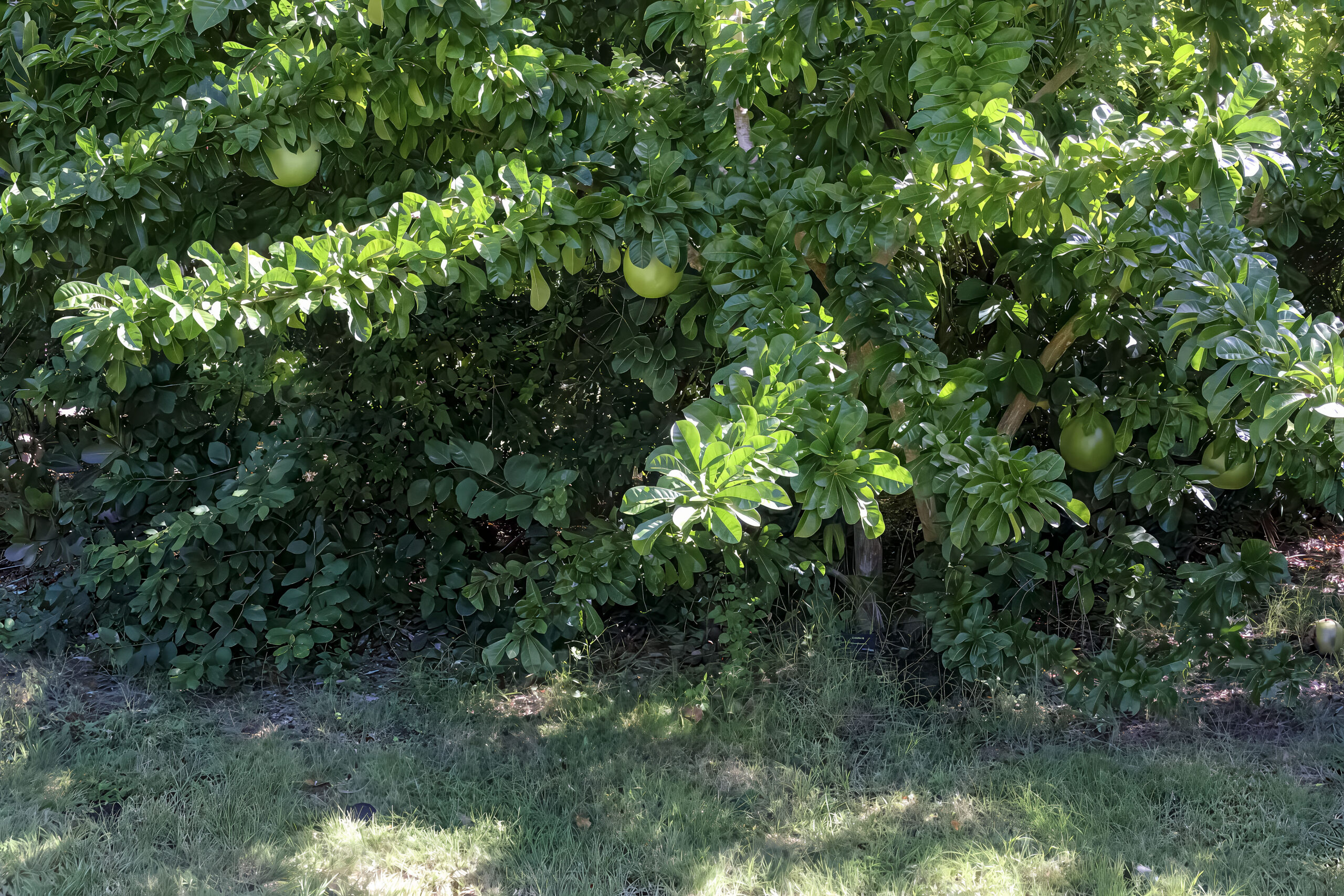
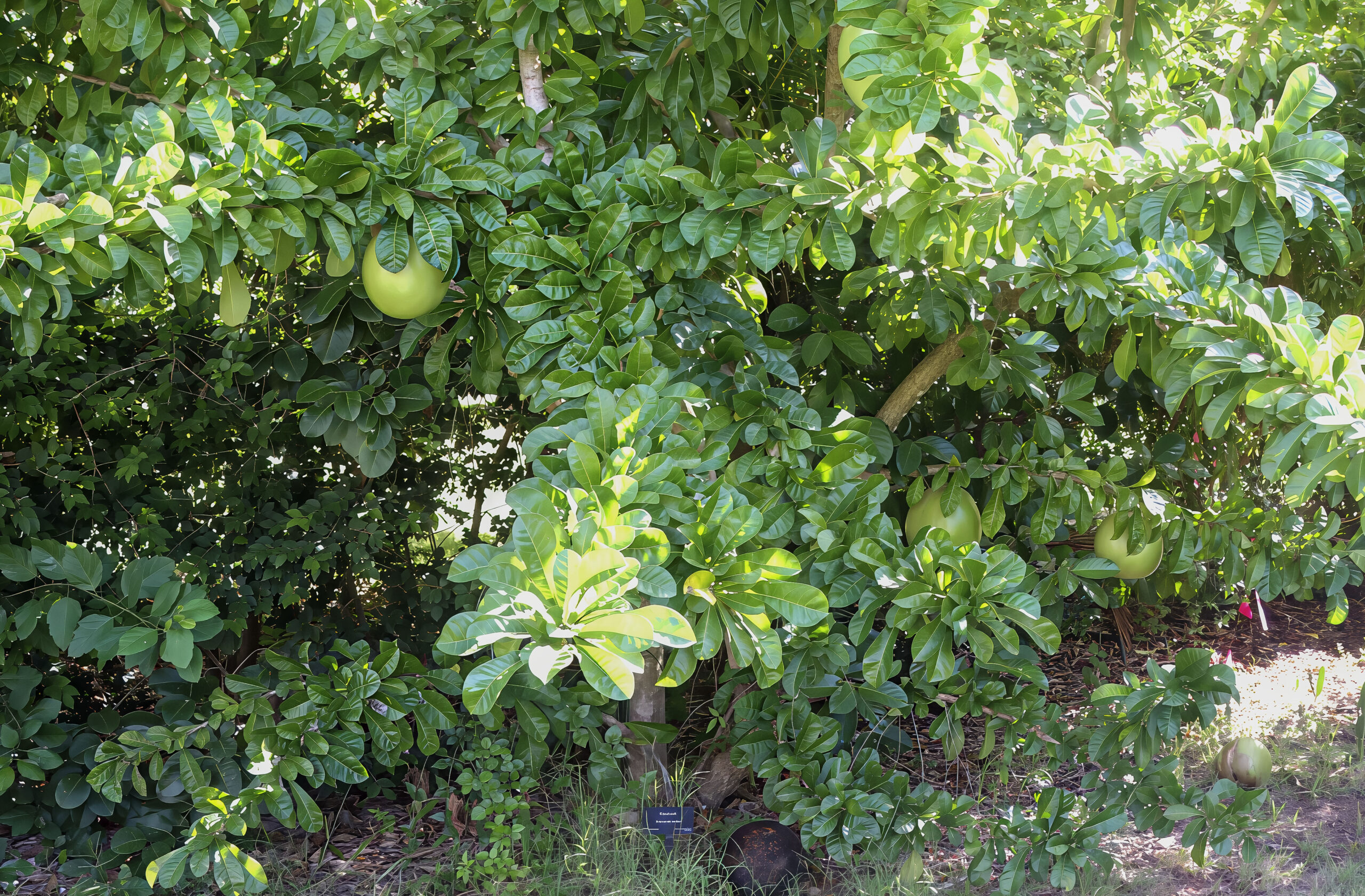
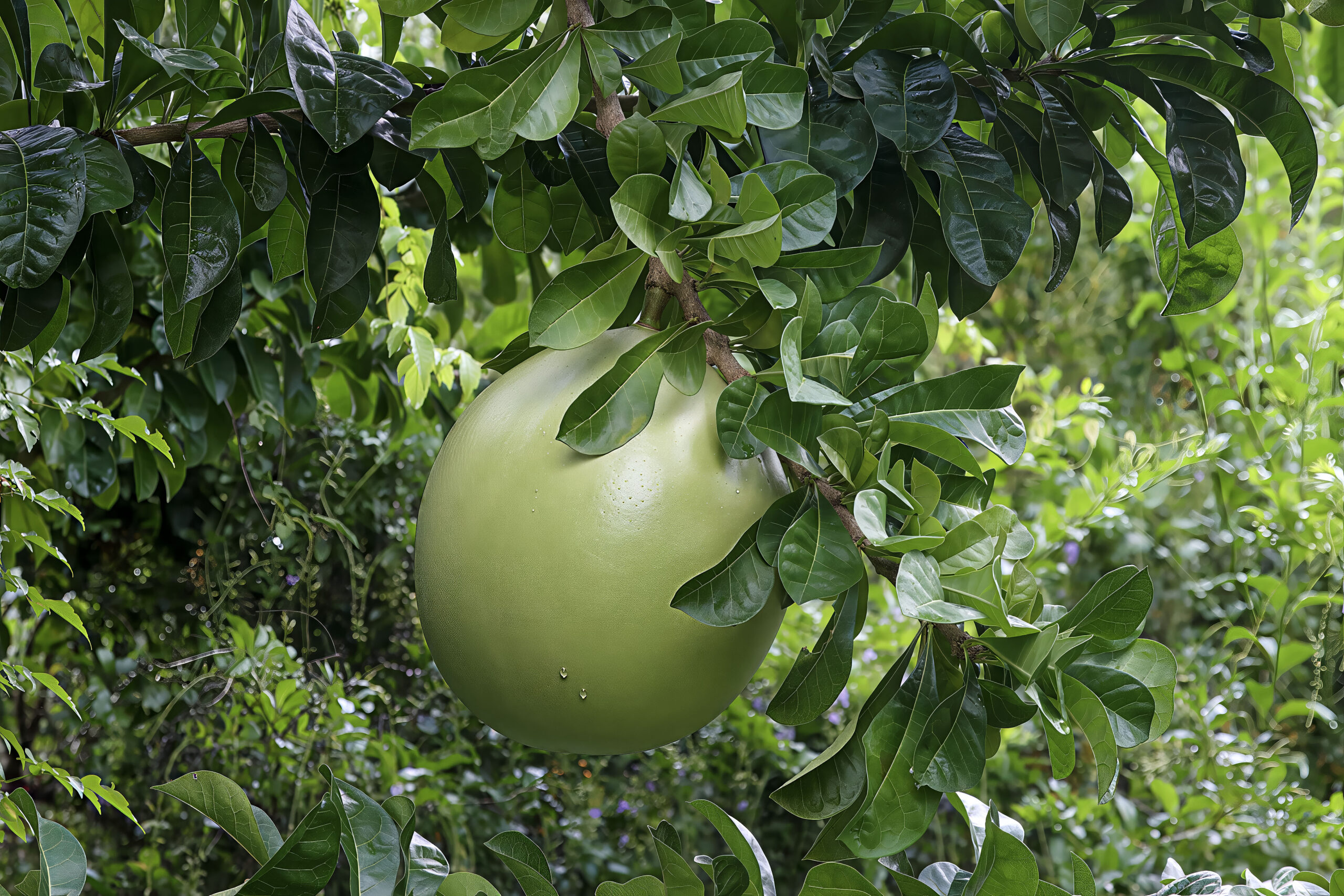
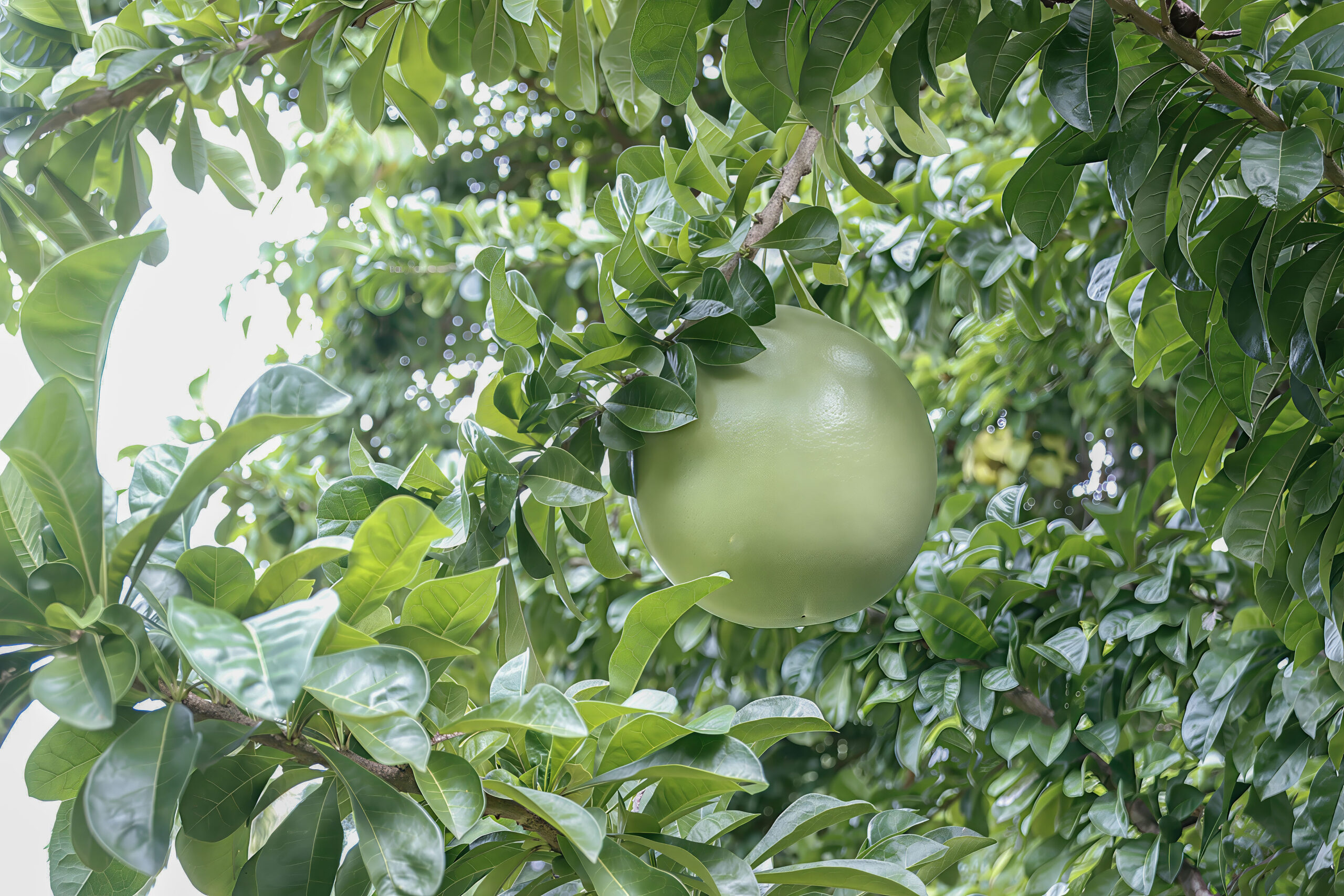
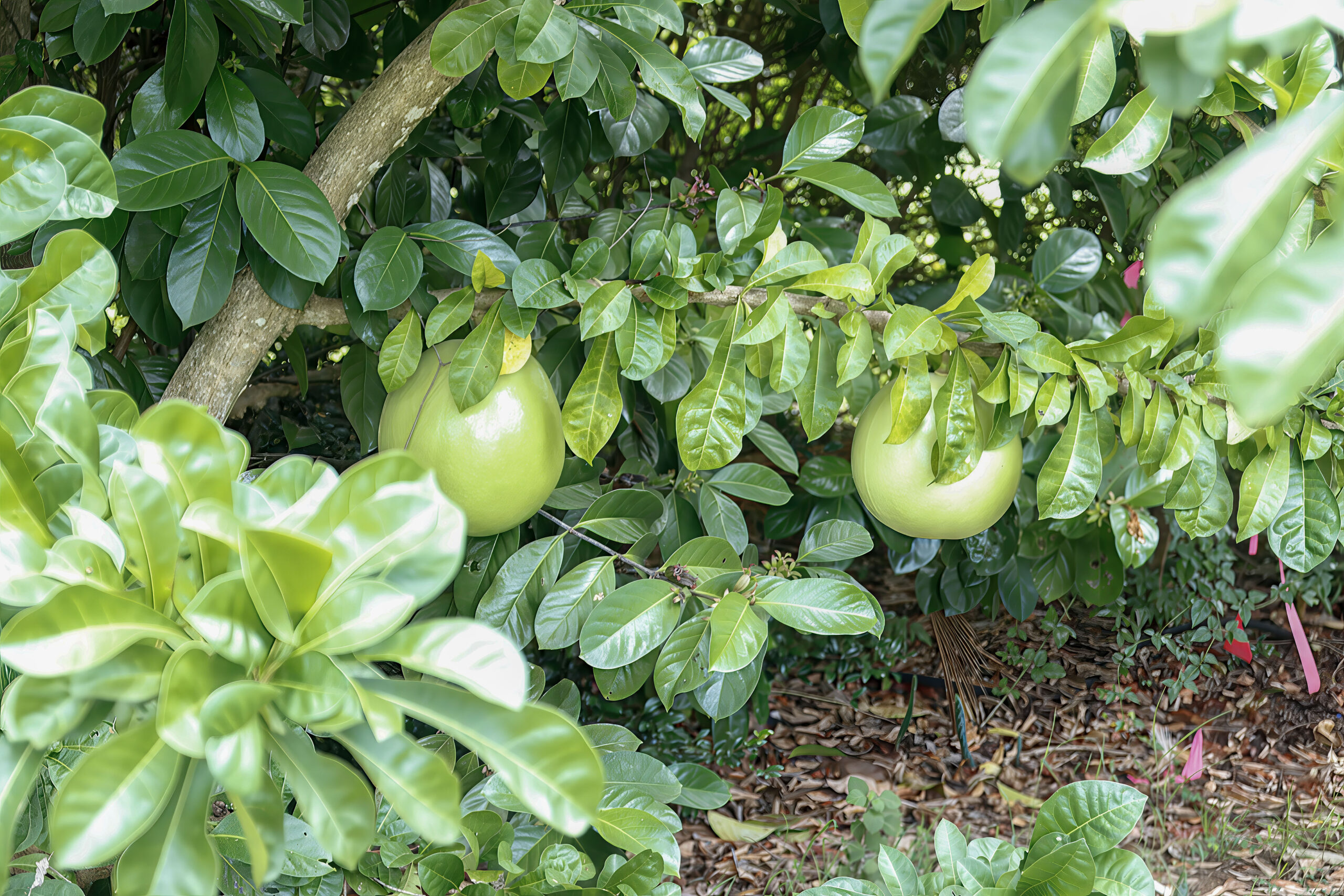
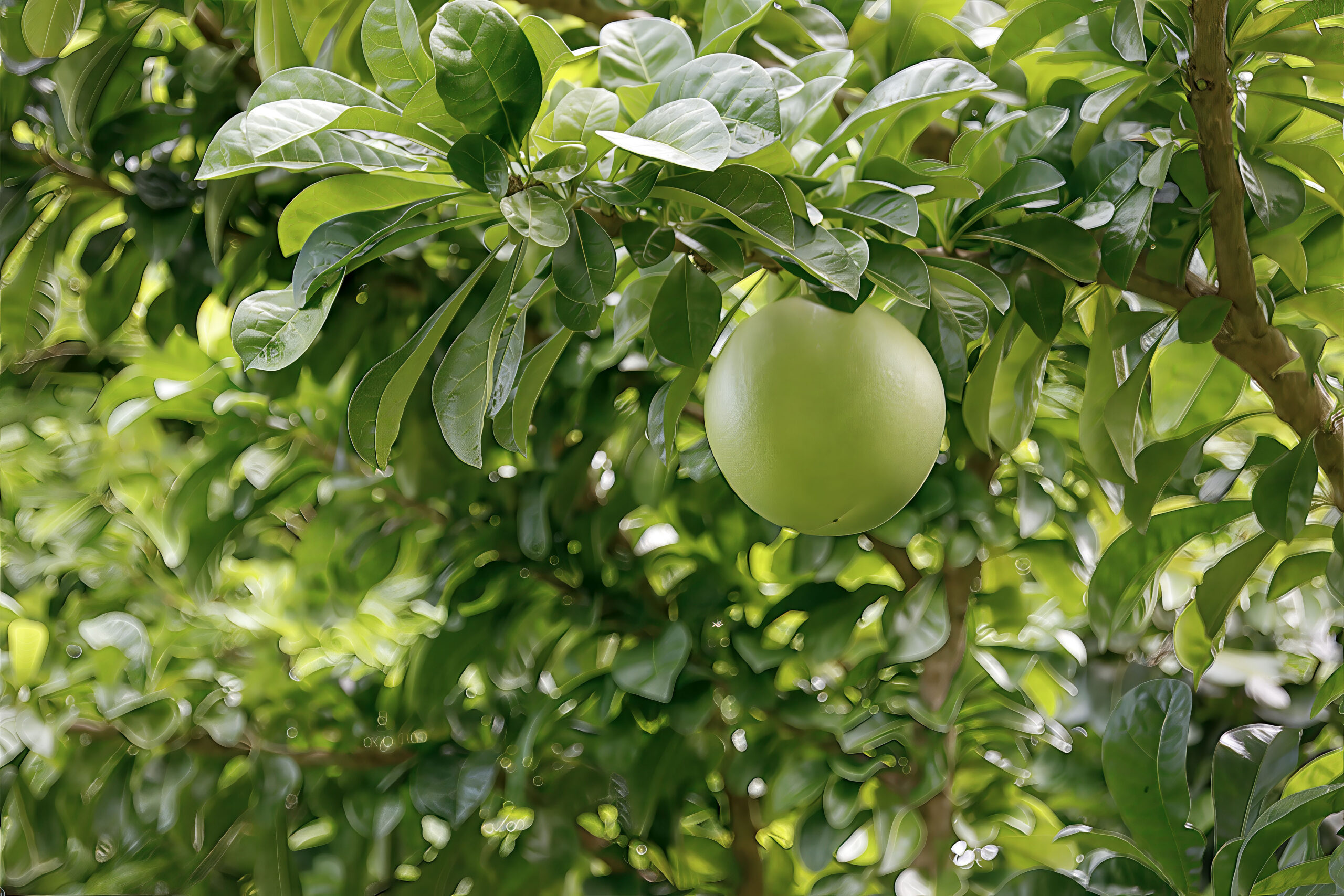
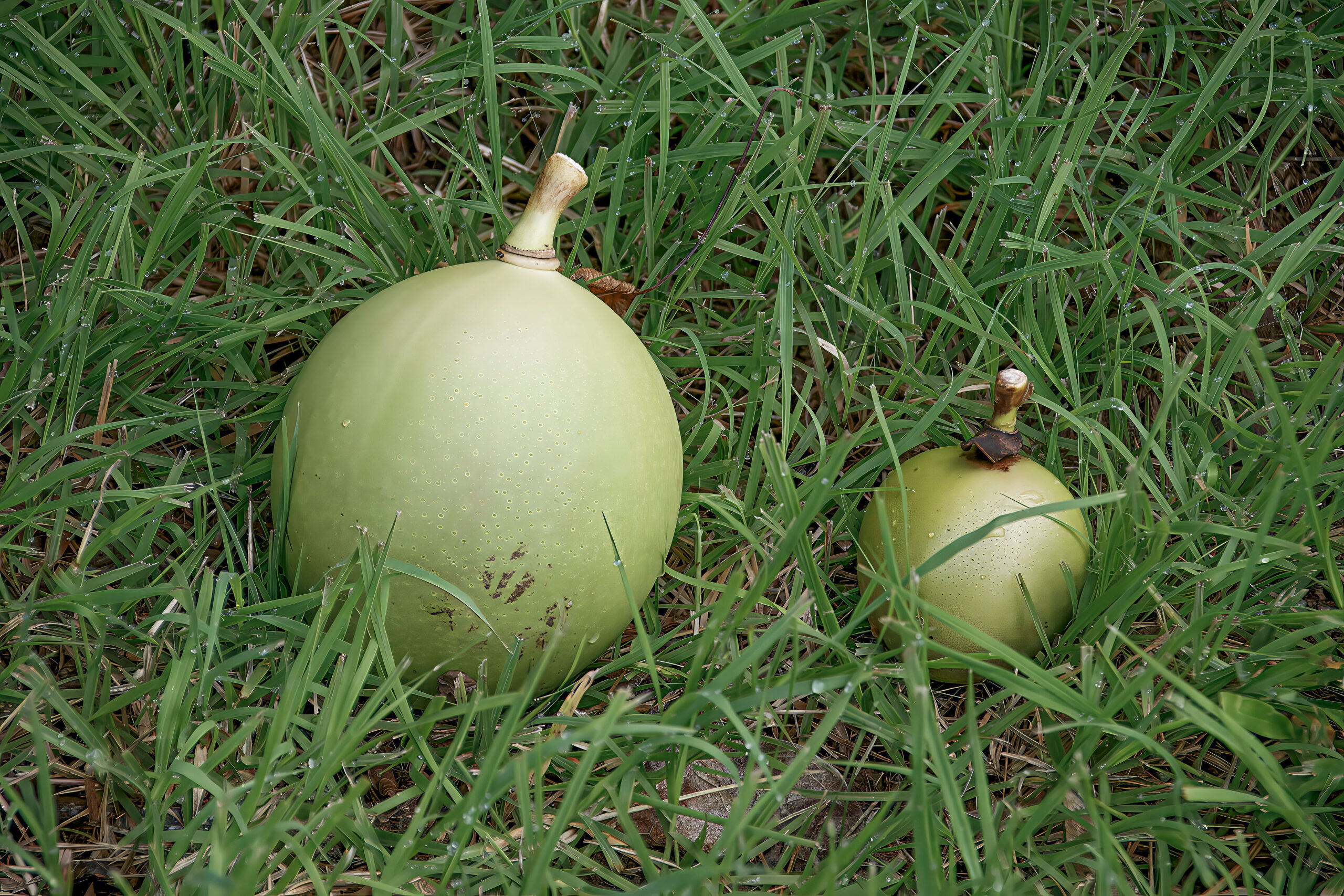
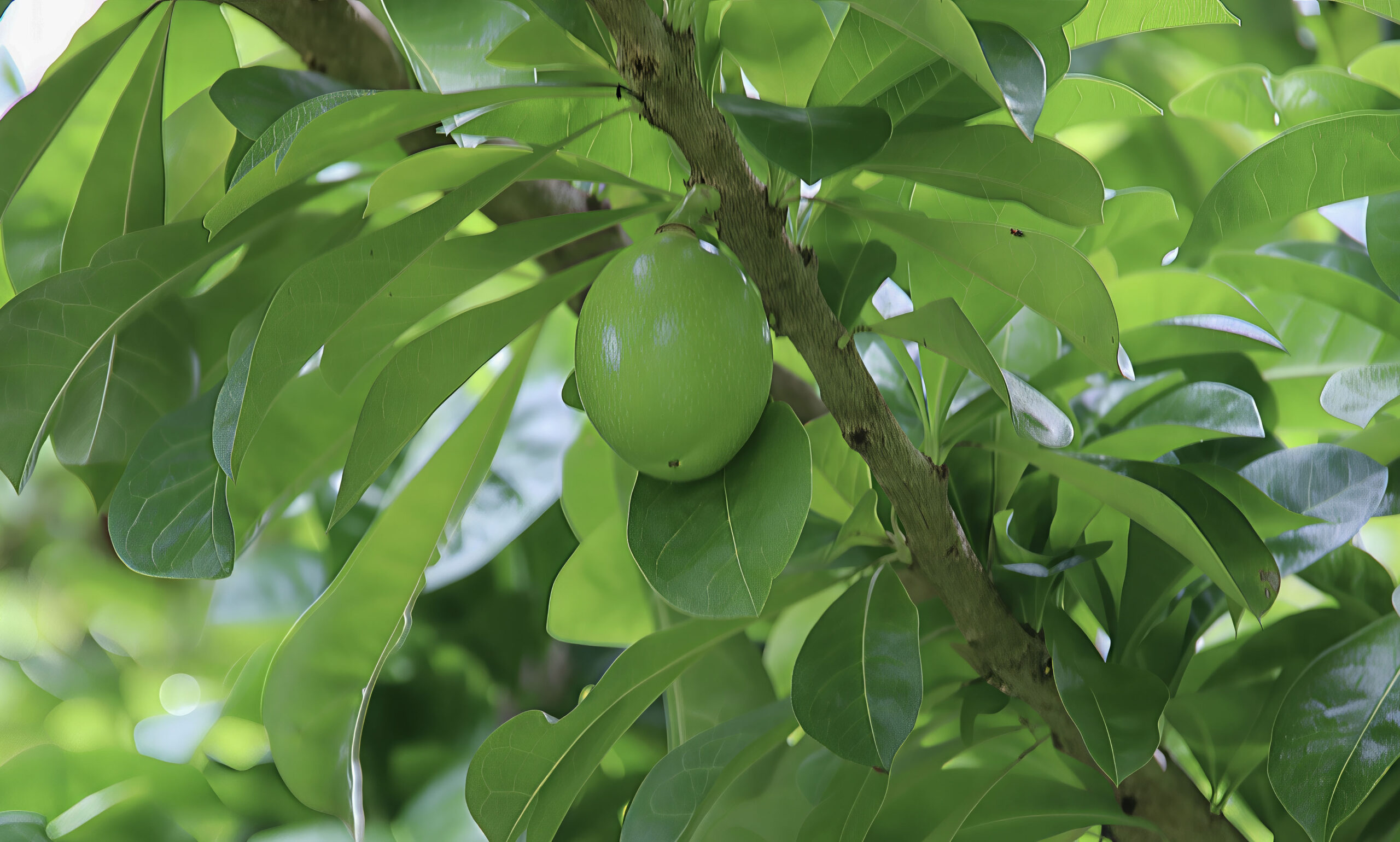
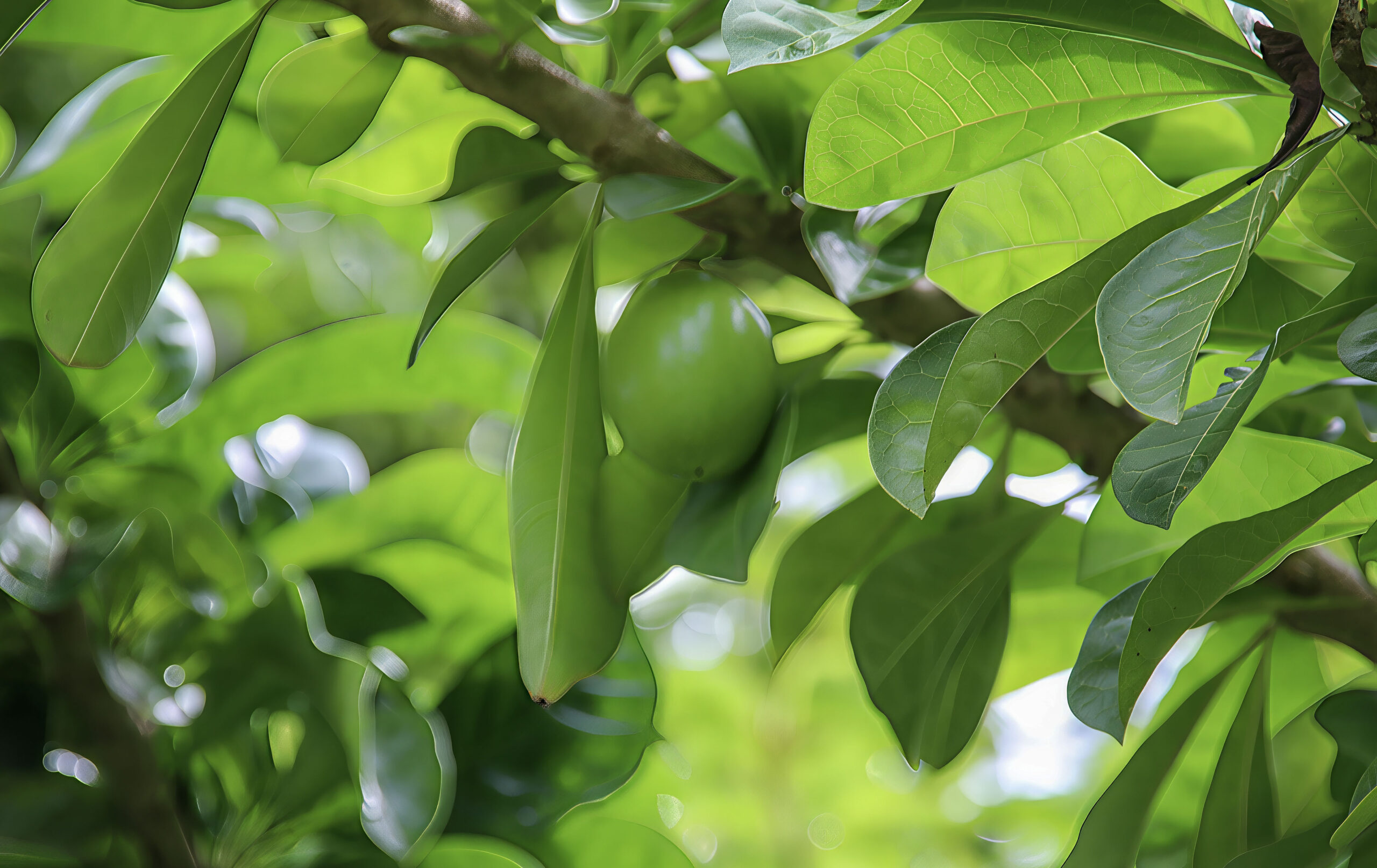
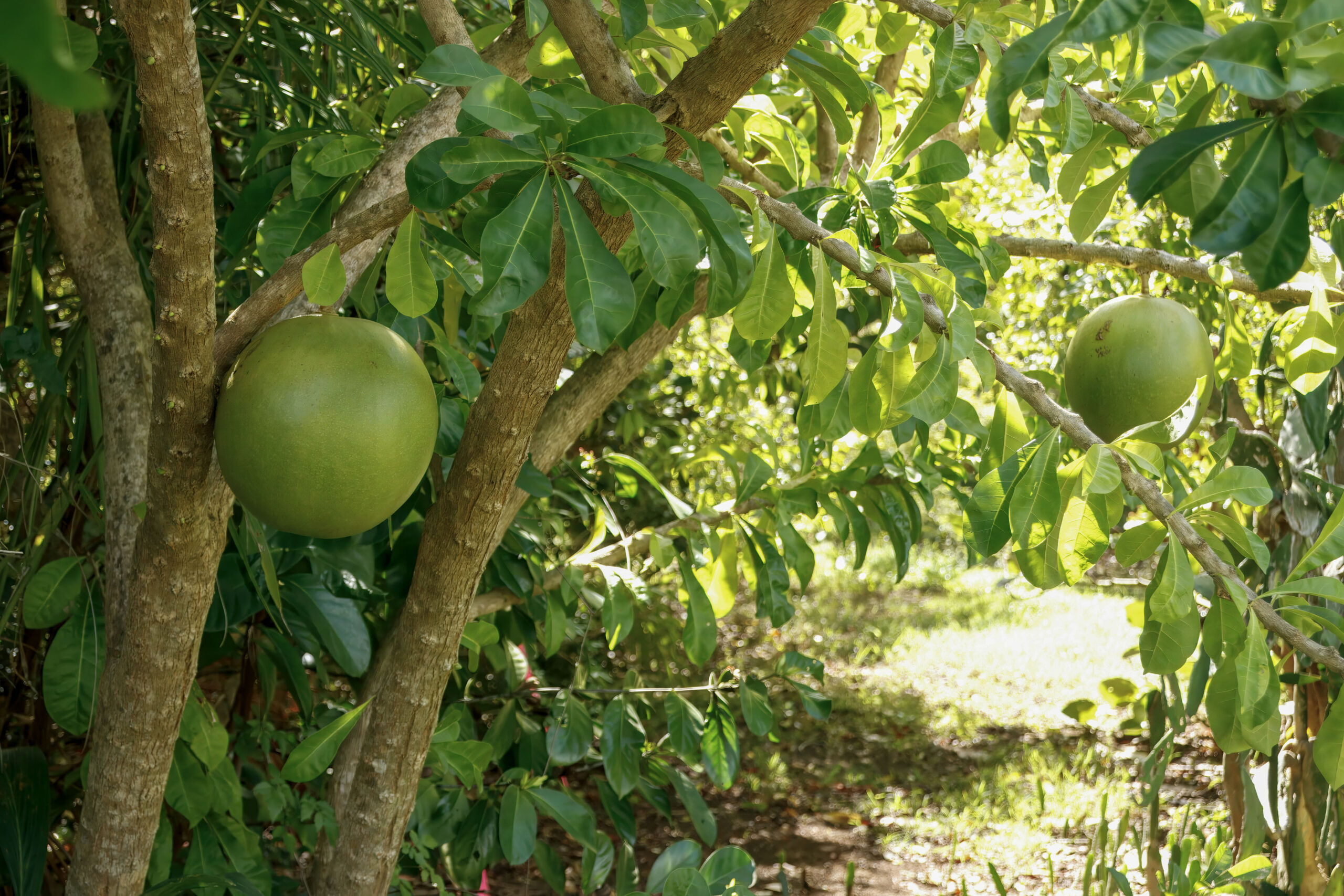
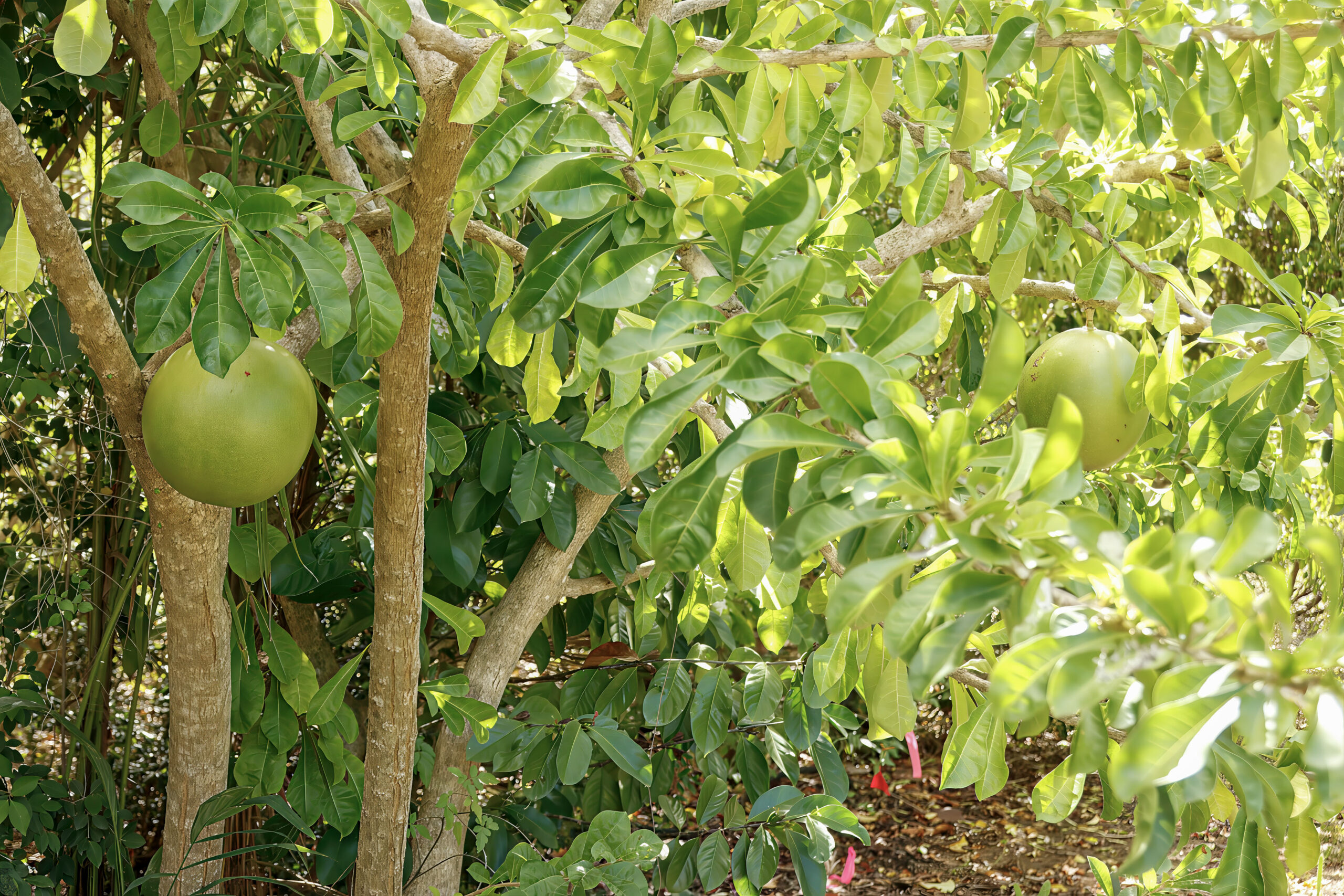
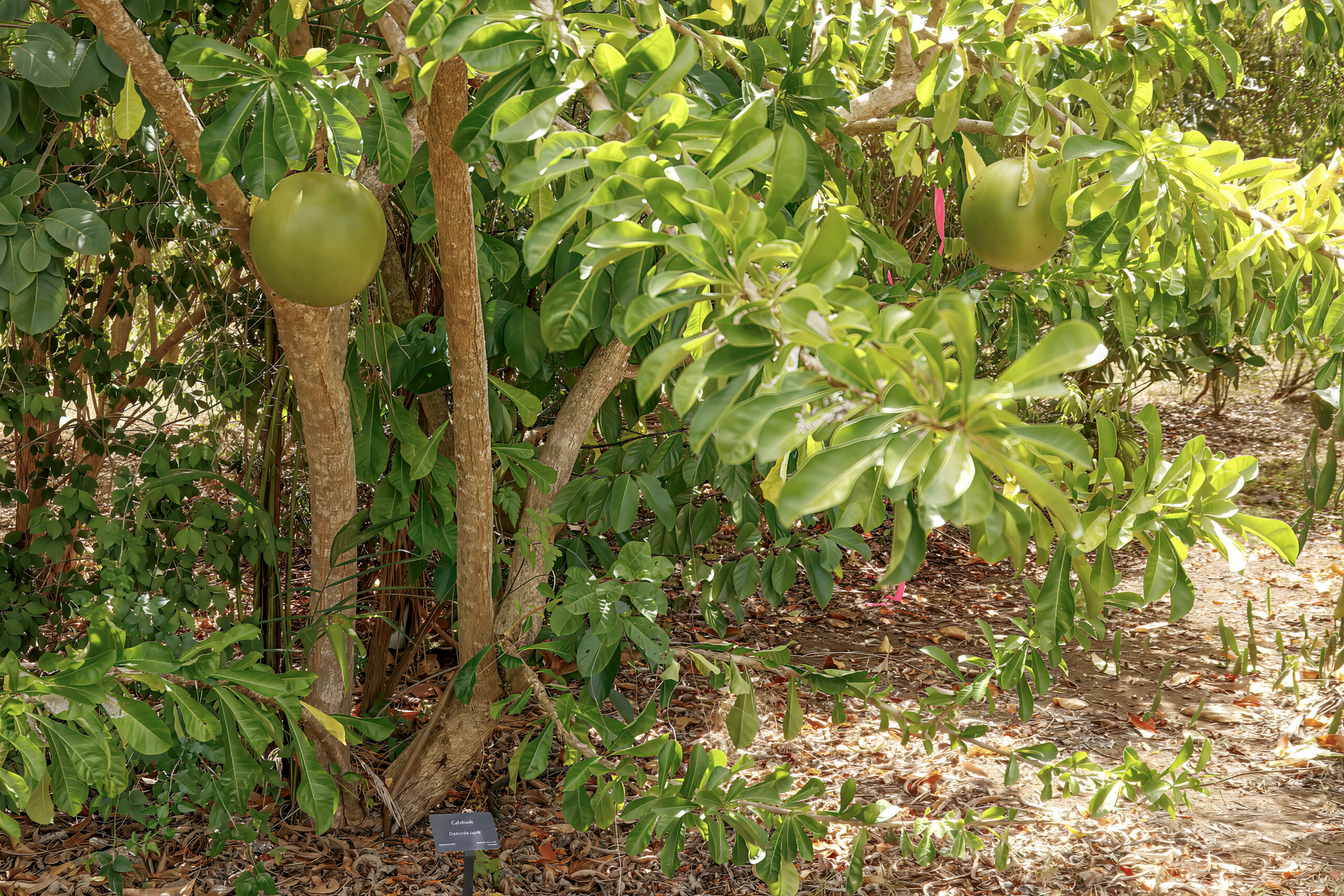
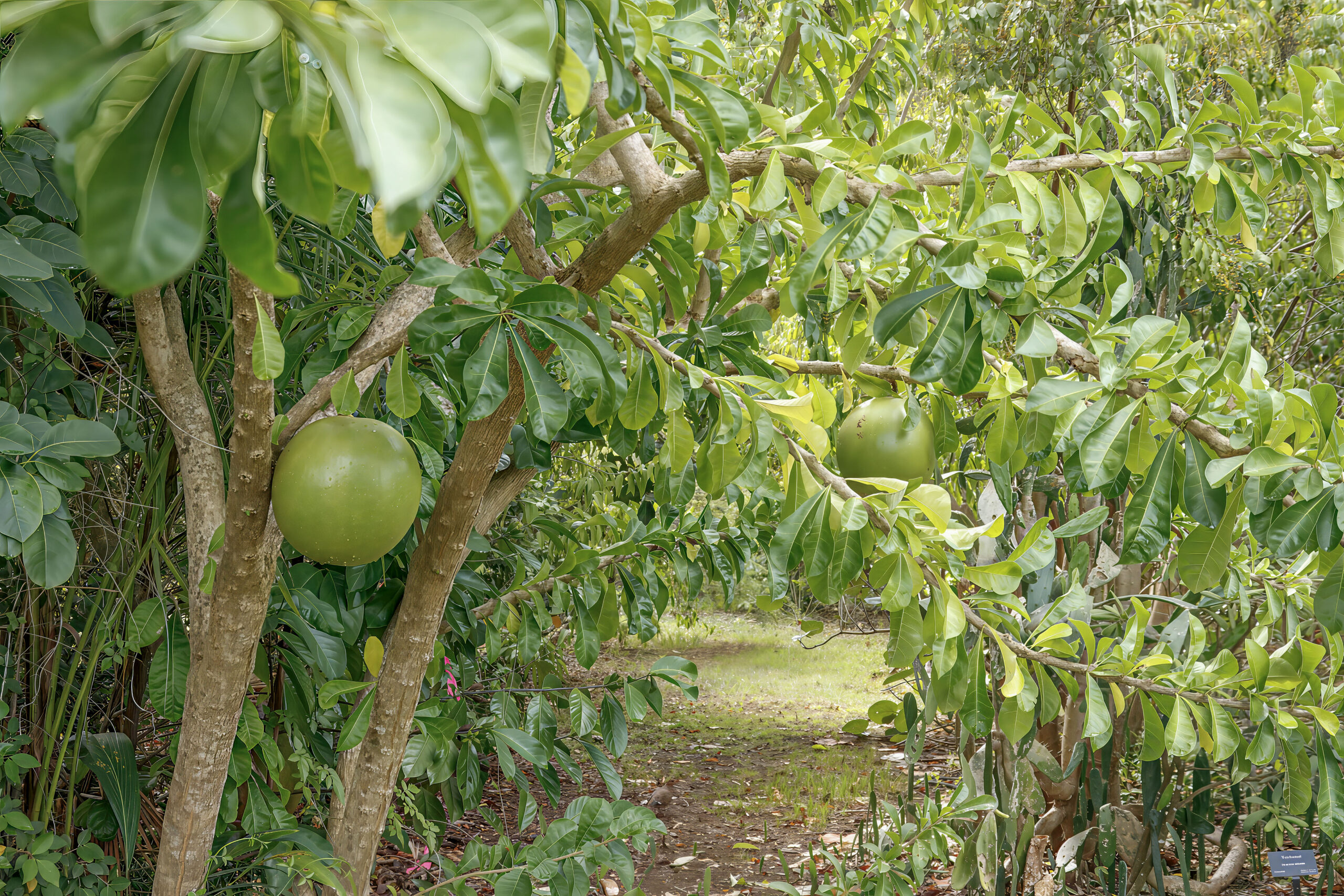
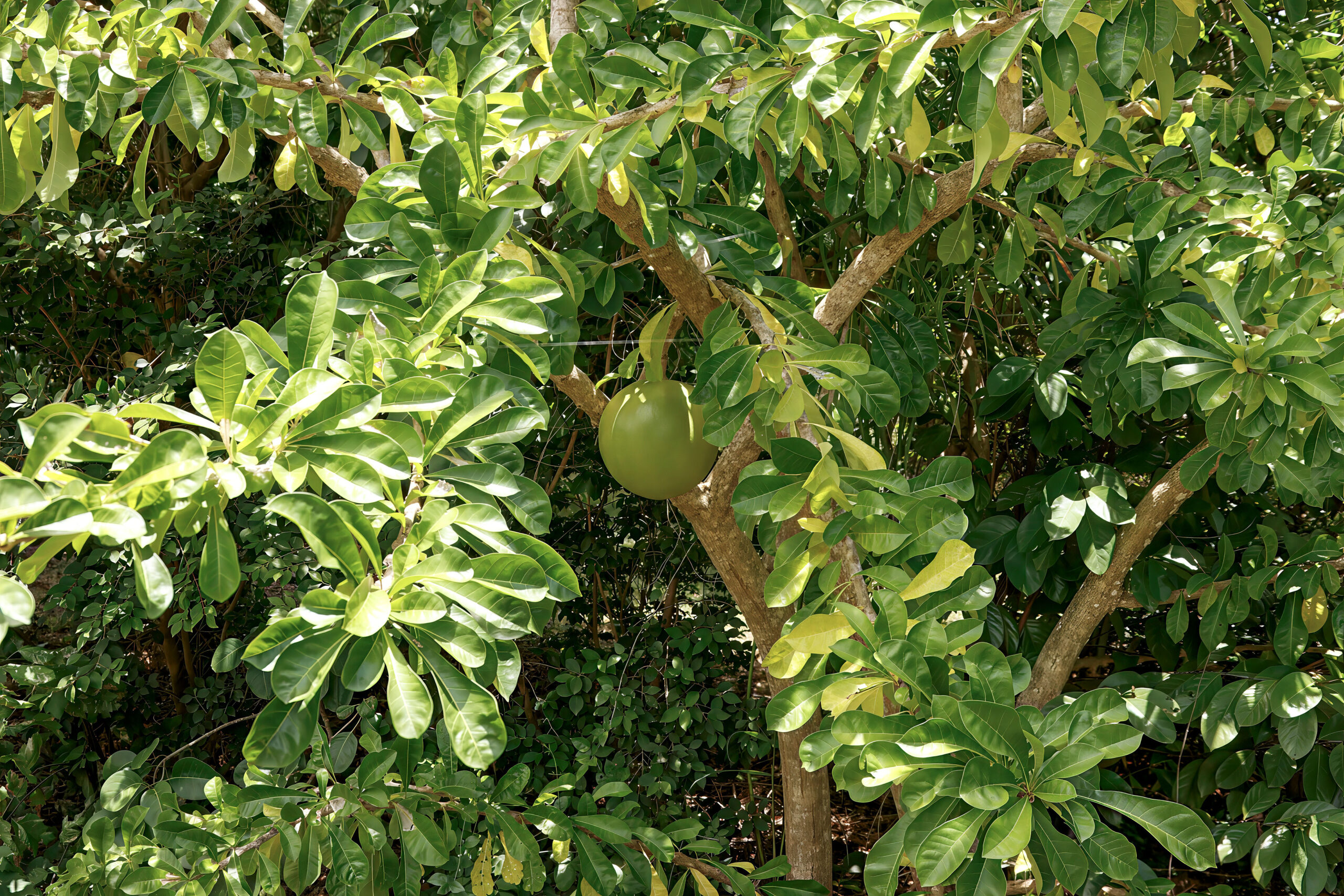
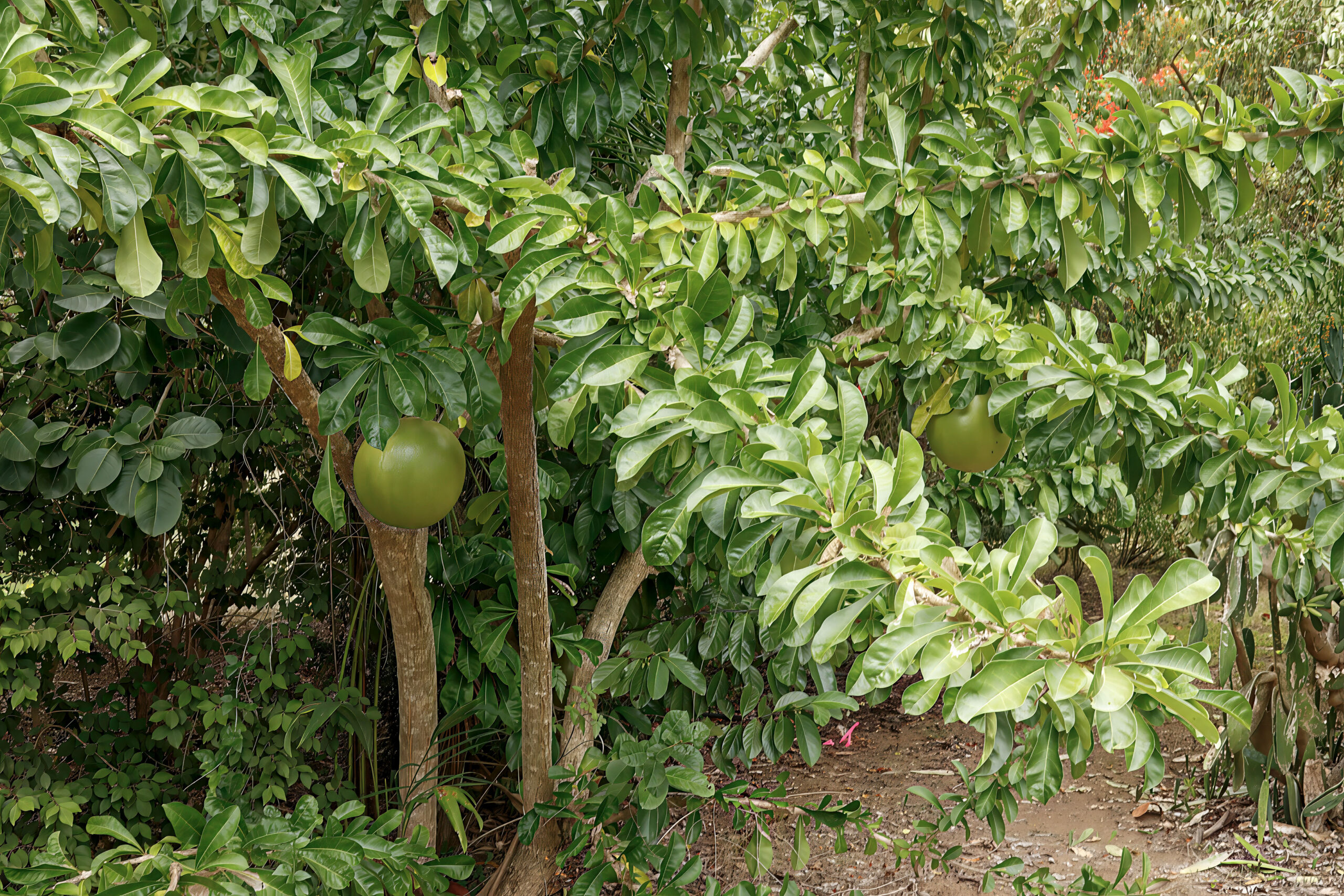
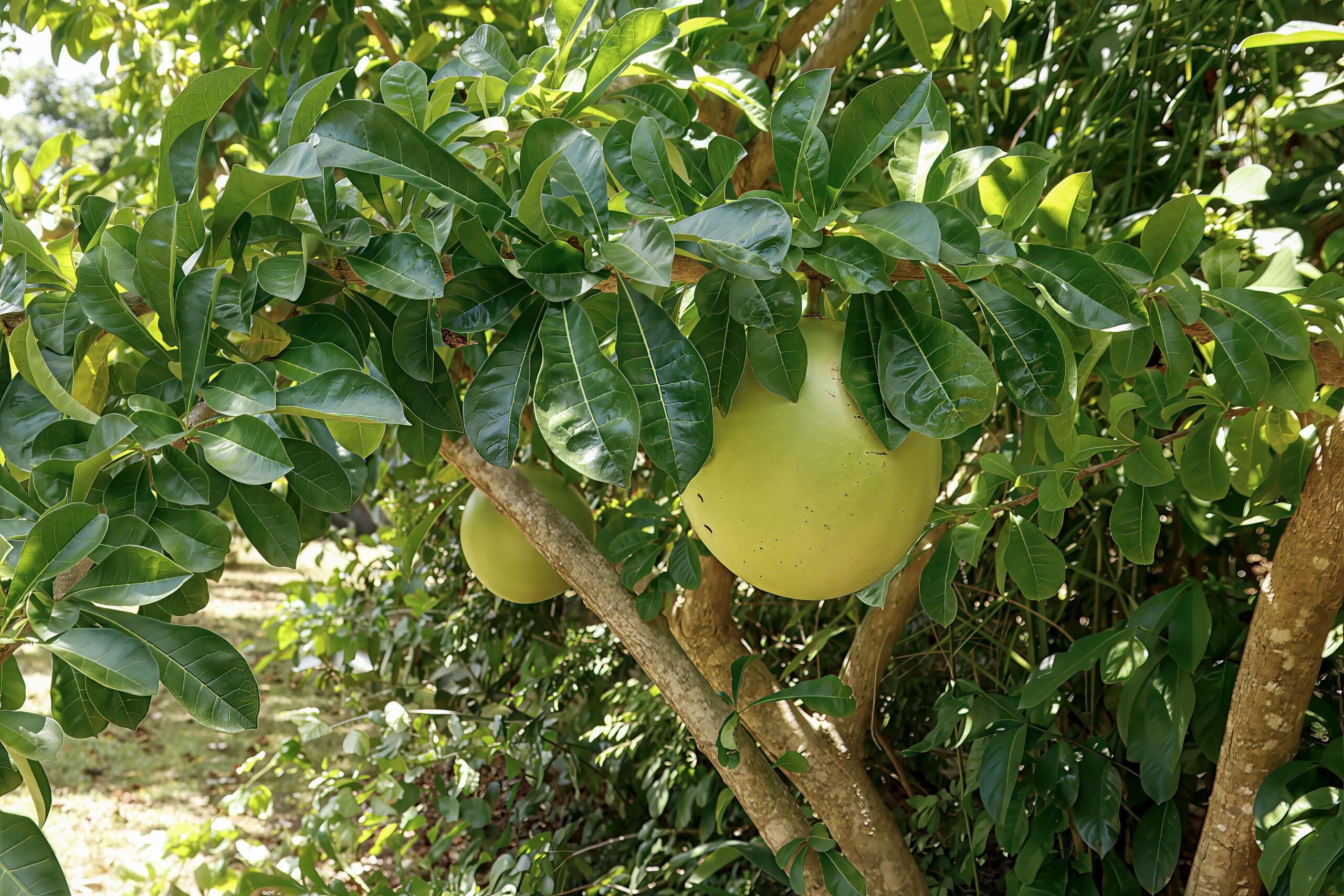
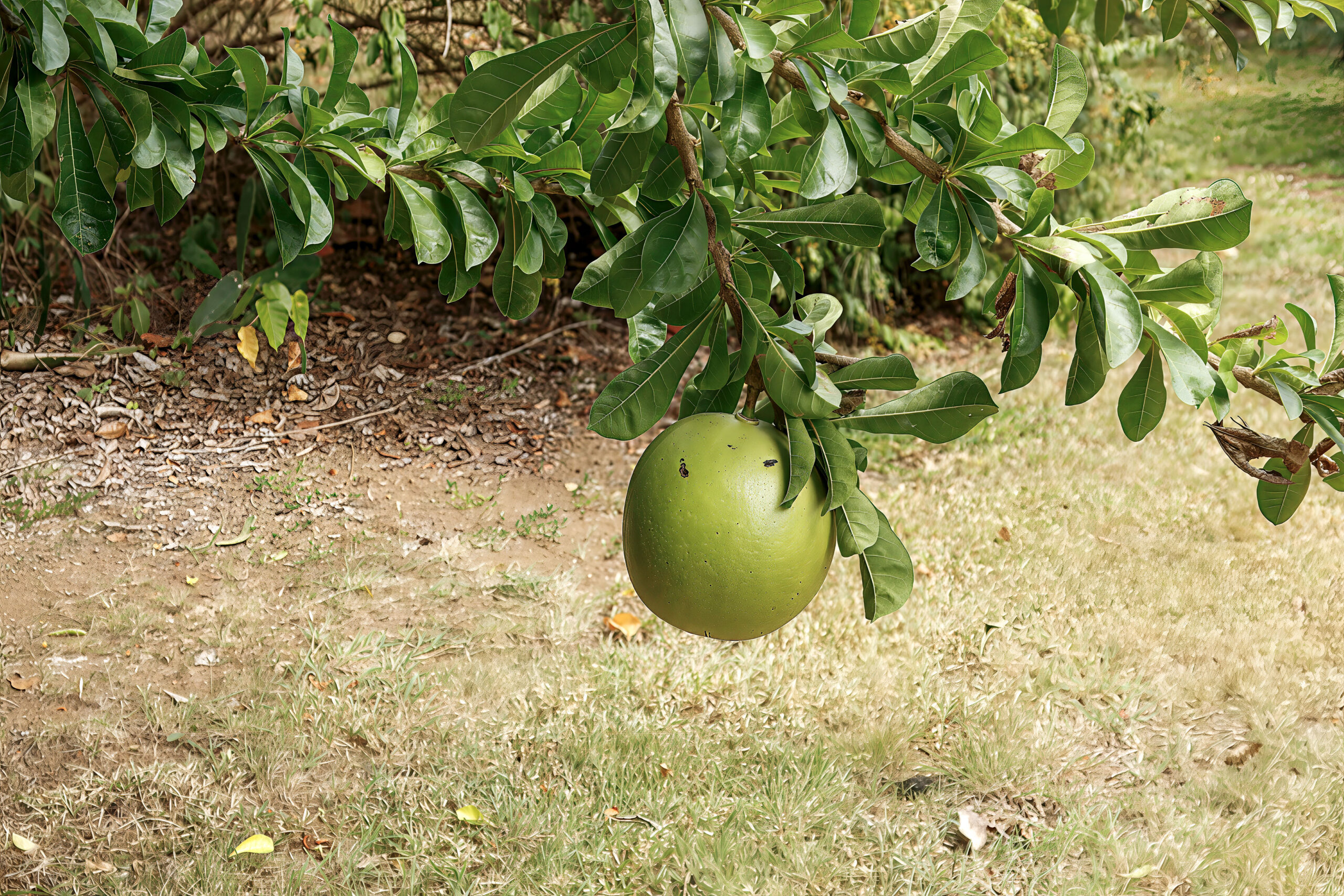
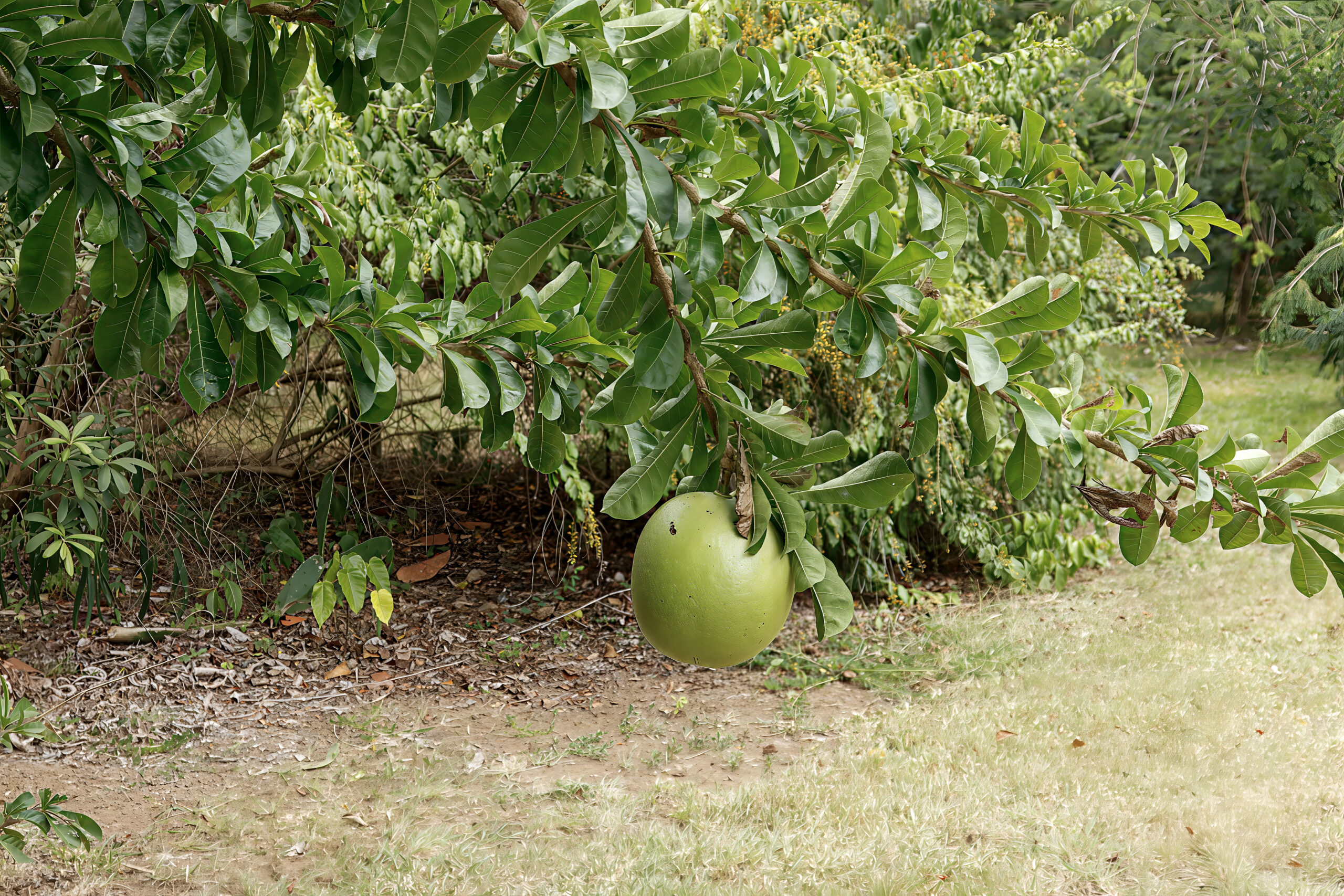
After flowering, the tree develops large, round, hard-shelled fruits (gourds), often 6–10 inches in diameter.
- Fruits develop slowly and may remain on the tree for 6–9 months before maturing.
- The hard shells are green when immature, becoming brownish and woody as they ripen.
- Fruits do not split open; instead, they are dispersed by gravity or harvested by humans for use in utensils, crafts, or containers.
Observation Tips:
- Track fruit size, surface texture, and color over time.
- Note hanging duration—some trees carry fruit almost year-round.
- Fallen gourds may remain intact for weeks and are slow to decompose.
3. Leaf Behavior
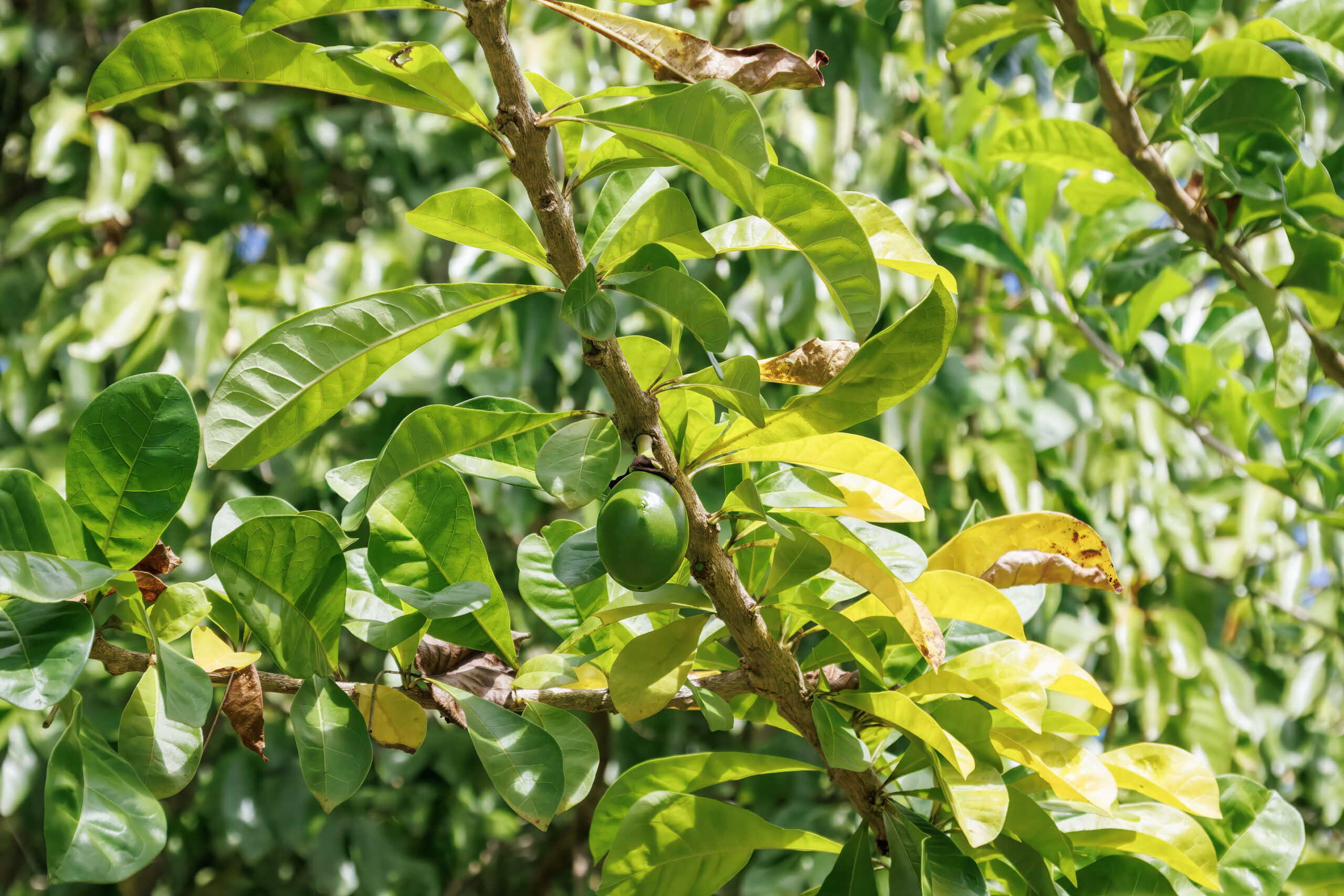
Leaves are simple, oblong, and bright green, often arranged in small clusters along branches.
- The Calabash Tree is semi-deciduous, sometimes shedding older leaves during the dry season.
- Leaf flushes follow flowering and fruit set, with young leaves appearing more delicate and lighter in color.
Observation Tips:
- Document leaf drop in late dry season, especially during flowering.
- Note new growth around the time of fruit development or early rains.
4. Seasonal Pattern (St. Croix)
- Jan–Mar: Occasional leaf drop
- Mar–May: Peak flowering
- Apr–Jul: New leaf flush + early fruit formation
- Jul–Dec: Fruit development and hanging phase
- Year-round: Sporadic flowering and fruiting may occur in mature trees