
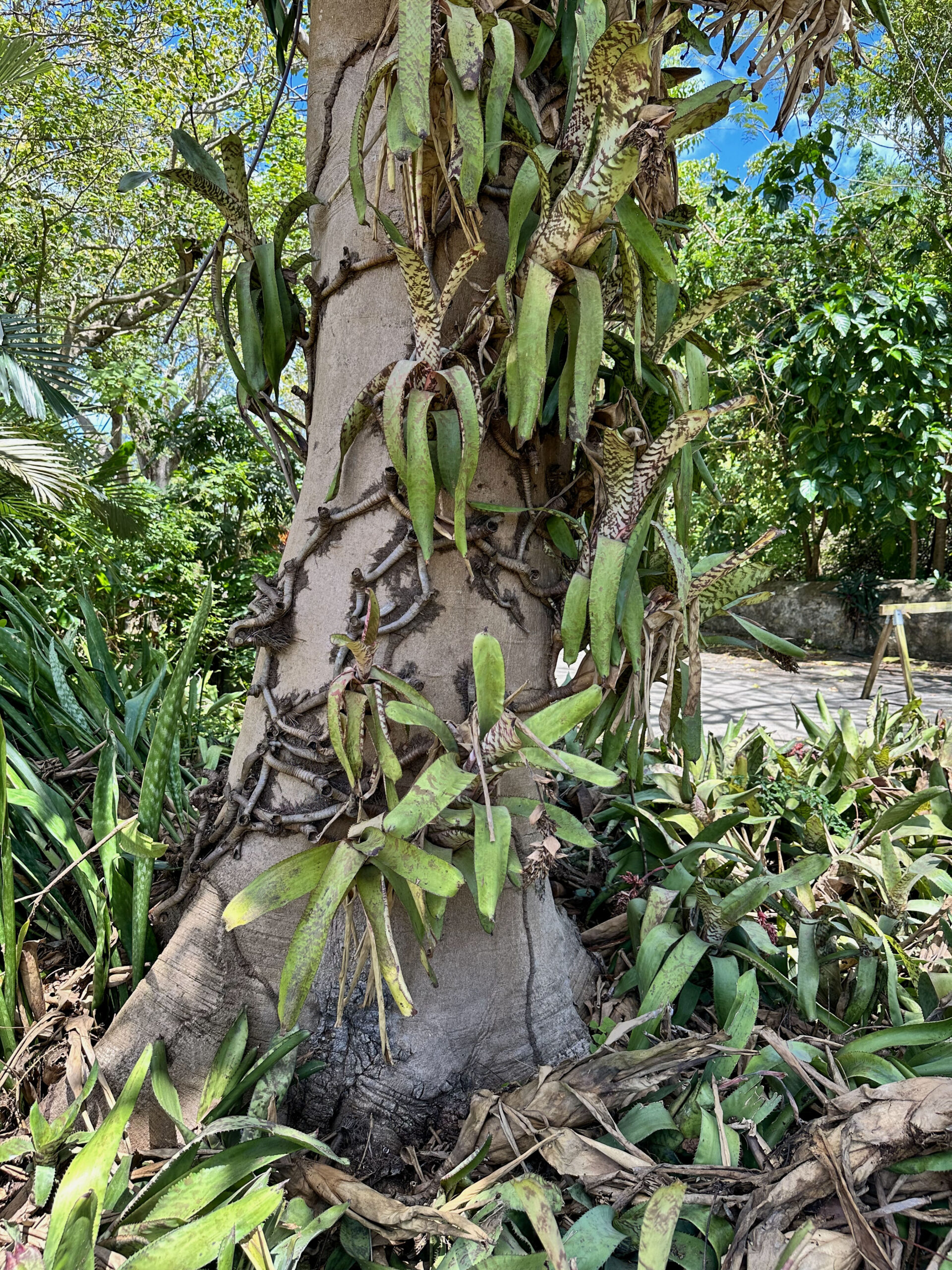
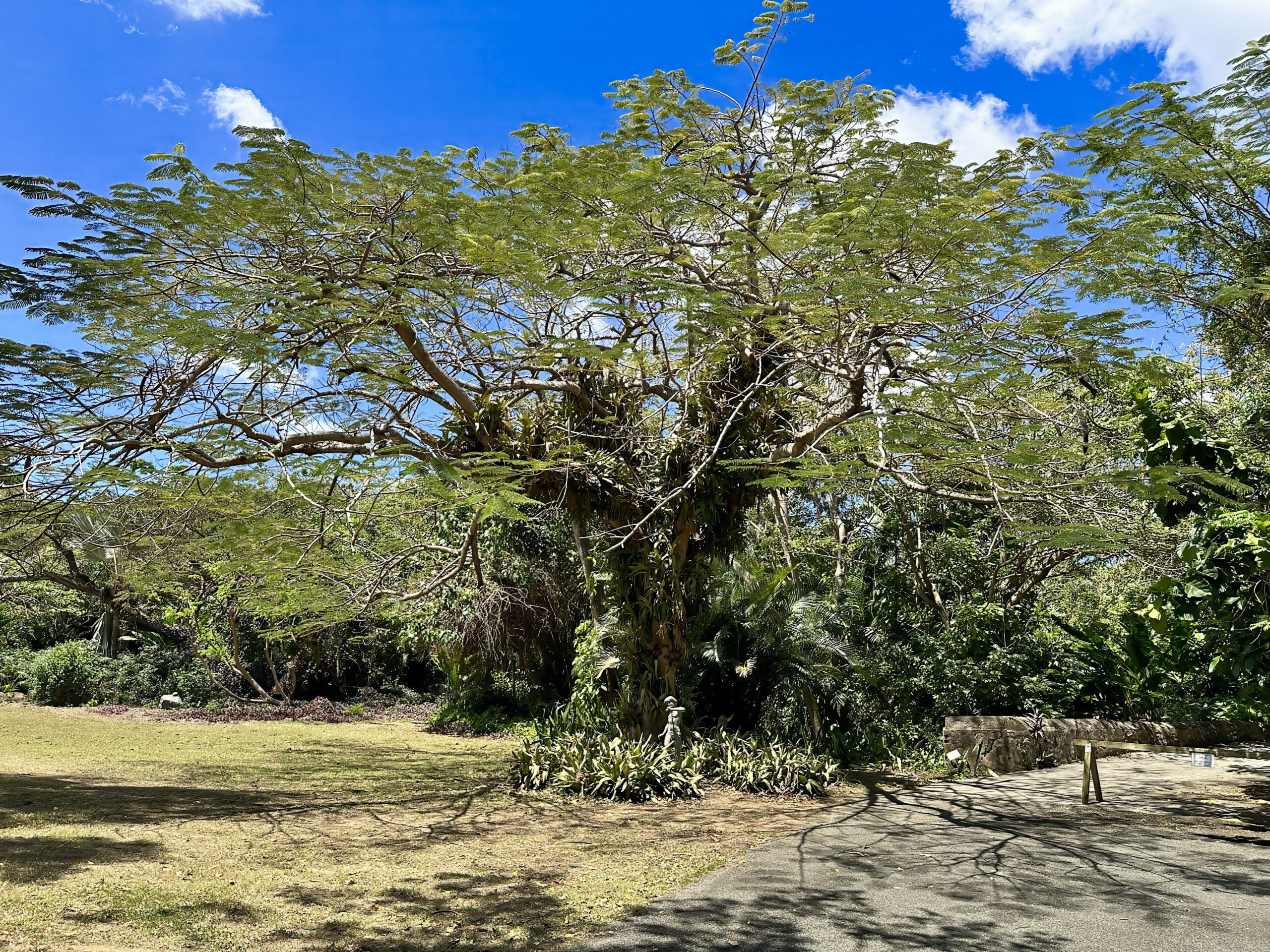
Flamboyant tree
Scientific name: Delonix regia
POWO Status: Tree
IUCN Red List threat level: Least Concern
GPS Location: 17° 42′ 56.13″ N, 64° 49′ 48.61″ W








Medicinal Uses
Delonix regia (Royal Poinciana/Gulmohar) is a plant with diverse traditional medicinal uses, leveraging its antioxidant, anti-inflammatory, antibacterial, and wound-healing properties to treat ailments like inflammation, diabetes, constipation, arthritis, pneumonia, fever, and gynecological issues, with research exploring its potential for heart health, immunity, and digestion due to compounds like flavonoids and tannins.
Traditional Uses & Properties
- Anti-inflammatory & Analgesic: Used for arthritis, joint pain, swelling, and general pain relief.
- Digestive Health: Treats constipation, diarrhea, bloating, and supports gut function.
- Antimicrobial: Shows antibacterial, antifungal, and antimalarial activity.
- Wound Healing: Applied topically for skin health and repair.
- Cardioprotective: Leaf extracts show potential in protecting the heart.
- Antioxidant: Fights free radicals, potentially boosting immunity.
- Other Uses: Fever, anemia, coughs (pneumonia), gynecological disorders (like leucorrhea, menstrual cramps), and as a tablet binder.
Plant Parts & Their Uses
- Leaves: Constipation, inflammation, diabetes, pneumonia, malaria.
- Flowers: Anti-diarrheal, wound healing, anti-helmintic, used in pills for gynecological issues.
- Seeds: Digestive aid, immune support, anti-inflammatory, skin health.
Key Bioactive Compounds
- Flavonoids, alkaloids, saponins, tannins, phenolics, carotenoids, sterols (like beta-sitosterol), and lupeol.
Modern Research & Potential
- Studies validate traditional uses, showing potential for immune modulation (regulating immune cells), liver protection (hepatoprotective), and even anticancer effects.
- It’s considered a valuable resource for pharmaceutical development, but more clinical trials are needed for standardization.
Observations:
Phenological Markers – Flamboyant Tree (Delonix regia)
1. Leaf Drop (Deciduous Behavior)
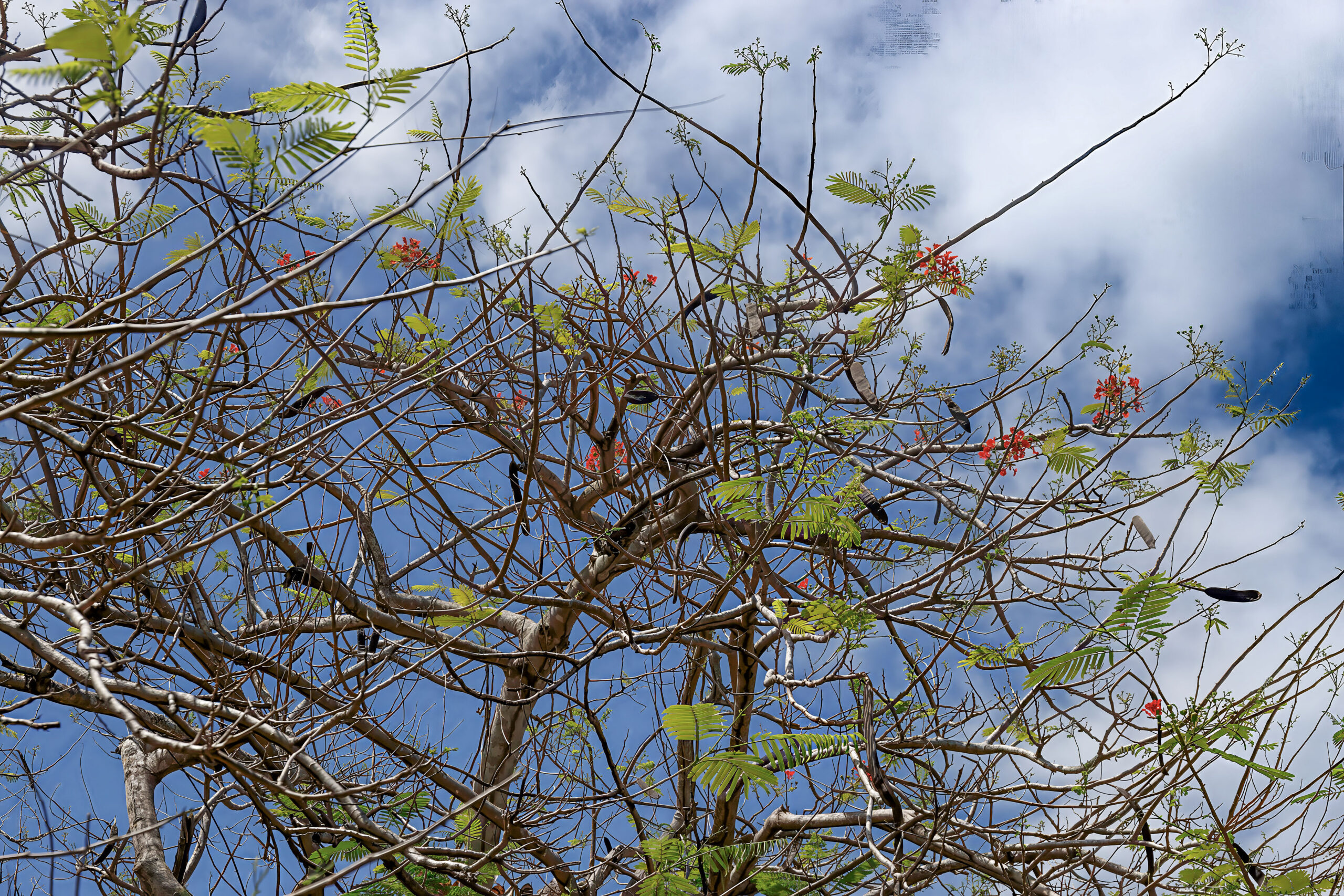
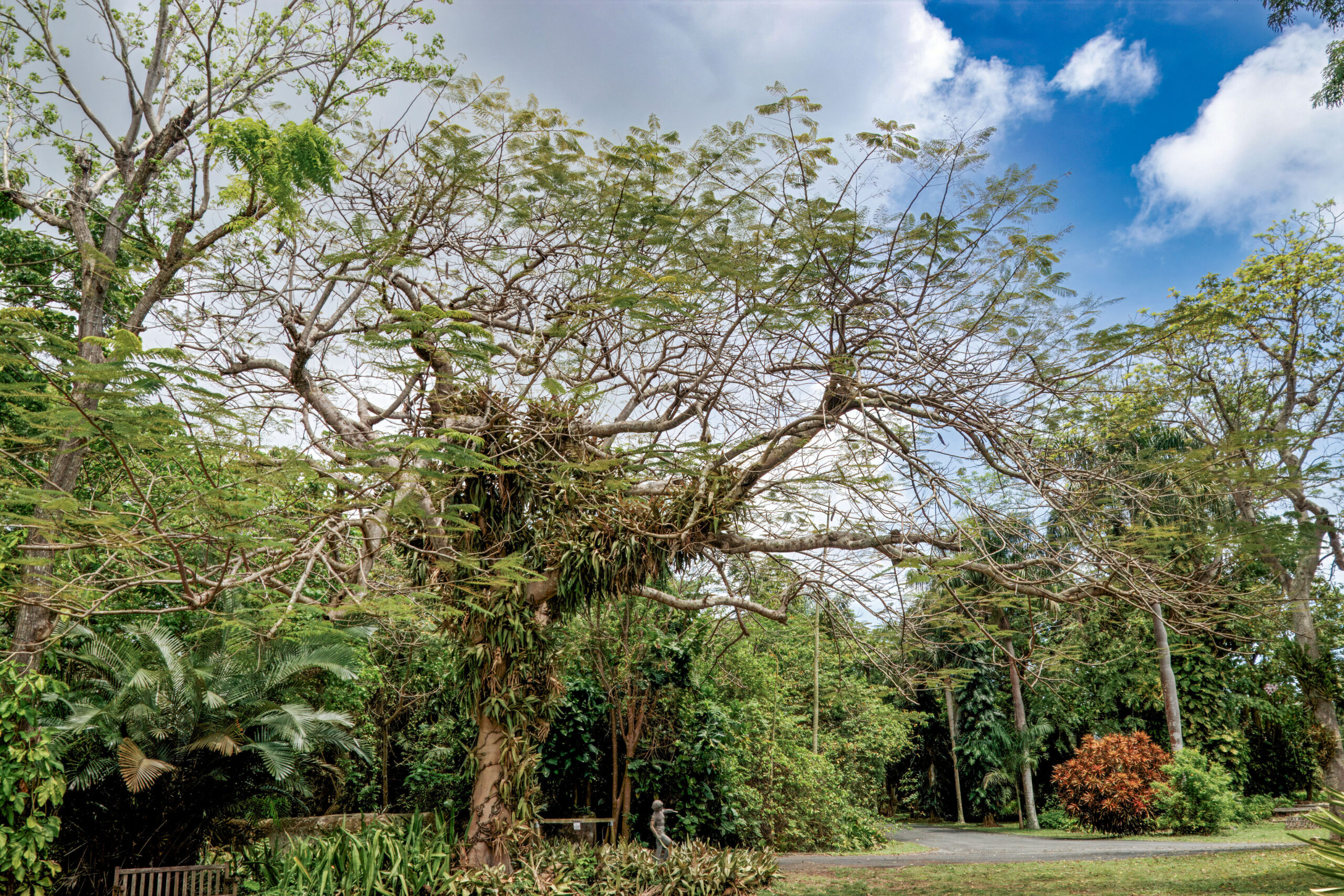
The Flamboyant Tree is deciduous, typically shedding most or all of its leaves during the dry season, particularly between January and March.
- This bare phase often precedes flowering and can last several weeks.
- Some trees may retain a sparse canopy depending on microclimate and rainfall.
2. Flowering
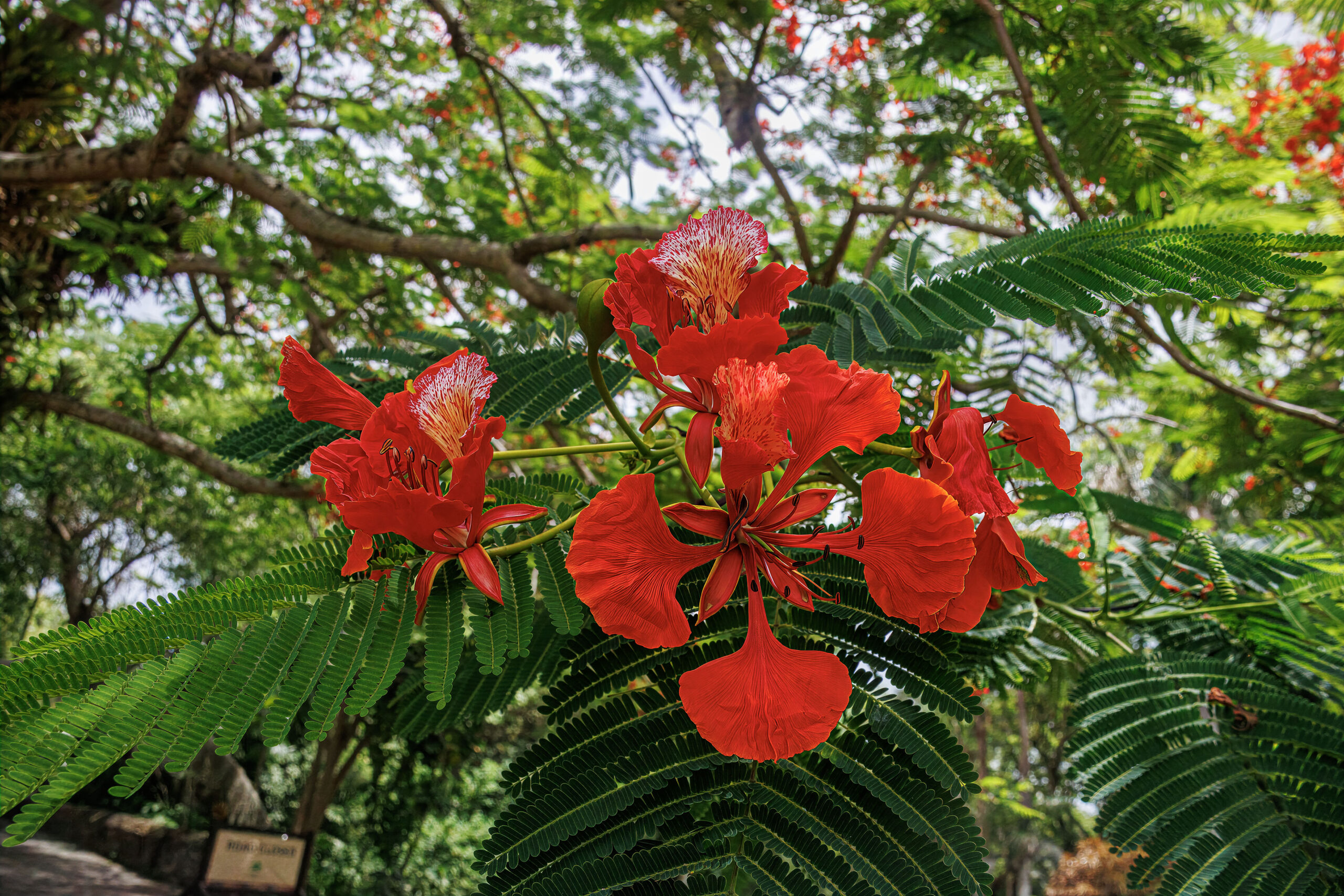
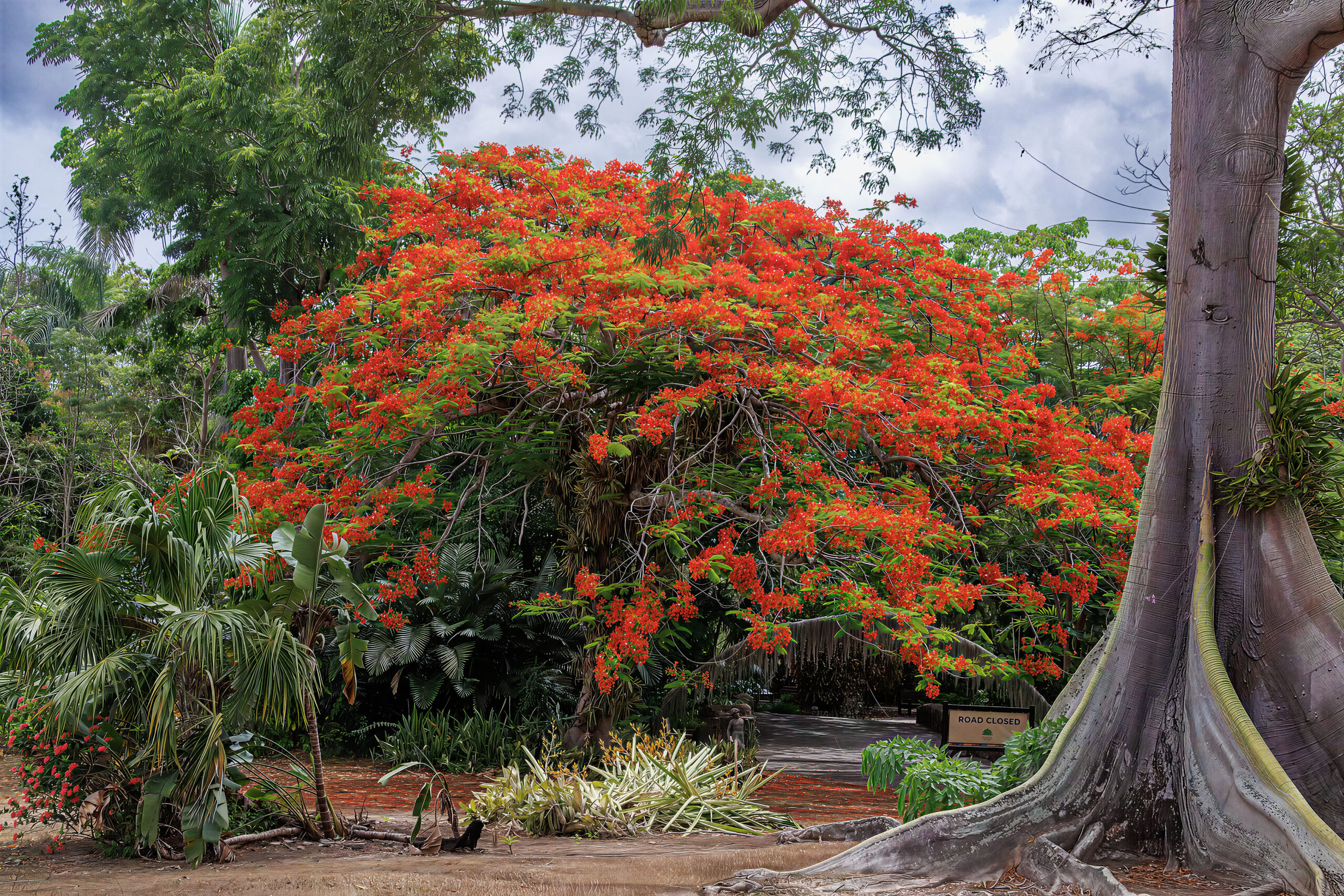
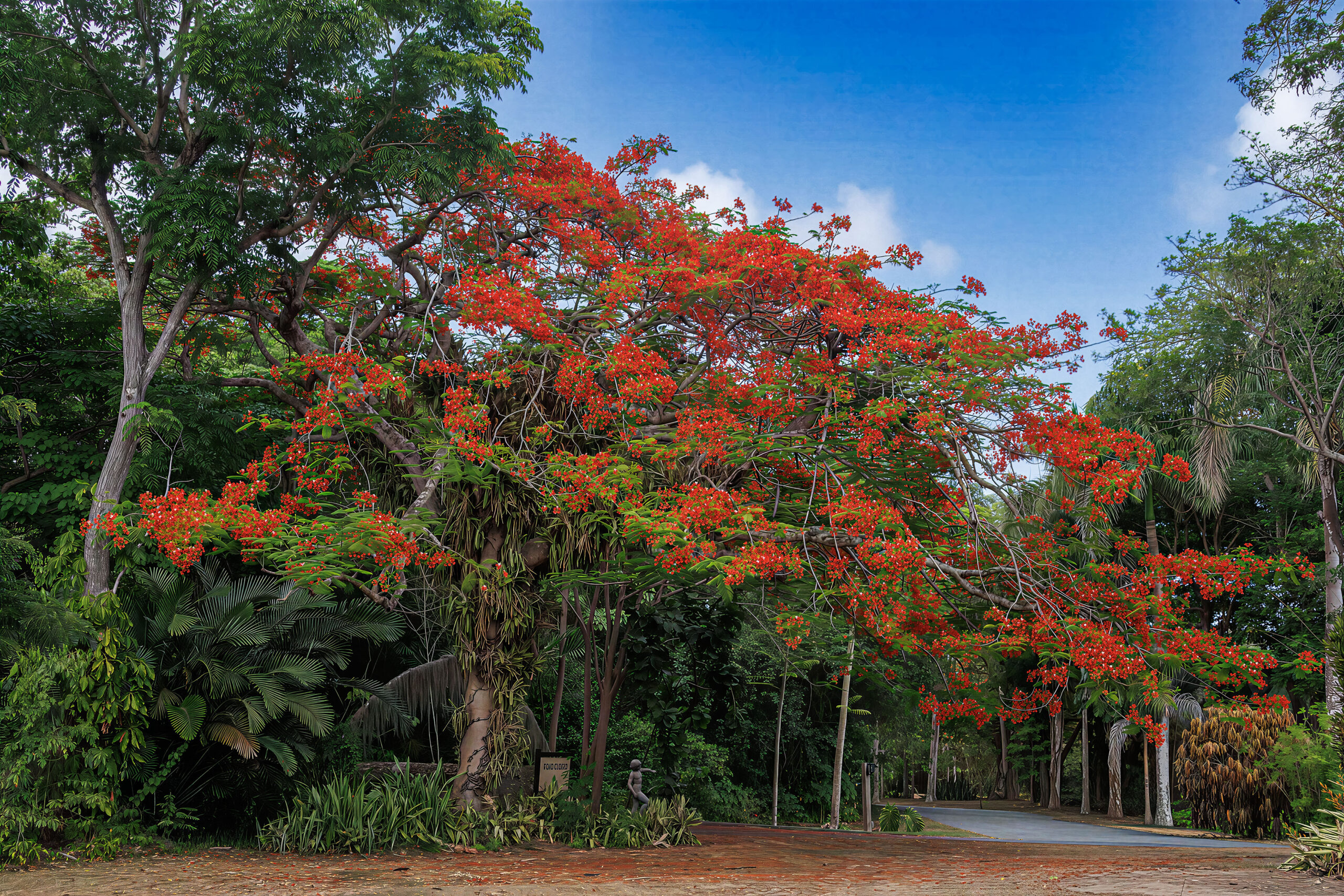
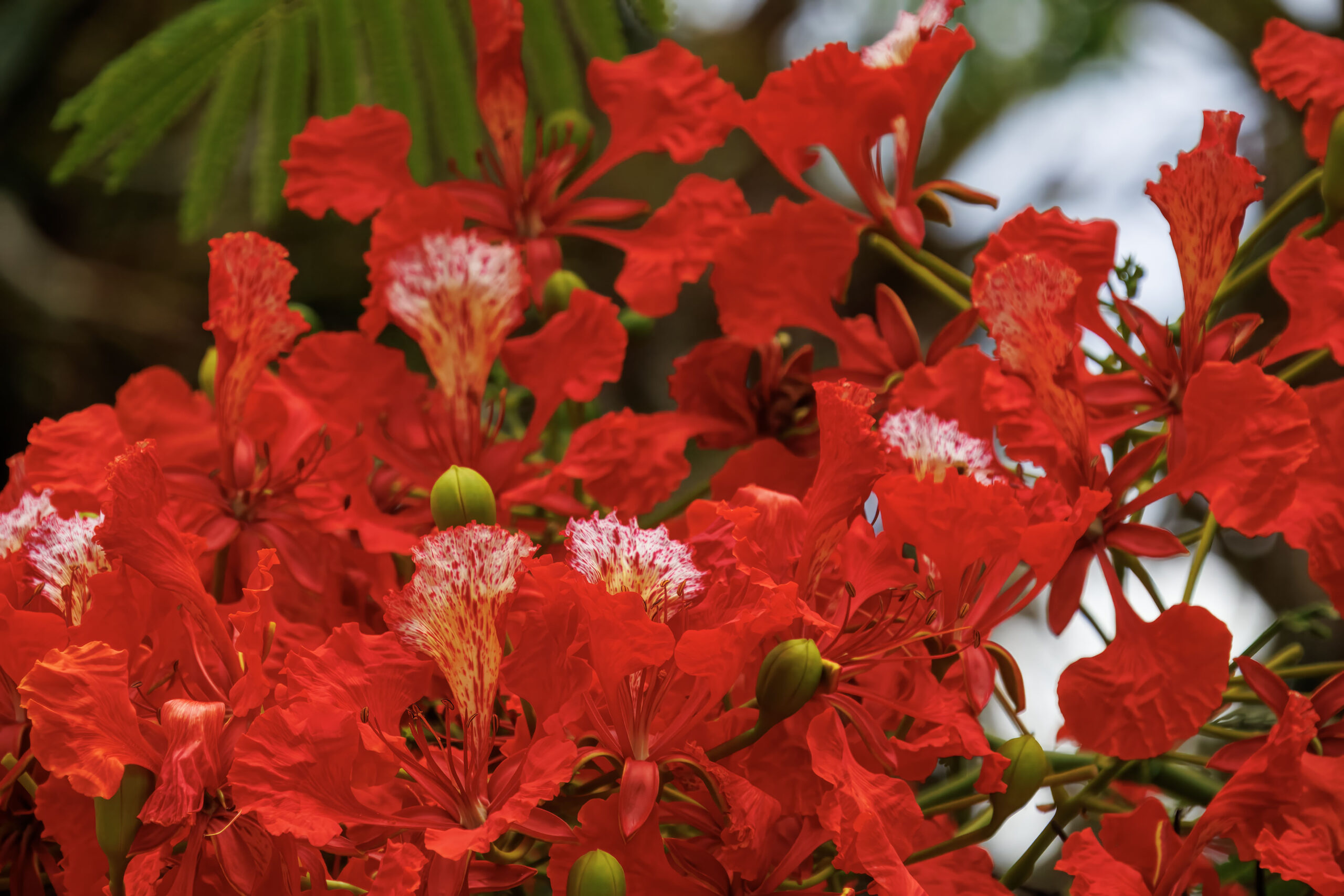
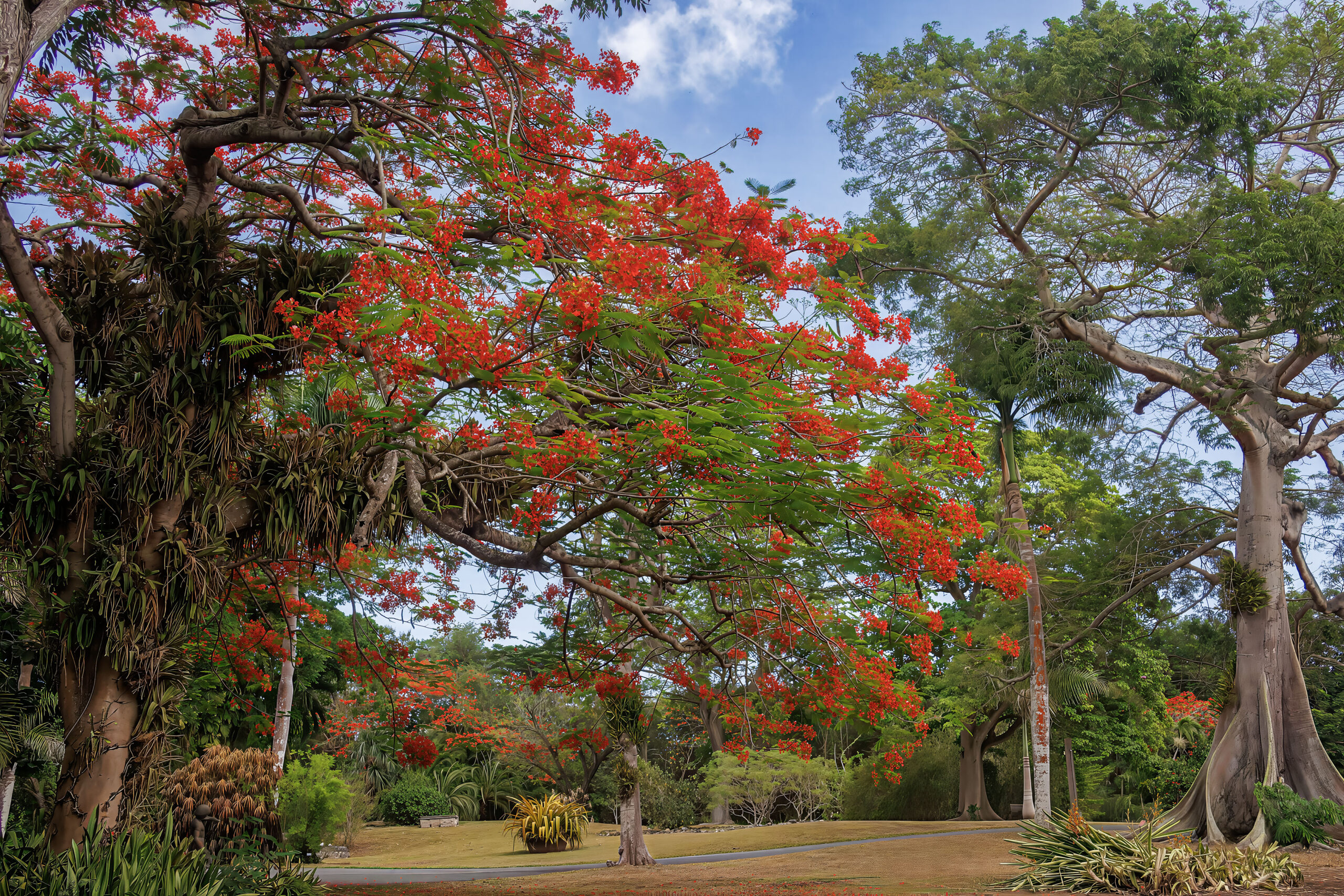
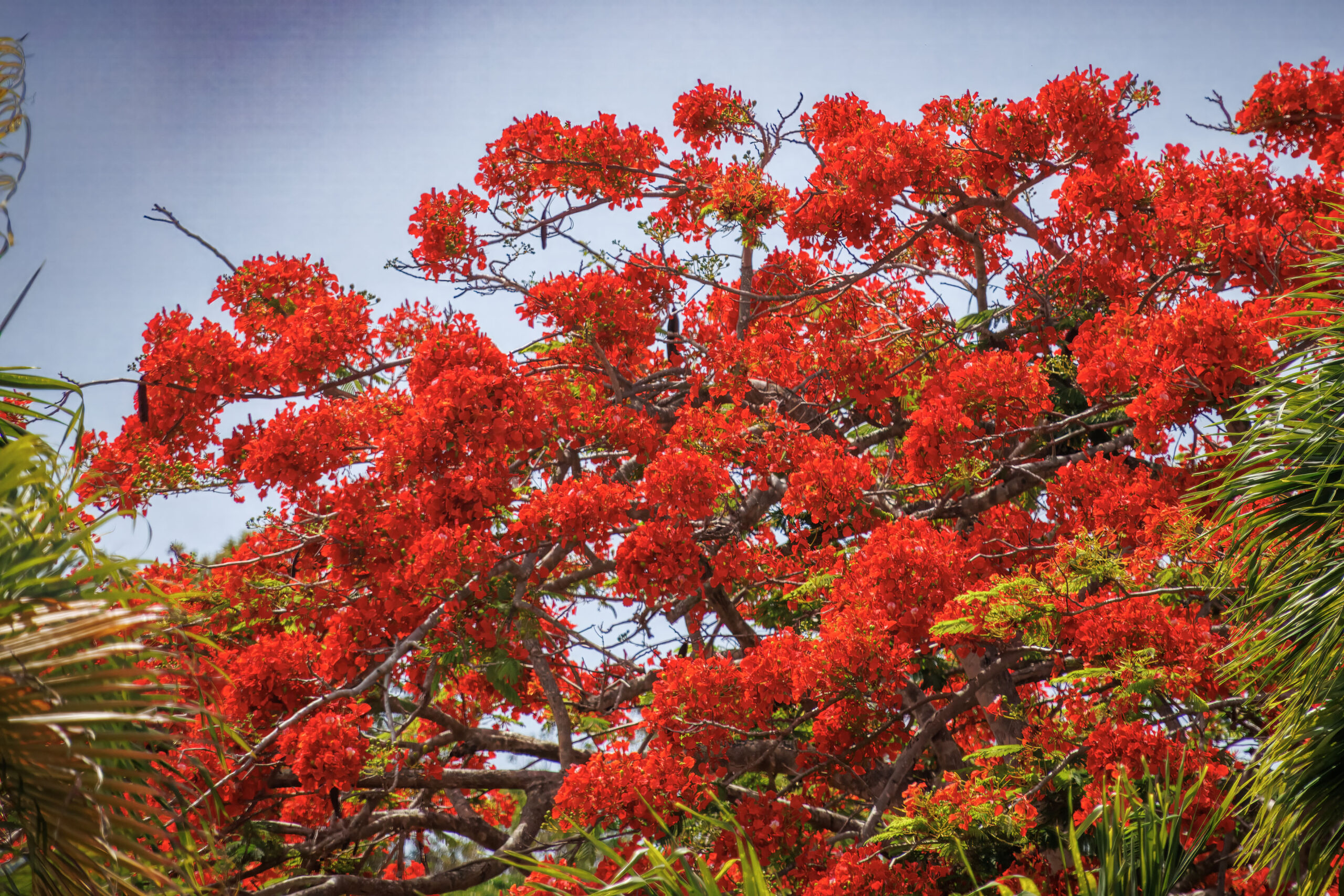
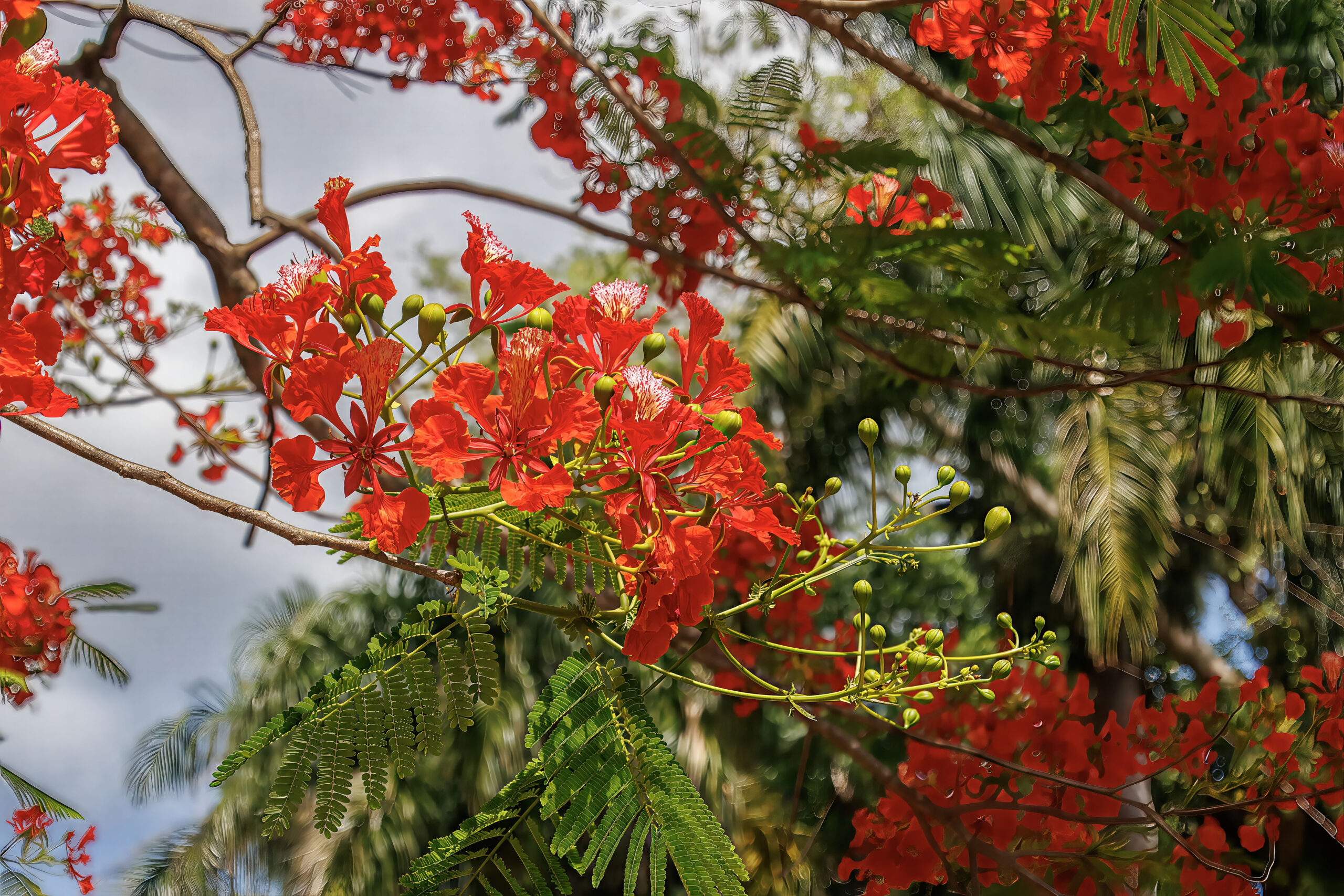
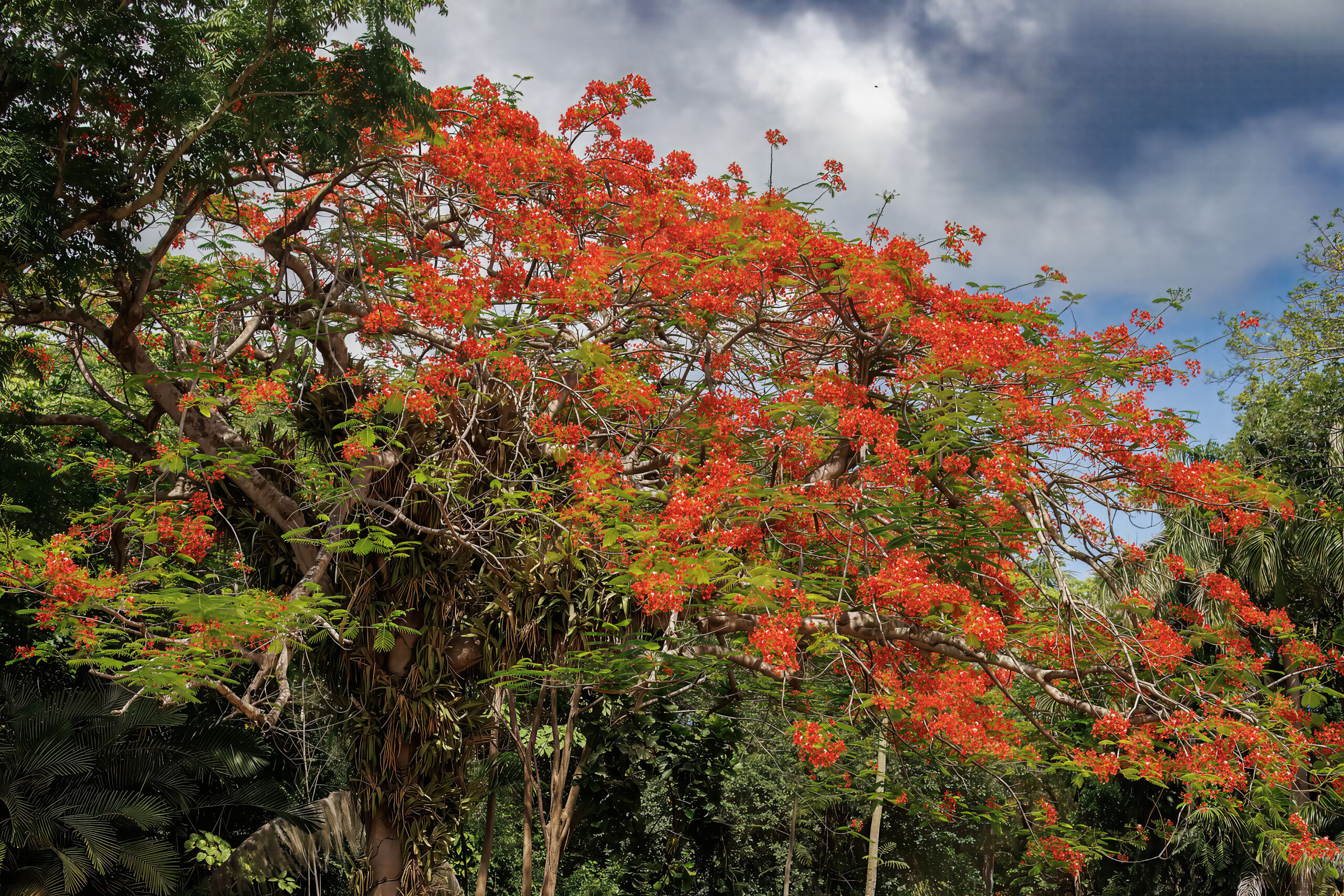
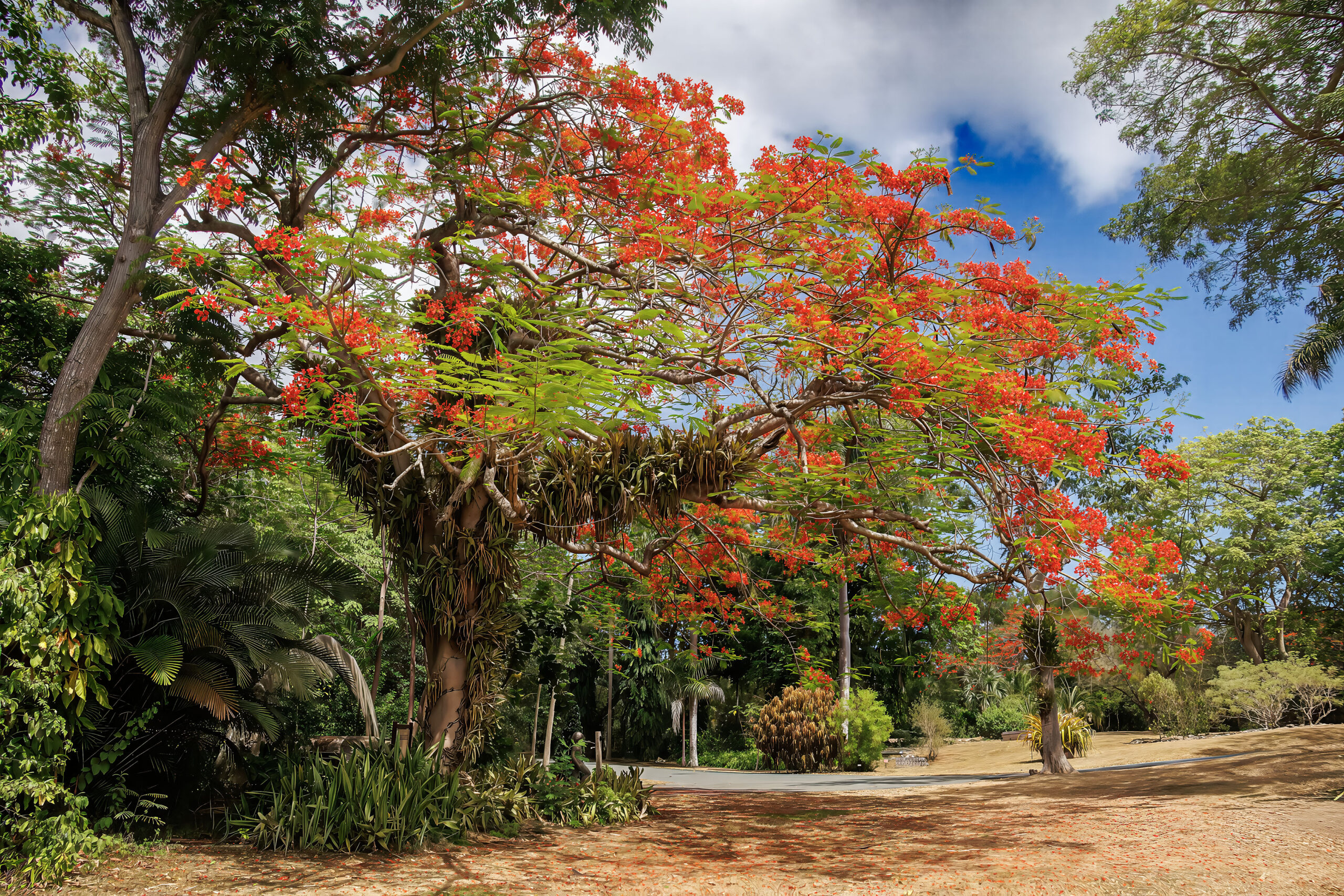
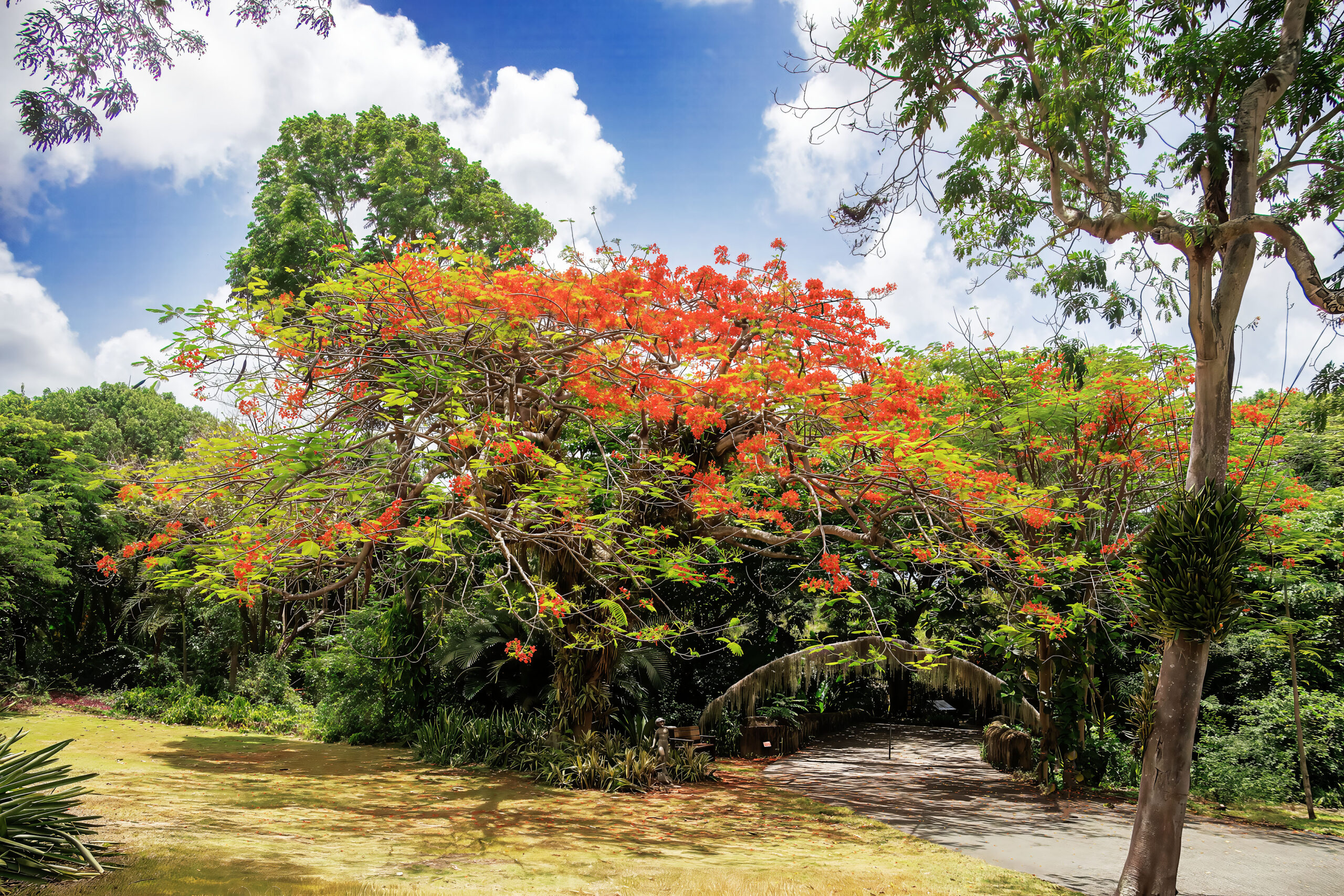
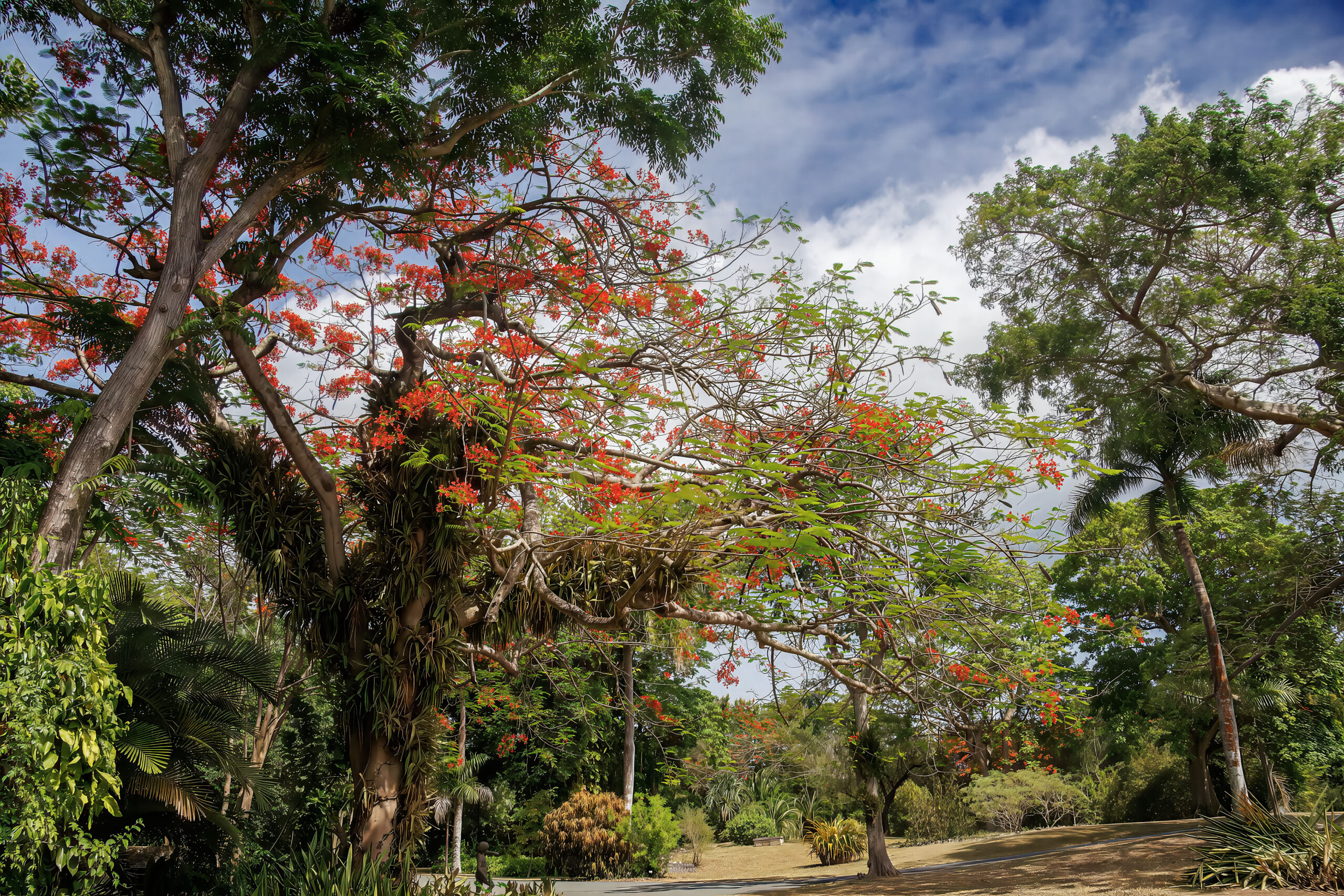
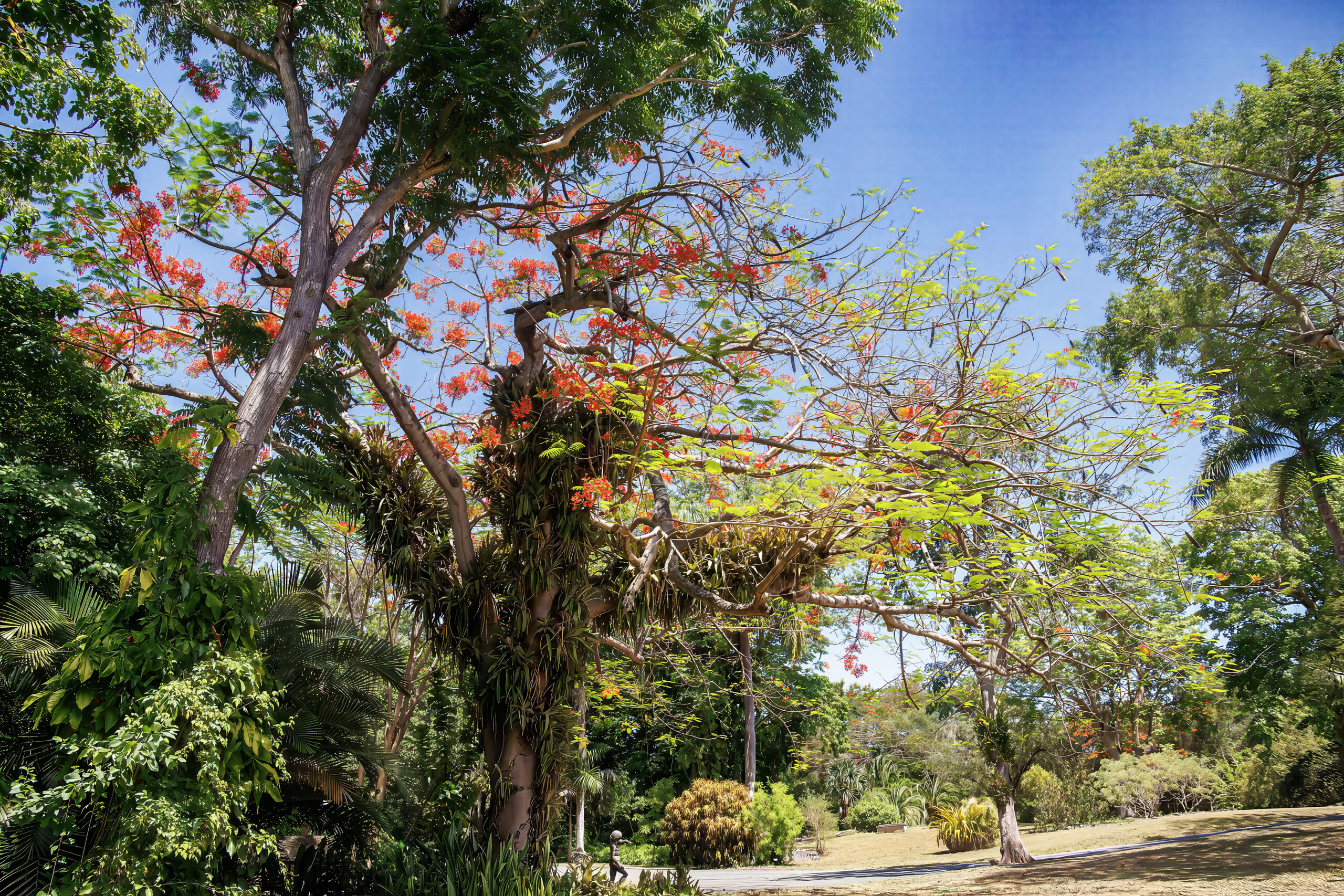
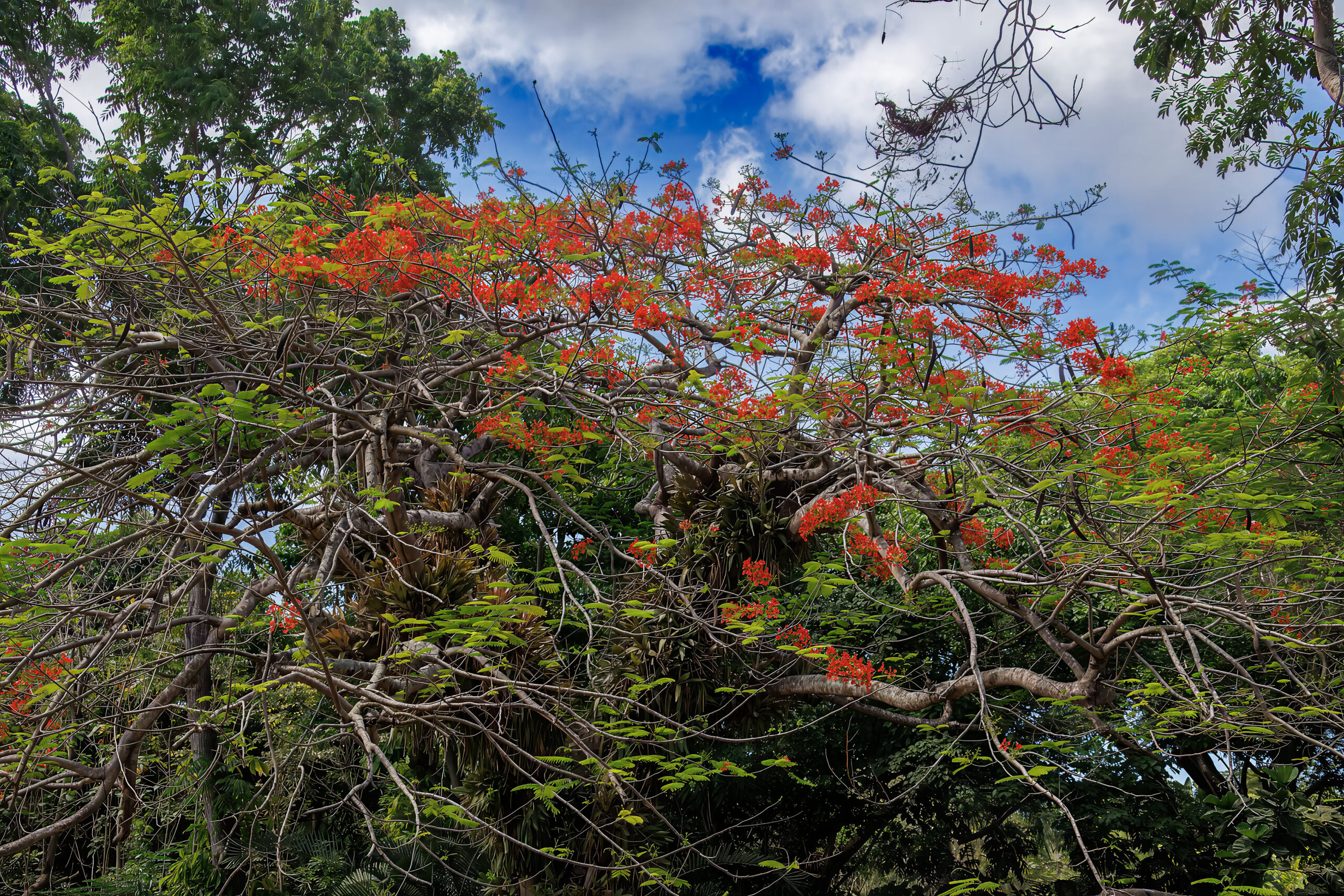
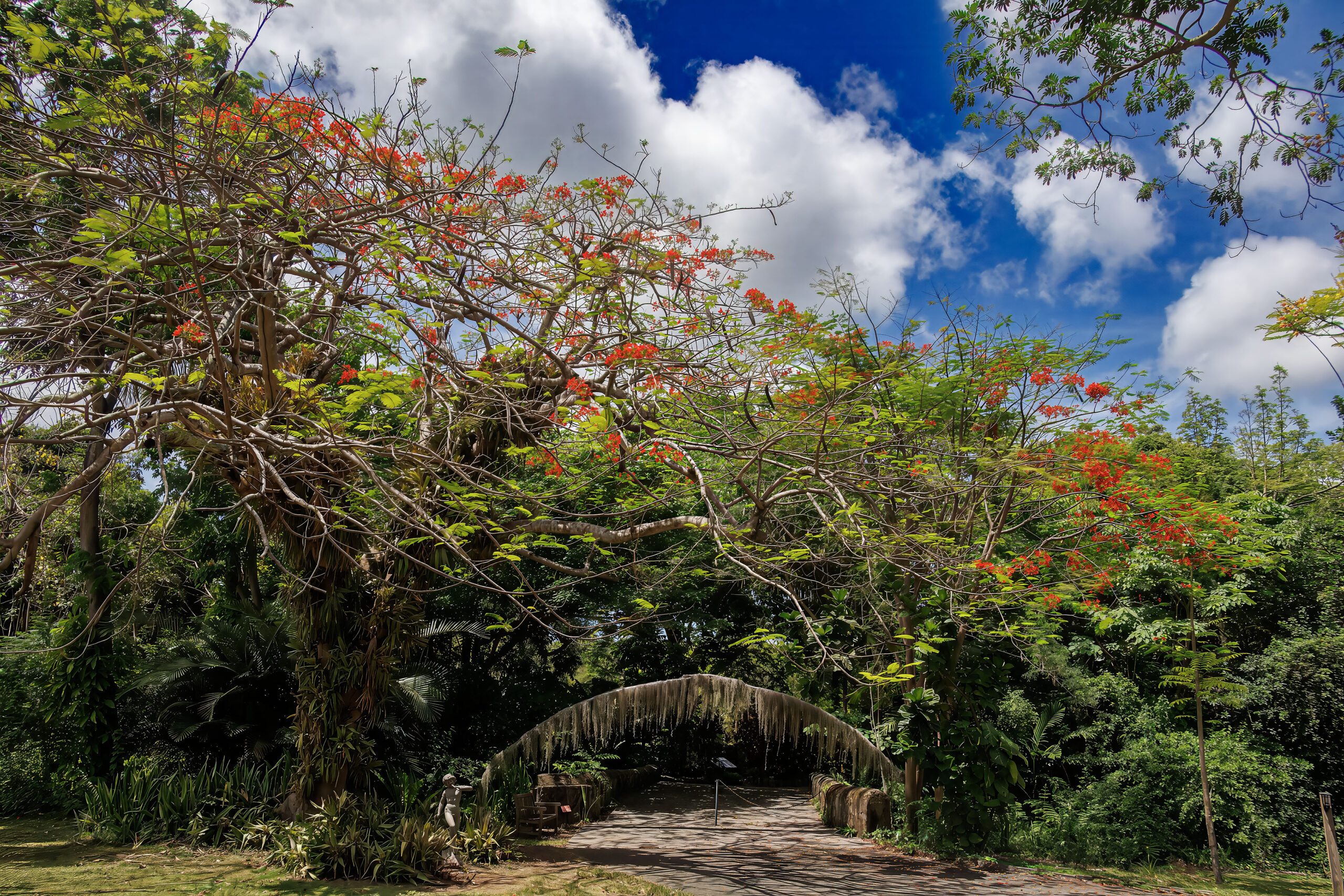
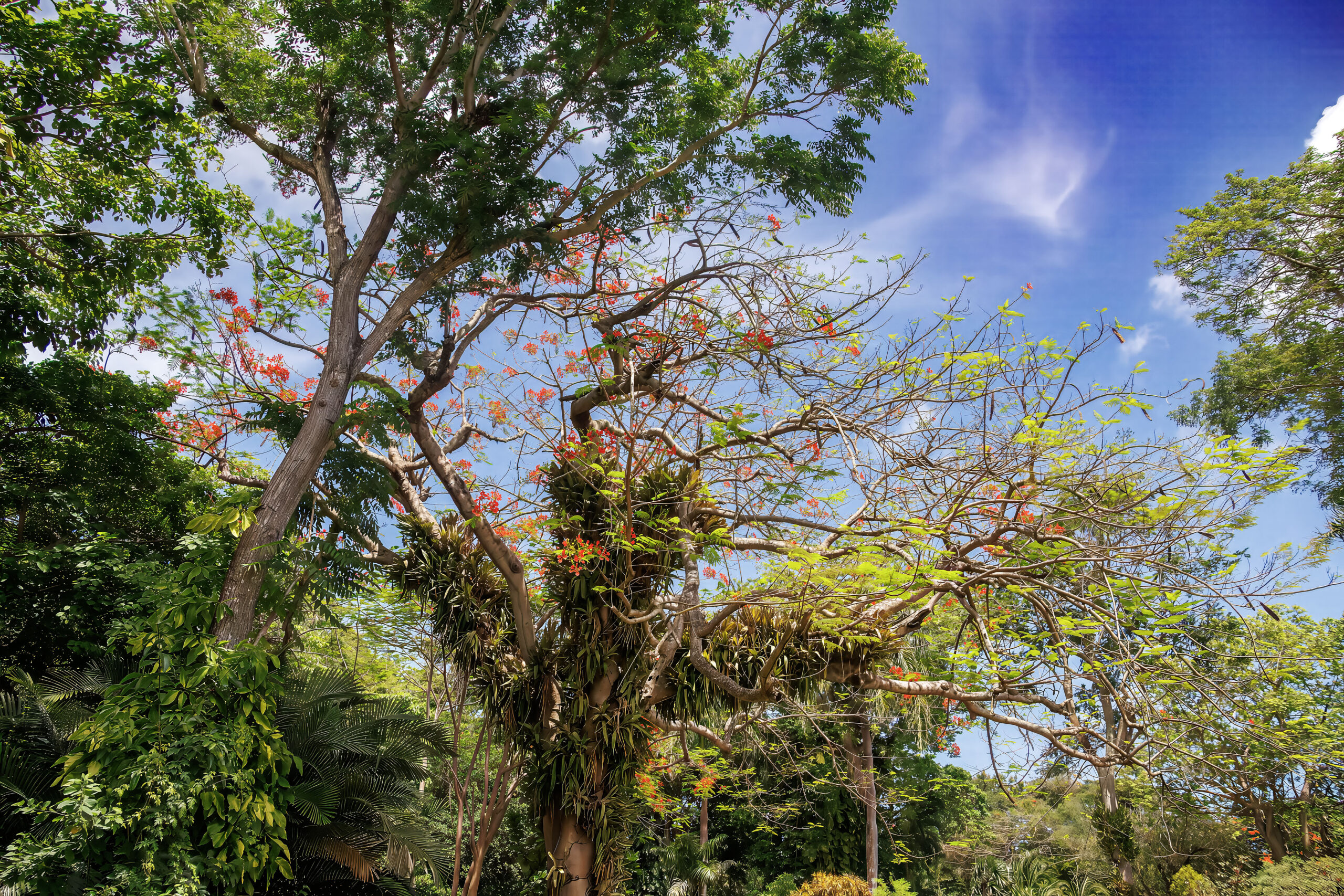
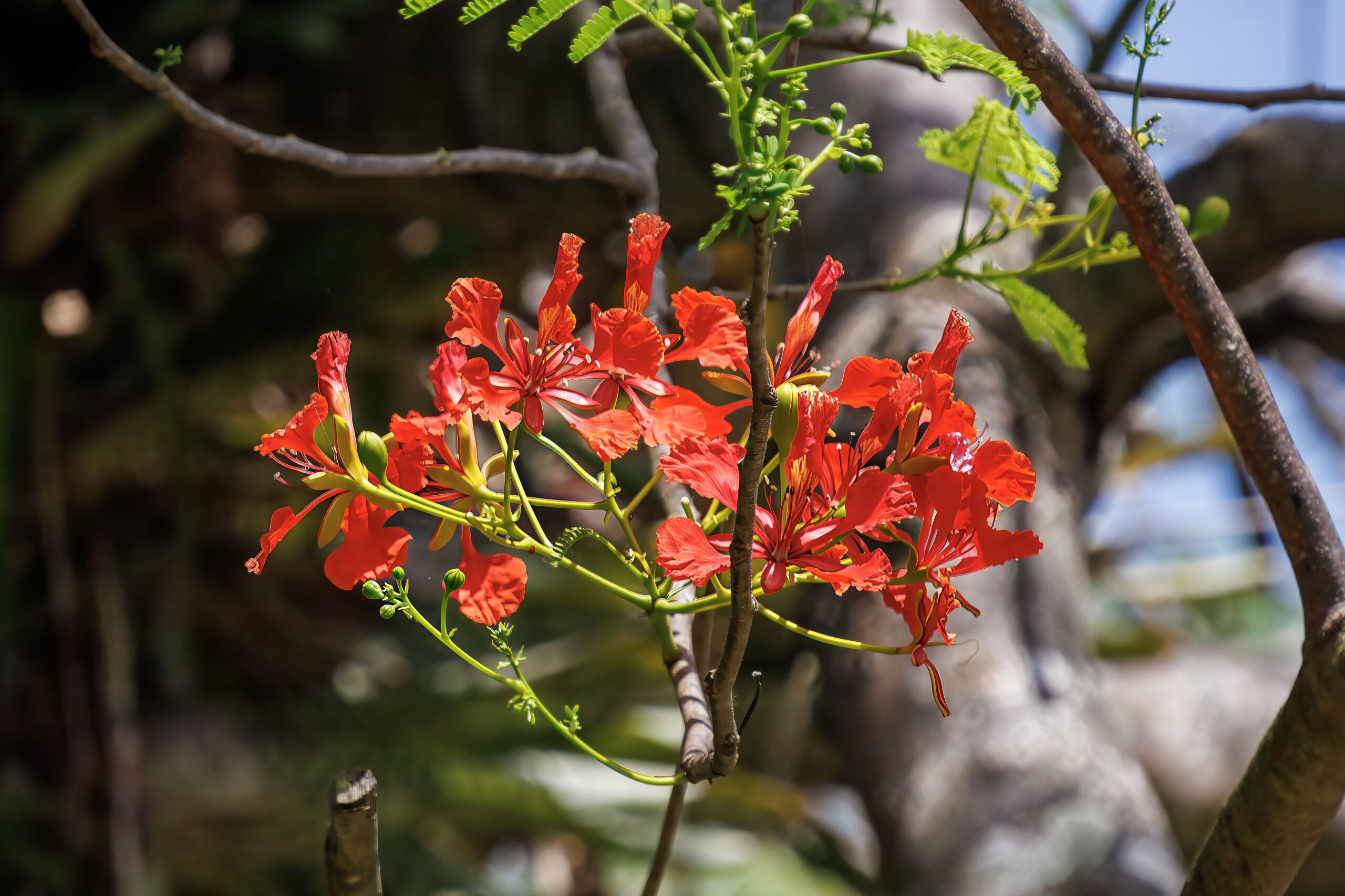
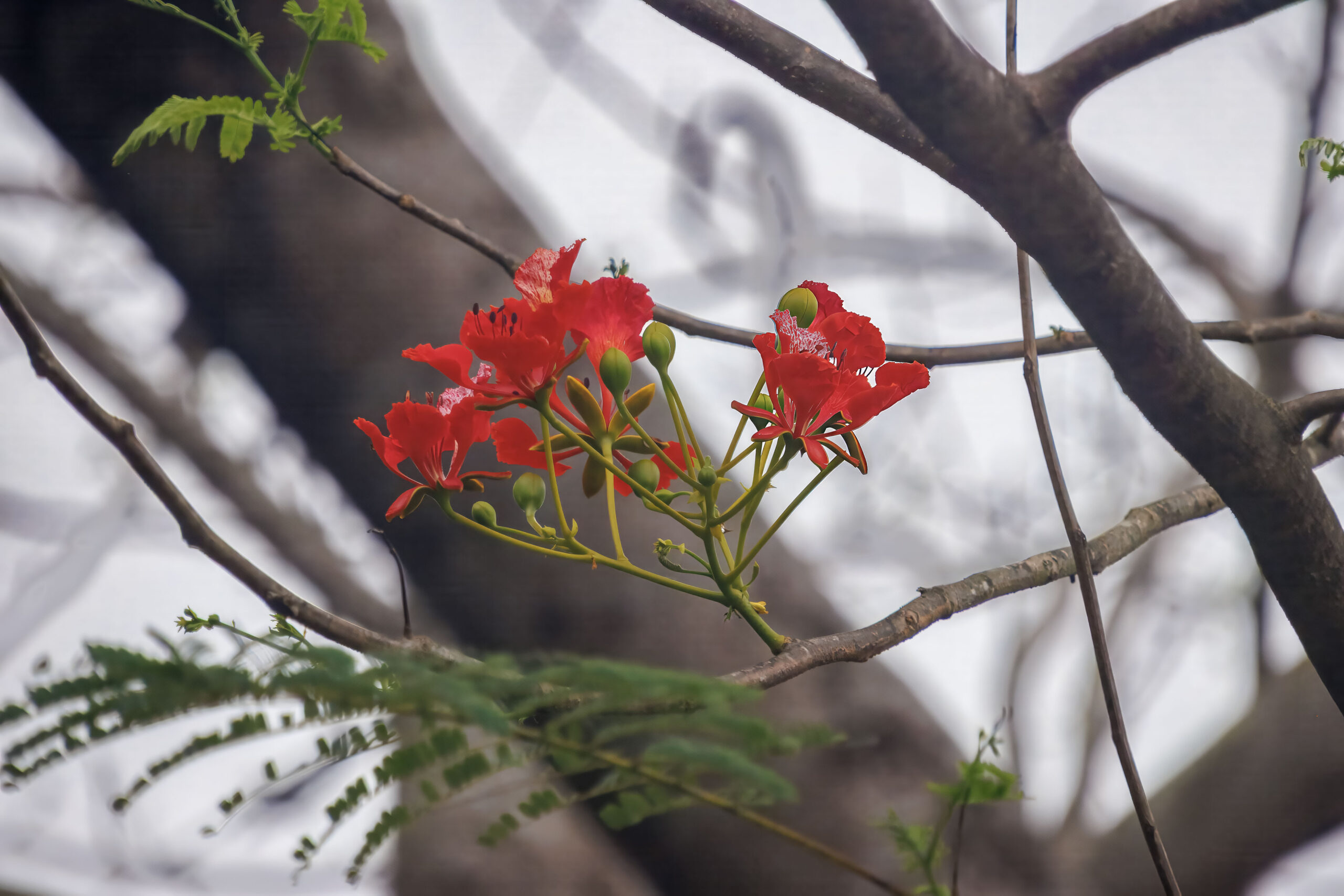
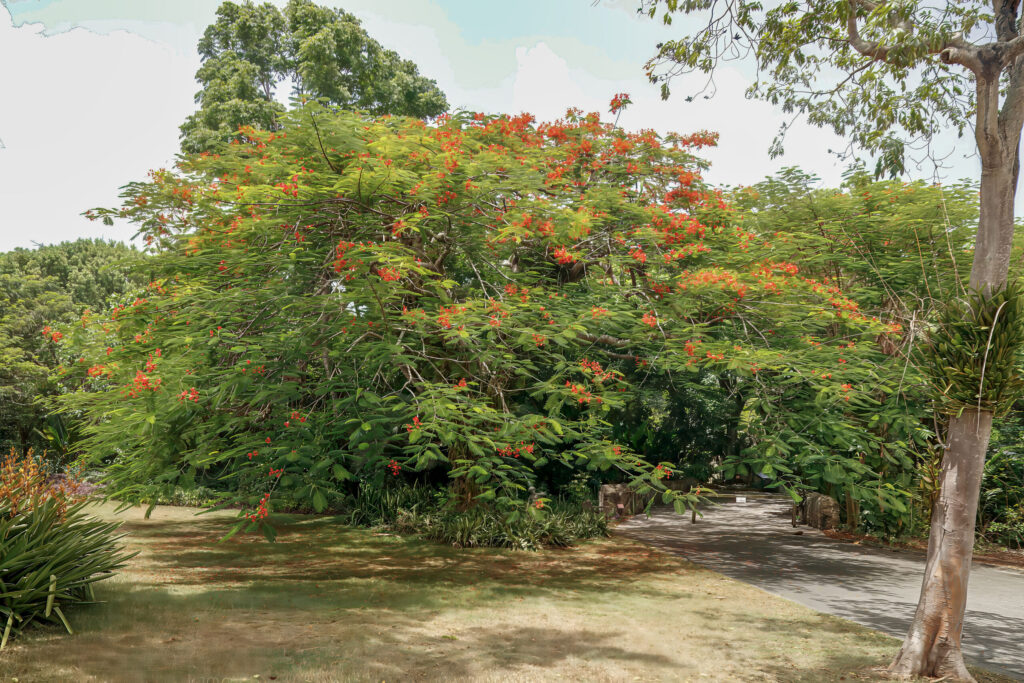
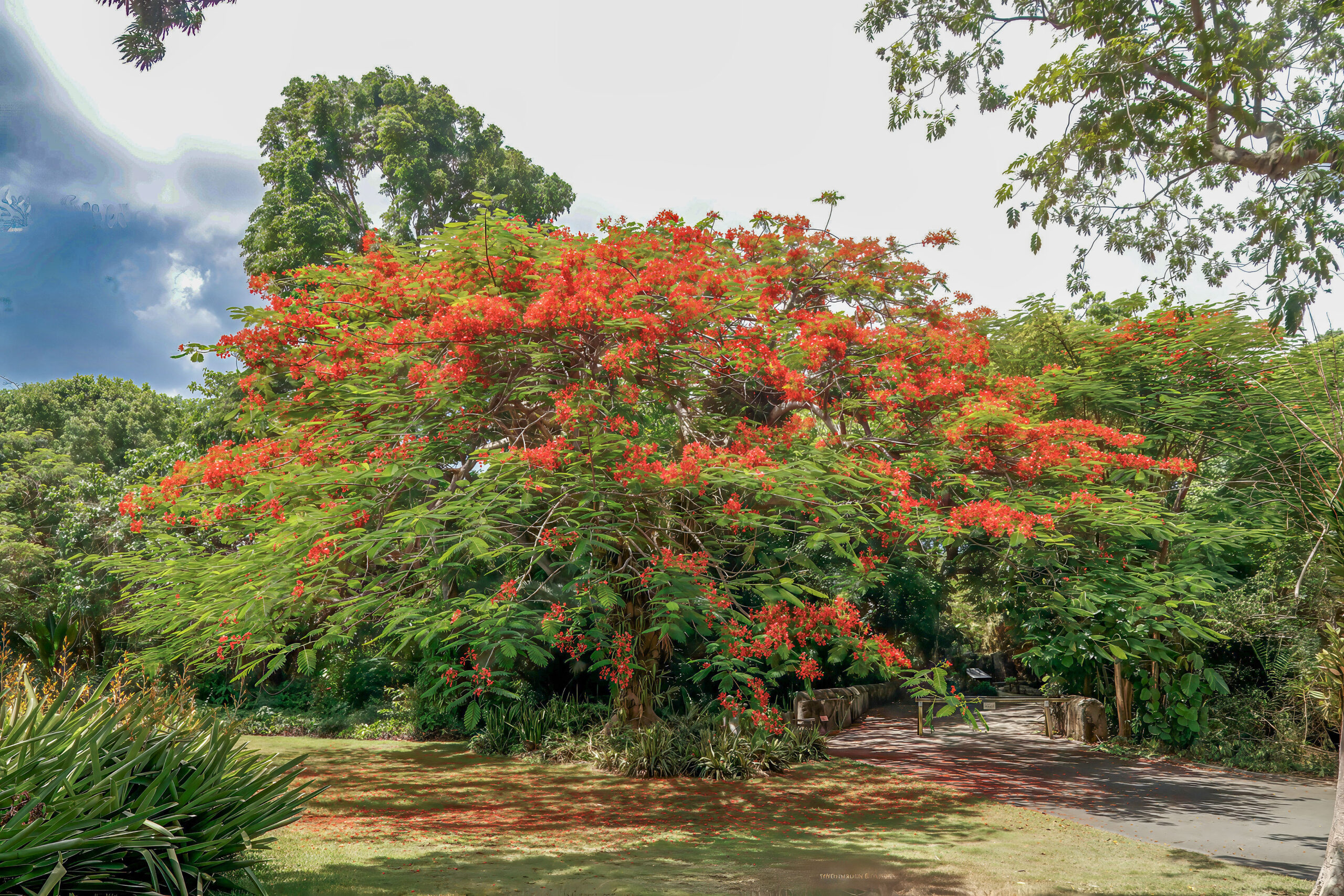
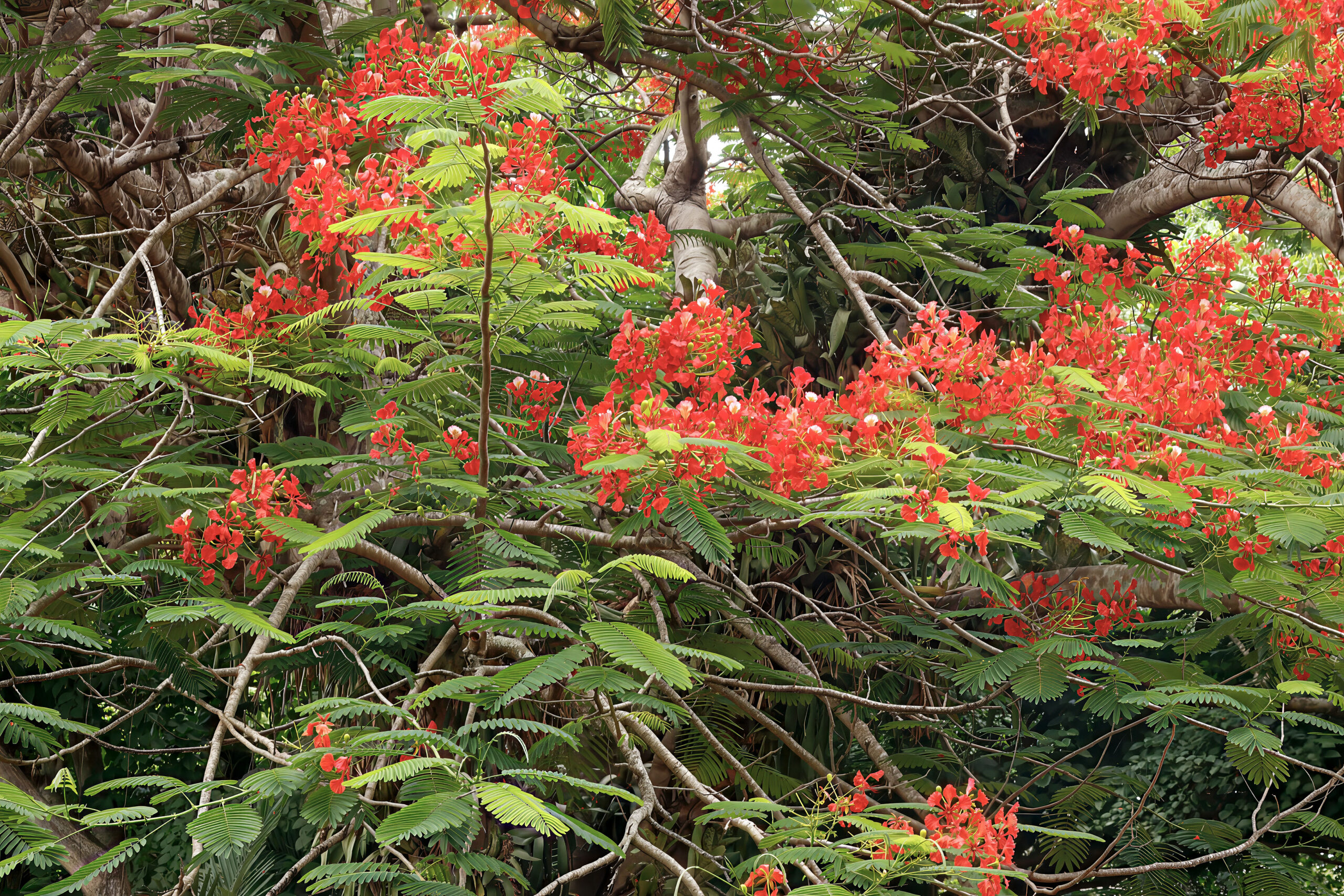
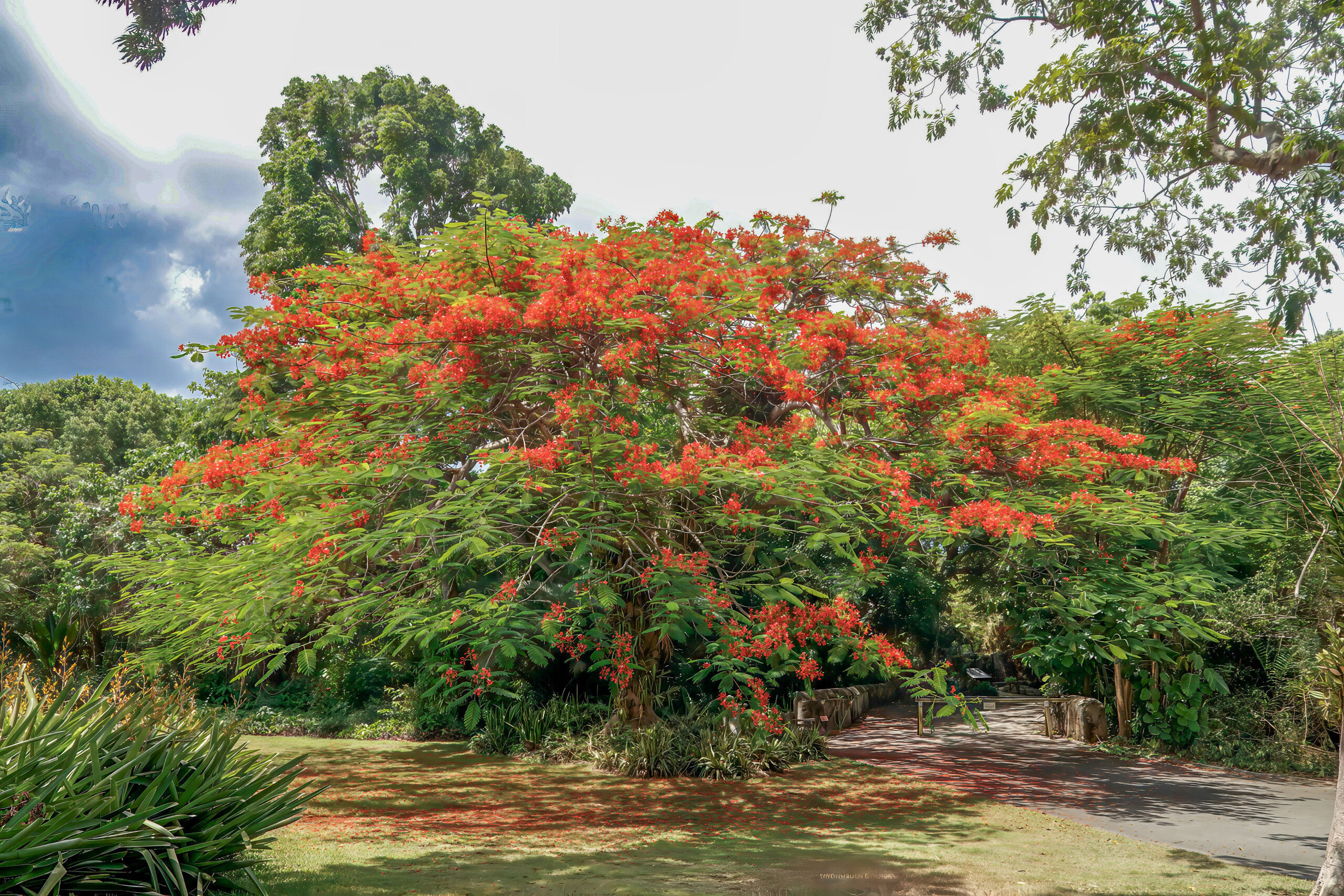
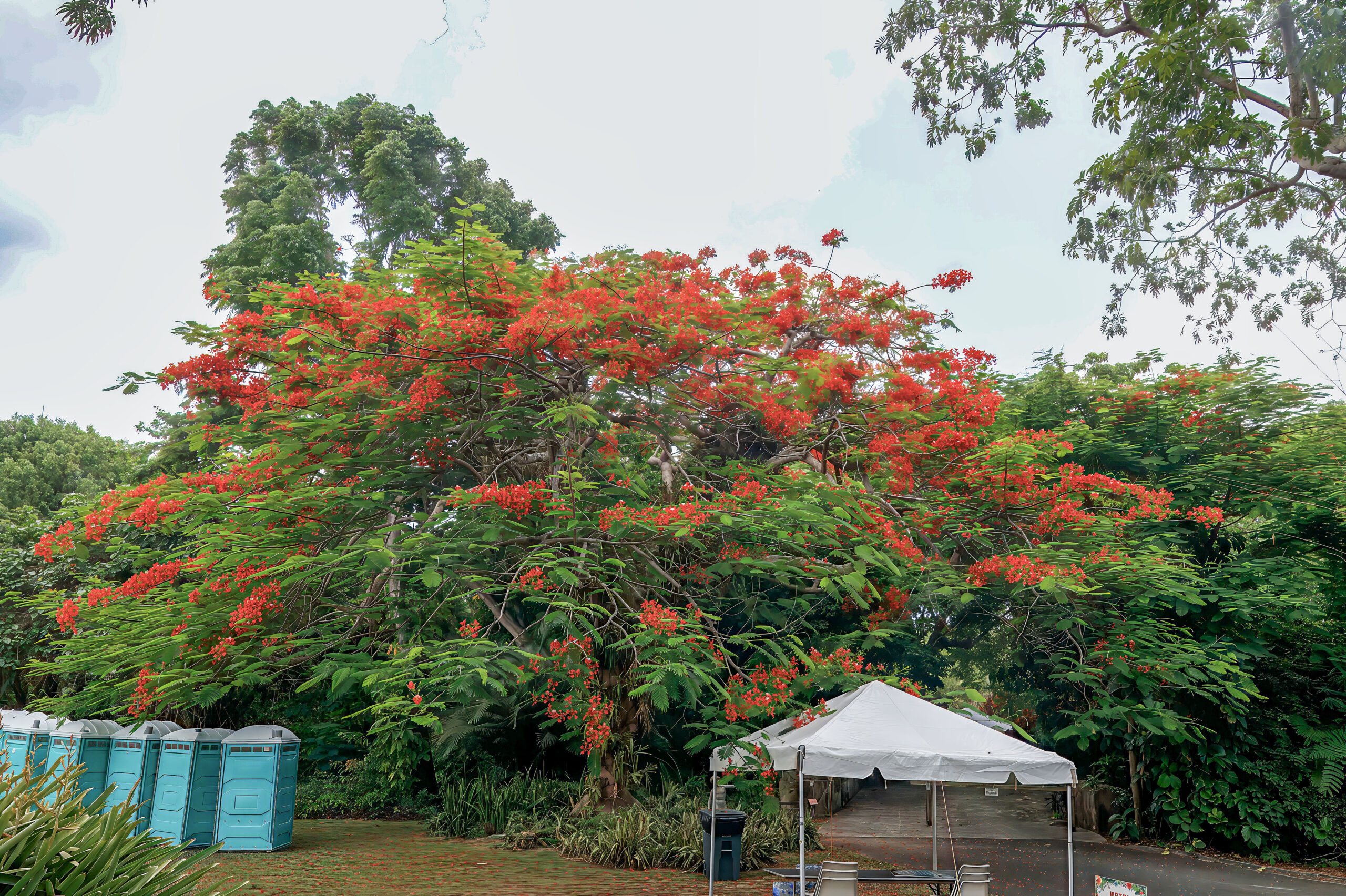
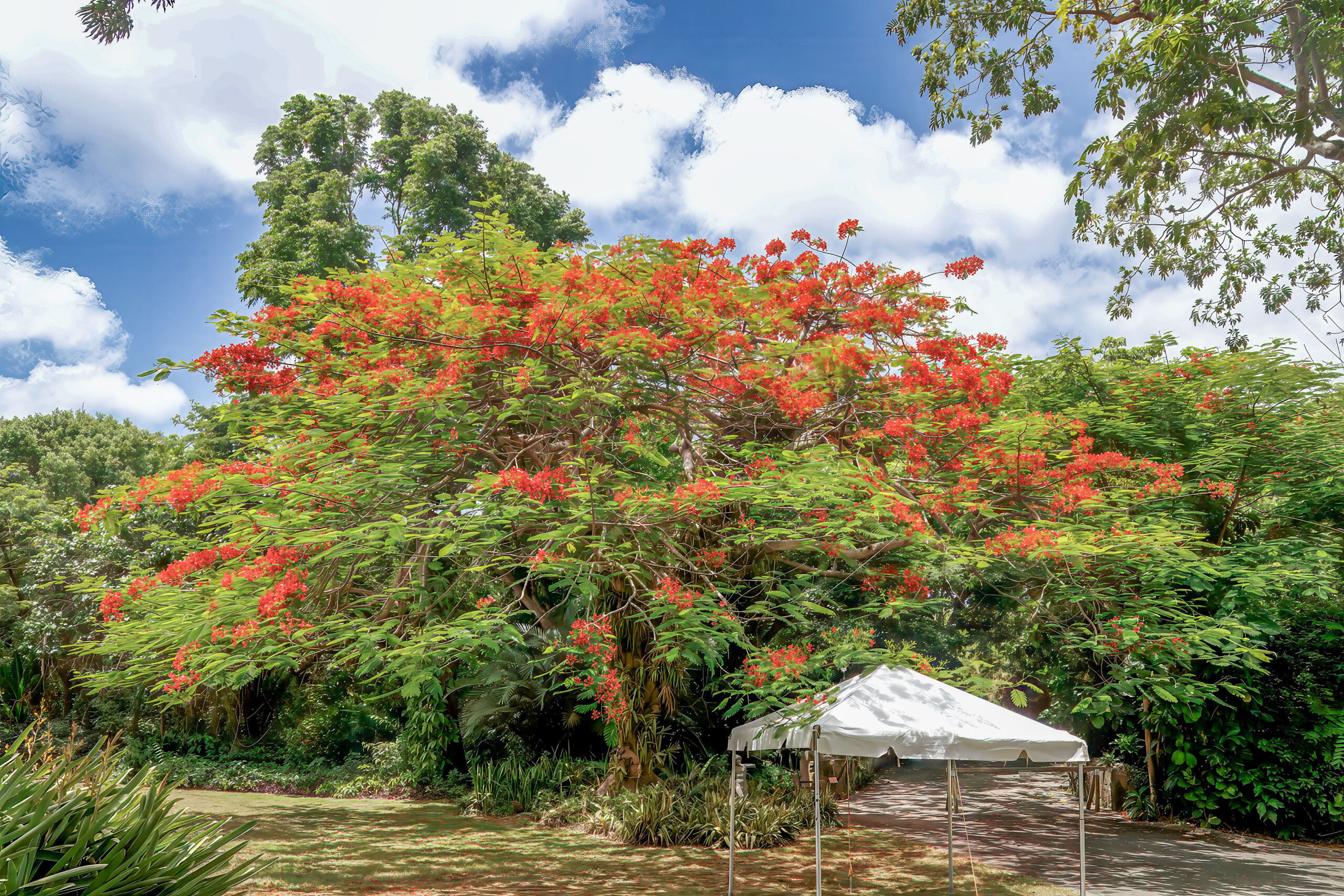
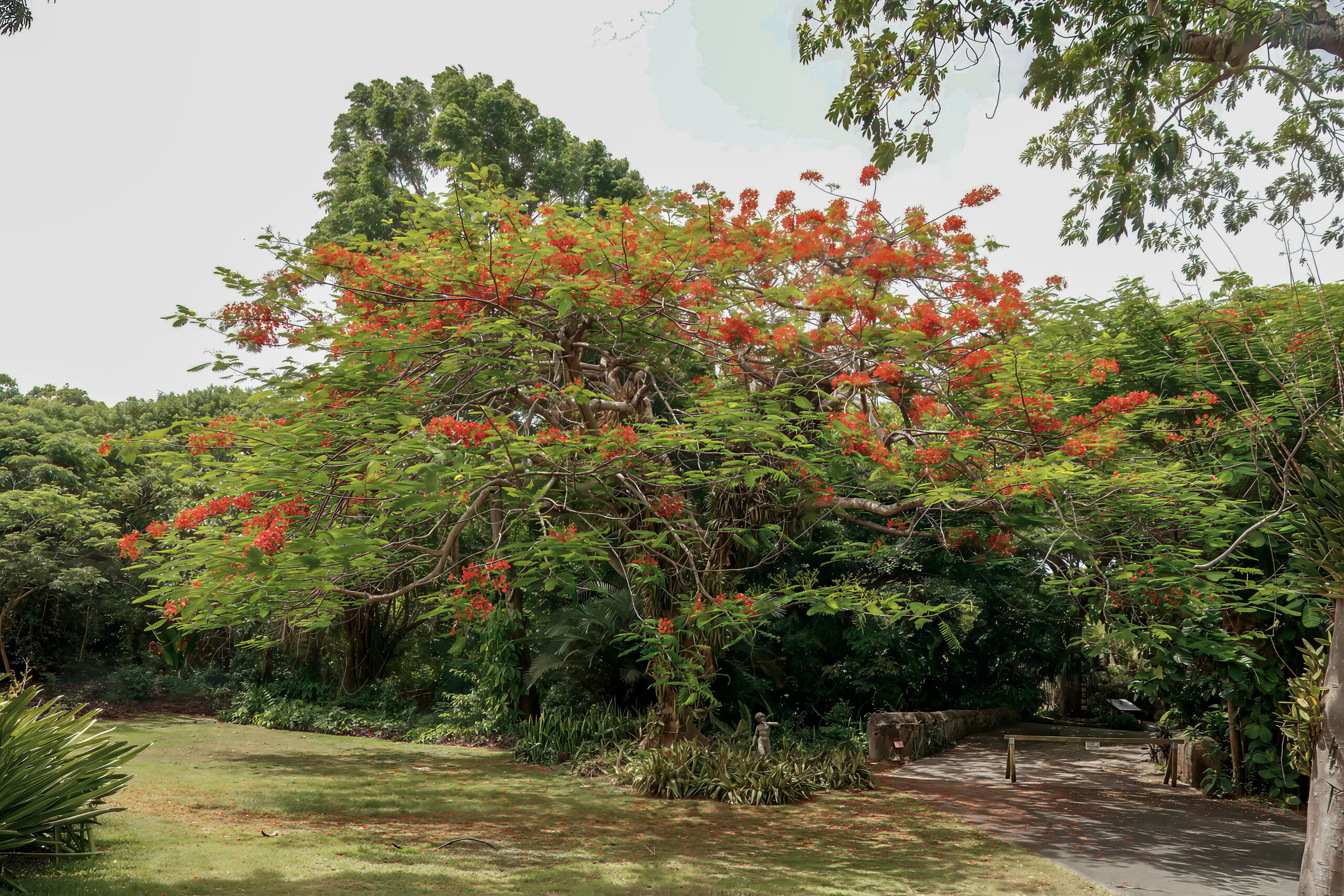
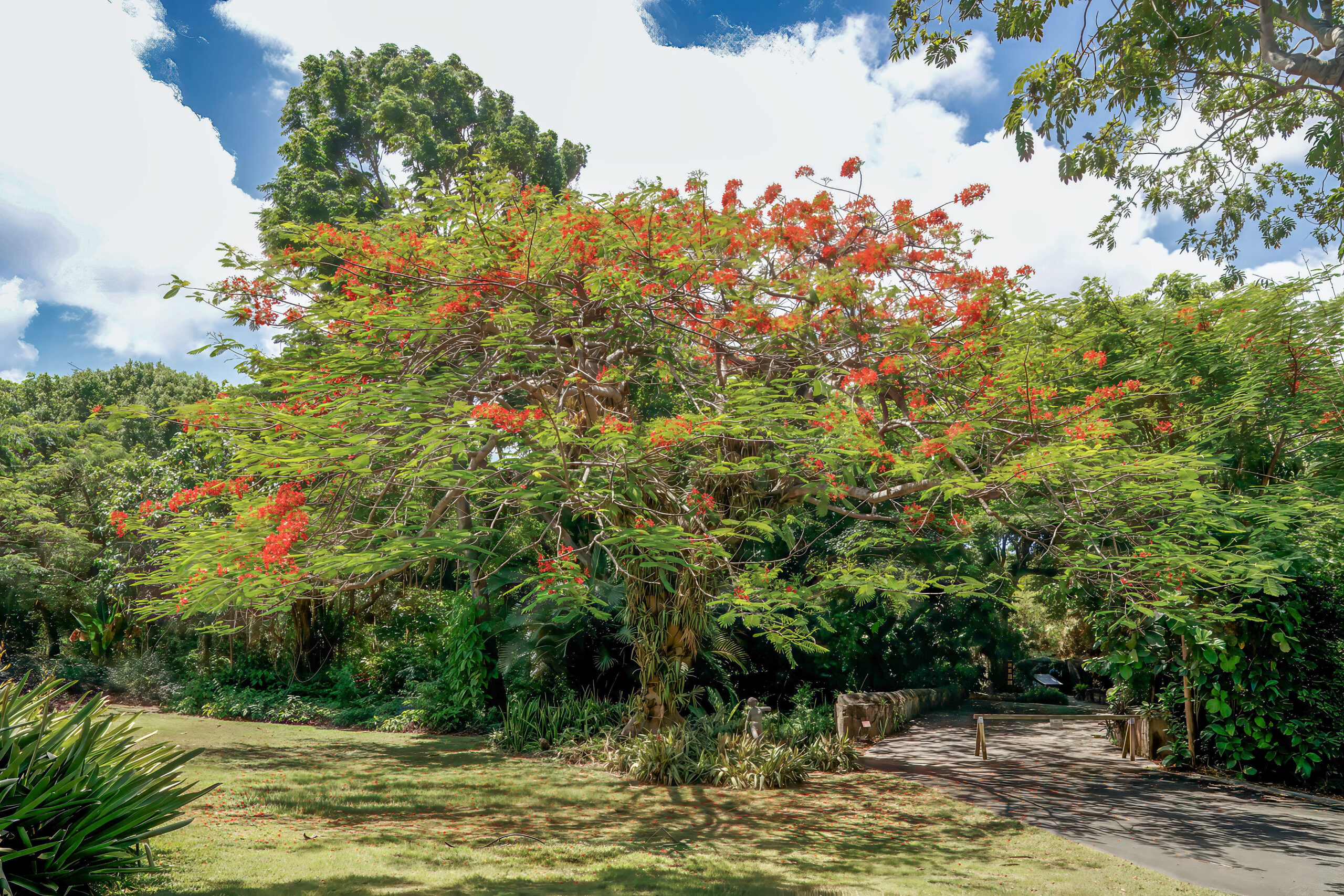
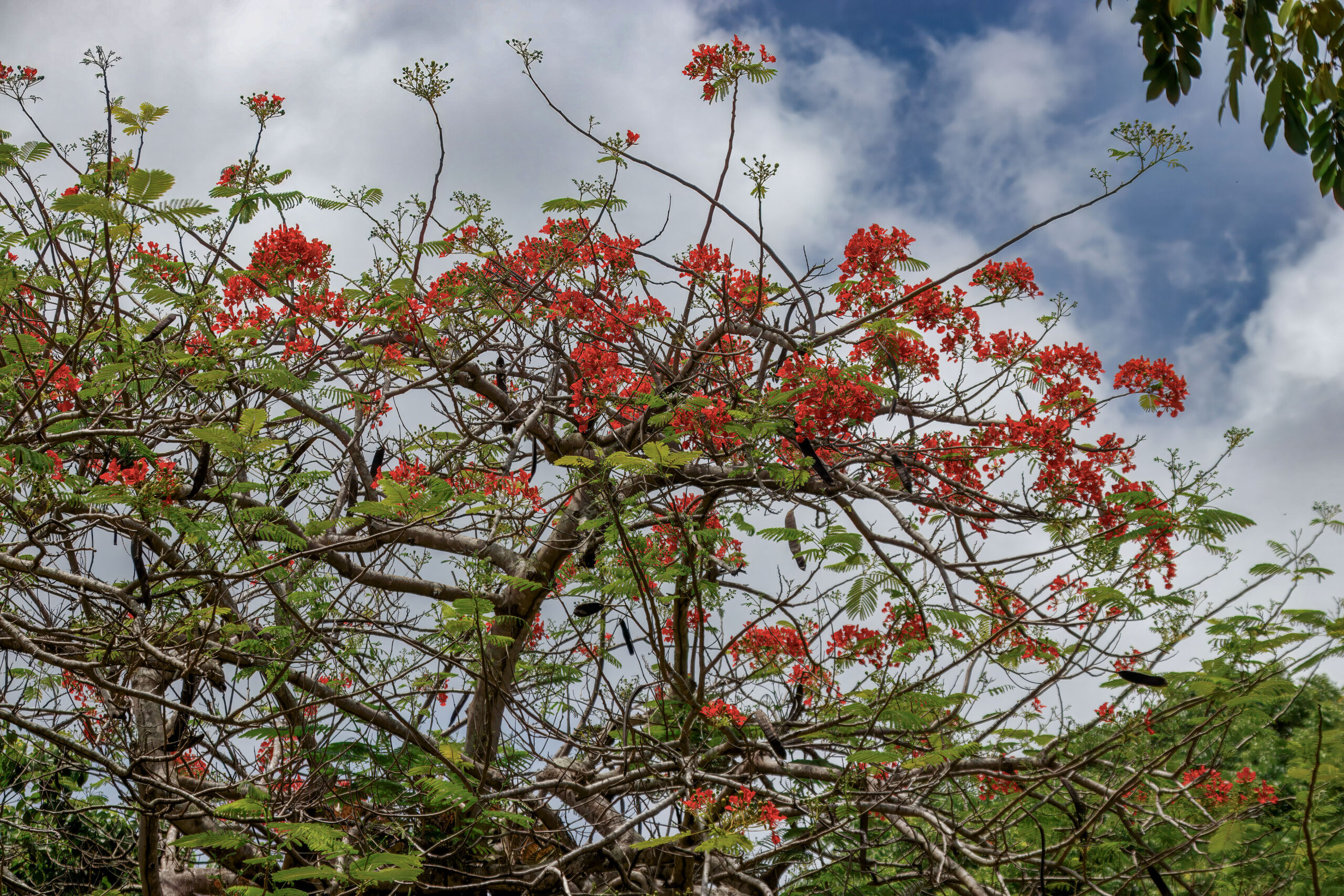
Flamboyant trees produce large, fiery red to orange flower clusters (occasionally yellow in rare cultivars) that cover the entire canopy in a spectacular display.
- Flowering peaks in late dry season to early wet season, usually April to June in St. Croix.
- Flowers emerge on bare or sparsely leaved branches, enhancing their visibility.
- Flowering may last several weeks to over a month, depending on conditions.
Observation Tips:
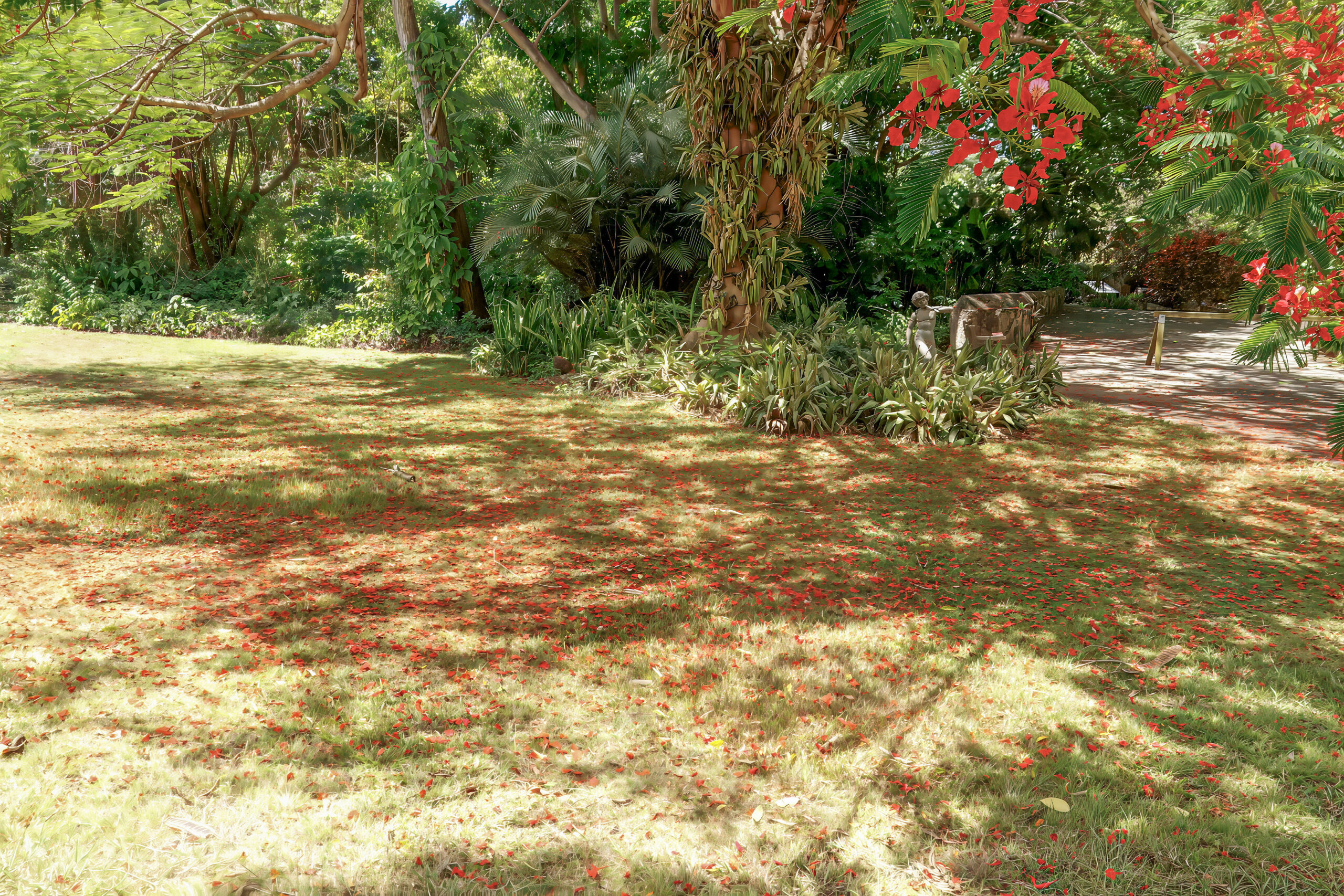
- Document first bud appearance, full bloom, and flower fall.
- Photograph tree silhouette during leafless blooming—a signature phenophase.
- Note pollinator activity—bees and butterflies are frequent visitors.
3. Leaf Flush (New Growth)
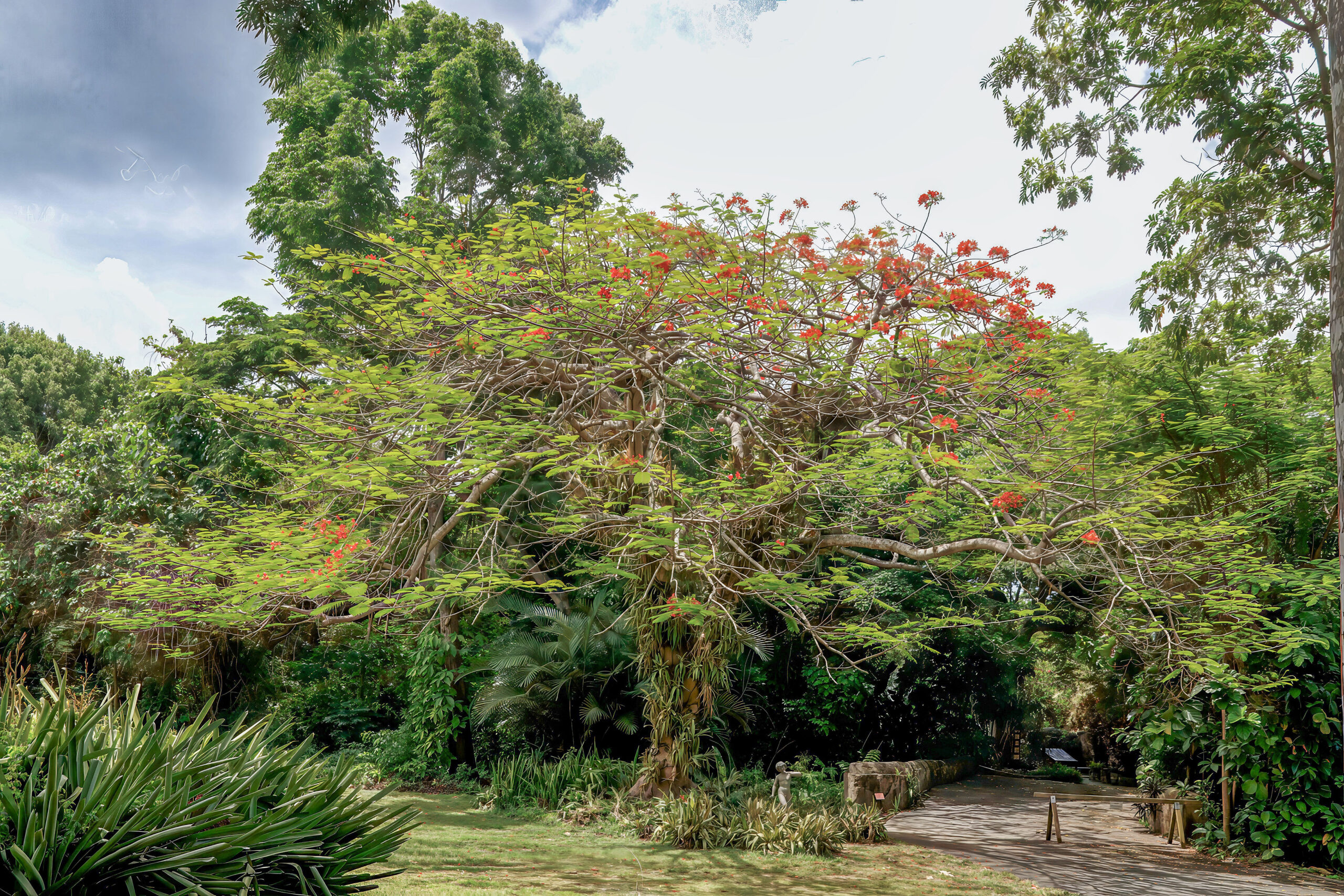
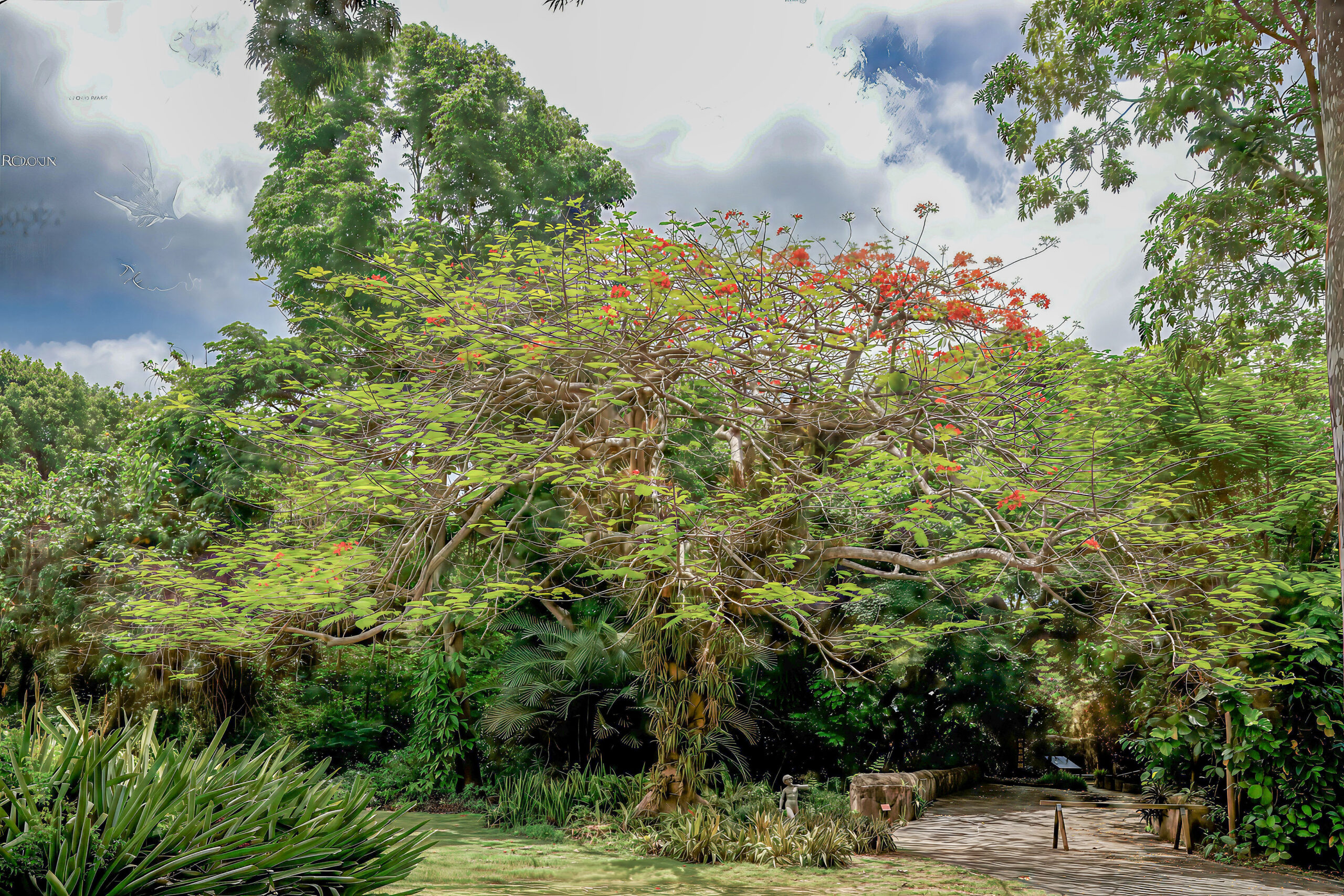
After flowering, delicate, fern-like leaves emerge quickly, creating a soft green canopy.
- Leaf flush typically begins in late spring to early summer (May–July).
- New leaves are light green and feathery, adding texture to the post-flowering profile.
Observation Tips:
- Track progression of new leaf emergence from terminal buds.
- Note whether leaf flush and fruiting overlap.
4. Fruiting
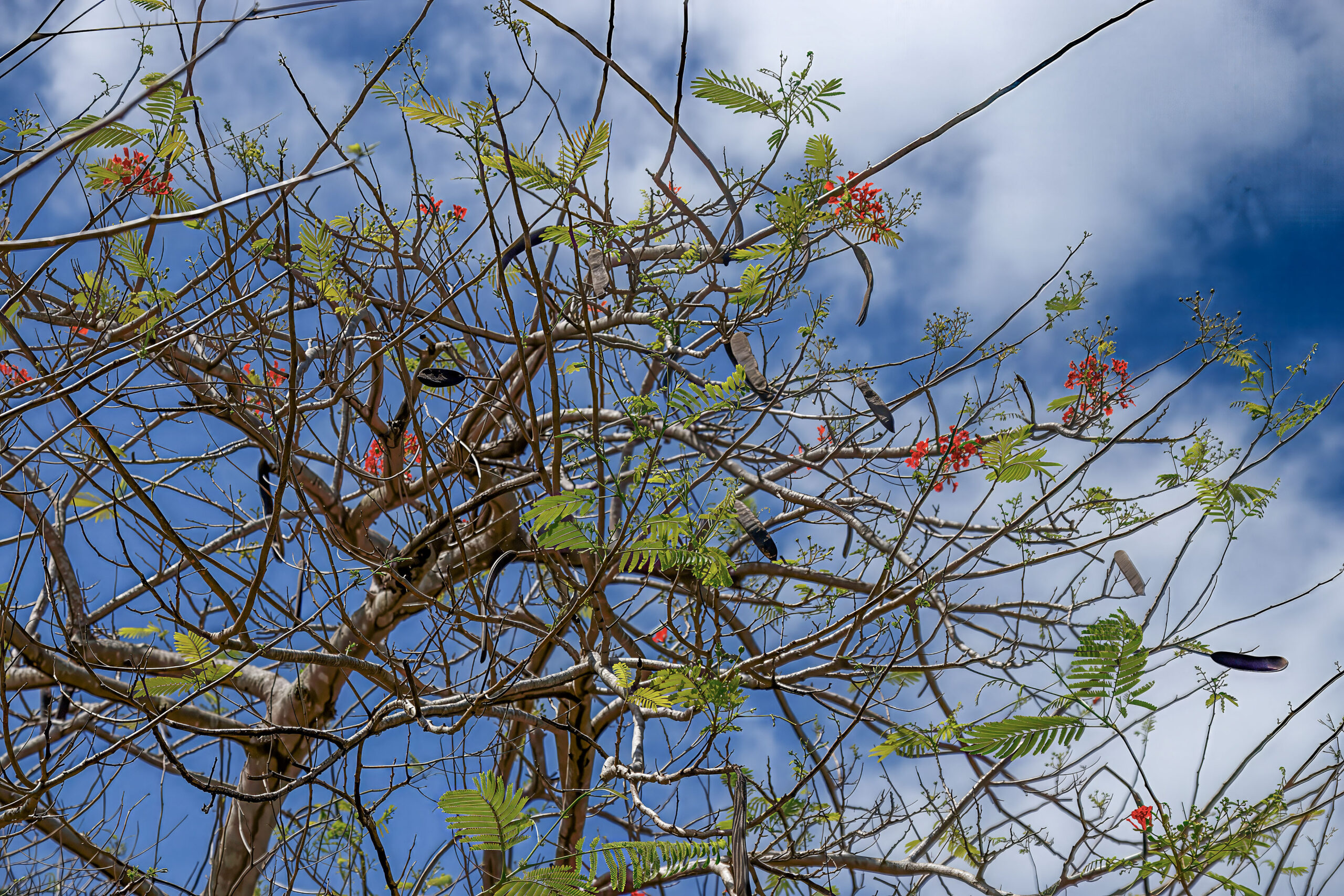
Long, flat, woody seed pods (up to 24 inches) form after flowering and hang from branches into the late wet season.
- Pods start green and turn dark brown or black as they mature.
- They may persist on the tree well into the dry season.
Observation Tips:
- Record pod development stages, especially color change.
- Listen for the sound of pods rattling in the wind—often audible during the dry season.
- Note pod drop and seed dispersal activity, which may be aided by birds or gravity.
5. Seasonal Pattern (St. Croix)
- Jan–Mar: Leaf drop
- Apr–Jun: Flowering peak
- May–Jul: Leaf flush begins
- Jul–Nov: Pod maturation and seed dispersal
- Dec–Jan: Gradual canopy thinning