
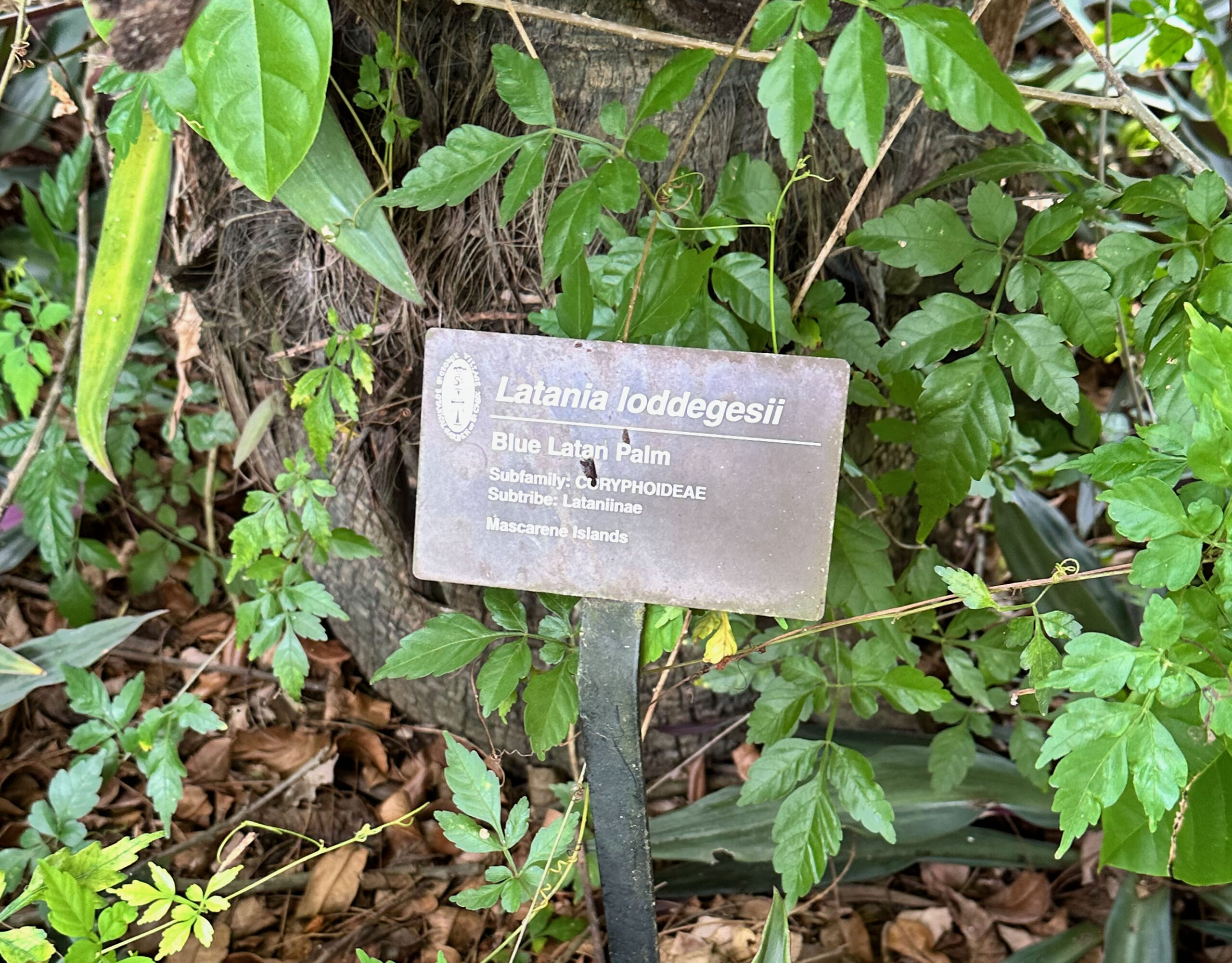
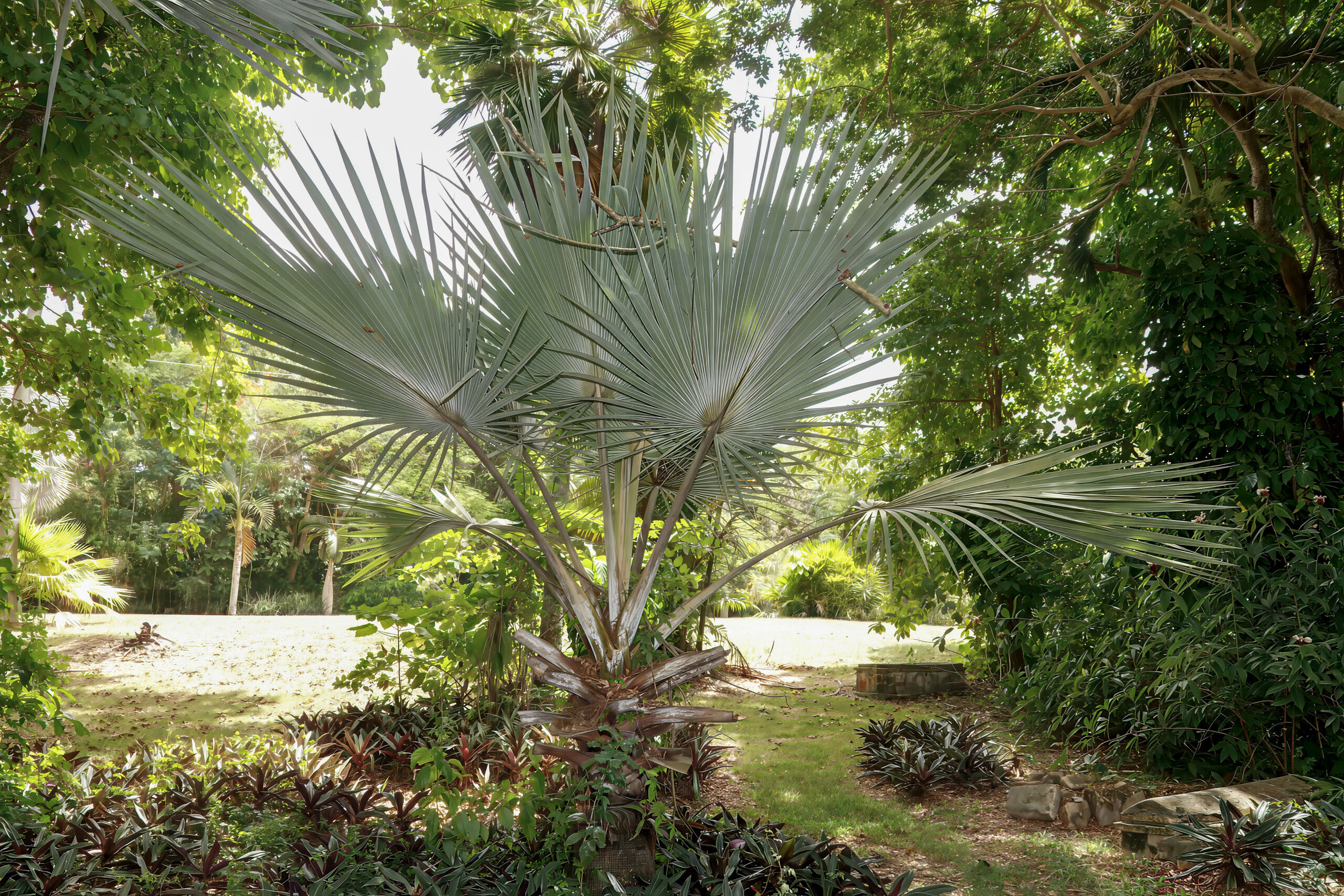
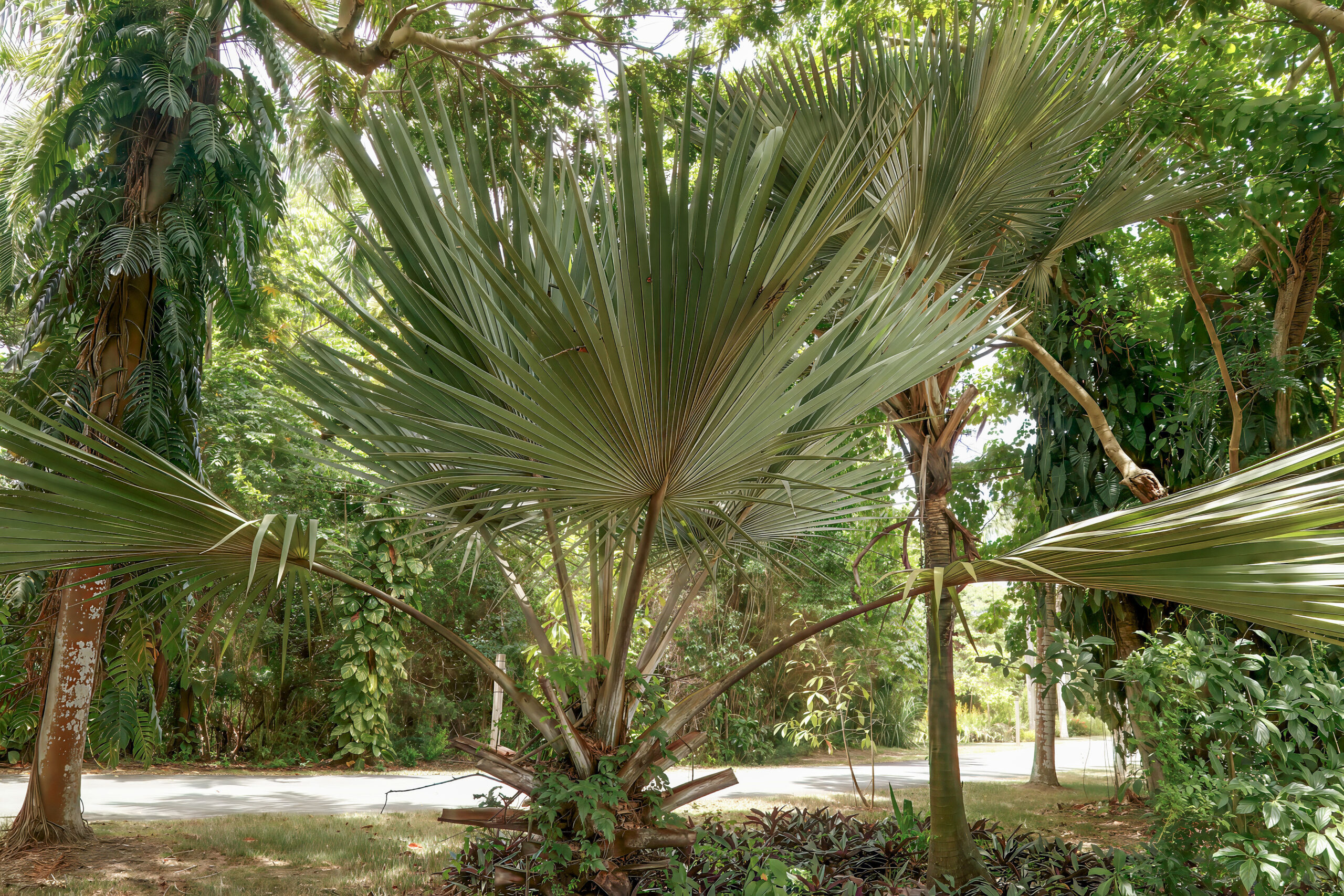
Blue Latan Palm
Scientific name: Latania loddigesii
POWO Status: Tree
IUCN Red List threat level: Endangered
GPS Location: 17° 42′ 55.74″ N, 64° 49′ 48.75″ W
Medicinal Uses
Latania loddigesii (Blue Latan Palm) is primarily known for ornamental, construction (thatching/timber), and edible uses (young seeds), with limited direct medicinal data, though its related species (L. verschaffeltii) show promising bioactive compounds like tannins, flavonoids, and sterols, suggesting potential medicinal value that warrants further study for health benefits.
Observations:
Phenological Markers – Latania loddigesii
Common Name: Blue Latan Palm, Blue Latania
Scientific Name: Latania loddigesii Mart.
Family: Arecaceae
Leaf Phenology
- Leaf Type: Large, stiff, fan-shaped (costapalmate) leaves with thick petioles; prominent, coarse texture
- Evergreen/Semi-deciduous: Evergreen
- Leaf Flush: New leaves emerge year-round in warm tropical climates; peak growth during wetter months
- Leaf Shedding: Older leaves naturally die back and are shed or remain attached until pruned
- Leaf Color Changes: Juvenile leaves are bright silvery-blue; mature leaves become more greenish-blue; senescing leaves turn yellow-brown before dropping
Flower Phenology
- Flower Type: Small, creamy-yellow to pale white flowers; dioecious species (male and female flowers on separate plants)
- Inflorescence: Male inflorescences are long, branched, and more conspicuous; female inflorescences are shorter and less branched
- Flowering Season: Primarily late spring to early summer (May–July in many tropical regions)
- Flower Duration: 3–6 weeks
- Flowering Cues: Consistently warm temperatures and seasonal moisture
Fruit Phenology
- Fruit Type: Large, oval to round drupes (up to 5 cm), smooth and green when immature, ripening to orange or reddish-brown; each contains a large seed
- Fruit Development Period: 6–8 months after pollination
- Fruit Maturity Season: Typically late winter to early spring (February–April)
- Fruit Dispersal: Gravity and animal dispersal; seeds are large and heavy
Bark Phenology
- Bark Texture: Smooth to slightly fibrous with prominent leaf scar rings
- Bark Color: Gray to light brown, sometimes with a slight bluish cast near the crownshaft
- Unique Bark Features: Stout, columnar trunk reaching 10–12 m; retains a clean appearance when old leaves are removed