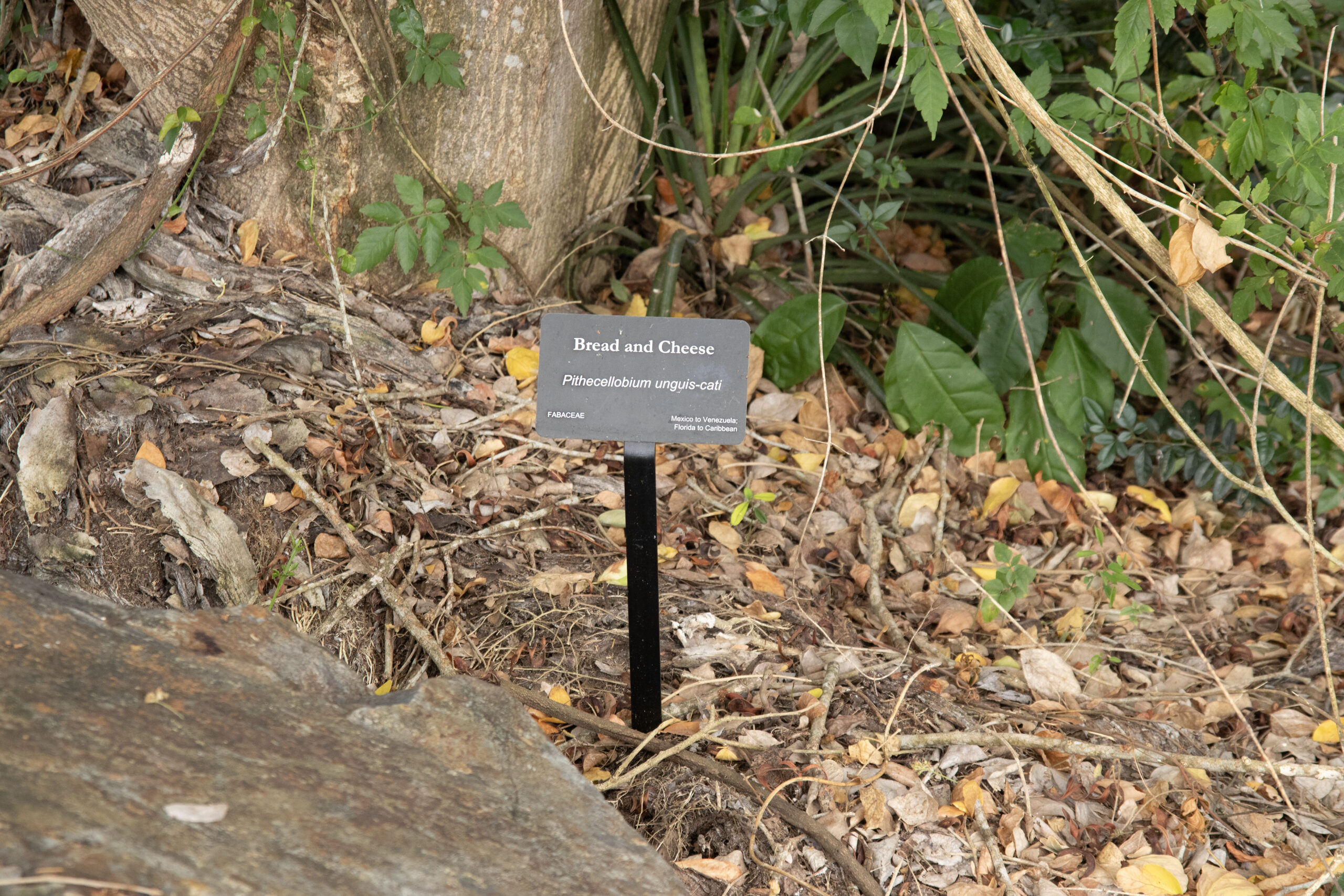
Bread and Cheese
Scientific name: Pithecellobium unguis-cati
POWO Status: Shrub or Tree
IUCN Red List threat level: Least Concern
GPS Location: 17° 42′ 58.10″ N, 64° 49′ 47.29″ W


Medicinal Uses
Pithecellobium unguis-cati, also known as Cat’s Claw (though distinct from Amazonian Cat’s Claw), is traditionally used for gastrointestinal issues like diarrhea and dysentery (bark), anti-inflammatory purposes, and even for wound cleaning (ground seeds), with parts used for antidiabetic, antimicrobial, antiulcer, and CNS depressant effects, though caution is advised due to potential toxicity and mixed traditional uses, like causing vs. preventing abortions.
Traditional Uses by Plant Part:
- Root Bark: Cures dysentery and bowel issues.
- Leaves: Used for indigestion, as a poultice with alcohol for bile, and sometimes to prevent miscarriages (though other traditions use it to cause abortions).
- Seeds (Ground): Traditionally used to clean ulcers.
- Fruit Pulp: Astringent, used for hemoptysis (coughing blood) and hemorrhages.
- Whole Plant/Extracts: Treated for fever, chest congestion, diarrhea, ulcers, and tuberculosis.
Reported Medicinal Properties (Scientific Studies):
- Antimicrobial & Anti-inflammatory: Extracts show activity against bacteria and inflammation.
- Antidiabetic: Potential to help manage blood sugar.
- Antioxidant: High vitamin C content.
- CNS Depressant: Acts on the central nervous system.
- Antivenom Activity: Some experimental evidence suggests this property.
Important Considerations:
- Caution & Mixed Information: Some traditional uses conflict (e.g., leaves for abortion vs. preventing it), and studies highlight the need for more research before widespread adoption.
Observations:
Phenological Markers – Bread and Cheese (Pithecellobium unguis-cati)
Common Names: Bread and Cheese Tree, Cat’s Claw, Blackbead, Goat’s Thorn, Monkey’s Ear
Scientific Name: Pithecellobium unguis-cati
Family: Fabaceae (Legume family)
Native Range: Caribbean, Central America, and northern South America
Habitat: Dry coastal scrub, thickets, open woodlands, limestone hills
General Description:
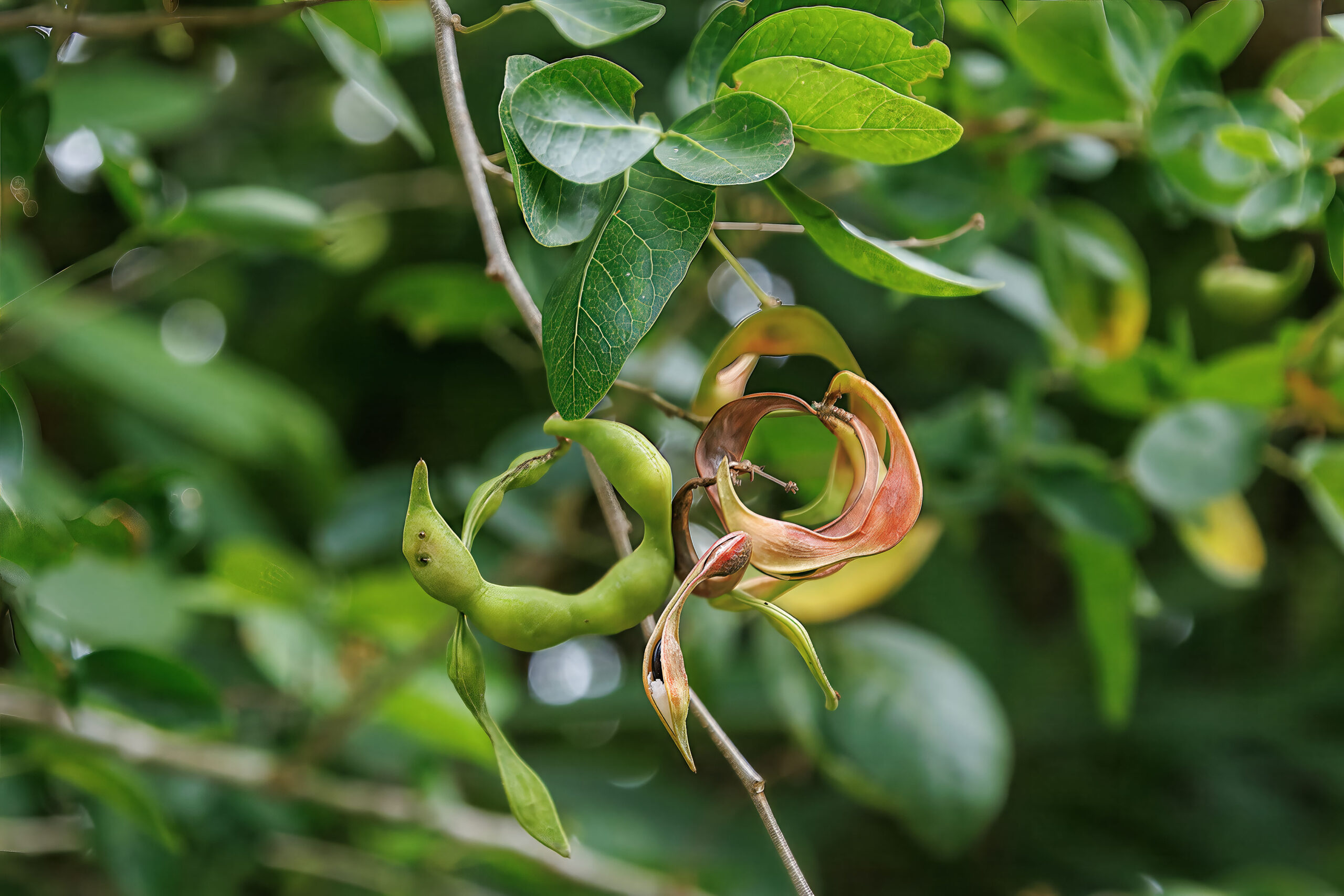
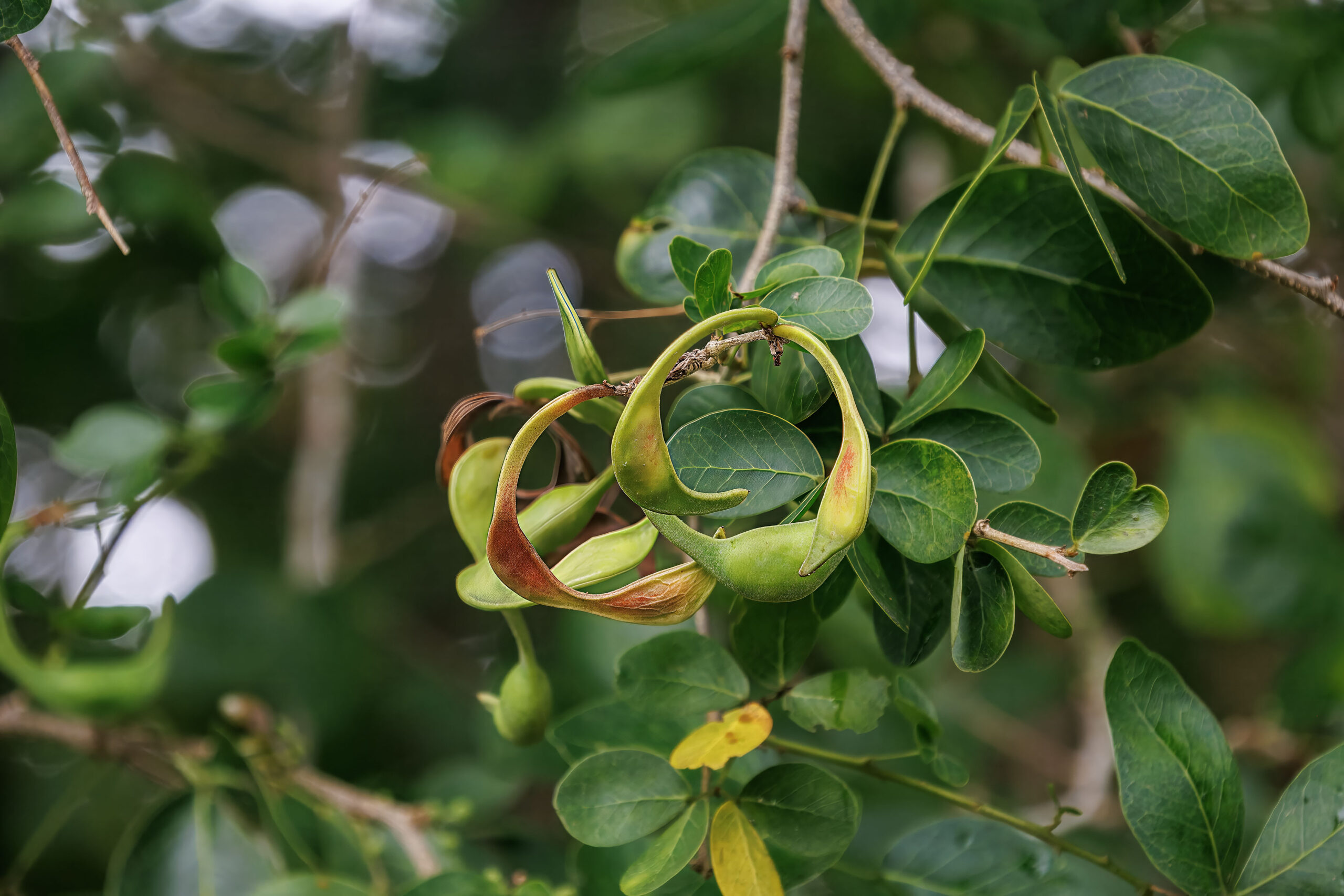
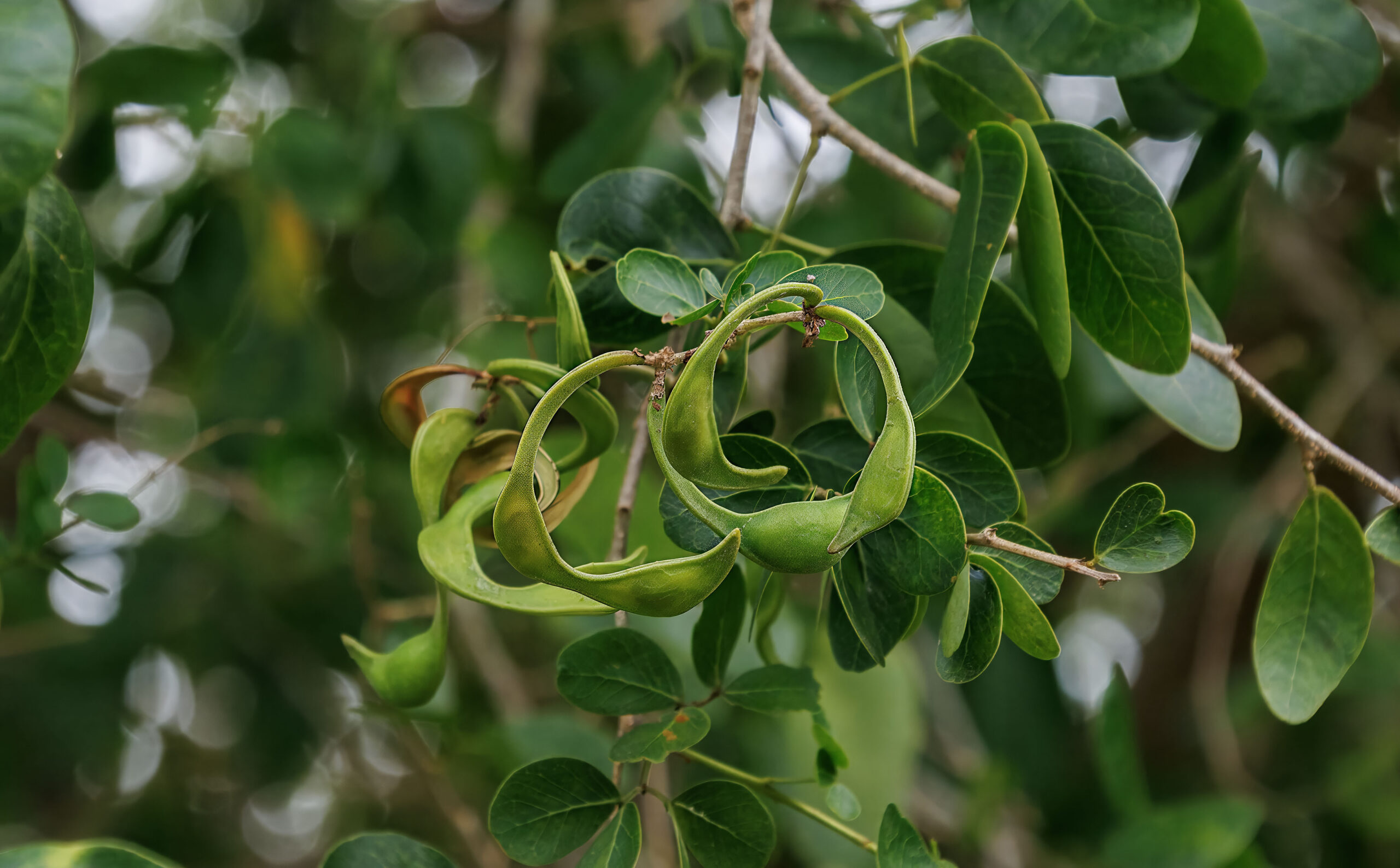
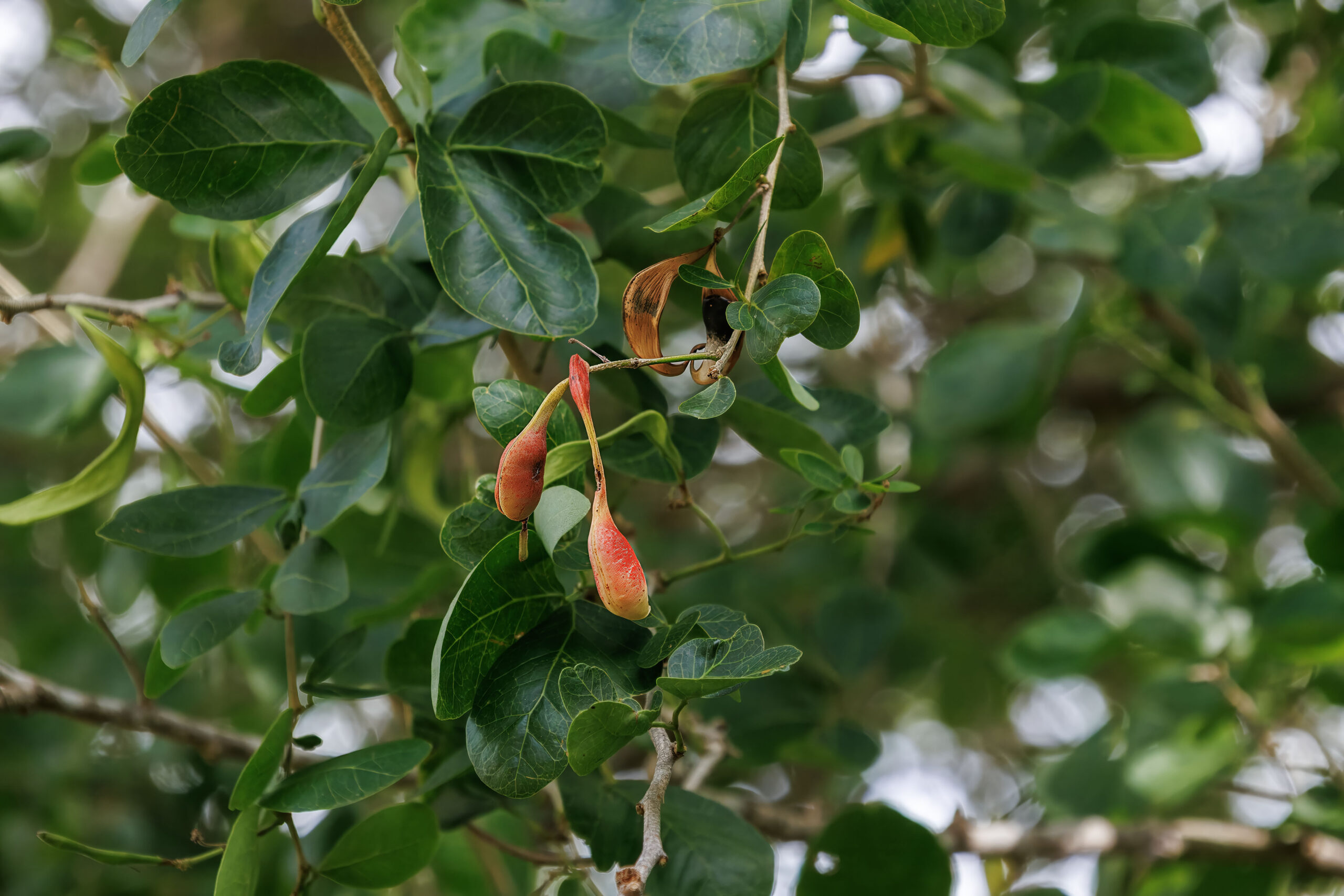
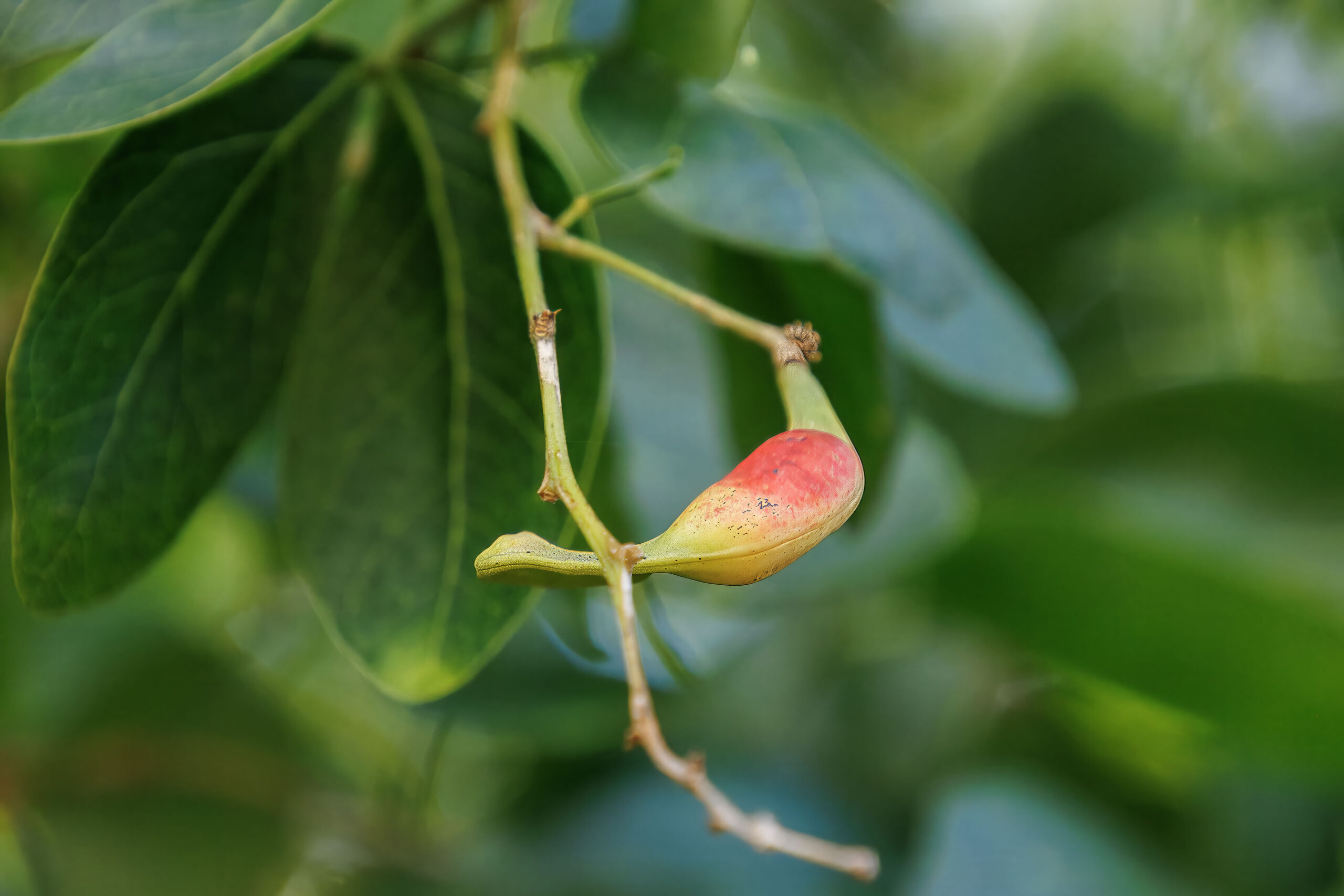
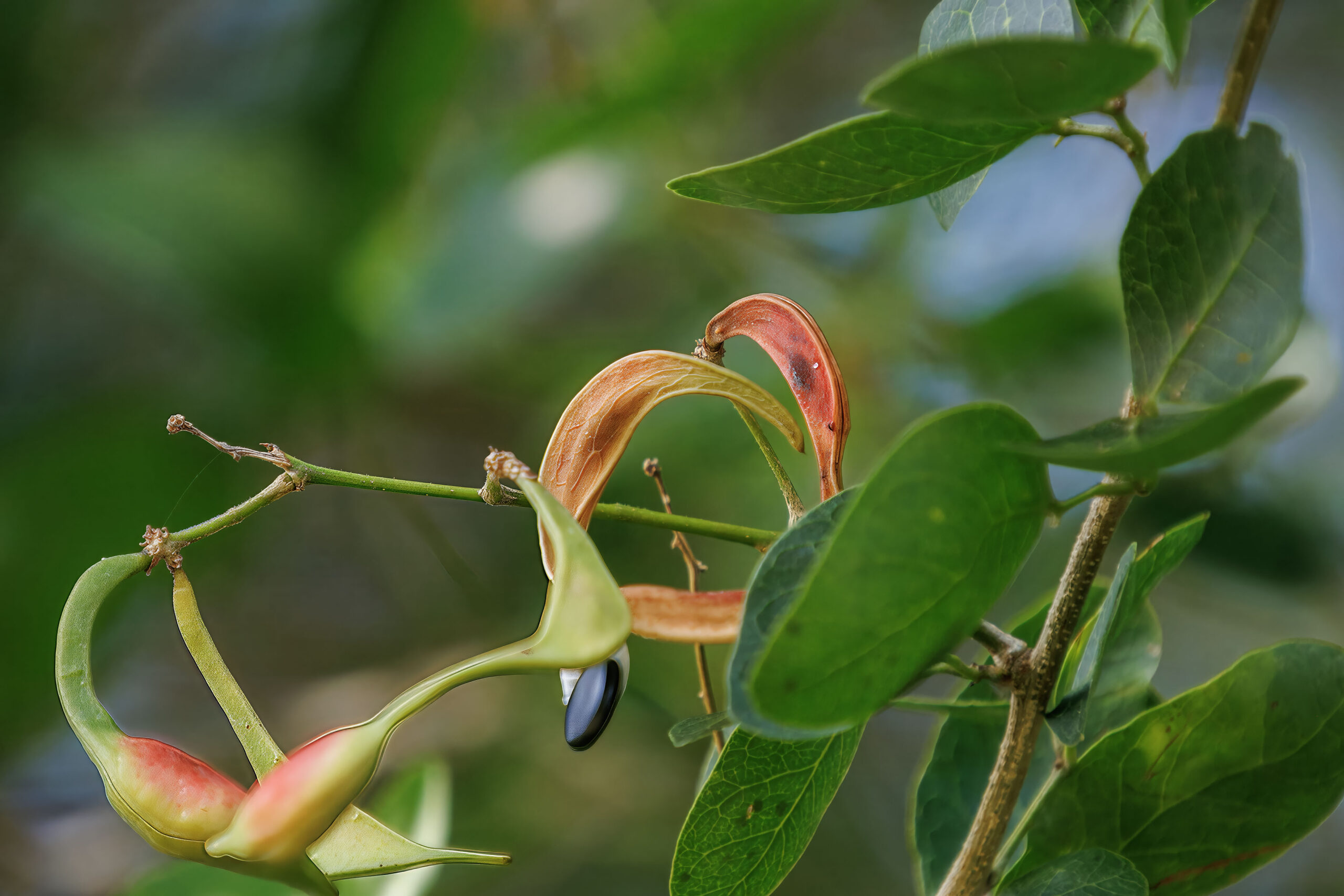
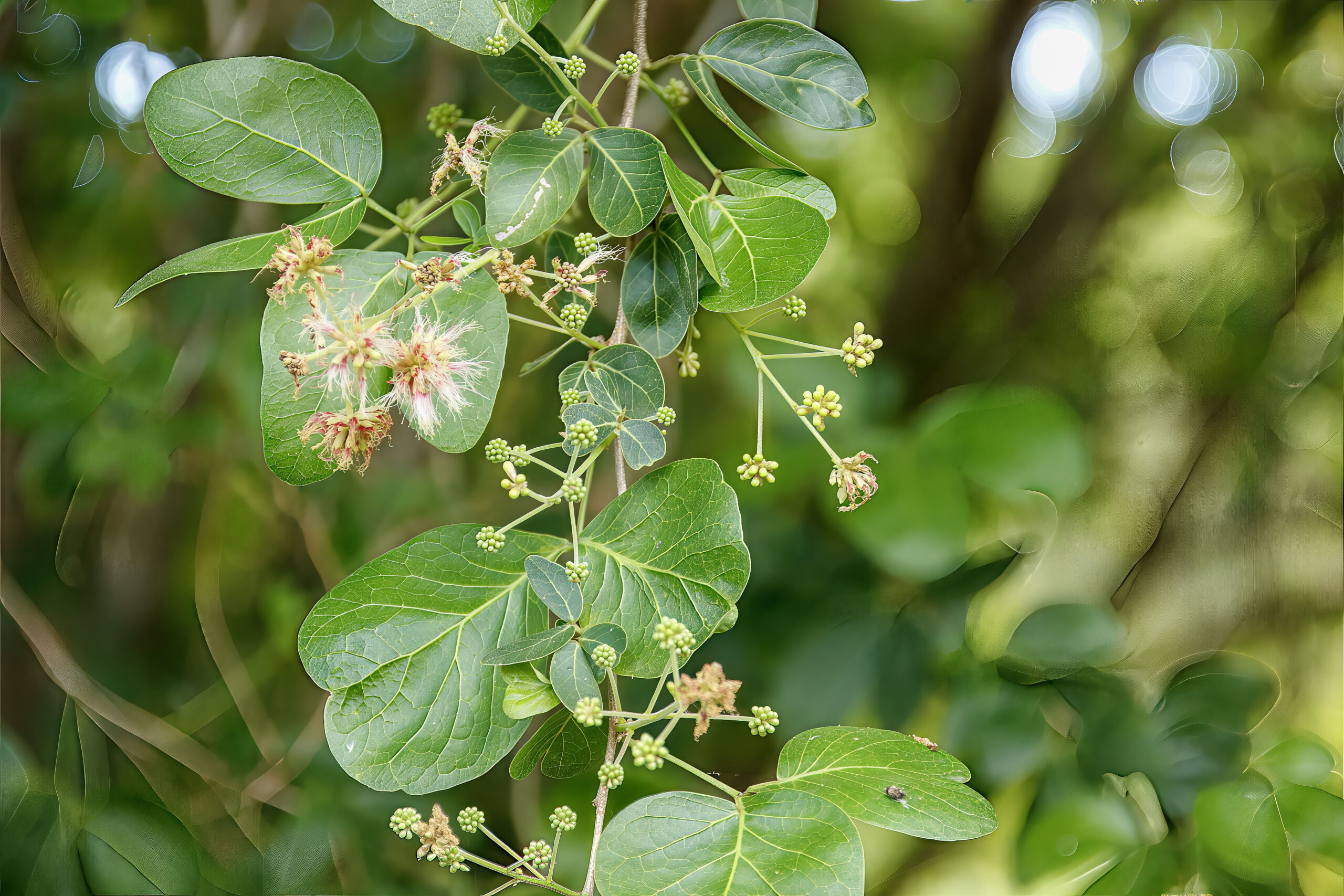
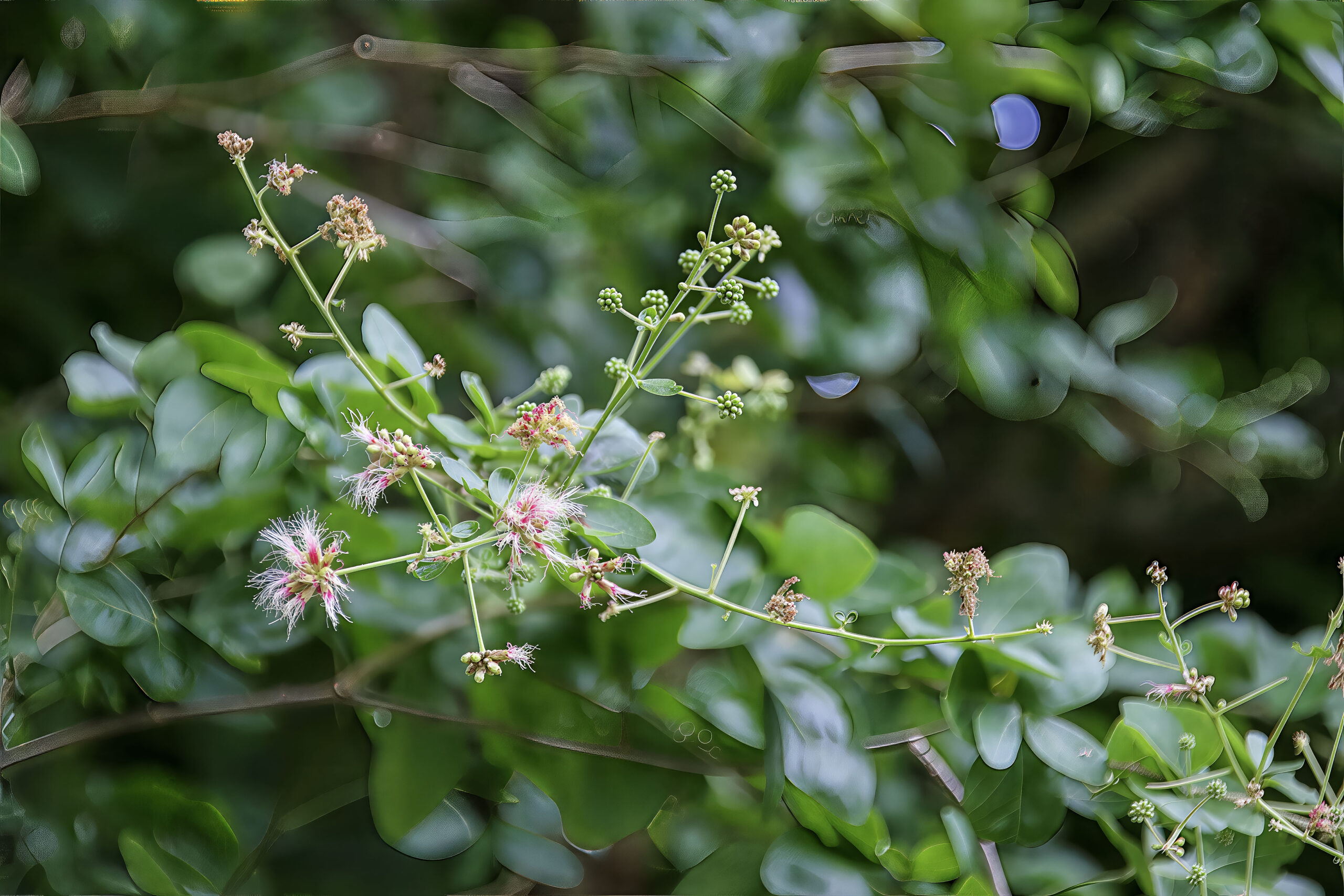
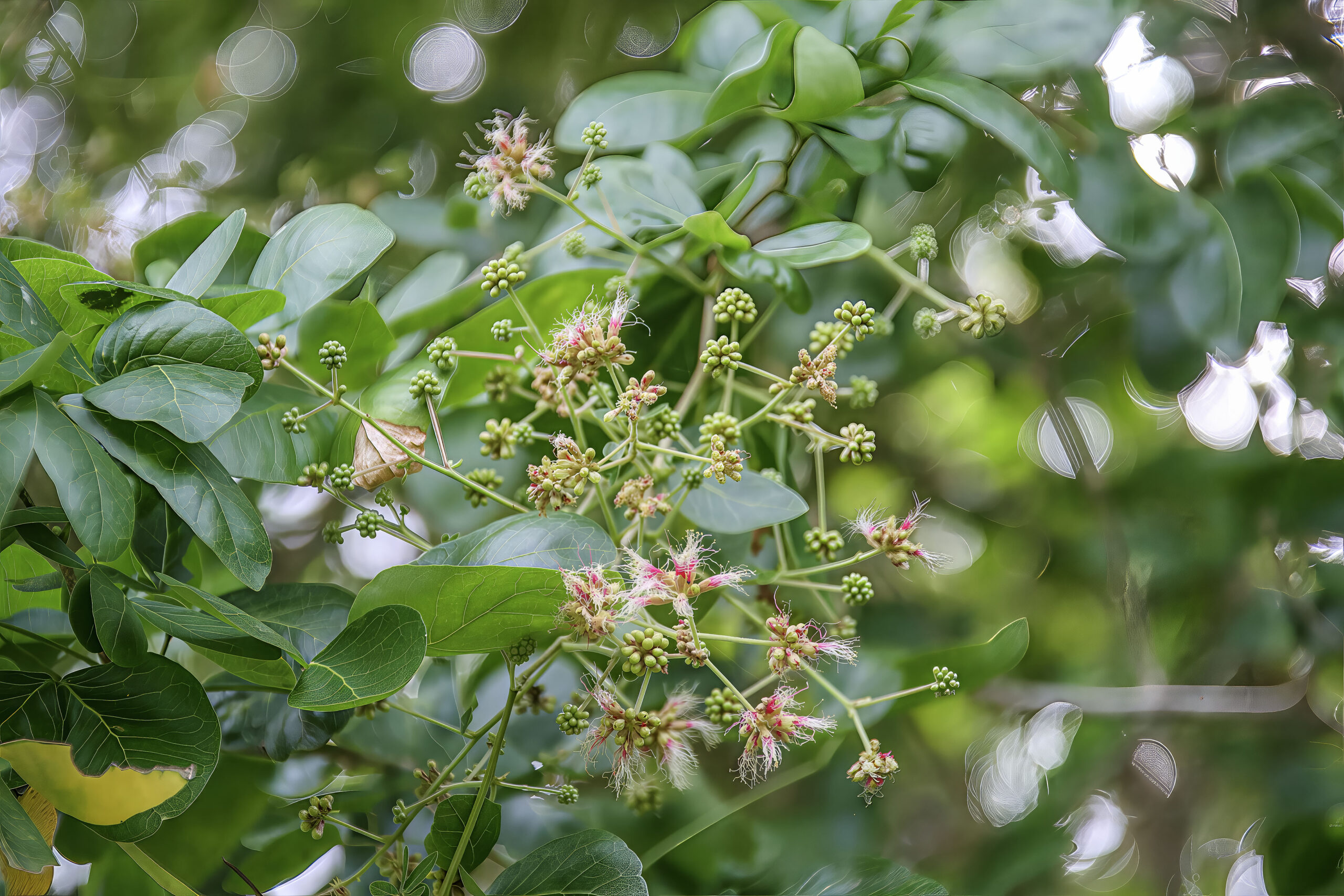
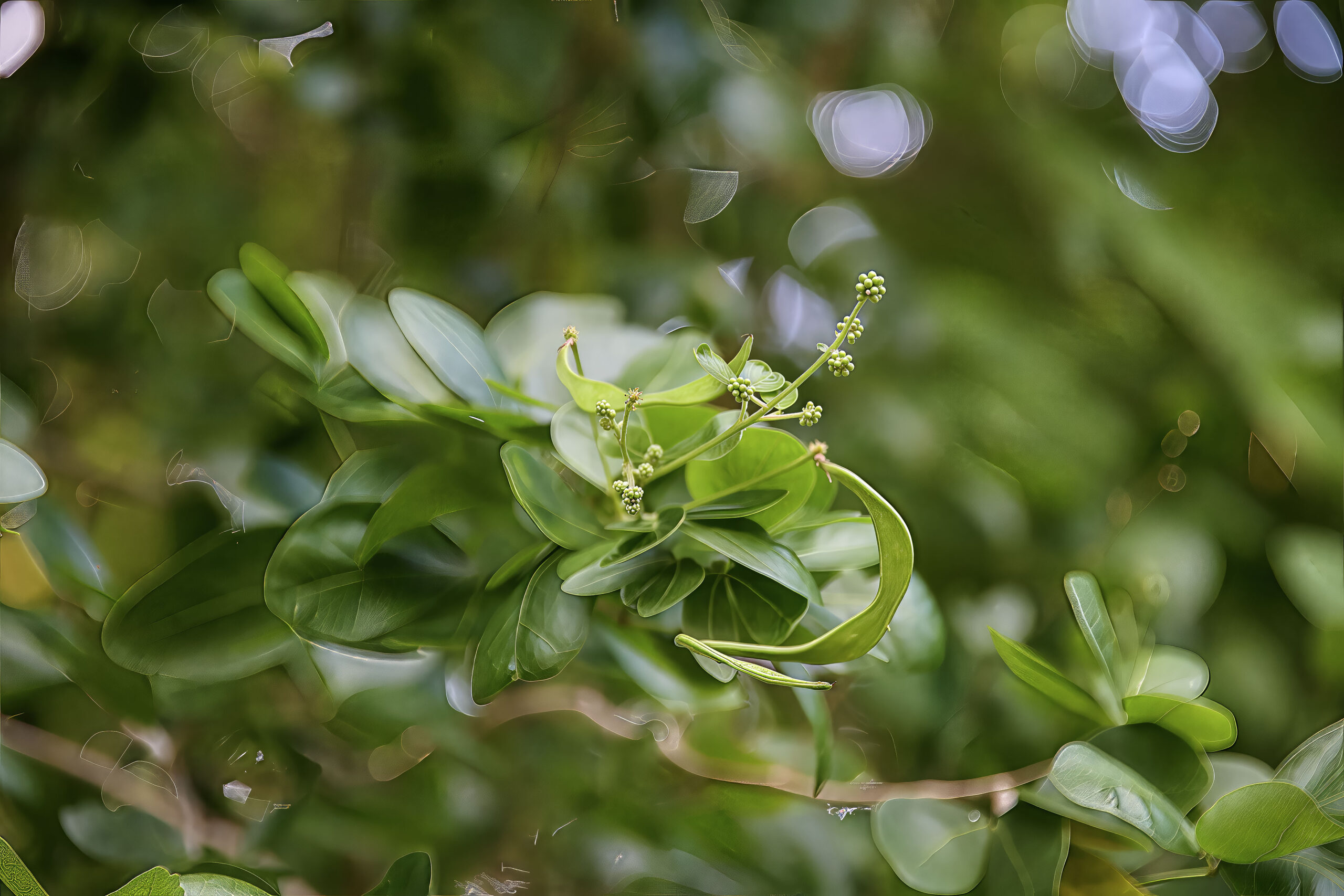
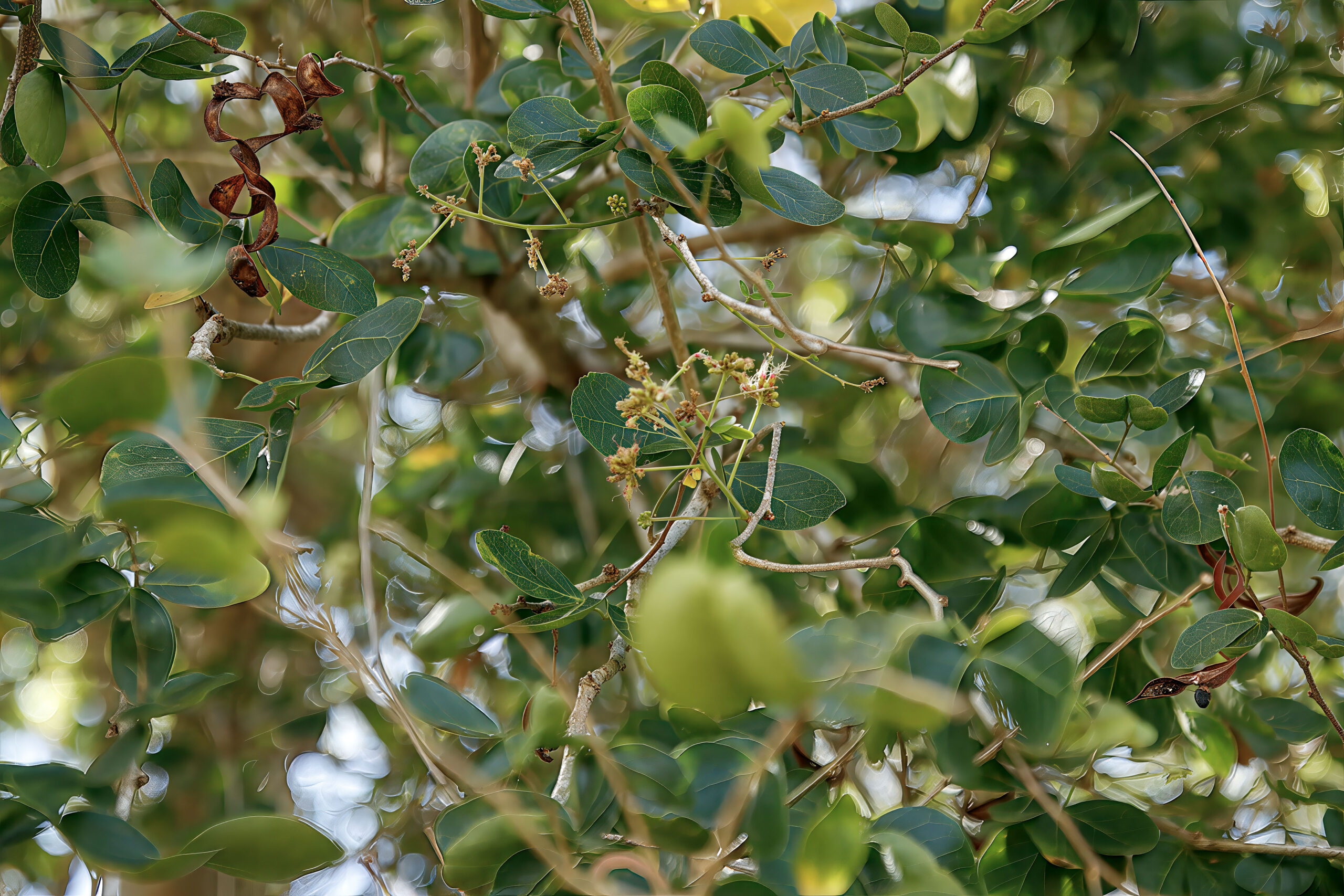
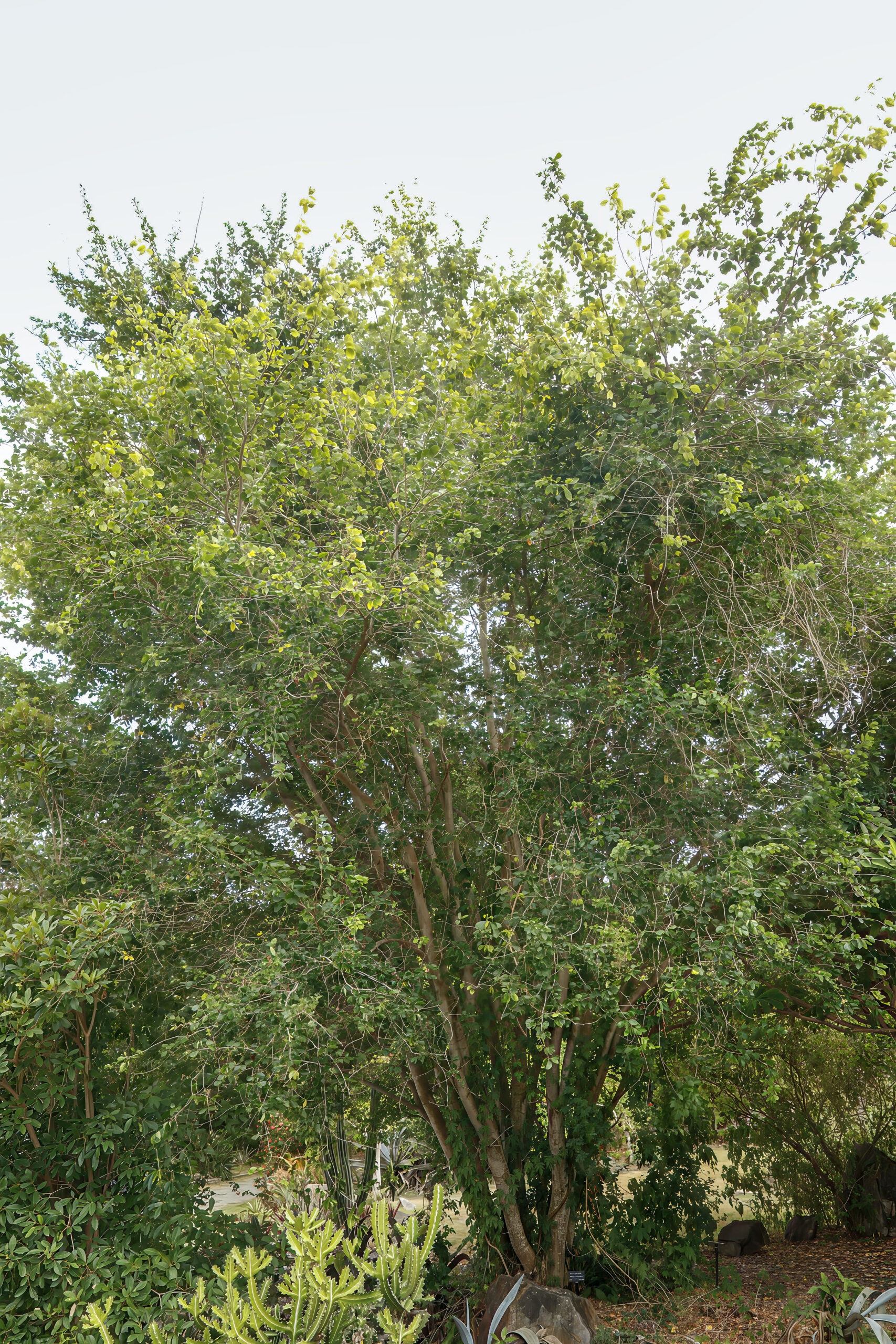
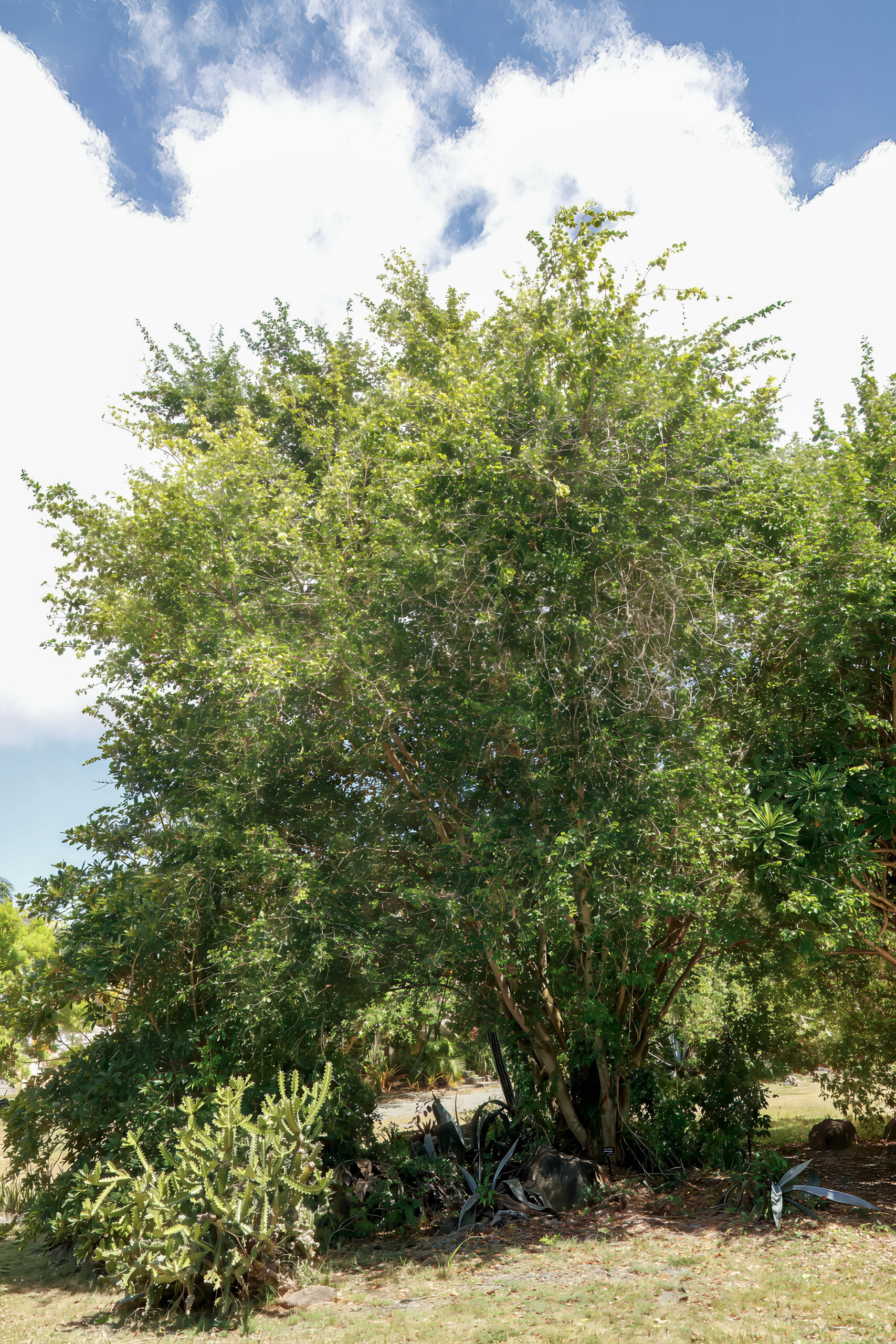
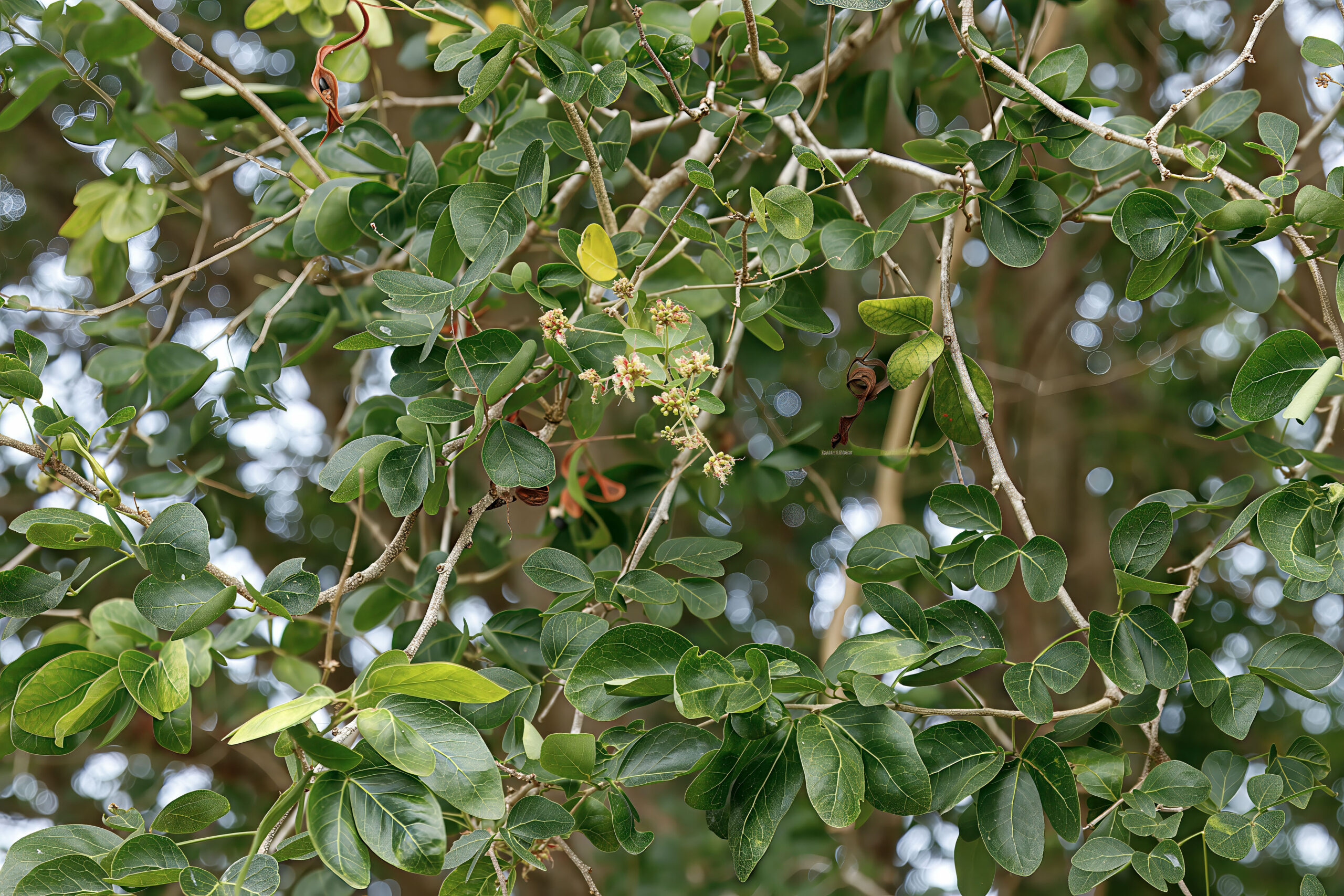
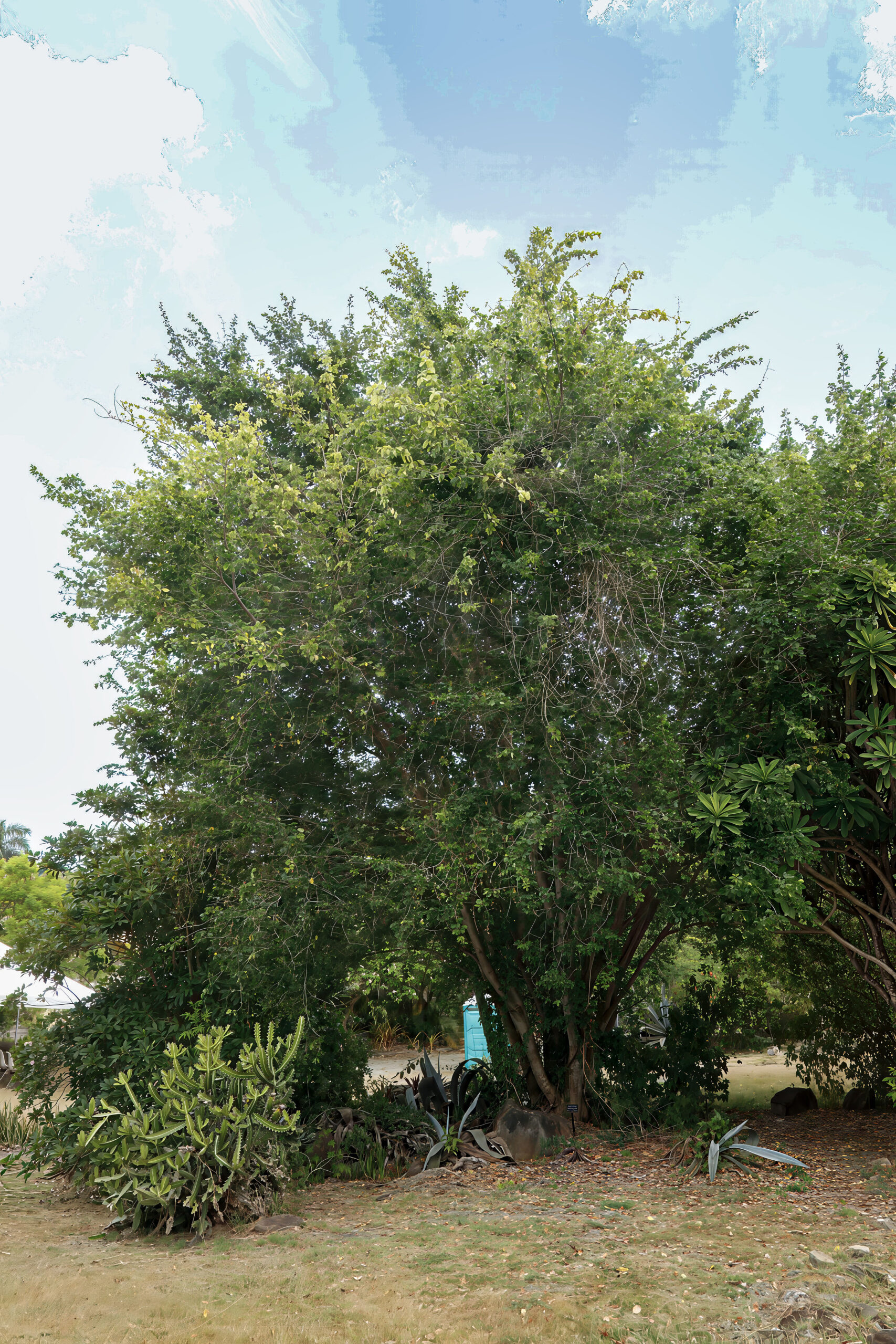
Pithecellobium unguis-cati is a native Caribbean tree recognized for its twisting, horned seed pods, delicate compound leaves, and small, fragrant flowers. It is commonly called the Bread and Cheese Tree in parts of the Virgin Islands due to the sweet, edible pulp inside its seed pods. The species ranges from a large shrub to a small-to-medium tree, depending on site conditions and pruning. It plays a vital ecological role as a native nitrogen-fixer, pollinator plant, and food source for wildlife.
Phenological Markers:
1. Flowering Period:
- First Sign of Budding: Late spring (April – May)
- Peak Bloom: Summer (June – August)
- End of Flowering: Early fall (September)
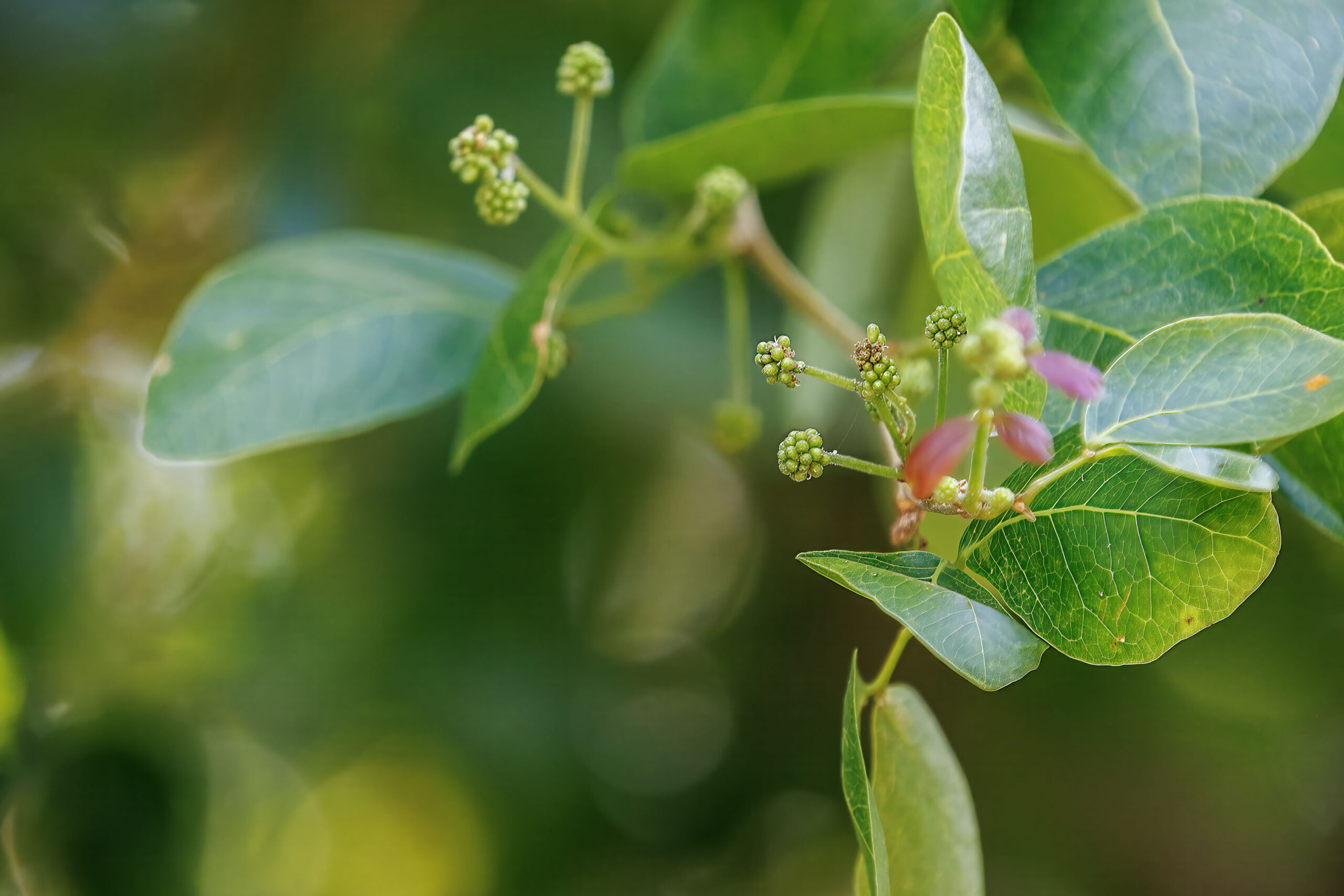
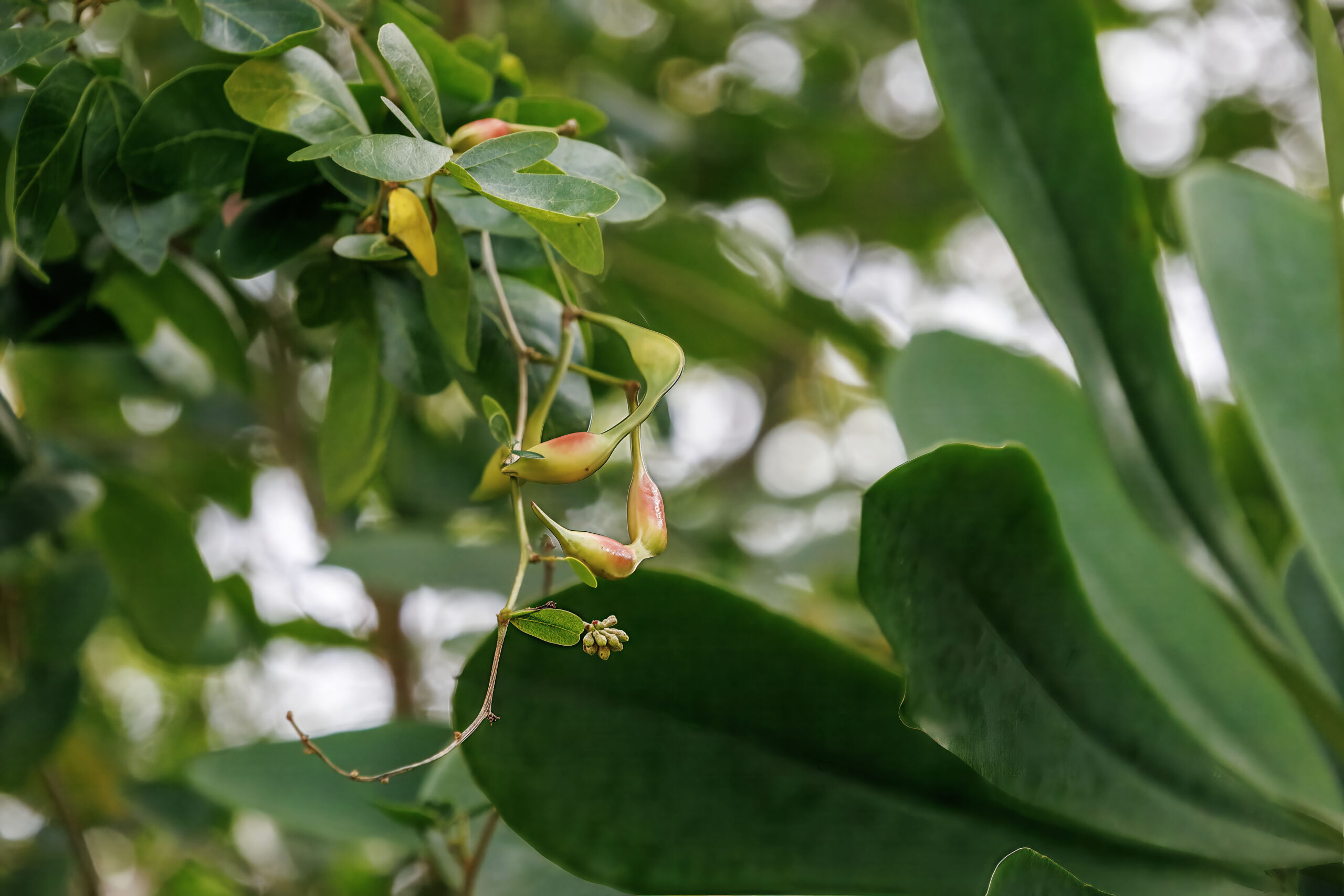
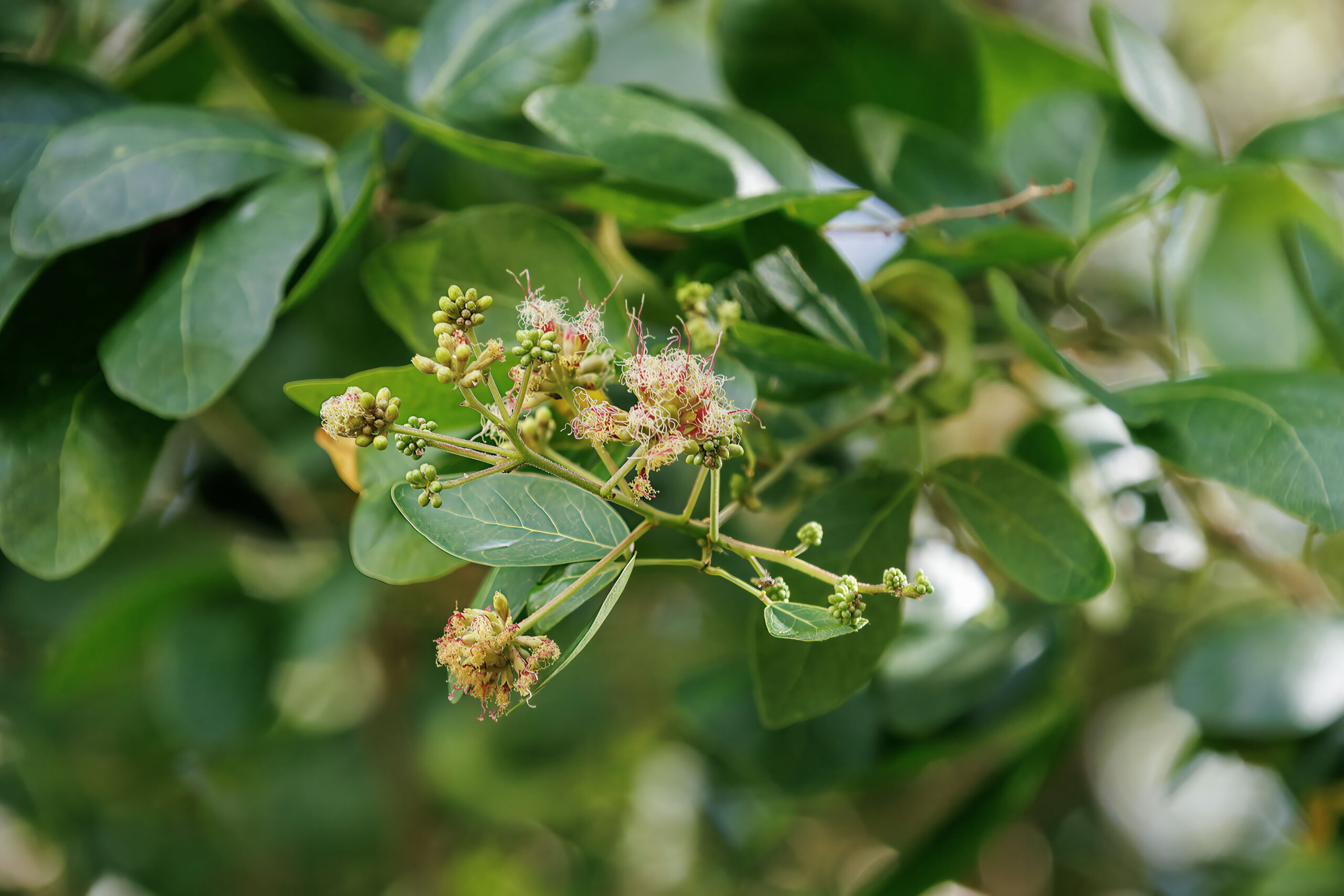
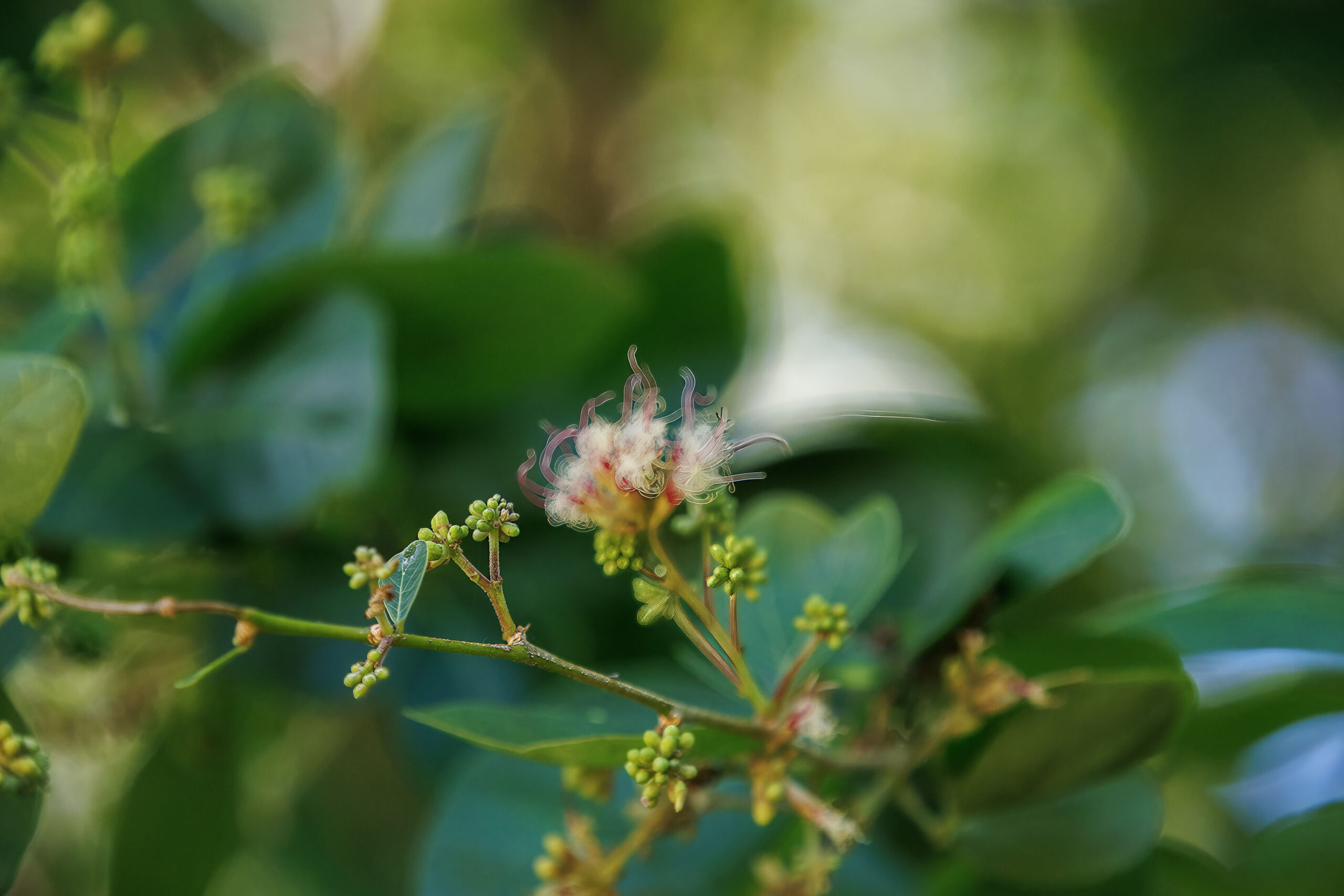
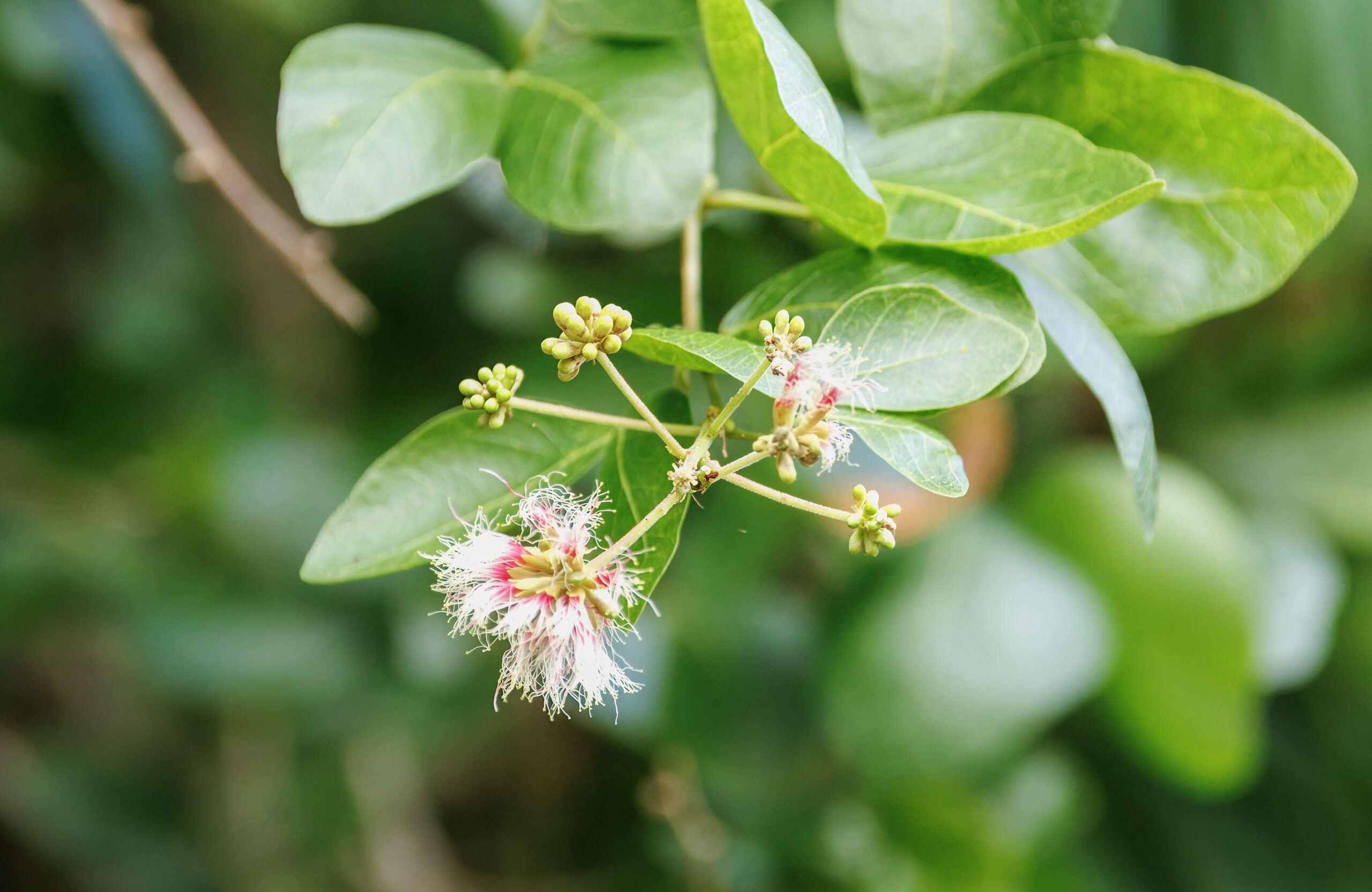
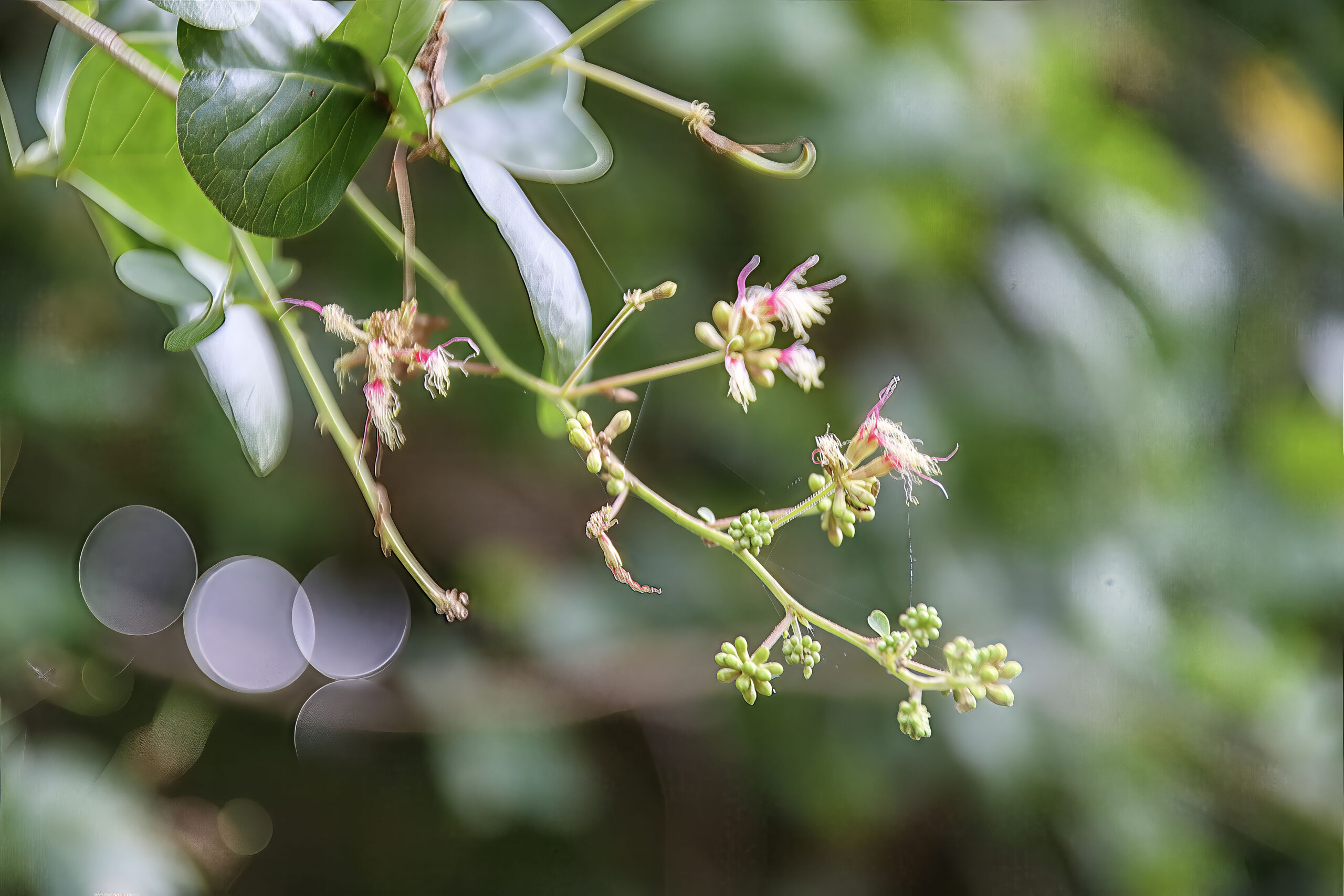
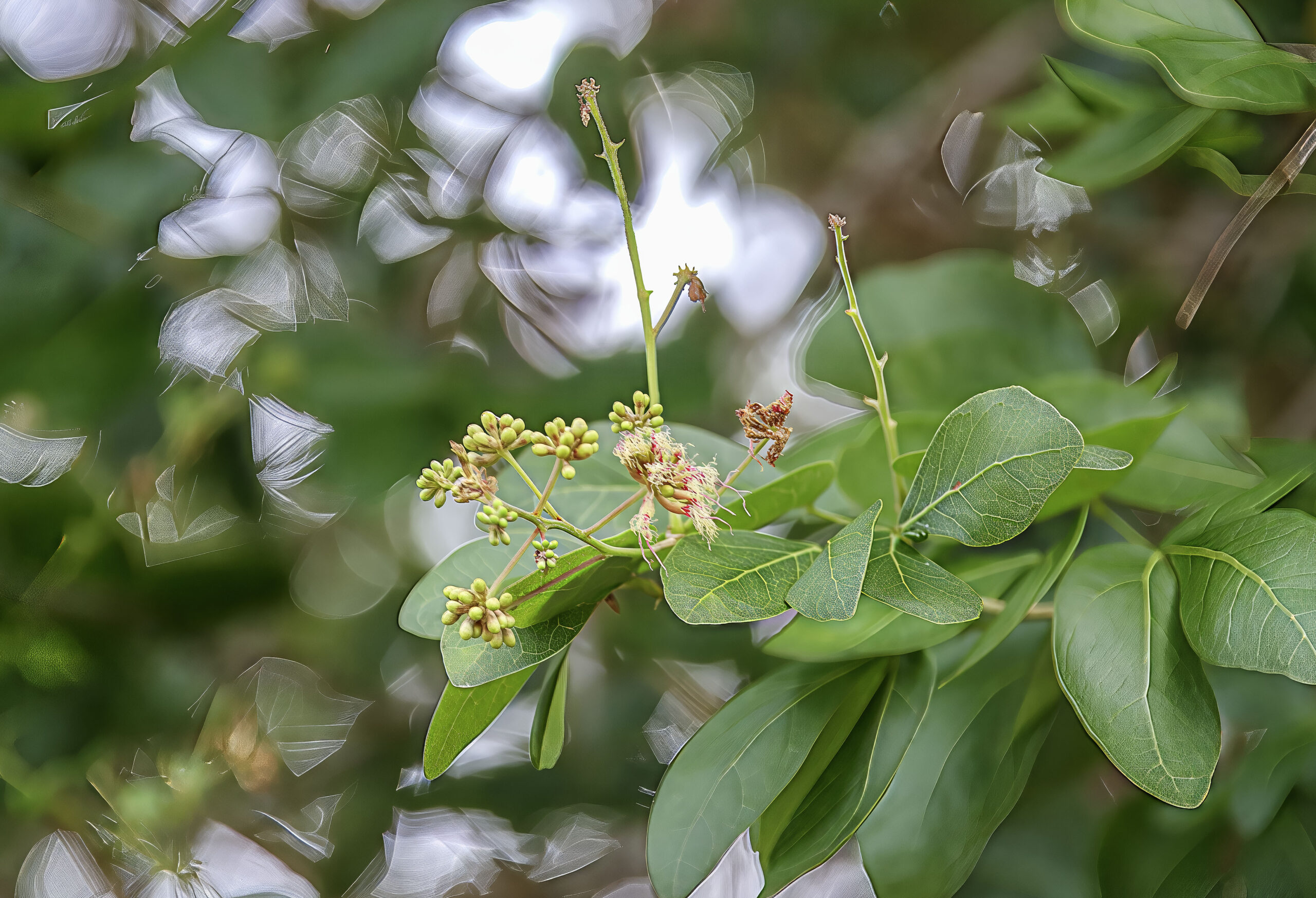
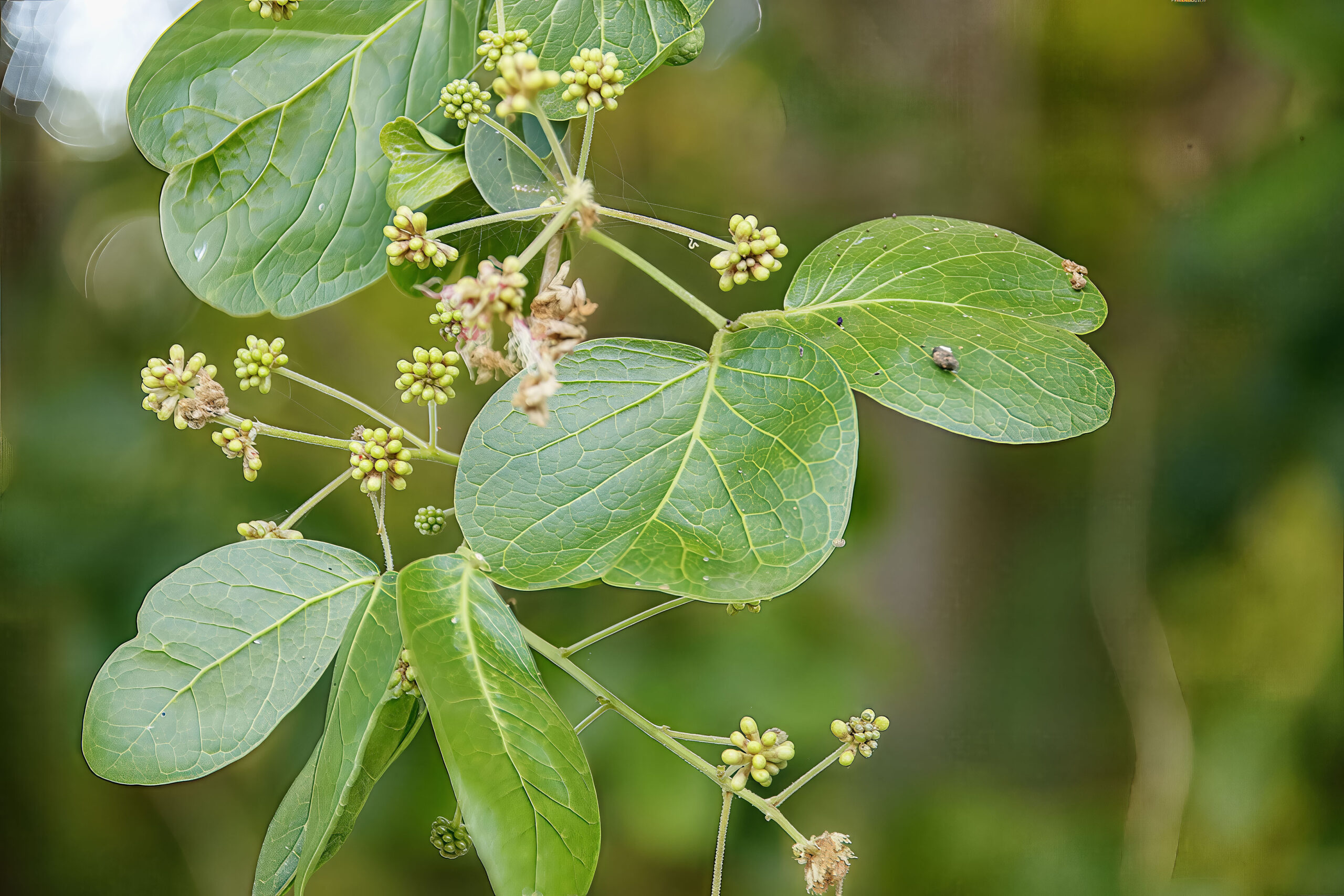
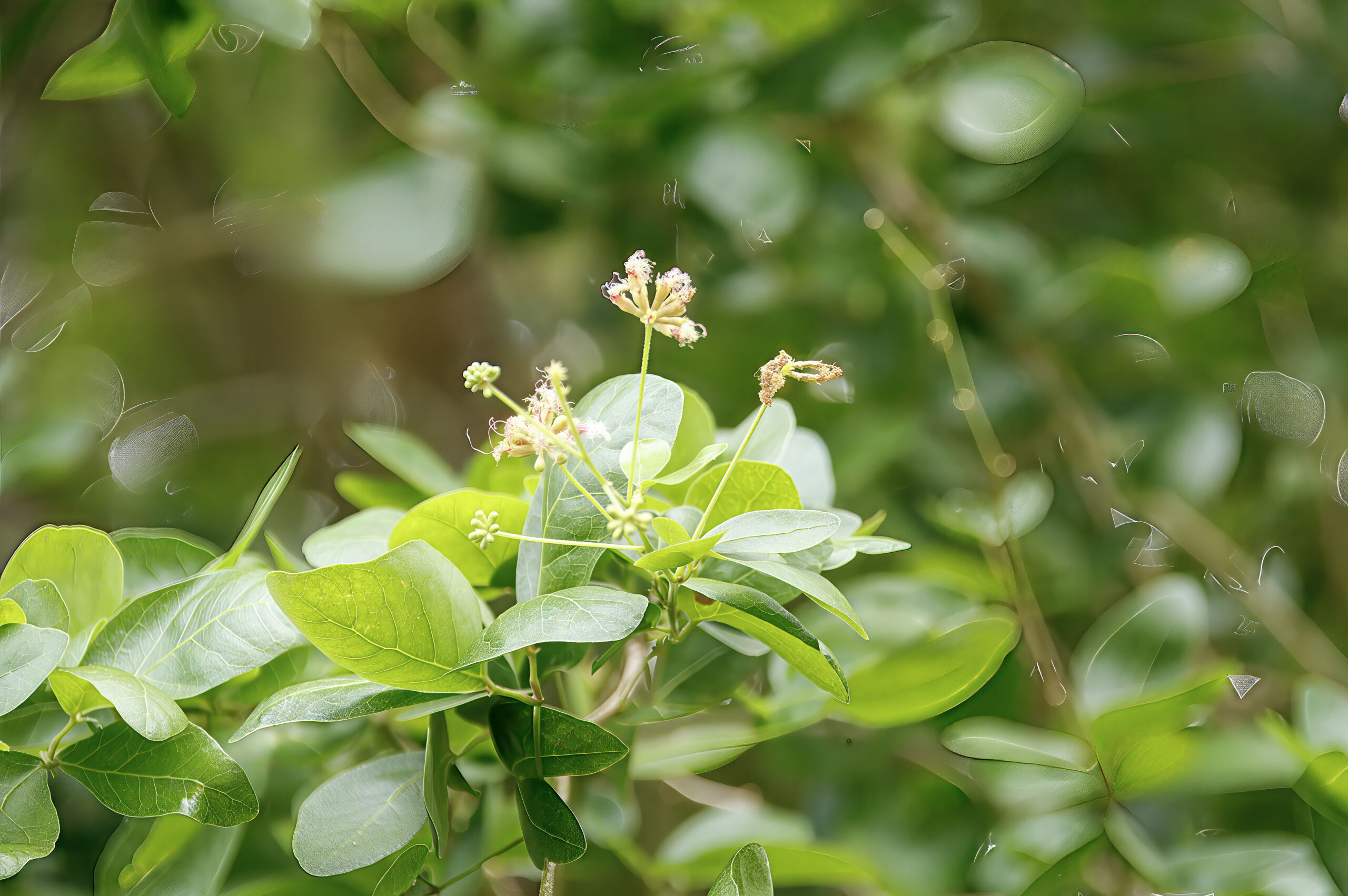
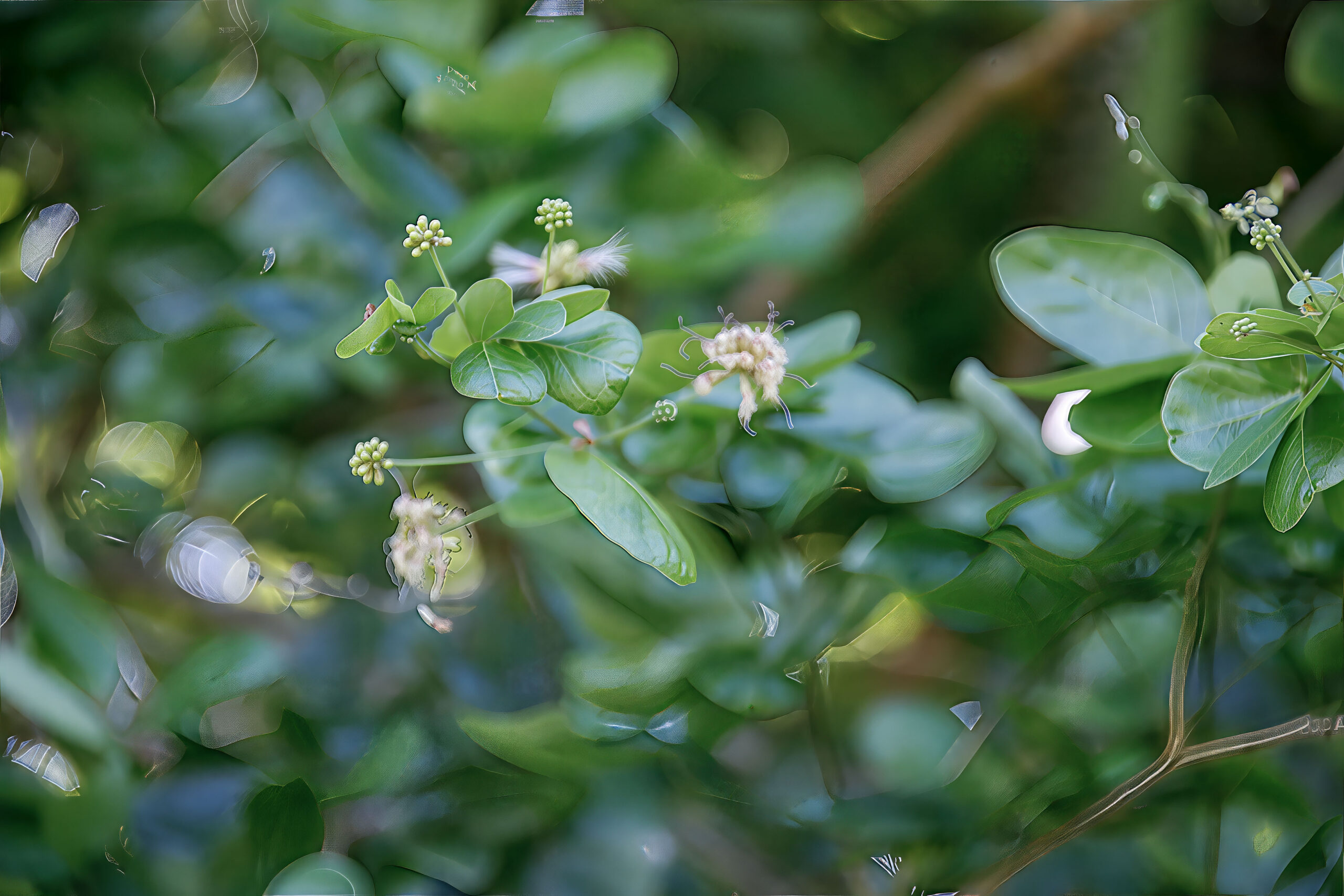
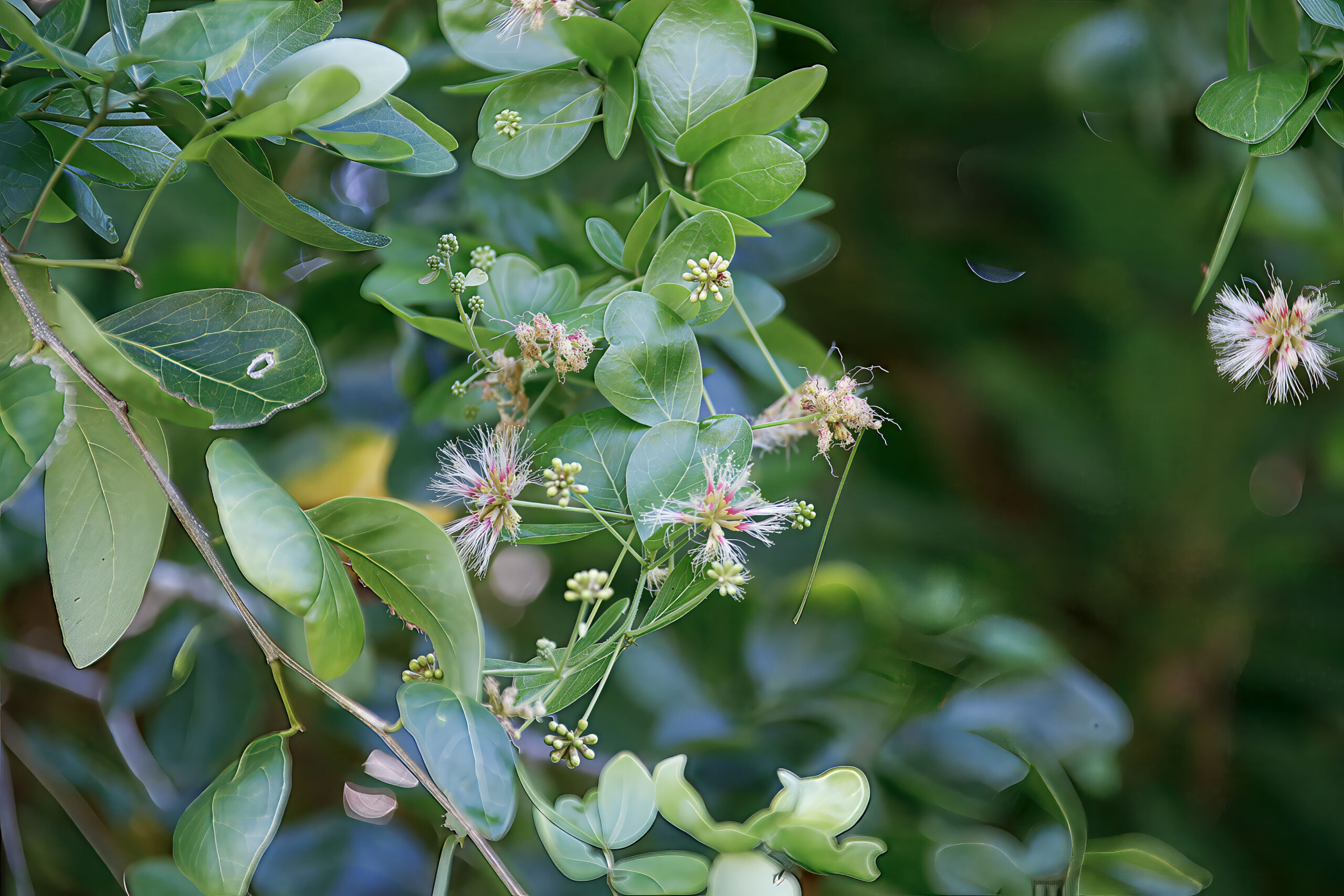
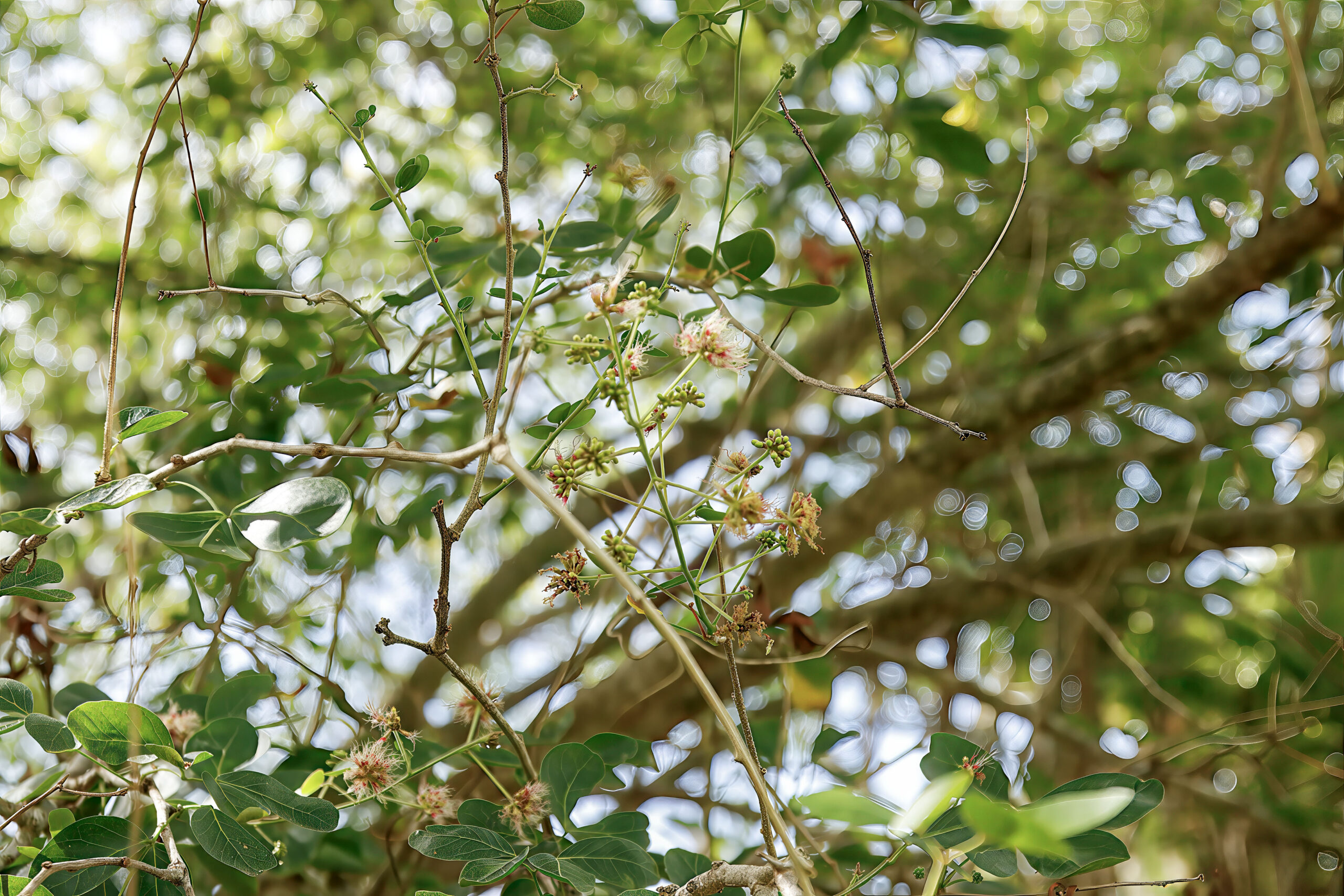
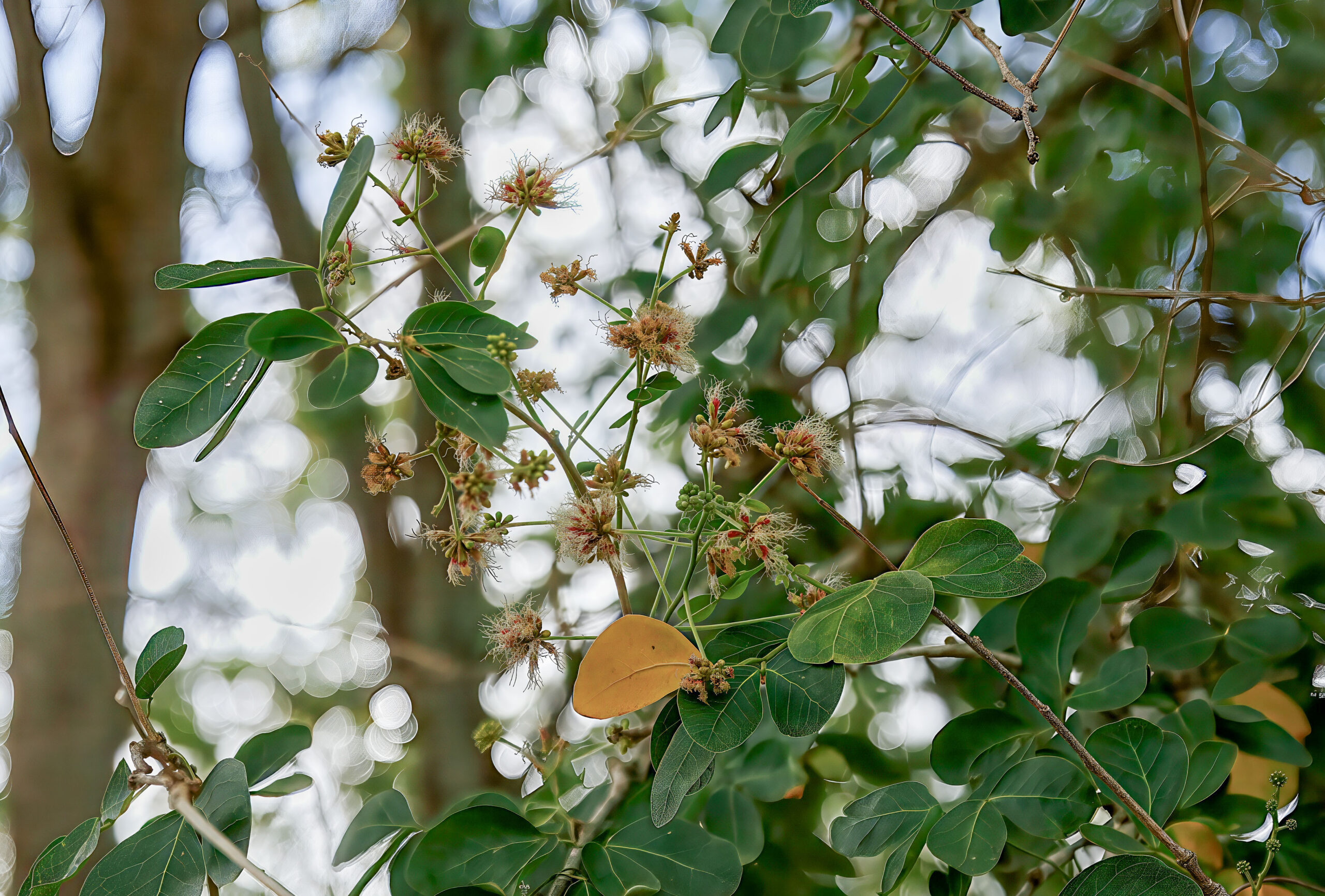
- Flower Characteristics: Small, creamy-white to pale yellow, fragrant flowers in puff-like clusters; borne on short stalks at branch ends
2. Leaf Growth and Senescence:
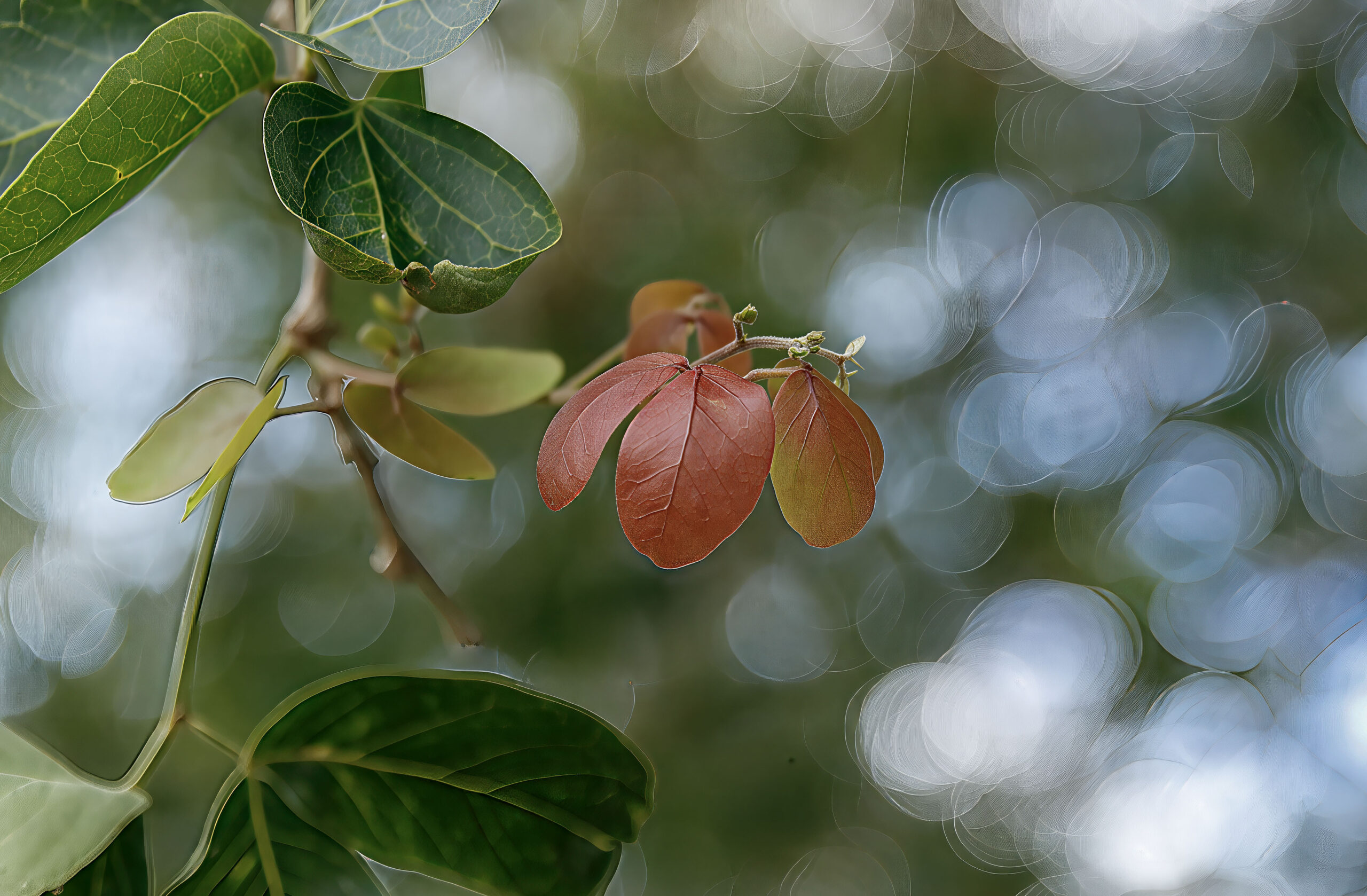
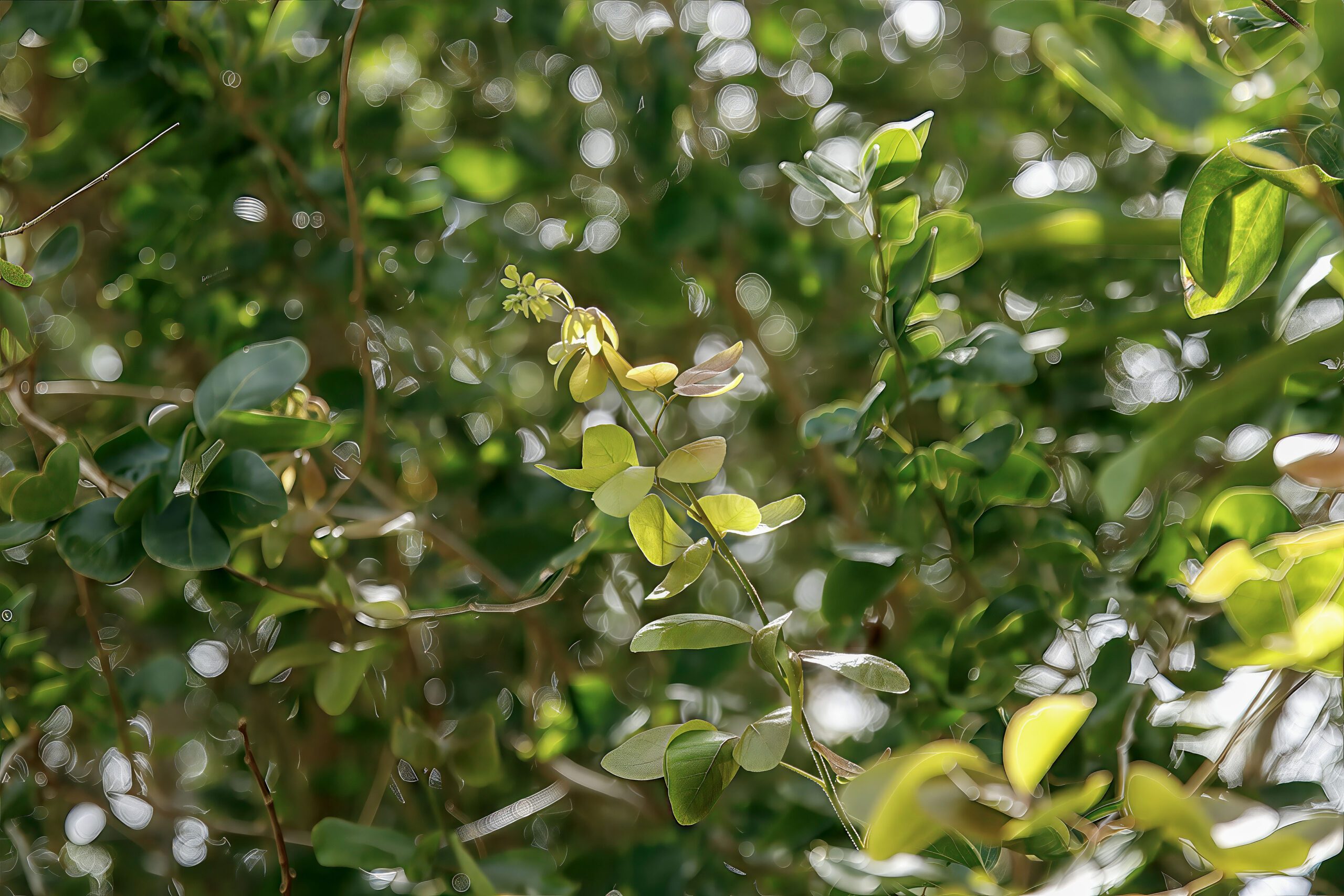
- New Leaf Growth: Spring (March – May)
- Leaf Maturity: Summer (June – July)
- Leaf Senescence: Minimal in tropical climates; some leaf drop during dry spells
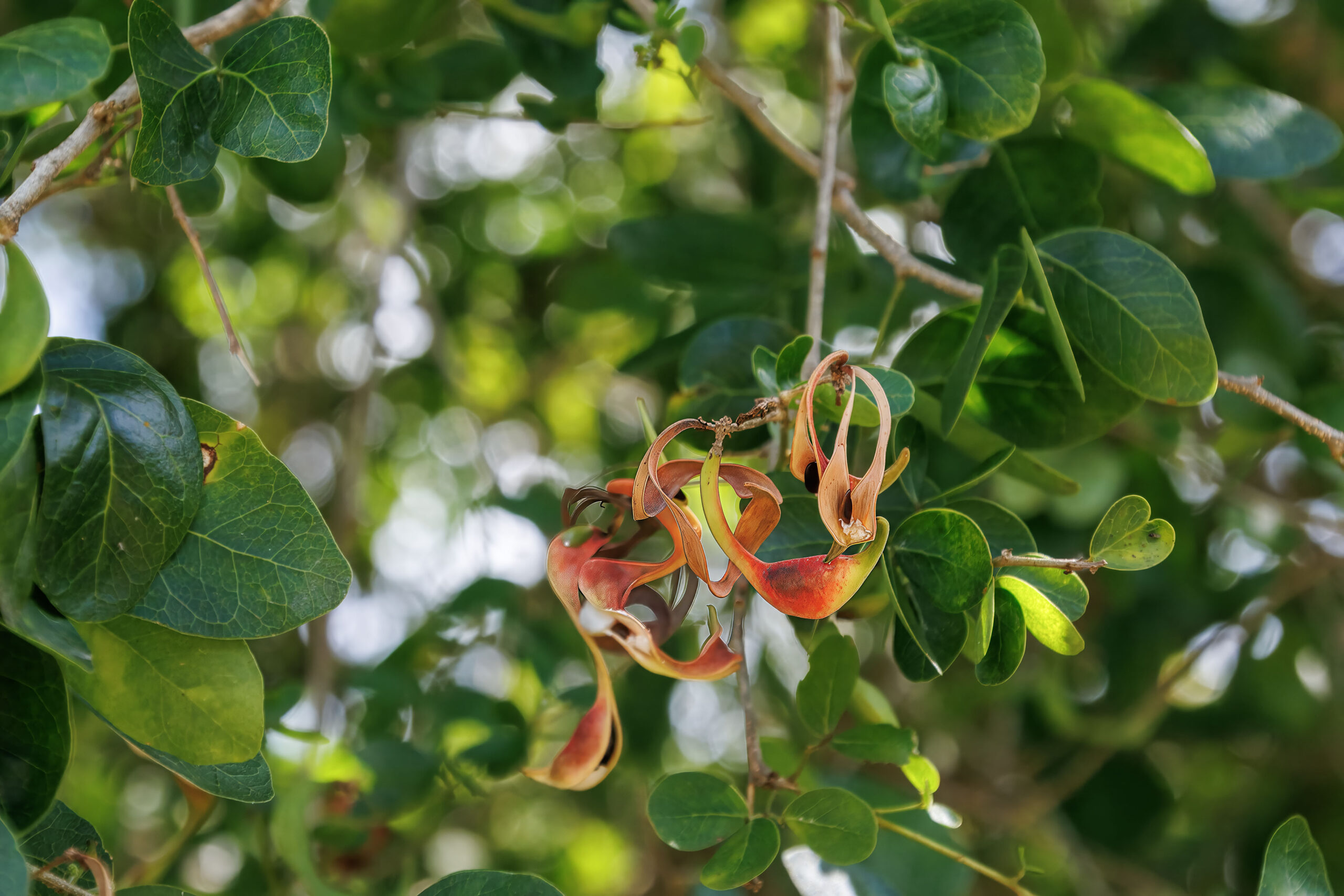
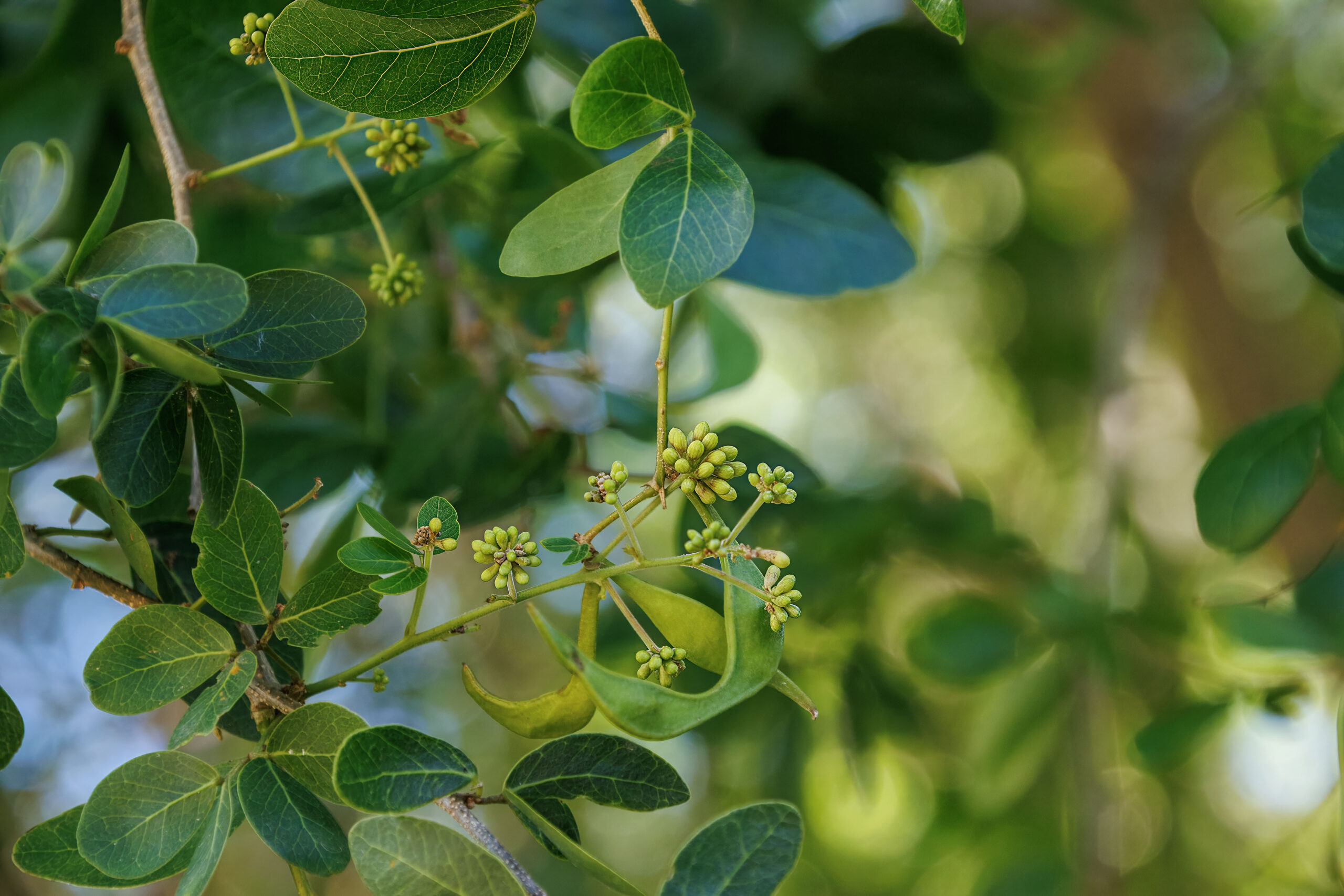
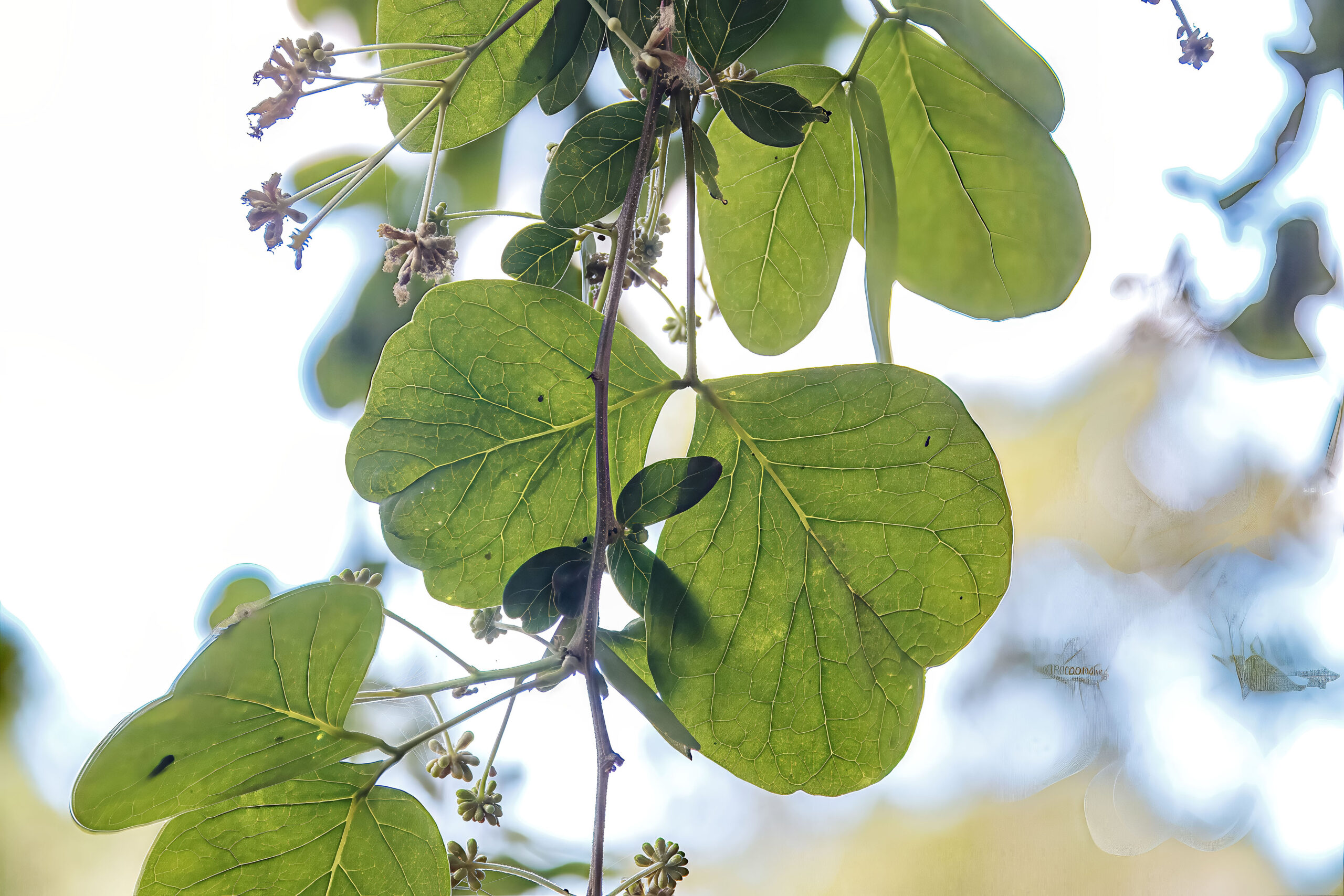
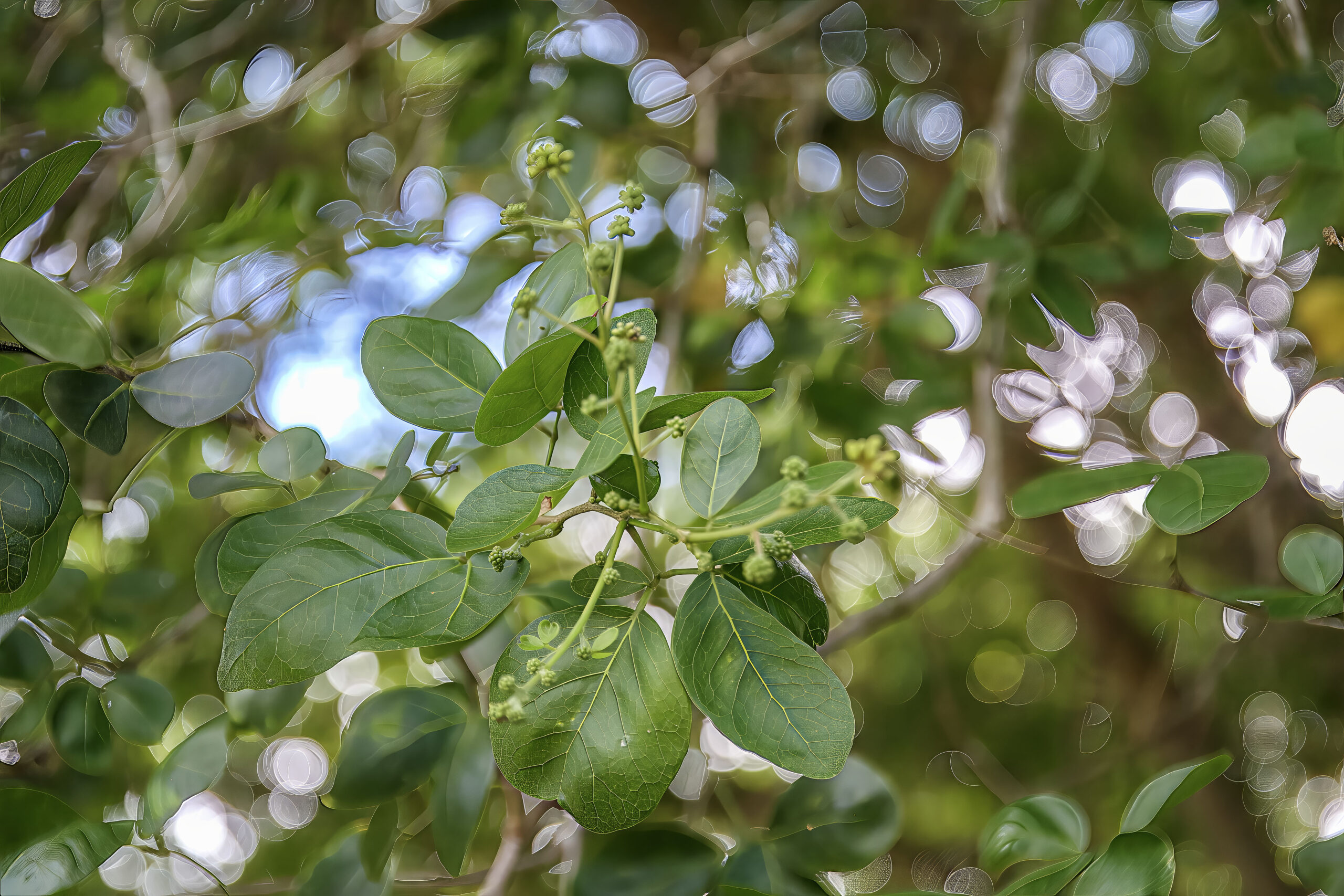
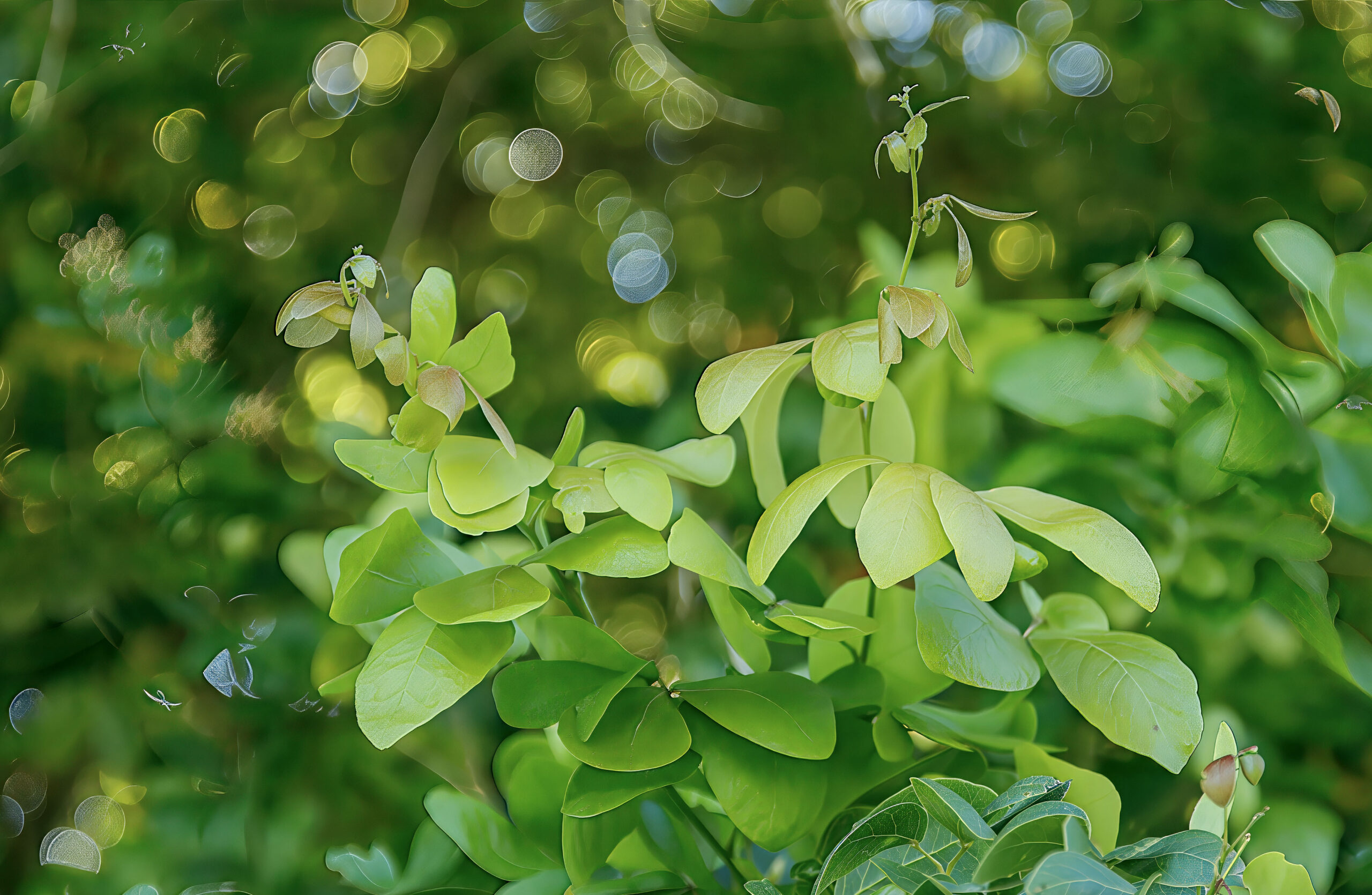
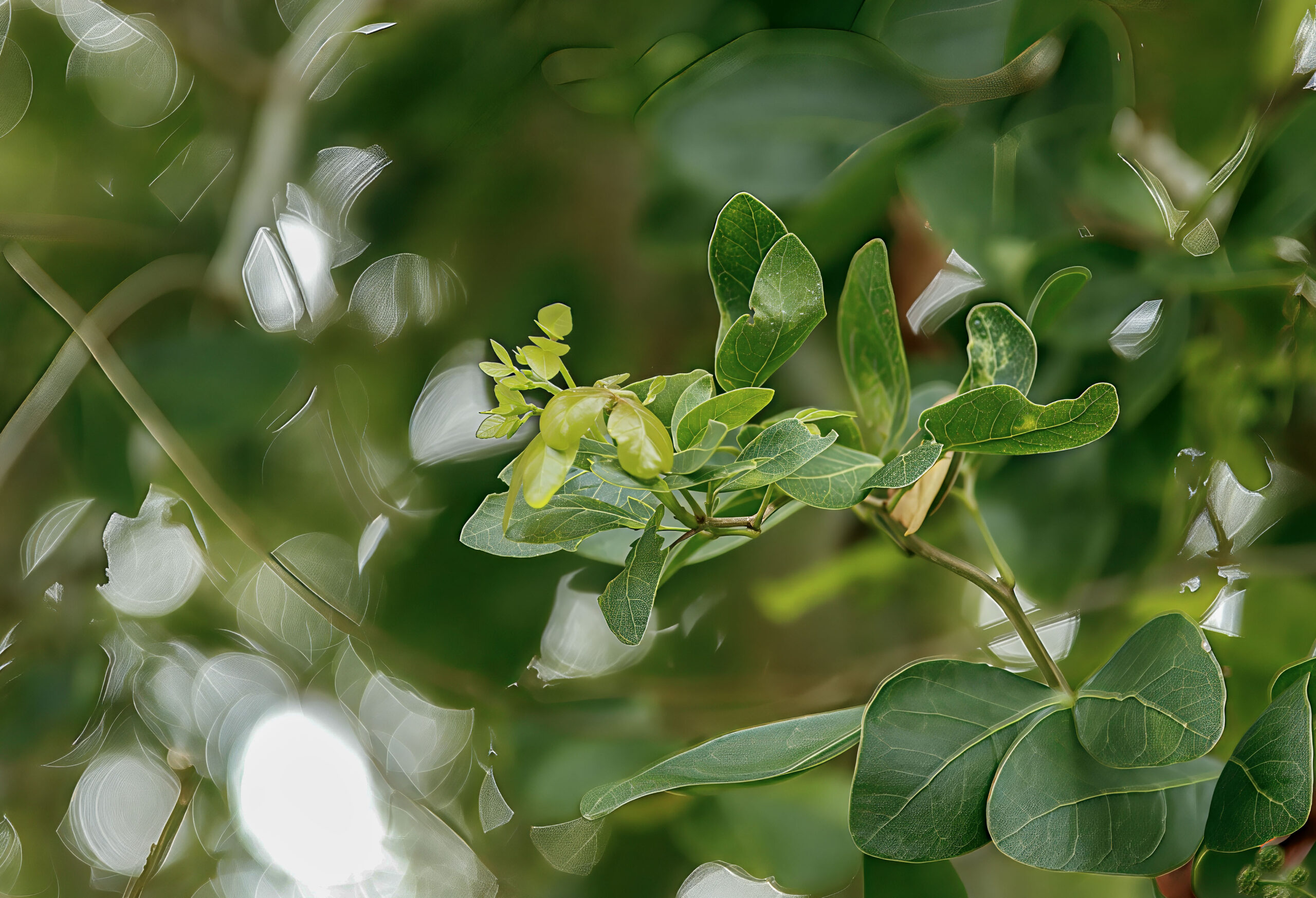
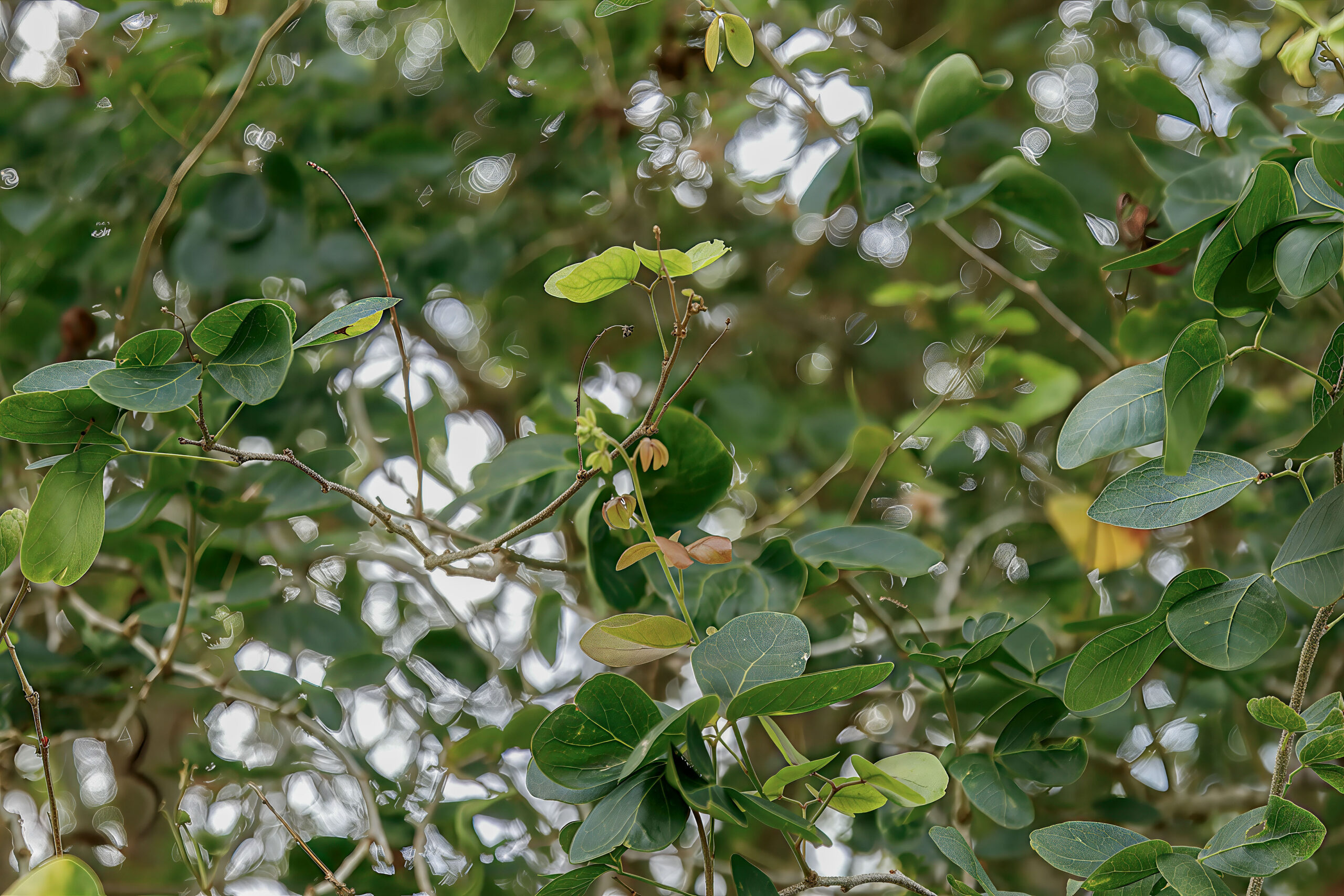
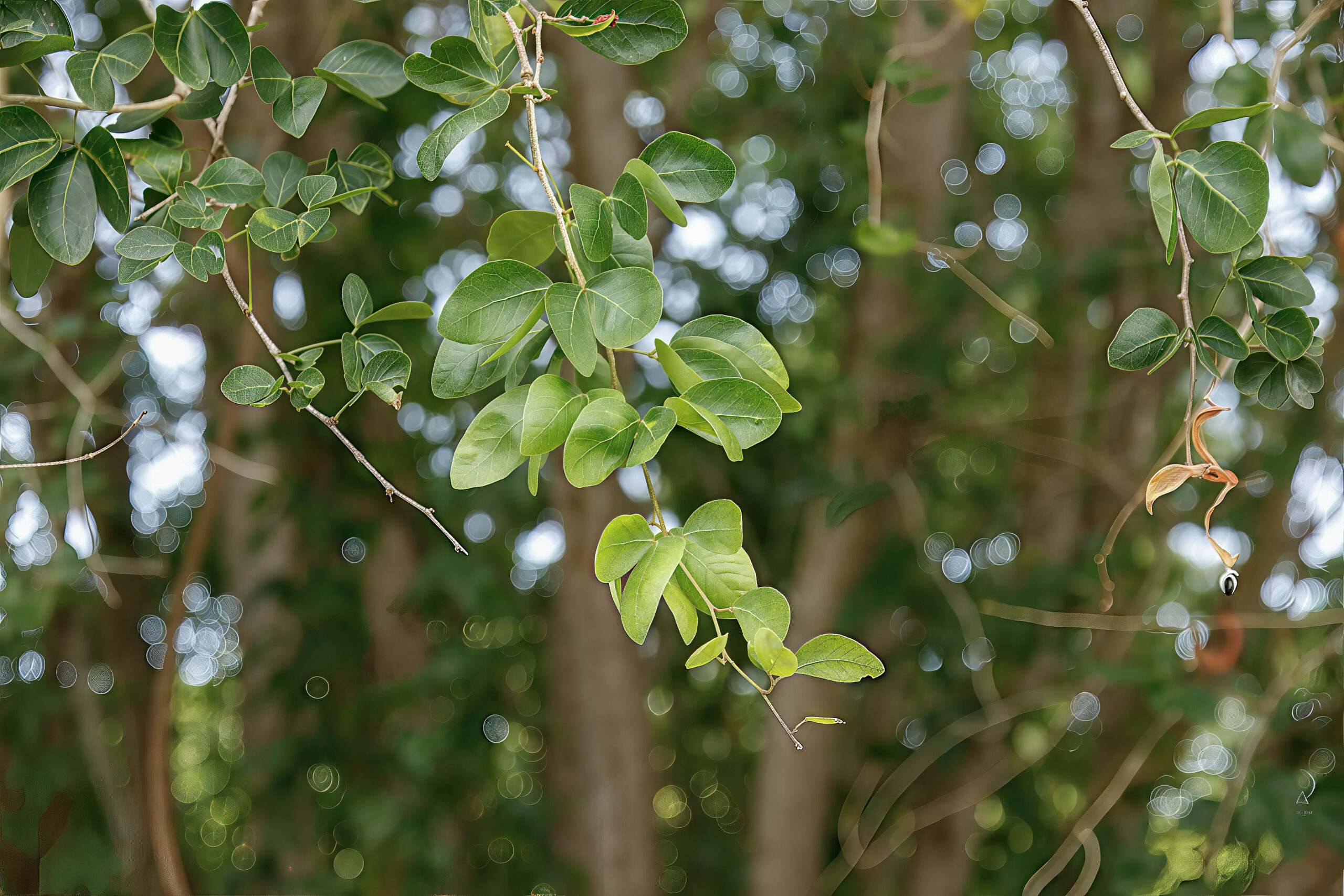
- Leaf Characteristics: Bipinnately compound leaves with small oval leaflets; light to medium green, sensitive to drought or damage
3. Fruit Production:
- First Sign of Pod Development: Mid to late summer (July – August)
- Pod Maturity: Fall (September – October)
- End of Fruiting: Late fall (November)
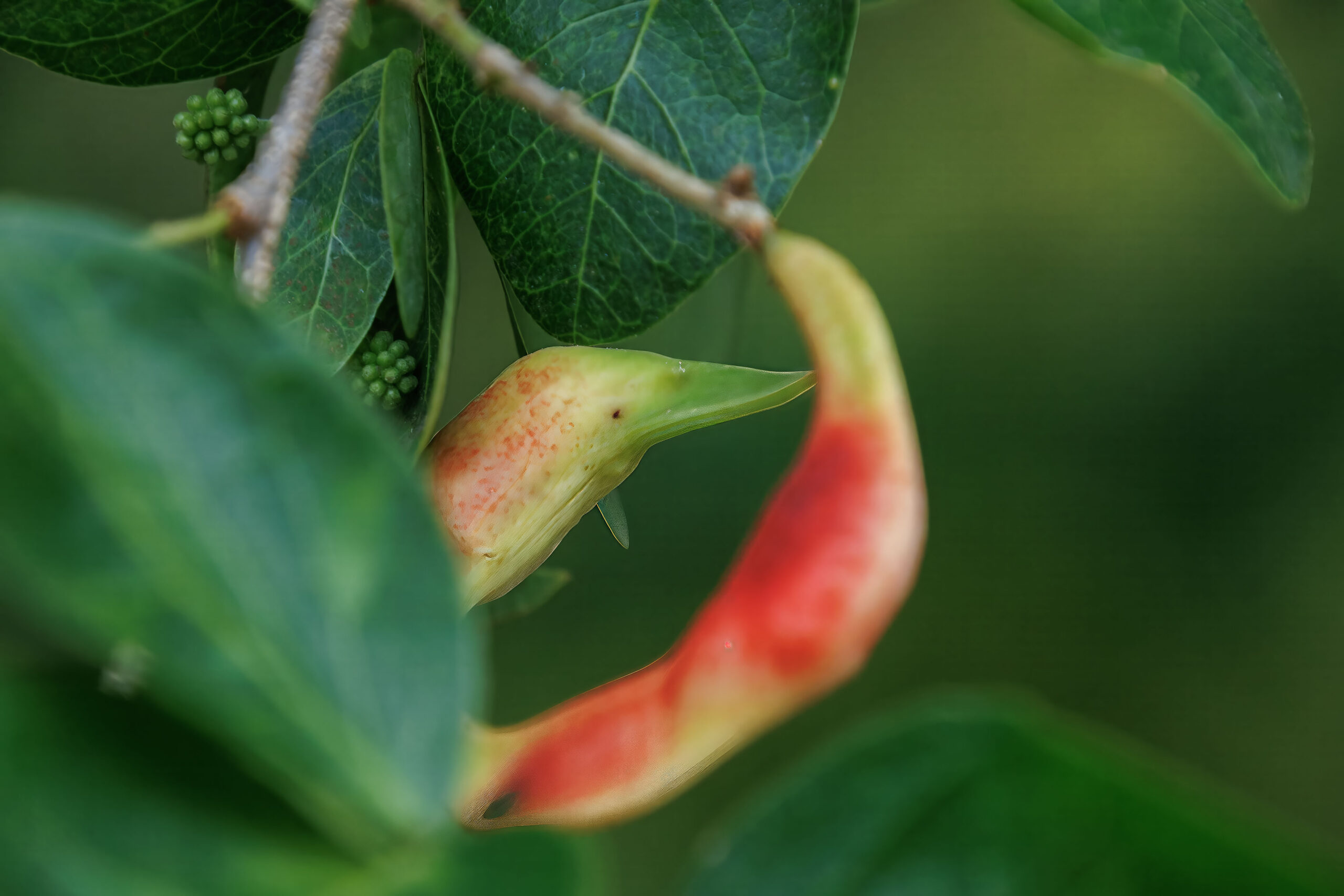
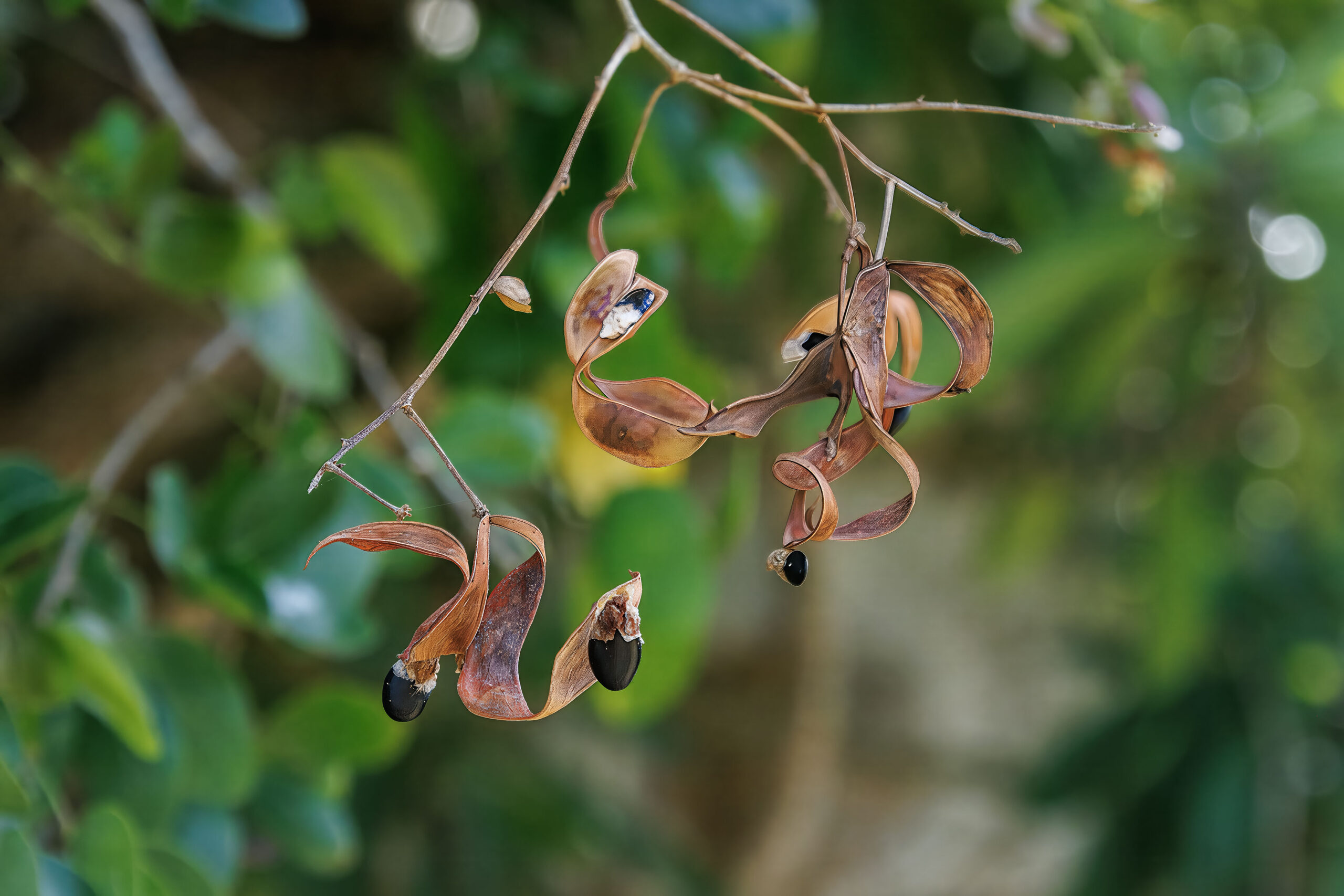
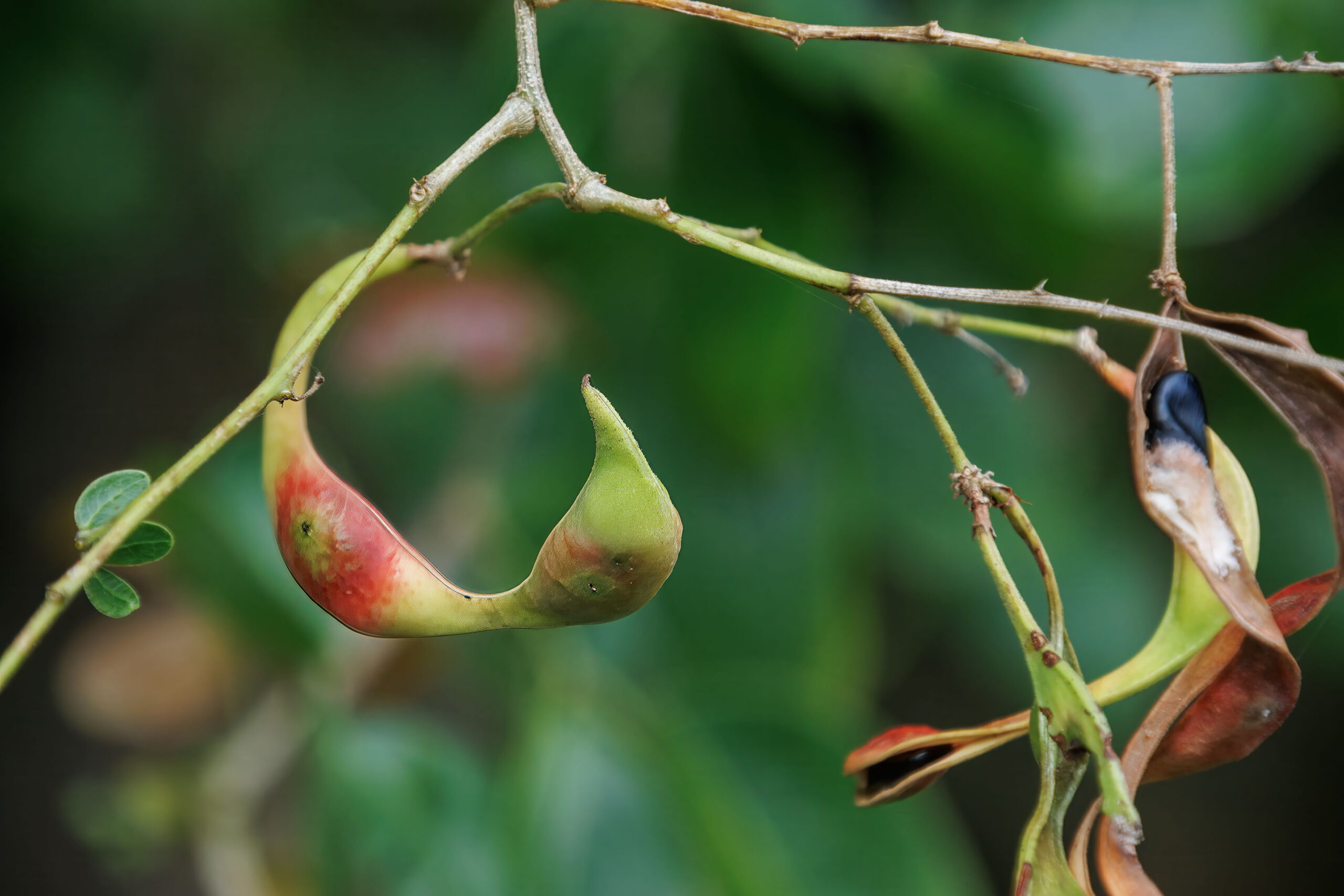
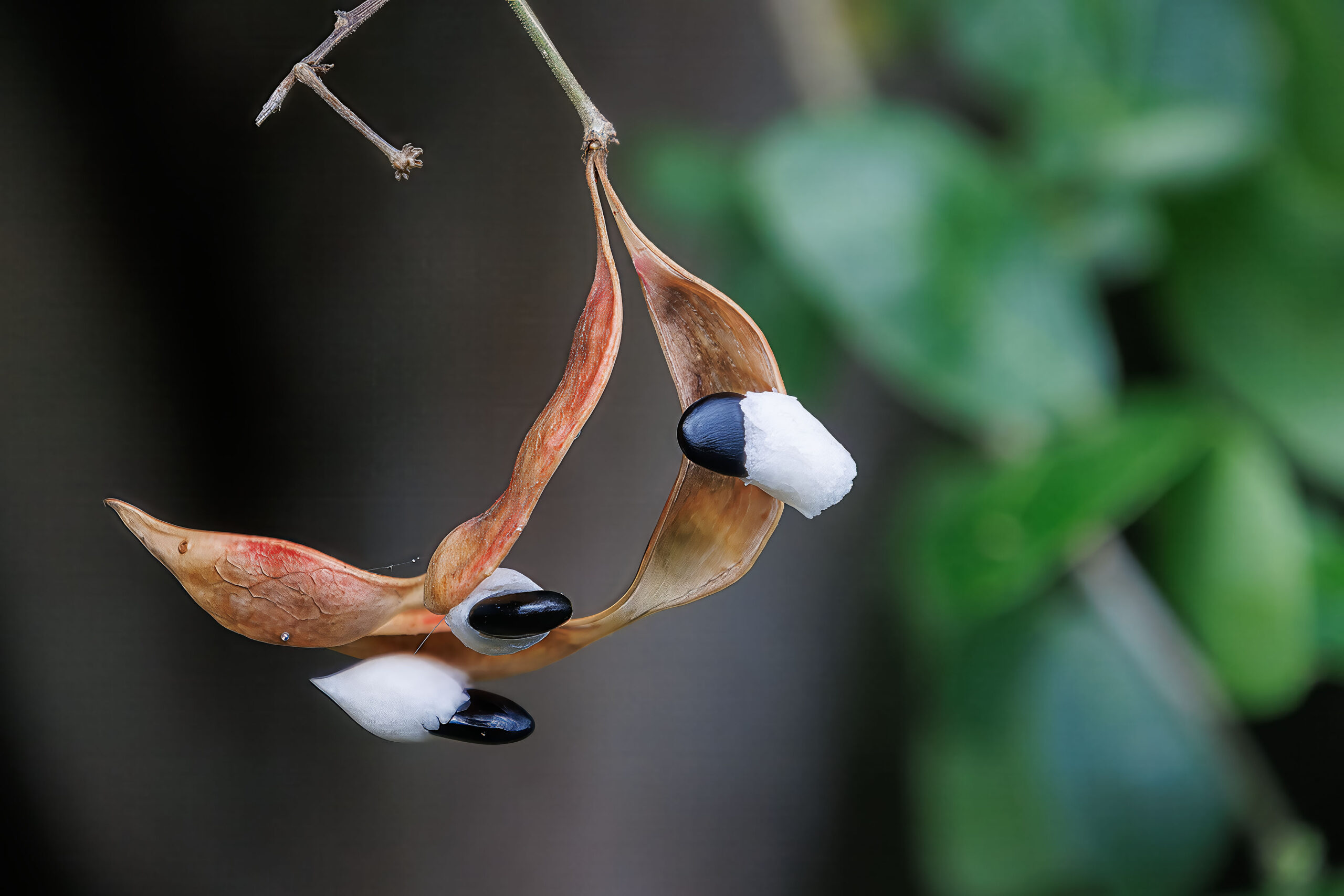
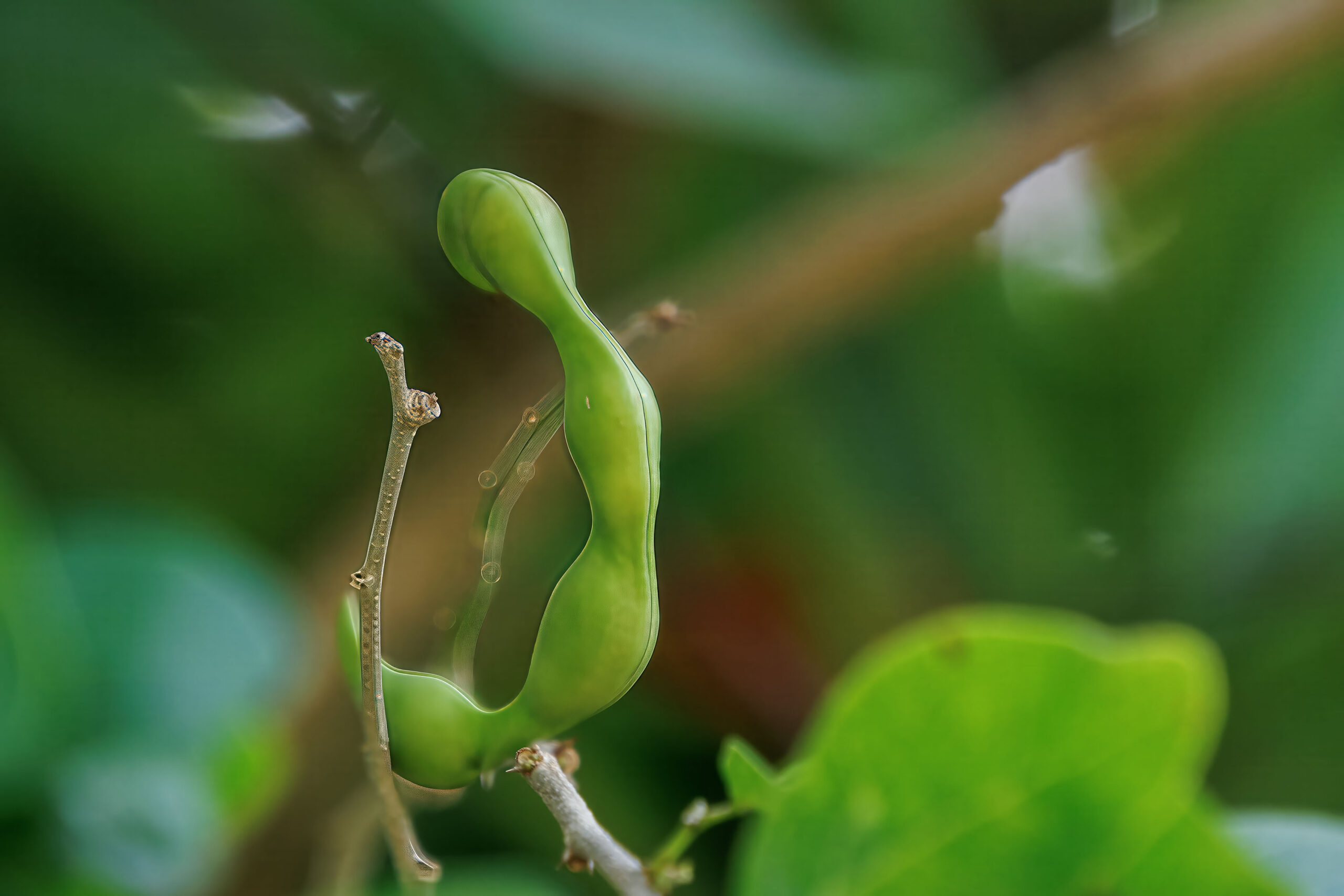
- Fruit Characteristics: Flattened, coiled, horned seed pods containing shiny black seeds surrounded by edible white to pink pulp
4. Dormancy Period:
- Dormancy Begins: Winter dry season (December – February), though leaf drop and slowed growth are often subtle
- Dormancy Ends: Early spring (March), with increased moisture and warmth
- Dormancy Characteristics: Reduced leaf growth, little to no flowering, possible partial dieback during extreme drought
Ecological Notes:
- Pollinators: Bees and other small insects
- Wildlife Interaction: Seeds and pods eaten by birds, small mammals, and historically by people (the “cheese” pulp is sweet)
- Soil Preferences: Thrives in sandy, rocky, or limestone soils with good drainage
- Growth Habit: Can grow as a multi-stemmed shrub or small tree; mature specimens often reach 15–25 ft with a spreading crown
Observational Guidelines:
- Best Time for Observation: April to October for full phenological activity
- Key Field Markers:
- Appearance of flower buds and puff-like blossoms
- Development and twisting of seed pods
- Leaf emergence and drought response
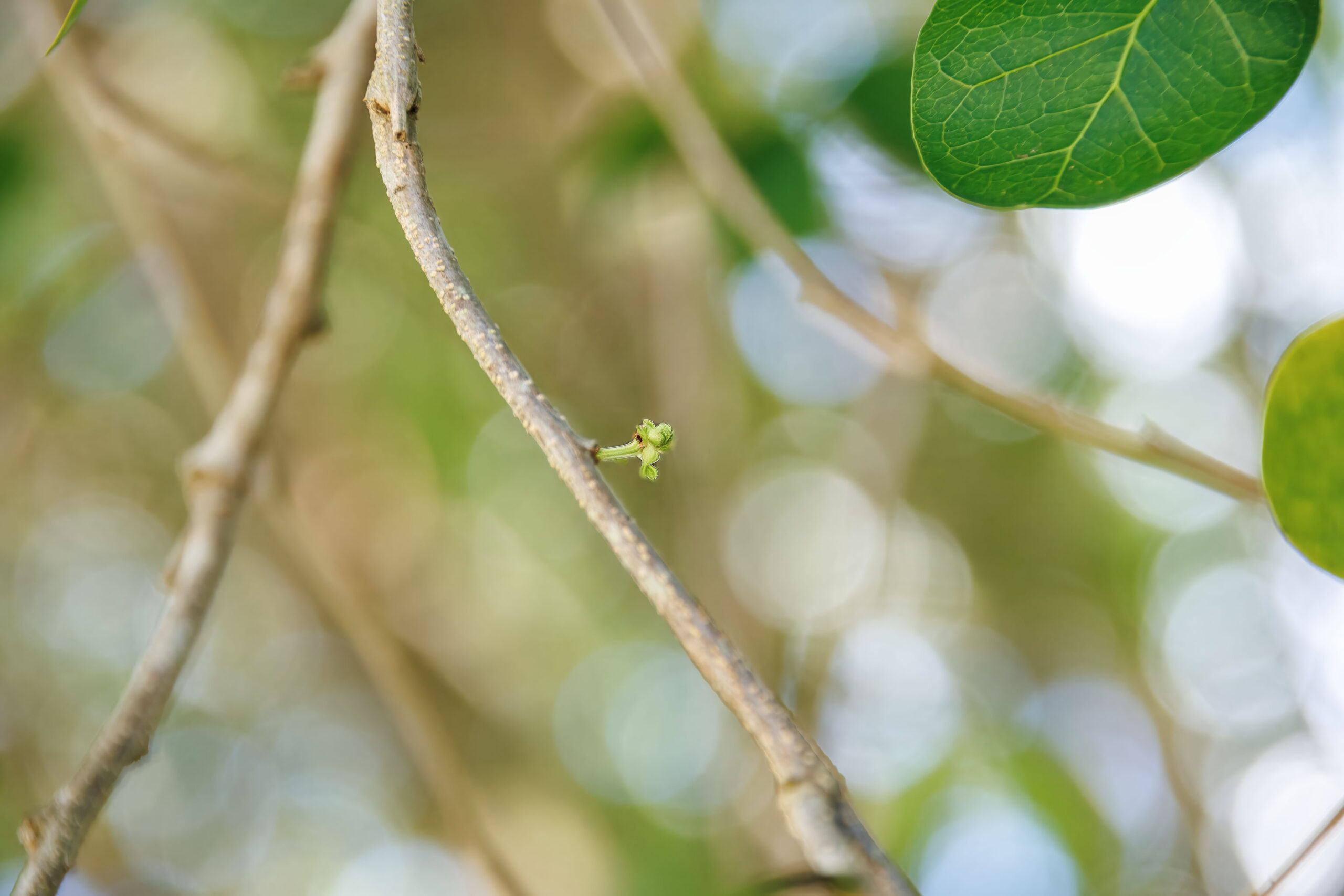
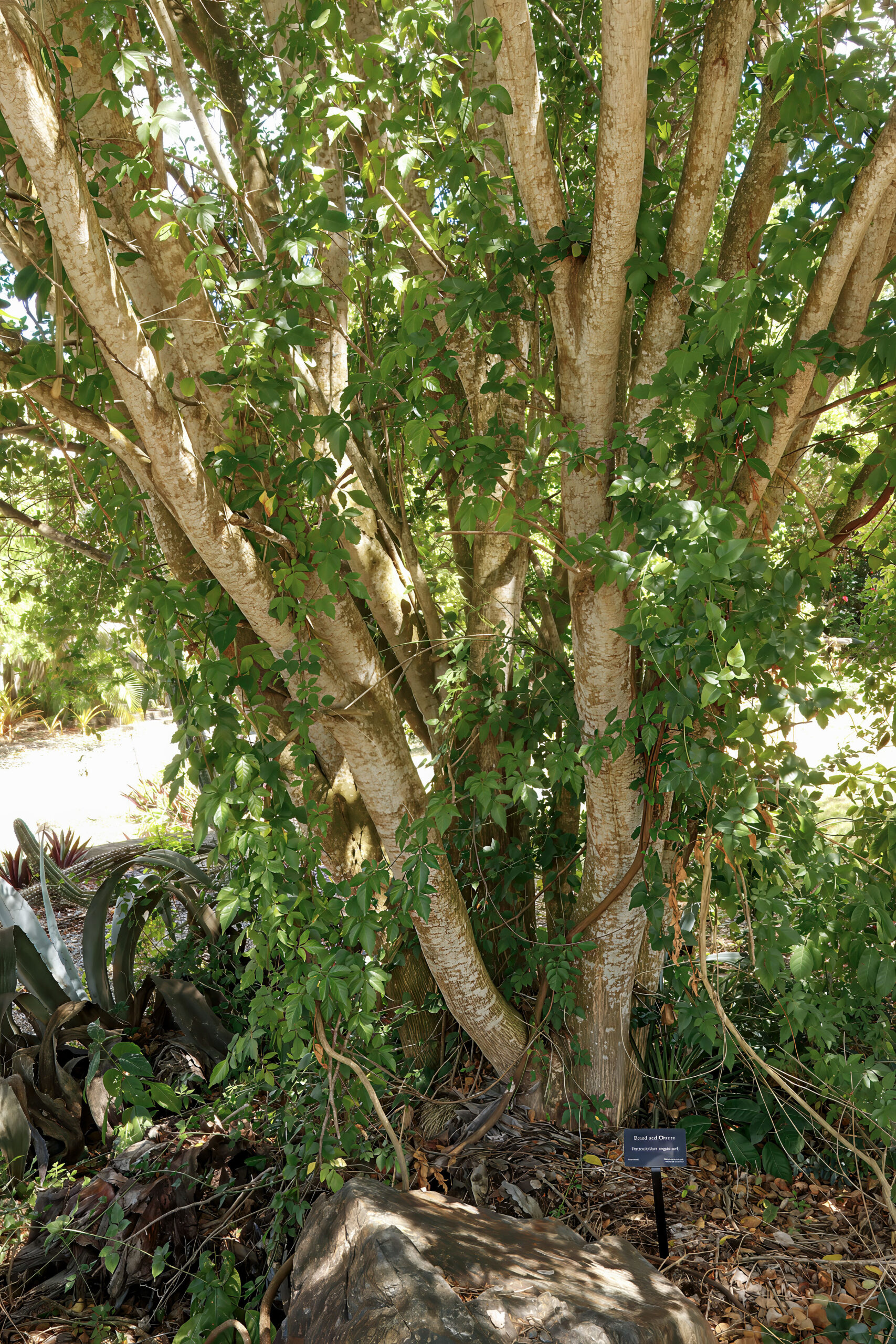
- Bark texture and branch formation (especially in older trees)
- Phenology Triggers: Flowering and fruiting are triggered by seasonal rains; drought slows leaf and pod development
ArbNet Qualification Notes:
Pithecellobium unguis-cati qualifies as a native tree when:
– Ground-planted and managed as a mature specimen
– Reaches at least 15 feet in height
– Exhibits woody growth and defined trunk structure
– Used to showcase native dry forest or scrub habitat diversity