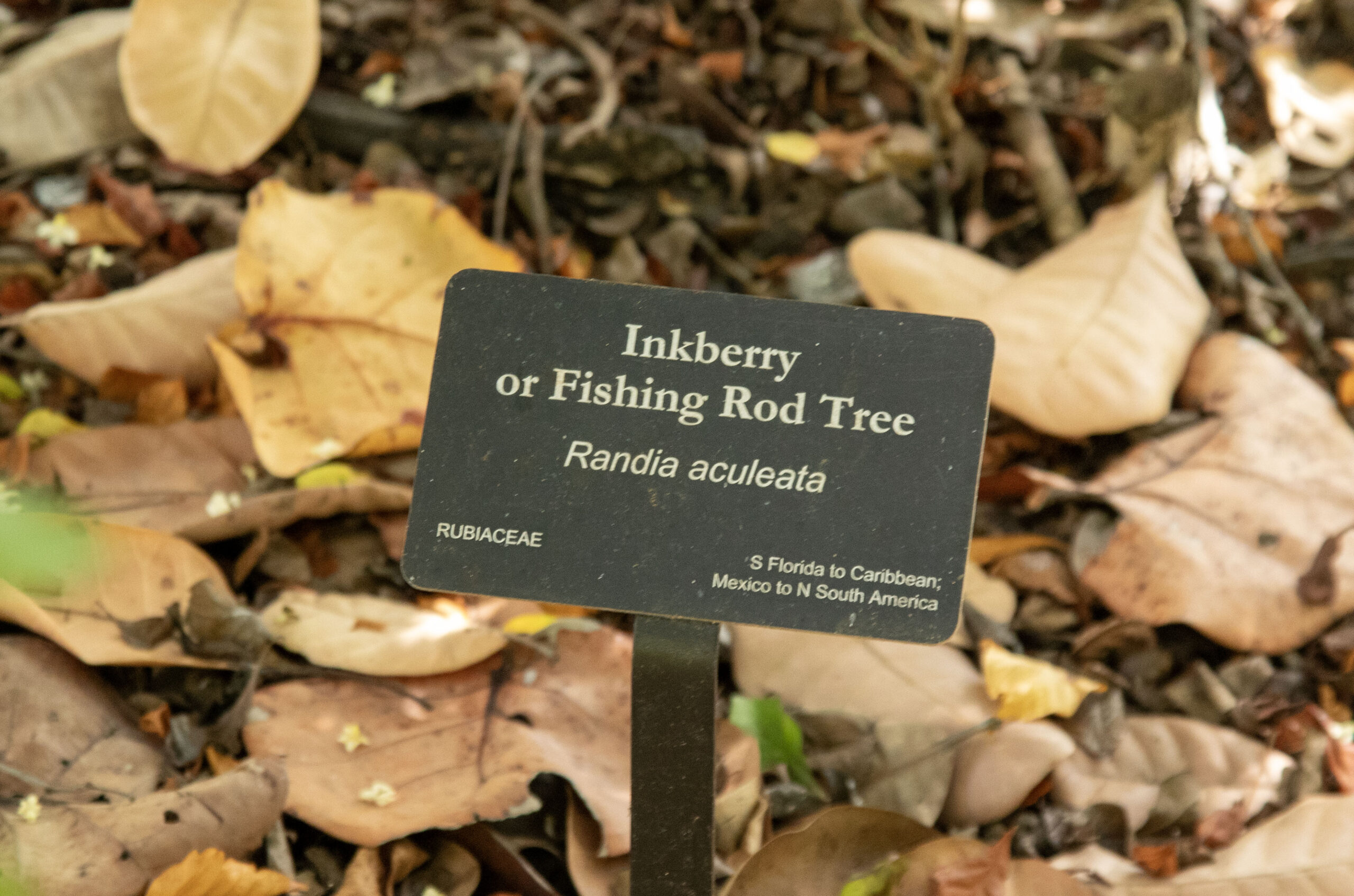
Inkberry tree

Scientific name: Randia aculeata

POWO Status: Shrub or Tree

IUCN Red List threat level: Least Concern

GPS Location: 17° 42′ 56.76″ N, 64° 49′ 43.01″ W

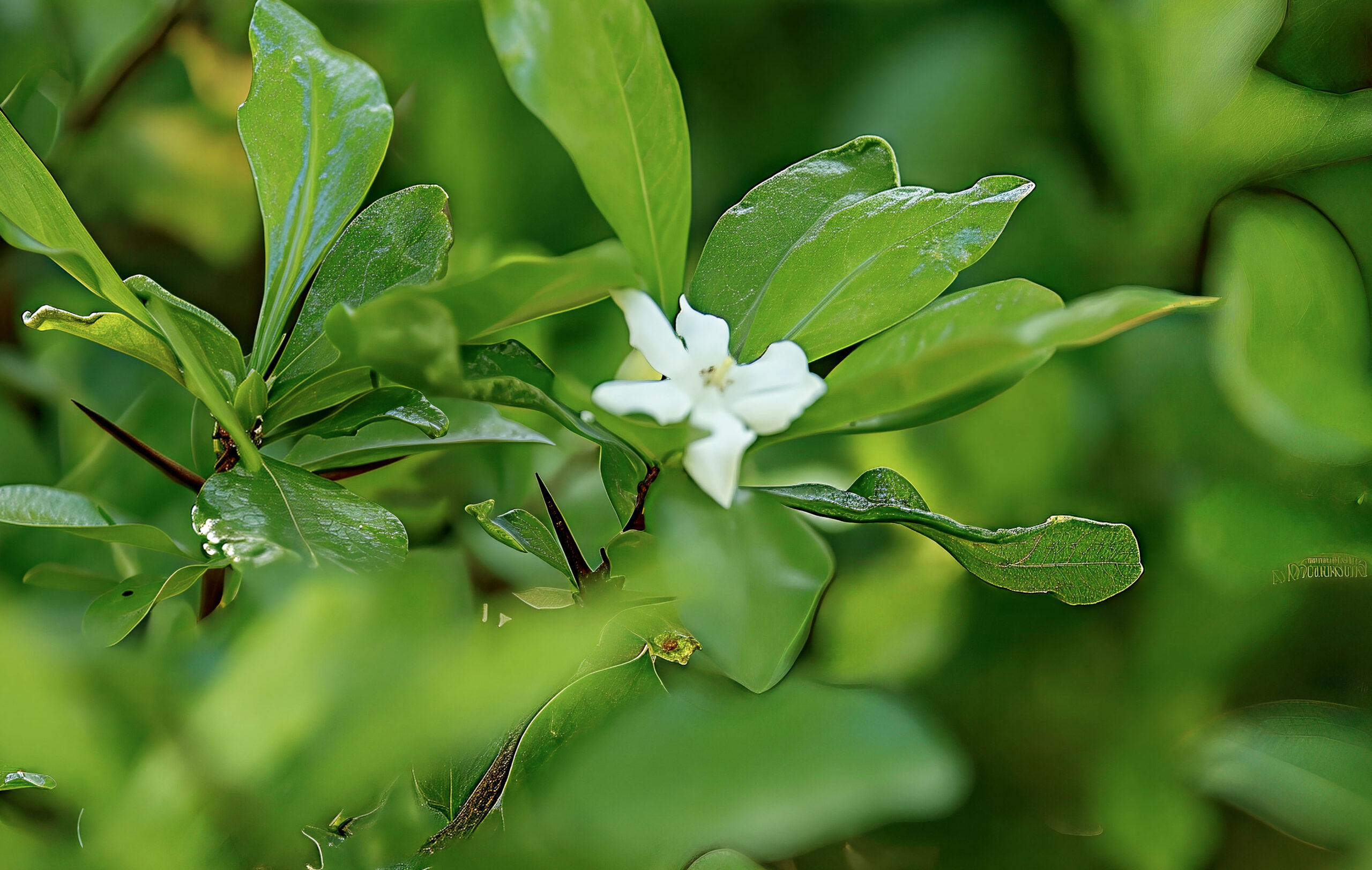
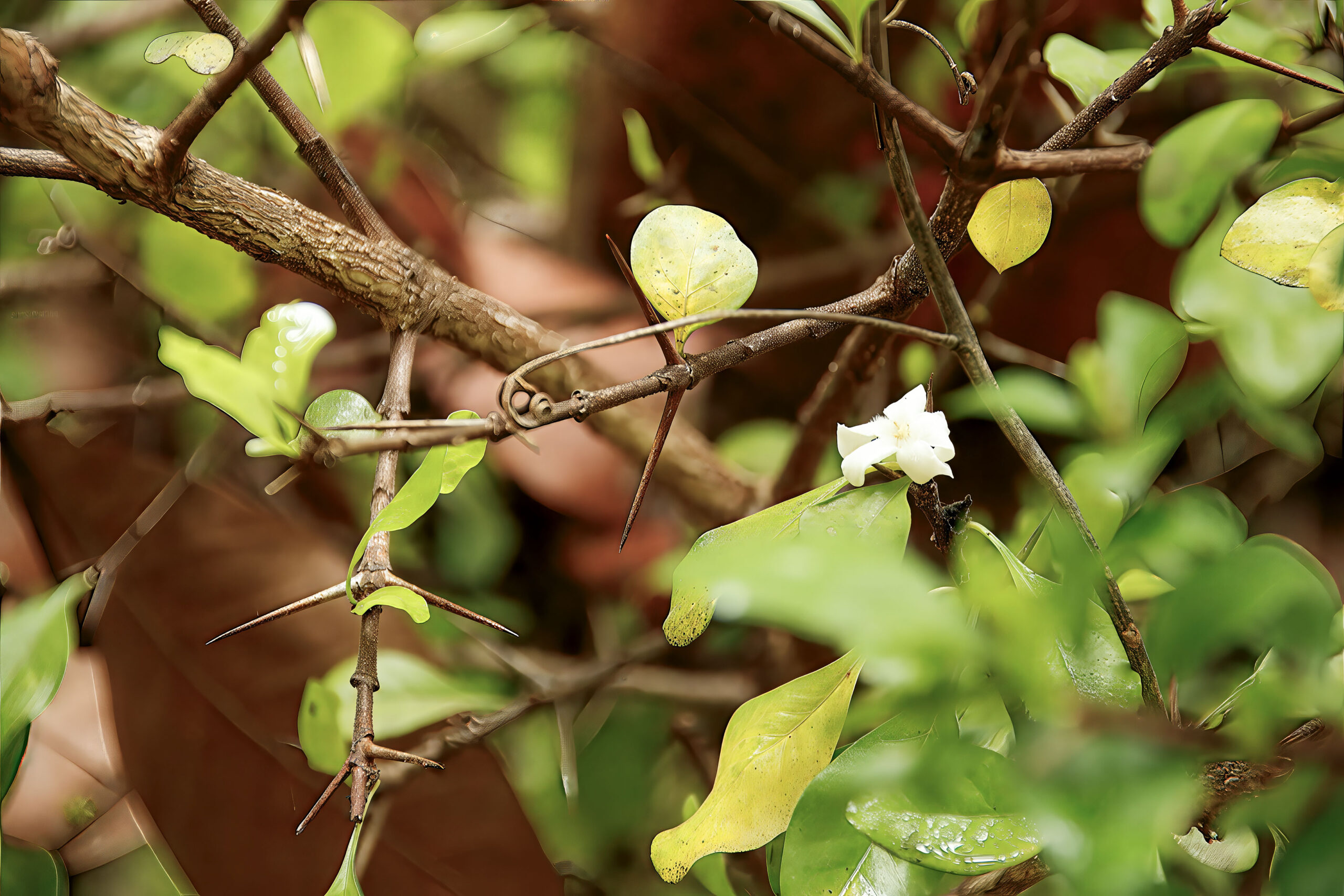
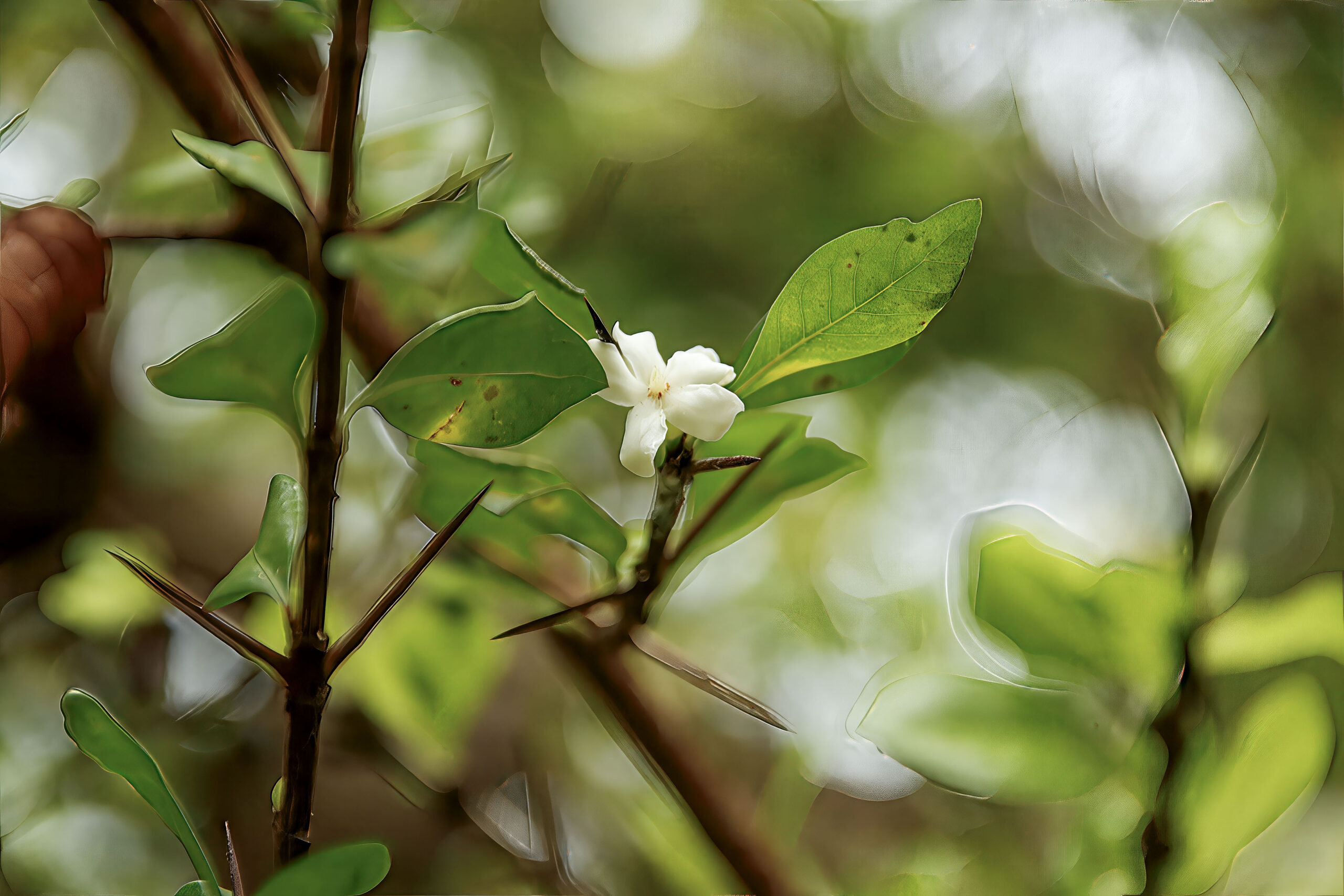
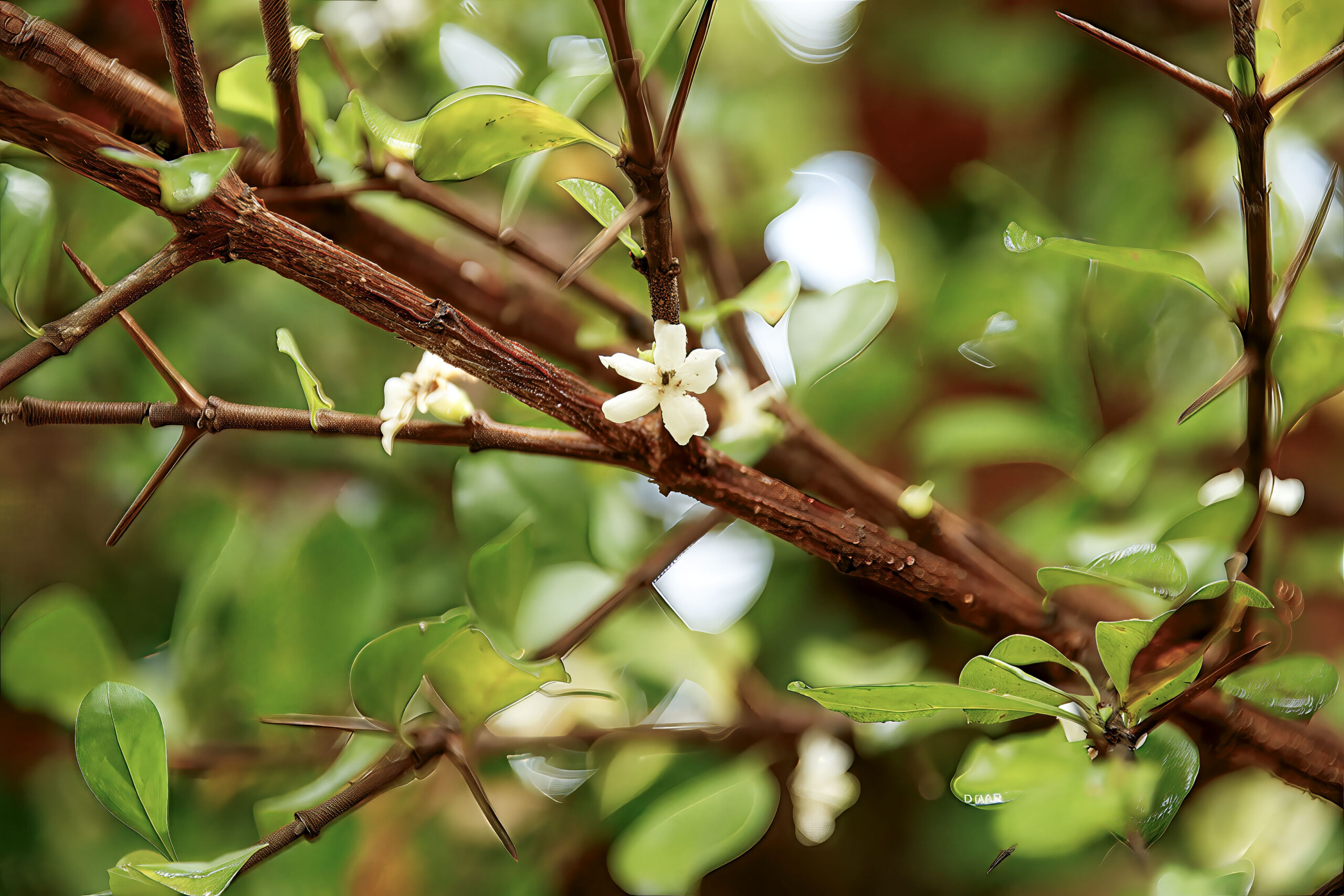
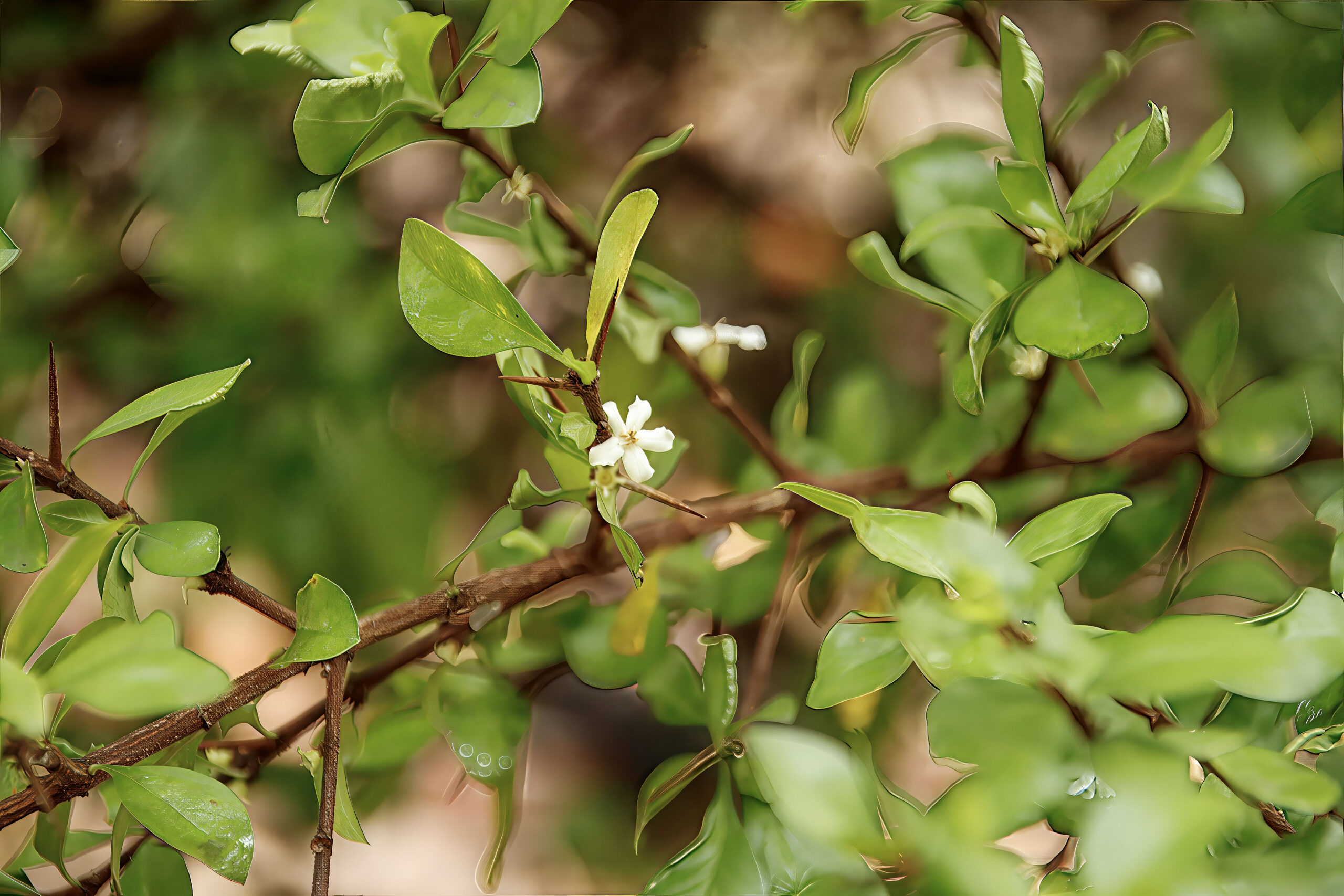
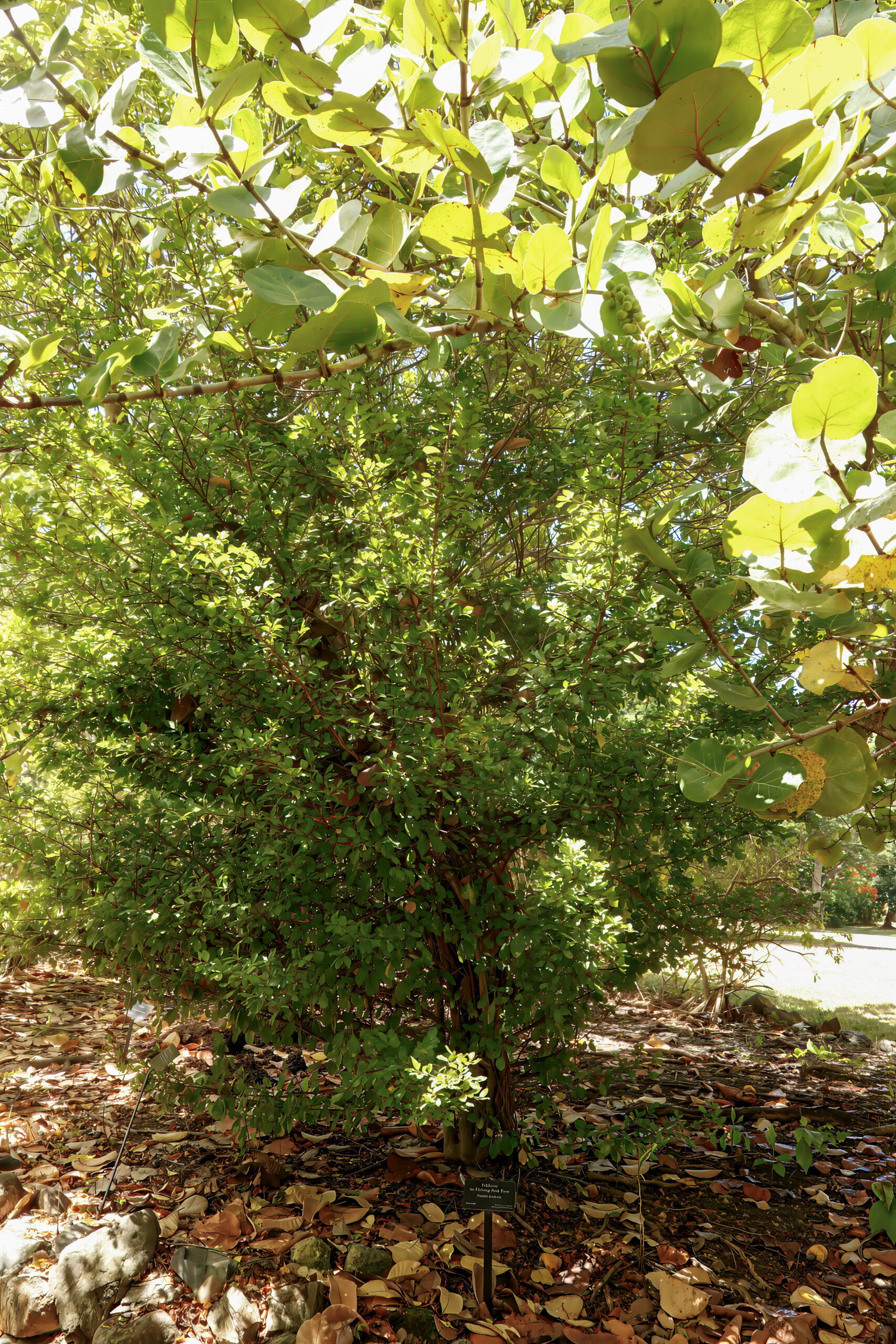
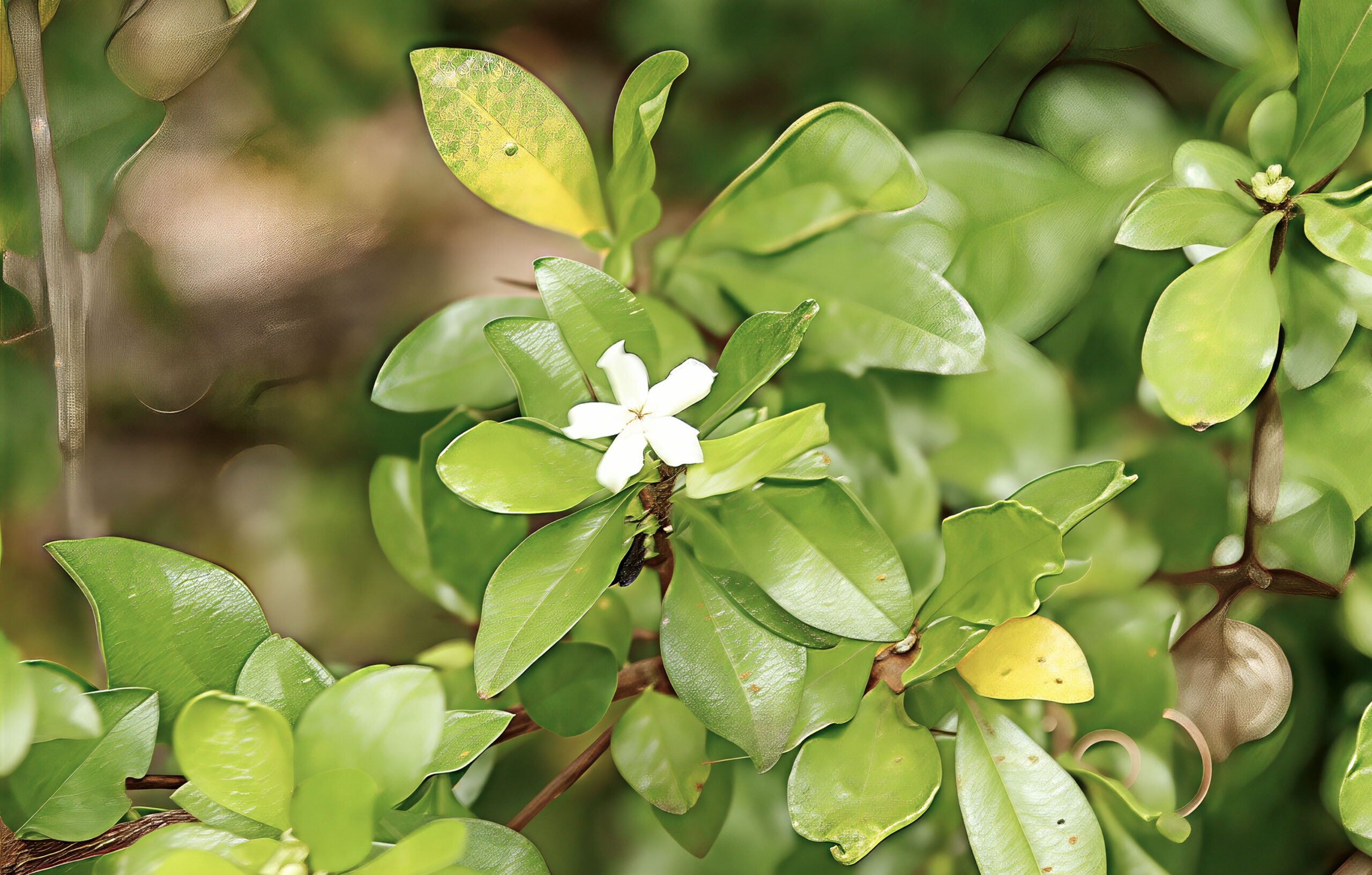
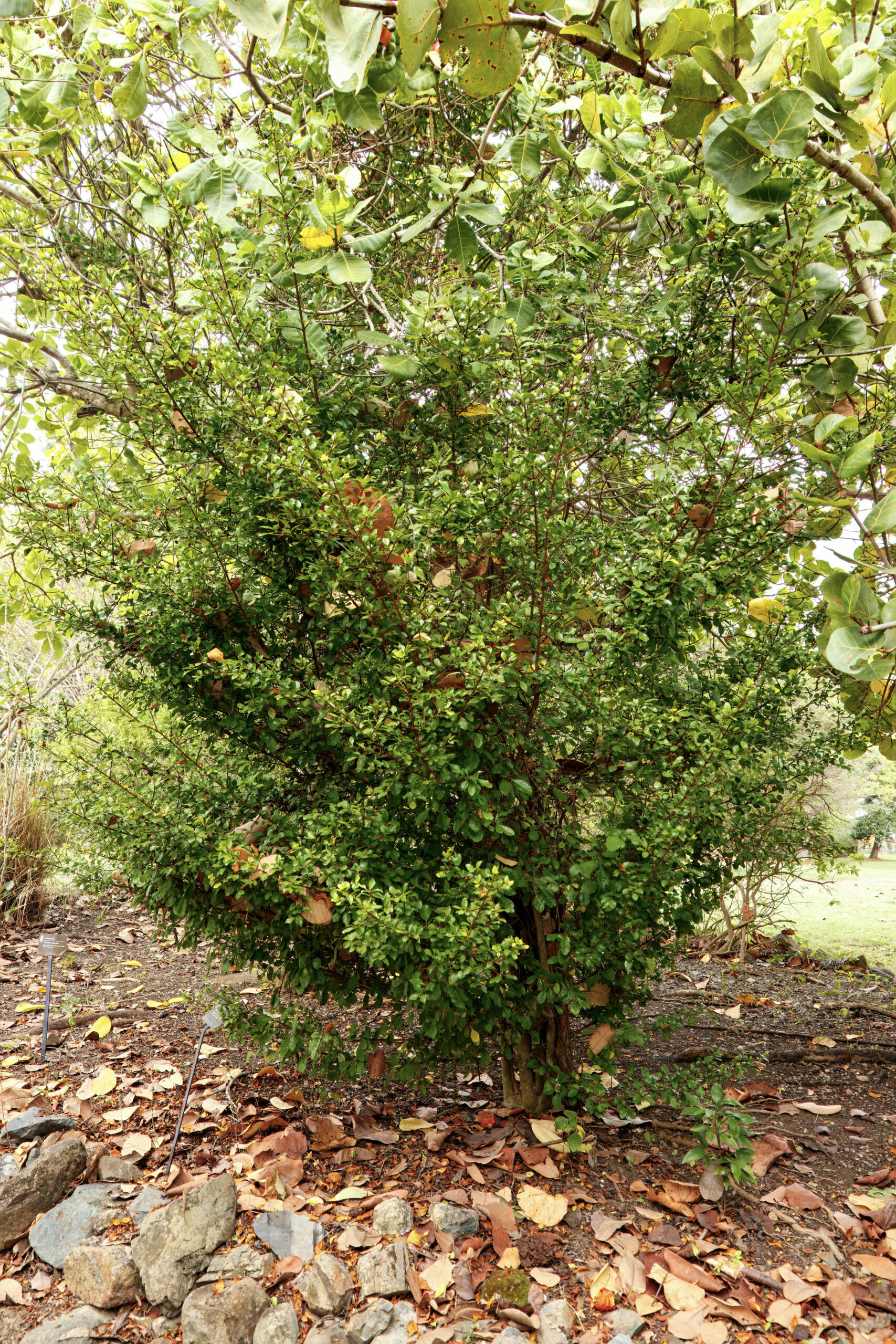
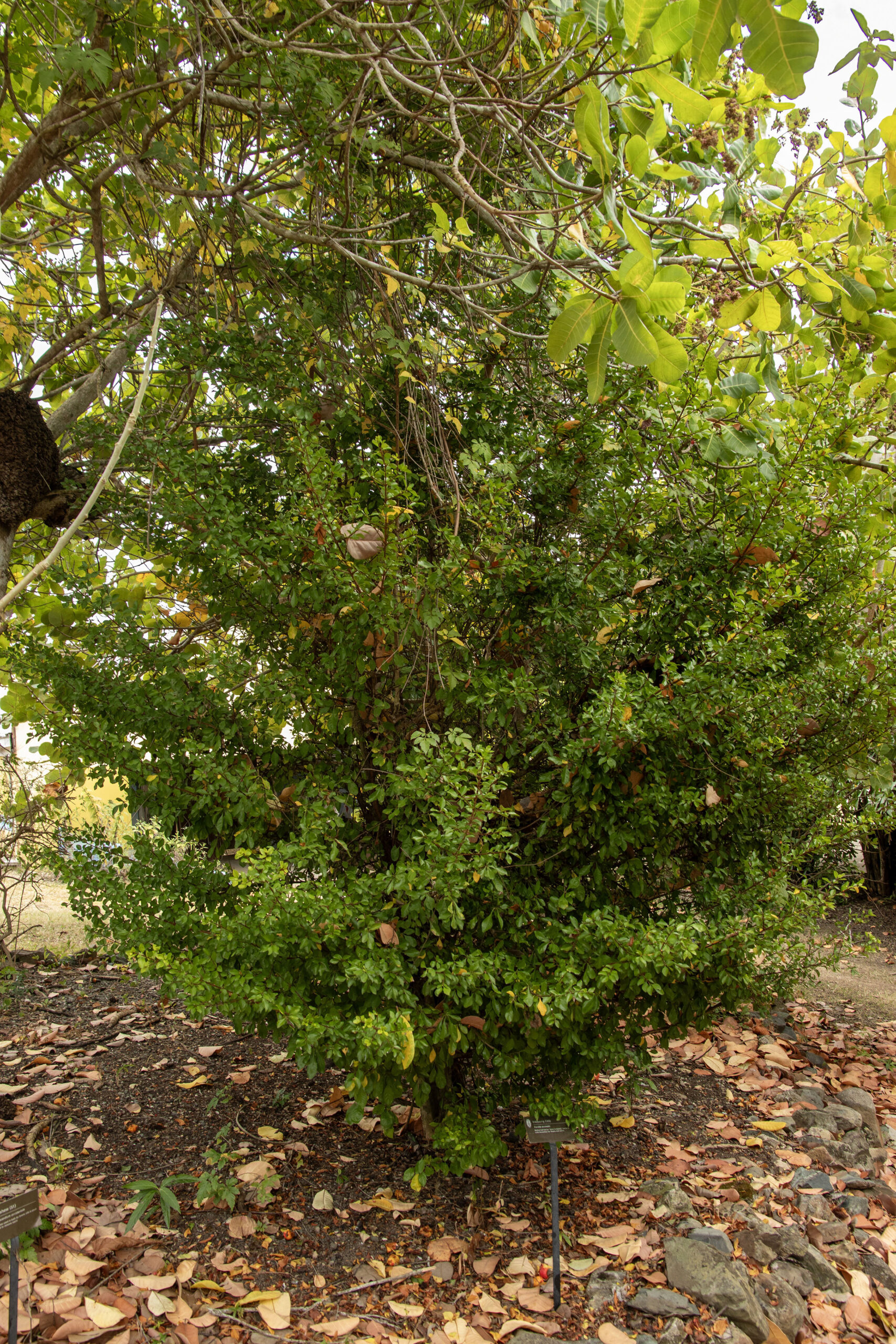
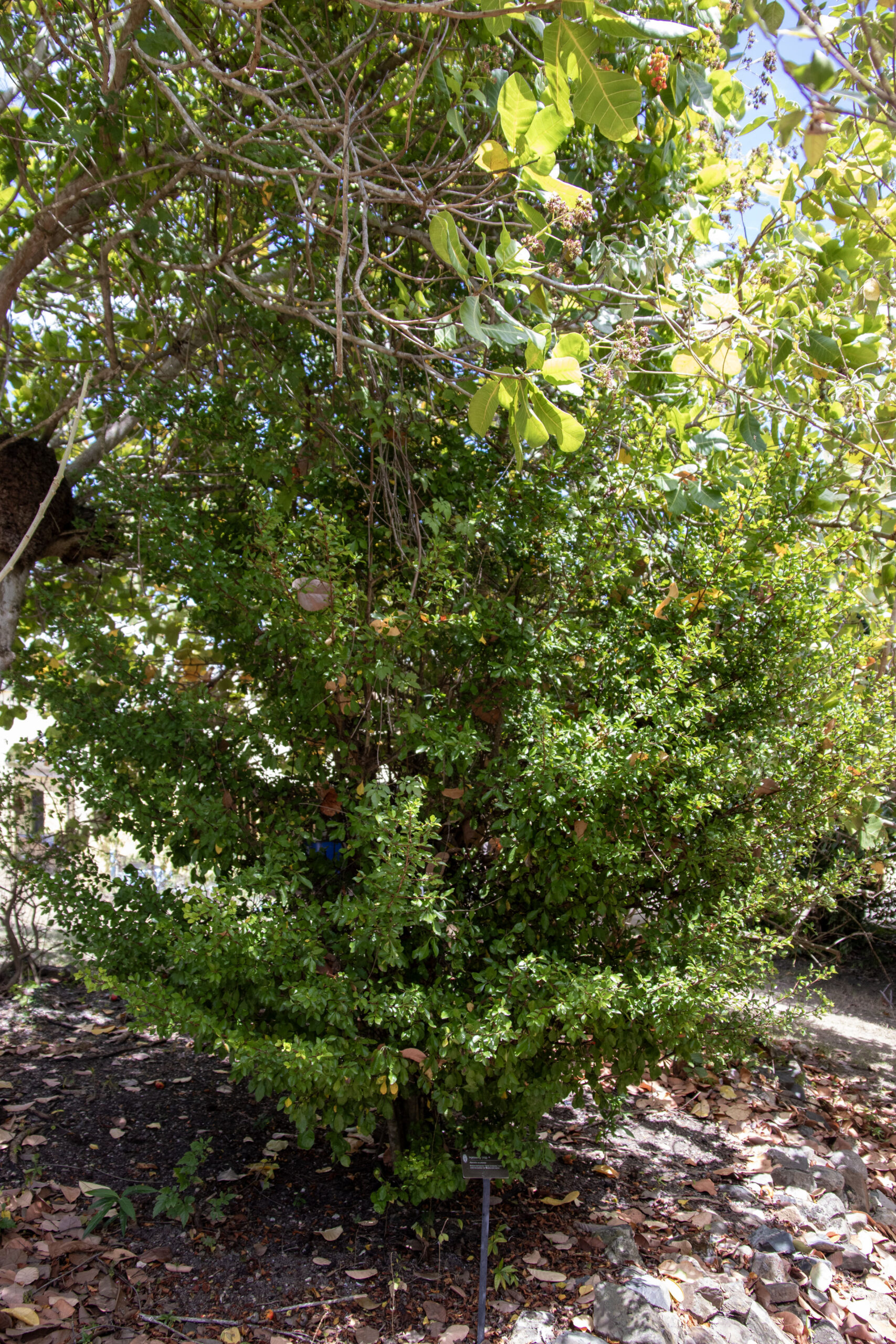
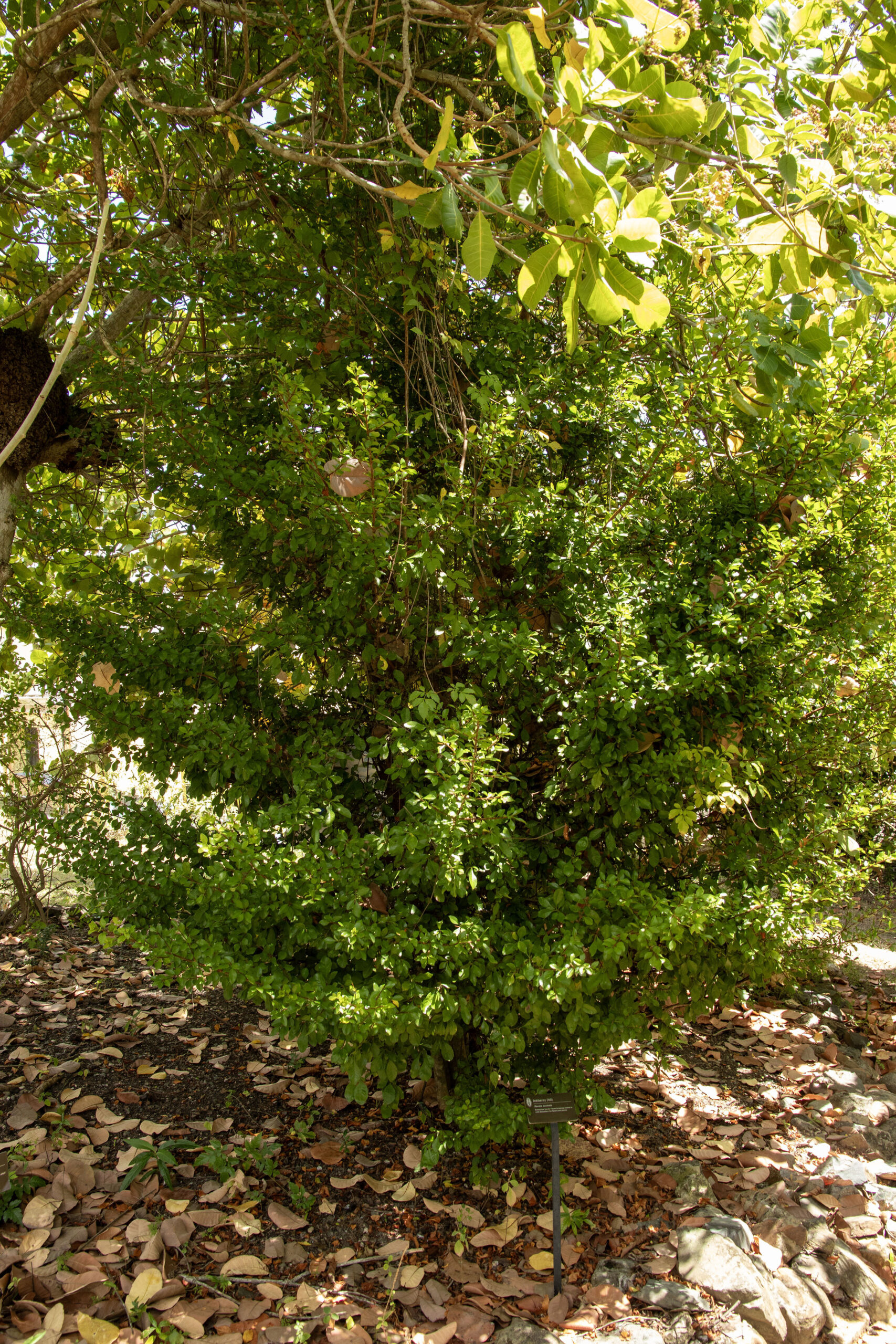
Randia aculeata, known locally in the Virgin Islands as “Inkberry,” is a woody shrub or small tree characterized by its small white flowers and deep blue-black berries. While modern botanical references often list it as “Indigoberry,” the name “Inkberry” holds cultural significance in the Virgin Islands, appearing in both scientific and local literature. The 1964 U.S. Forest Service publication Common Trees of Puerto Rico and the Virgin Islands lists “Inkberry” as a recognized common name specific to the Virgin Islands. Additionally, educator and cultural historian Ruth Moolenaar used the name in her 1969 story The Beautiful Inkberry Tree, written for young Virgin Islanders. This blend of scientific identity and cultural tradition reflects the importance of honoring local naming practices alongside phenological documentation.

Medicinal Uses

Randia aculeata, or white indigo berry, is used in traditional medicine for issues like diarrhea, fever, pain, and even as an antidote for snakebites, with fruits, leaves, and sap utilized for various remedies, though scientific validation of many uses is ongoing. Uses include fruit teas for indigestion, sap to stop bleeding, and leaf baths for sores, with modern research showing anti-inflammatory potential and protection against snake venom. 

Common Medicinal Uses:

  • Gastrointestinal Issues: Fruits are used for diarrhea, dysentery, and indigestion.
  • Fever: Used to control fevers.
  • Pain & Inflammation: Extracts applied for general pain, chronic pain, and skin issues; also used for rheumatism and chest spasms.
  • Snakebites: Fruit preparations are consumed, and the plant shows promise in protecting against muscle damage and blood issues from venom.
  • Bleeding: Latex/sap used to stop hemorrhaging.
  • Respiratory: Used for coughs, bronchitis, and lung ailments.
  • Skin: Leaves used in baths for infected sores. 

Other Applications:

  • Dye/Ink: Berries produce a blue dye used as ink.
  • Tools: Wood used for fishing rods and cooking tools. 

Important Note:

  • While traditionally used, many of these applications lack robust scientific evidence, though some studies confirm anti-inflammatory and anti-bacterial properties, supporting some traditional uses.

Observations:

Phenological Markers – Inkberry (Randia aculeata)

1. Leaf Behavior
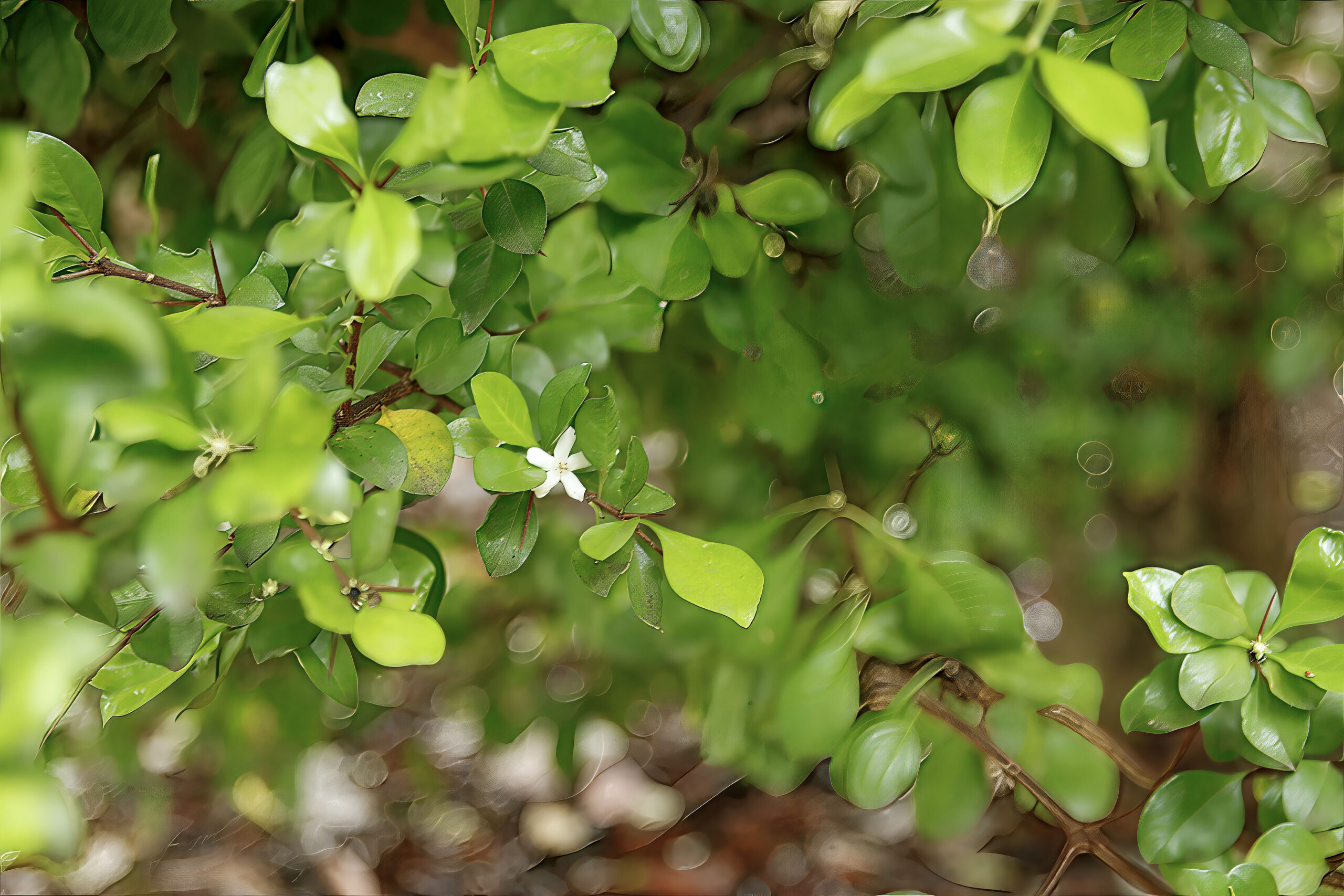
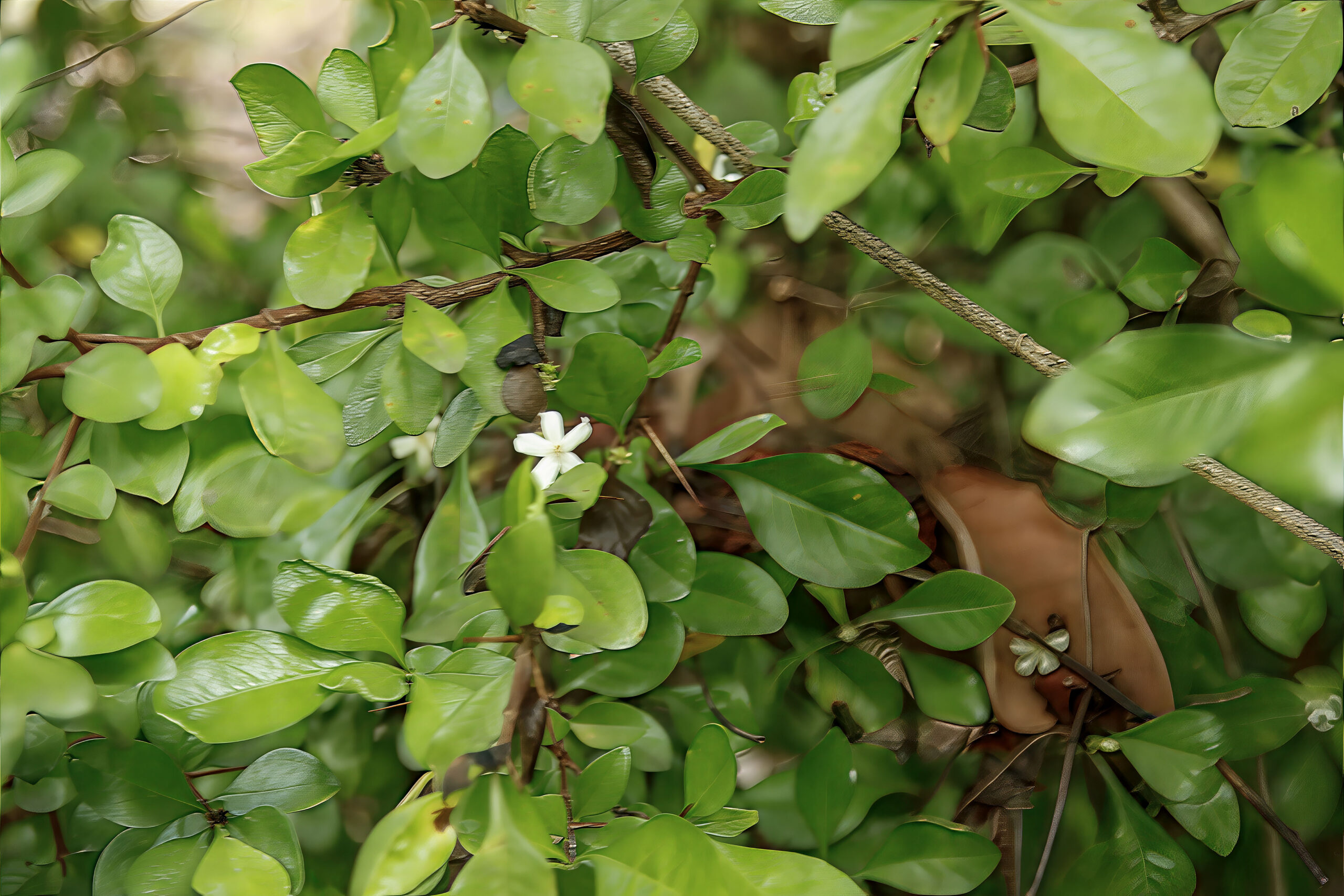
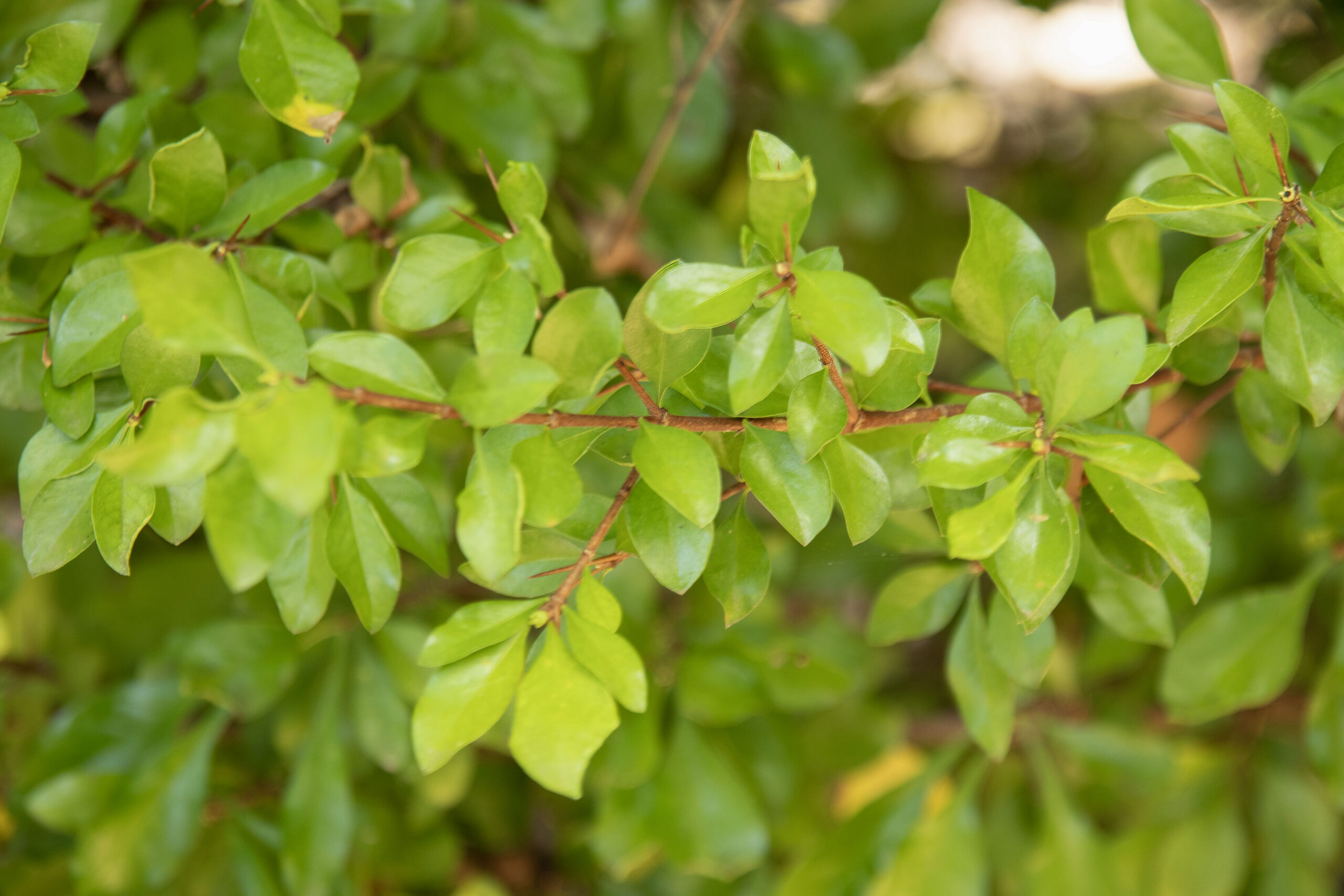
Randia aculeata is evergreen, with small, opposite leaves that are oval to oblong, smooth-edged, and often shiny on the upper surface.

  • The plant maintains foliage year-round, though minor leaf drop may occur during extended droughts.
  • Leaf color remains a steady medium to dark green, with subtle new leaf flushes after rainfall.

Observation Tips:

  • Look for small flushes of lighter green new growth at branch tips.
  • Document any drought-related yellowing or leaf loss (usually brief and limited).

2. Flowering
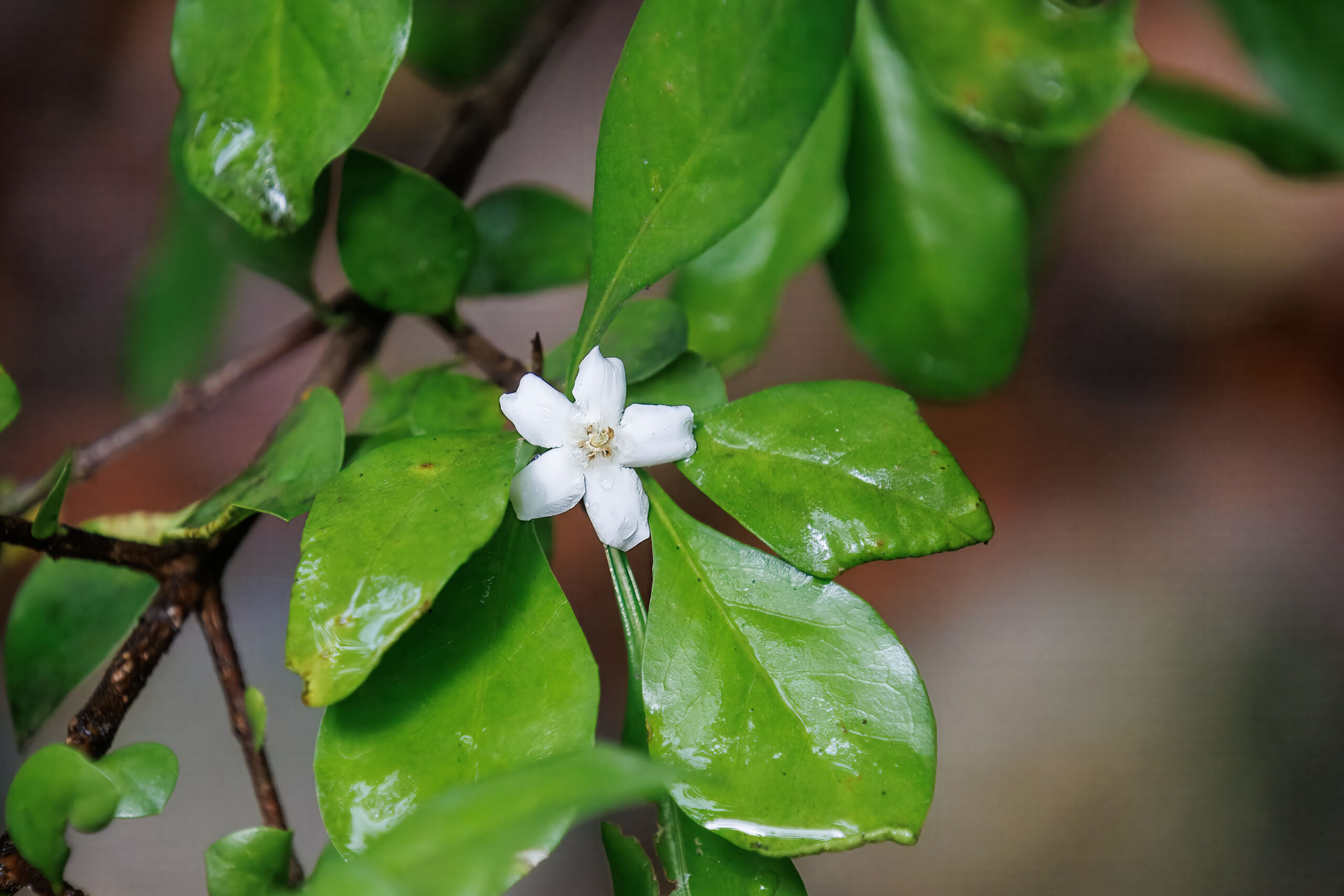
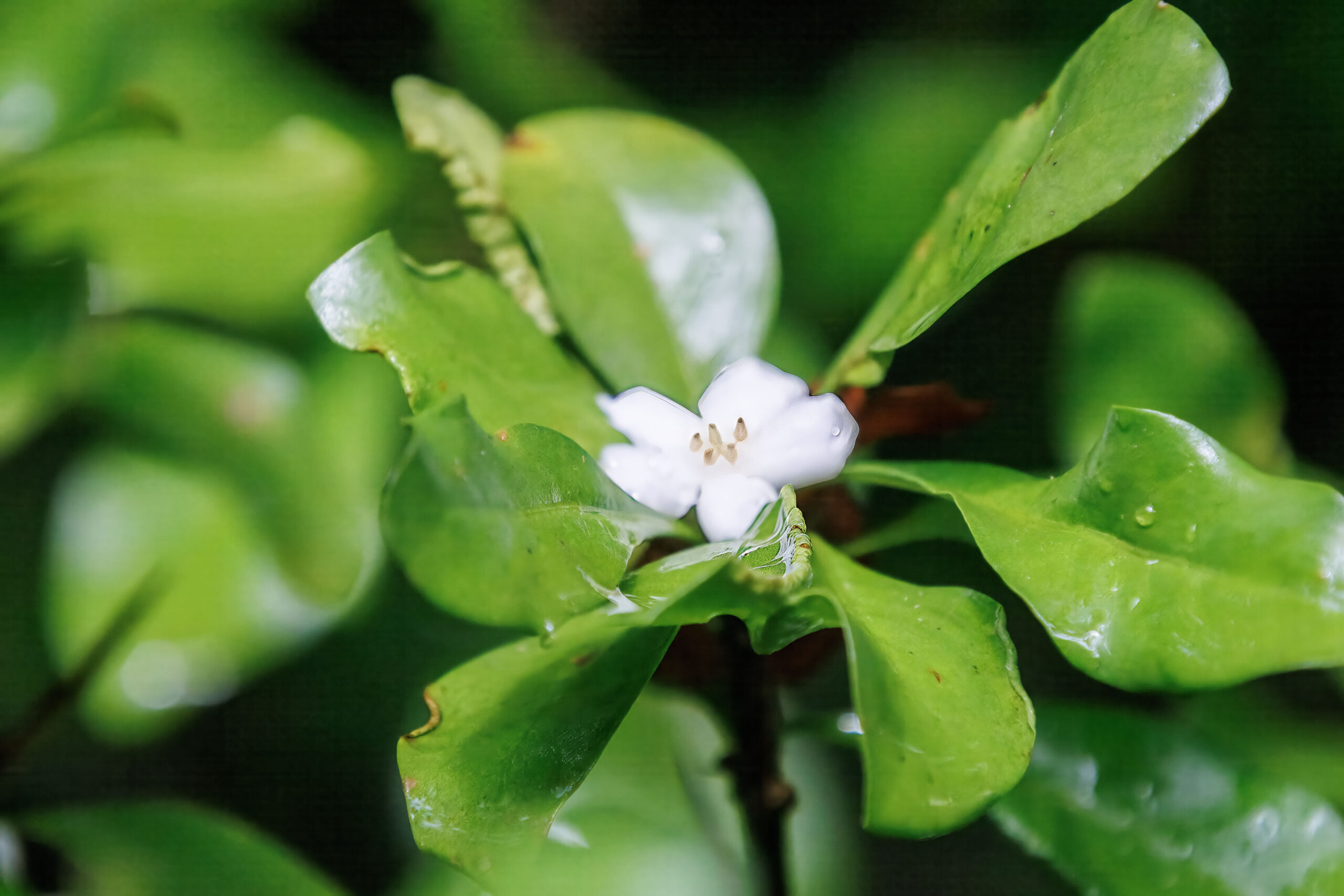
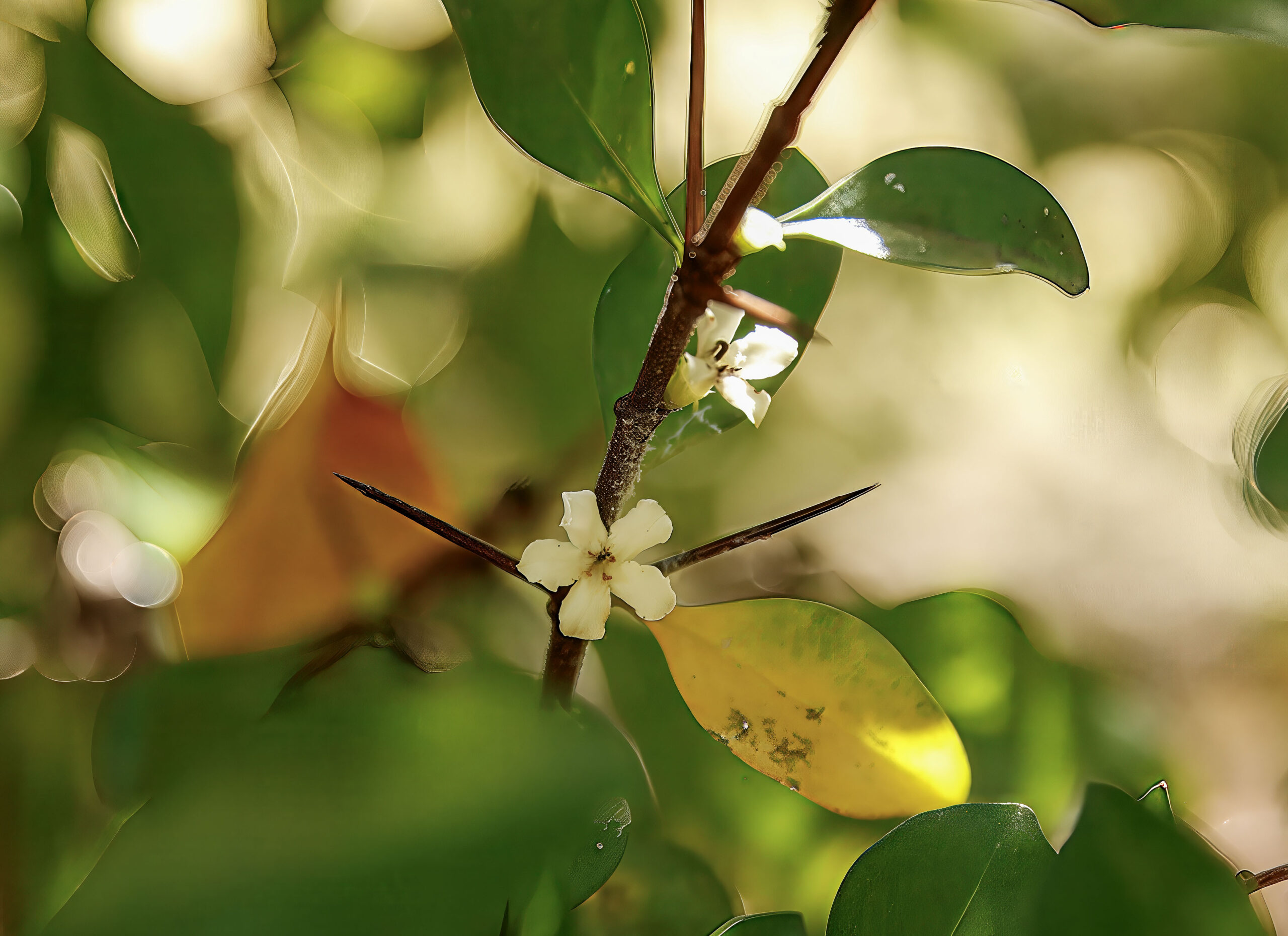
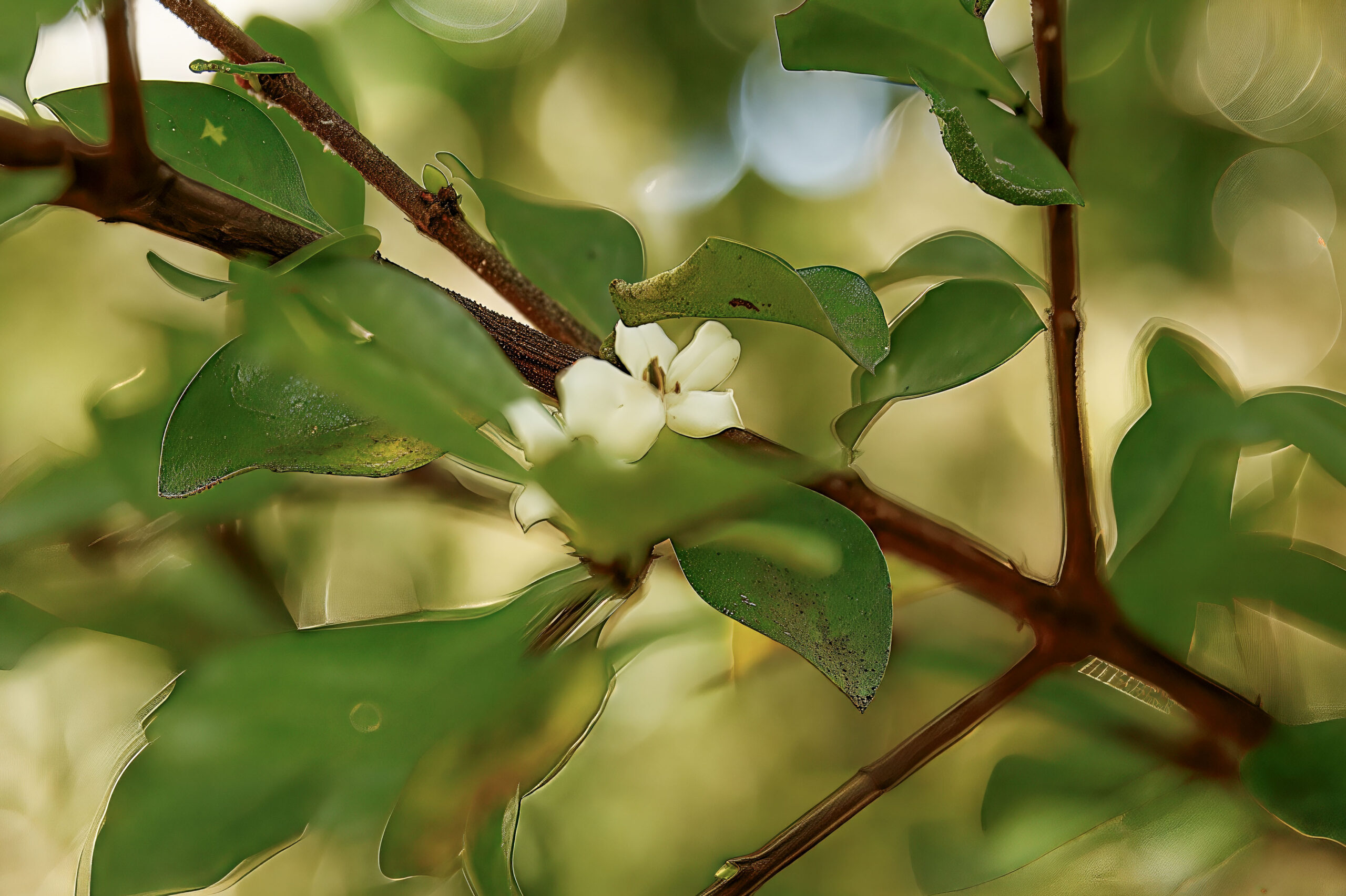
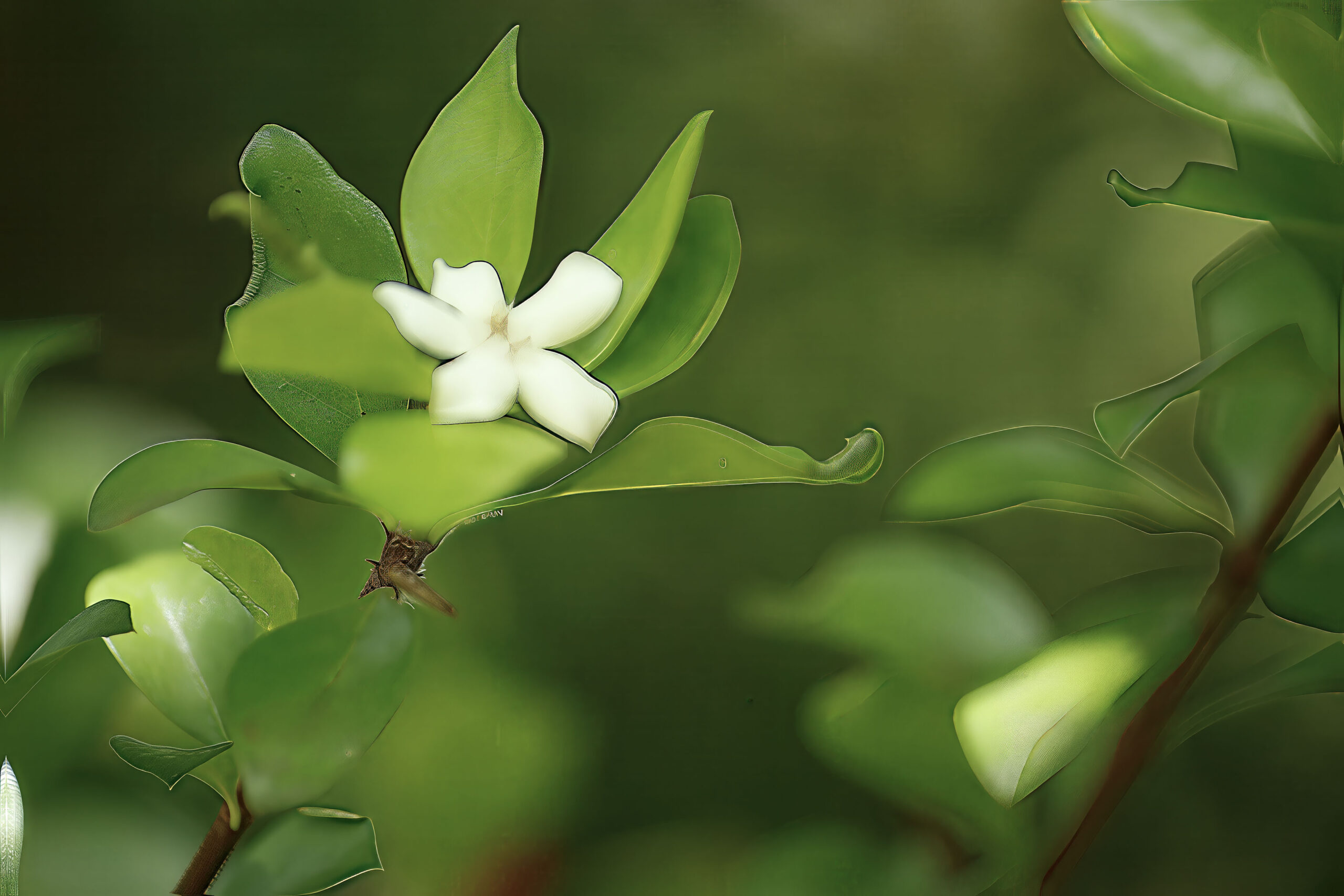
Flowers are white, tubular, and fragrant, opening primarily in the evening or early morning, and are pollinated by moths and bees.

  • Flowering typically occurs in May–August, but some blooming can happen sporadically throughout the year in response to moisture.
  • Flowers are borne singly or in pairs at leaf axils and are usually about 1 inch long.

Observation Tips:

  • Watch for flower buds and bloom opening around sunset or early morning.
  • Track pollinator activity, especially moths.

3. Fruiting
The fruit is a small, round, black berry (about 1–1.5 cm in diameter) with dark pulp and several seeds.

  • Berries develop quickly after flowering and are used in traditional ink and dye production (hence the name).
  • Fruiting season generally follows flowering, June–September, with some variation.

Observation Tips:

  • Monitor fruit development, color shift from green to glossy black, and eventual fruit drop.
  • Note any bird activity, as the berries attract small frugivorous species.

4. Growth Habit
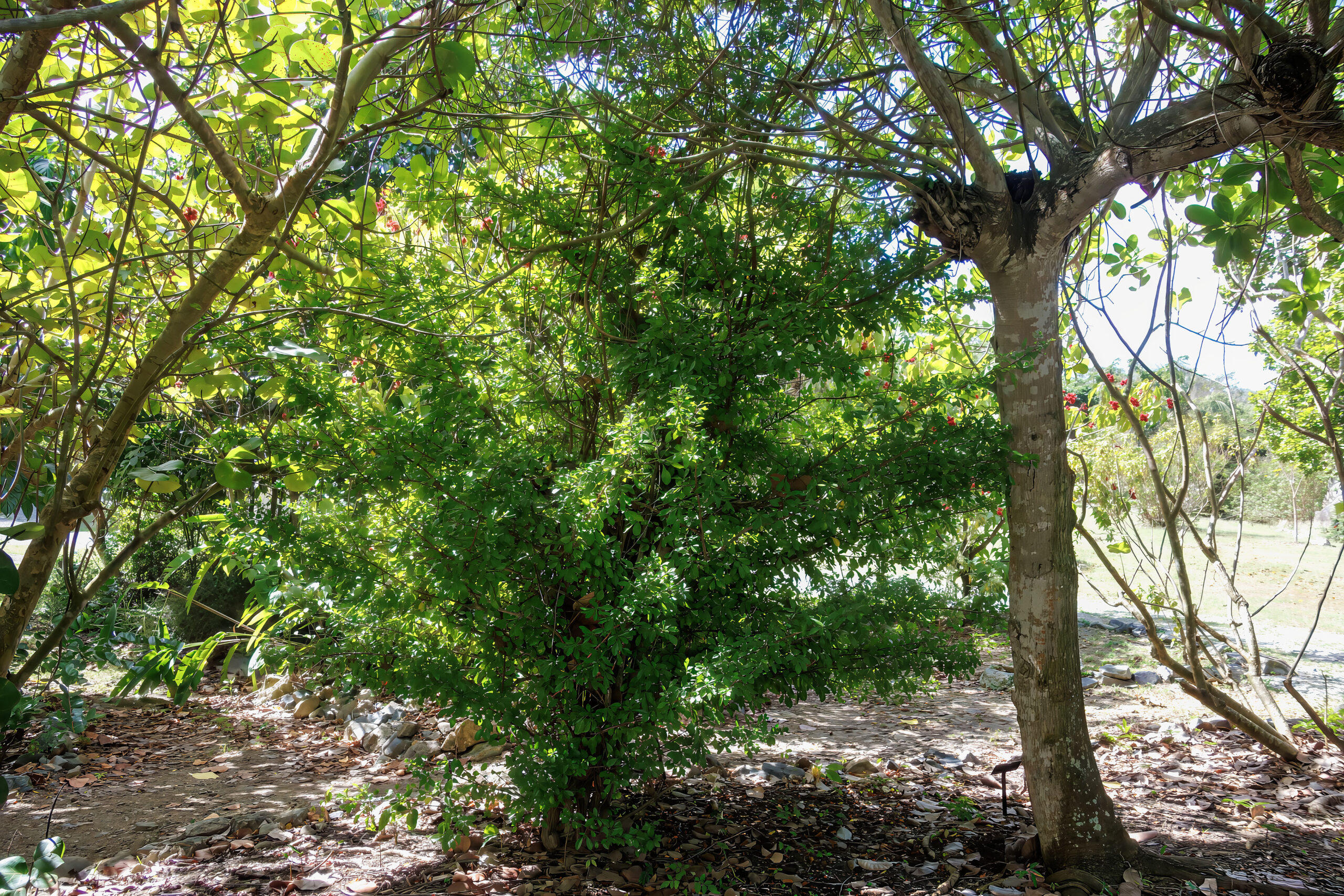
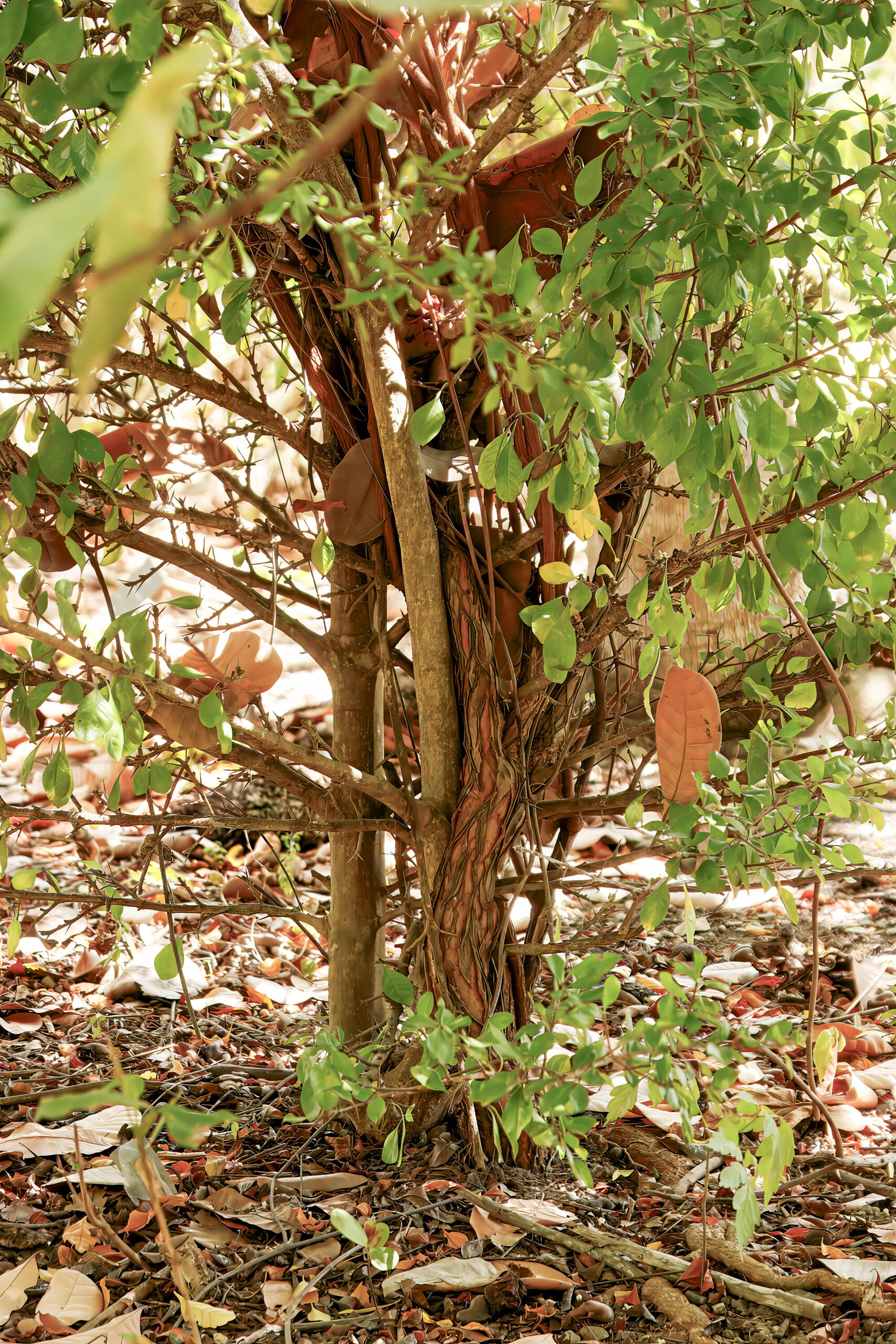
Typically grows as a dense, multi-stemmed shrub or small tree, usually 6–15 feet tall.

  • Older stems may have short spines, especially in dry or exposed conditions.
  • Well adapted to coastal scrub, limestone soils, and dry forest edges.

5. Seasonal Pattern (St. Croix)

  • Mar–Apr: Minor leaf turnover; buds may begin forming
  • May–Aug: Peak flowering
  • Jun–Sep: Fruiting and berry drop
  • Oct–Feb: Stable canopy; occasional flowering if rains occur

Scroll to Top