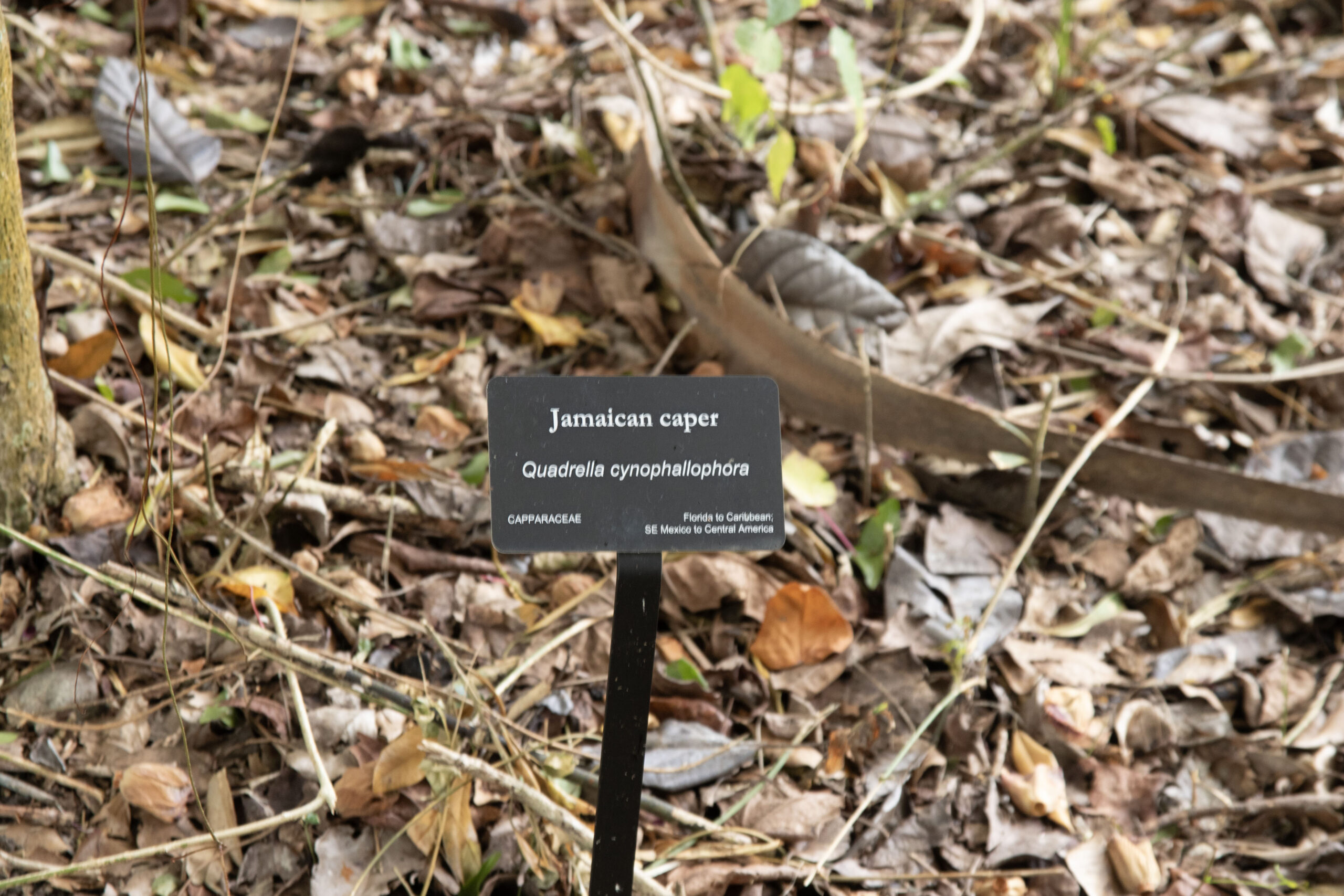
Jamaican Caper
Scientific name: Quadrella jamaicensis (syn. Capparis cynophallophora)
POWO Status: Shrub or Tree
IUCN Red List threat level: Least Concern
The species once widely known as Jamaica Caper under the genus Capparis was reclassified into the genus Quadrella as part of a broader revision of the Capparaceae family.
So:
- Capparis cynophallophora is now generally accepted as a synonym of Quadrella jamaicensis.
- The accepted name in Plants of the World Online (Kew), ITIS, Tropicos, and other major databases is: Quadrella jamaicensis (Jacq.) Hutch.
However, many people — especially in landscaping, gardening, and restoration ecology — still use the name Capparis cynophallophora in informal contexts, and it’s widely recognized.
GPS Location: 17° 42′ 58.94″ N, 64° 49′ 46.05″ W


Medicinal Uses
In traditional and folk medicine practices in the Caribbean, particularly Jamaica and the Cayman Islands, various parts of the Quadrella jamaicensis plant (also known as the Jamaica Caper or Capparis jamaicensis or Morisonia cynophallophora) have several medicinal uses. The roots, bark, leaves, and fruit are used to prepare remedies for a range of ailments.
Traditional Medicinal Uses:
- General Ailments: A tea made from the roots, bark, leaves, and fruit is a traditional remedy for a variety of internal and external ailments.
- Venereal Disease: The plant parts are used traditionally as a remedy for venereal disease.
- Skin and Topical Issues:
- In Jamaica, the crushed bark and leaves have been used to treat mange in dogs.
- The bark and leaves, when crushed and thrown into water, were also noted for their narcotic/poisonous properties that would stun fish, causing them to float to the surface.
- Musculoskeletal Ailments: The plant is mentioned as a bushy shrub used as a hot poultice for strains or dislocations in some traditions.
It is important to note that the scientific evidence for these traditional uses is limited, and many uses lack sufficient evidence to rate effectiveness. As with any traditional remedy, caution is advised.
Observations:
Phenological Markers – Quadrella jamaicensis (Jamaica Caper)
(syn. Capparis cynophallophora)
Family: Capparaceae
Common Names: Jamaica Caper, Black-Willow Caper, Caper Tree
Local Names: Sometimes referred to simply as “Caper Bush” in Caribbean areas
🌳 Description:
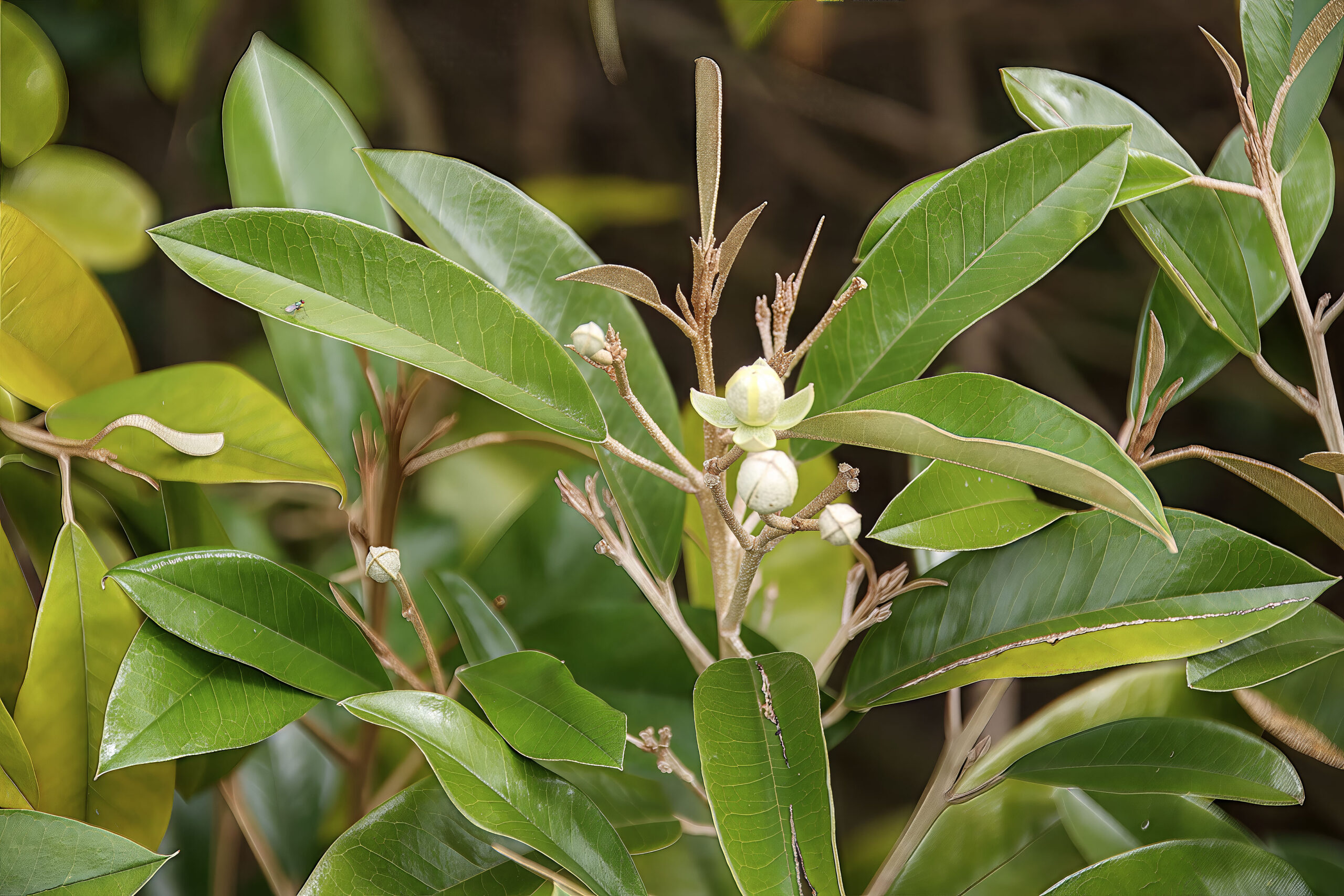
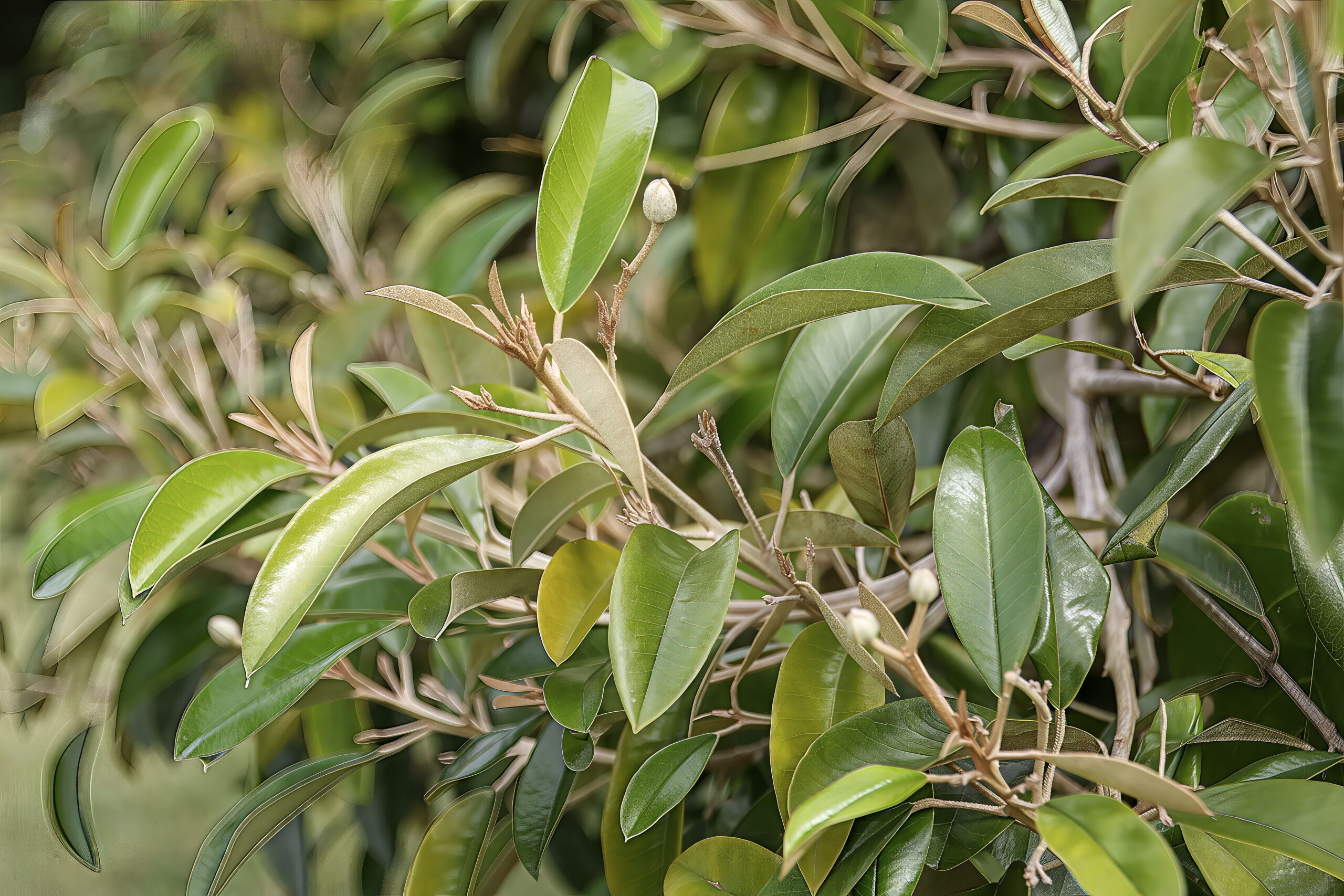
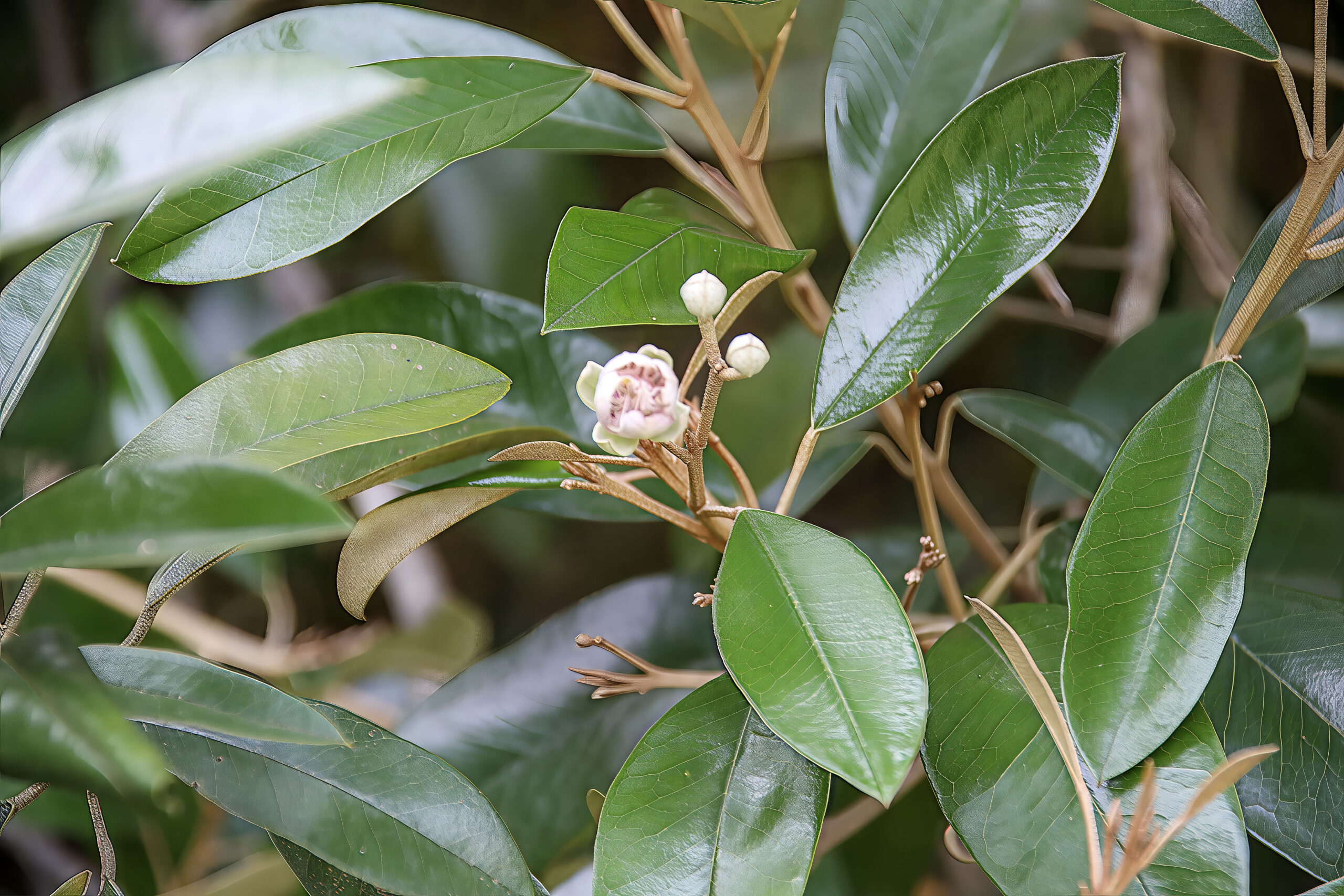
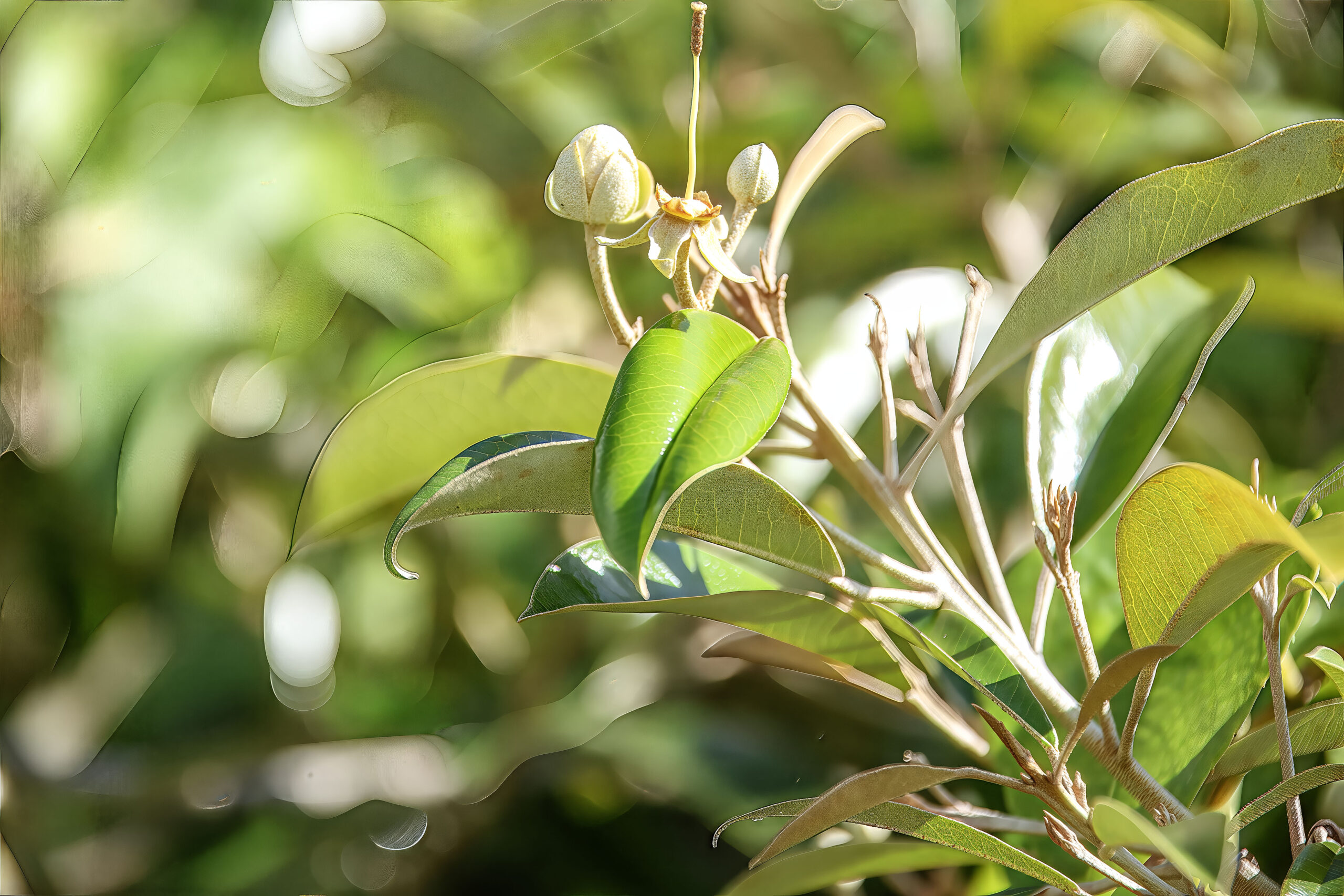
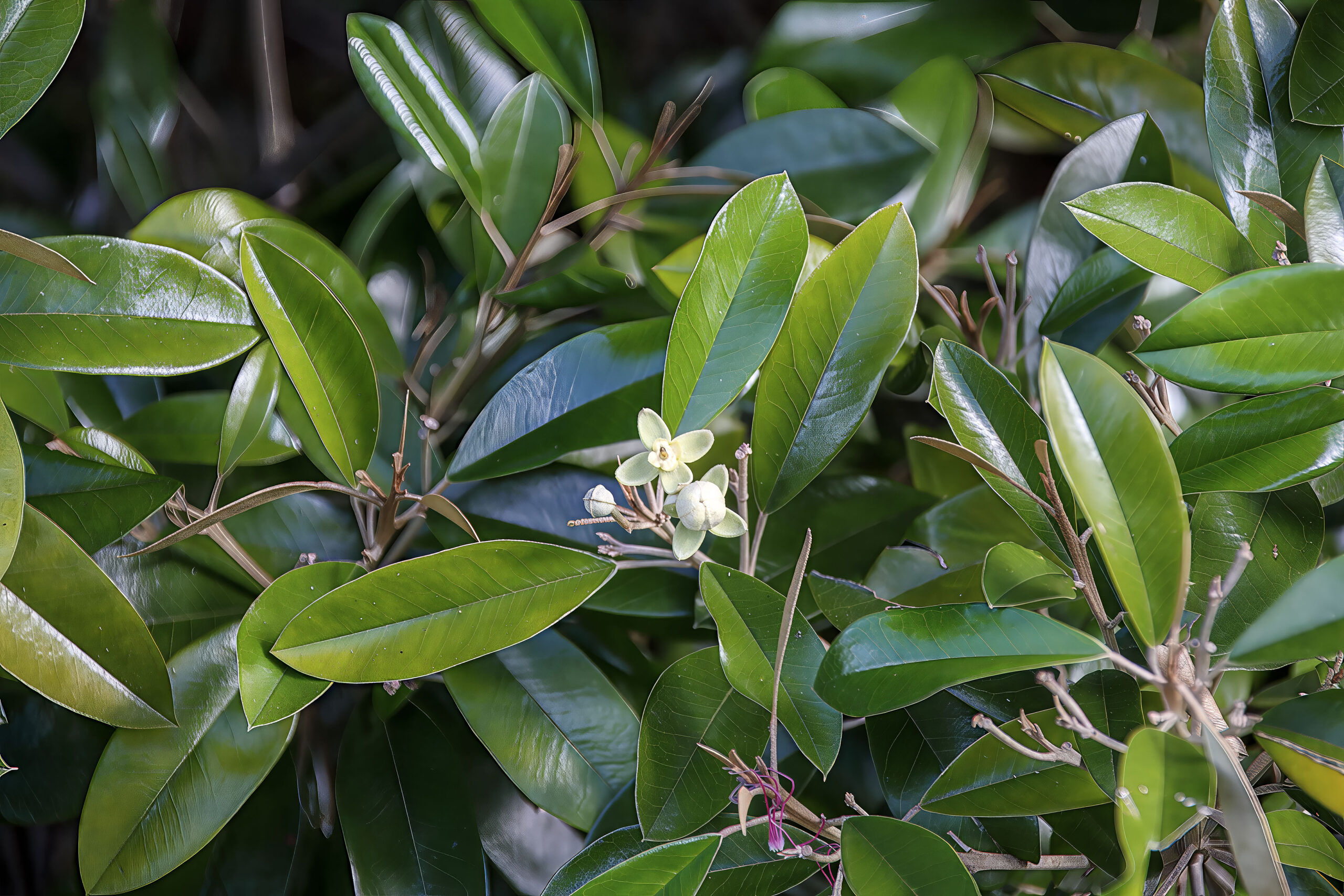
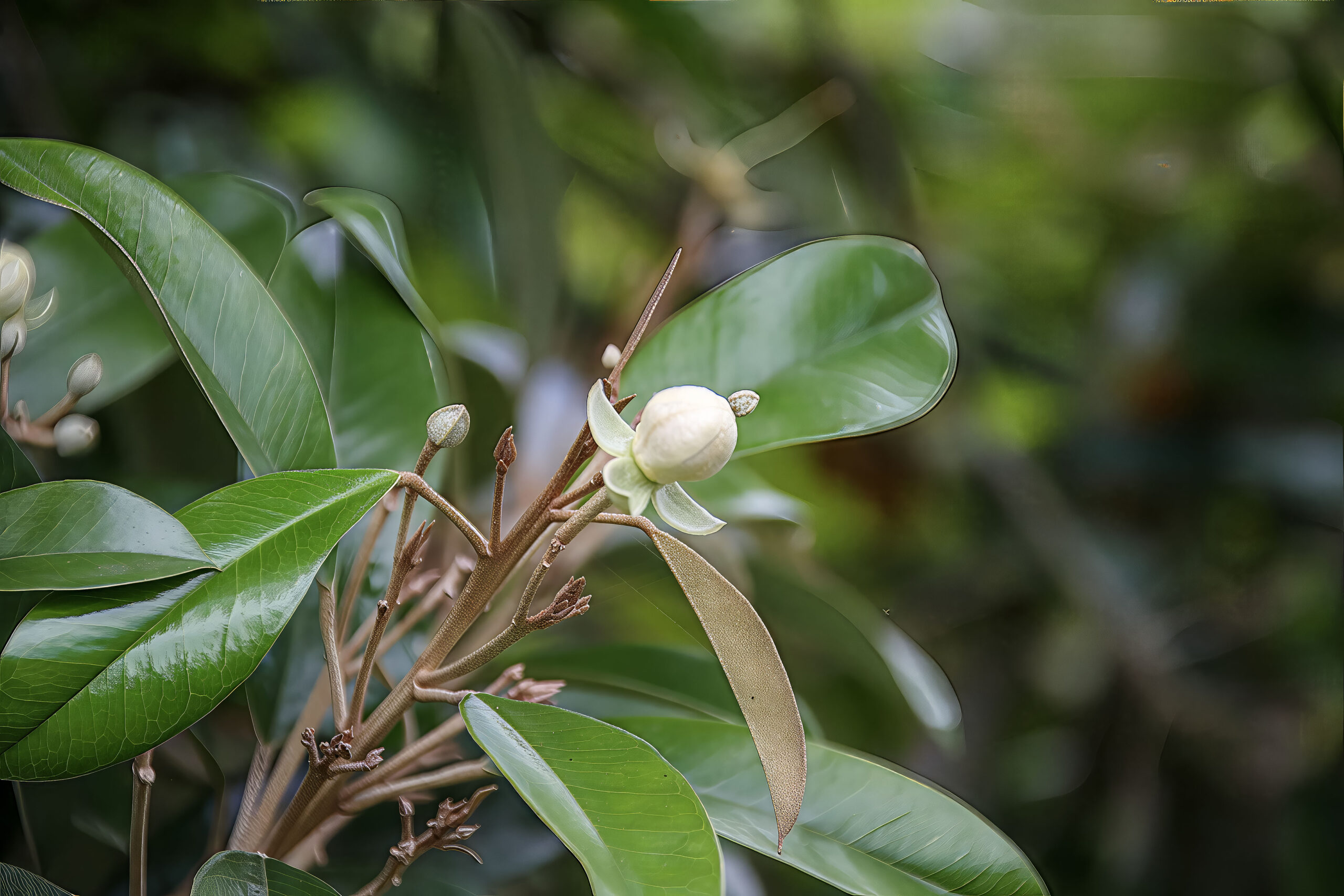
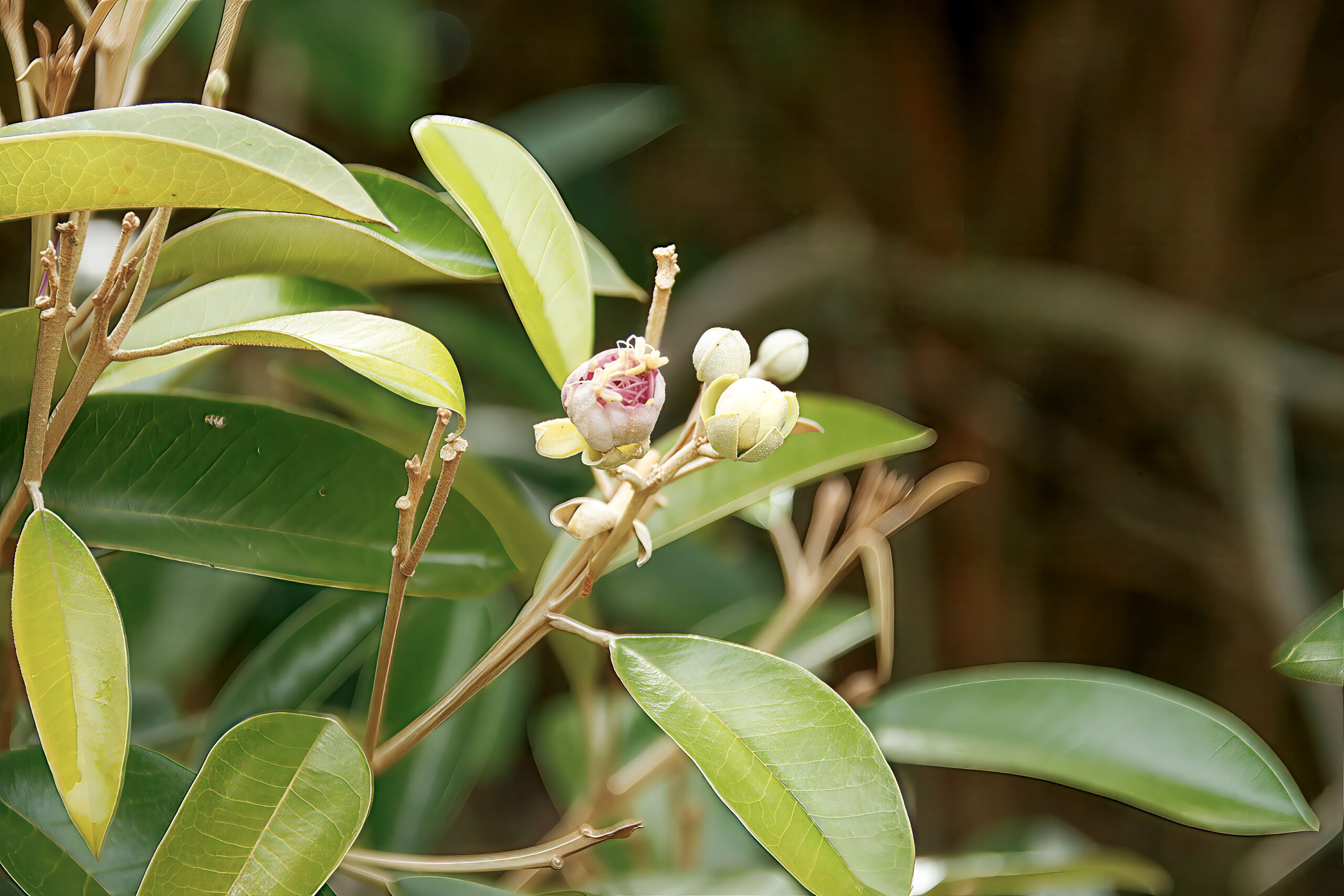
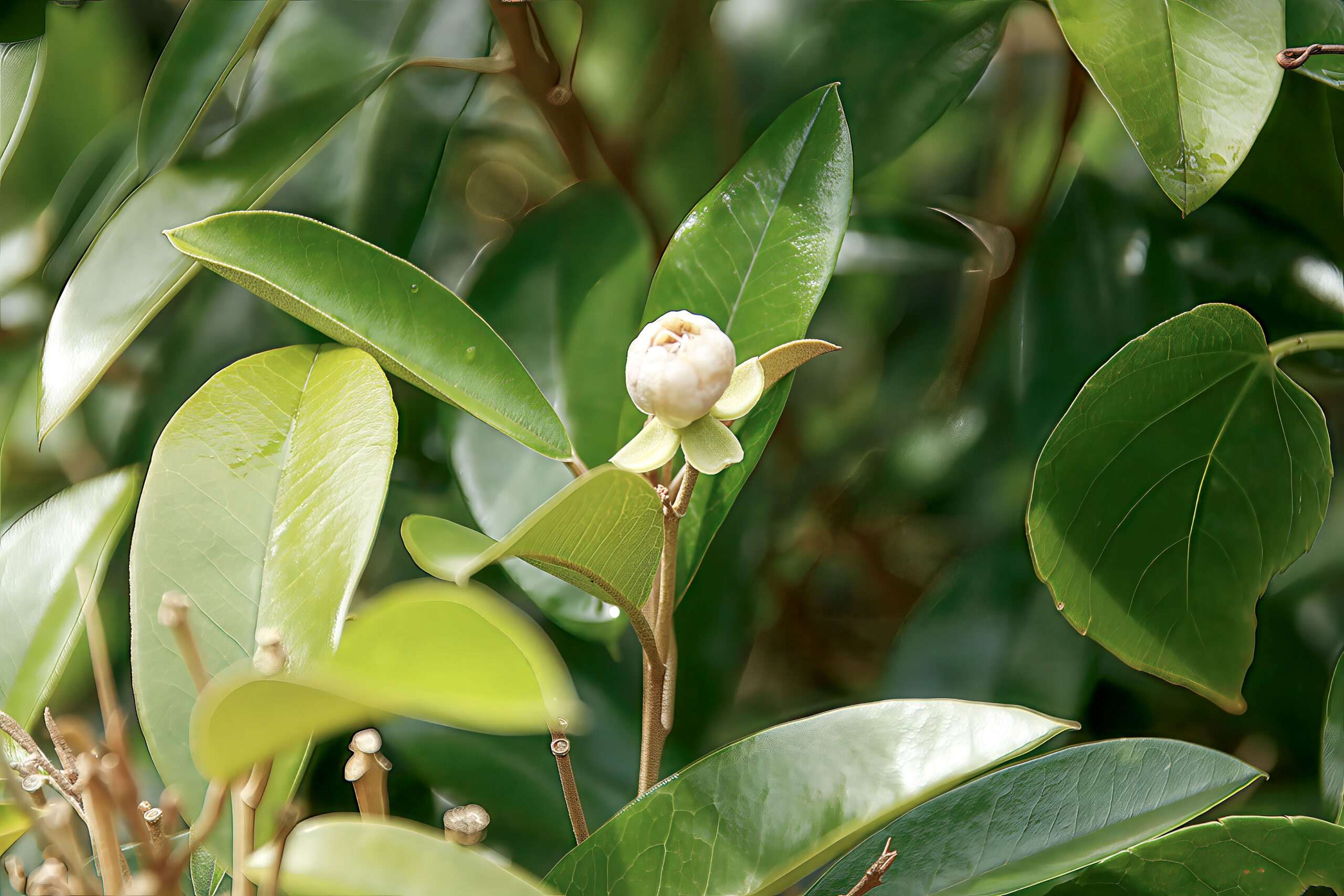
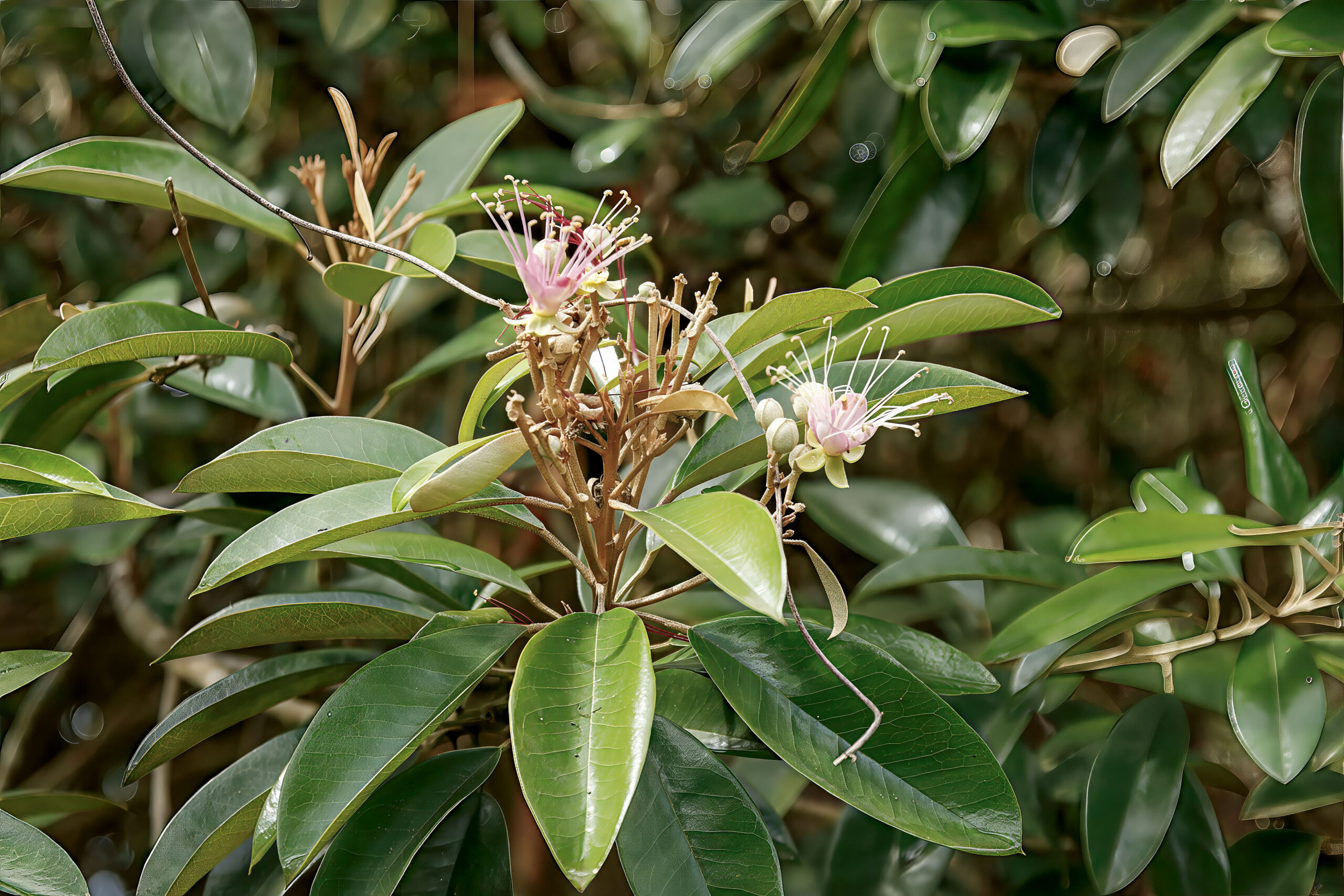
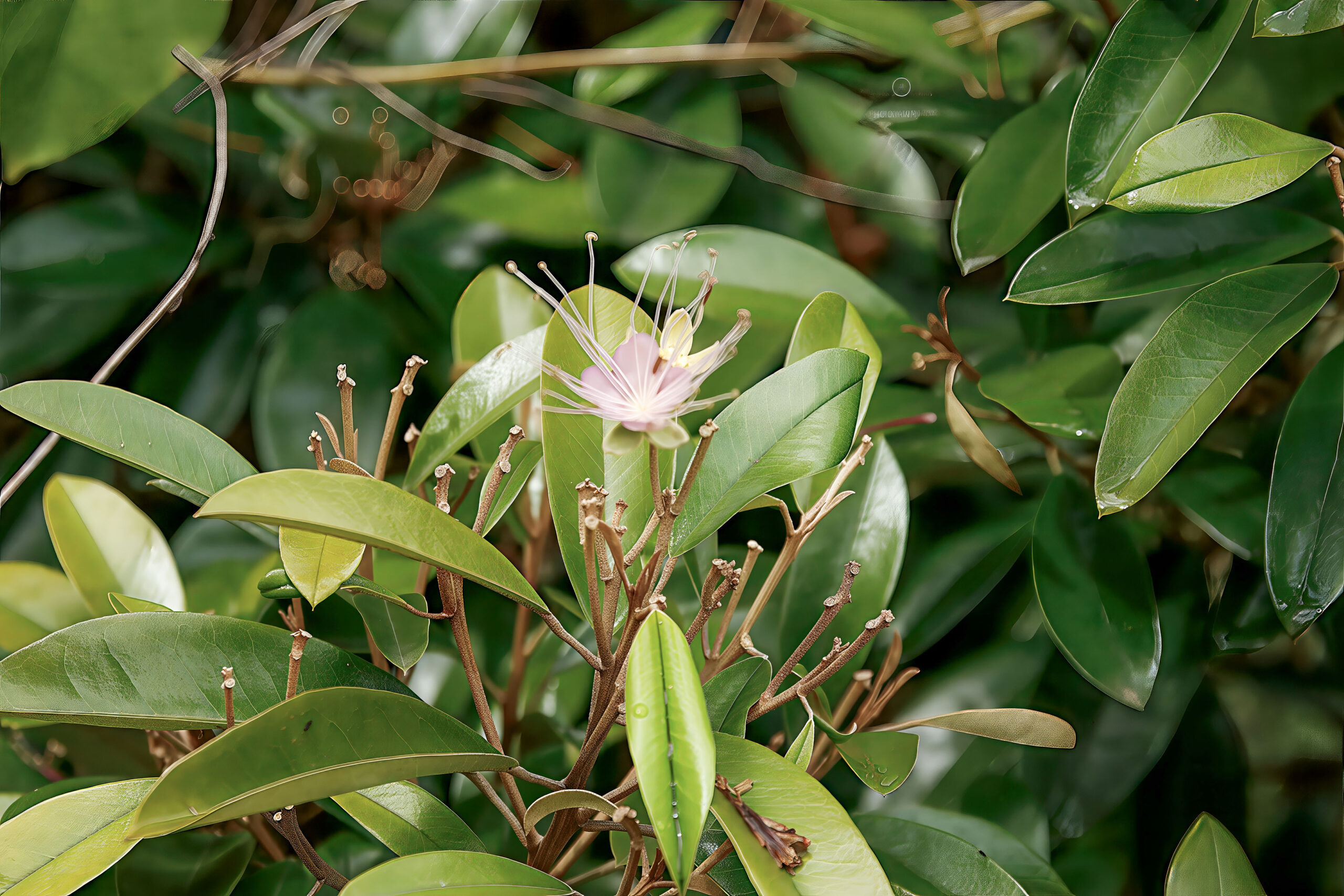
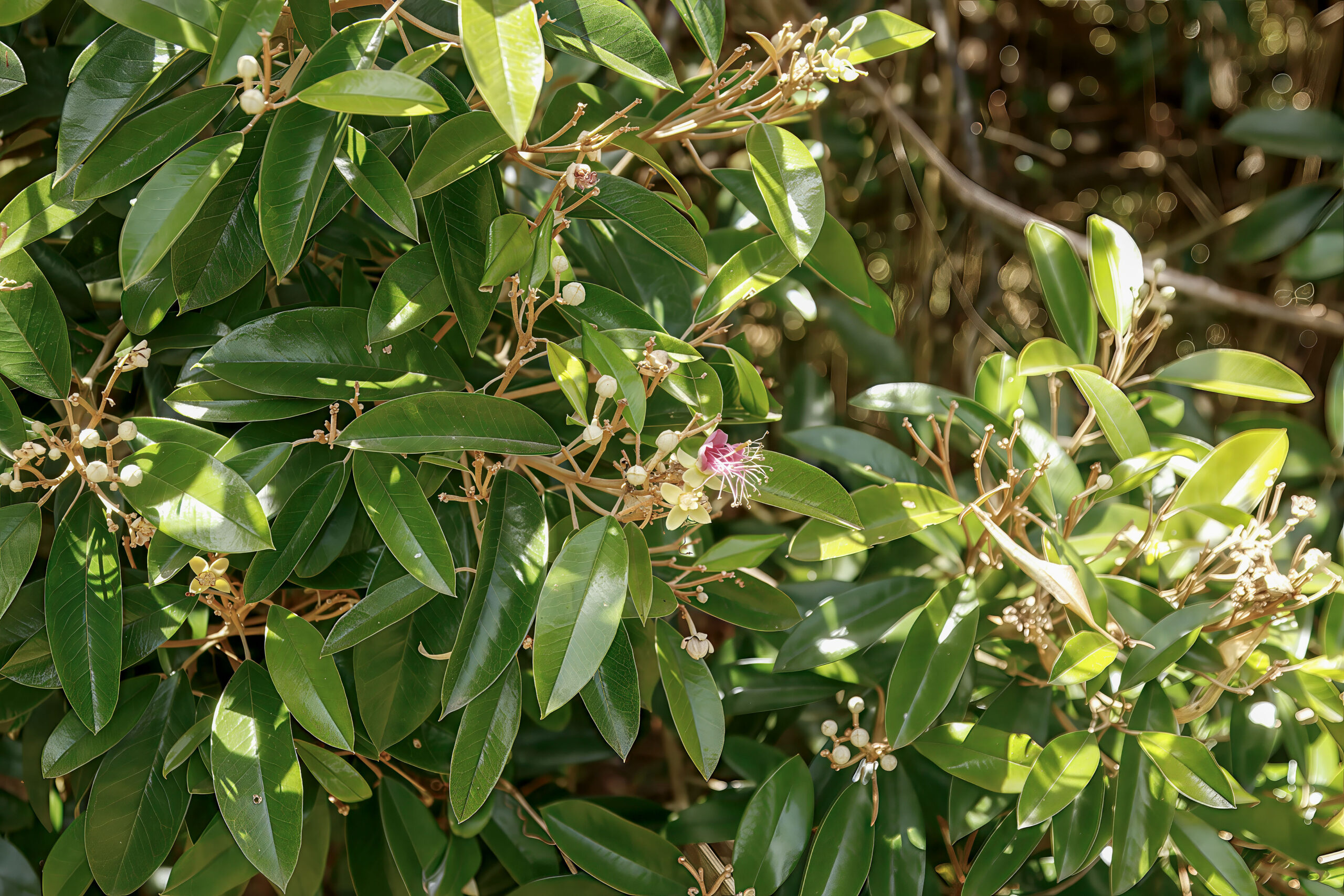
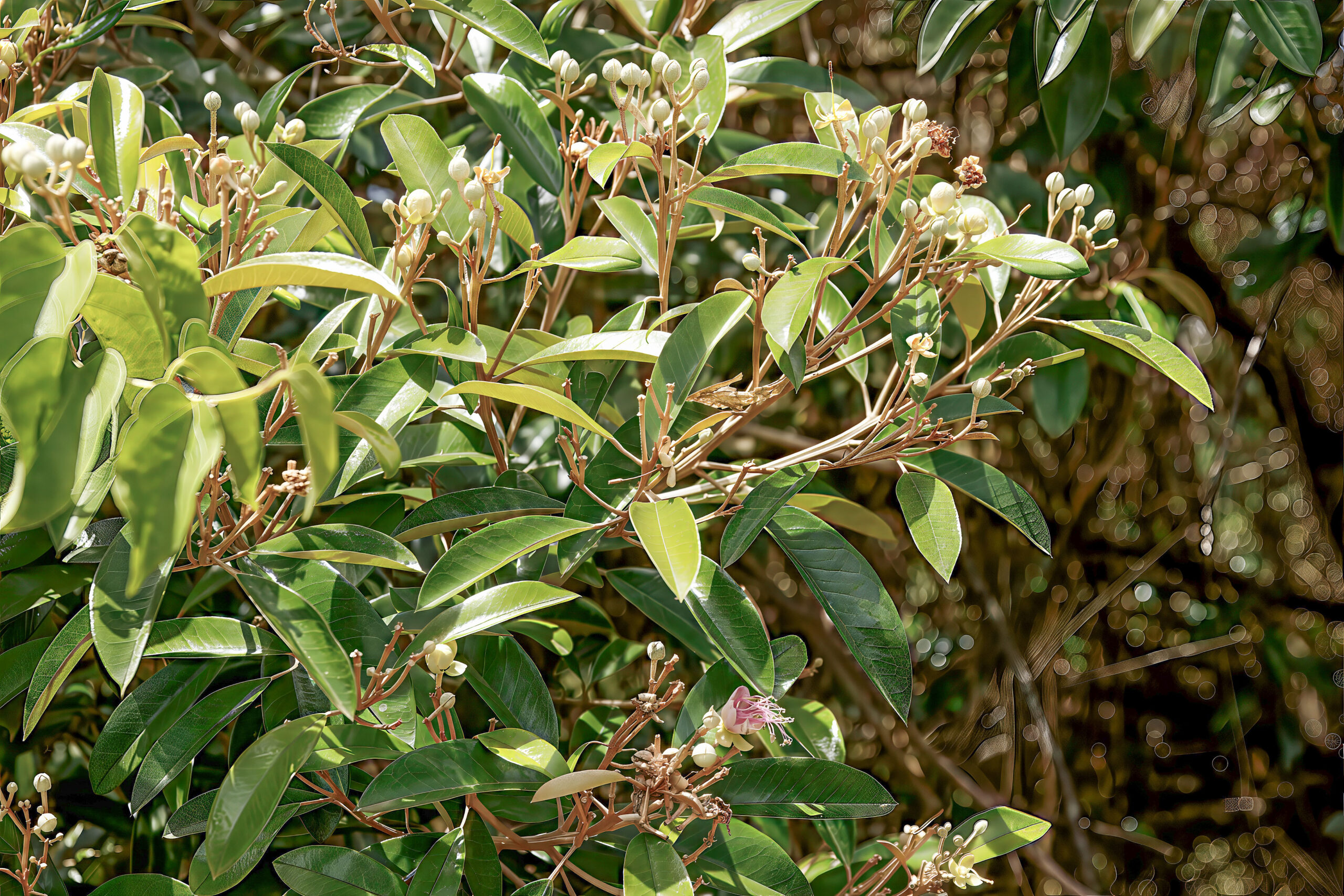
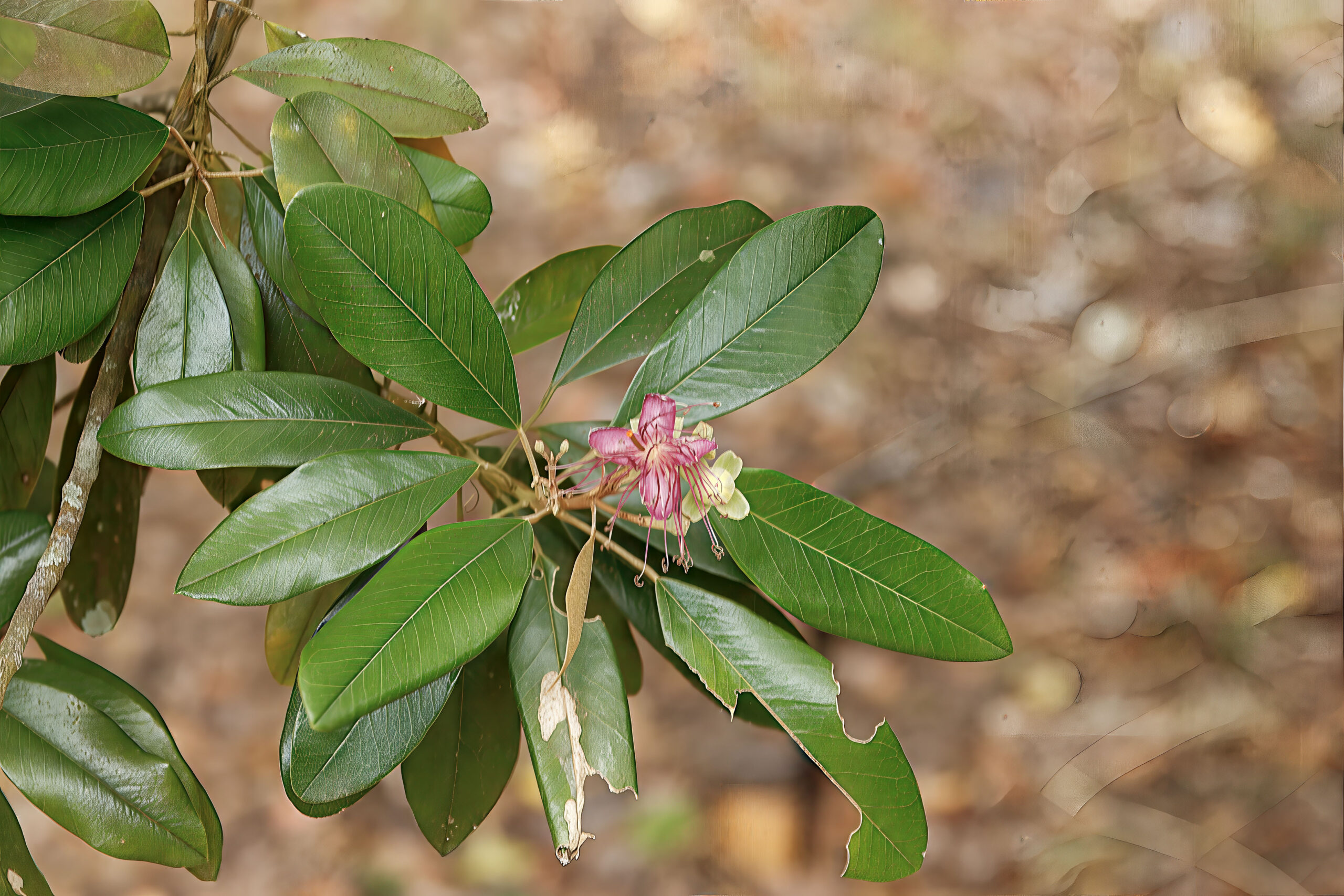
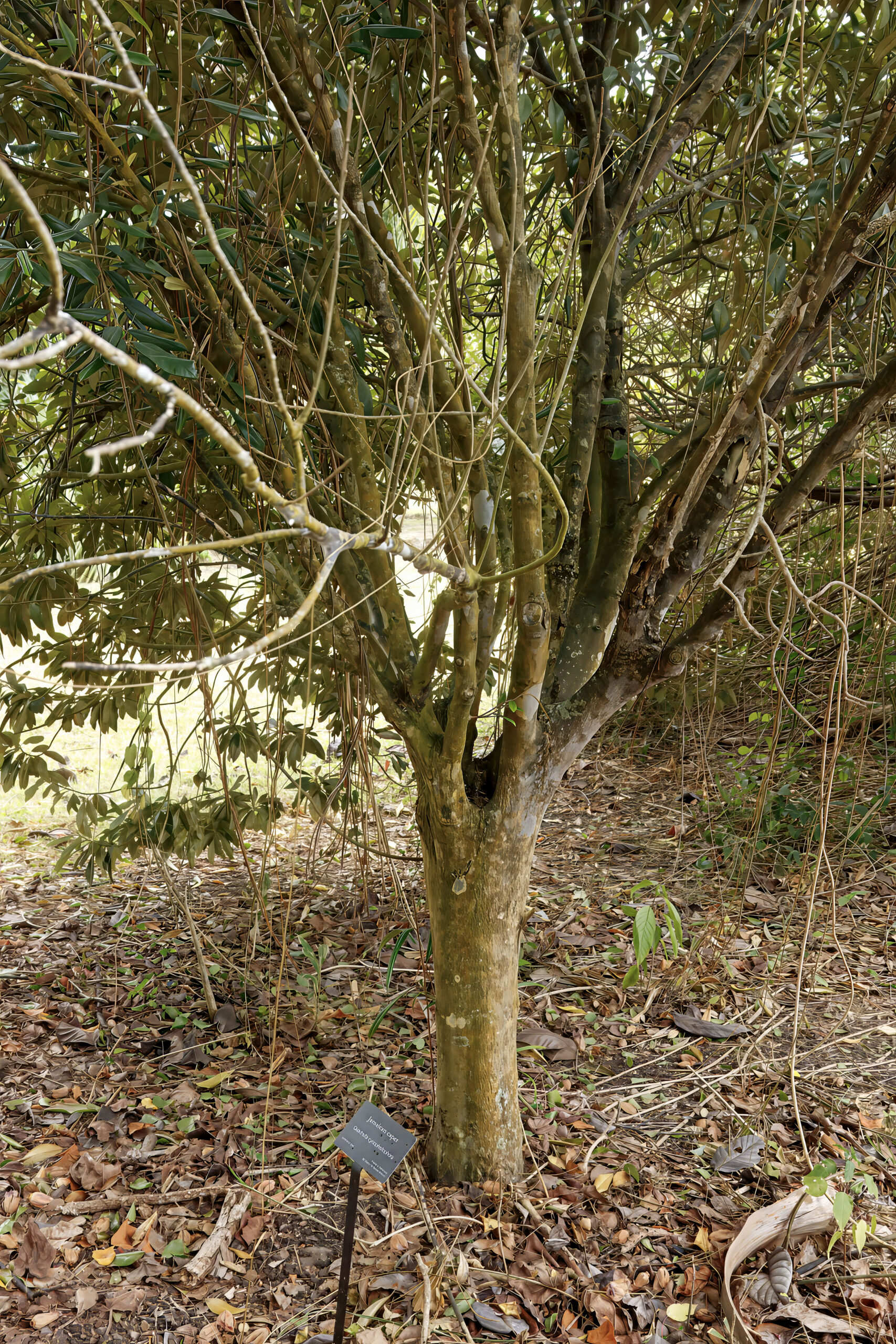
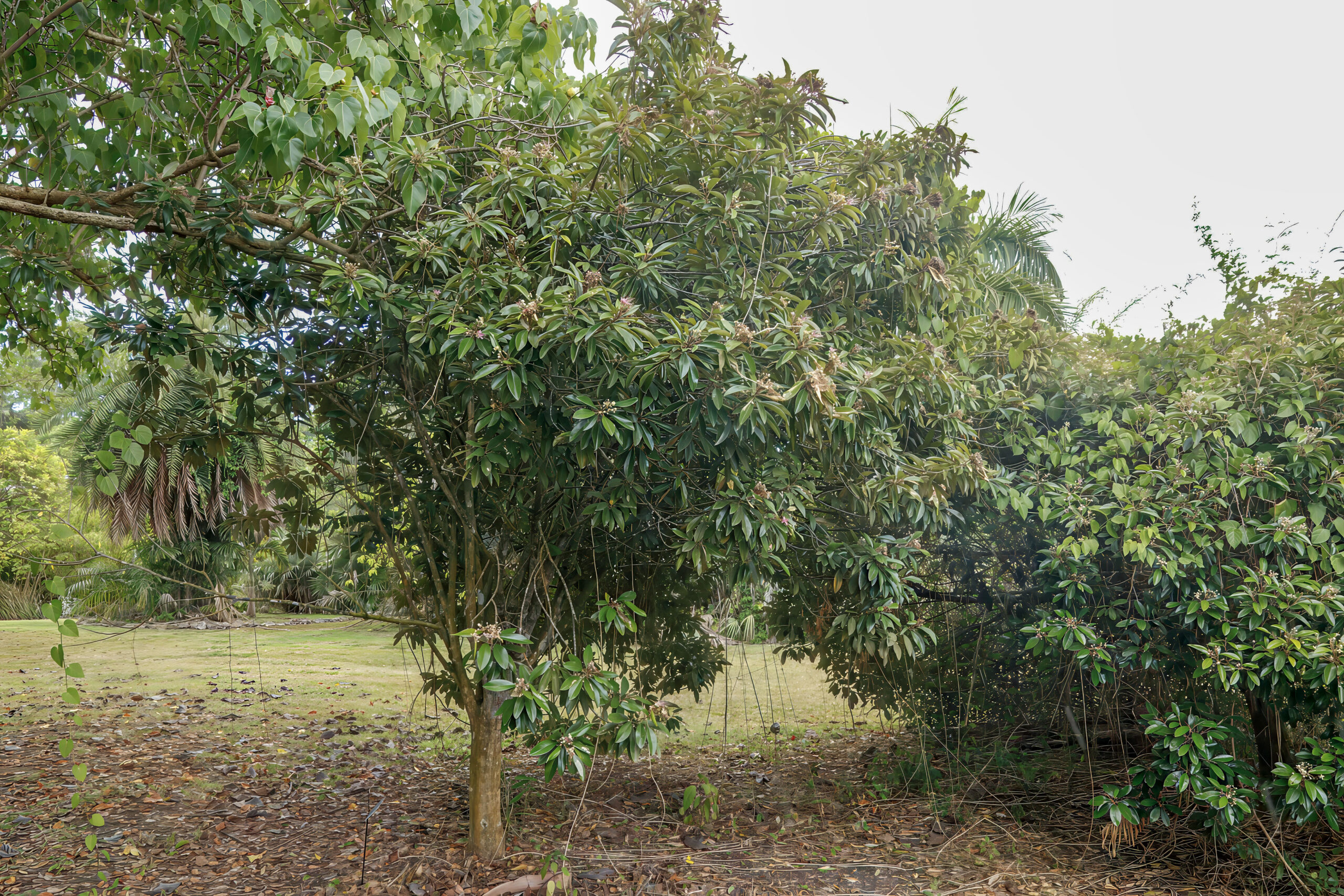
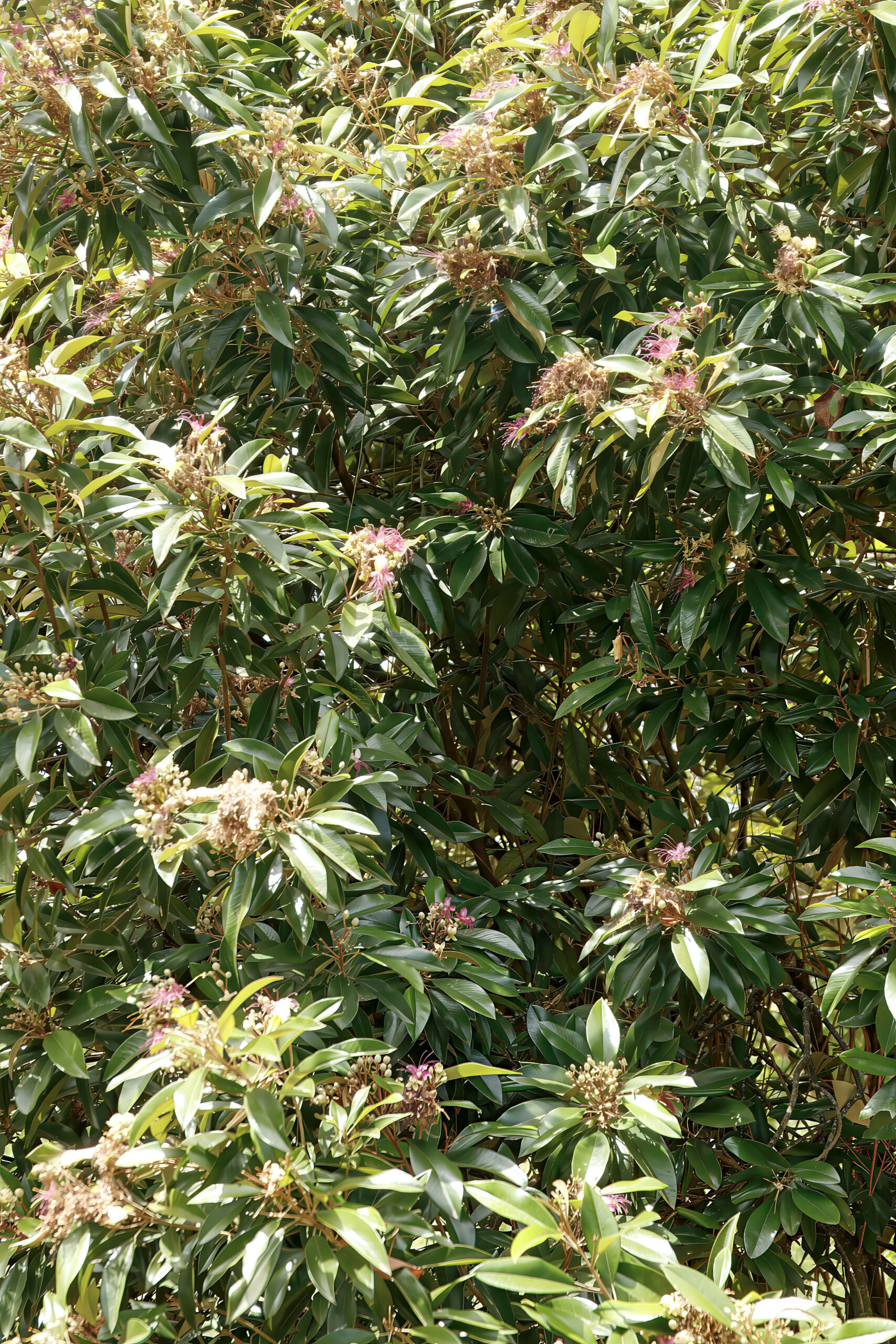
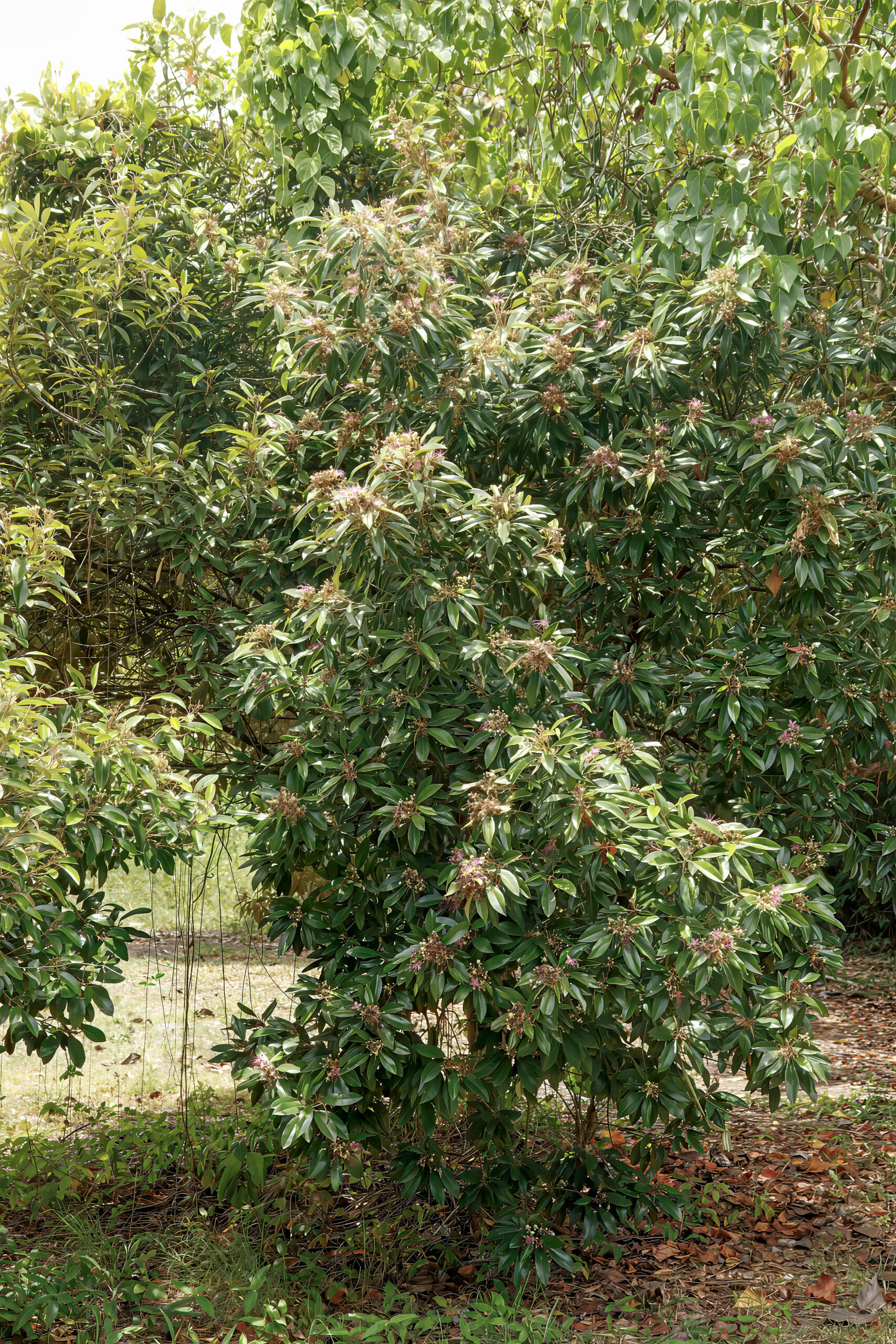
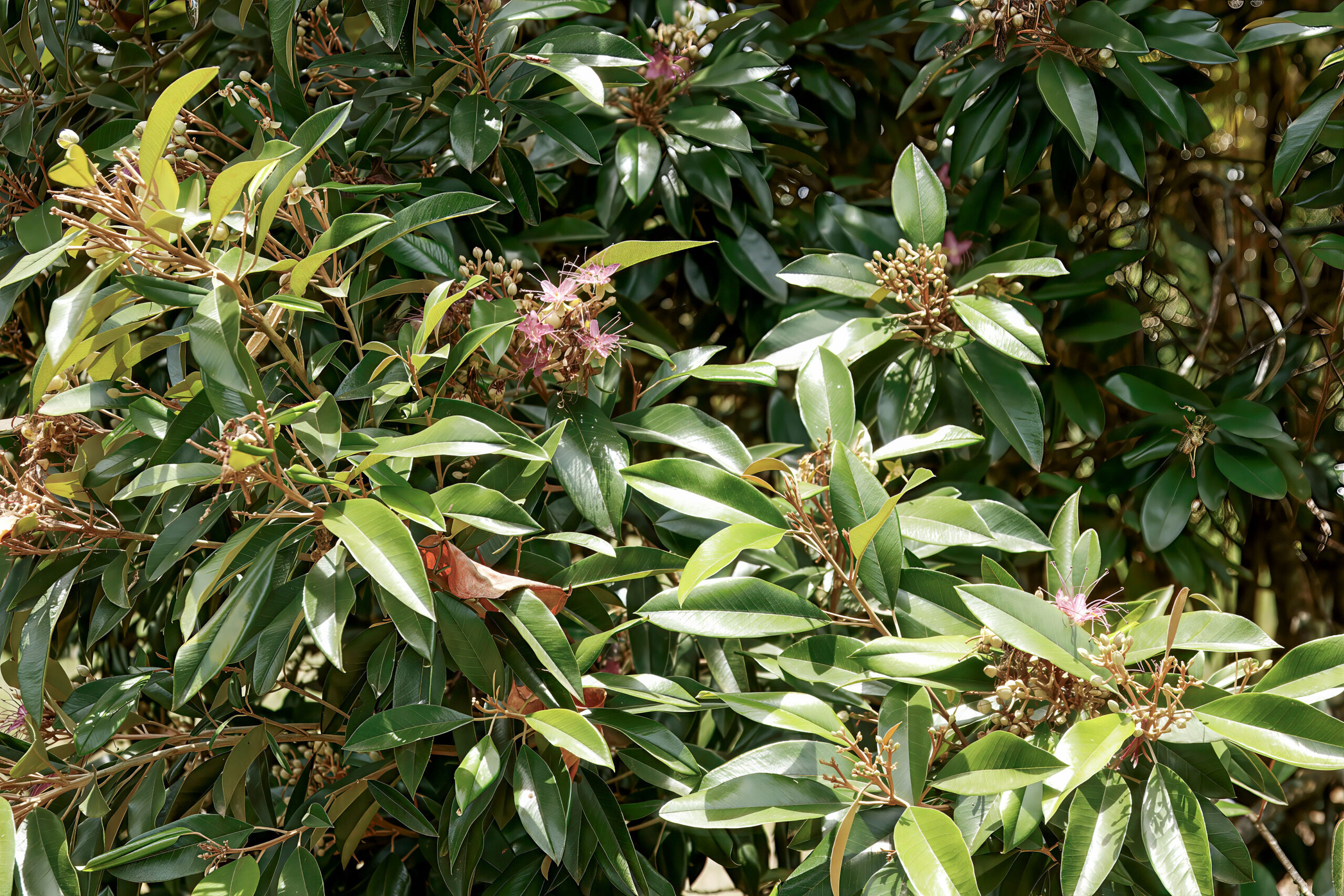
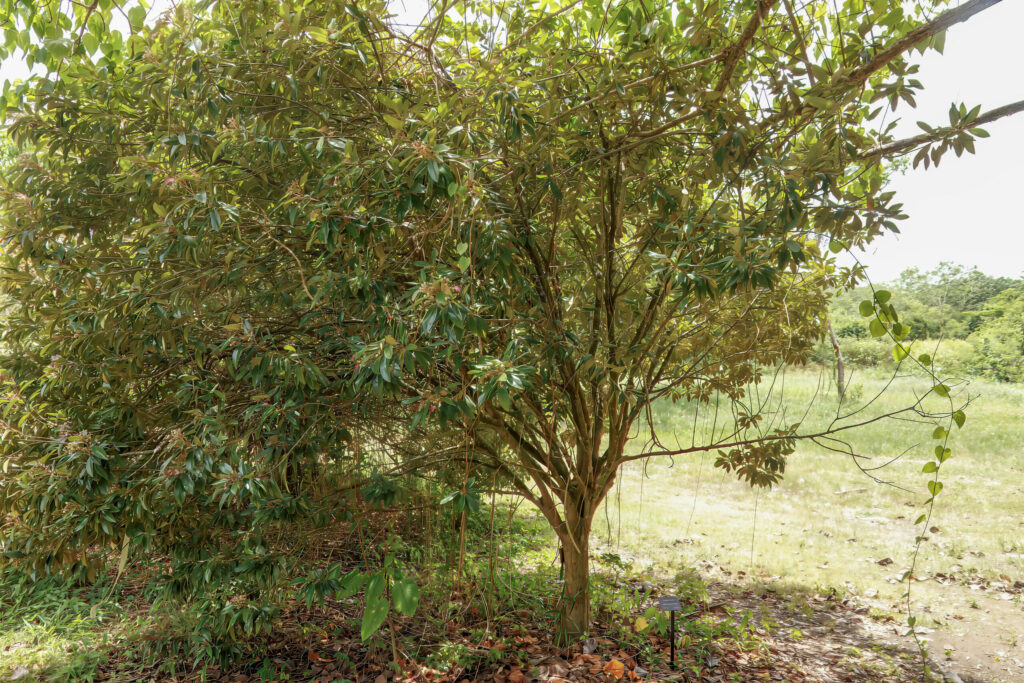
A small, evergreen native tree or large shrub, usually 3–6 meters tall, sometimes taller. It has a naturally dense, symmetrical crown and is often used ornamentally due to its beautiful foliage and striking flowers. Leaves are thick, glossy green on top and coppery or rusty-brown beneath, giving a two-toned appearance when stirred by the wind.
🌿 Leafing:
- Leaf Type: Simple, alternate, oblong to elliptic, entire margins
- Phenology Notes: Evergreen, but with pronounced cycles of new leaf flush
- New Leaves: Emerge soft and copper-colored, contrasting dramatically with mature dark green
- Leaf Shedding: Minimal; older leaves replaced as new flush appears
🌸 Flowering:
- Blooming Season: Primarily late spring to early summer (April–July), but can occur sporadically year-round
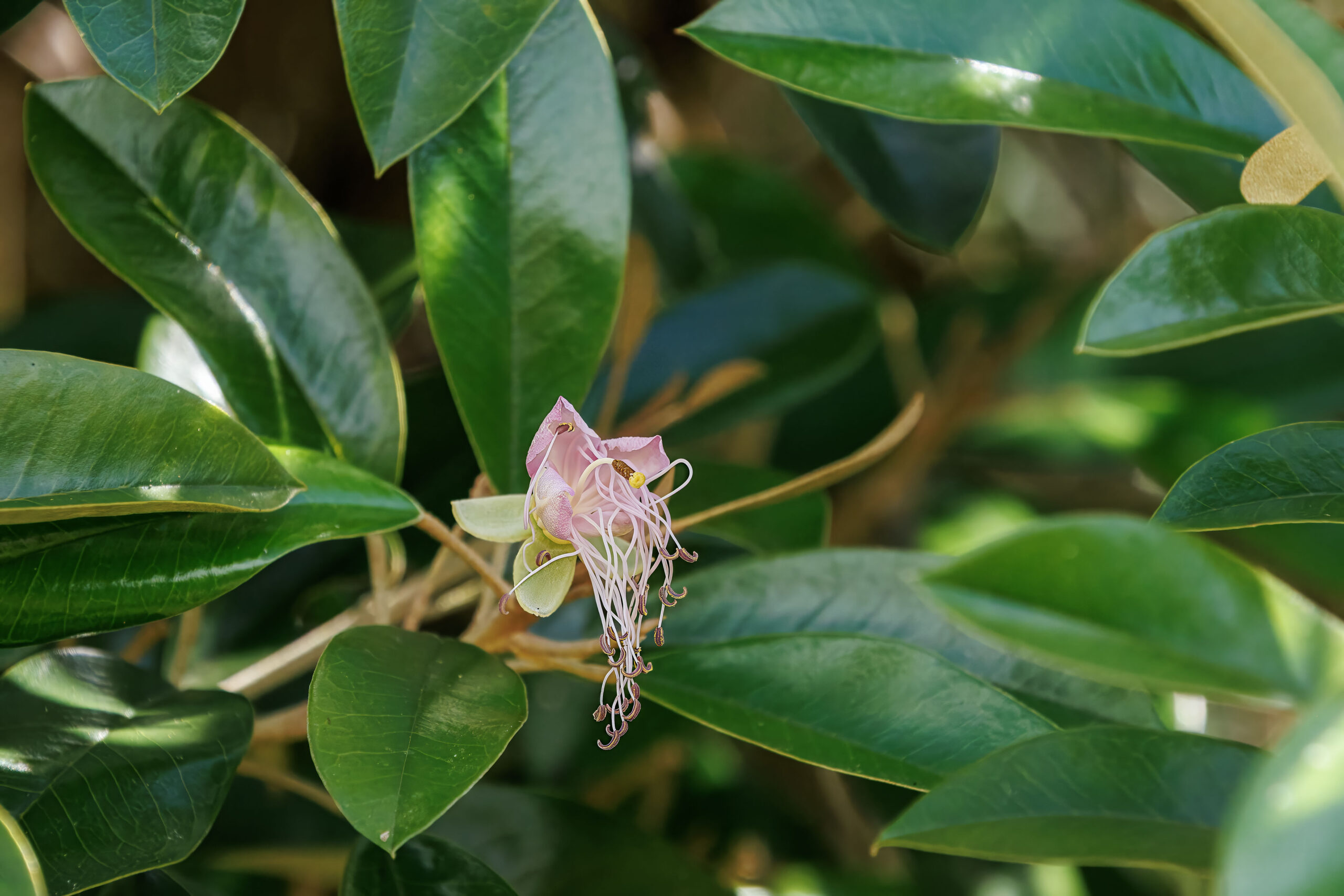
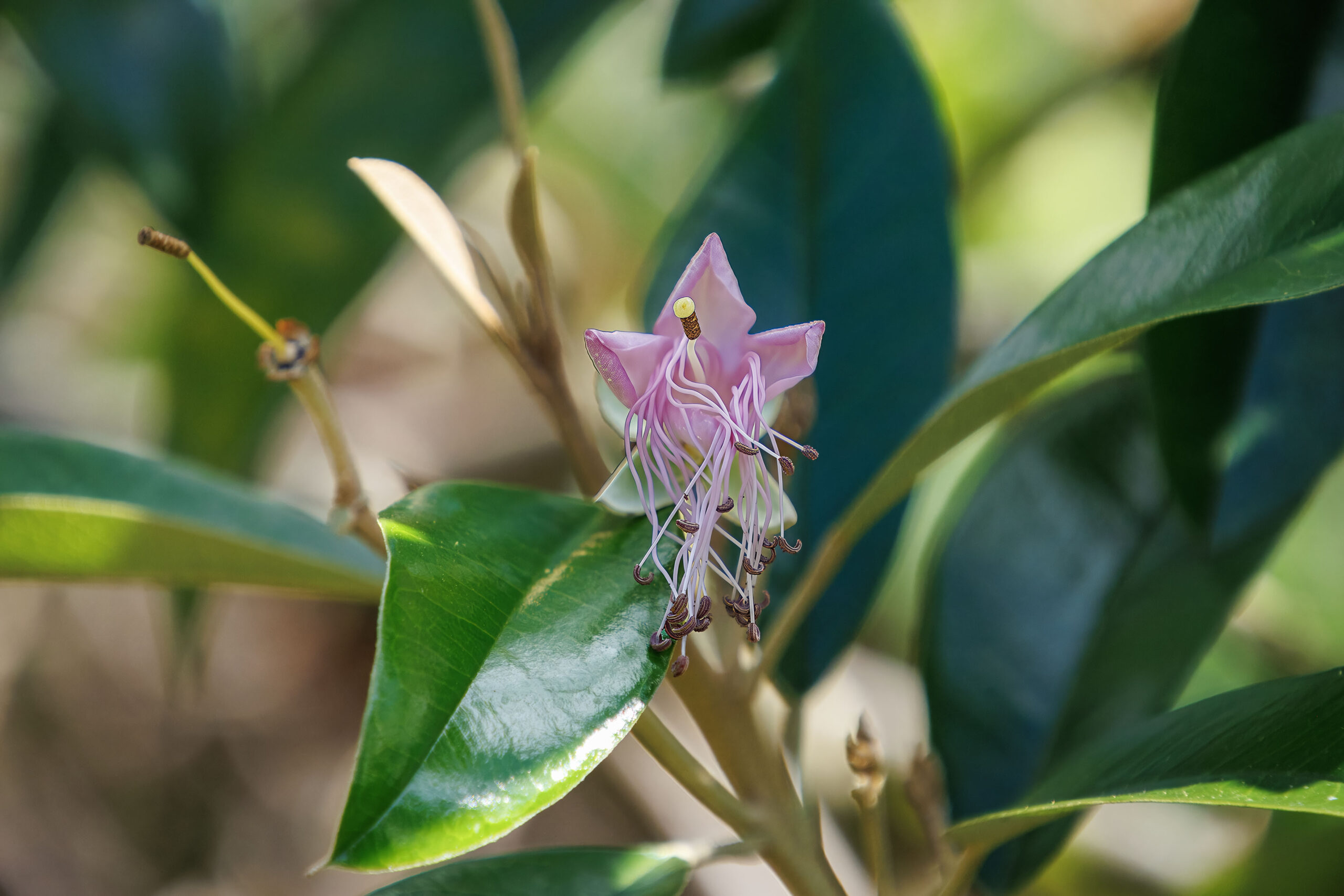
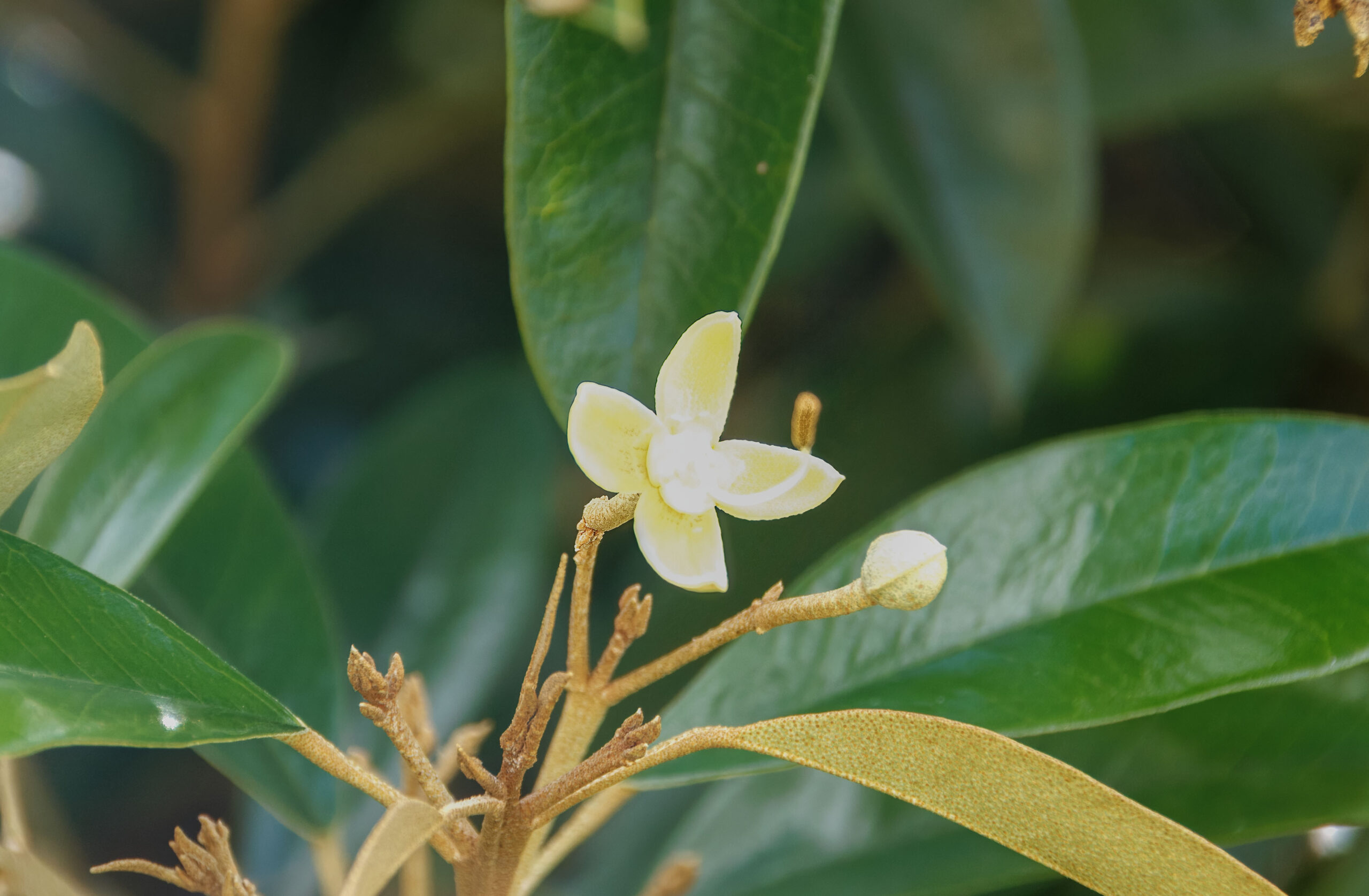
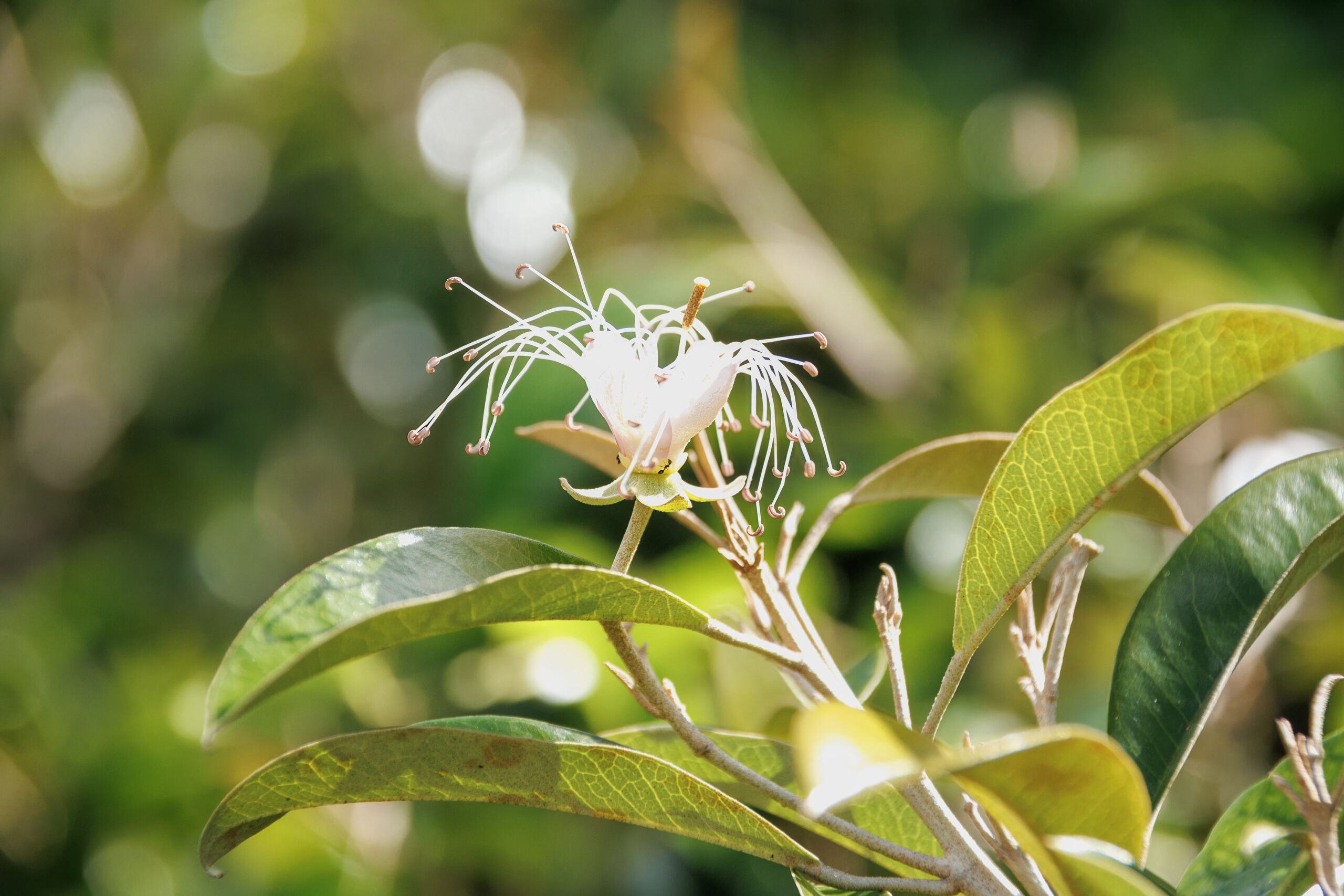
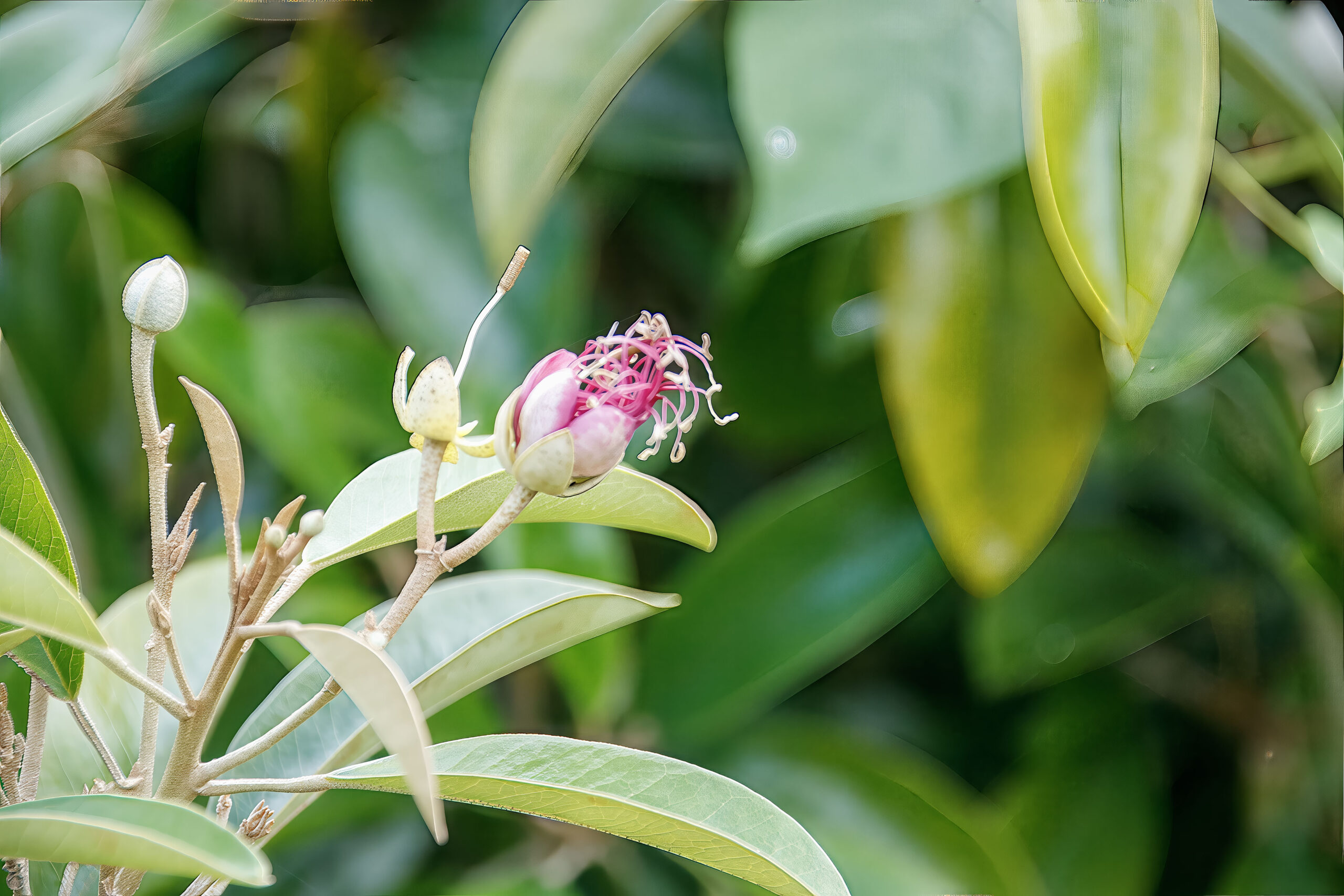
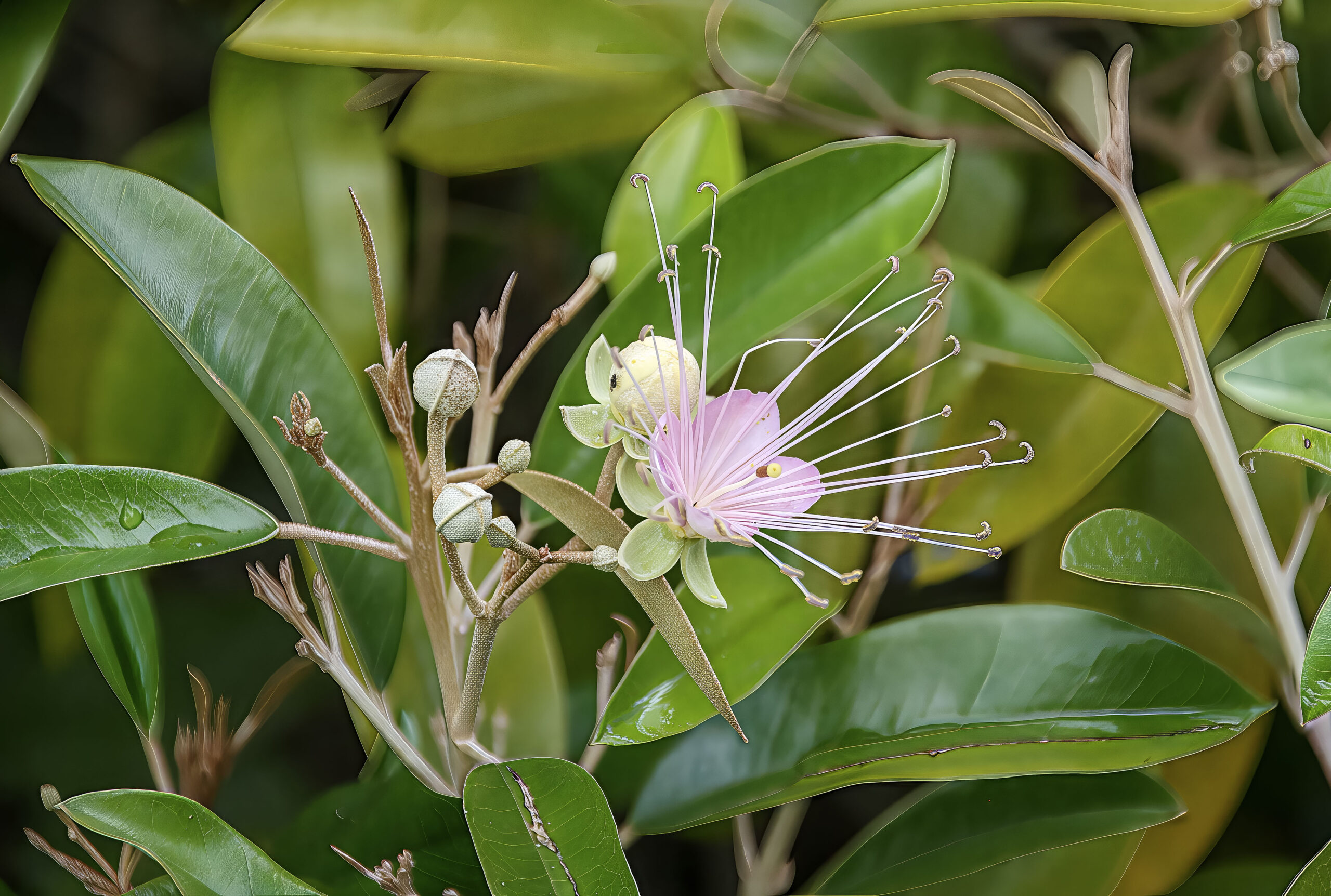
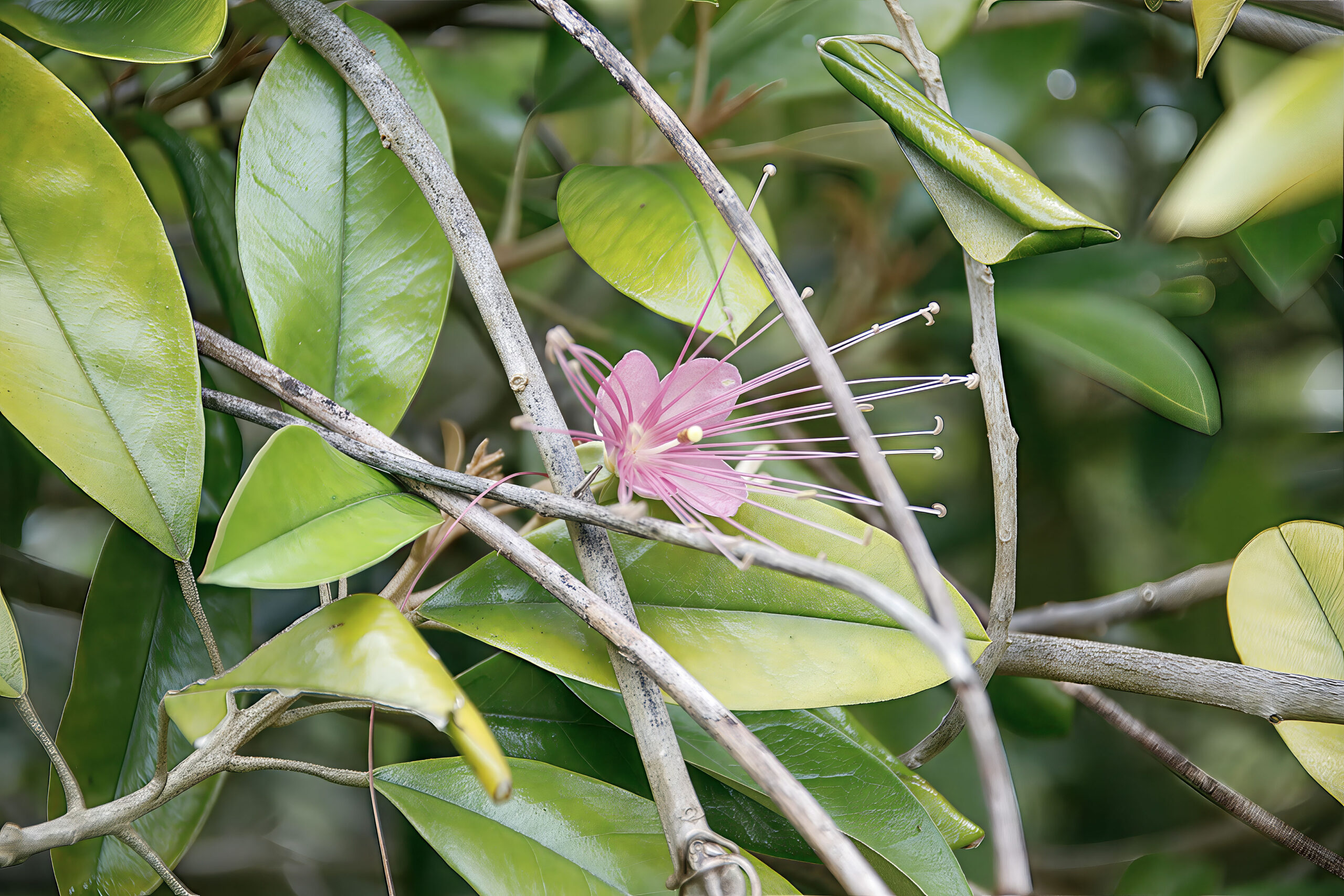
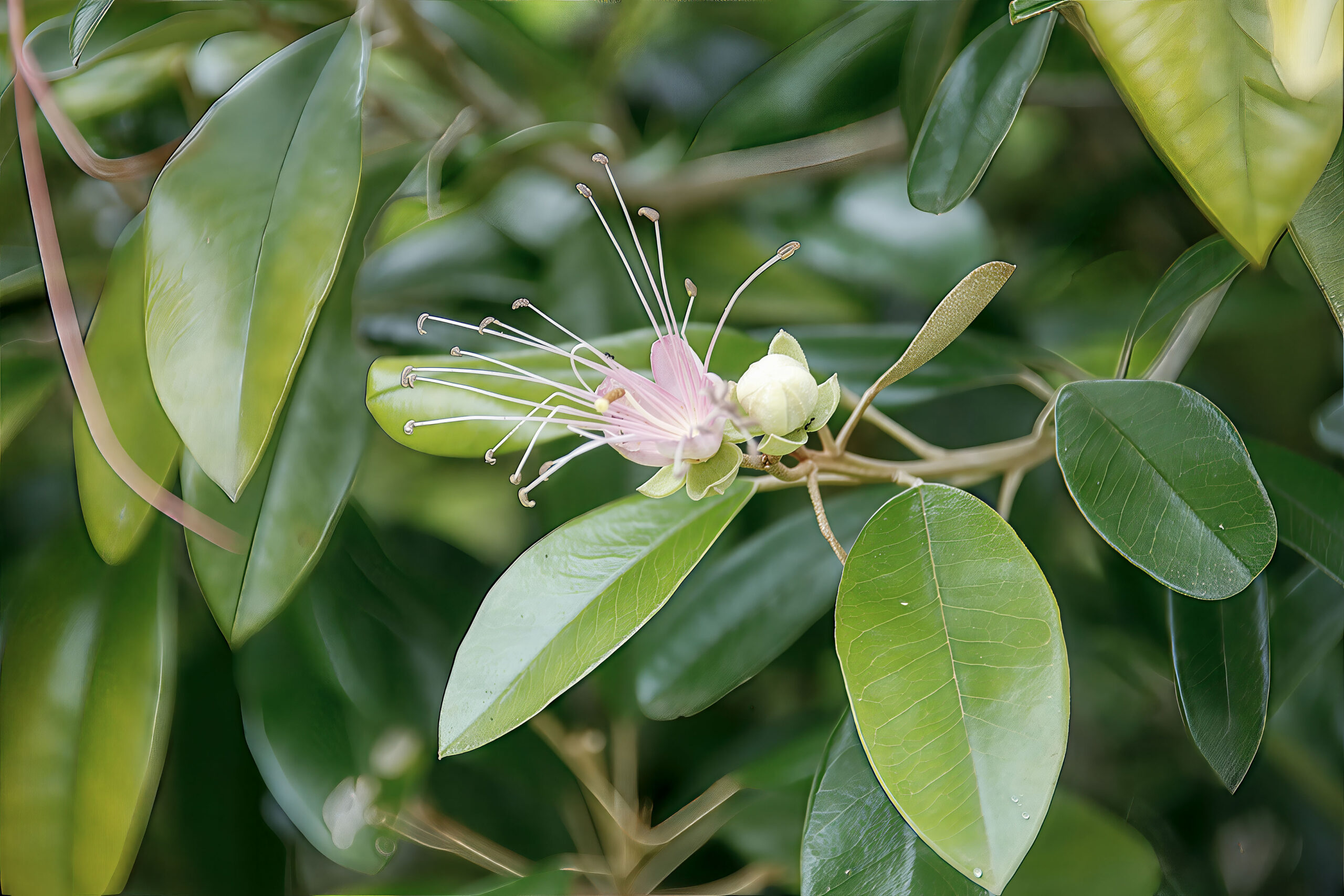
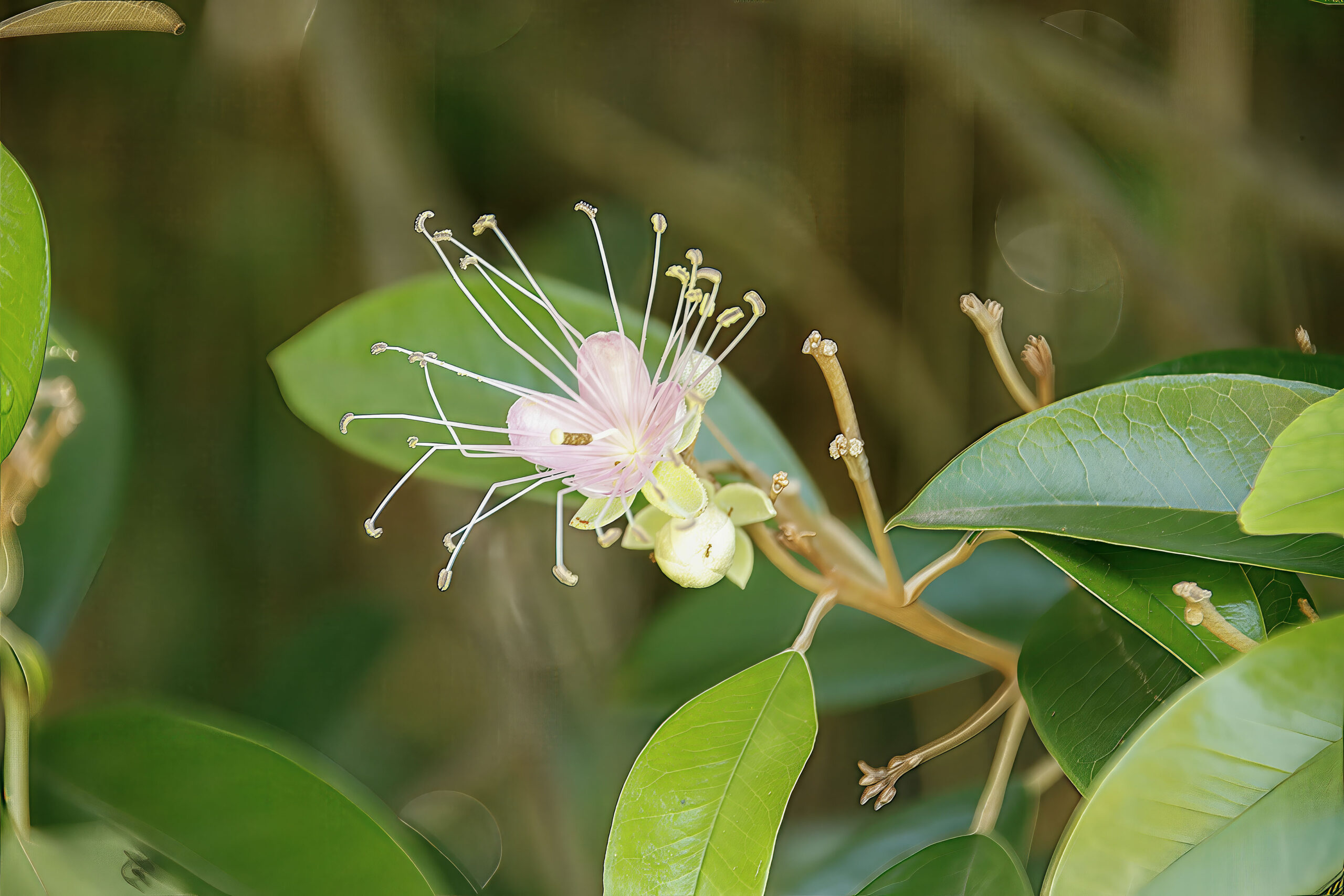
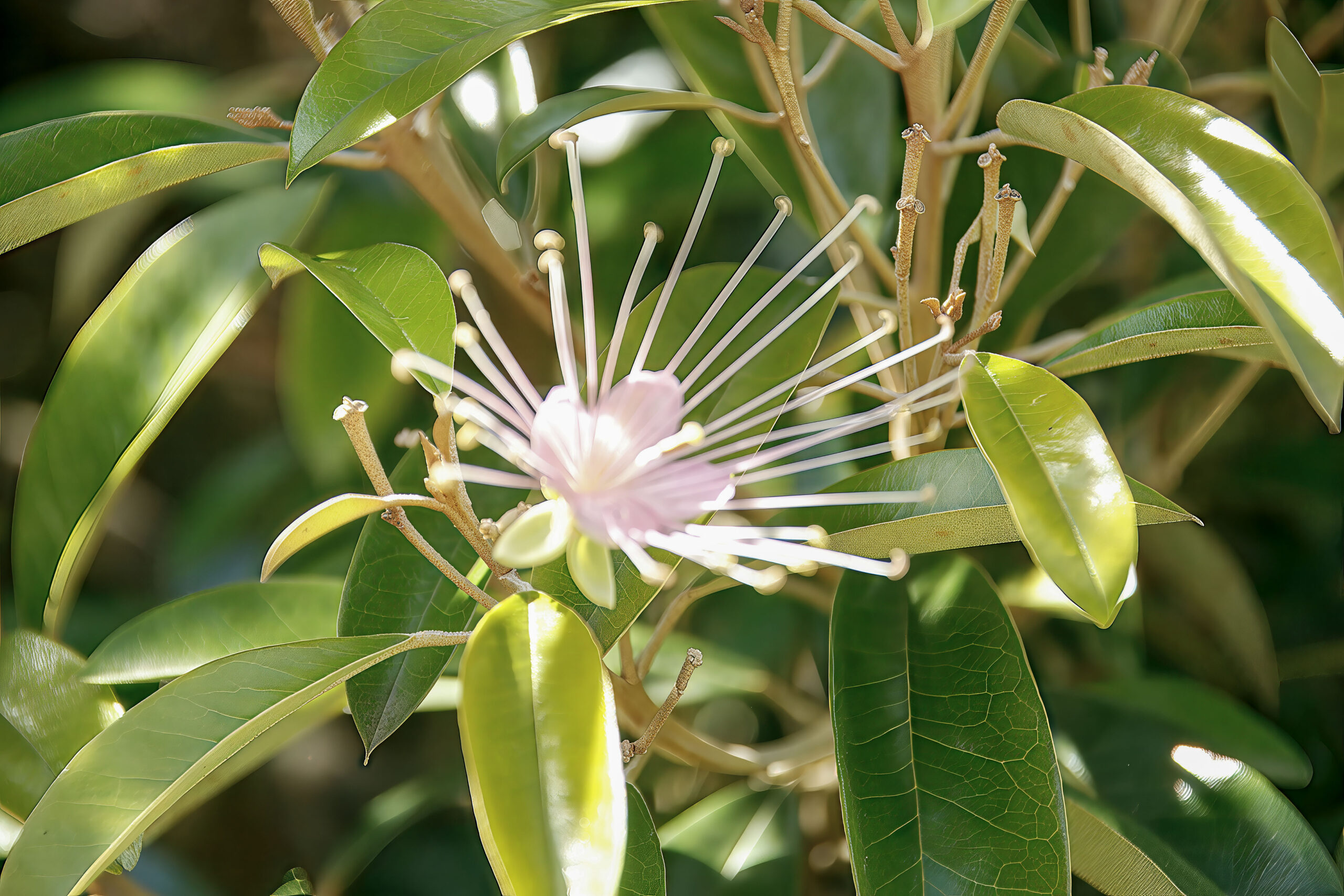
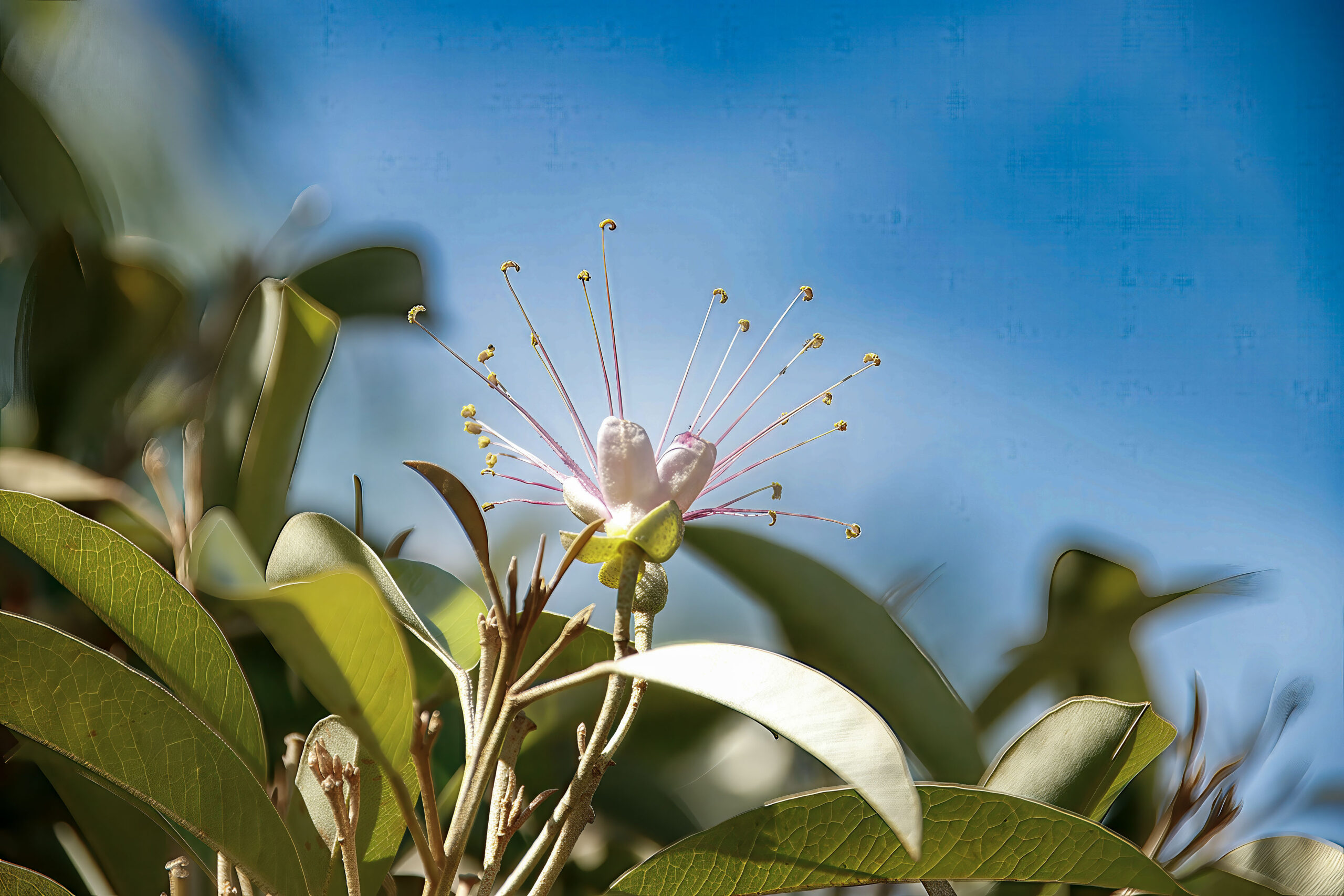
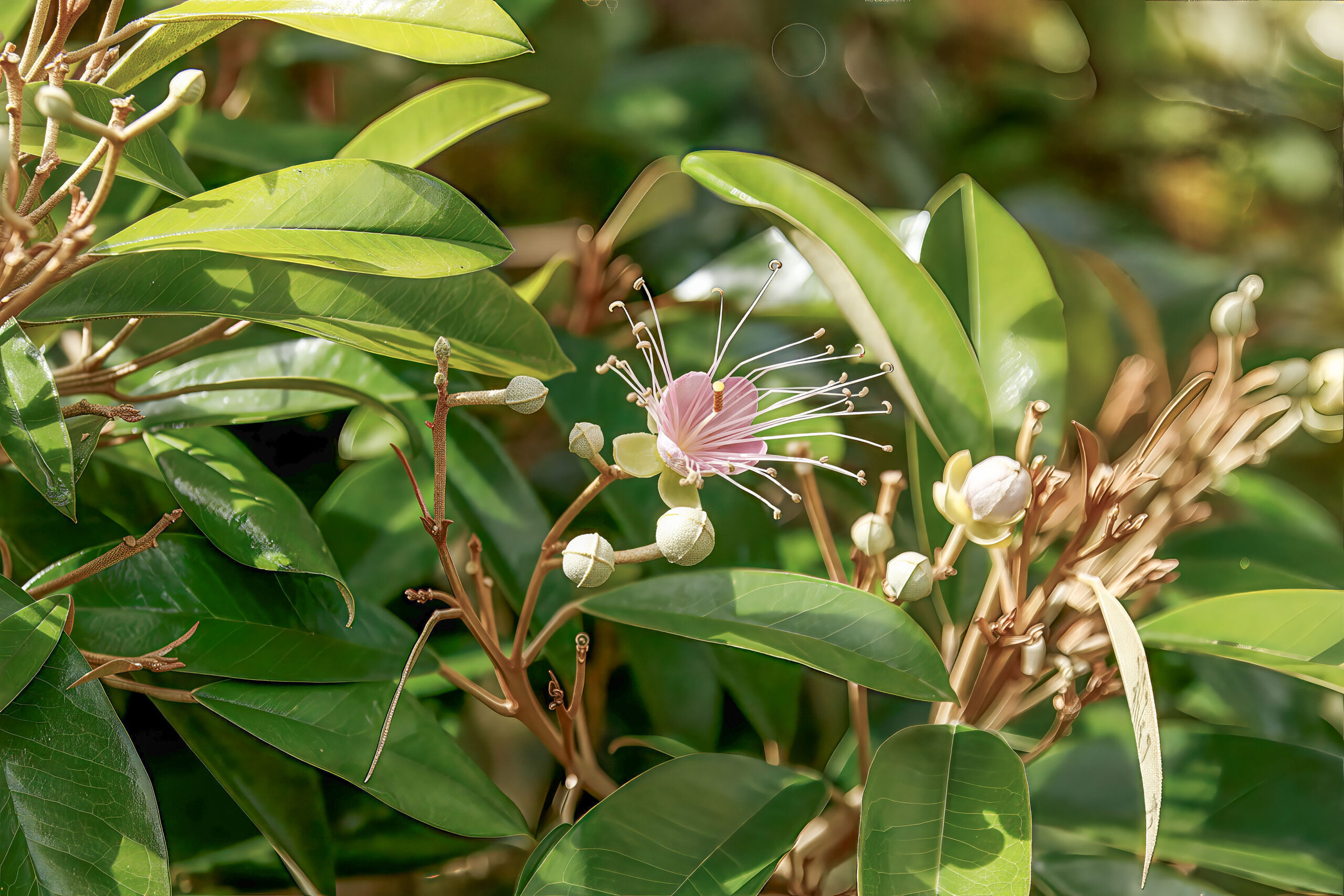
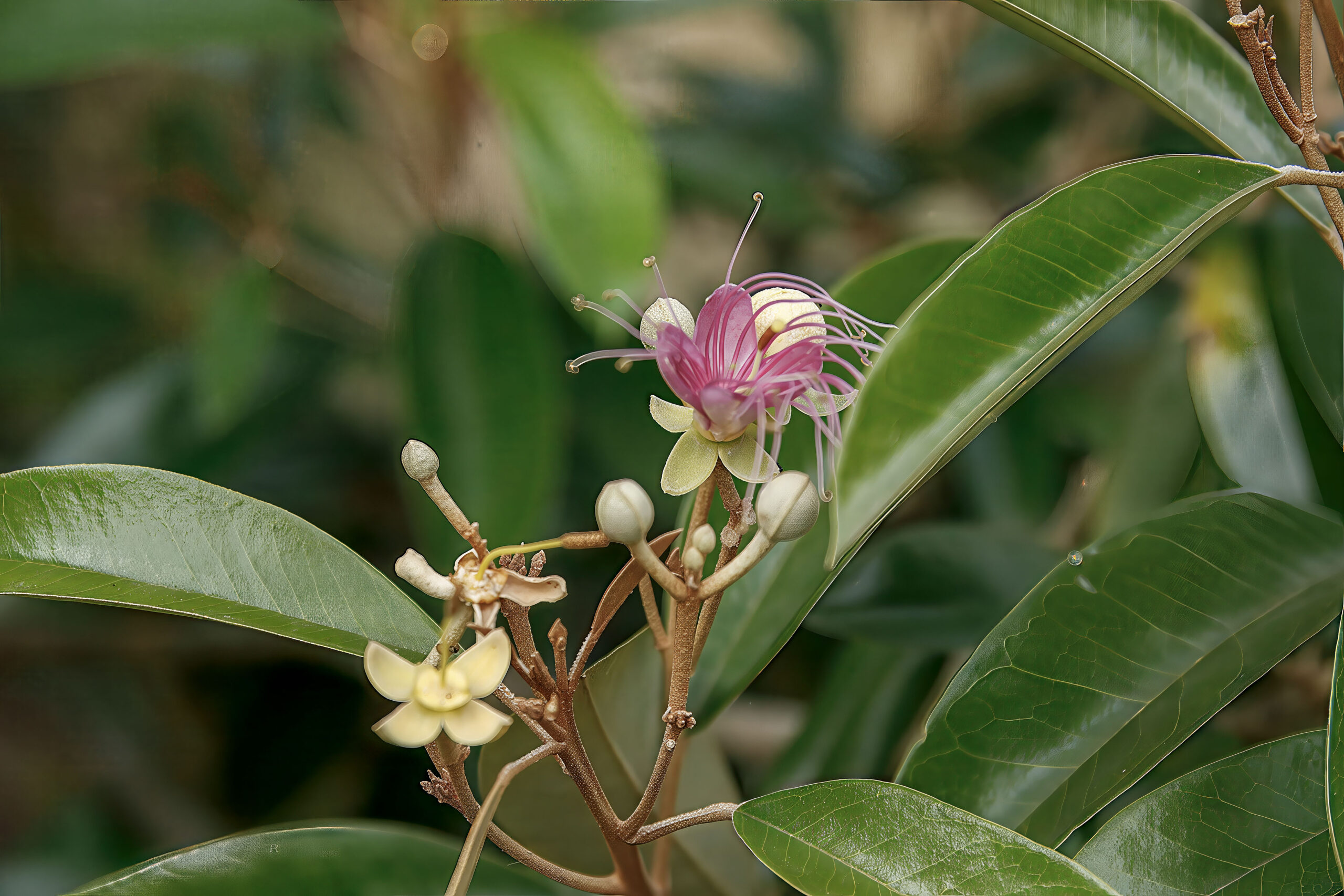
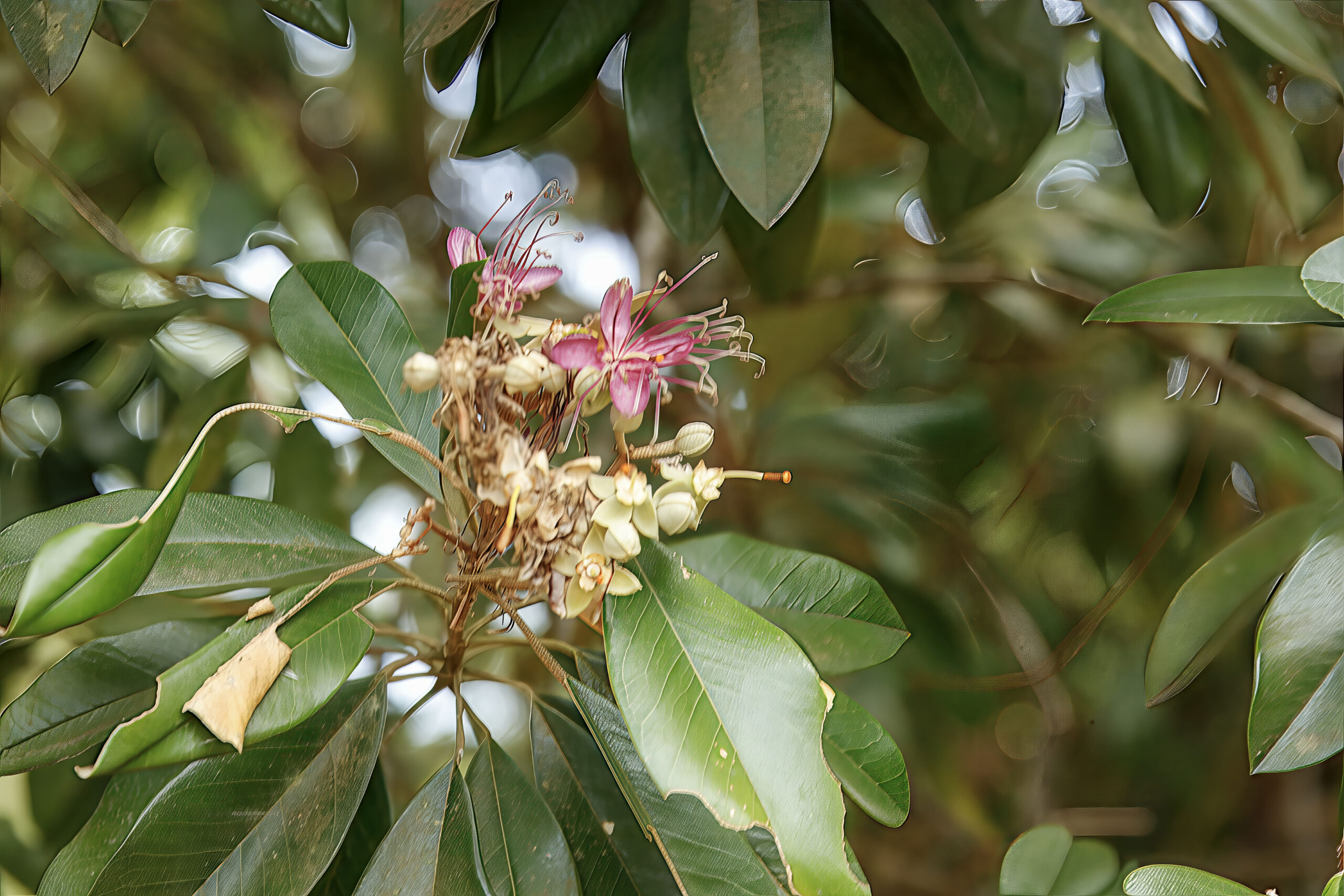
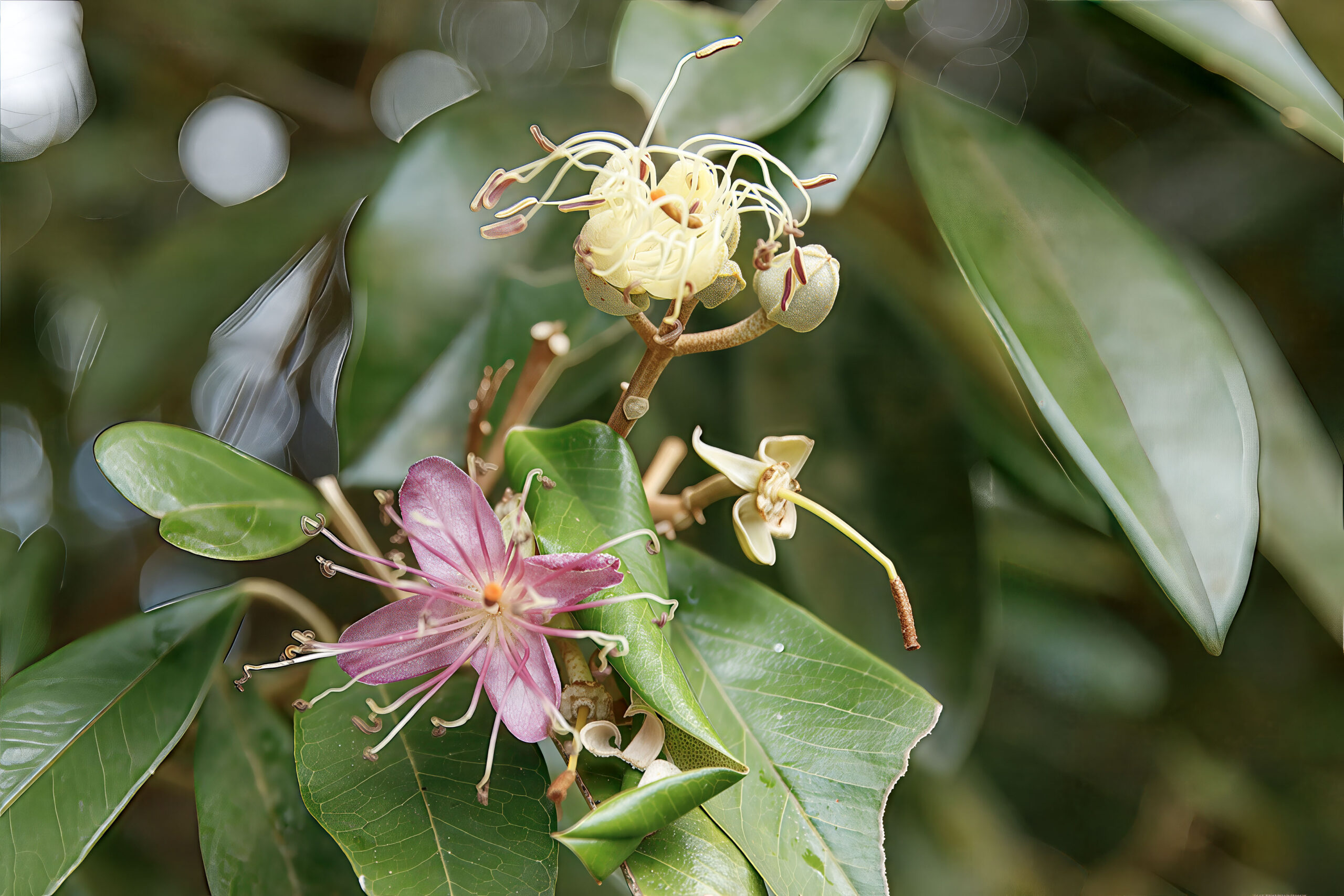
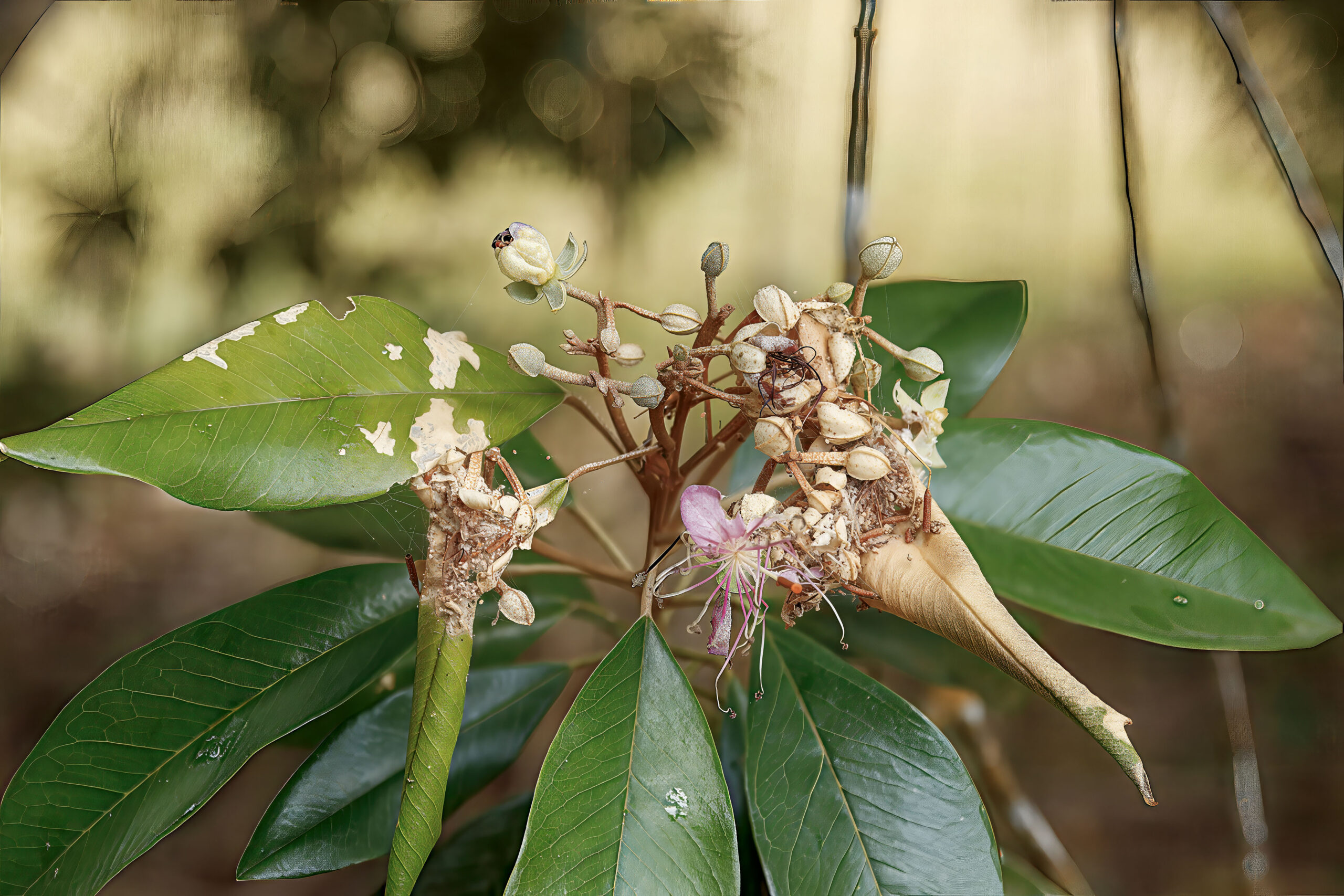
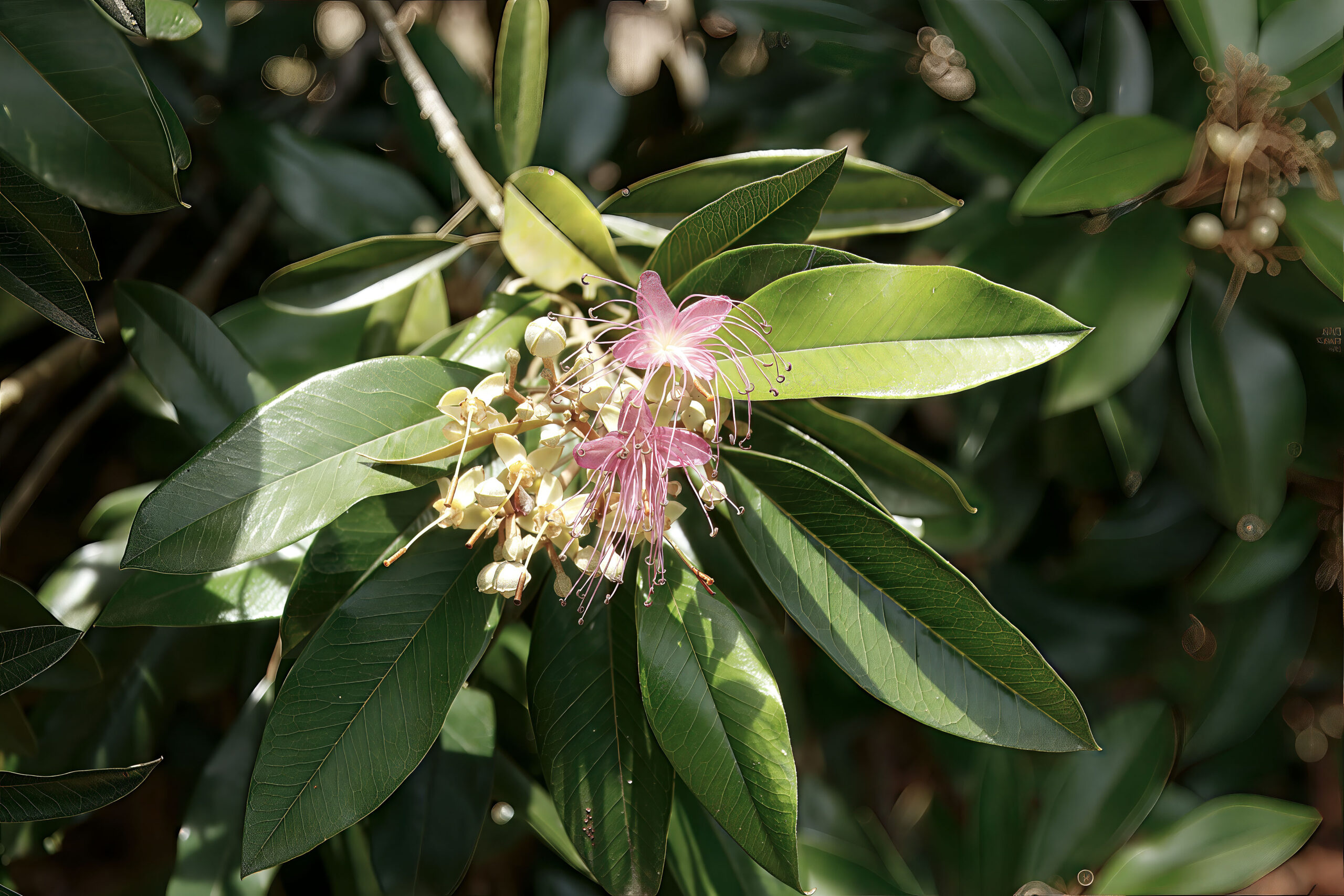
- Flowers: Showy, fragrant, white with long purple stamens that become more purple as they age
- Pollinators: Bees, butterflies, and other insects attracted by color and scent
🍈 Fruiting:
- Fruit Type: Slender green pods (seed capsules) that split open when mature
- Fruit Season: Summer into early fall (May–October)
- Seed Notes: Seeds are black and surrounded by bright orange arils, which attract birds
📍Habitat & Range:
- Native to: Southern Florida, Caribbean, Central America
- Common in: Coastal hammocks, thickets, and well-drained sandy or limestone soils
- Found on: St. Croix and other Virgin Islands; often in natural areas and increasingly in native landscaping projects
🌱 Ecological Importance:
- Provides nectar and pollen for pollinators
- Seeds dispersed by birds
- Drought- and salt-tolerant, ideal for coastal reforestation and xeriscaping
- Helps support biodiversity in native plant communities
📷 Notes for Photography:
- Capture:
- Copper-toned new leaves and contrast with mature foliage
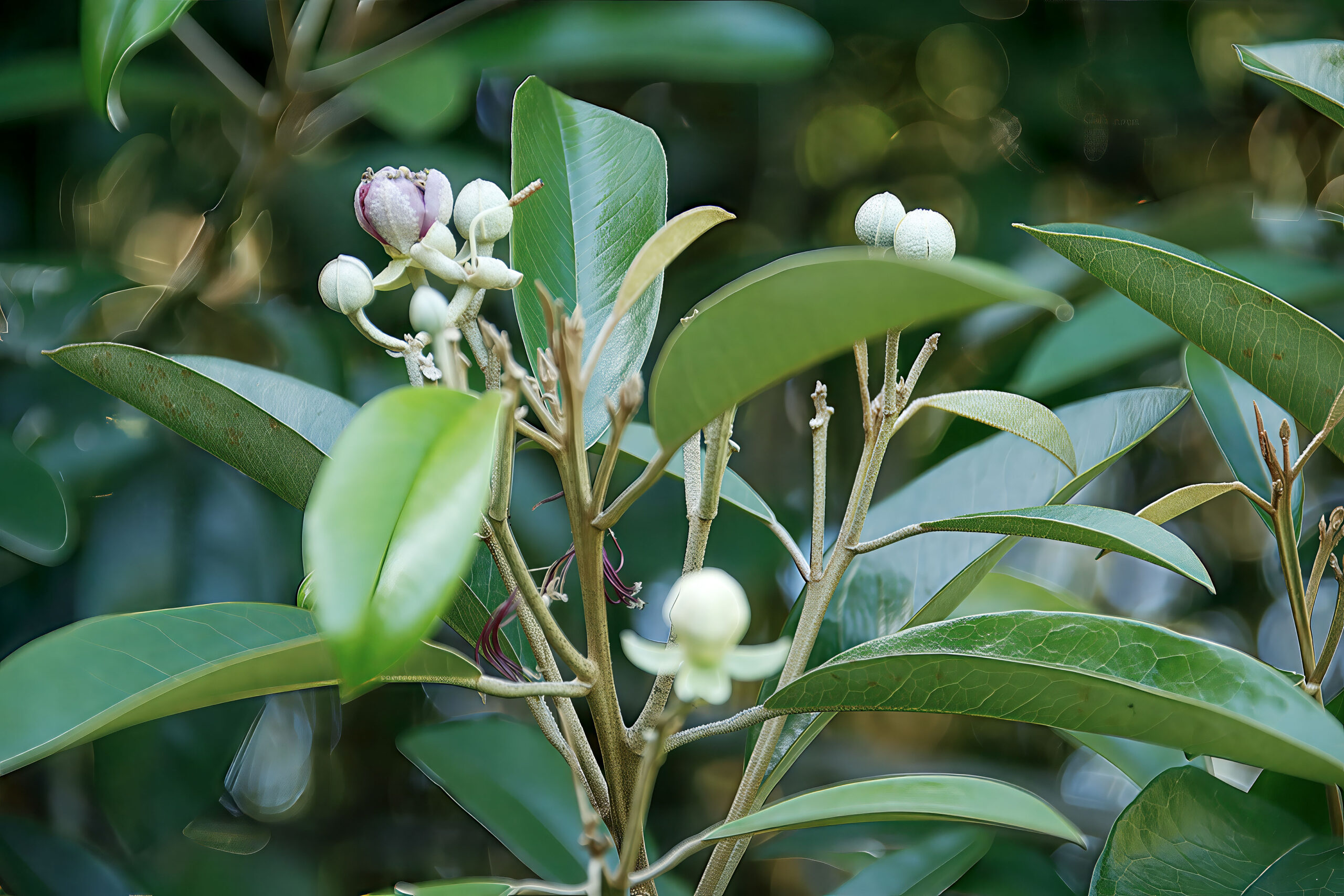
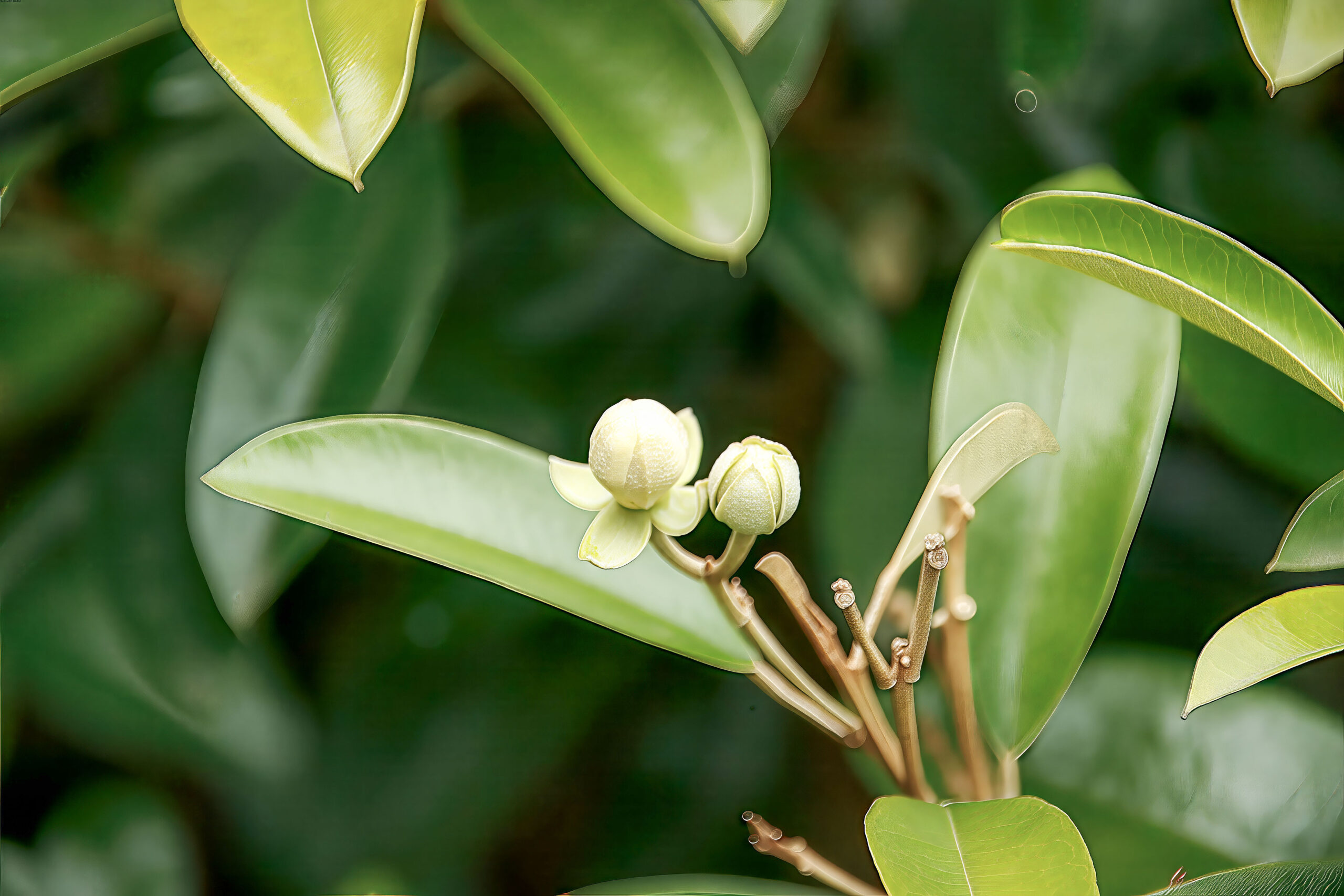
- Full flower development (bud → open → senescing)
- Long stamens and color shift
- Dehiscing fruit pods and bright orange arils
- Best seasons:
- Late spring to early summer for flowers
- Summer to fall for seed pods