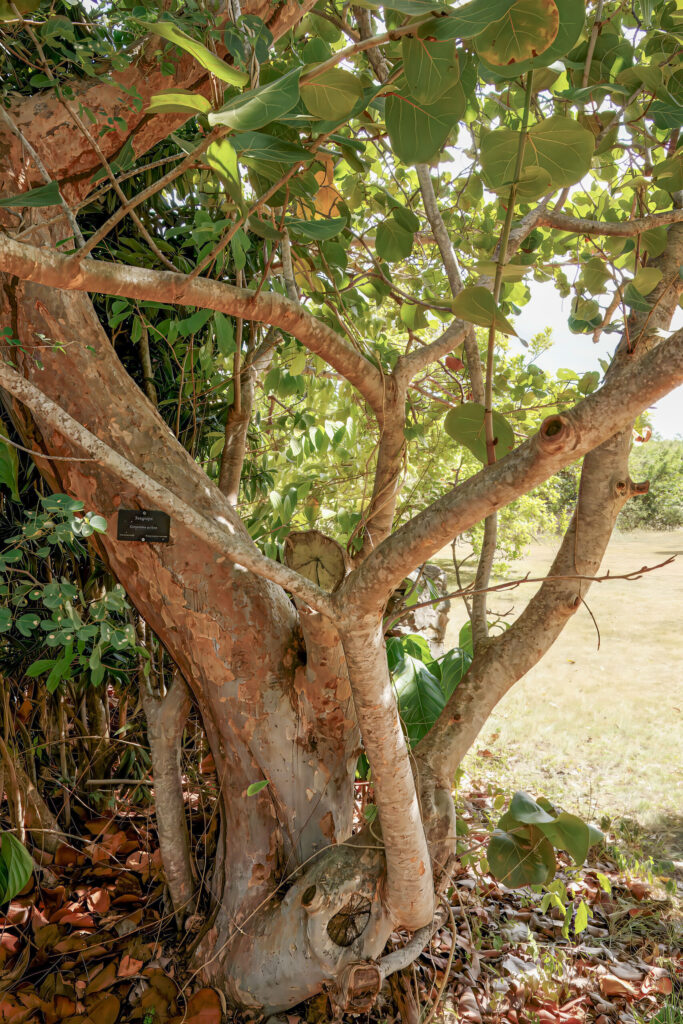
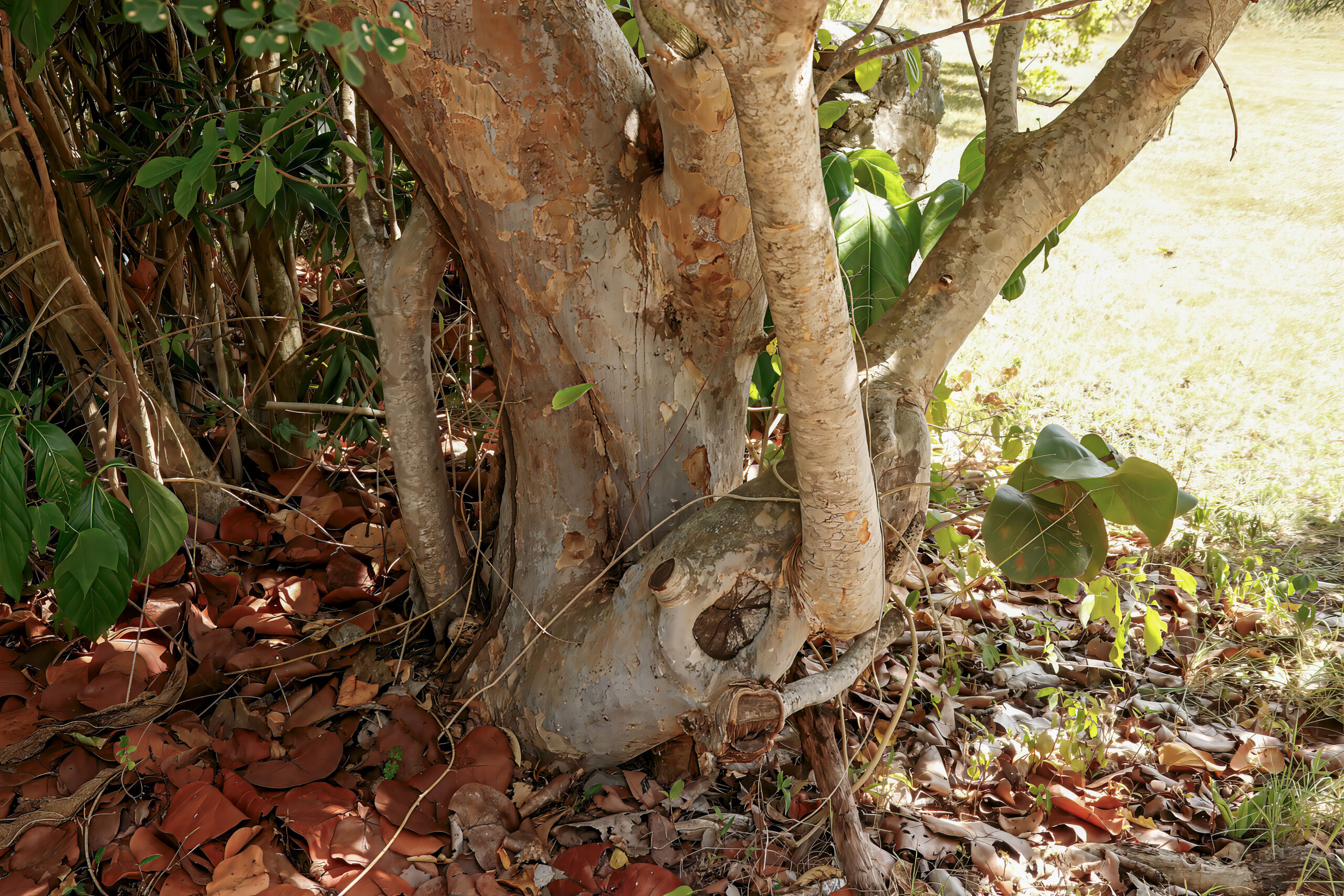
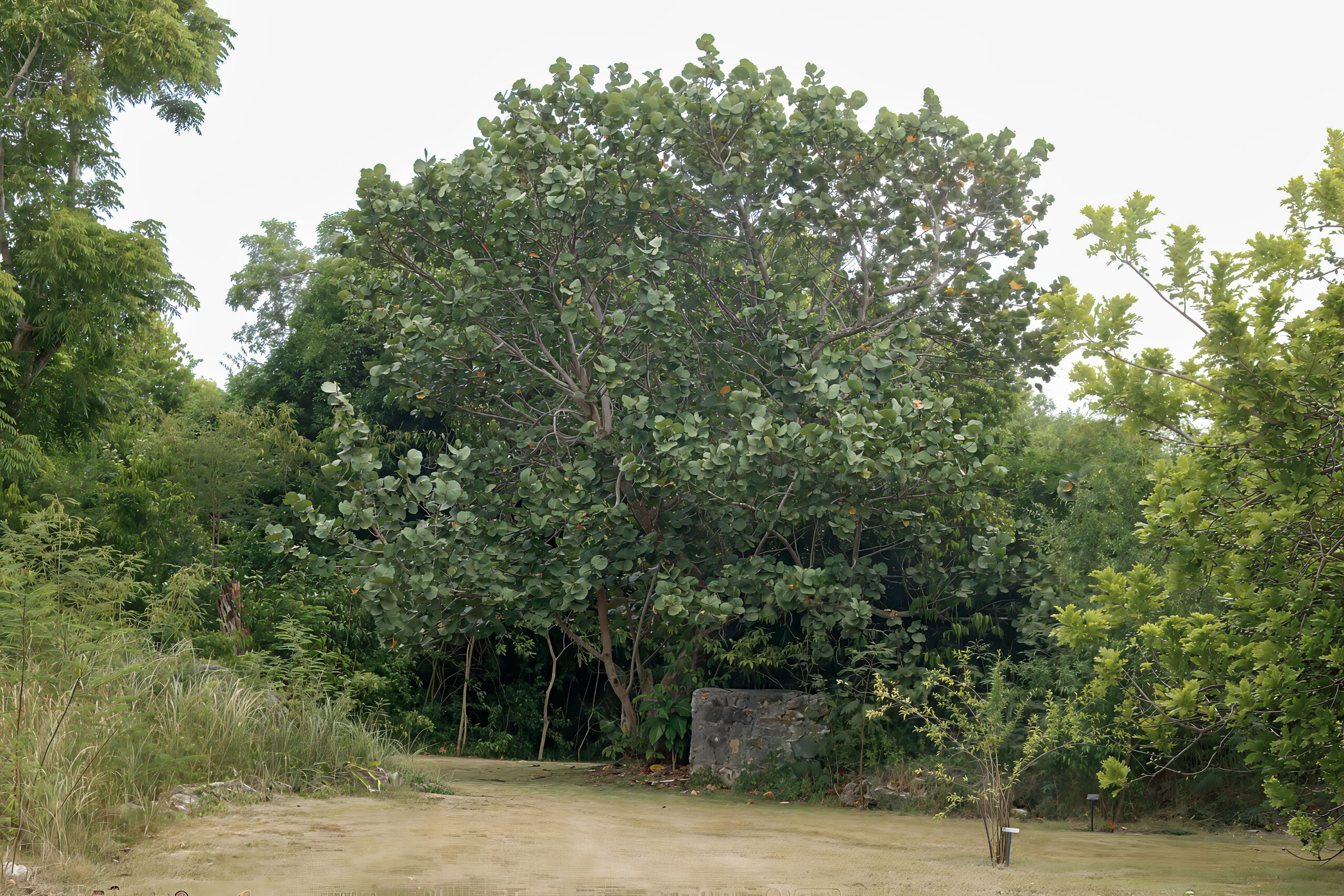
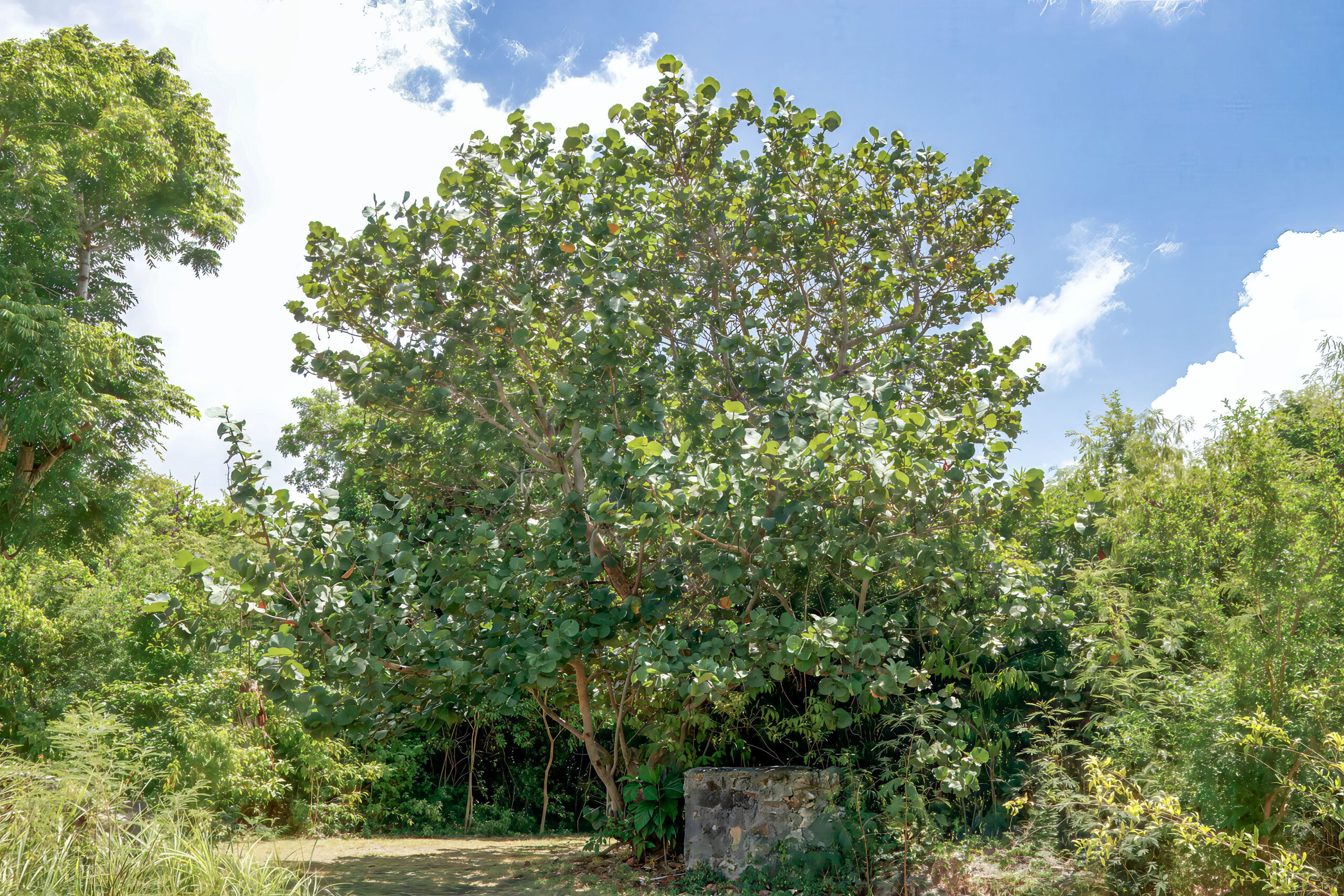
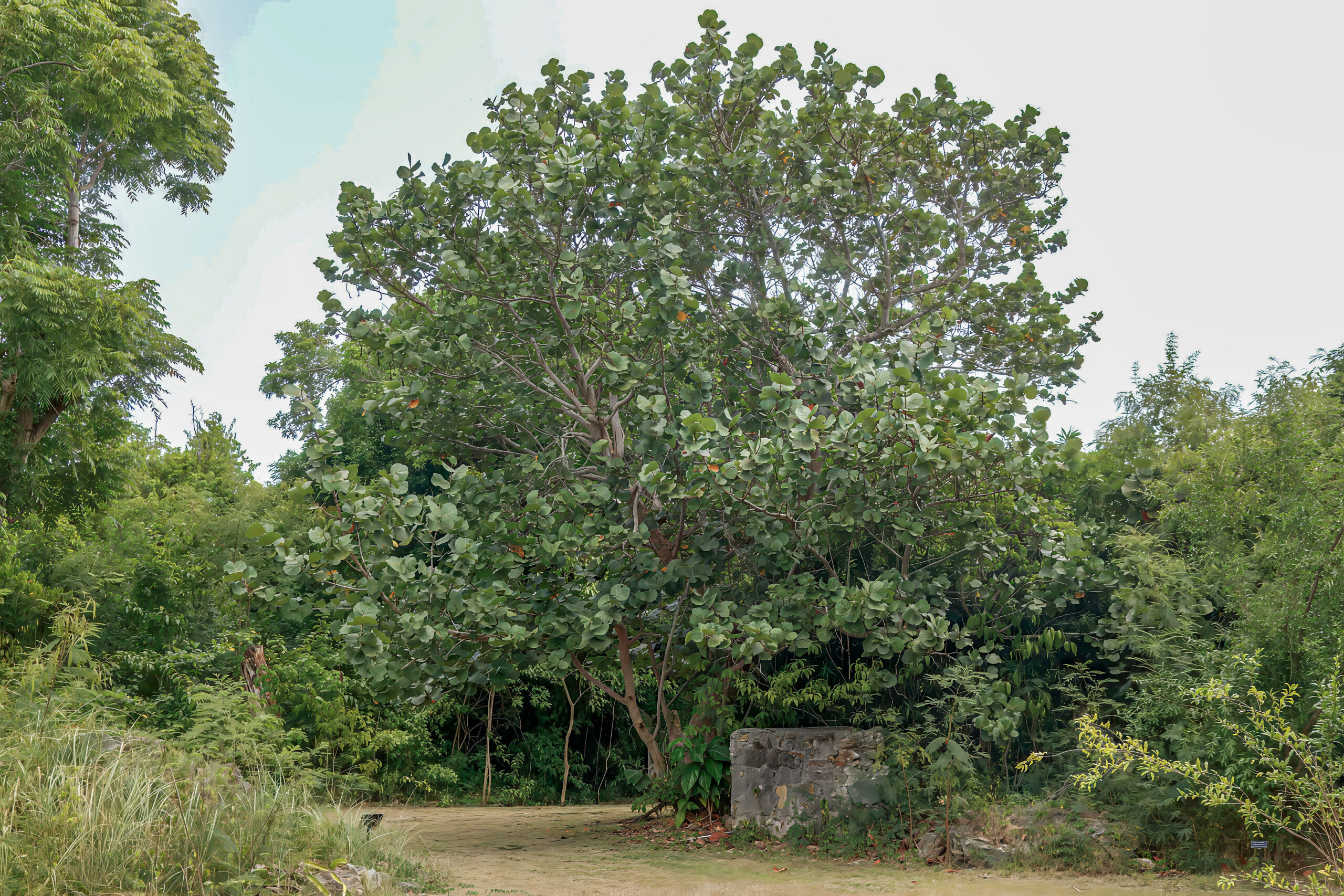
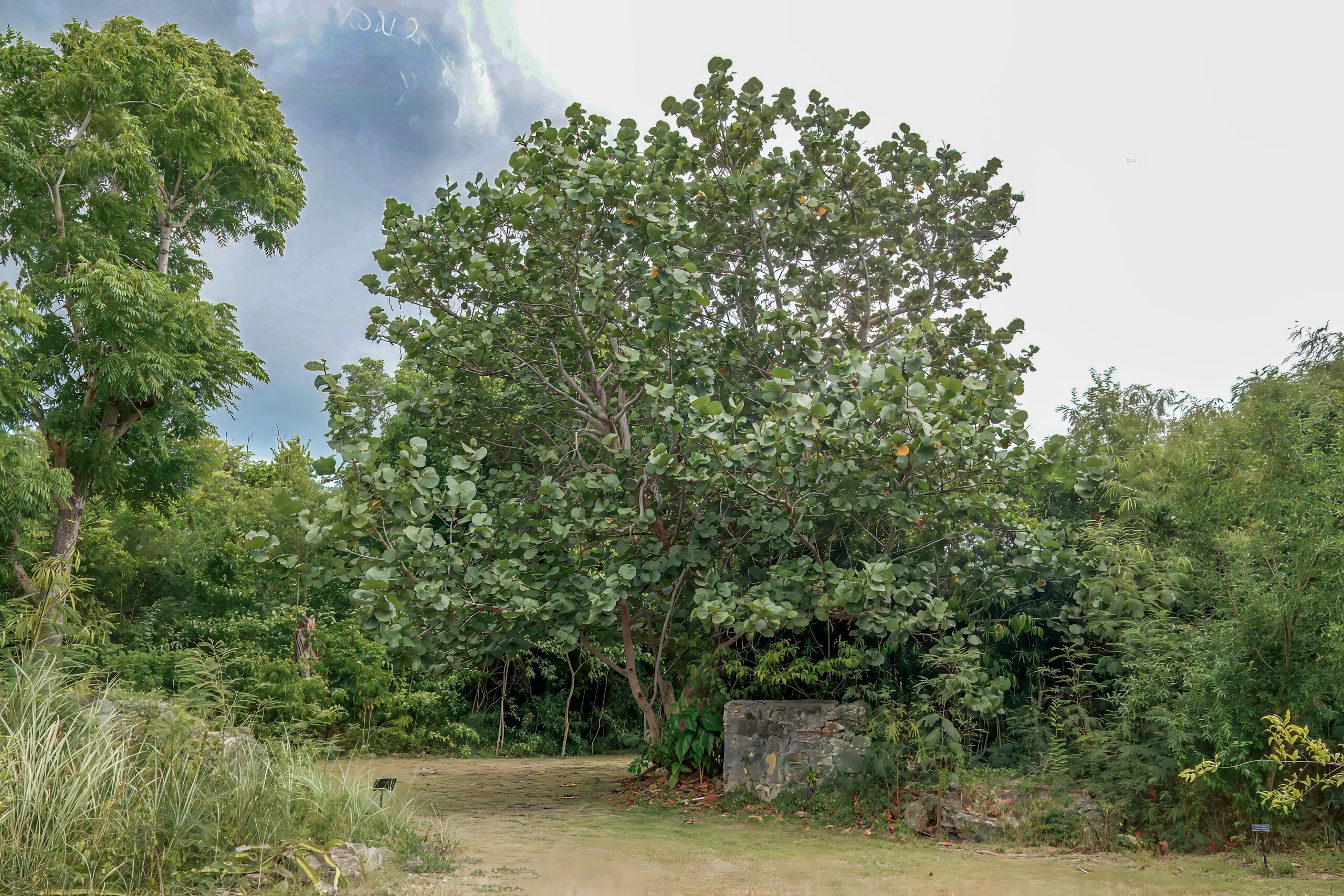
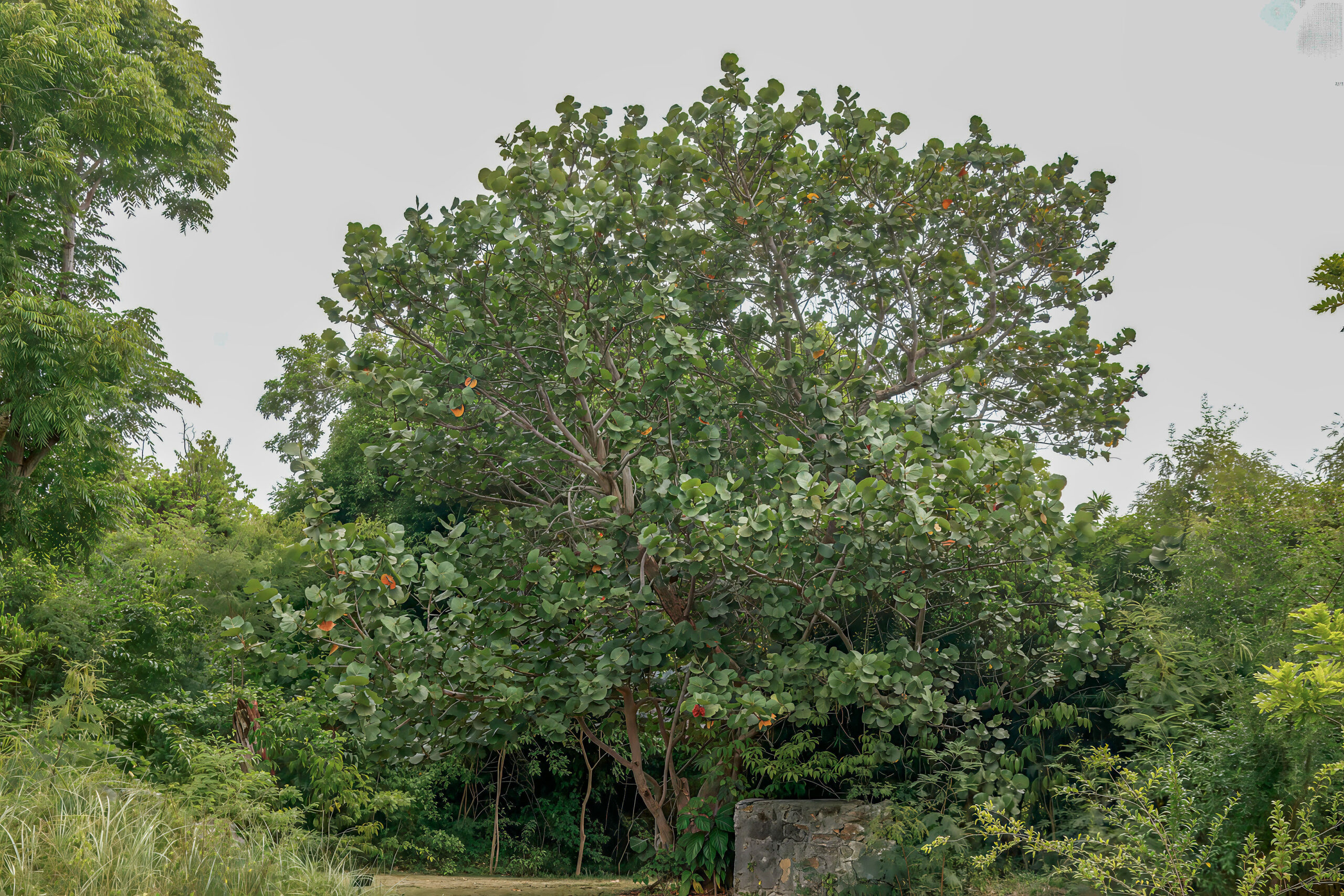
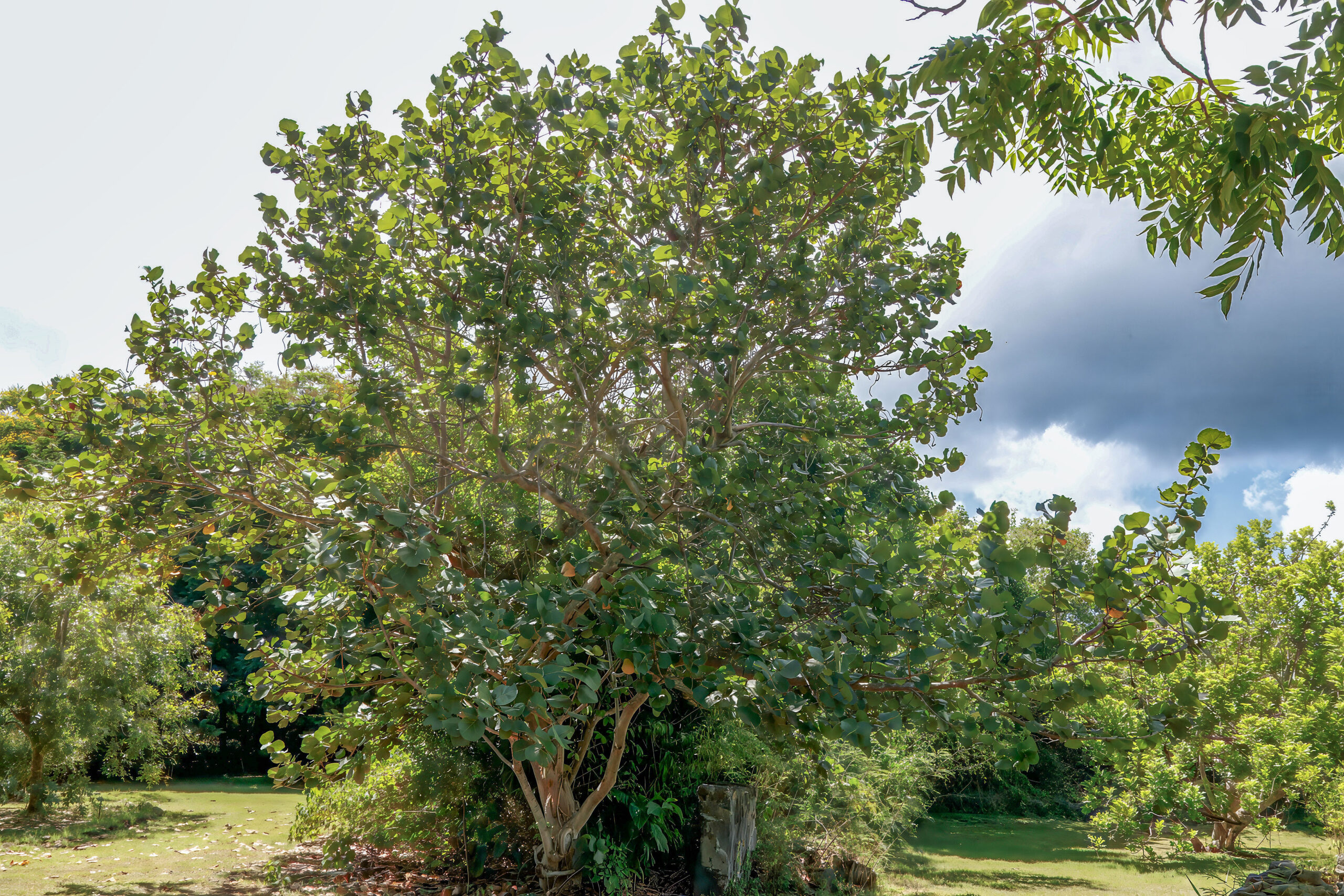
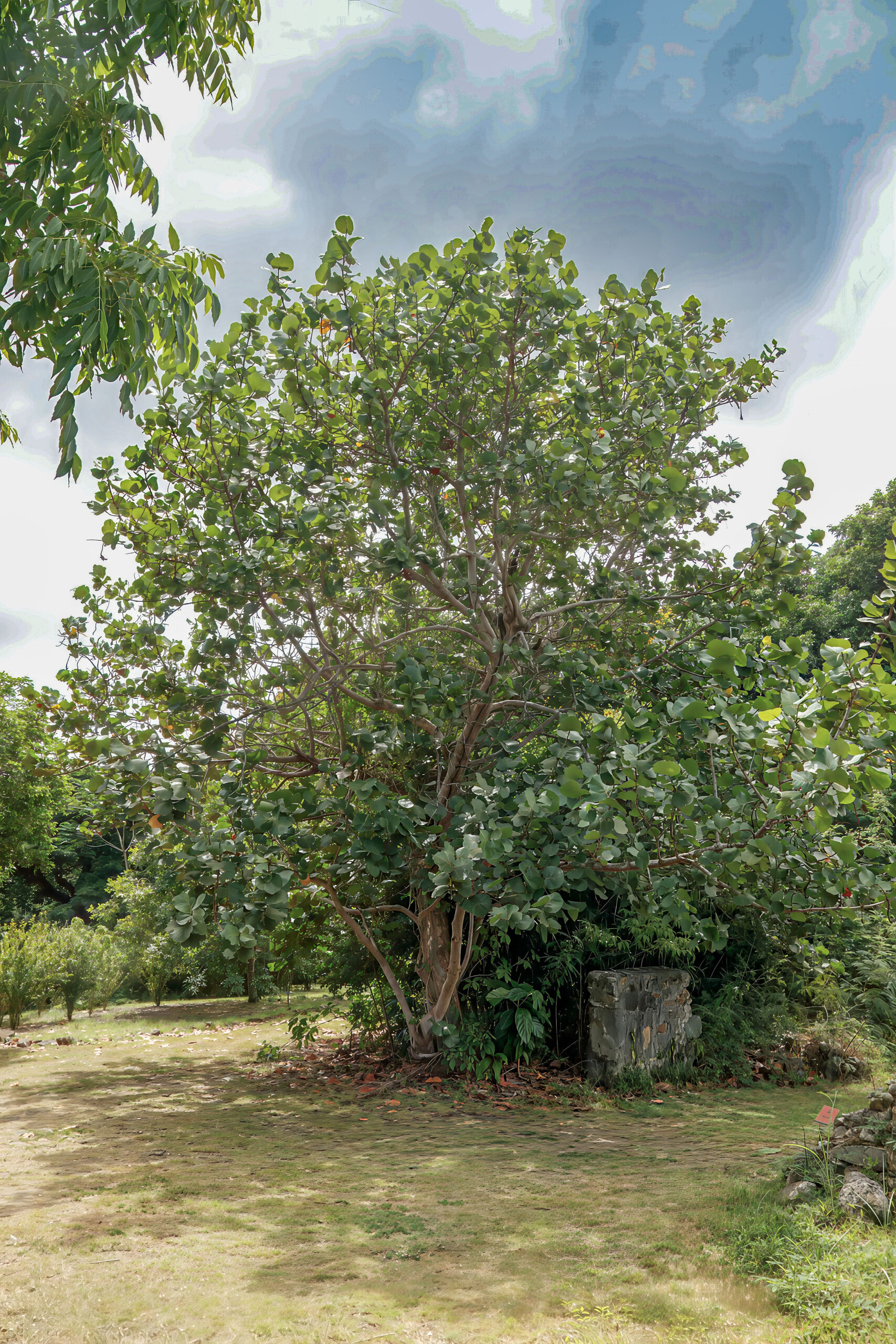
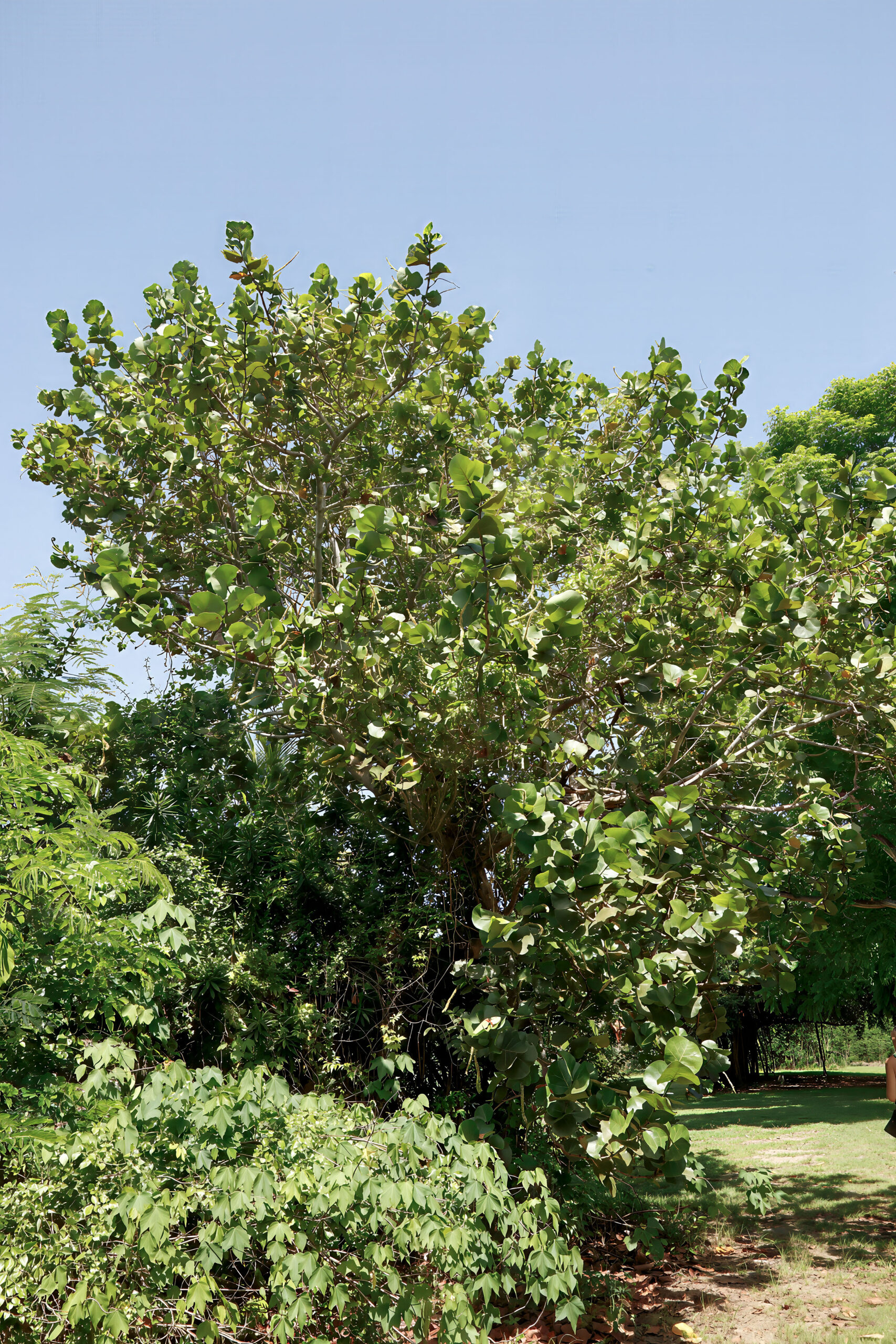
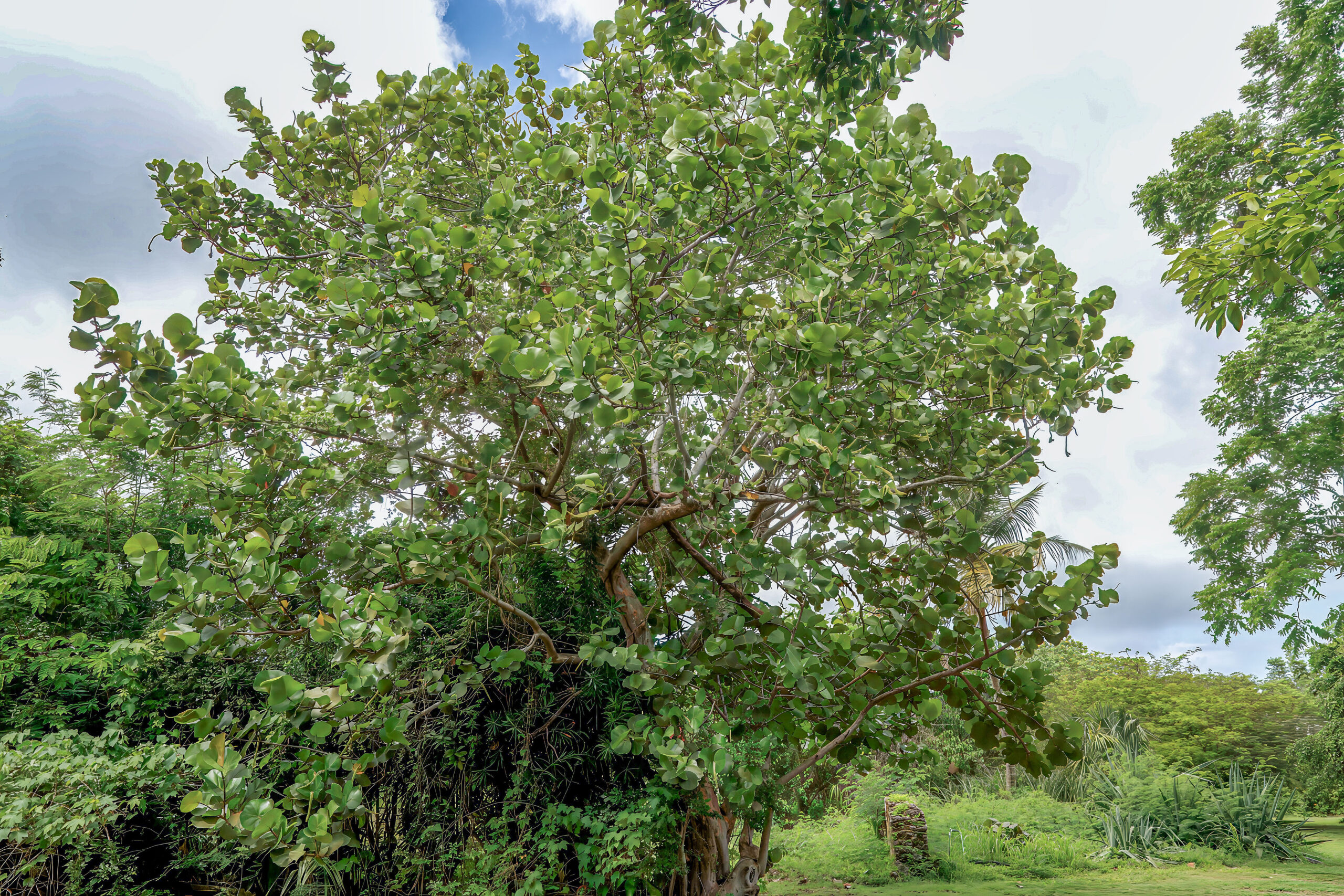
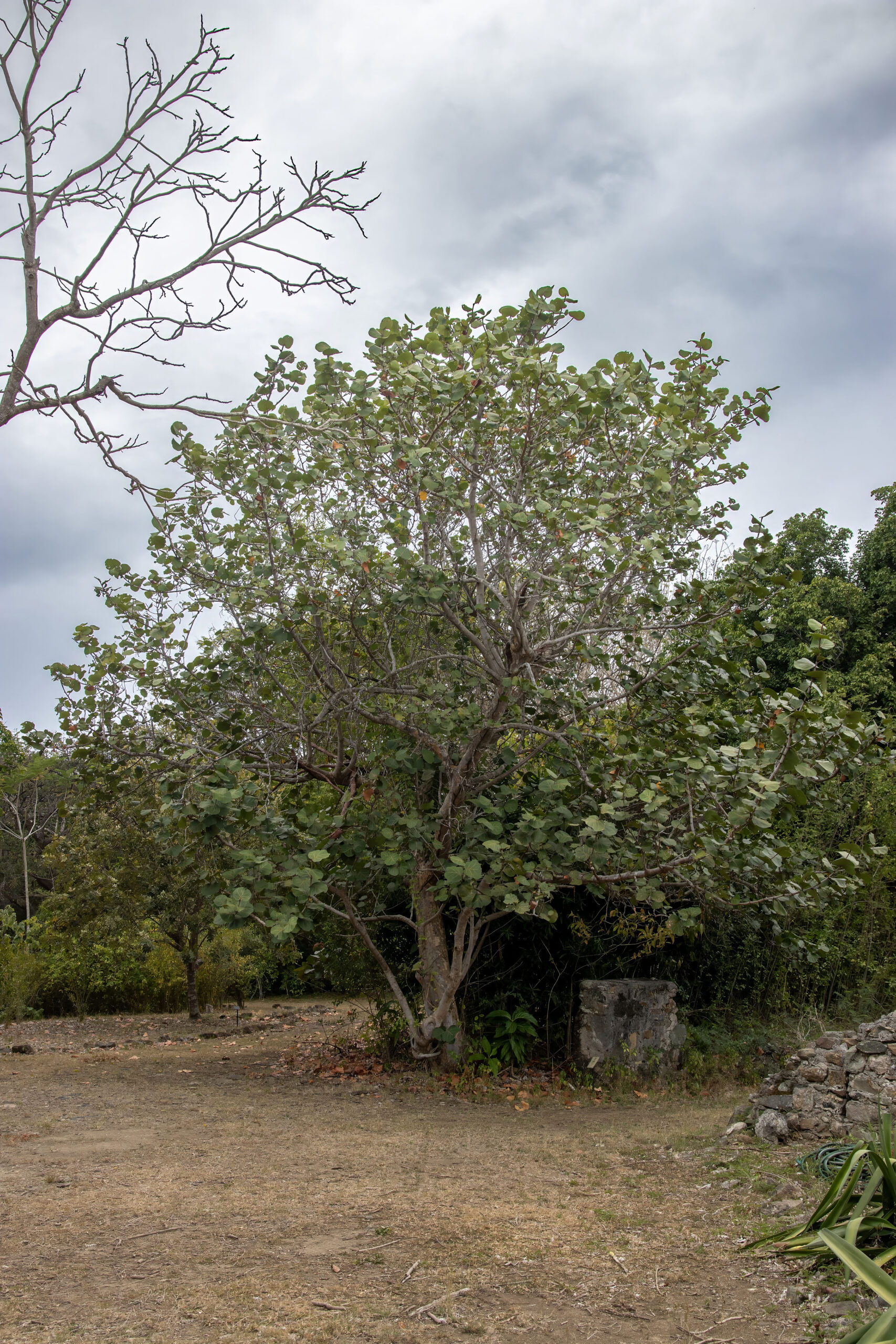
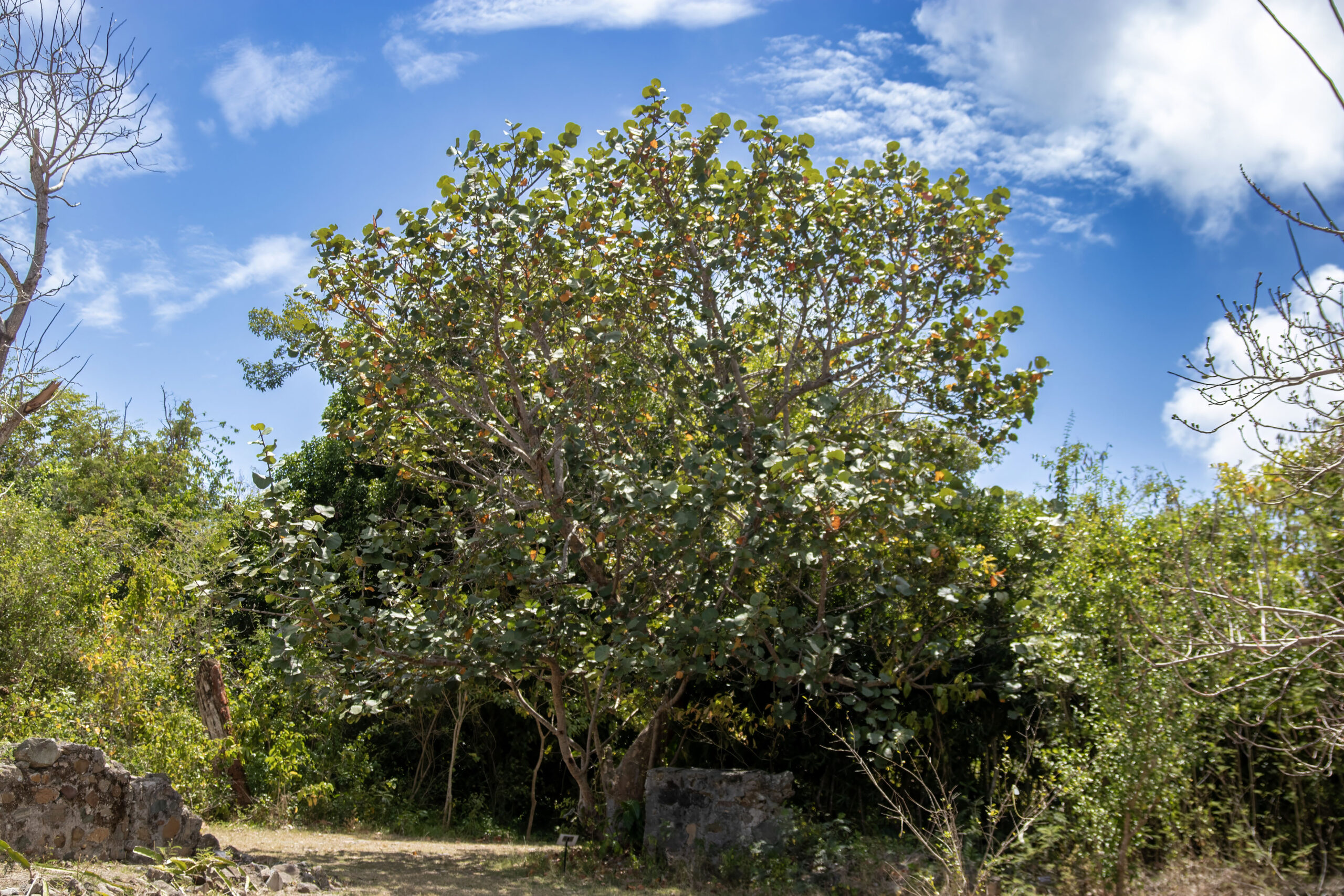
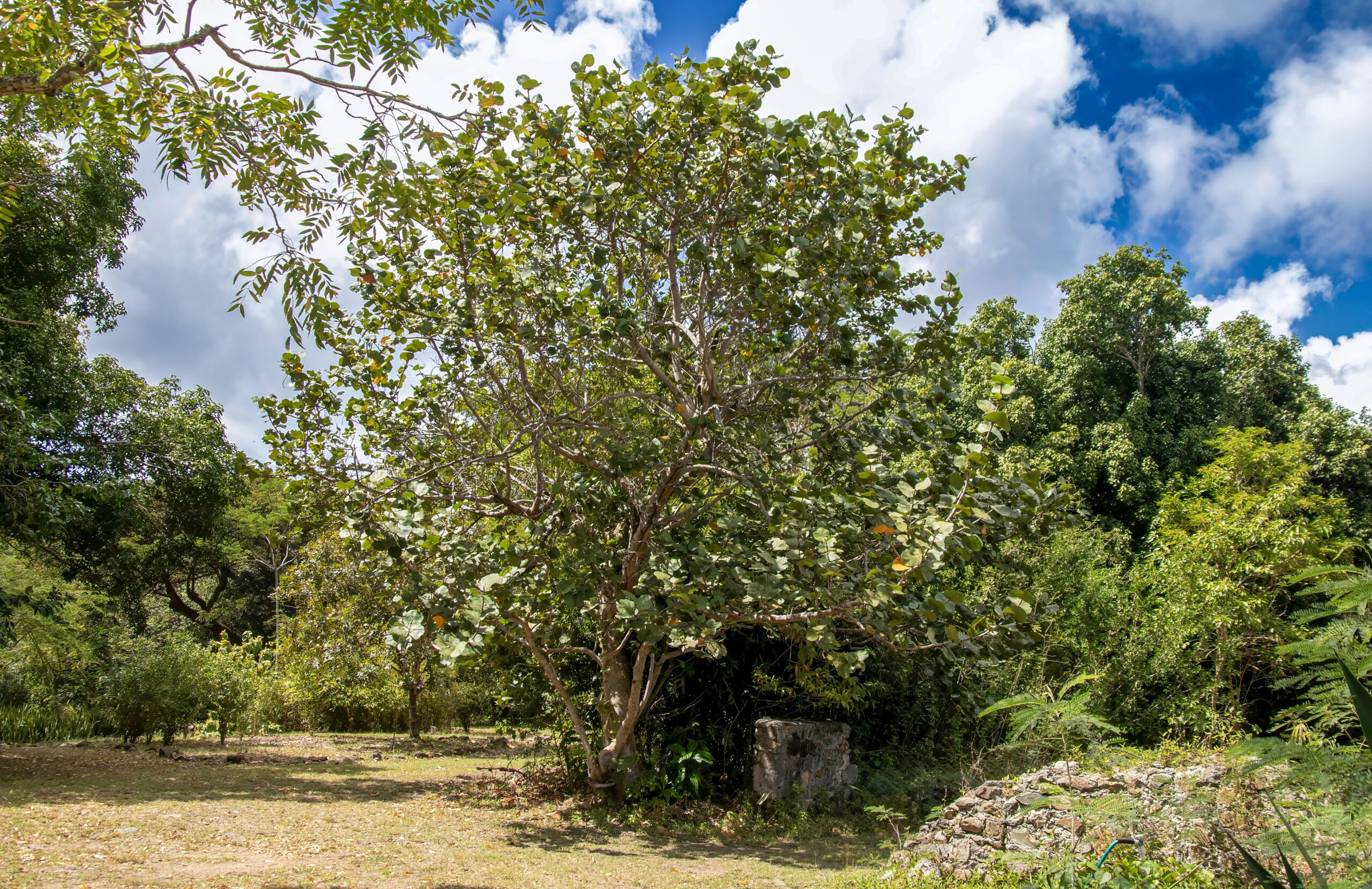
Sea Grape tree
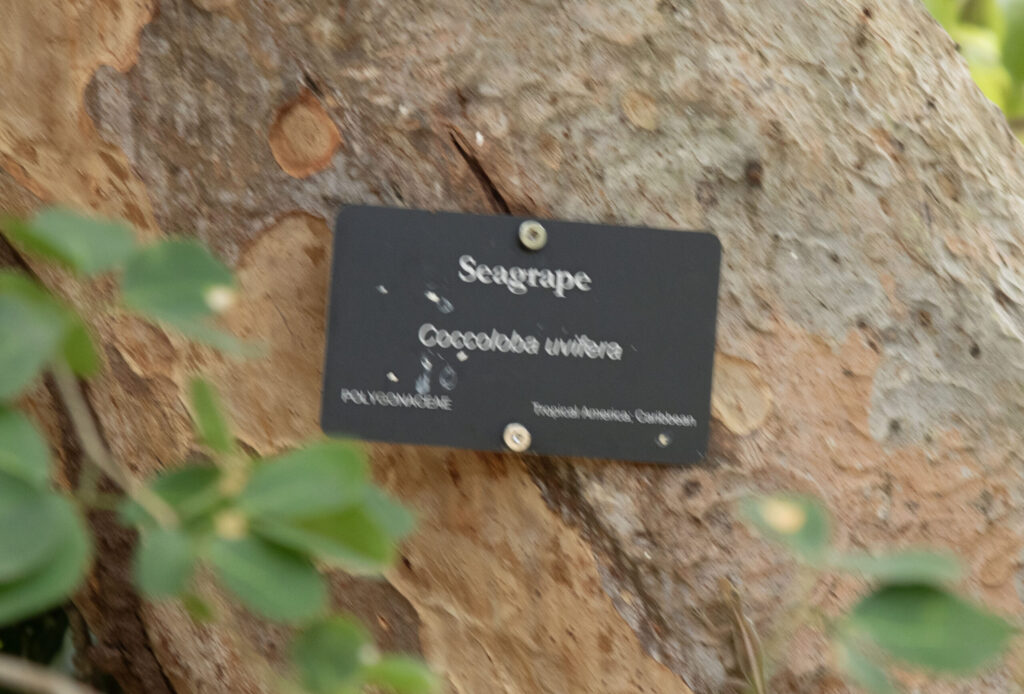
Scientific name: Coccoloba uvifera
IUCN Red List threat level: Least Concern
GPS Location: 17° 42′ 56.76″ N, 64° 49′ 43.01″ W


Medicinal Uses
Coccoloba uvifera, or Sea Grape, is traditionally used in Caribbean and South American medicine for digestive issues (diarrhea, dysentery), skin ailments (rashes, burns, sores), and respiratory problems (asthma, hoarseness) due to its astringent, anti-inflammatory, and antimicrobial properties, with teas and poultices from leaves, bark, and roots being common preparations, though scientific validation for some uses, especially for diabetes, is still ongoing.
Traditional Medicinal Uses
- Digestive Health: Bark and leaf teas are used for diarrhea, dysentery, and other intestinal problems; the juice (“Jamaica kino”) also serves this purpose.
- Skin Conditions: Poultices or washes from leaves treat rashes, eczema, minor burns, boils, and skin irritations, helping with itching and healing.
- Respiratory Issues: Leaf decoctions are used for asthma, coughs, and hoarseness.
- Blood Sugar & Diabetes: Leaf teas are traditionally drunk to lower blood sugar, with some studies showing promise for diabetes, though caution is advised.
- Other Uses: Root/bark decoctions treat anemia, menopausal symptoms, and tumors; applied to the head for headaches.
Scientific & Active Compounds
- Antioxidant & Anti-inflammatory: Contains flavonoids, phenolics, and antioxidants that combat free radicals and inflammation.
- Antimicrobial: Extracts show antibacterial and antifungal activity, slowing microbial growth.
- Antidiabetic: Leaf extracts inhibit enzymes related to glucose metabolism and improve glucose tolerance in studies.
How It’s Used
- Tea: Brewed from leaves or bark for internal consumption (digestive, blood sugar).
- Poultice/Compress: Crushed leaves applied topically for skin issues.
- Decoction: Boiling bark, roots, or stems for various ailments, often astringent.
Note: While promising, many traditional uses, particularly for diabetes, require more rigorous clinical trials to confirm efficacy and standardized dosages, notes Springer Nature, researchtrends.net, and National Institutes of Health (.gov).
Observations:
Phenological Markers – Sea Grape Tree (Coccoloba uvifera)
1. Leaf Behavior
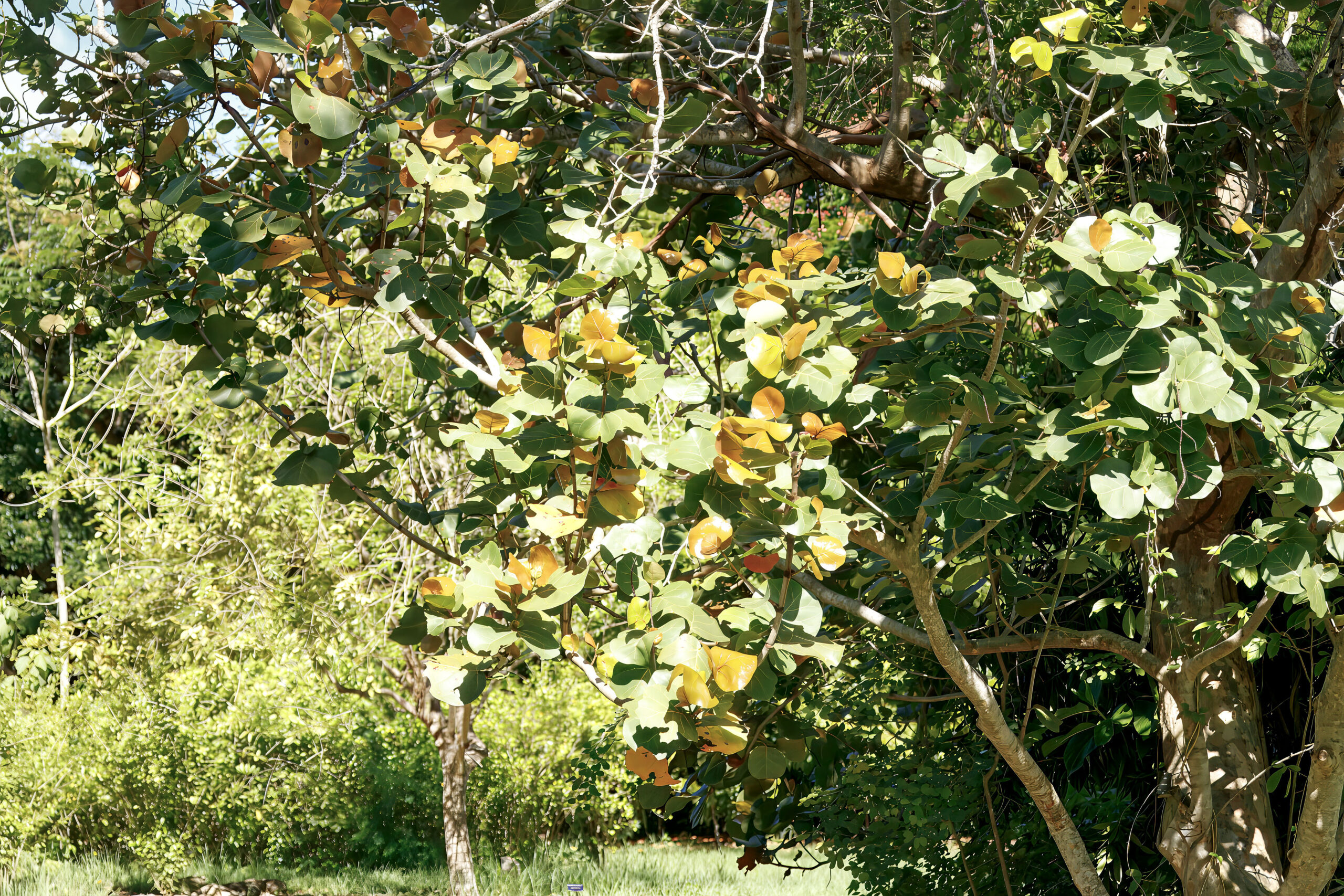
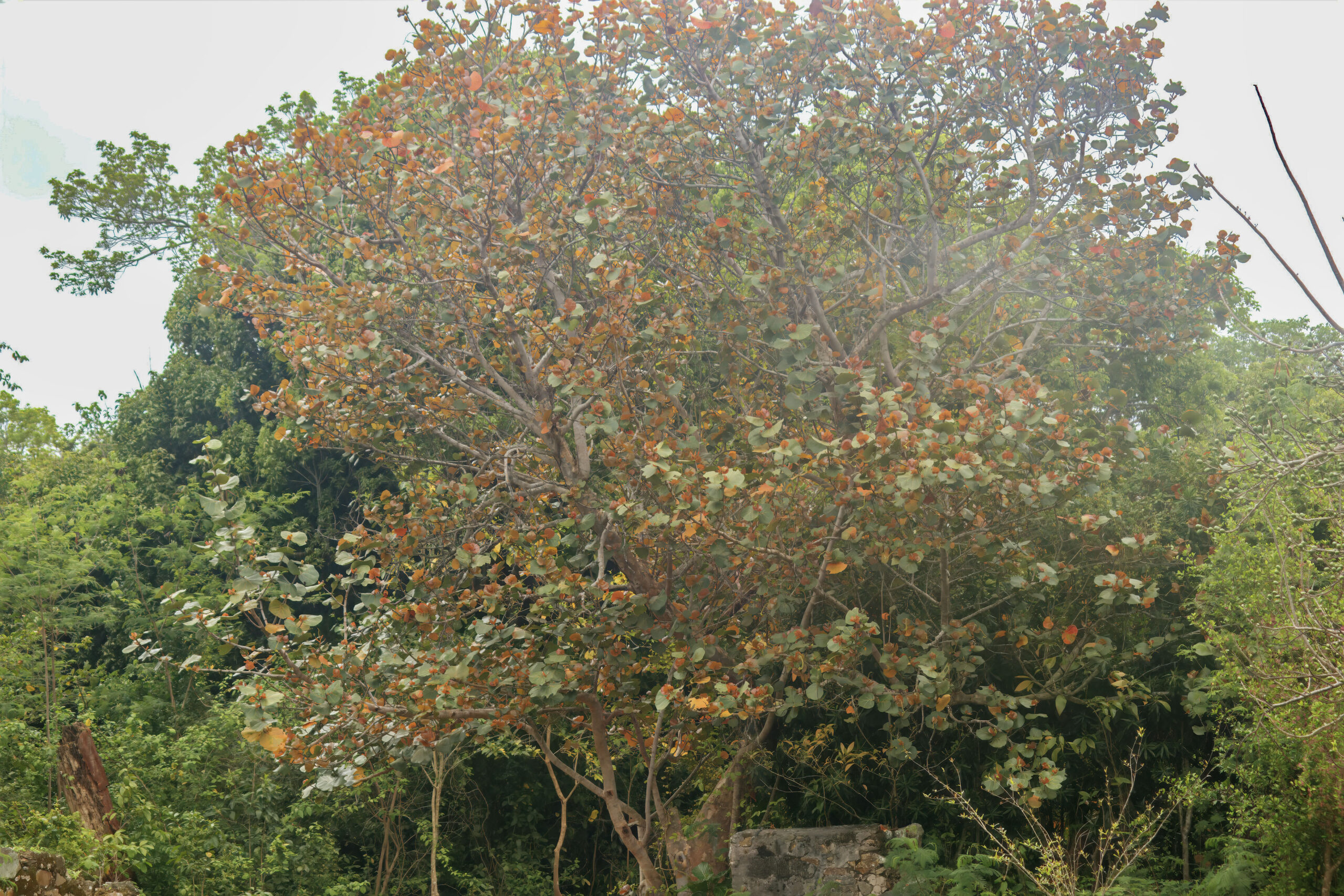
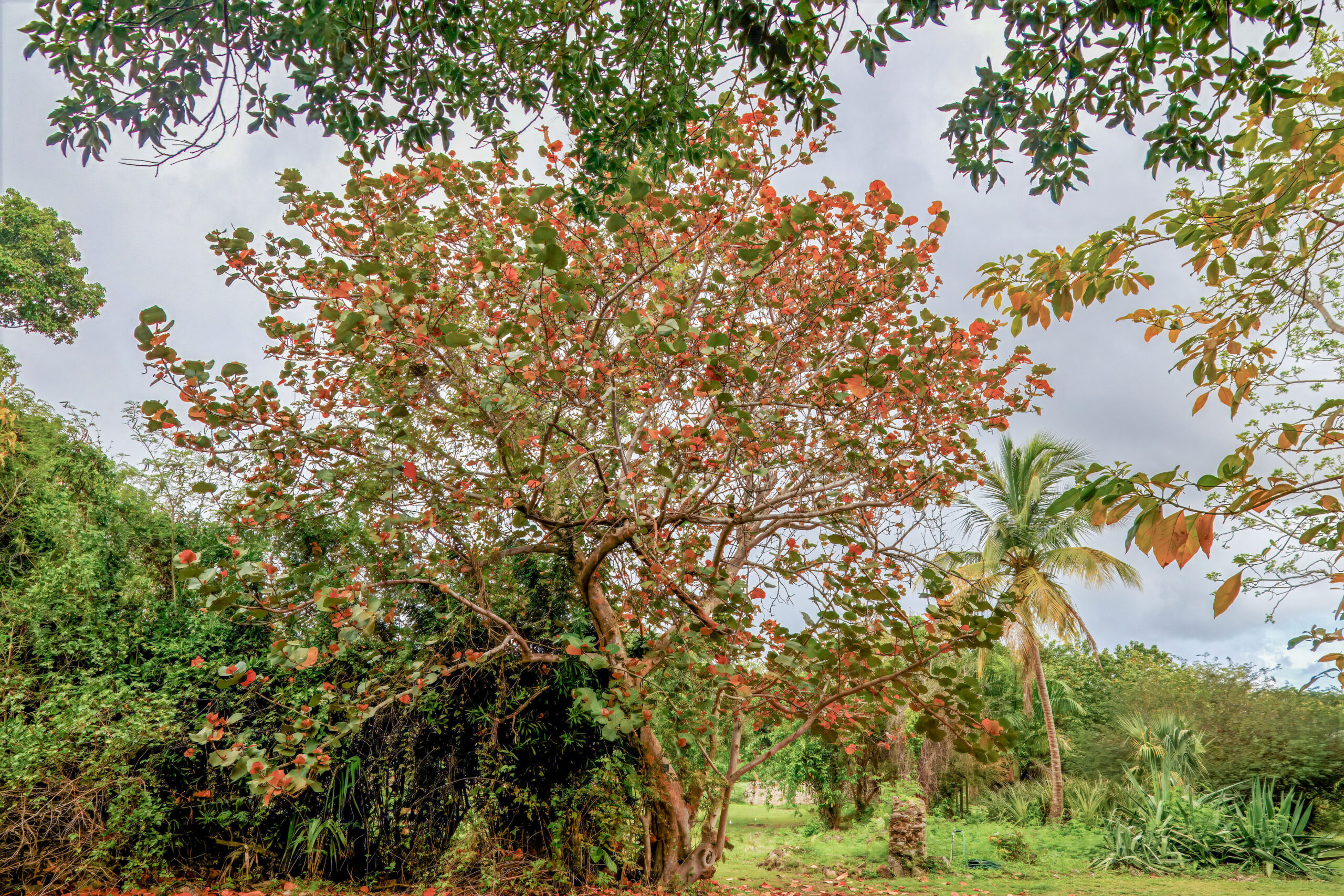
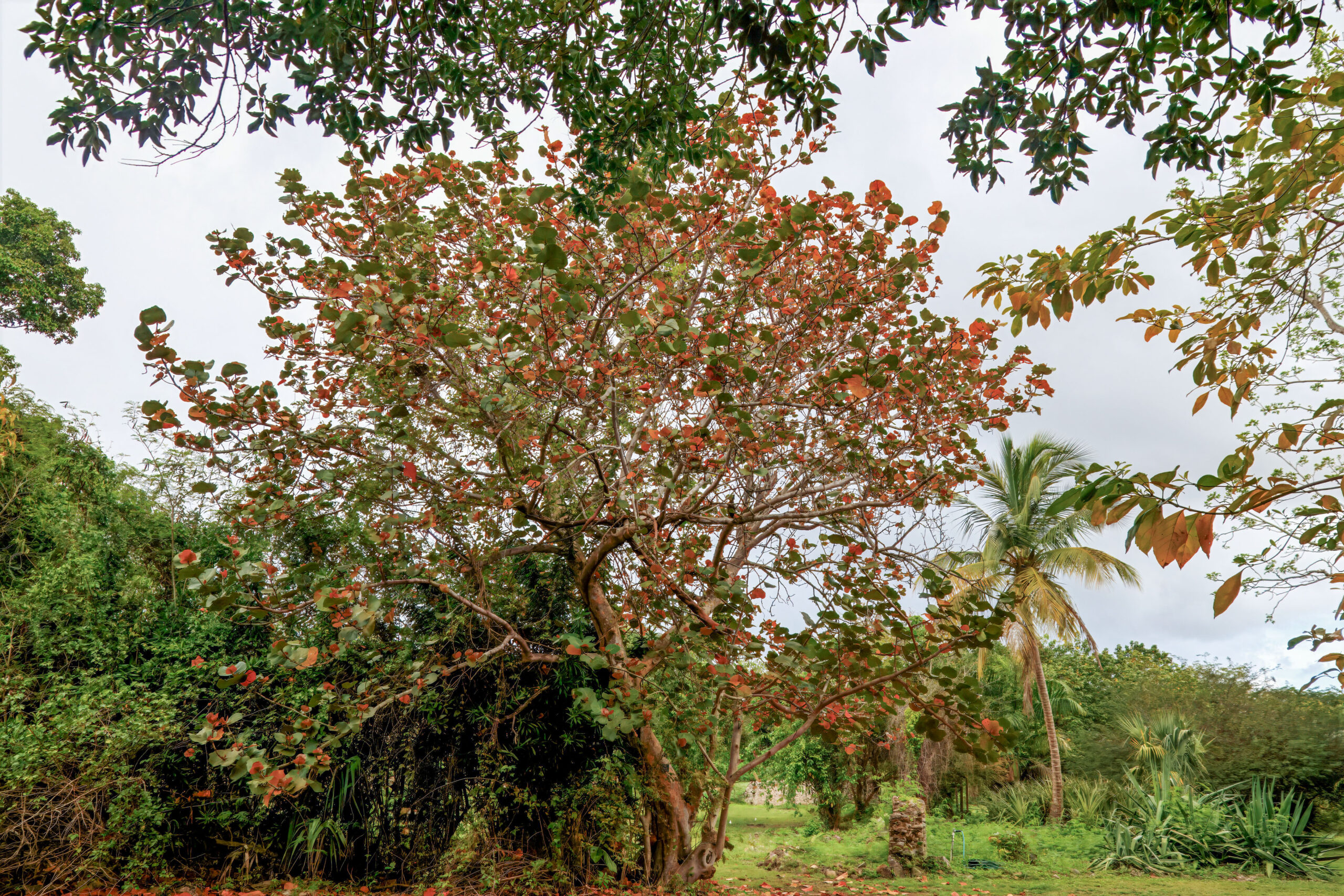
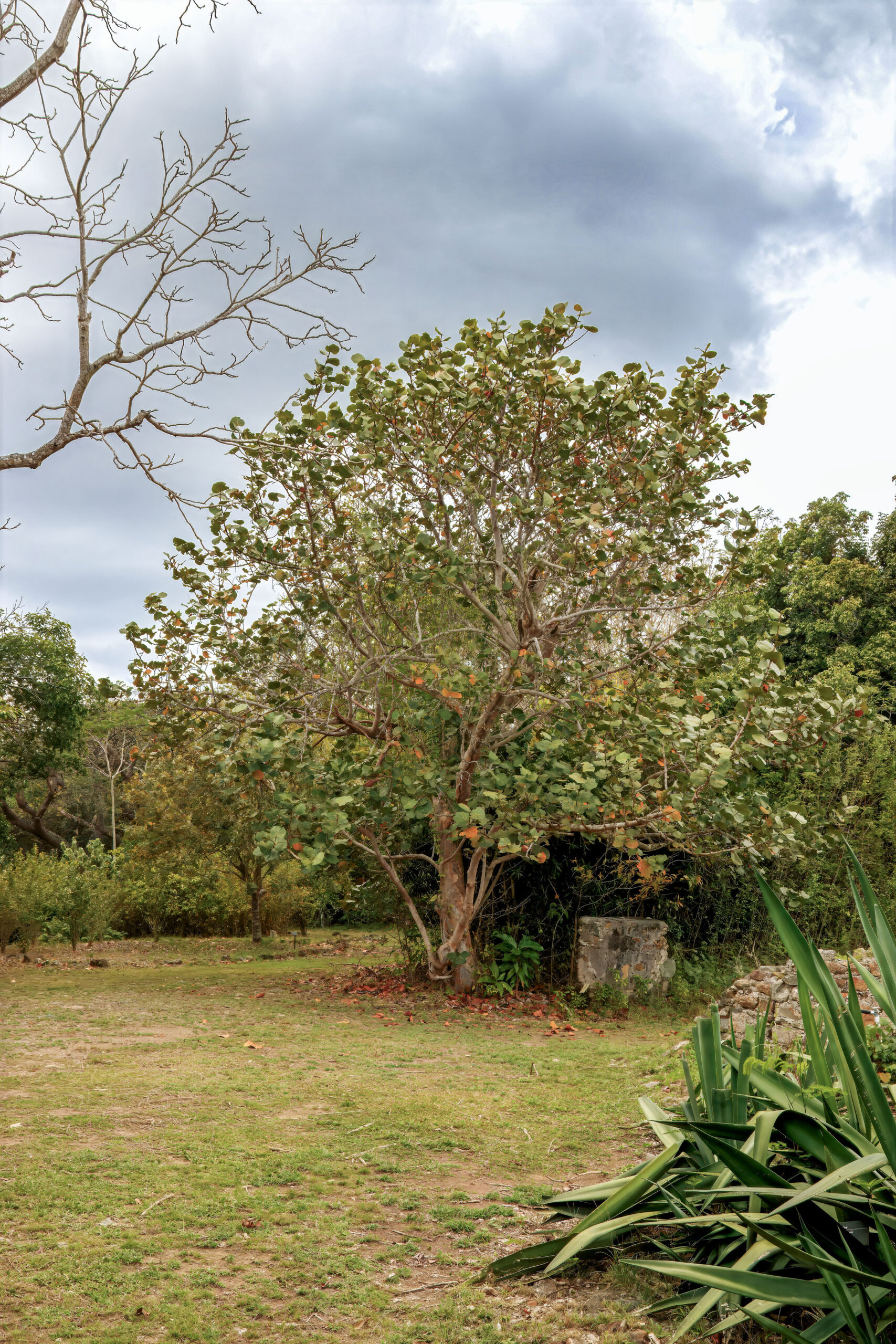
Sea Grape is evergreen, but leaf turnover is frequent, especially during dry spells or wind exposure.
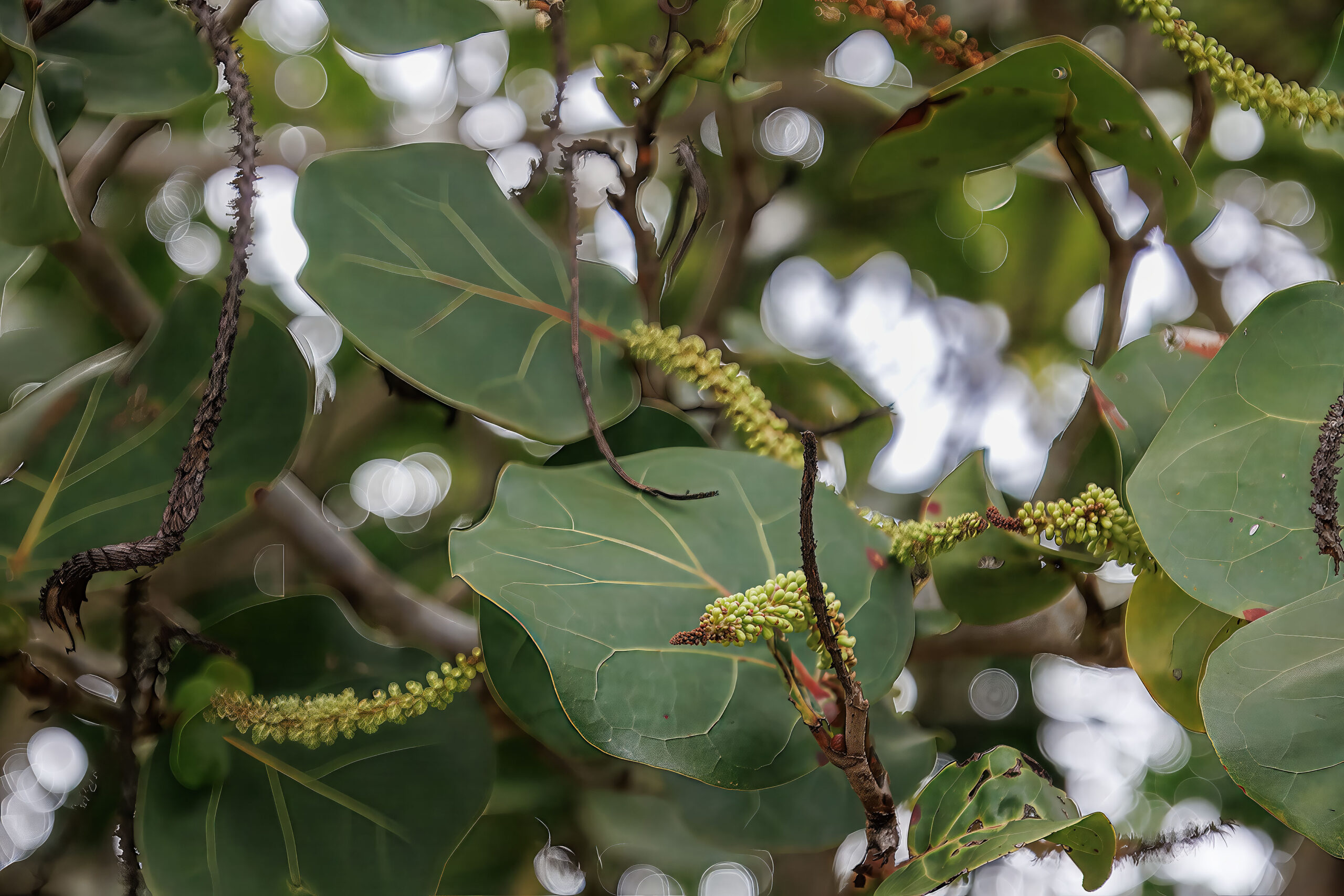
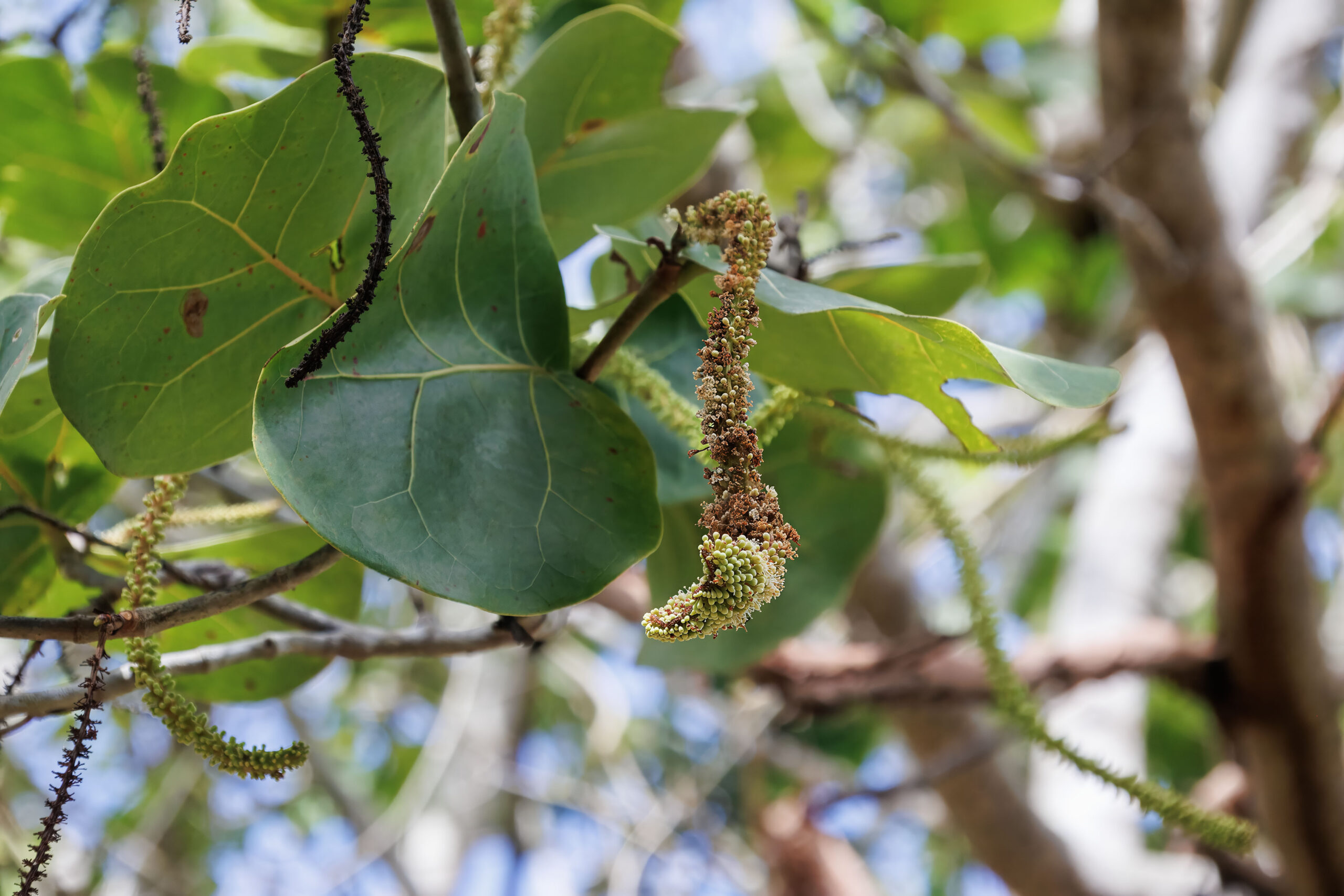
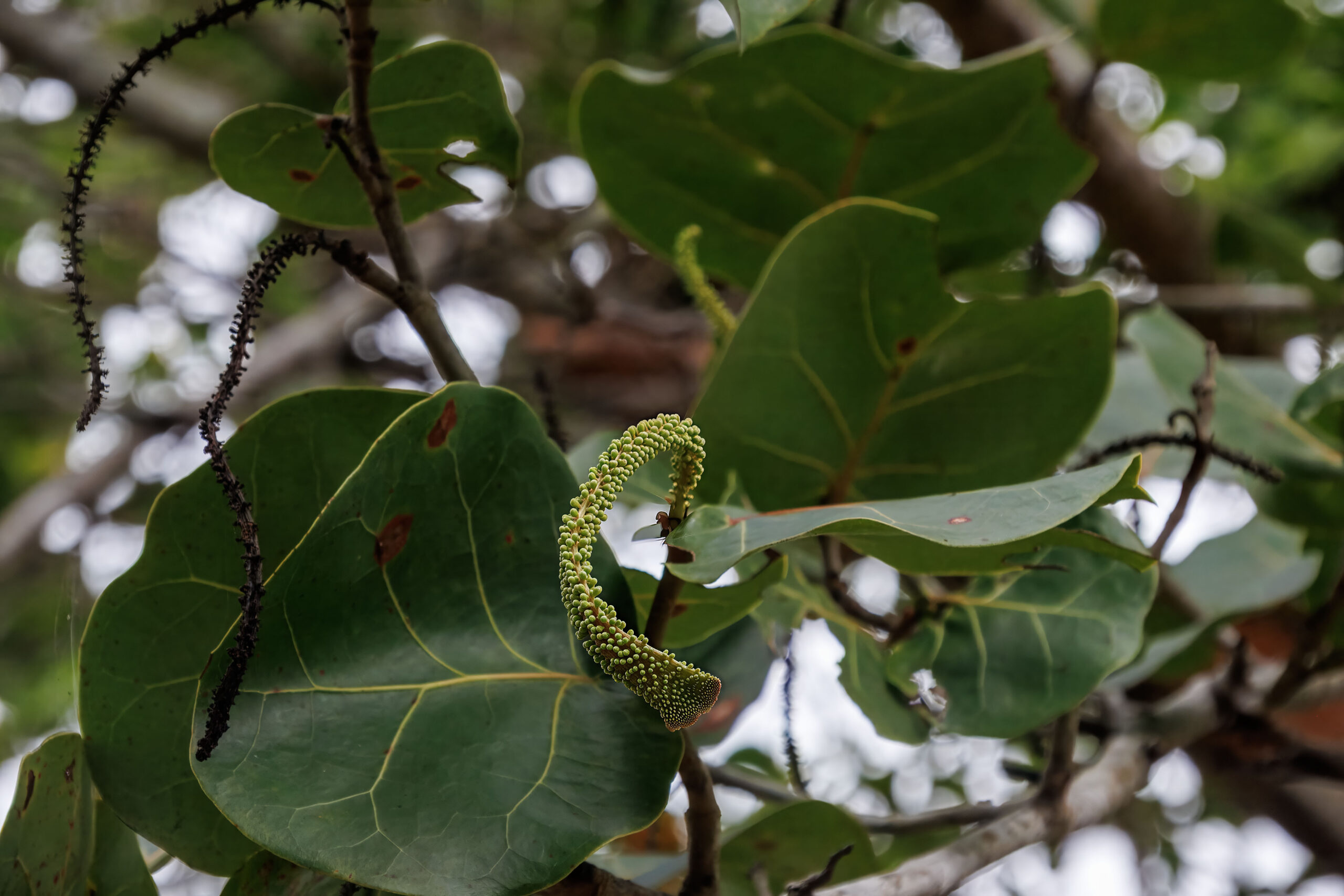
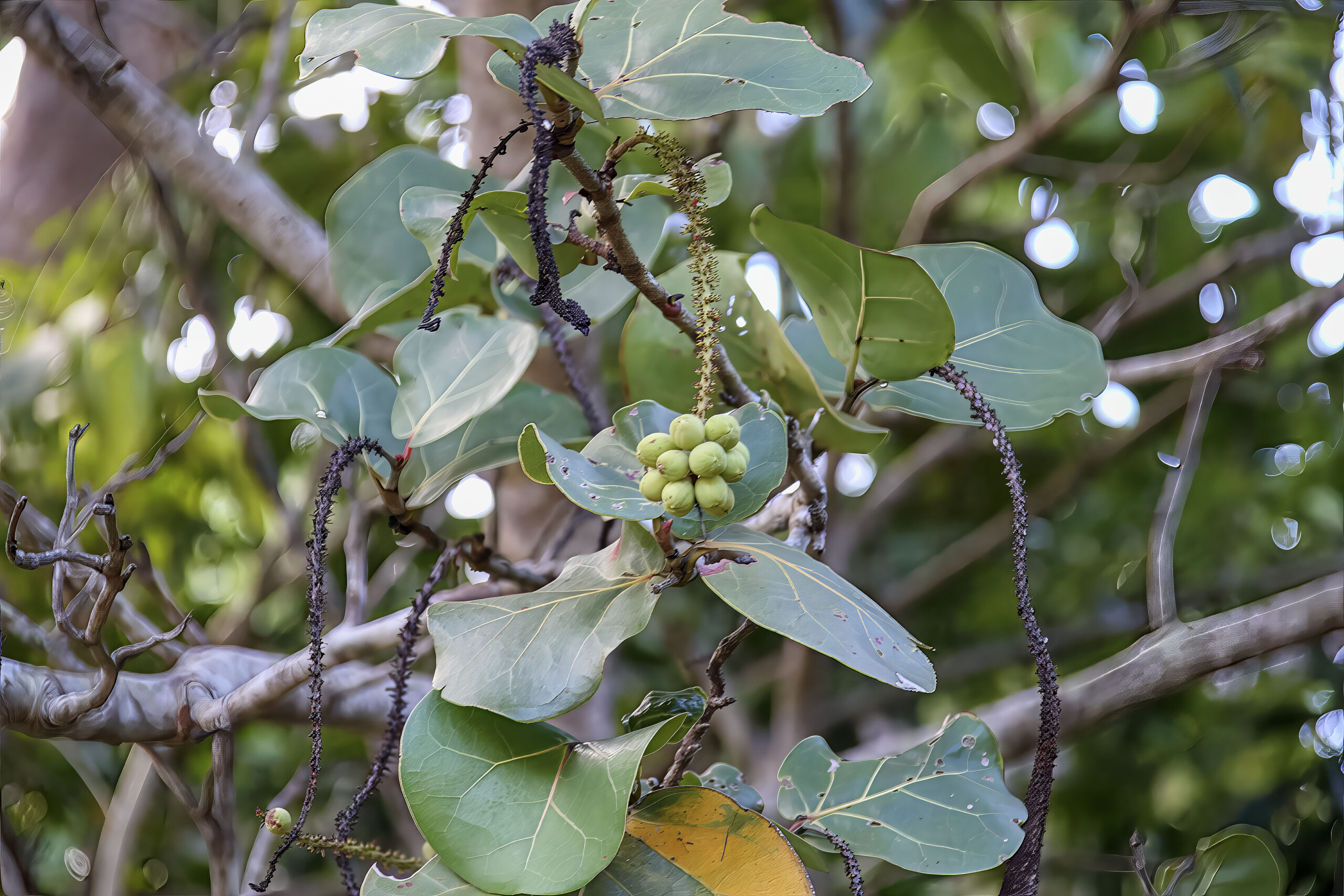
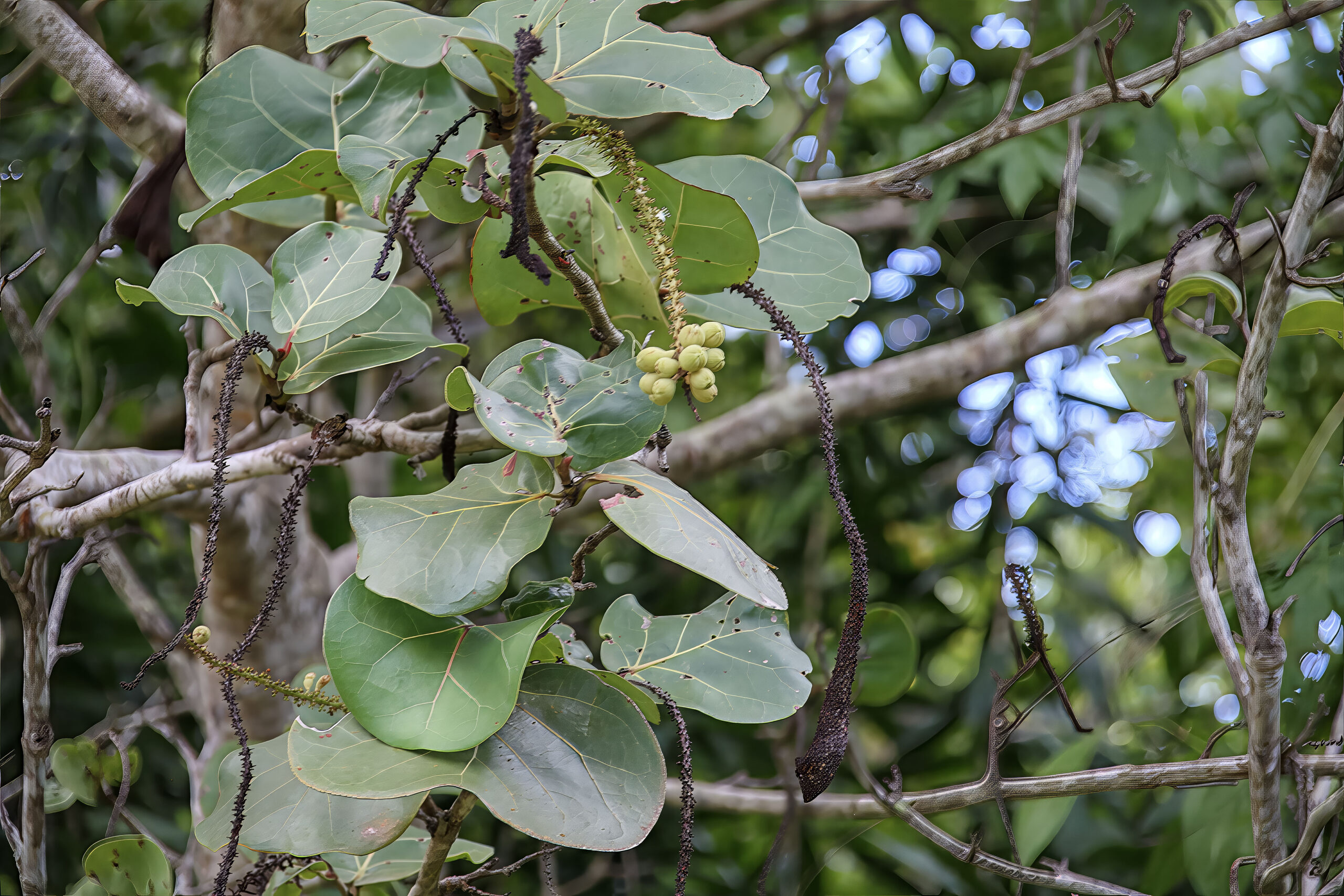
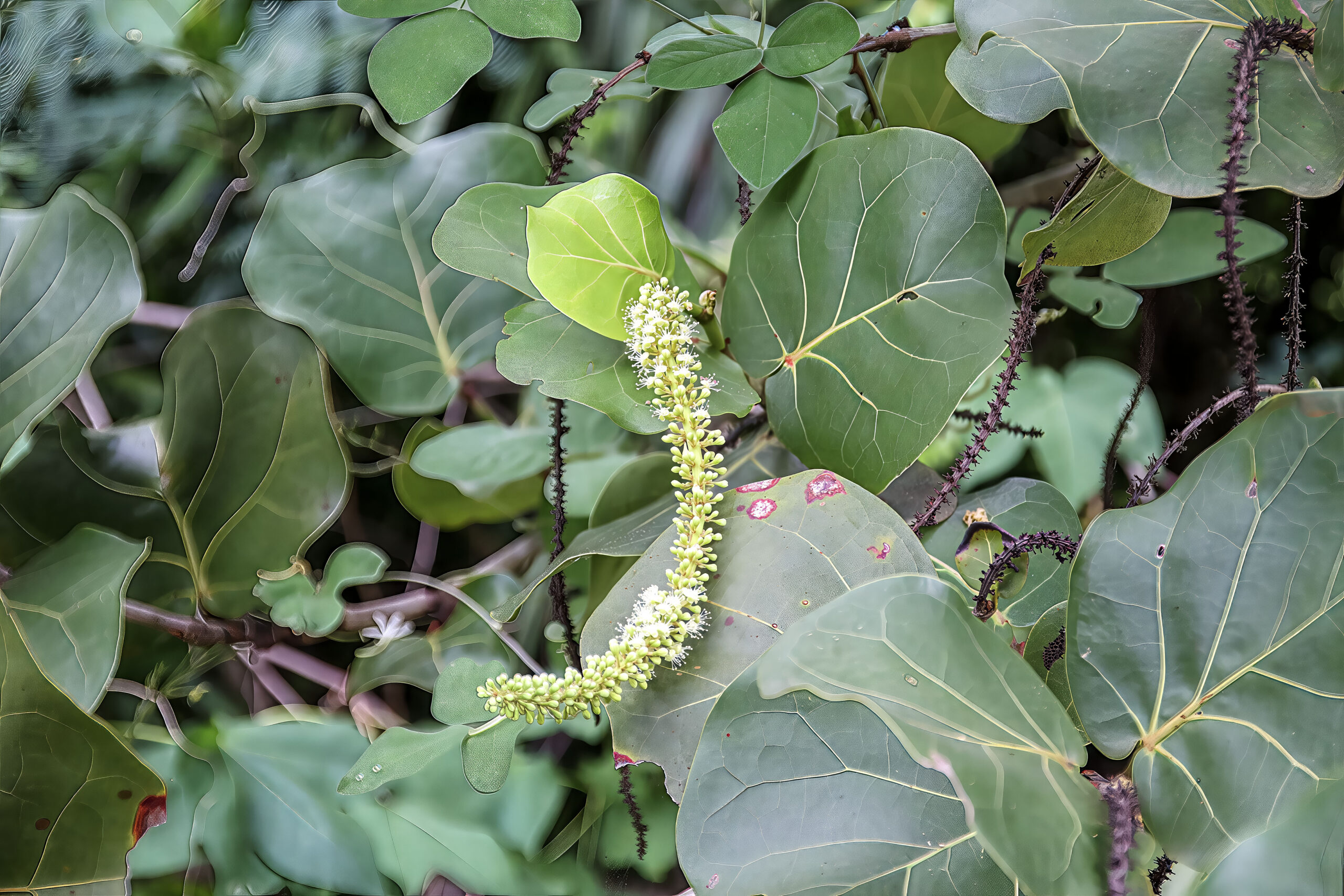
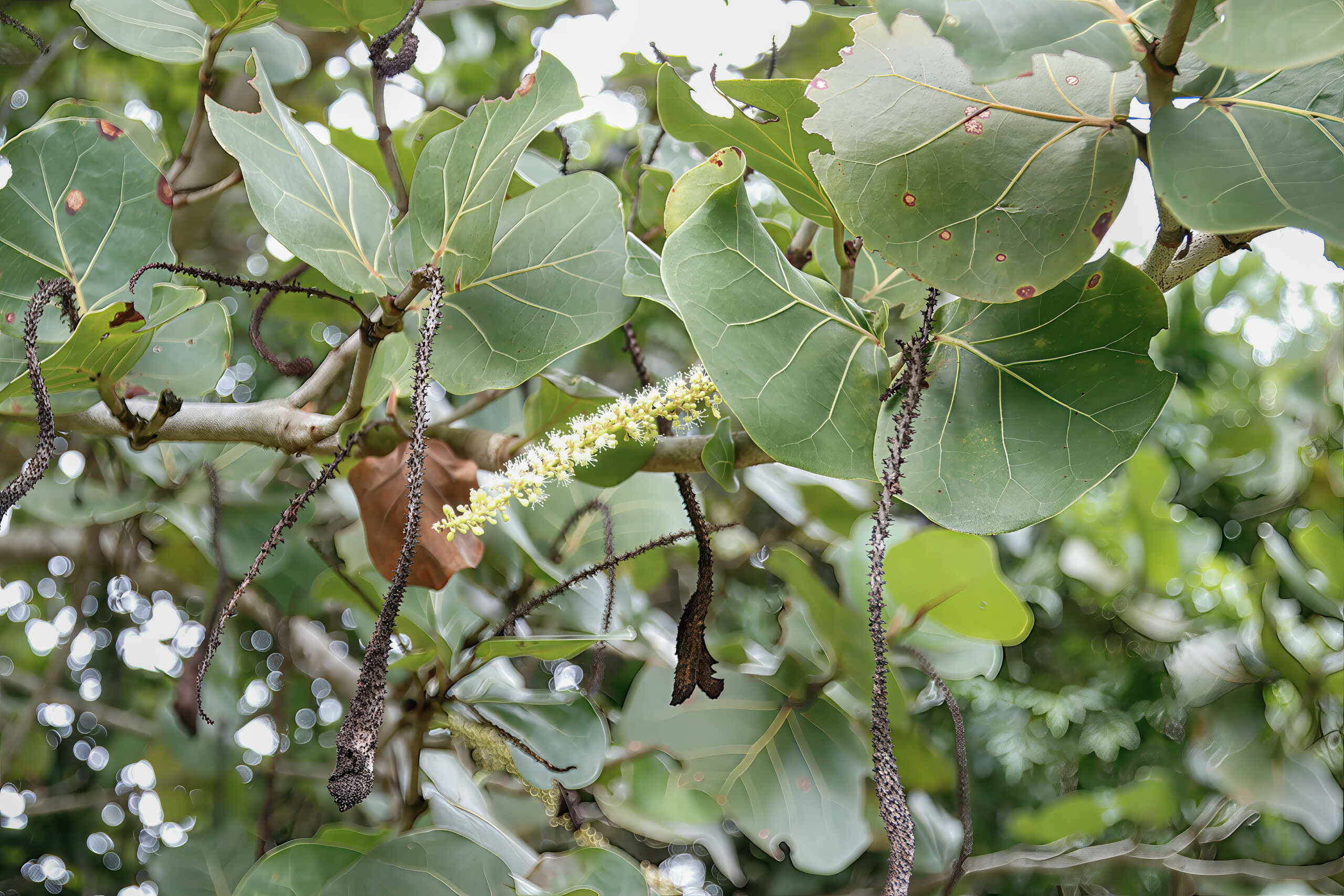
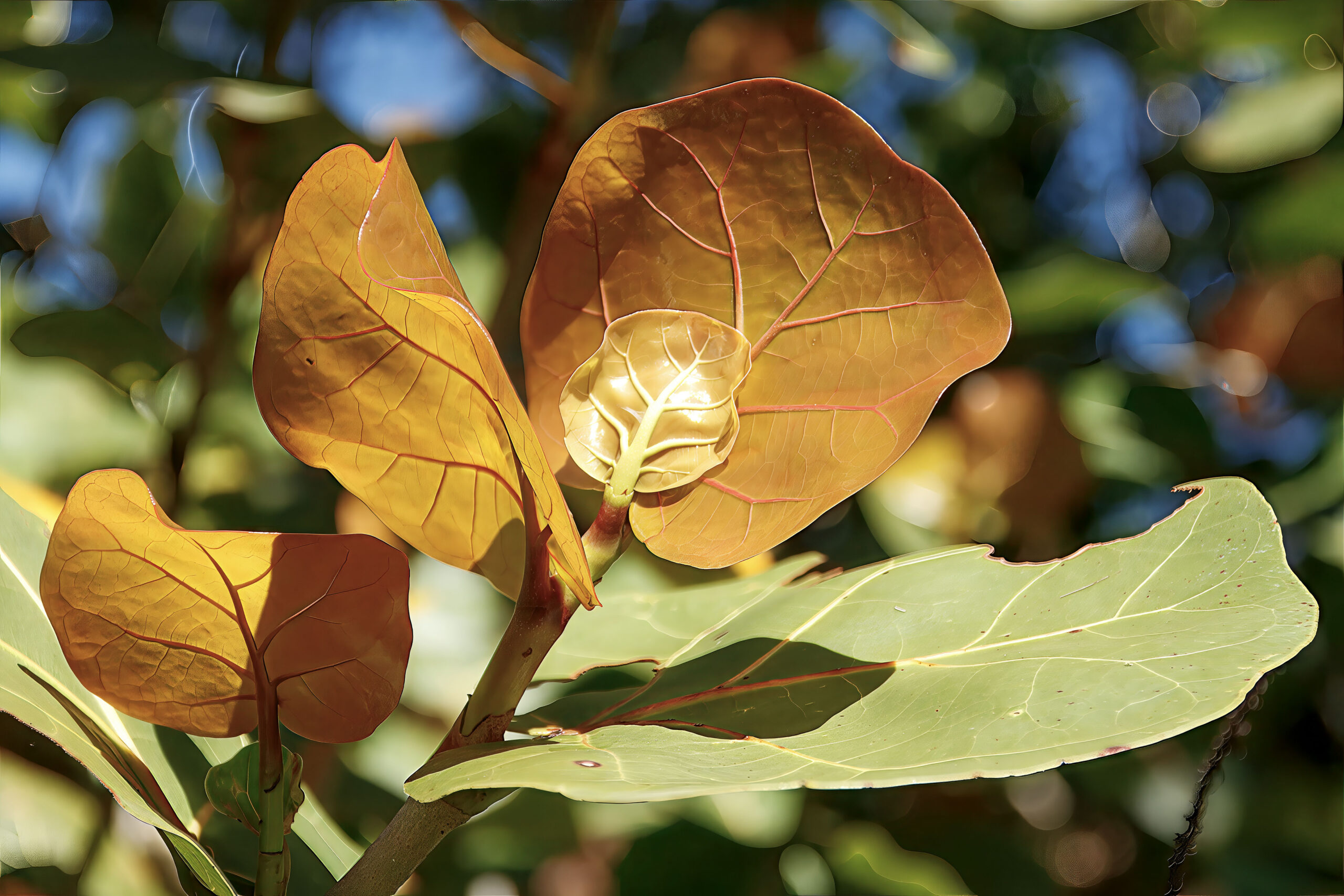
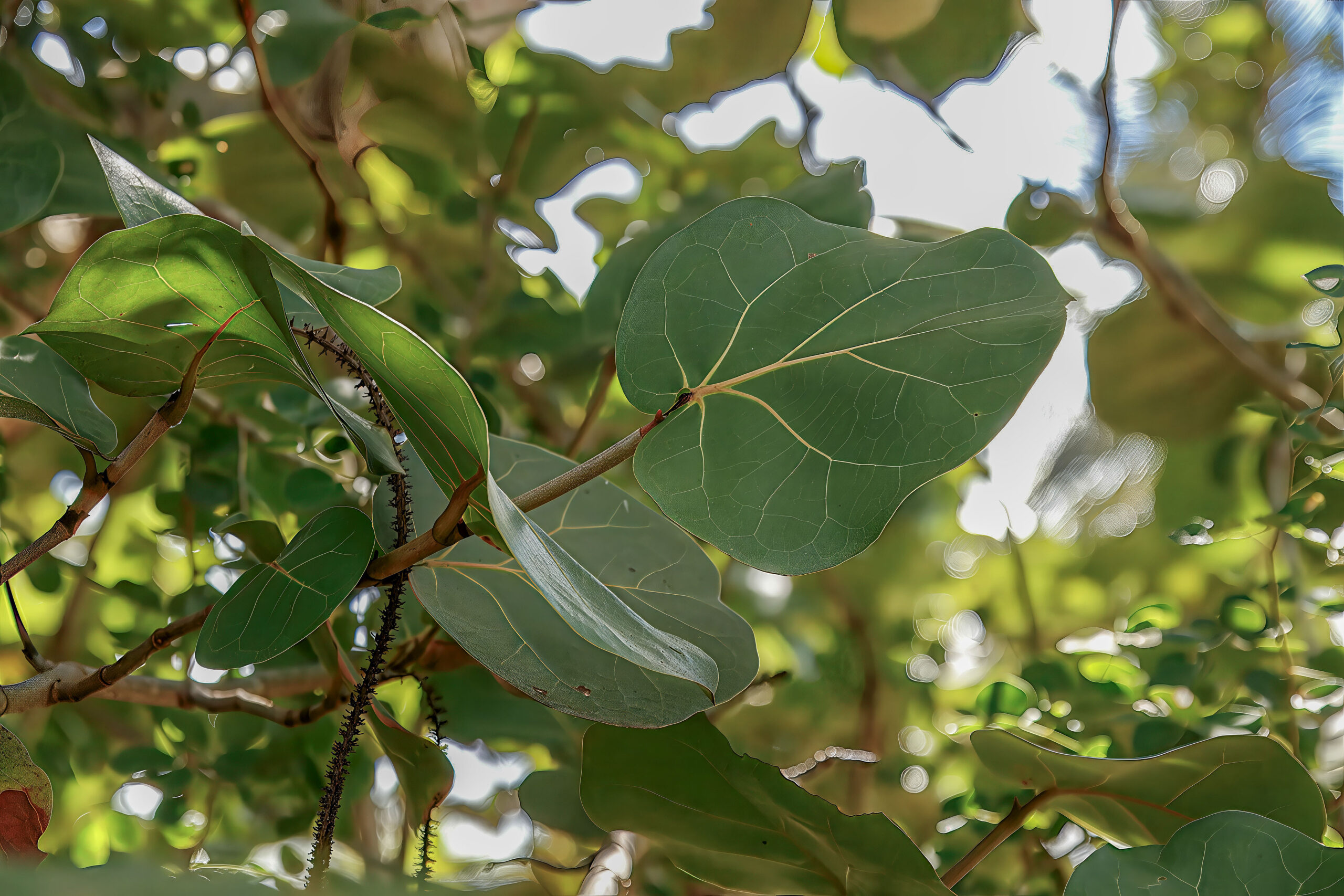
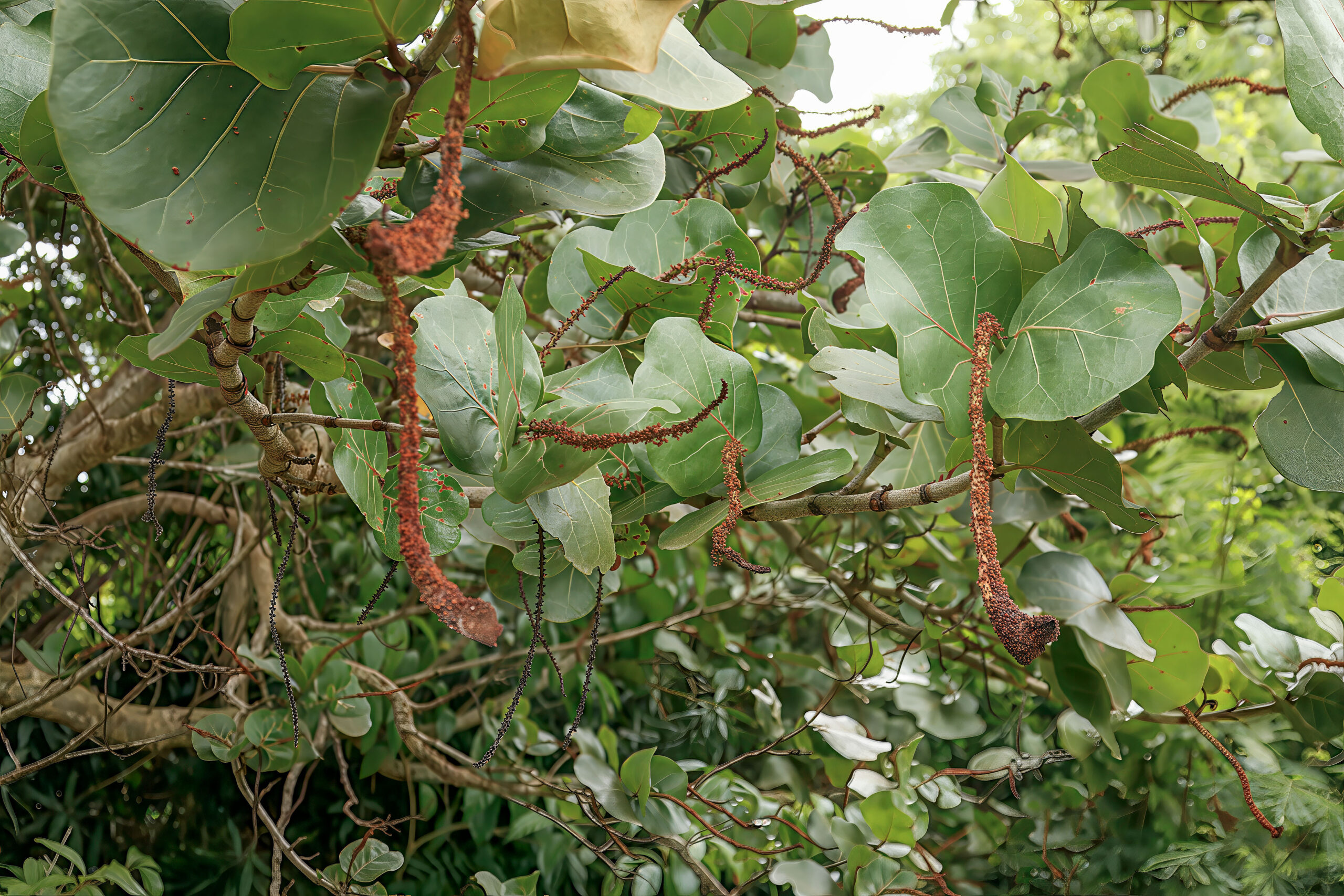
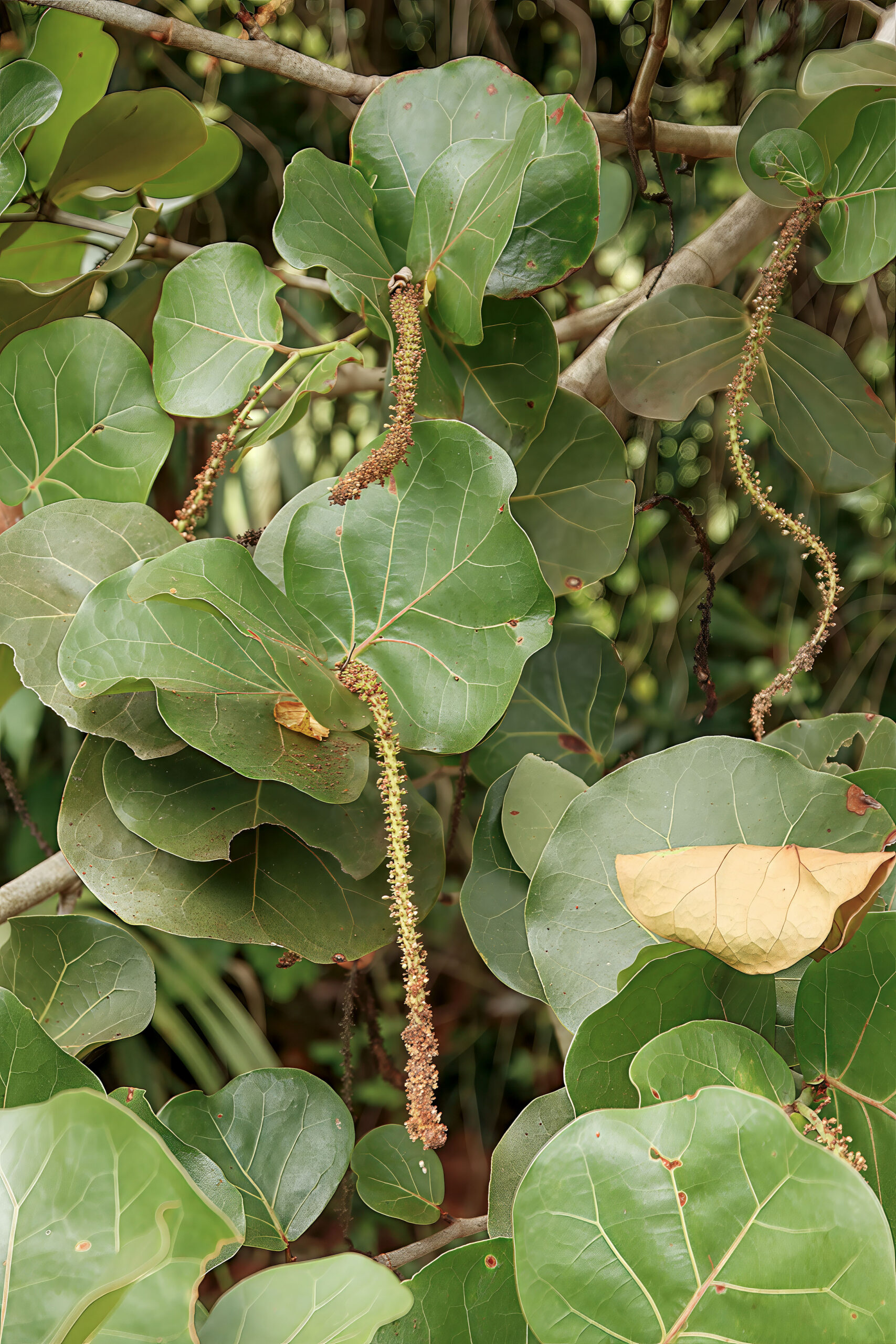
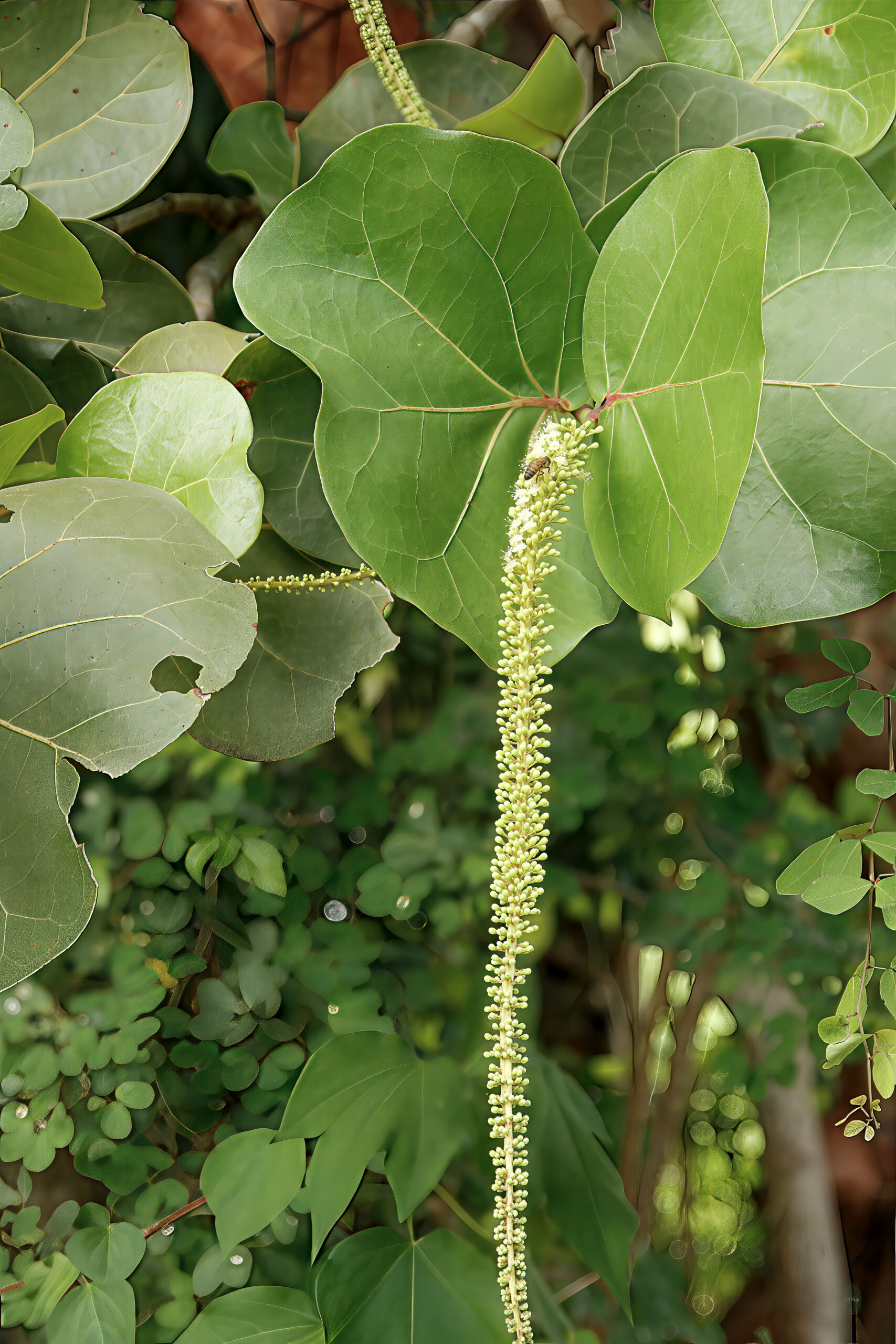
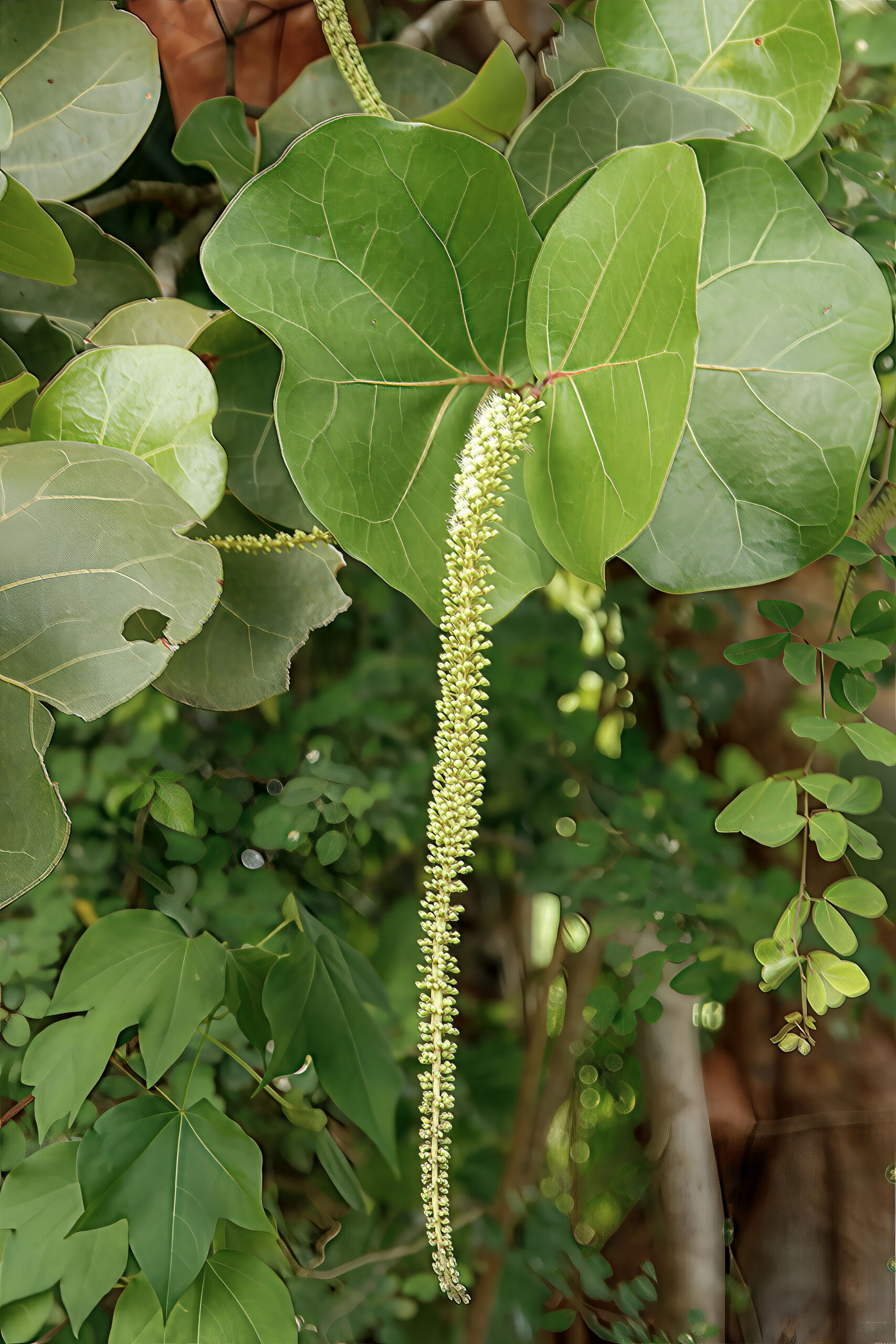
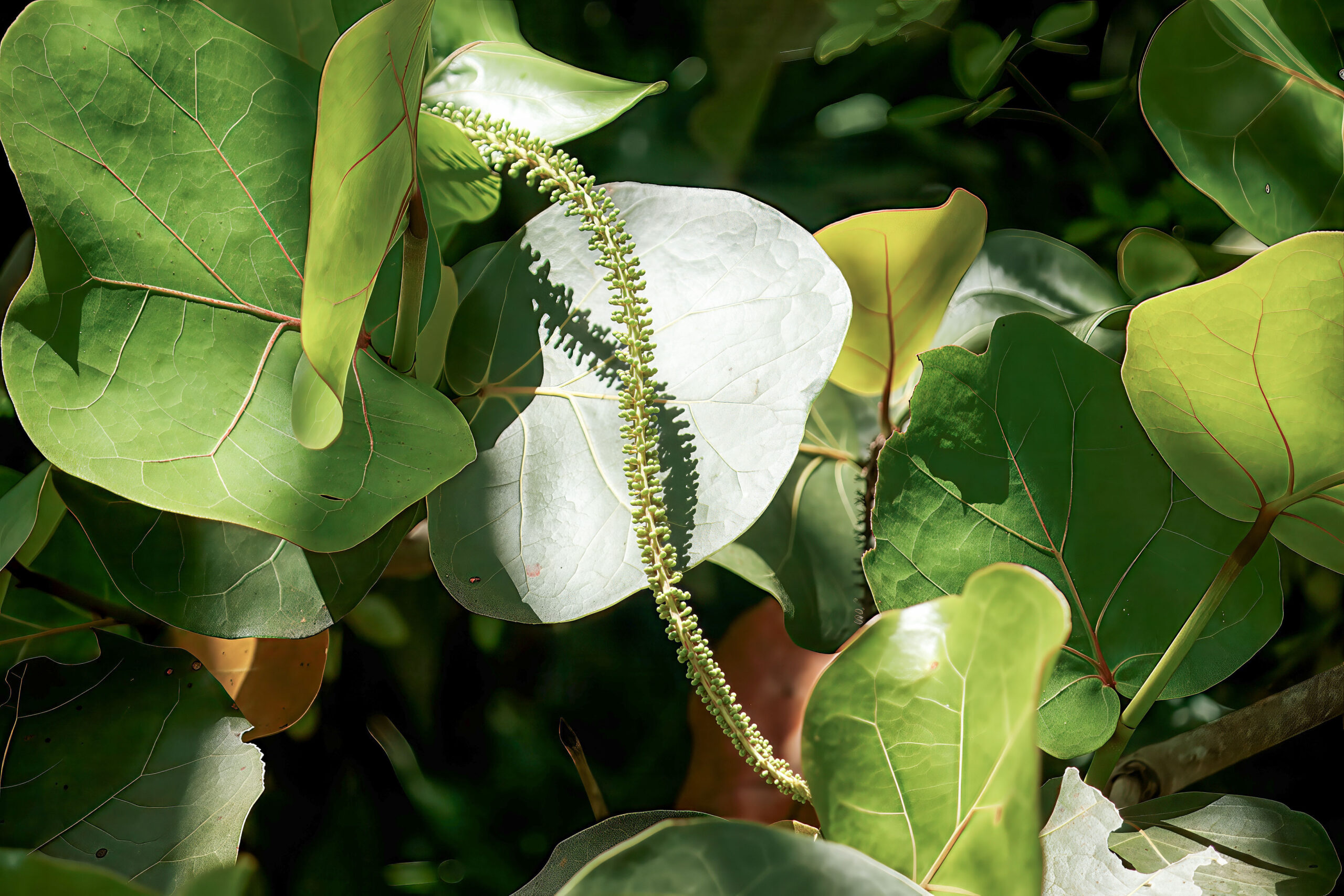
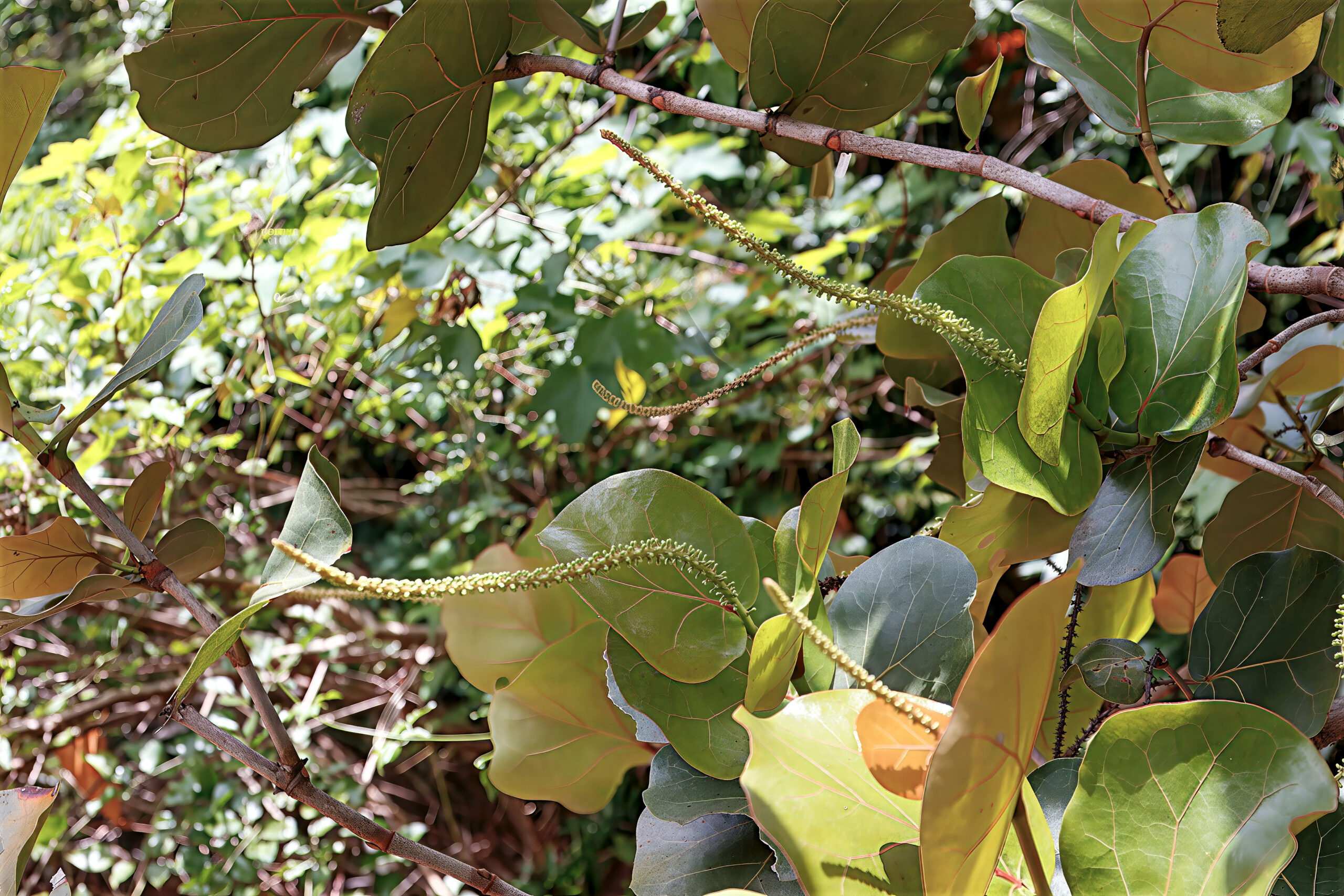
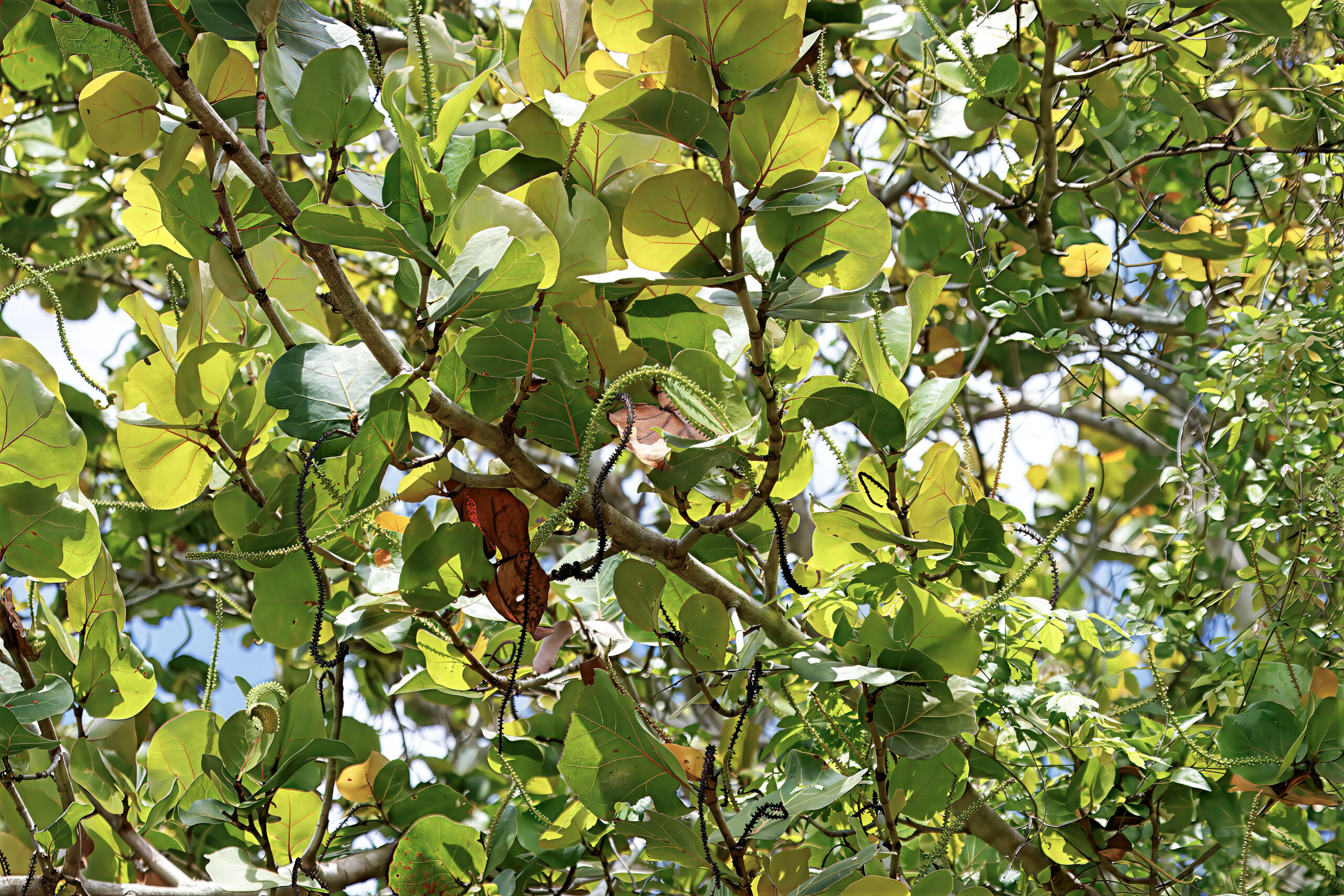
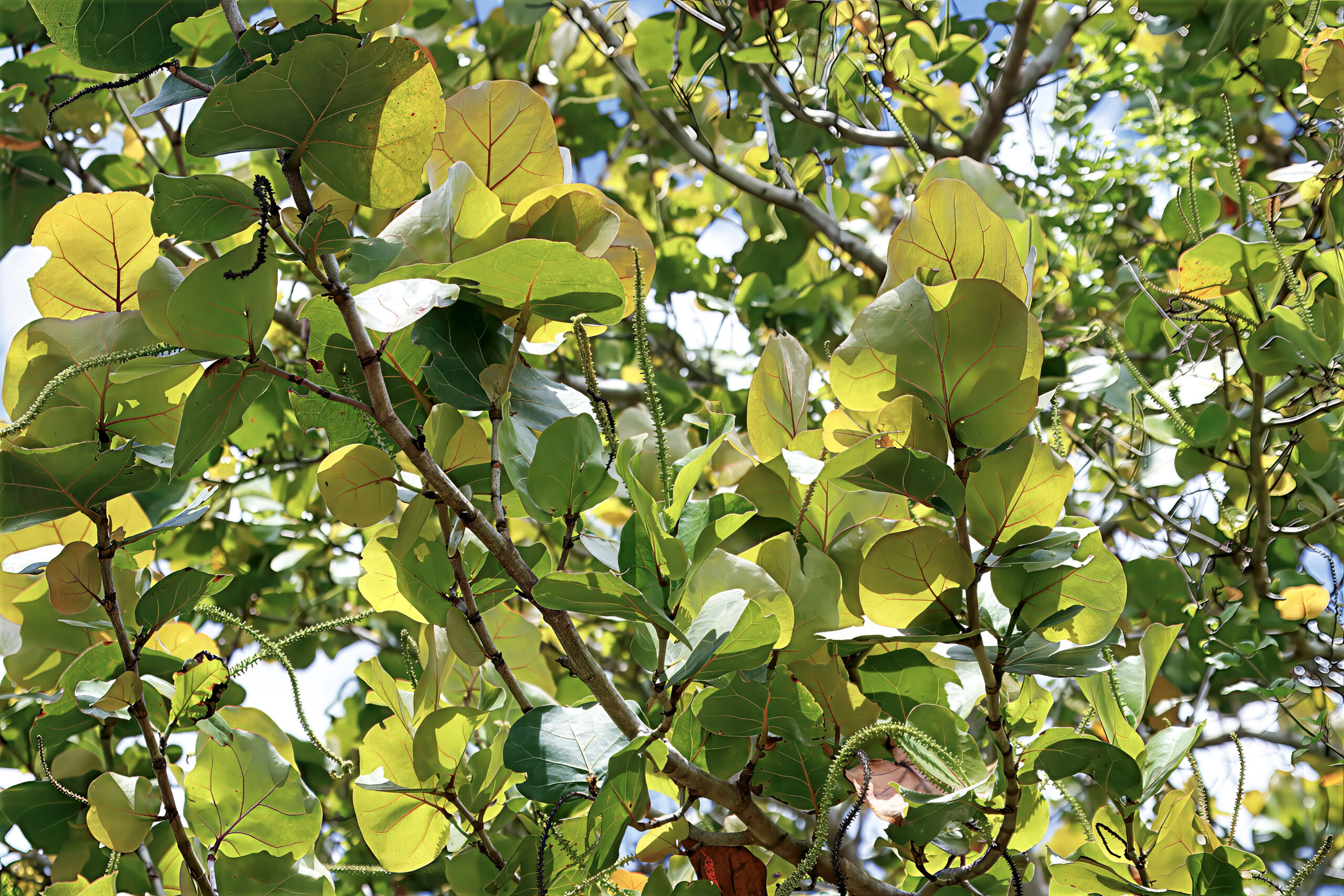
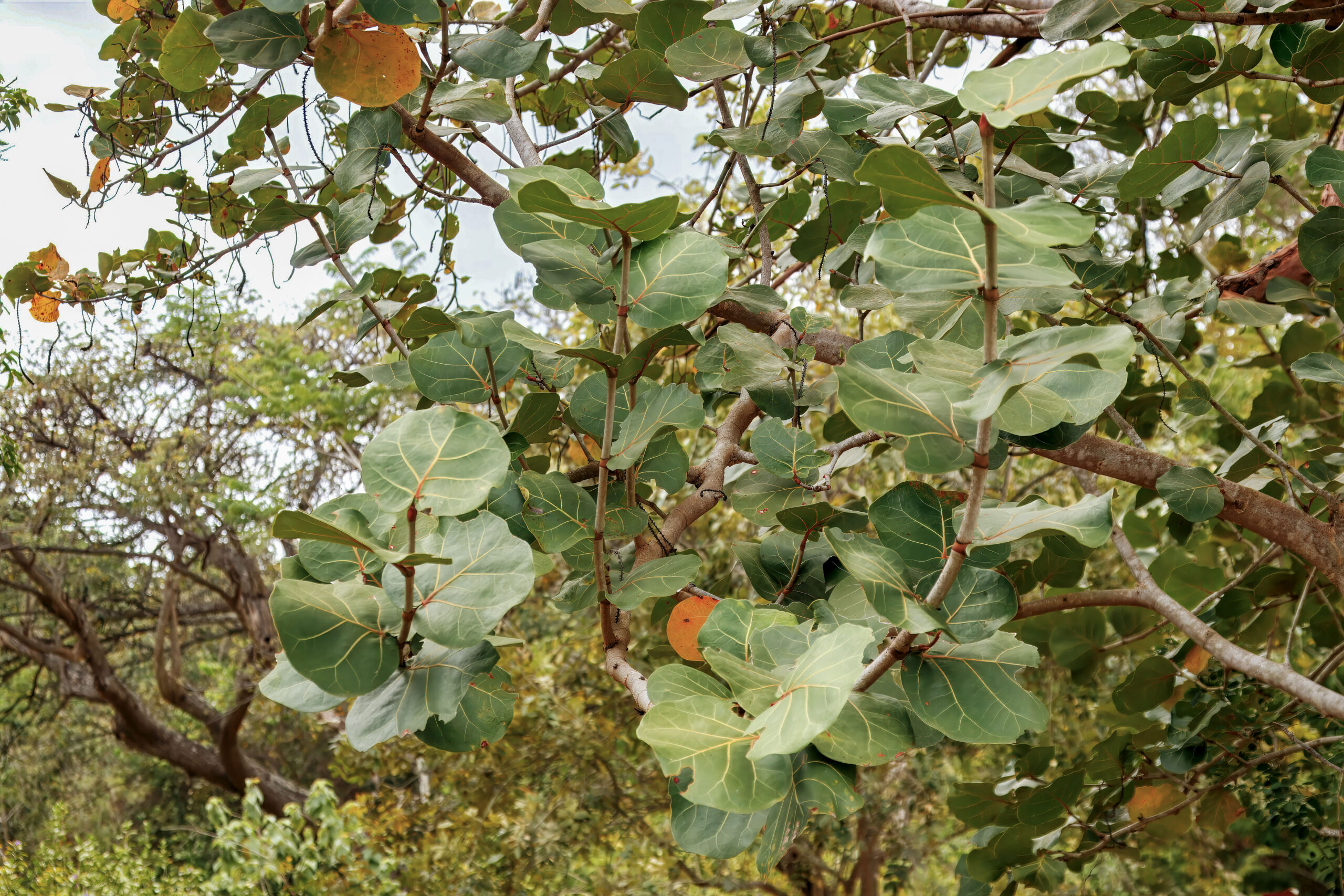
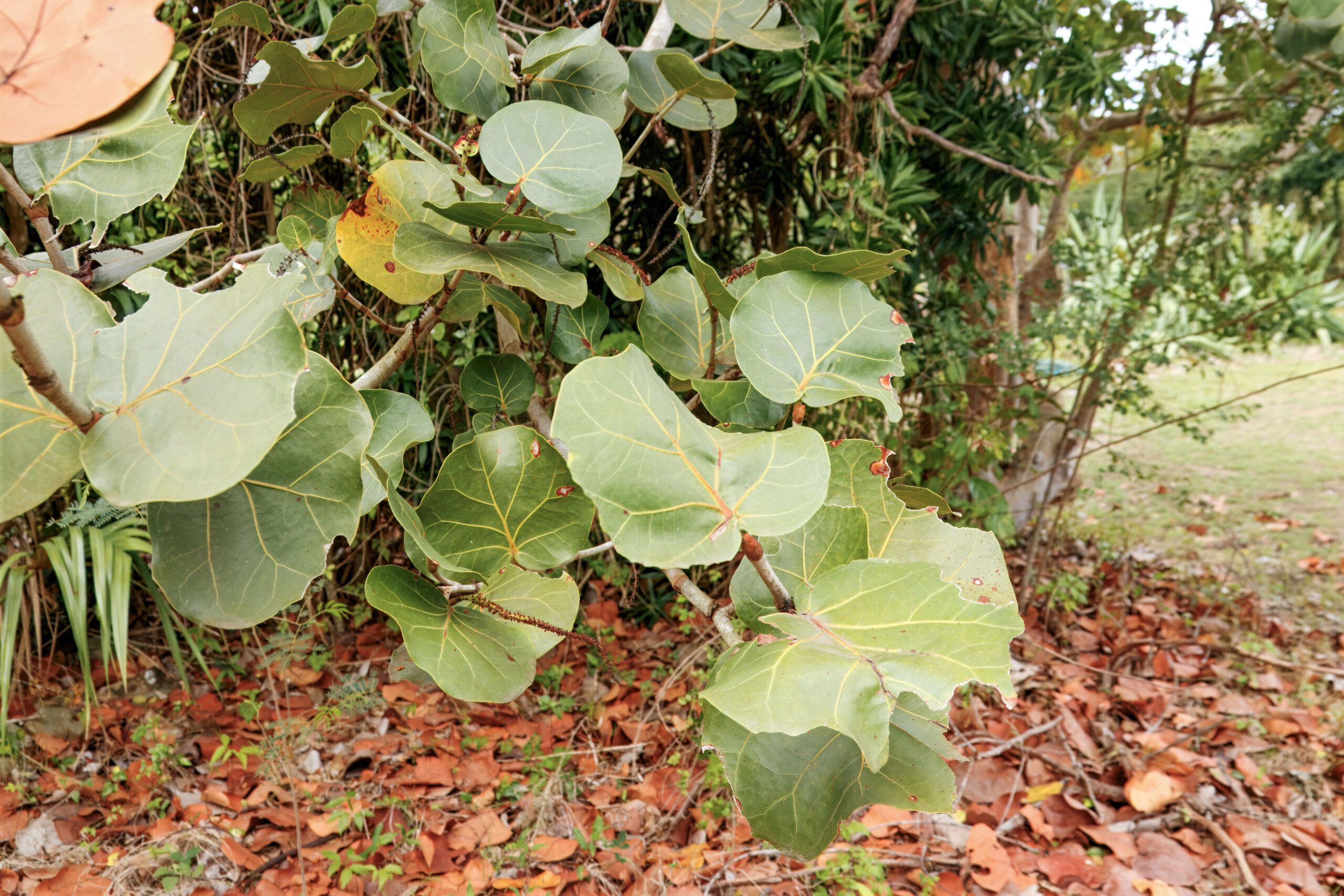
- Leaves are large, leathery, and nearly circular, often with prominent red veins.
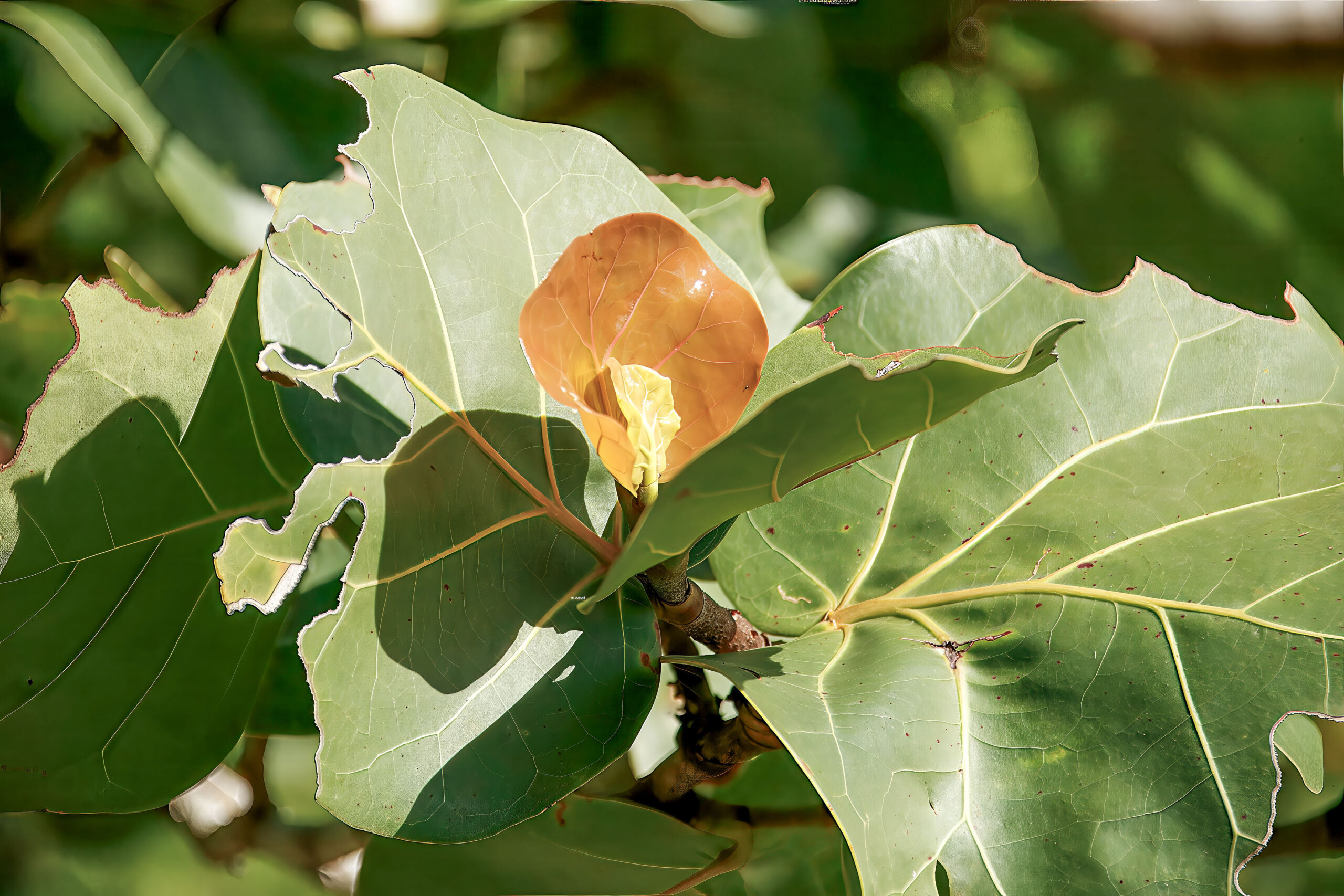
- New leaves emerge reddish-bronze, maturing to glossy green.
- In coastal areas, salt spray and wind may cause seasonal leaf tip browning or edge burn.
Observation Tips:
- Record leaf color transitions and note timing of young leaf flushes.
- Watch for leaf fall under high wind or drought stress, typically January–March.
2. Flowering
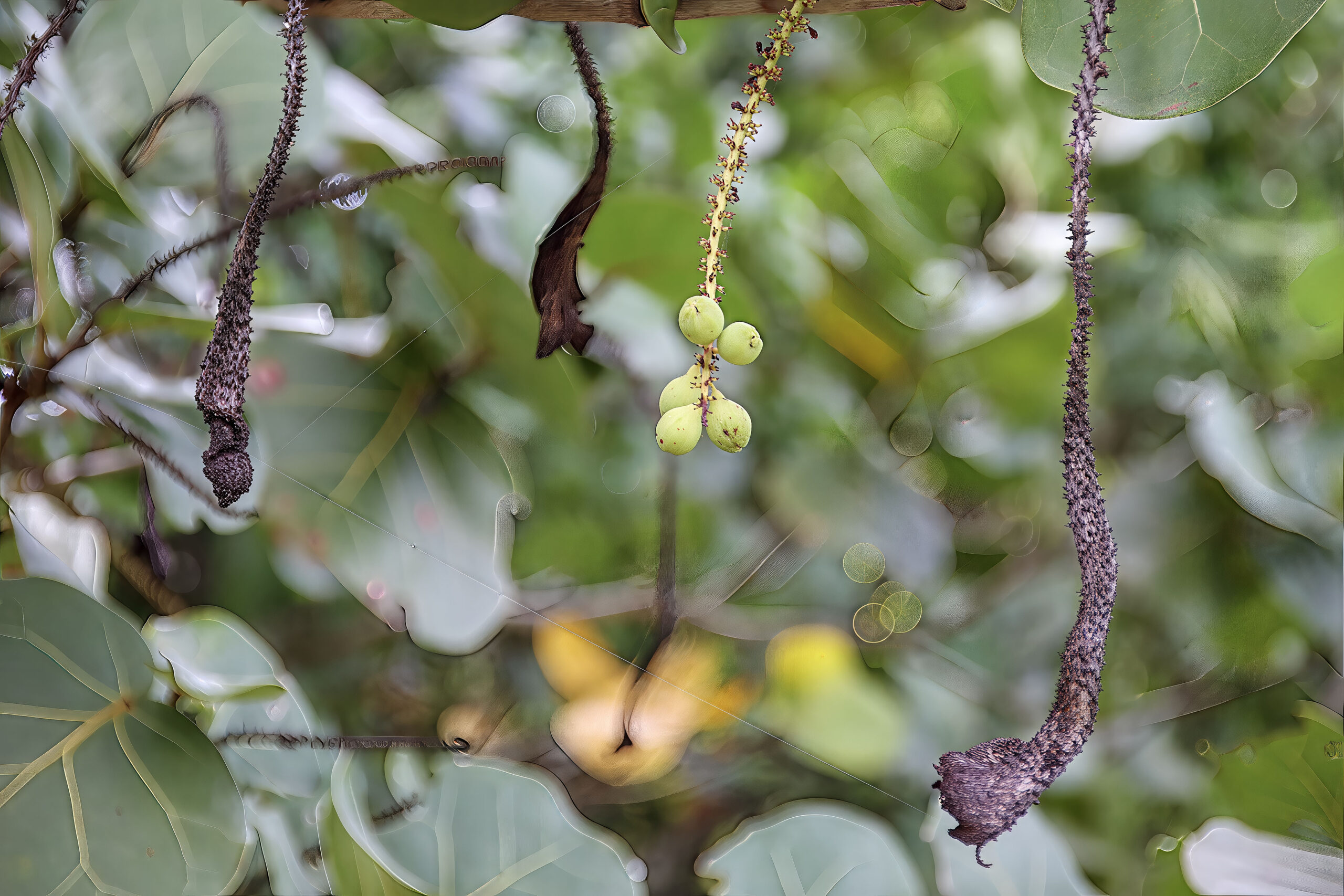
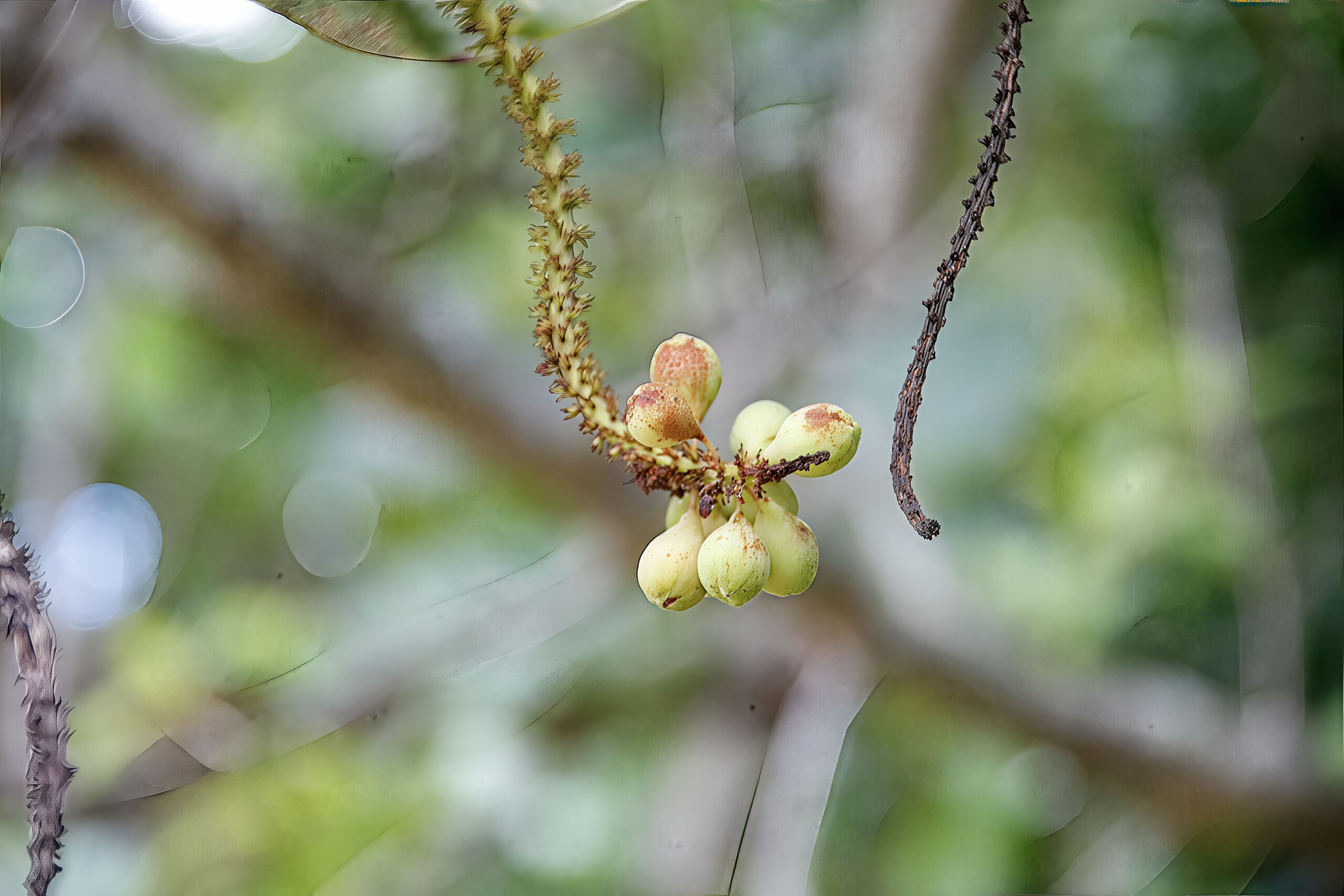
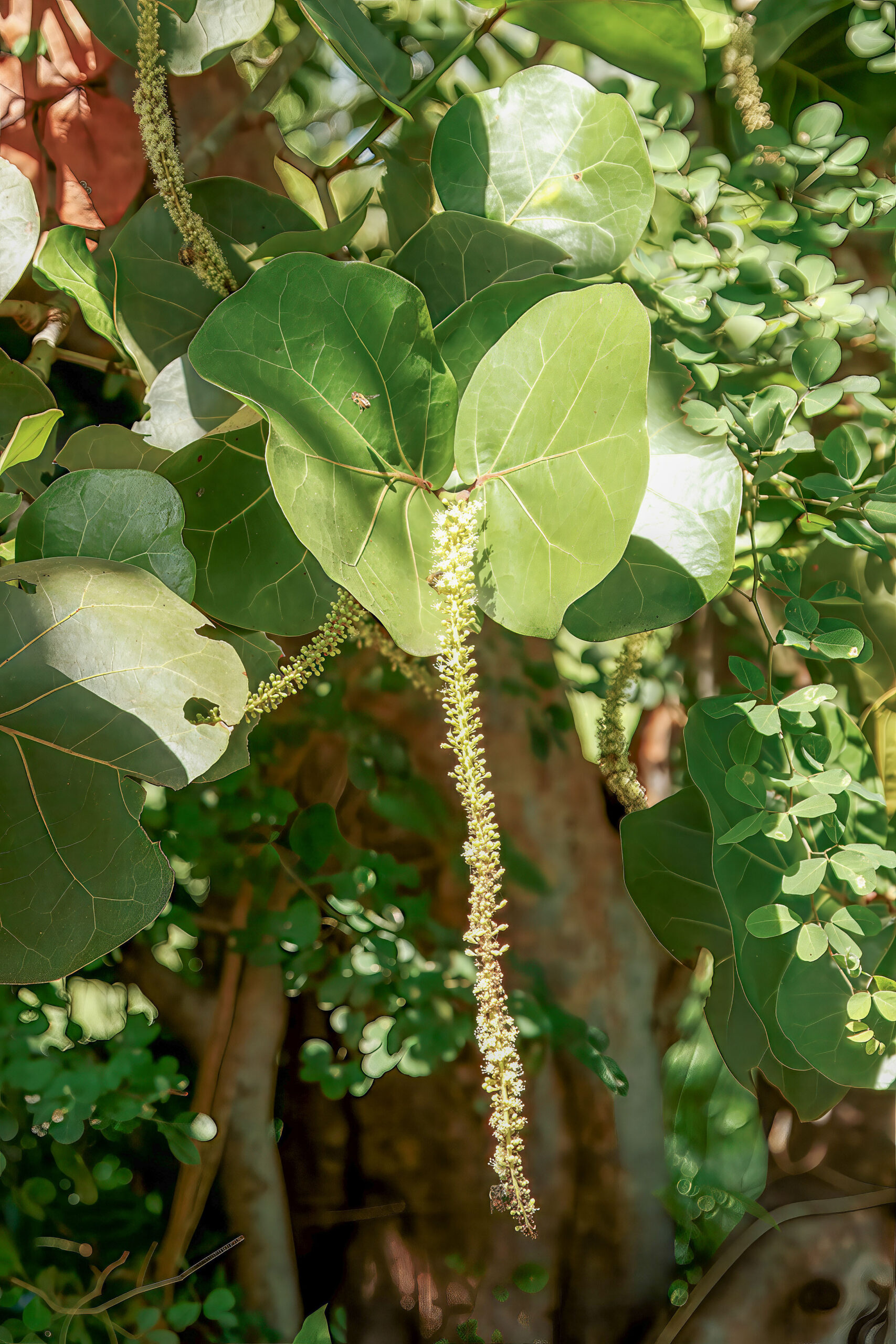
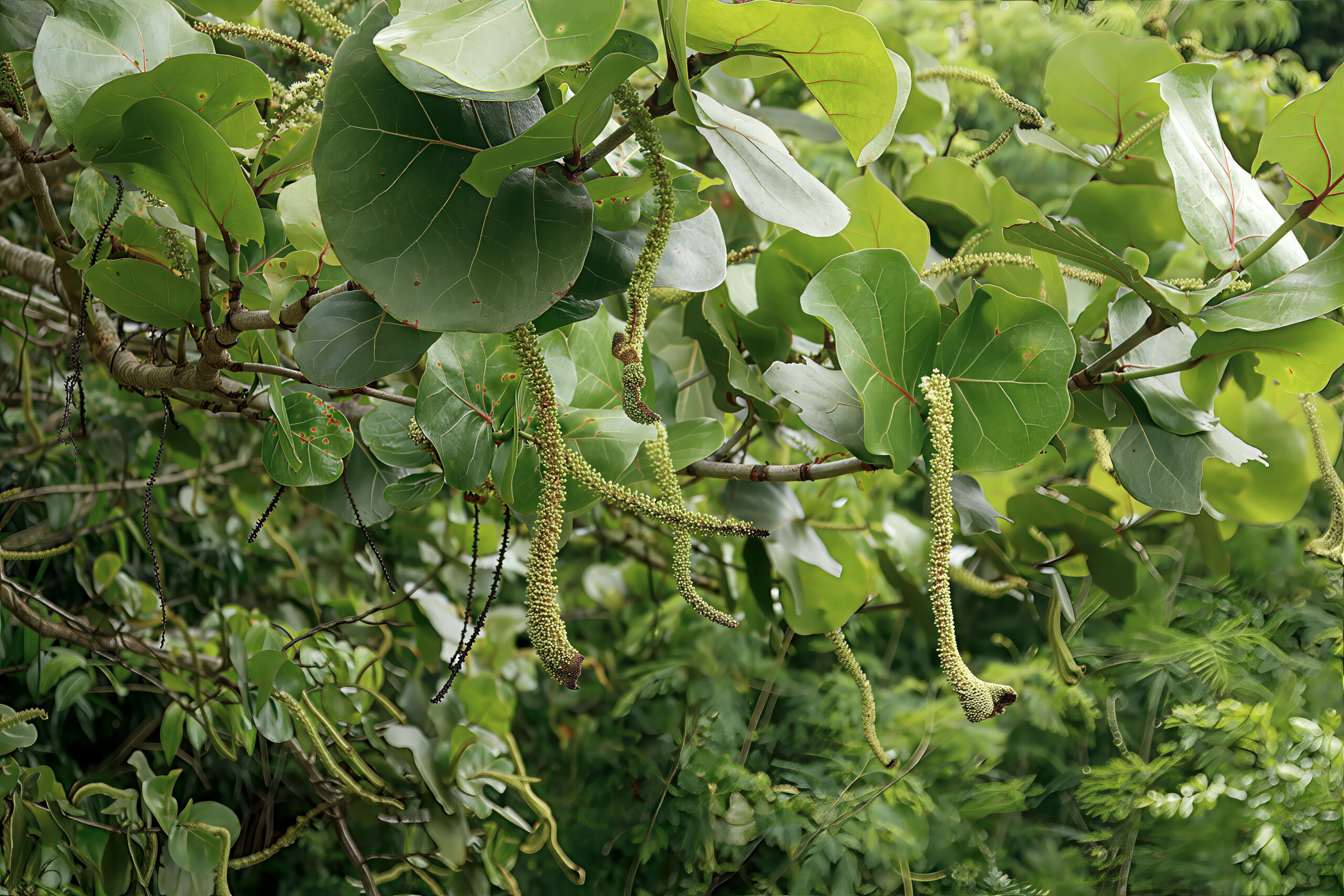
Flowers are small, white to greenish, and produced in long, slender, upright spikes.
- Flowering typically begins in late dry season, often March–May, though may occur year-round in favorable conditions.
- Trees are dioecious, with male and female flowers on separate trees.
- Flowers are lightly fragrant and attract bees, flies, and beetles.
Observation Tips:
- Document first appearance of flower spikes, especially after dry spells.
- Observe insect activity, particularly during early morning.
3. Fruiting
Fruit develops in long clusters, resembling bunches of grapes. Each “grape” is a round drupe that starts green, ripens to purple, and contains a large seed.
- Fruiting follows flowering and usually peaks from July to September.
- Ripe fruits are edible and attract birds, iguanas, and humans alike.
Observation Tips:
- Track fruit set, color change, and drop.
- Monitor fruit scavenging by animals or fruit drop after rain.
- Note fruit abundance, which varies by year and tree.
4. Seasonal Pattern (St. Croix)
- Jan–Mar: Leaf turnover or stress shedding
- Mar–May: Flowering
- May–Jun: Early fruit development
- Jul–Sep: Fruit ripening and dispersal
- Oct–Dec: Canopy growth, possible secondary flowering