
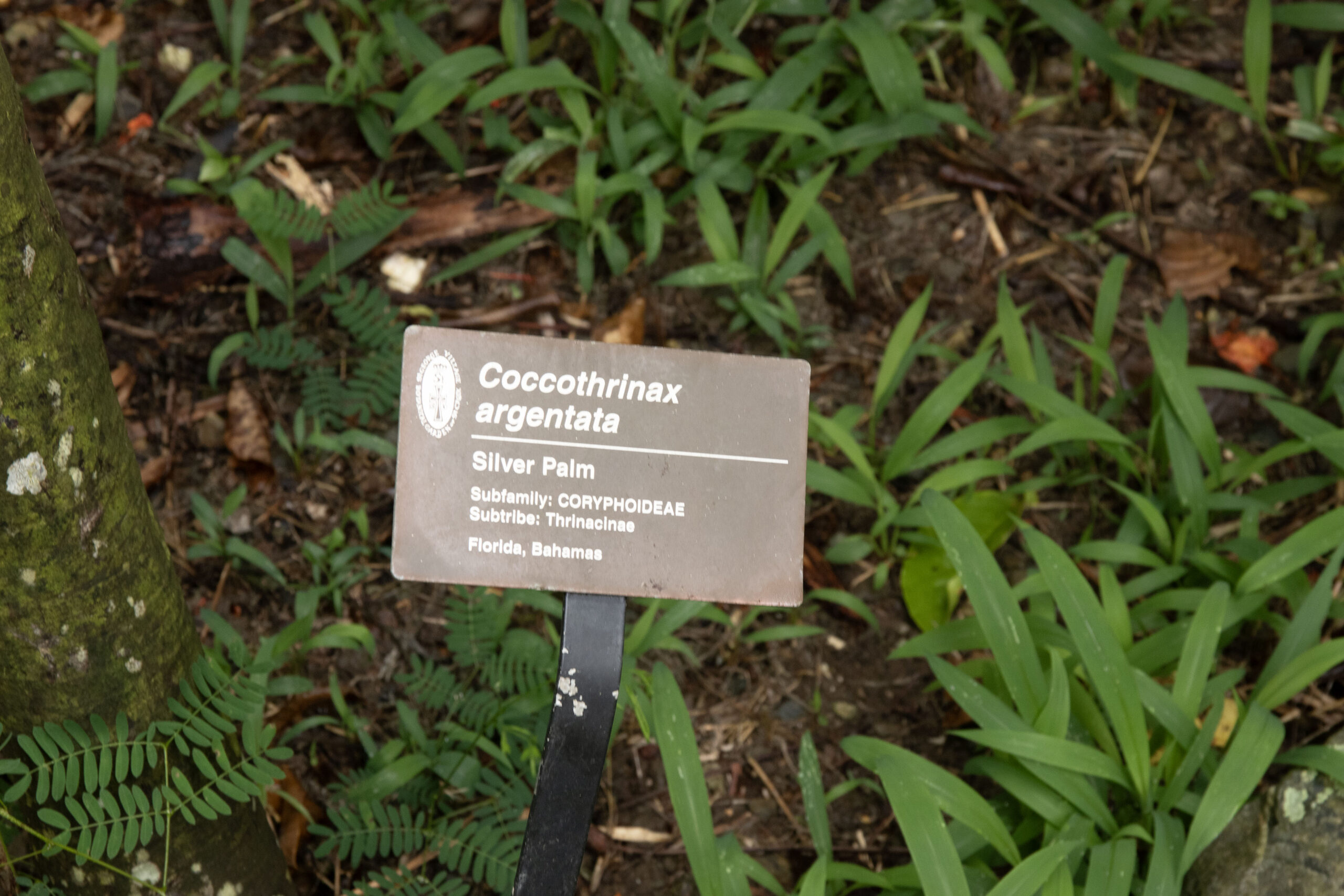
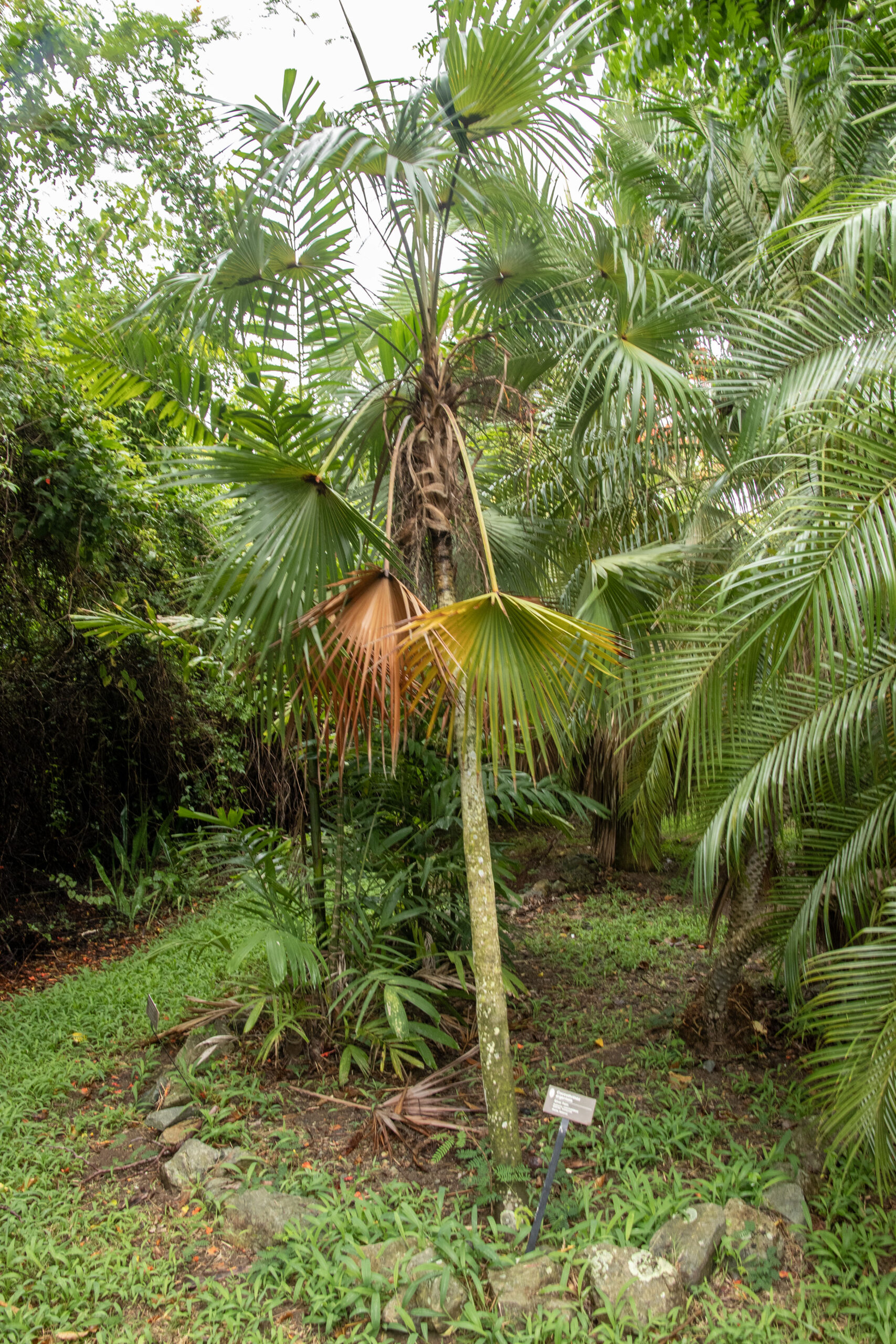
Silver Palm
Scientific name: Coccothrinax argentata
POWO Status: Shrub or Tree
IUCN Red List threat level: Least Concern
GPS Location: 17° 42′ 55.06″ N, 64° 49′ 44.24″ W
Medicinal Uses
Coccothrinax argentata (Silver Thatch Palm) is traditionally used by healers for pain relief, and related species (C. argentea) are used for uterine fibroids and hot flashes, with studies on Areca palms (related family) showing anti-inflammatory and analgesic properties, suggesting potential therapeutic benefits, though modern research specifically on C. argentata is limited.
Traditional Medicinal Uses
- Pain Relief: The palm is used to alleviate pain in traditional practices.
- Women’s Health: Coccothrinax argentea (a closely related species) is used for treating hot flashes and uterine fibroids.
Related Species & Potential
- Research on other palms, like the Areca palm (in the same family), indicates potential for anti-inflammatory, analgesic (pain-relieving), antioxidant, and antibacterial effects, hinting at similar properties in Coccothrinax species.
Other Uses
- Horticulture: It’s a popular ornamental plant.
- Crafts: Young leaves are used for thatching, hats, and baskets.
Important Note: While traditional uses exist, scientific validation for many of these specific remedies is still developing, and it’s crucial to consult healthcare professionals before using plants for medicinal purposes.
Observations:
Phenological Markers – Coccothrinax argentata
Common Name: Silver Palm
Scientific Name: Coccothrinax argentata (Lodd.) Nees
Family: Arecaceae (Palm family)
Leaf Phenology
Leaf Type: Pinnate, with finely segmented leaflets
Evergreen/Semi-deciduous: Evergreen
Leaf Flush: New leaves emerge during warmer seasons or after significant rainfall
Senescence: Occasional yellowing or shedding of older leaves during the dry season
Phenological Indicator: Fresh, bright green leaves emerging from the crown during the warmer months
Flowering
Inflorescence: Small, yellowish-white flowers arranged in panicles
Blooming Period (Tropics): Primarily late spring to summer
Pollinators: Attracts insects such as bees
Phenological Indicator: Clustered flower spikes emerging at the top of the palm, especially in warmer months
Fruiting
Fruit Type: Small, round, black or purple fruits
Fruit Development: Fruits develop a few weeks after flowering, usually ripening by late summer to early fall
Dispersal: Fruits are dispersed by birds and gravity
Phenological Indicator: Appearance of black or purple fruits, often in clusters at the base of the flower stalks
Suggested Photo Angles
- Full palm in context, showcasing its tall, slender trunk and leaf arrangement
- Close-up of individual leaflets to highlight the fine segmentation
- Flowering spikes with emerging buds or open flowers
- Developing and mature fruits, with a focus on color change from green to dark purple or black
- Leaf flush during new growth periods or shedding leaves during drought stress
Notes for Monitoring
The palm’s relatively slow growth and mature stature make it a long-term component of coastal ecosystems
Flowering and fruiting cycles may be influenced by seasonal rainfall and temperature variations
Coccothrinax argentata is often found in coastal, rocky, or sandy areas, where it thrives in well-drained soils